There’s a certain audacity required to turn your back on the ocean when you’re designing a restaurant on the Gold Coast, but that’s precisely what J.AR OFFICE has done with Norte, a Latin American restaurant and bar in Mermaid Beach that has just claimed the Eat Drink Design Awards 2025 title for Best Restaurant Design. In a setting where most venues scramble for water views and sun-drenched terraces, Norte offers something far more subversive: darkness, texture and theatrical restraint.
“The client brief was to create a moody, sensory dining experience that captured the essence of South American cuisine,” says Jared Webb, Founder and Director of J.AR OFFICE. “Drawing from the modernist Luis Barragán era of Mexico City, Norté is intentionally ‘anti-Gold Coast’ in its aesthetic, eschewing ocean views in favour of an internalised, atmospheric environment that offers insulation from the Queensland sun.”
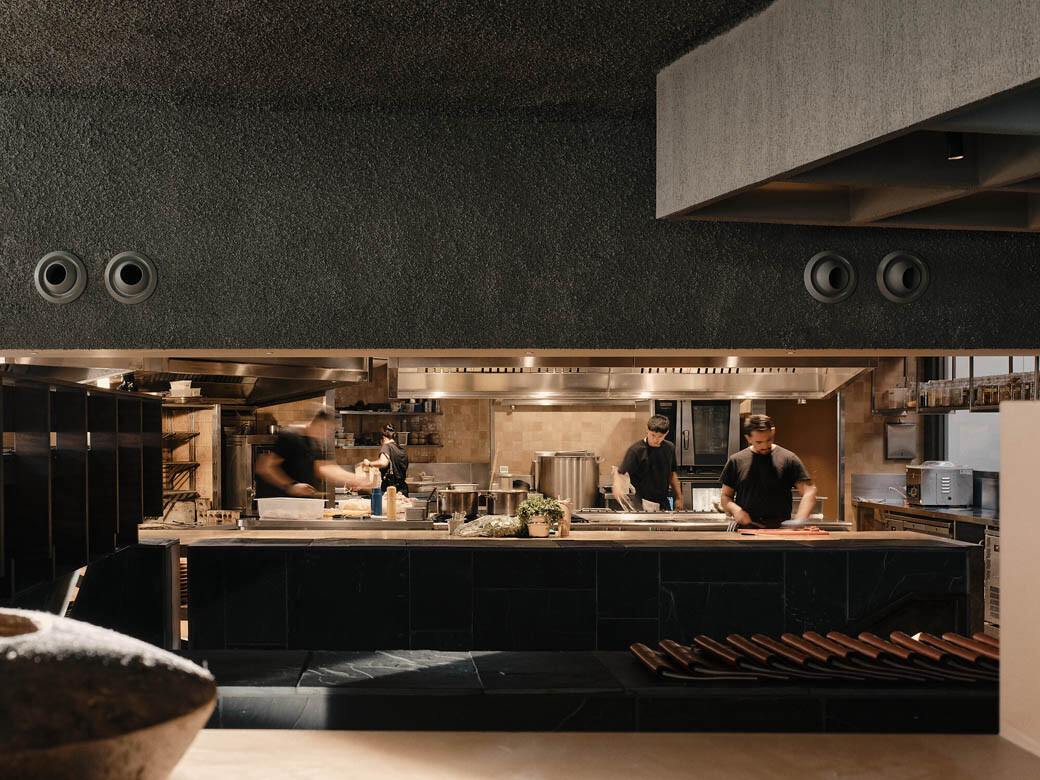
The jury citation praised this boldness, noting that Norte “delivers a bold and unexpected experience for its coastal setting” and “embraces a moodier, textural palette with theatrical lighting and rich materiality.” It’s a restaurant that doesn’t apologise for its intensity—spicy (three chillies), sassy yet low-key, as Webb describes it—and one that manages to be both distinctly South American and Australian without slipping into cliché.
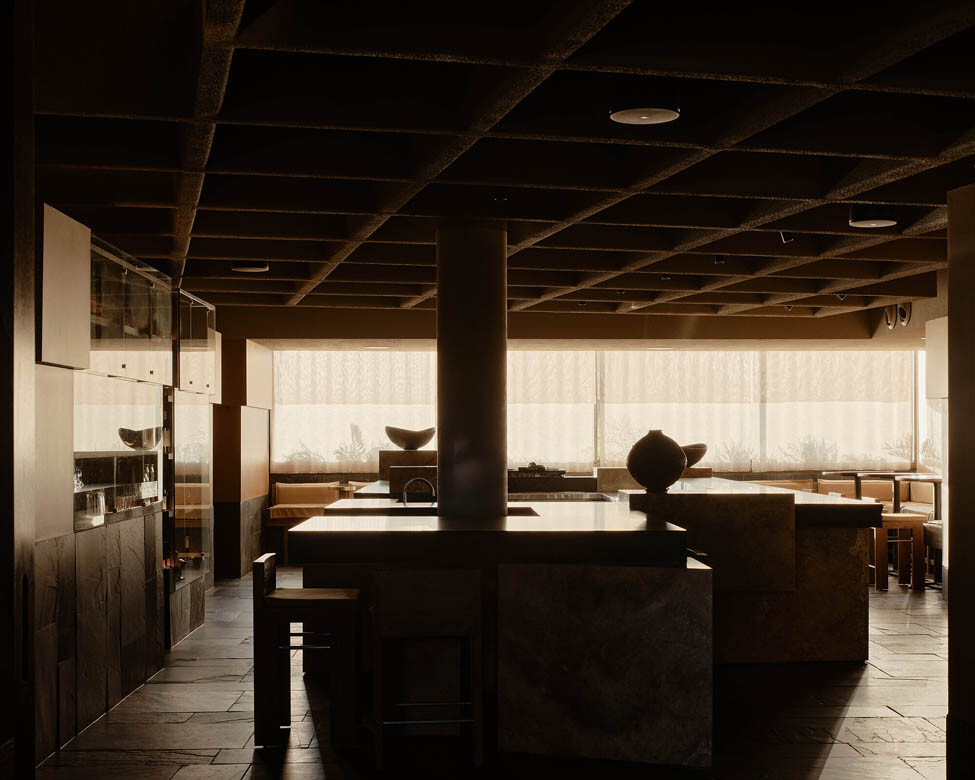
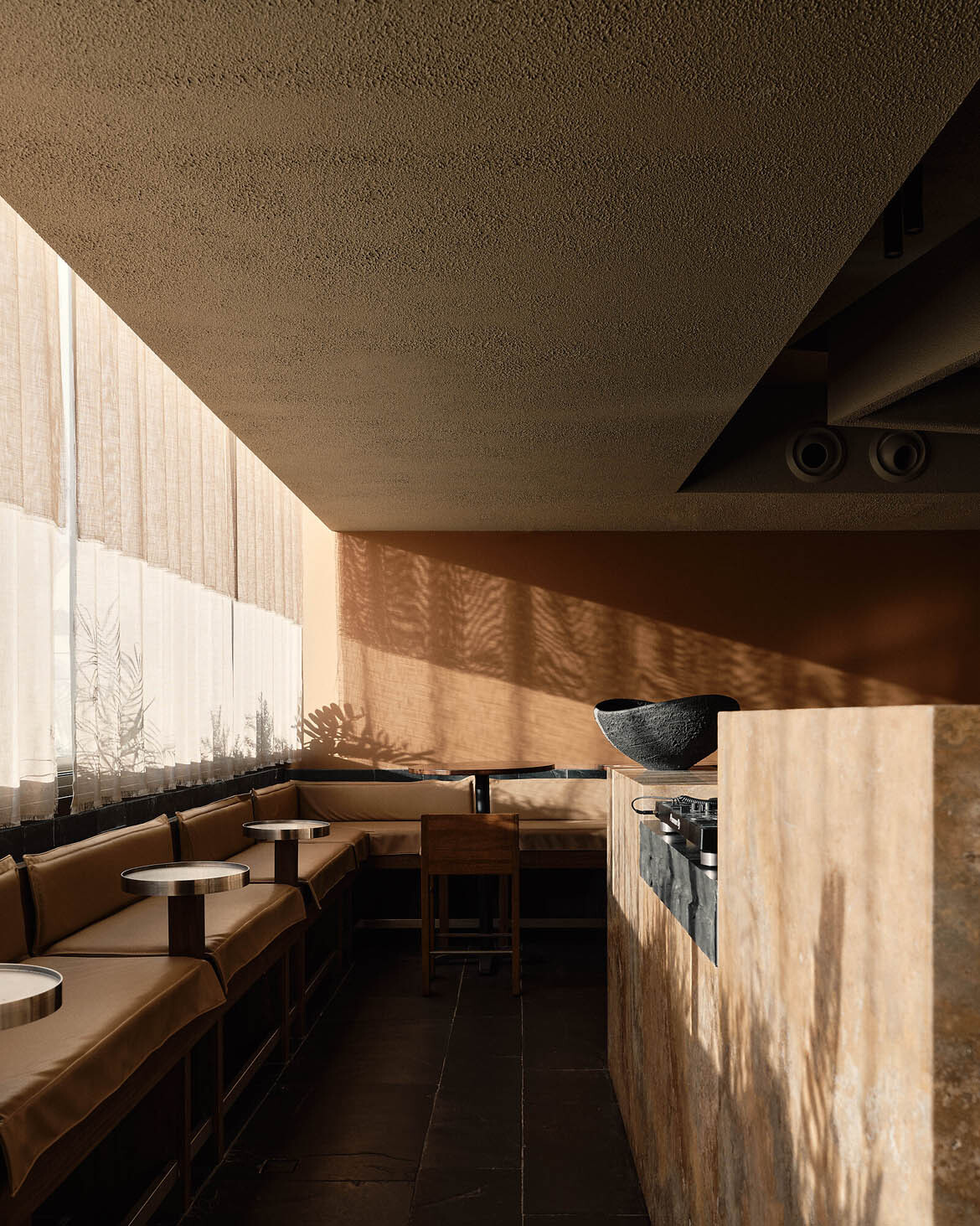
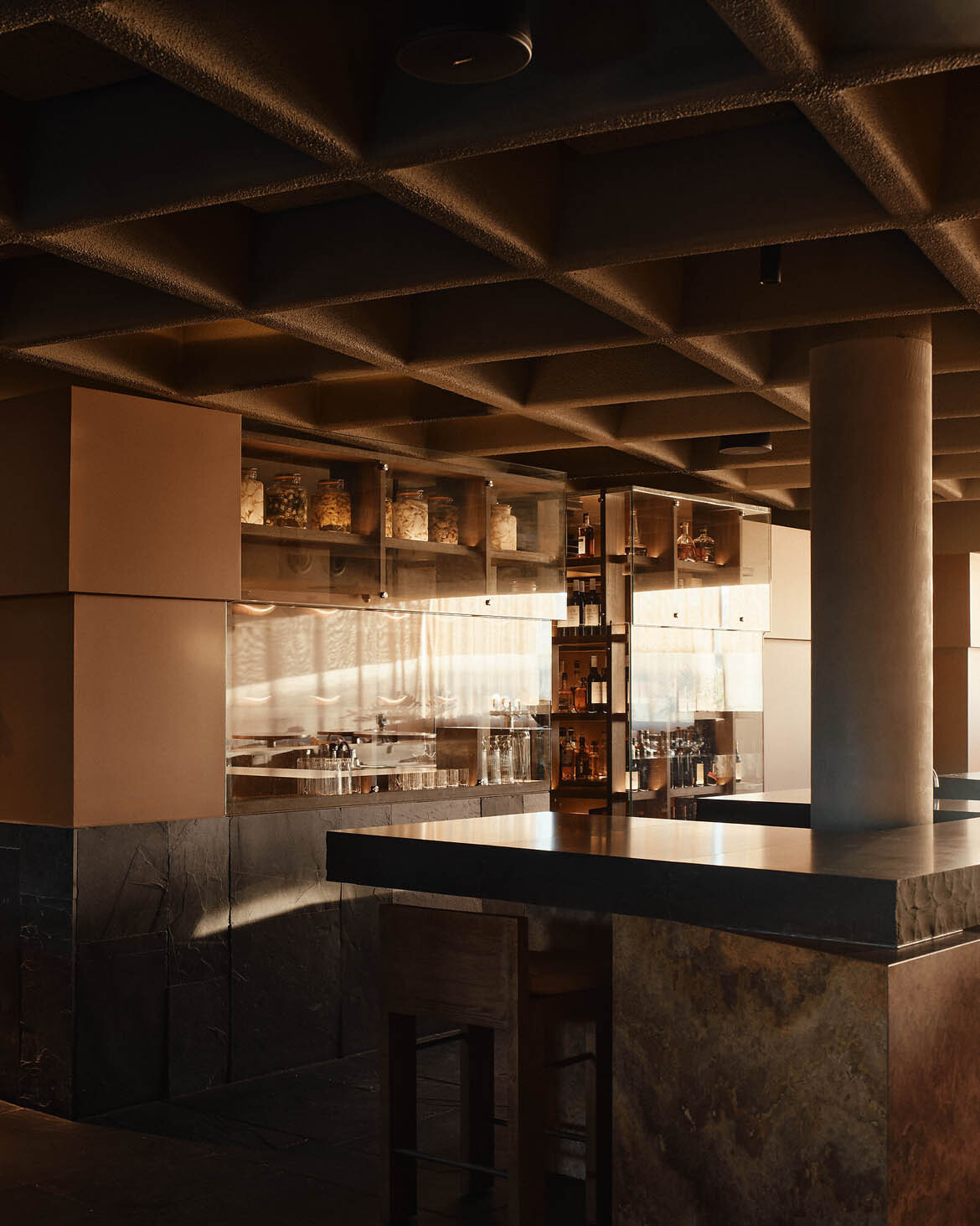
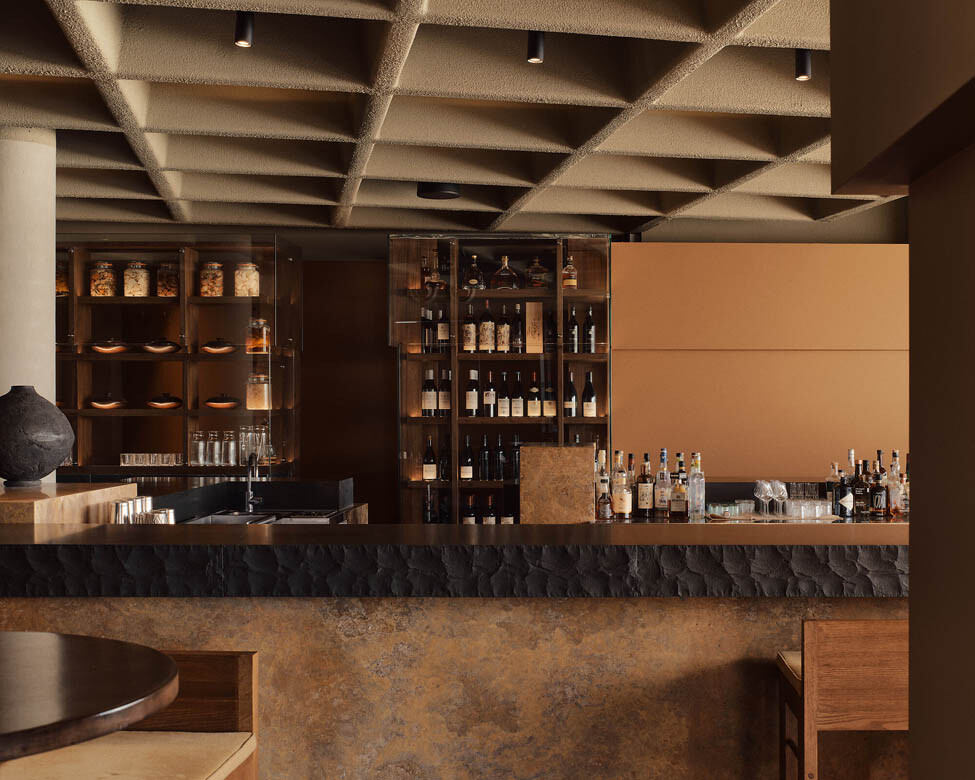
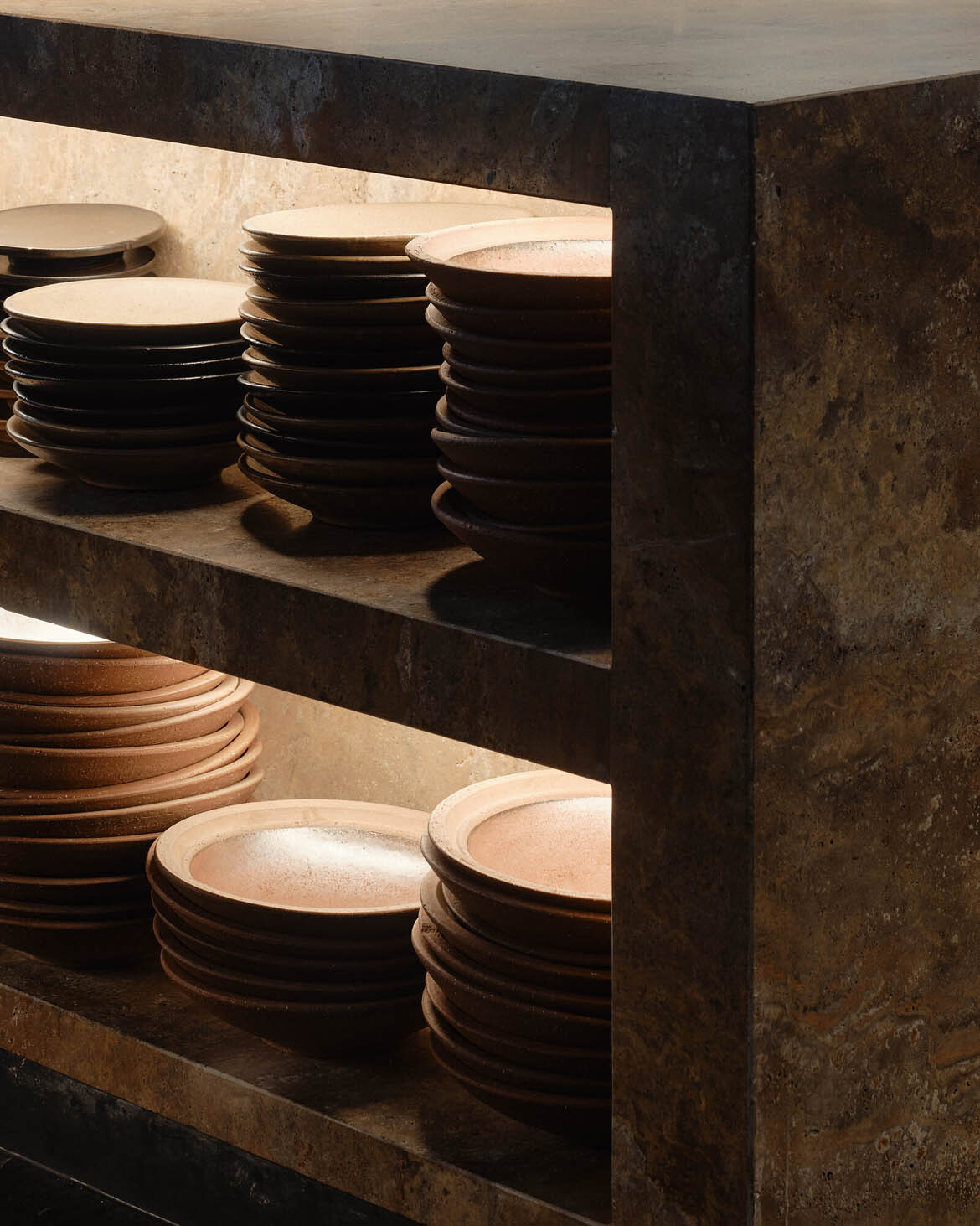
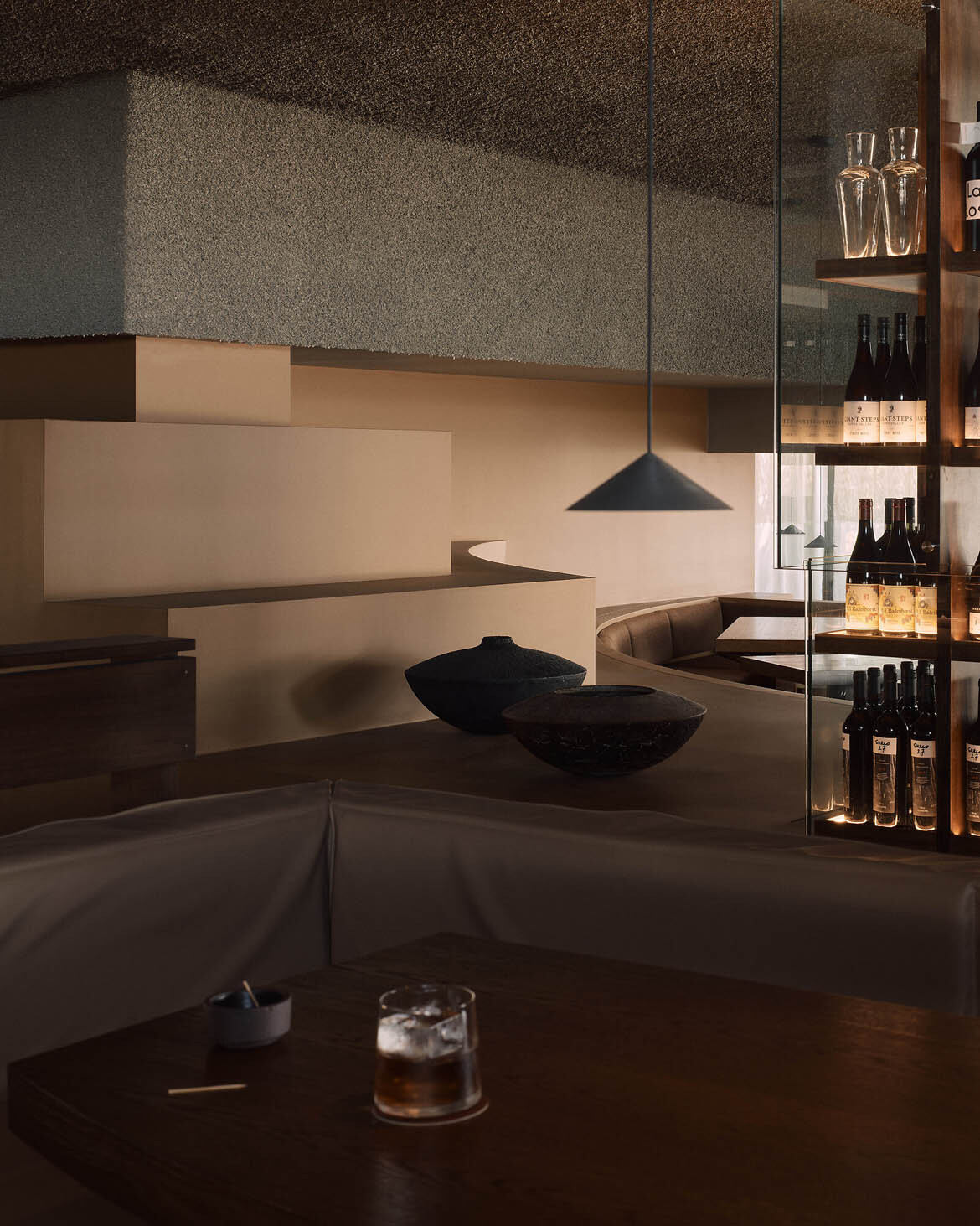
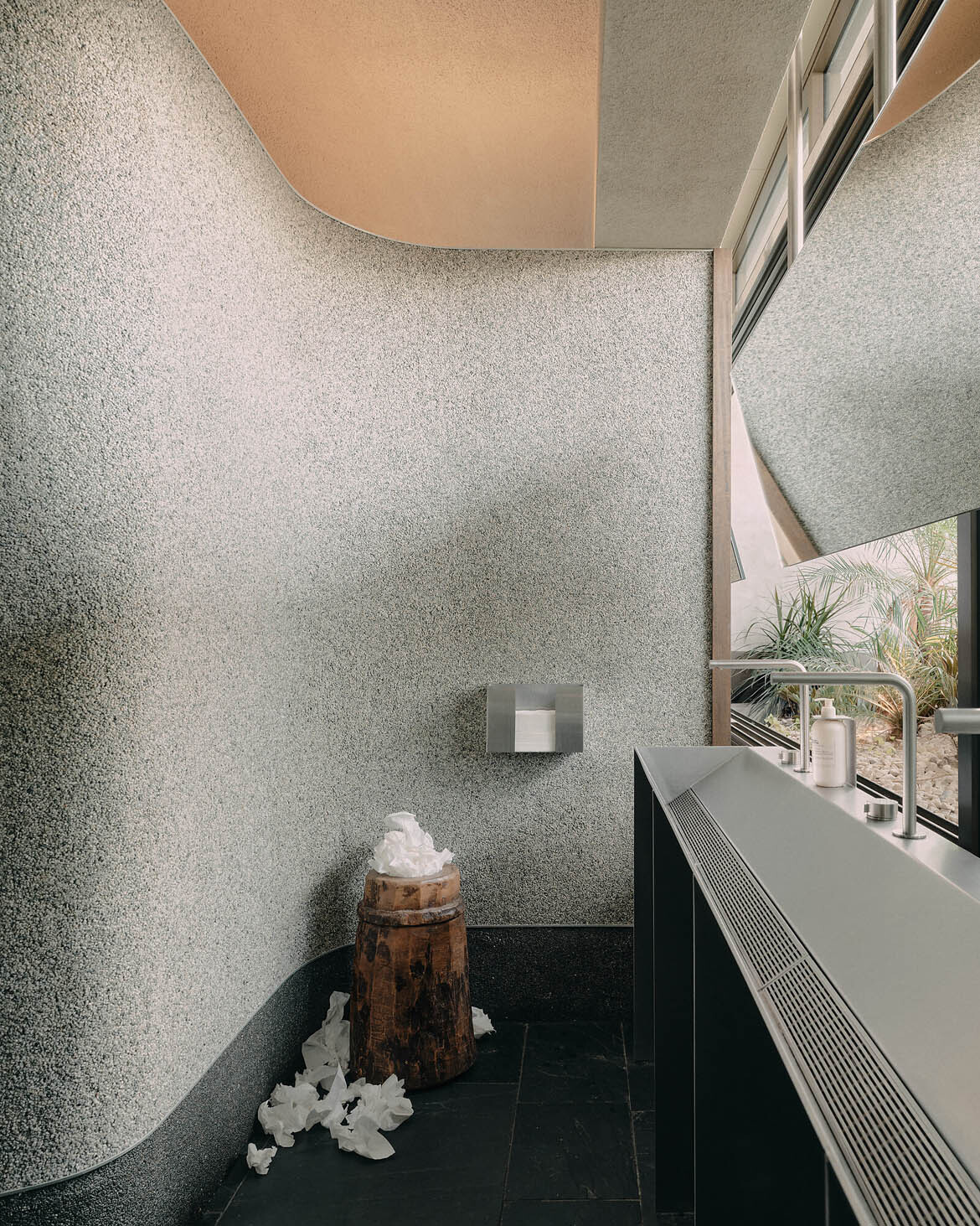
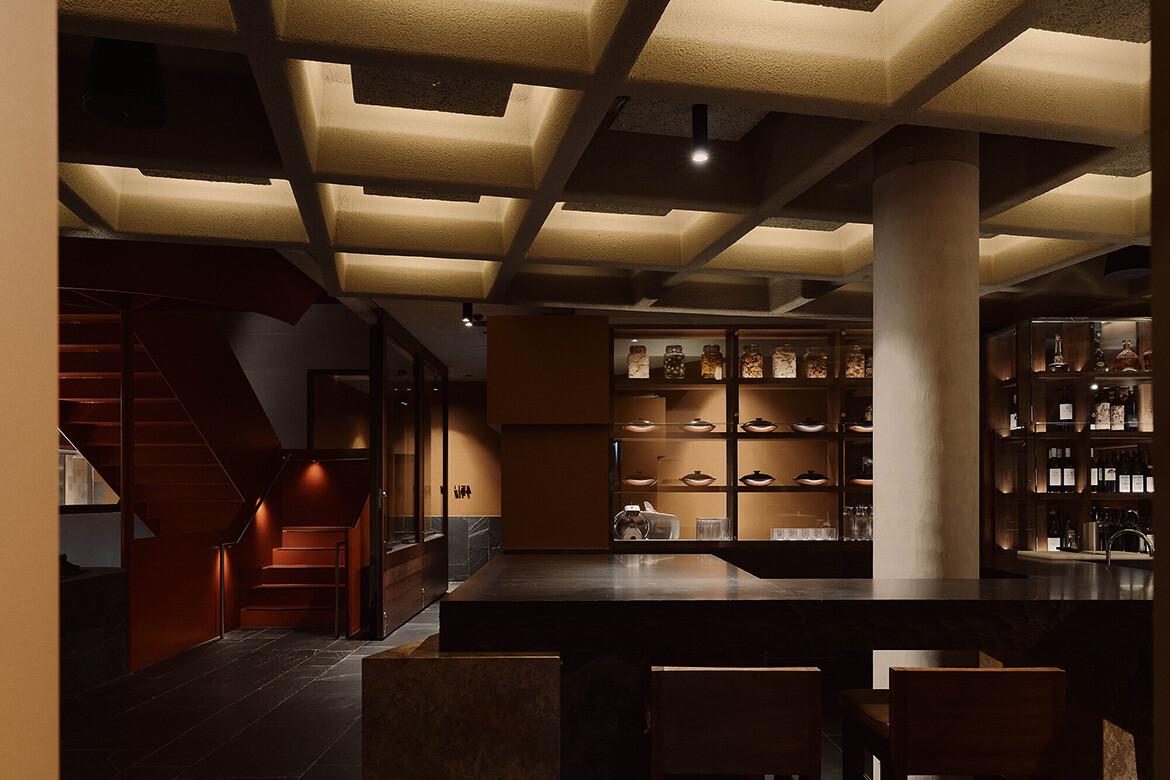
The design language is one of intentional contradiction. Black split-face slate—typically an external material—clads floors and walls throughout, bringing a robust, almost geological presence to the interior. This severity is softened by brushed walnut timber details, their grain expressed through matte wax finishes. High-gloss Mango Squash paint glows against the matte black surfaces. Sharp, clean wall datums meet cavernous, gently sloped vermiculate ceilings. Pebblecrete walls and red ceilings nod to the Gold Coast’s modernist resort heritage, a lineage often overlooked in favour of contemporary beach-house aesthetics.
Related: CBRE Sydney workplace by Bates Smart reimagines the office experience
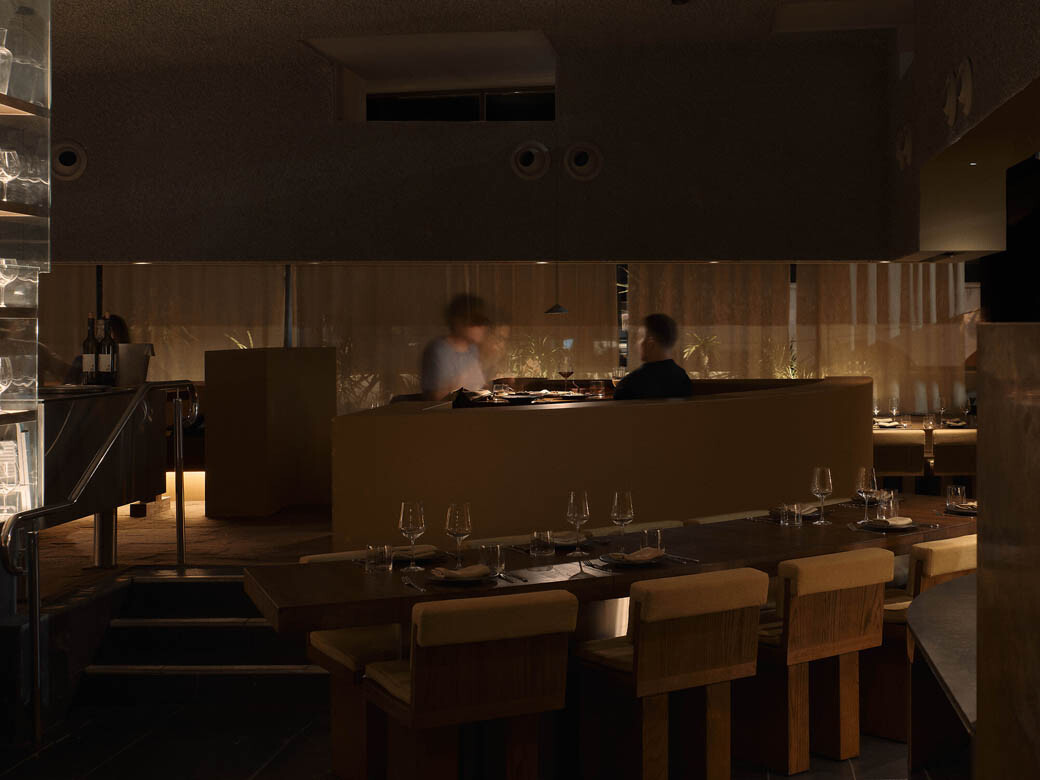
At the heart of the spatial strategy are two central glazed volumes: a glowing wine vault visible from the dining room, and a vertical lightwell housing a dramatic red staircase. These insertions solve a practical problem—bringing natural light into an otherwise internalised space—while establishing clear wayfinding through what could have been a disjointed floor plate. Instead, the constraint became an asset, with the layout realised as a sequence of rooms that unfold with cinematic pacing.
The dining room itself is formatted as a series of raised, carpeted pods that provide sightlines across the venue, to the kitchen and perimeter gardens. The chocolate-toned carpet, with its raised profile referencing hand-hooked textiles, adds tactile heft underfoot. Meanwhile, the bar operates as an in-the-round experience, arranged like a stone relic—monolithic and ancient, as if it had been present for centuries. Patrons occupy all edges and platforms, creating flexible seating for parties of all sizes.
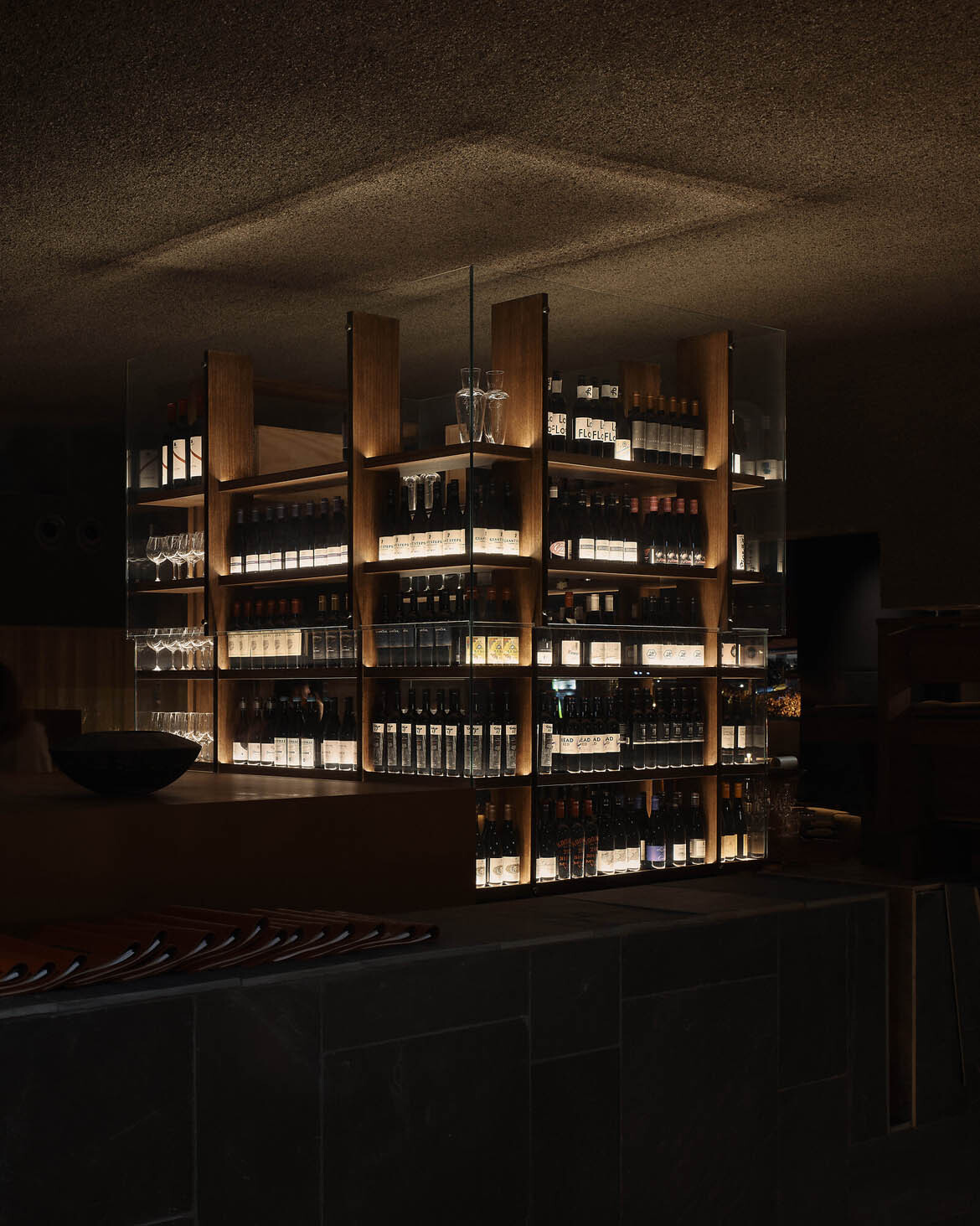
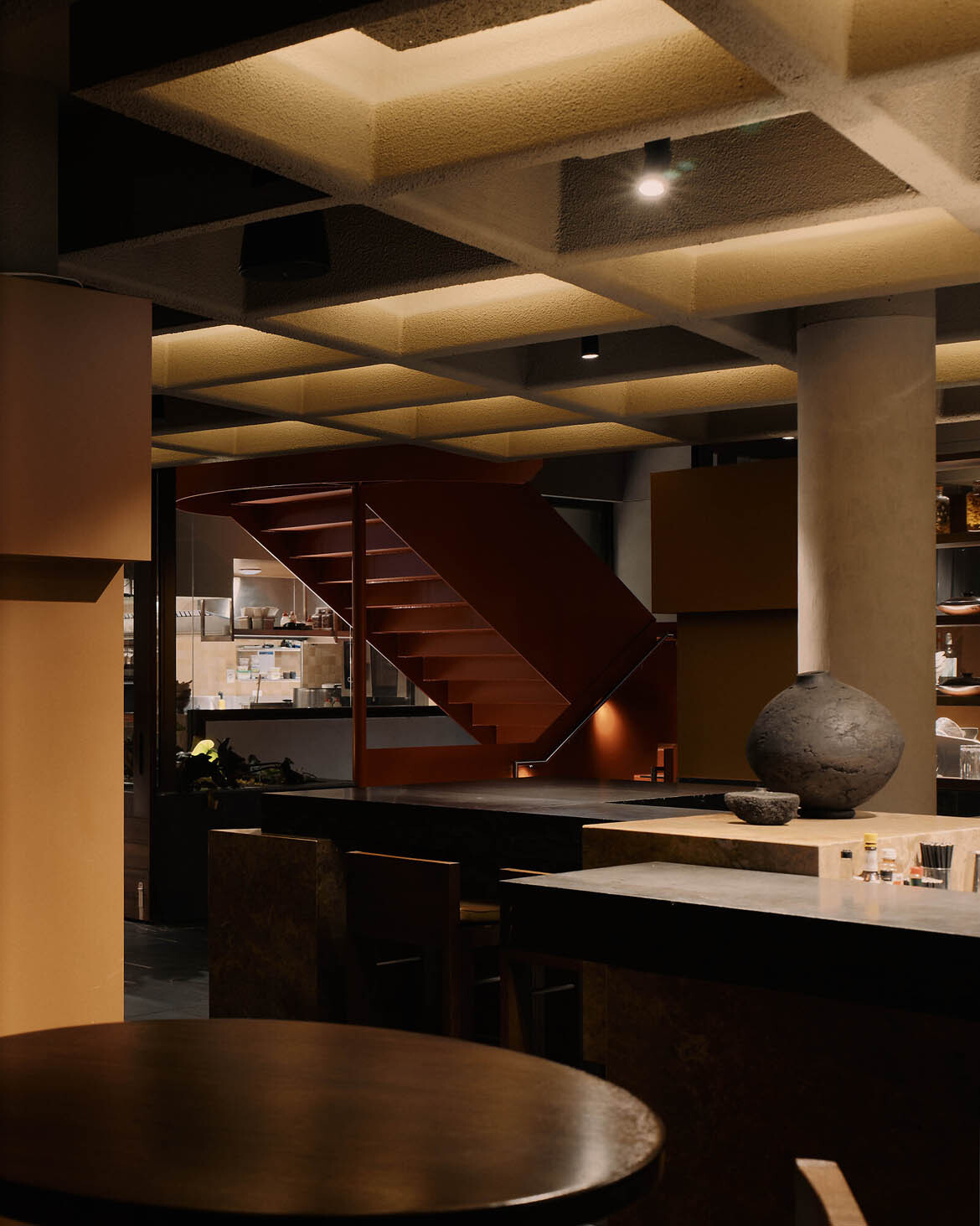
Every piece of furniture was designed in-house by J.AR OFFICE, rendered in generous proportions that evoke the unfussy geometry and material honesty of modernist design. The fabrics are deliberately chunky in their weave, expressing handmade character—local emerging textile designer George Park was enlisted to produce bespoke wall hangings. A waffle pod ceiling amalgamates the lobby, providing a hotel-like arrival sequence where guests are greeted and guided to their tables. Monolithic black granite benches and yellow travertine finished with stainless steel flourishes round out a material palette that is as considered as it is surprising.
The jury commended the project as “immersive and refined, with a mature, atmospheric presence that invites curiosity,” adding that “this is a restaurant that doesn’t just serve food—it sets a scene.” That scene-setting extends to the way the interior design mirrors the menu’s focus on citrus, savoury and open-flame flavours through colour and texture that both complement and contradict each other.
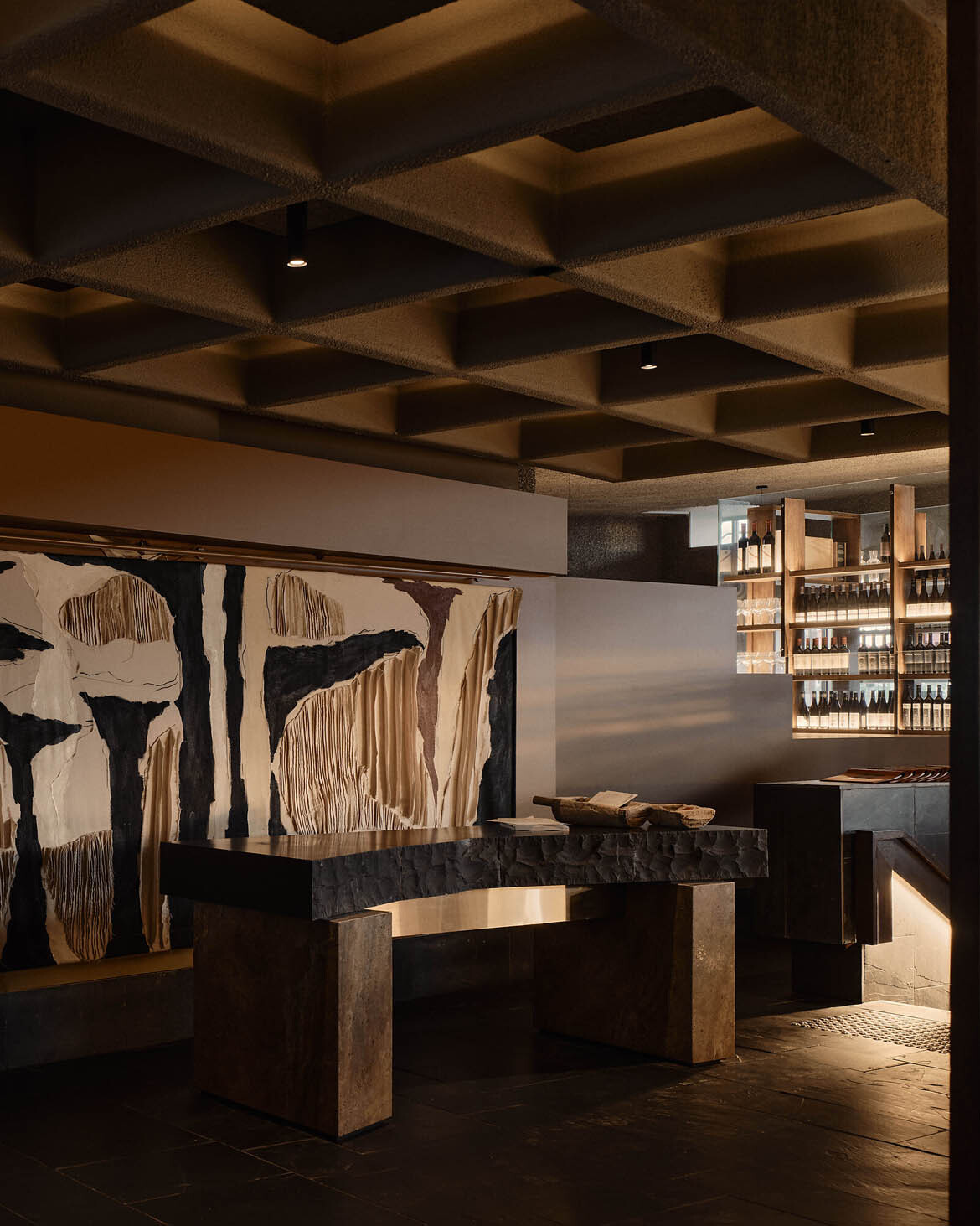
Webb frames the design within a specific cultural and temporal reference: the modernist, functionalist era of 1960s Mexico City, when rapid urban growth prompted architectural responses emphasising efficiency and functionality. It’s a parallel that resonates with the Gold Coast’s current exponential growth, and Norte’s design acknowledges this context while refusing to replicate it literally. “The design is influenced by the modernist, functionalist era of Mexico City, both materially and operationally, while avoiding interiors that feel themed,” Webb explains.
What emerges is a venue that champions authenticity—both in its menu and its spatial experience—for those who can handle the heat. Norte proves that thoughtful design doesn’t require expansive timelines or conventional coastal narratives. It demonstrates that sophistication can be found in turning inward, in embracing darkness over light, in choosing texture over transparency. In a region defined by its relationship to the beach, Norte’s greatest achievement may be showing that the most compelling experiences often come from looking elsewhere.
J.AR OFFICE
jaroffice.com
Photography
David Chatfield