The view out of the windows at Loca Nicu is spectacular – and it is not because of any kind of panoramic scenery. Rather, the openings – accompanied by timber shutters painted a blood-red colour – frame the chromatic roofscapes of the House of Tan Yeok Nee within which the restaurant is located.
One of these details is a band of ceramic horses galloping in frozen motion across the roof’s da ji (or main ridge), among other imagery. It is a fitting representation of the Japanese-French dining restaurant, whose name is derived from Zen idioms like Hakuba Roka Ni Iru (white horse entering white reeds) and Hakucho Roka Ni Iru (white sawn entering white reed) – imagery suggesting “gentleness, quiet movement and restraint,” according to Keiji Ashizawa, the founder of Keiji Ashizawa Design (KAD).
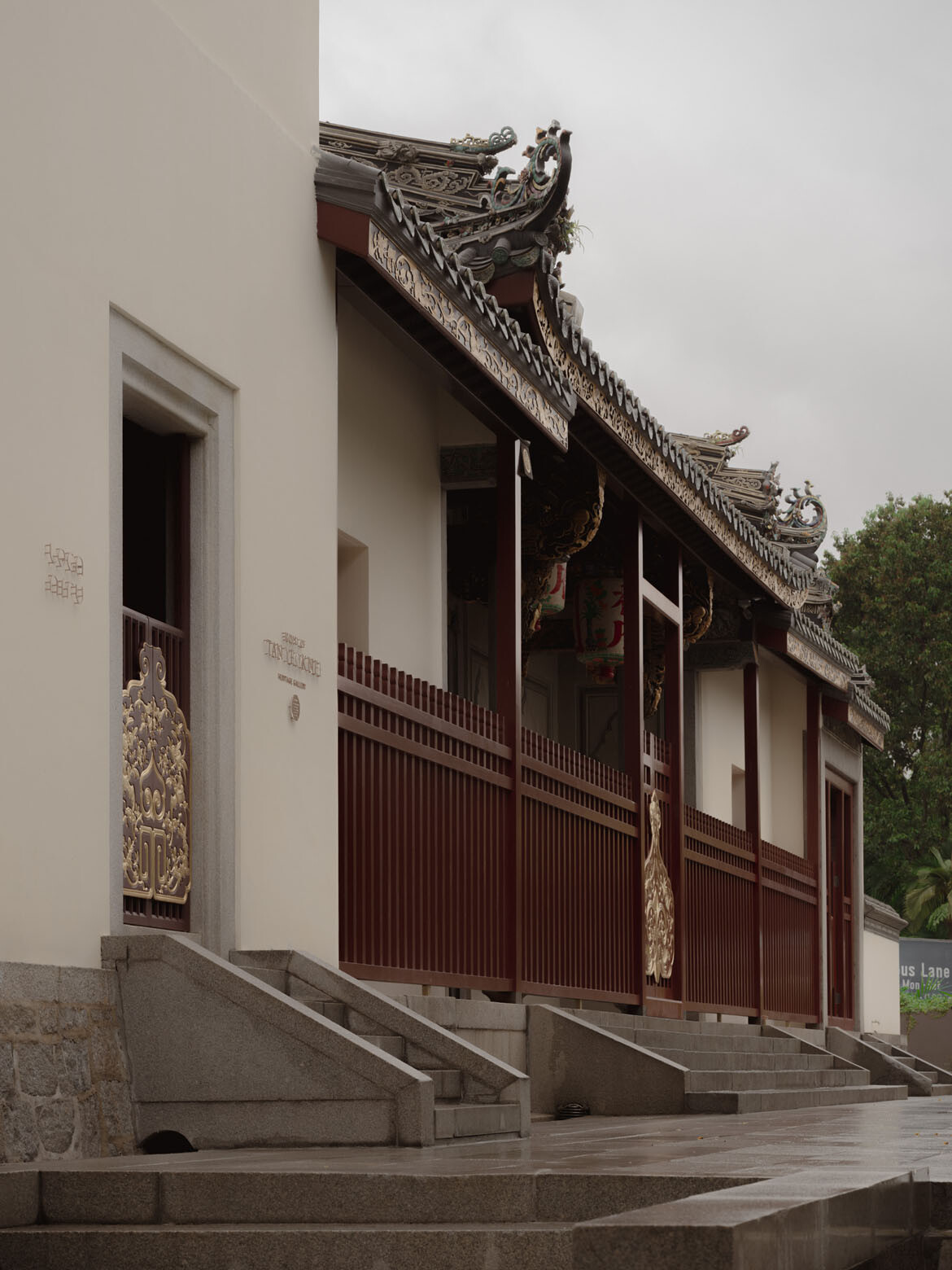
The interior’s gentle colours and forms create a world away from the vividly coloured and decorated building Loca Niru is located within, which is a mansion constructed in 1880 belonging to Teochew businessman, Tan Yeok Nee. The Teochews are a dialect group from Guangdong in China; among four magnates who had built such elaborate Chinese-style mansions during that era, only this remains.
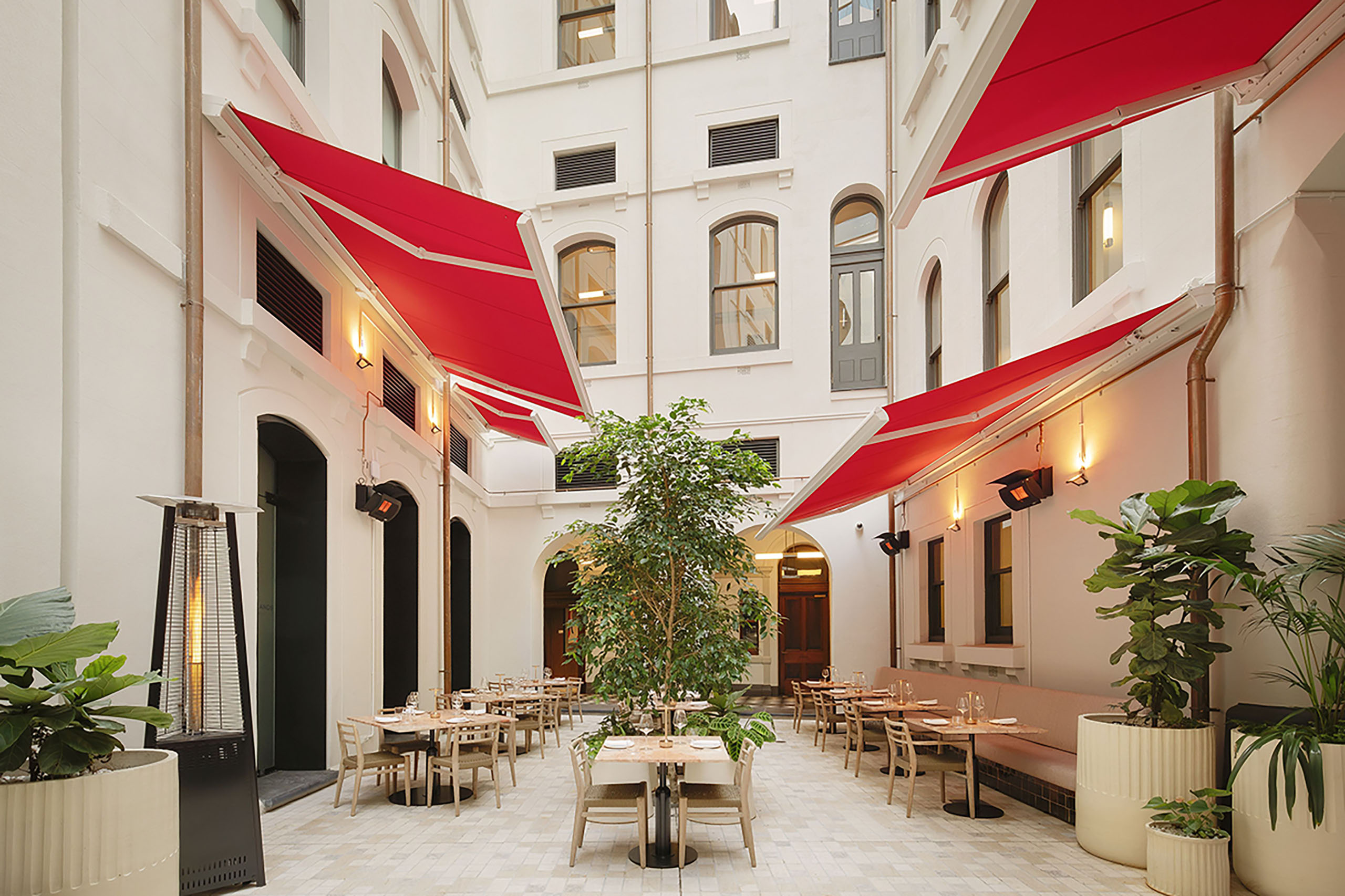
Recognised as a National Monument, the building near the Orchard Road shopping district was purchased and restored by the Karim Family Foundation. It now houses a gallery and event spaces, as well as Loca Nicu which is accessed via a discreet door beyond a courtyard. Original timber staircases lead to the second storey, housing the 36-seat restaurant led by Chef Shusuke Kubota.
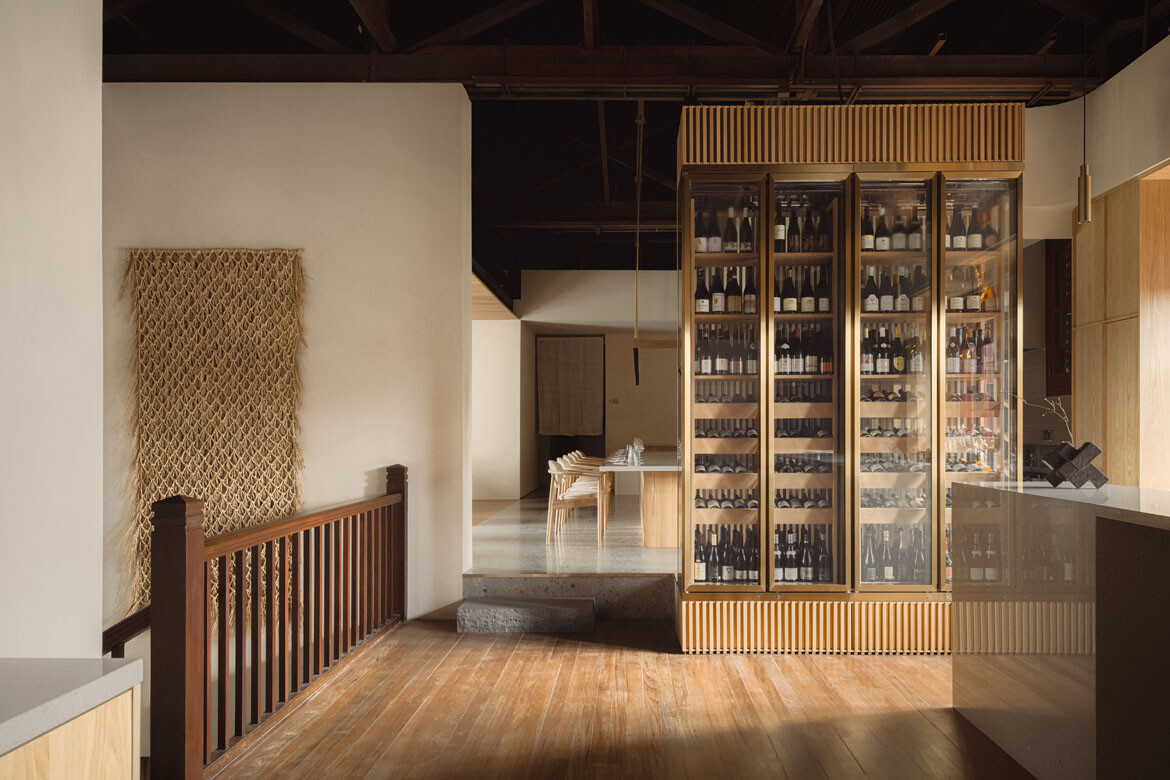
Translating the Loca Niru concept in spatial terms, for Ashizawa, meant “softening light, reducing visual and acoustic noise and allowing the atmosphere to feel composed.” At the same time, the team was attuned to the sensitivity needed for working on a historic building.
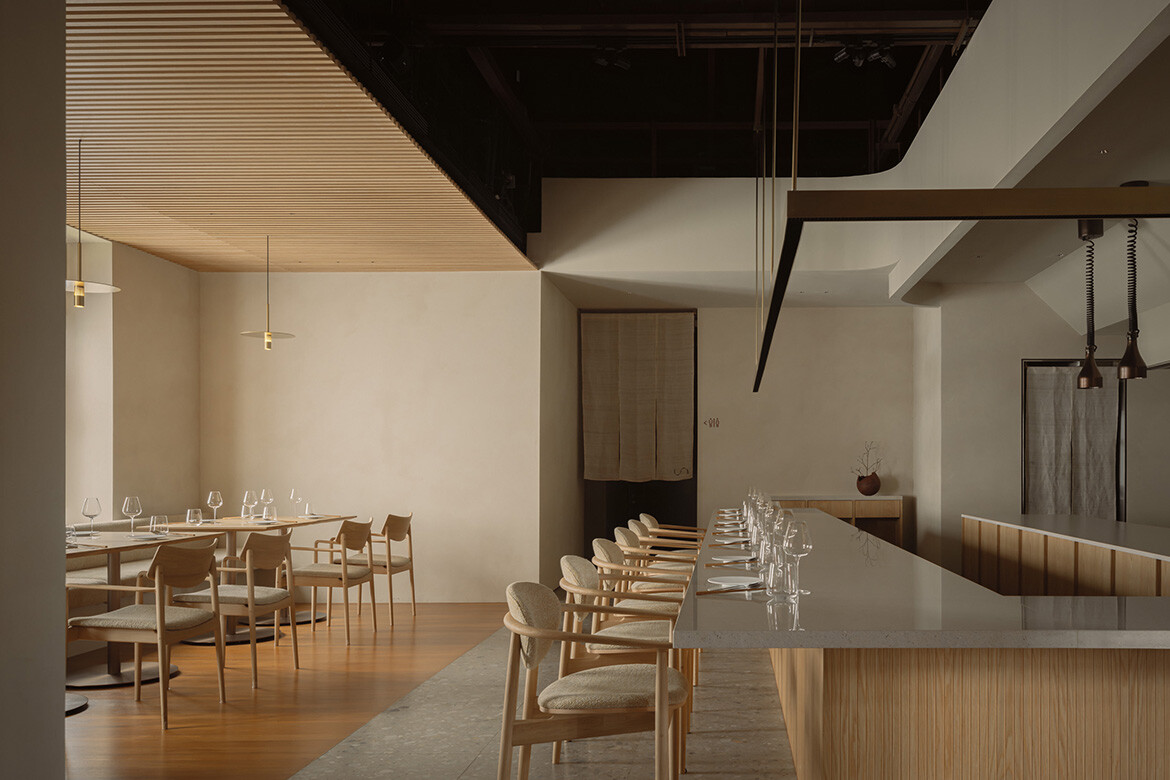
For instance, acoustic louvre panels finished in a similar tone to the original timber structure now conceal the interior exposed metal sheet roof after the team realised it “disrupted the acoustic quality and emotional tone of the dining space.”
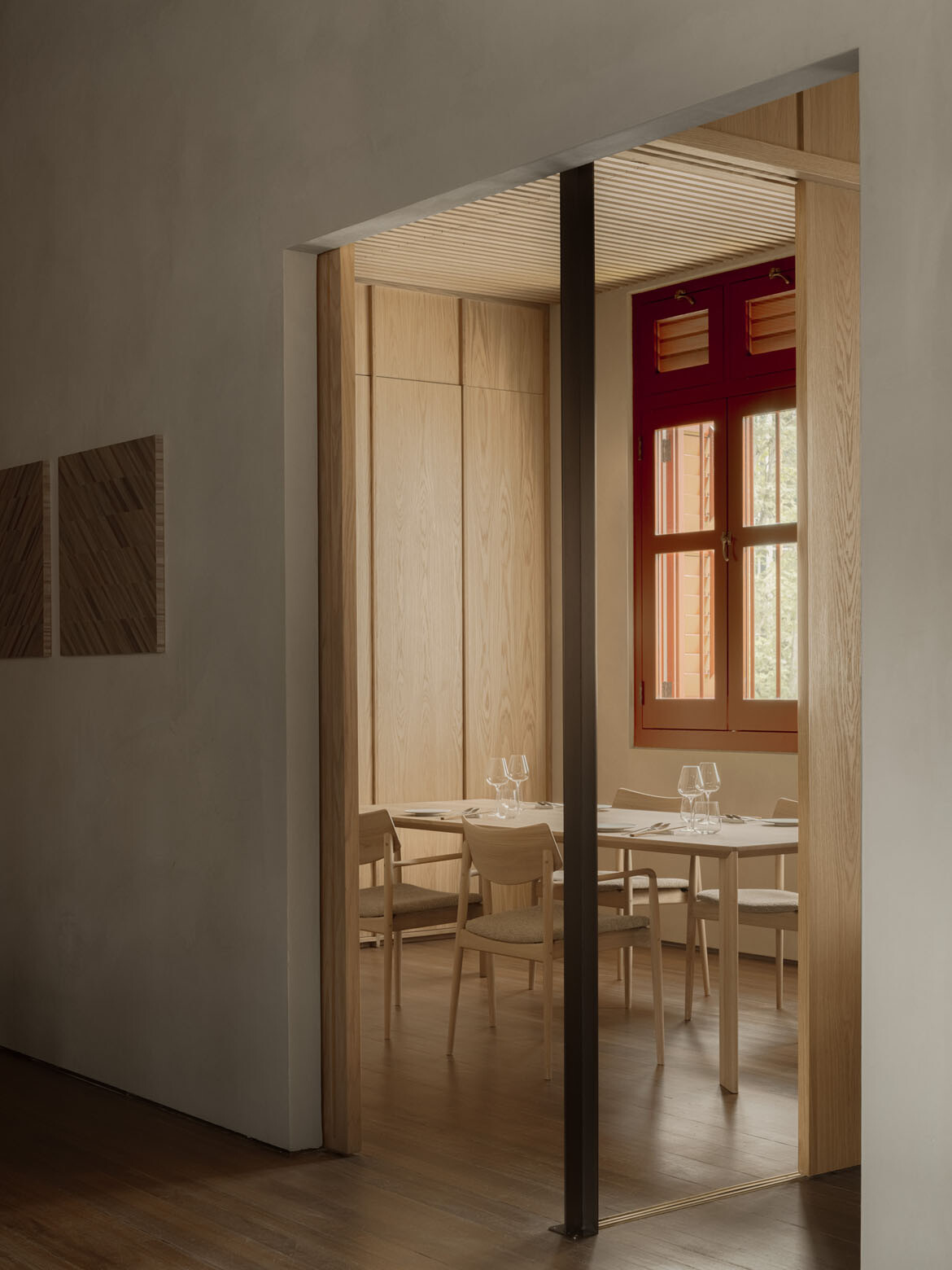
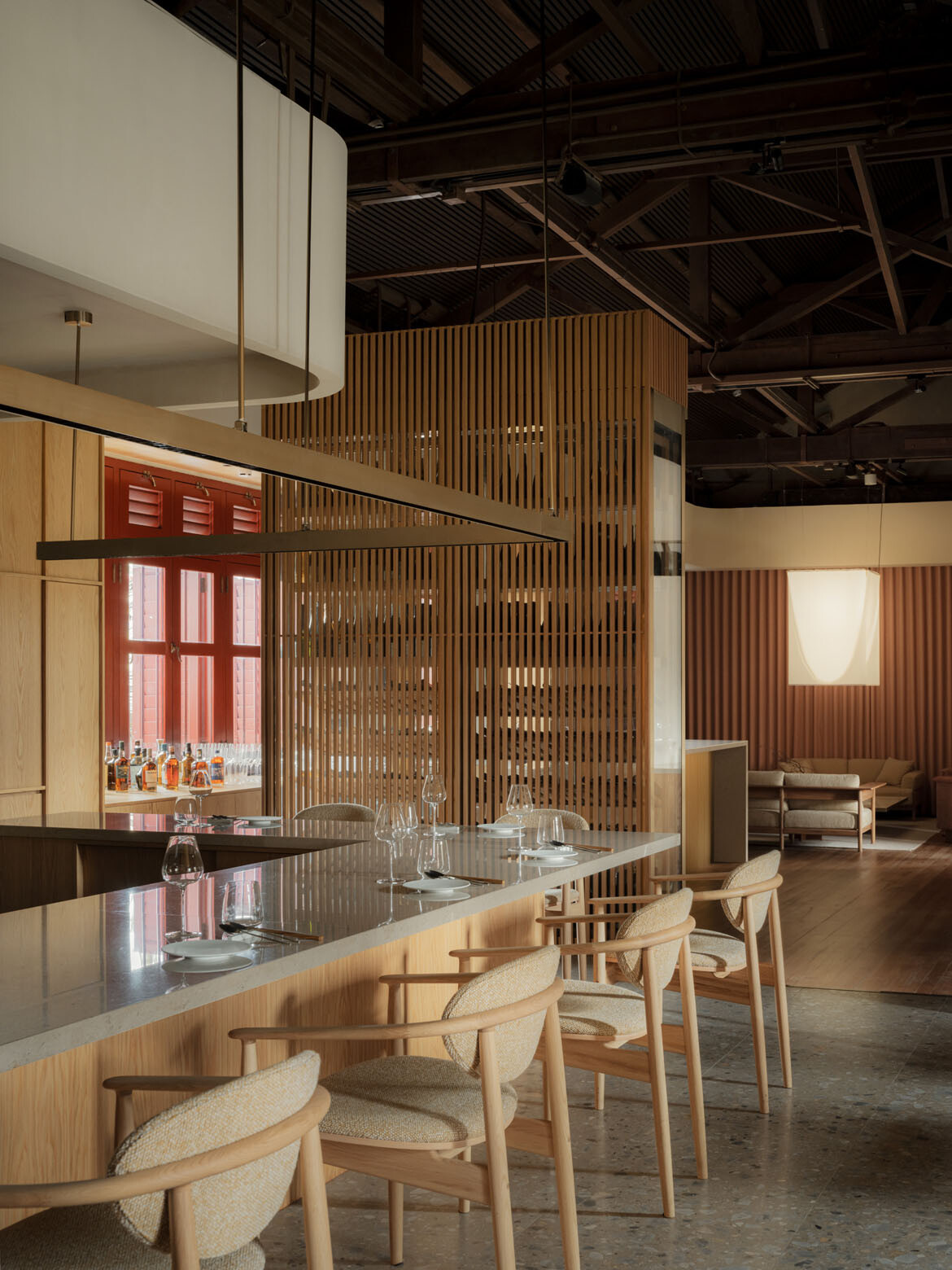
“This decision served both aesthetic and functional purposes. Visually, it reconnected the ceiling with the existing wooden elements; acoustically, it reduced echo within the space and minimised noise intrusion from outside. Once the metal roof was concealed, the space felt noticeably calmer and more resolved as if it had been returned to a more appropriate state.”
Related: 1980s nostalgia in this Melbourne restaurant
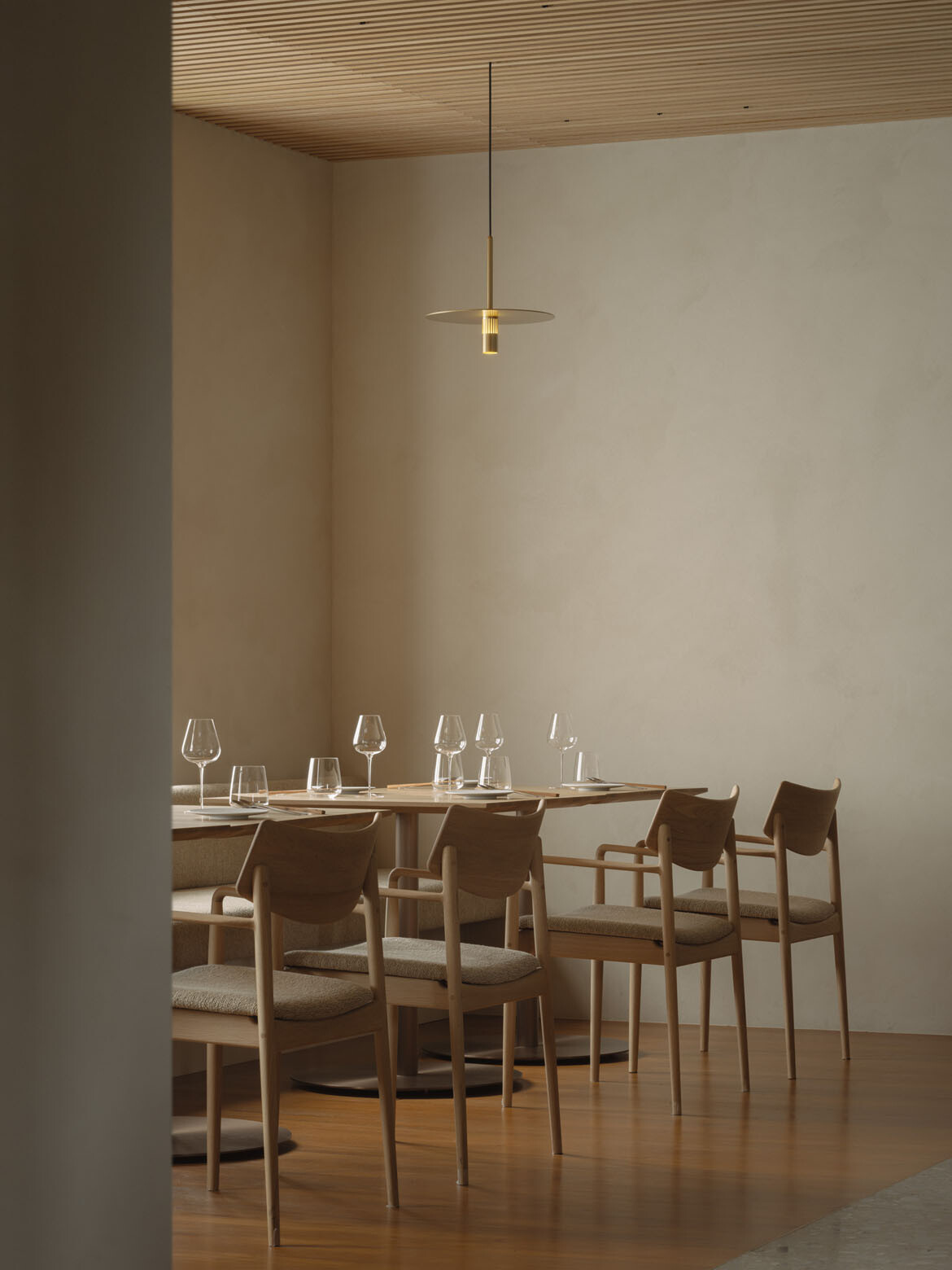
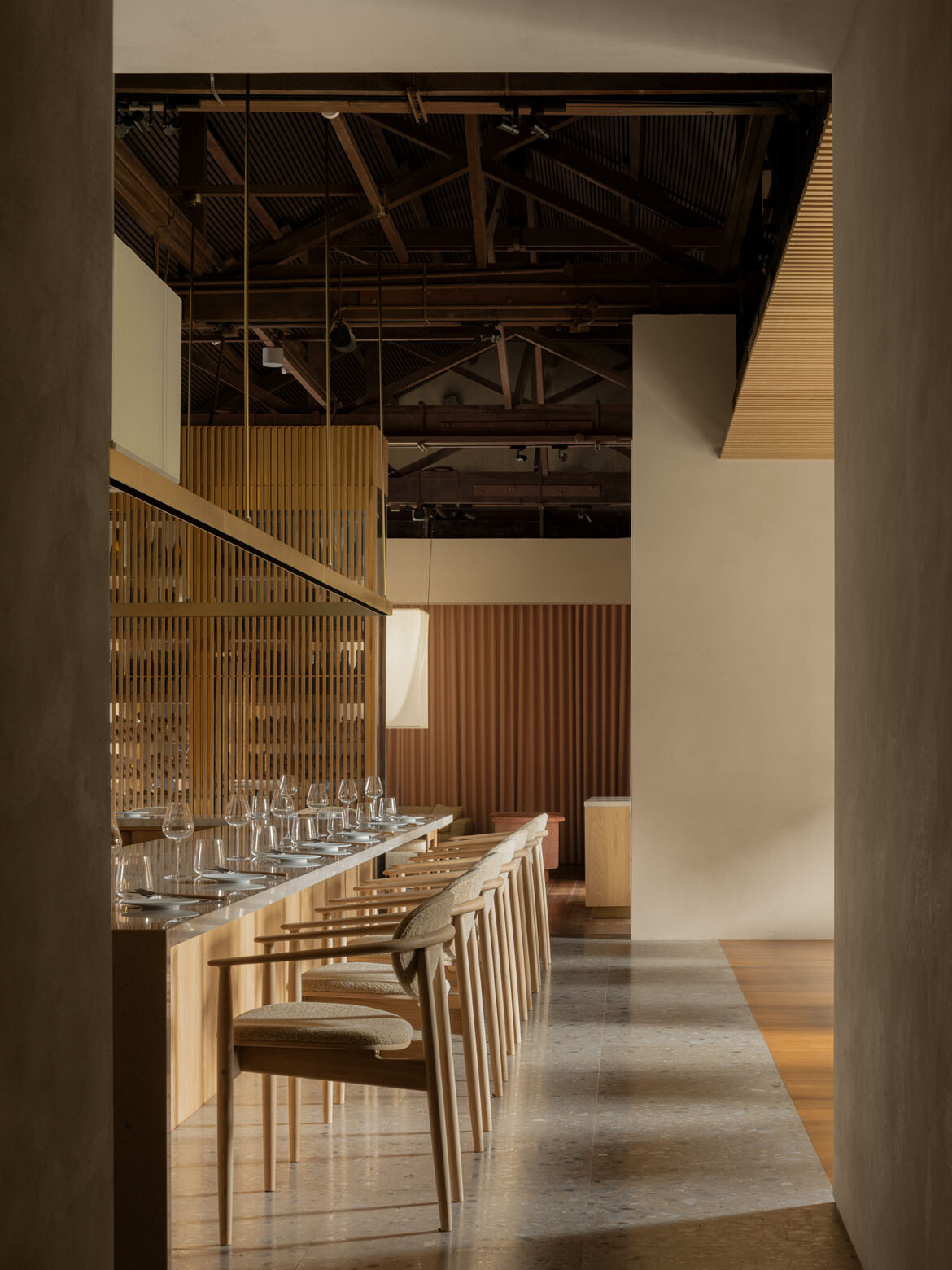
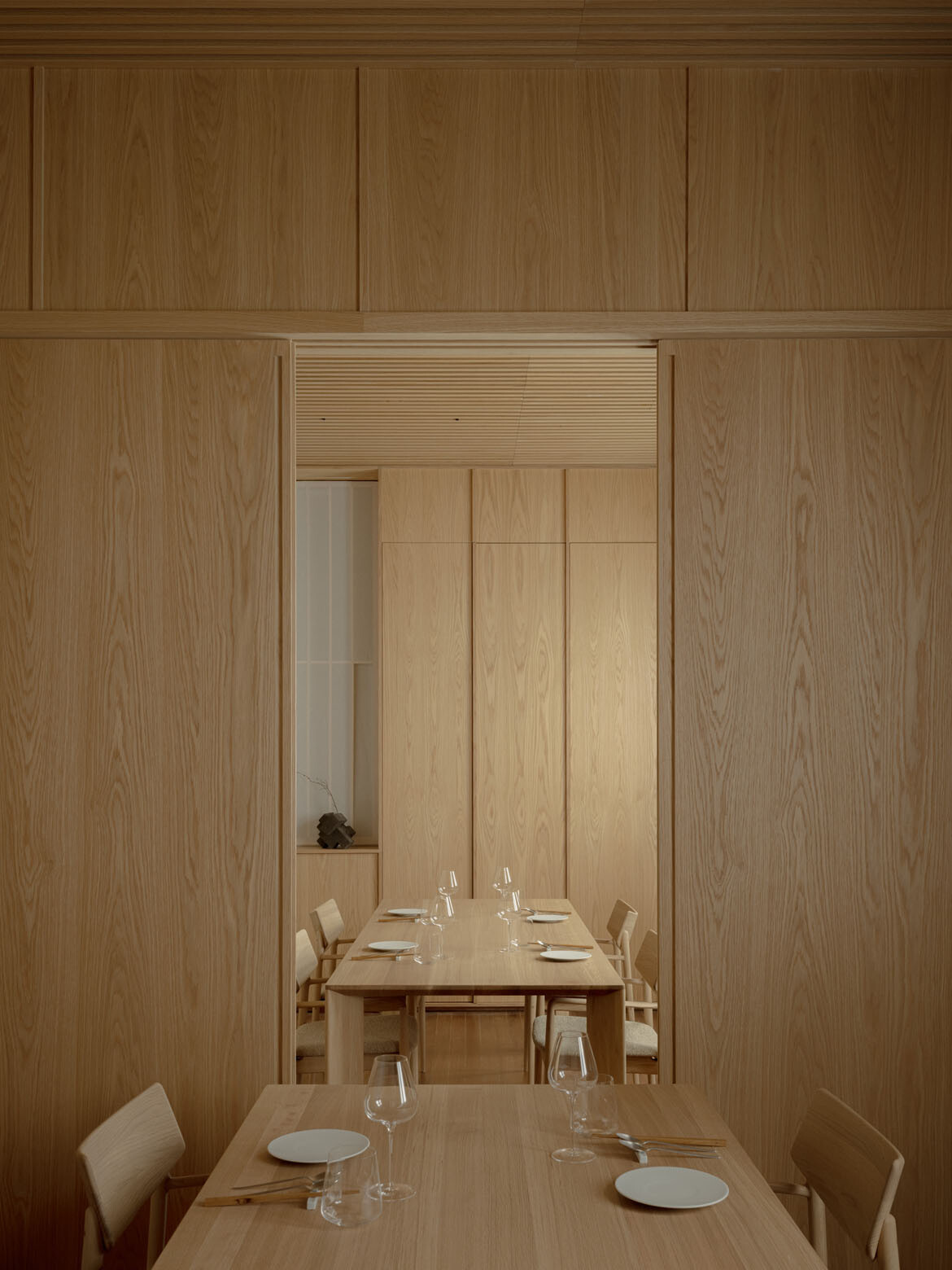
Ashizawa shares that natural and tactual materials such as oak, terrazzo, plaster finishes, metal, fabric and Japanese washi paper were chosen for their ability to age gracefully – and “for the way they respond softly to light, sound and touch.”
Aside from filtering the harsh tropical daylight, Japanese washi shoji screens layer many of the windows. They are made using the taiko-bari technique that allows the frames to be faintly visible behind the paper as Ashizawa felt their strong red tone would be too visually dominant in the evening.
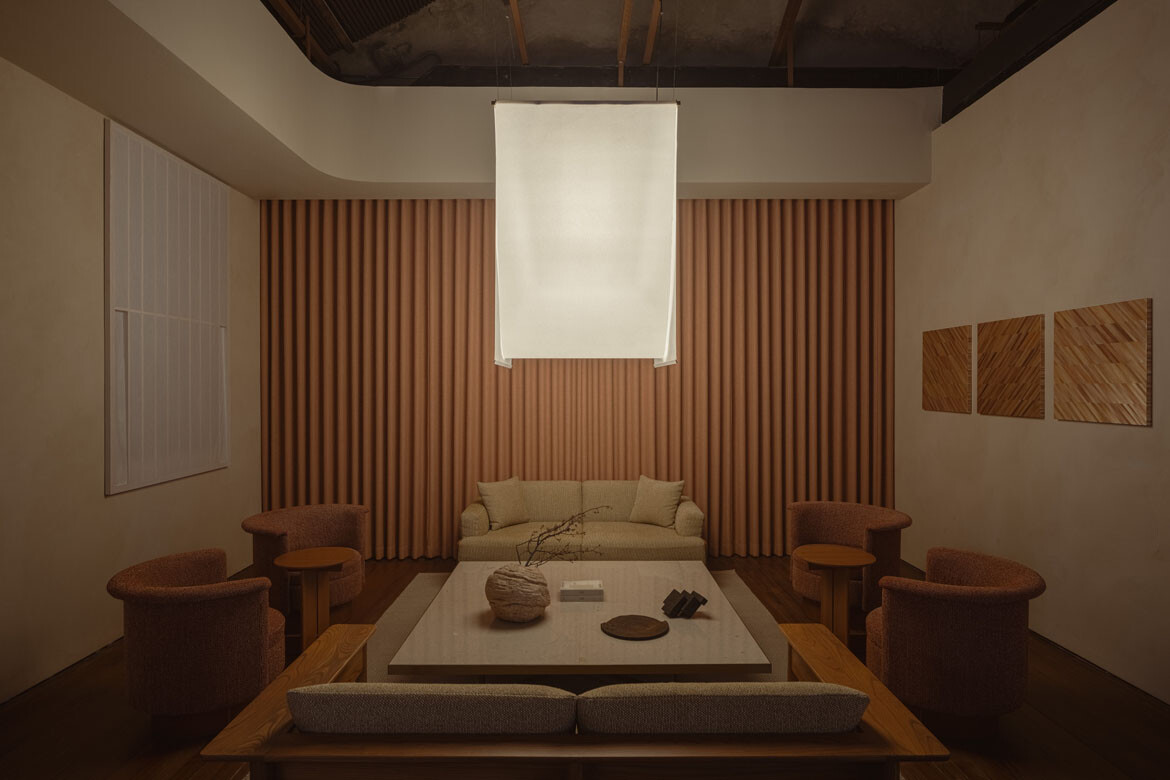
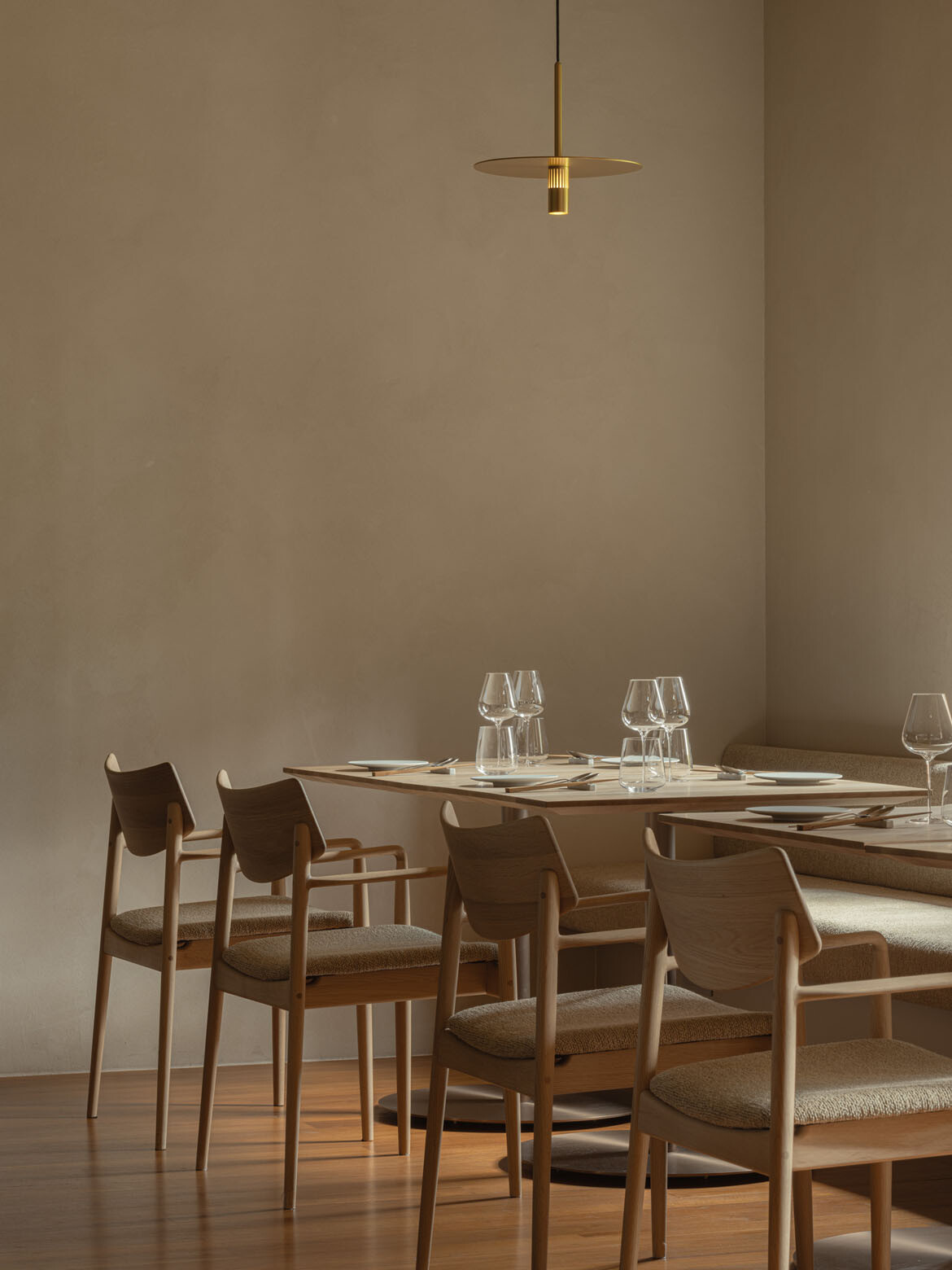
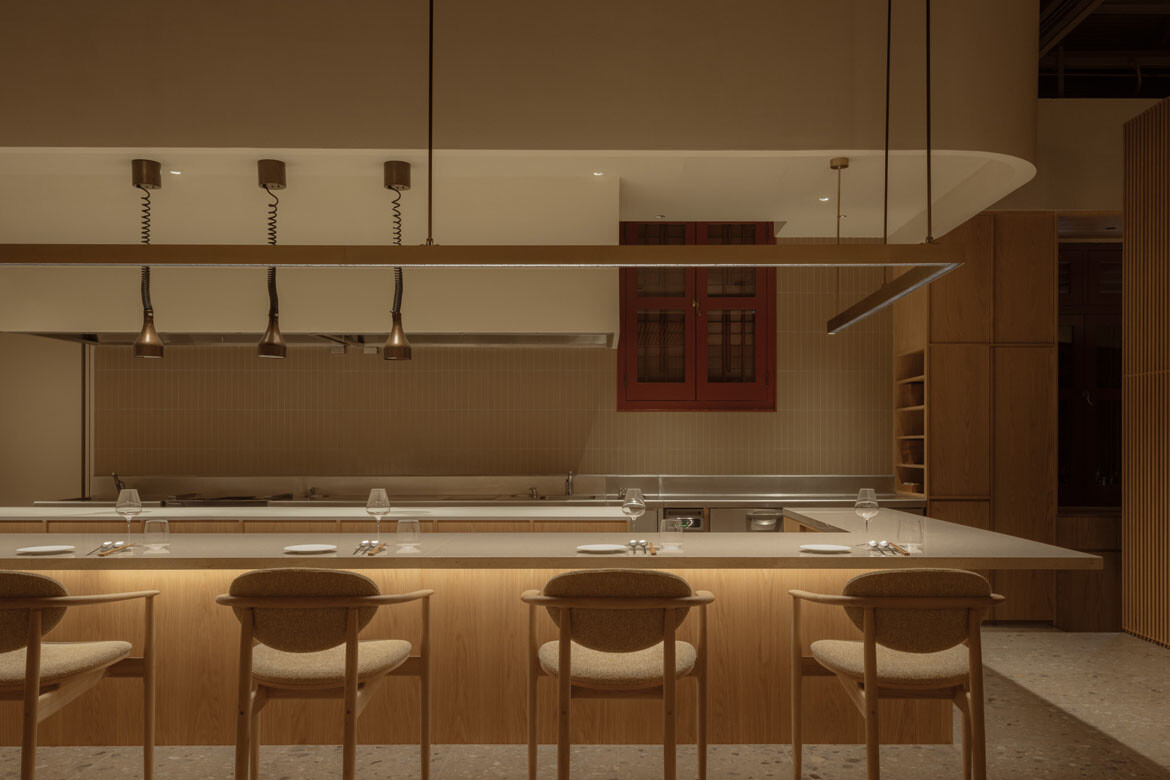
The bar counter is the central feature that distributes into two zones – the dining area on the left, and the lounge and two private dining rooms on the right. The latter, elevated a step up, is floored with terrazzo, while a brighter lighting scheme with brass-finished disc pendant lamps and elongated pendant lights above the counter seats “draw attention to the activity of the show kitchen and establish a lively focal point upon arrival,” adds Ashizawa.
The latter, as well as the bar, features original timber flooring that is pale and scratched with the marks of time. Darker furniture and softer lighting defines a more “intimate and inward-looking” atmosphere. At the lounge, an oversized pendant lamp made of Echizen washi in Japan emits a soft and warm glow.
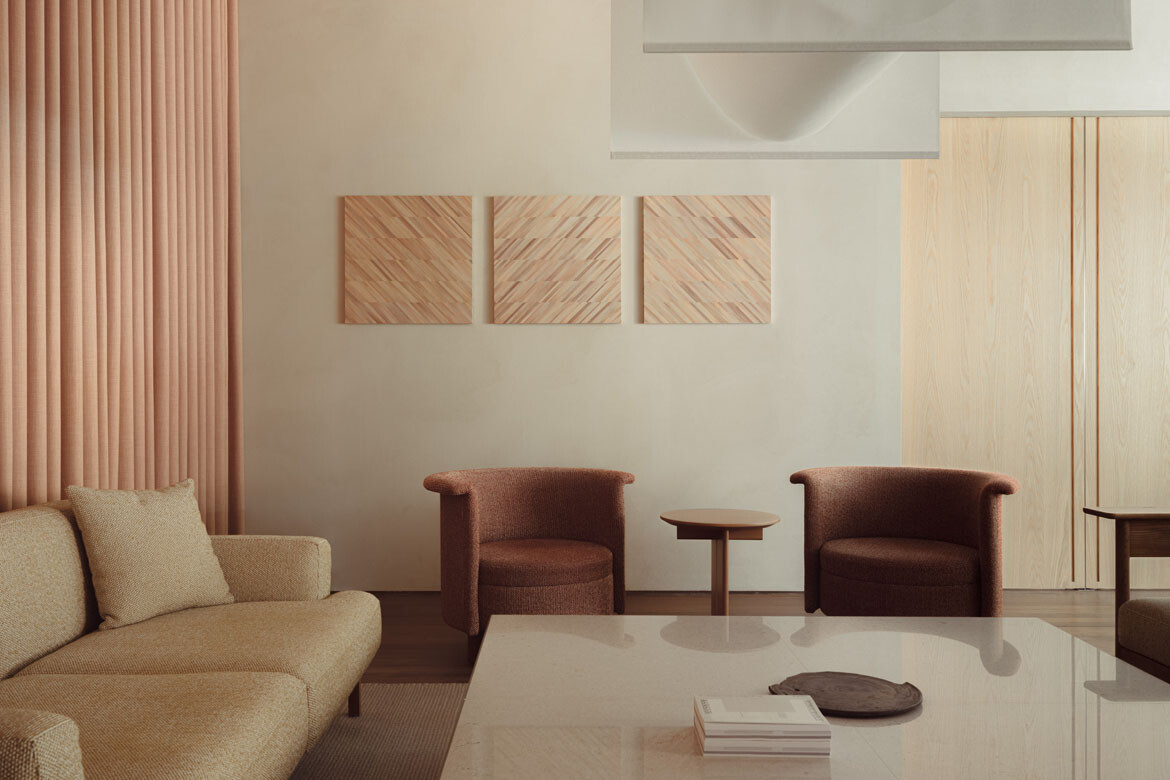
The furniture pieces, many designed by KAD for Karimoku Case, were selected for their “calm presence, precise proportions and material honesty that supports the dining experience rather then draw attention to itself,” says Ashizawa. In the lounge, furniture made from keyaki (Japanese Zelkova) have a deeper, slightly red tone to respond to the red-tinged timber flooring and window frames. In contrast, the dining area’s oak timber and beige-khaki tones closely reflect the Loca Niru concept’s “gentle, natural imagery.”
Perhaps one of the most poignant embodiments of the restaurant’s narrative of craft, tradition, and adaptive reuse is a tapestry at the staircase. It is designed by Japanese design group Straft, who creates modern pieces from rice straw – a material originally used to create agricultural by-products.
“Straw naturally resonates with the Loca Niru concept – of the image of a white horse entering a field of reeds – while emphasising craftsmanship and material honesty,” explains Ashizawa. The straw comes from Nagano, where Chef Kubota hails from.
The restaurant’s story is expressed at the start and end of each restaurant visit, with custom handles on the solid wood entrance door designed to mimic reed stalks. Ashizawa concludes: “Together with the projection of reeds on the ground floor wall, these details extend the concept from arrival through to the dining space above.”
Keiji Ashizawa Design
keijidesign.com
Photography
Tomooki Kengaku