Melbourne’s bar and dining scene continues to evolve, with Disuko the latest hospitality offering from MAMAS Dining Group. Designed as a day-to-night Japanese rooftop restaurant and cocktail bar, the venue occupies the former site of long-standing Melbourne institution Madam Brussels, now reimagined with a distinctly different atmosphere.
Derived from the Japanese word for ‘disco’, Disuko draws on references from 1980s Tokyo, when eclectic interiors, jazz and pop soundtracks and late-night socialising defined the city’s nightlife. These influences are translated into a layered interior that balances nostalgia with contemporary hospitality design.
The venue was designed by Thai Ho in collaboration with MAMAS’ in-house interior designer Joan Budiono, and constructed by Directitude. The layout offers a variety of dining and social settings, including table seating, alcoves, a central bar, an Omakase bar and an outdoor terrace overlooking the city.
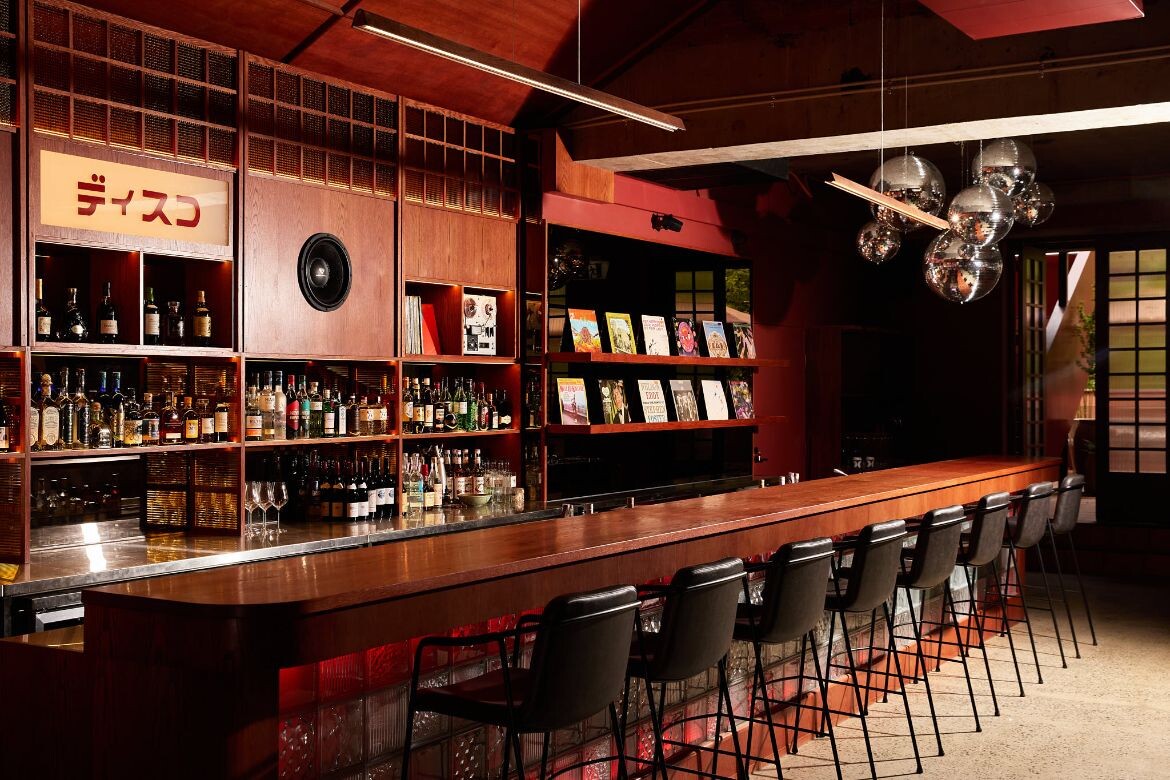
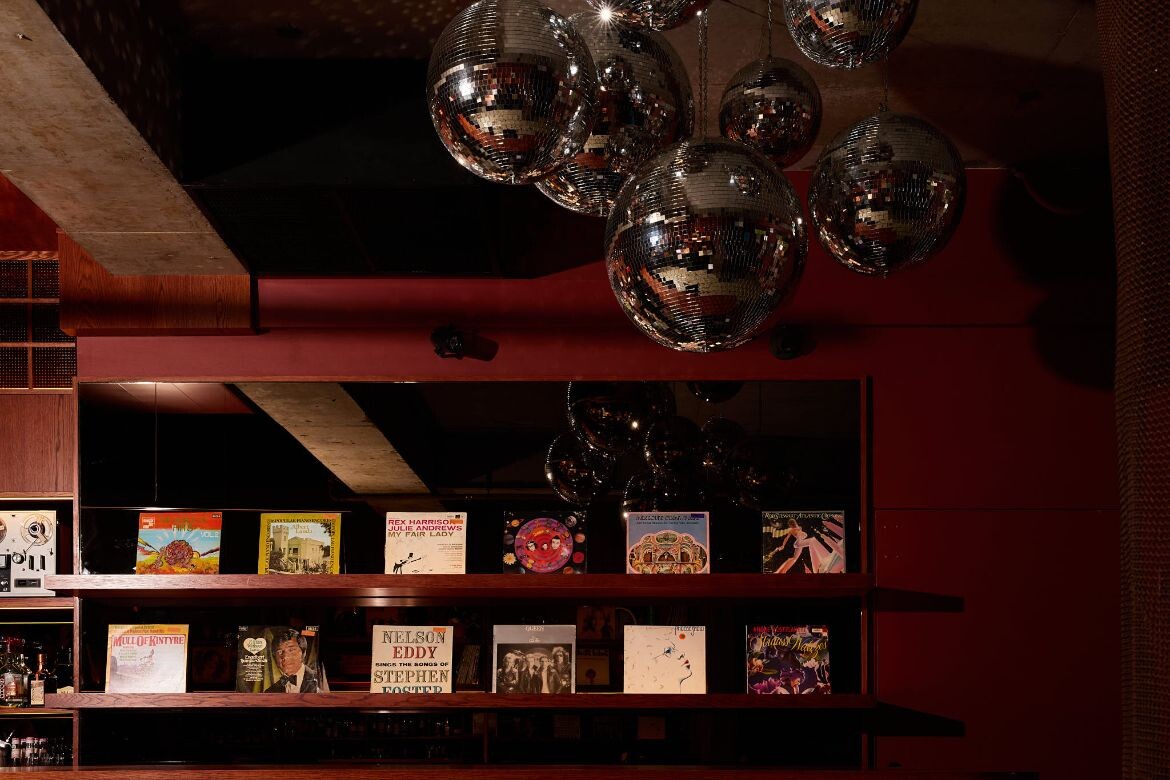
Accessed via a discreet Bourke Street entry and elevator, Disuko opens onto a rooftop space animated by vinyl DJ sets, mirrored surfaces and disco balls that reflect light and movement throughout the venue.
Related: Ra:tio blends interior and landscape design in a Jubilee Hills café
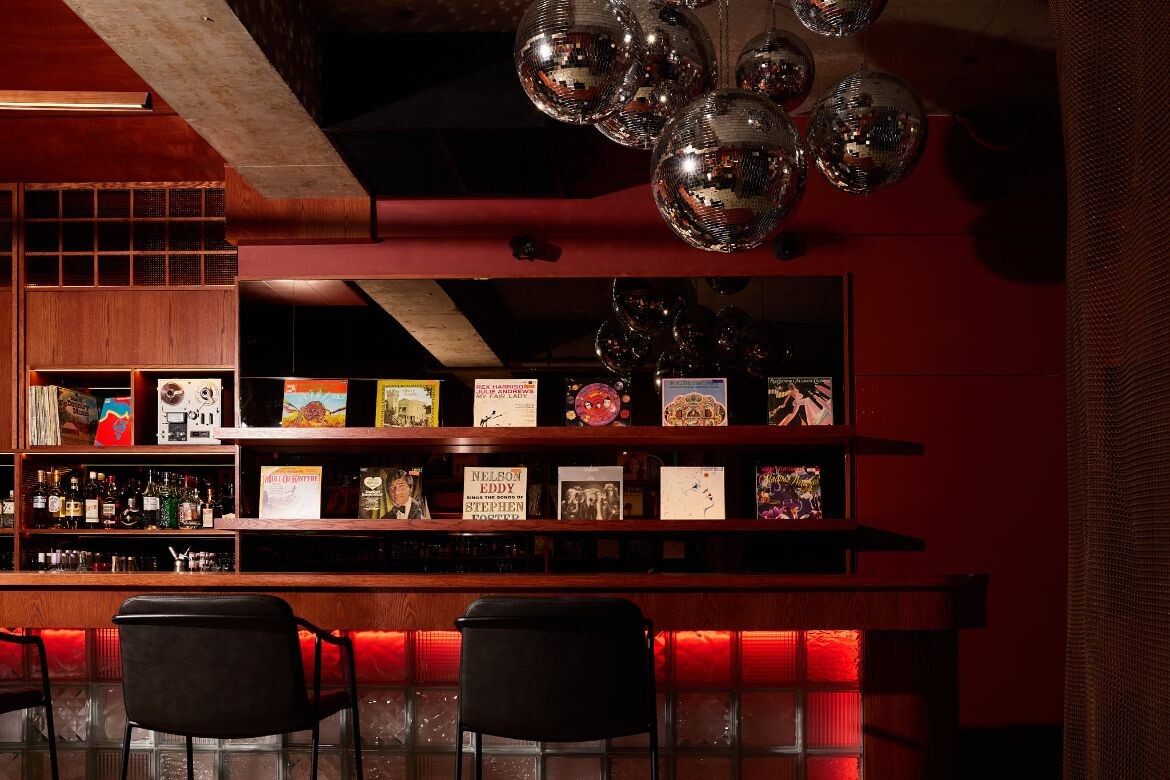
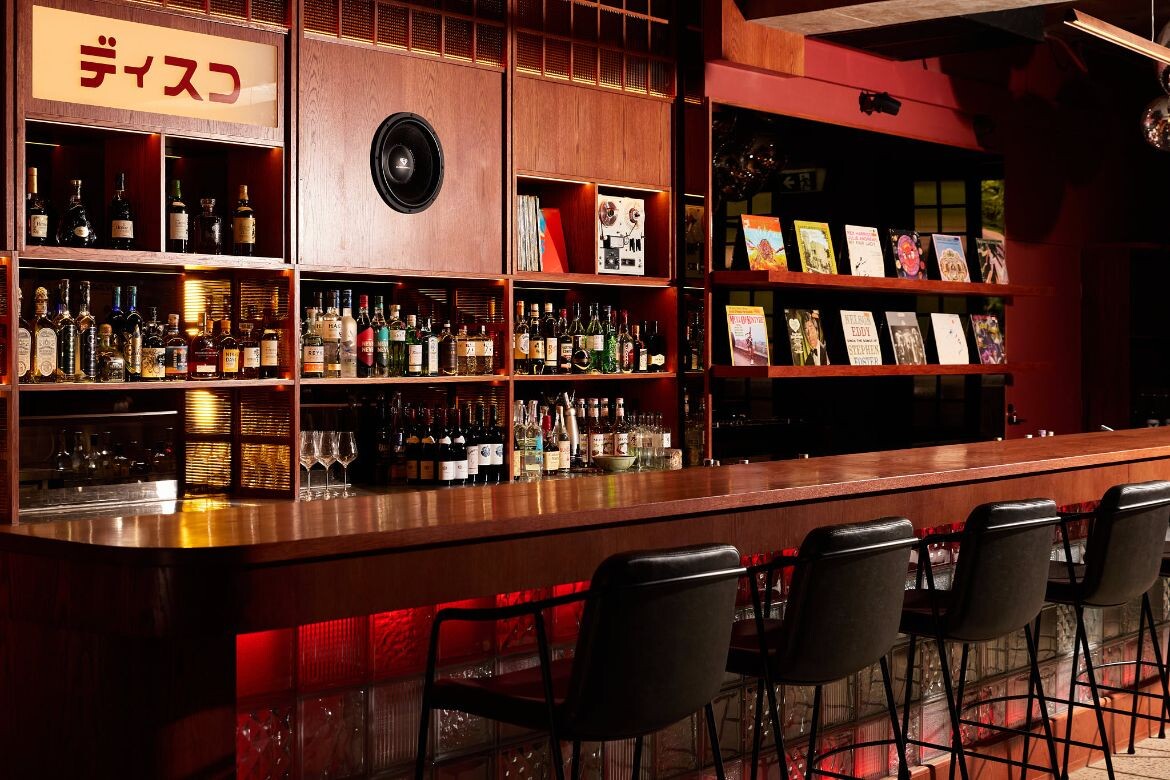
At the centre is an eight-metre-long timber bar, detailed with retro orange backlit glass blocks. It anchors the space and serves house cocktails alongside a wide selection of Japanese sake. Booth seating opposite provides more private pockets for small groups.
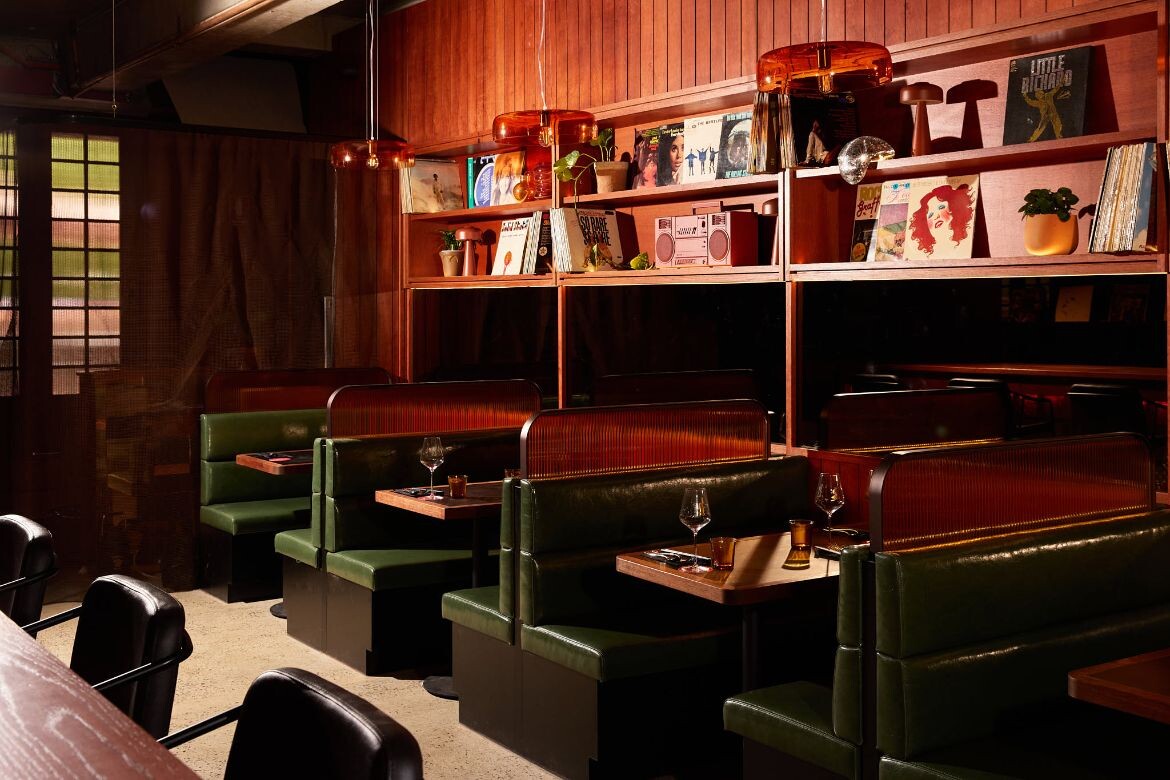
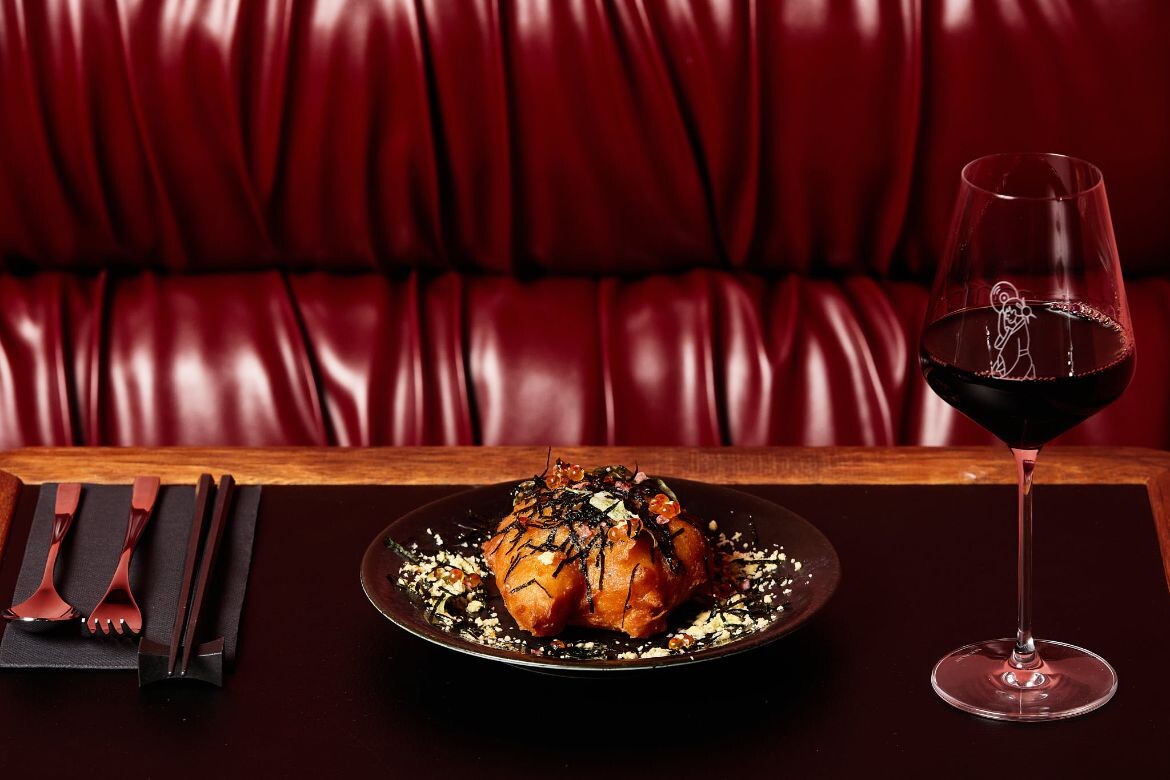
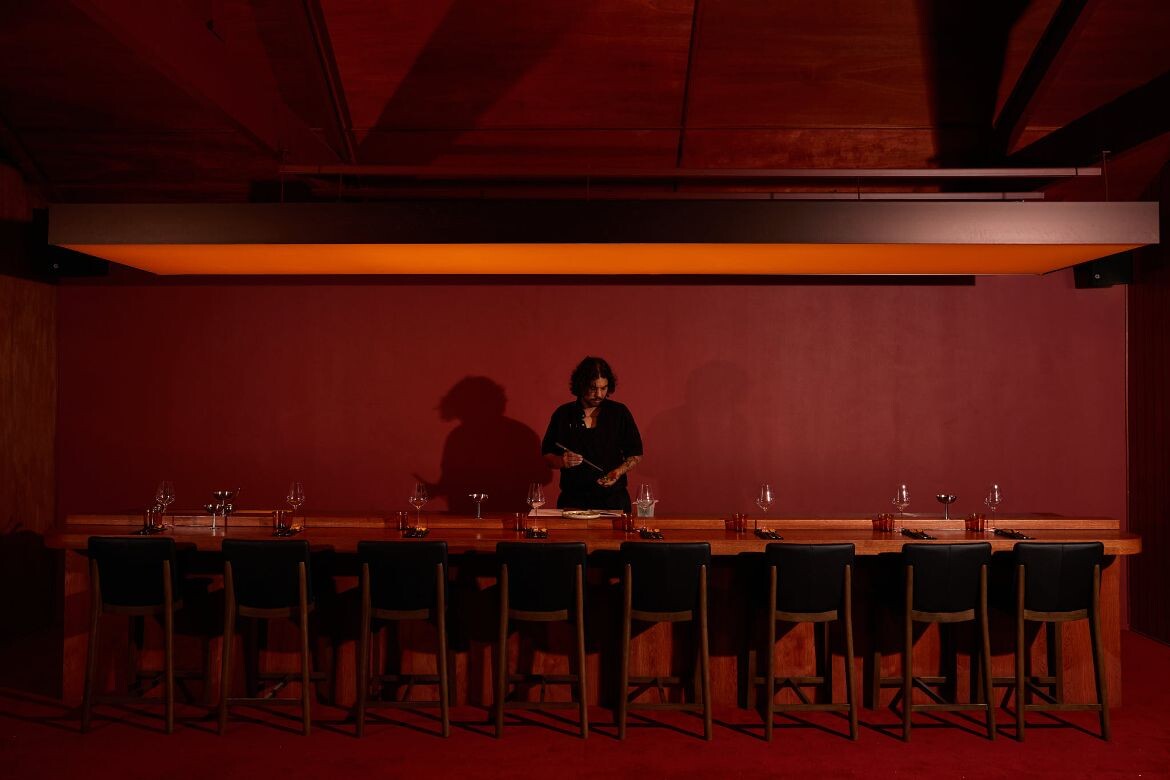
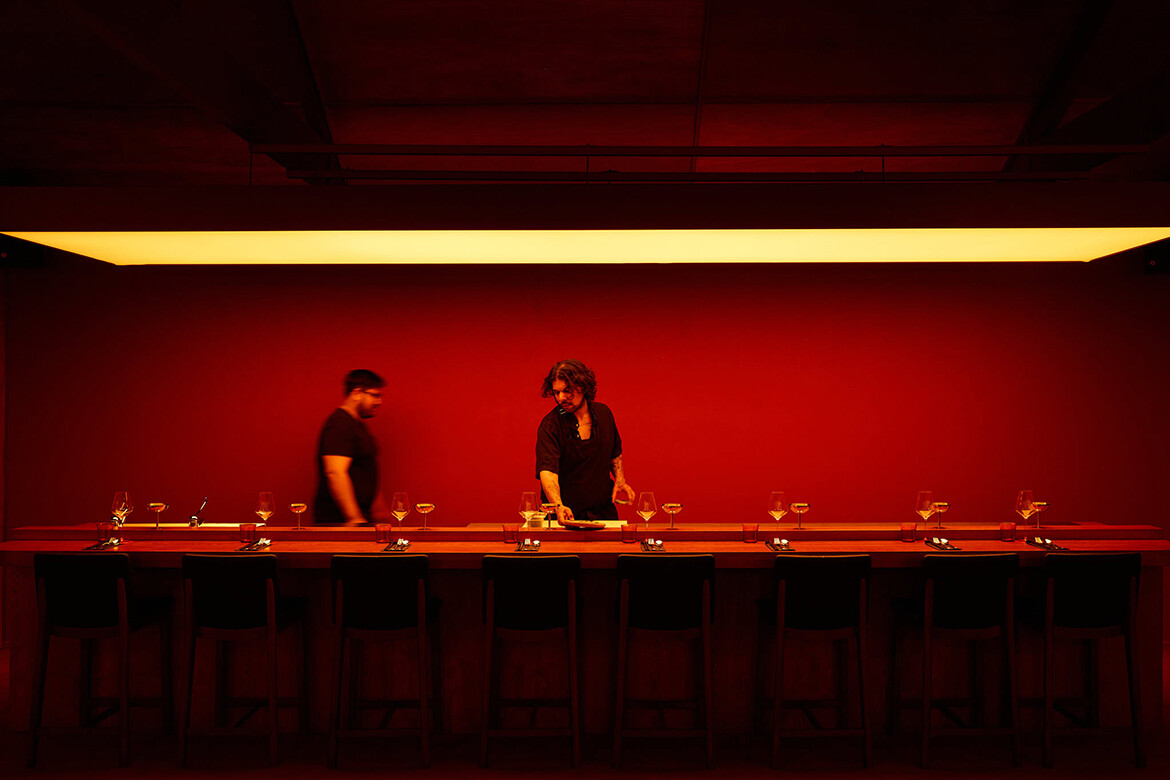
Further inside, the main dining room is conceived as a more intimate environment, featuring panelled Japanese red timber walls and a cherry-red ruched leather banquette. Adjacent is an eight-seat Omakase bar offering a 12-course sushi and sashimi experience, where diners can observe the chefs at work.
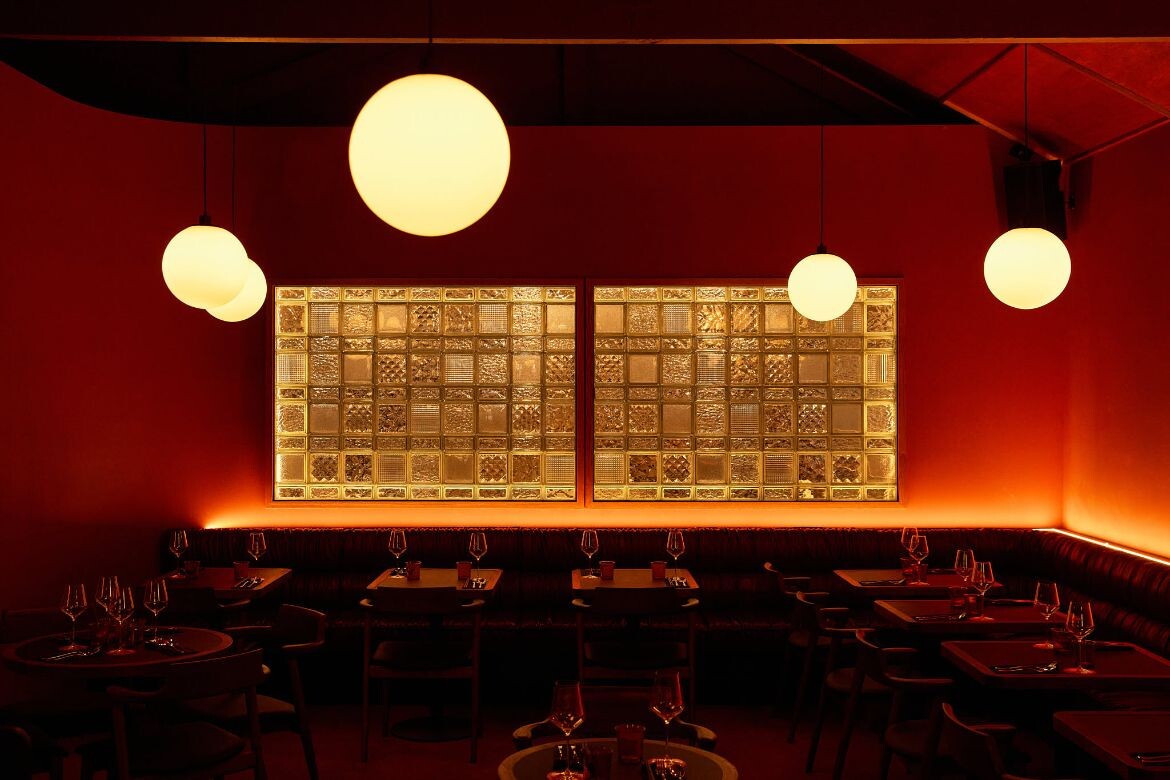
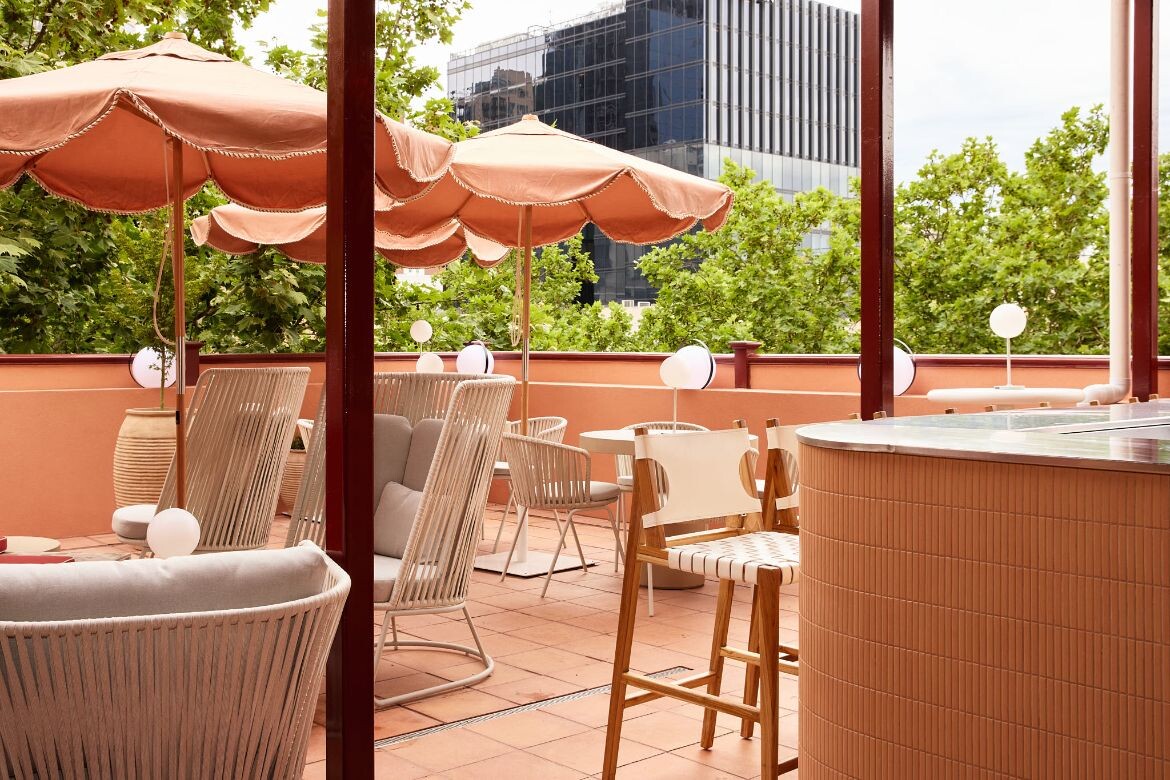
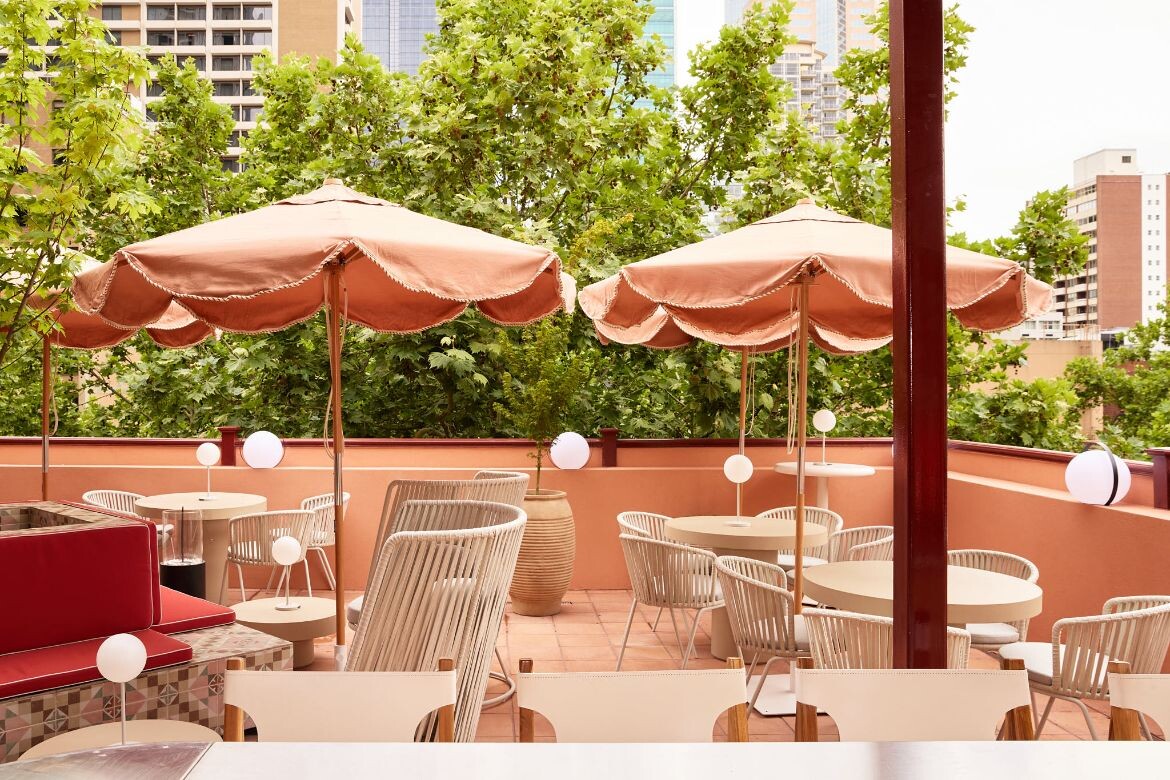
The interior palette leans into warm amber, terracotta and red tones, creating a cocooning atmosphere softened by layered textures and materials. Outside, the terrace features terracotta tiles, beige furnishings and salmon-pink umbrellas, framing views across treetops and the Melbourne skyline. An additional bar supports the outdoor area, while above, a 30-seat private dining room known as The Tokyo Sky Mezzanine provides space for larger gatherings.
Music plays a central role in Disuko’s identity, reflected not only in the programming but also in bespoke design elements. Among these are custom boomboxes panelled with kumiko joinery, a traditional Japanese woodworking technique, finished in gold and integrated into the dining room as functional art pieces.
Reflecting on the concept, Thai Ho, CEO and director of MAMAS Dining Group, notes the personal influences behind the project. “The inspiration for Disuko was born from years spent visiting my family in Shibuya, Tokyo,” he says. “Its culture, cuisine and energy left a lasting impression. Disuko is our interpretation of that era, filtered through a Melbourne lens.”
Combining a considered interior design with Japanese cuisine, craft cocktails and specialist sake, Disuko offers a new rooftop destination that draws on cultural reference while engaging directly with Melbourne’s hospitality landscape.
MAMAS Dining Group
mamasdininggroup.com.au
Disuko
disuko.com.au
Directitude
directitude.com.au
Photography
Threefold