Description provided by designer.
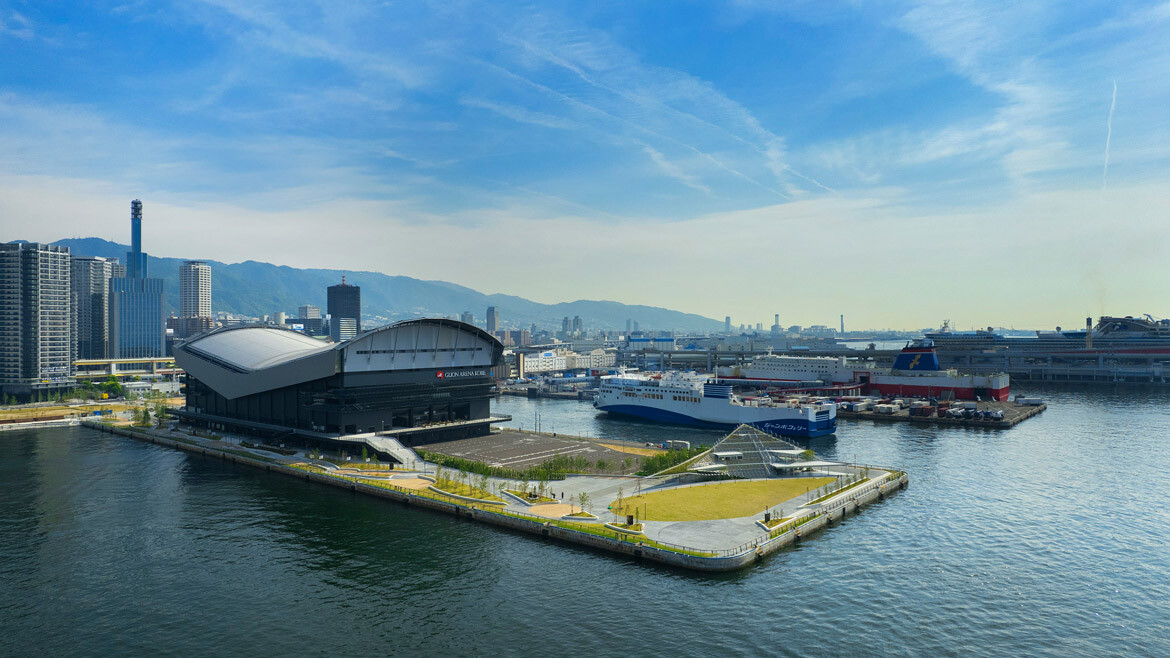
Kobe is a city where the sea and mountains are close together, with its urban area spreading across the slopes at the base of the mountains. In the Sannomiya area (the current city centre), the most important urban axis connecting the sea to the mountains is Flower Road, running north-south from Shin-Kobe Station to the port. The Second Pier, the site of this project, is located at its tip.
Kobe Port prospered as a mooring facility for conventional cargo ships, but it has now completed its urban role. The three remaining piers are also undergoing a transformation, shifting from a container port to spaces for people.
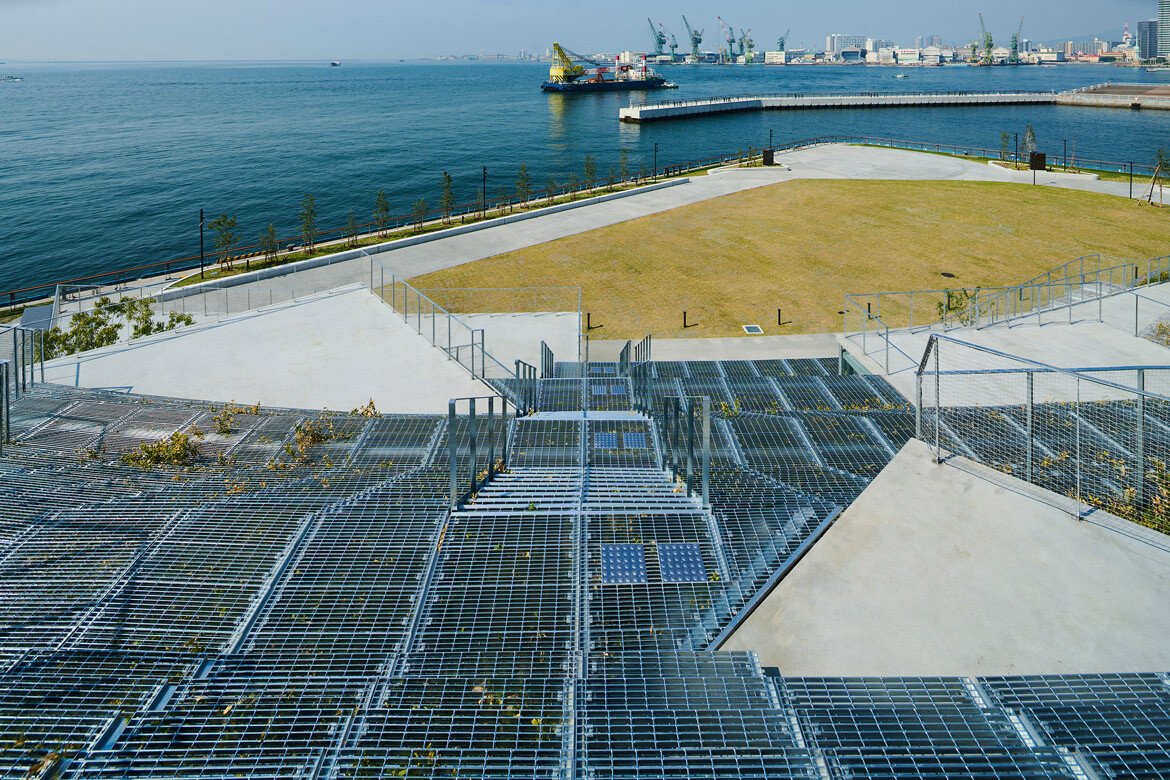
We strongly envisioned positioning this port hub as the starting and ending point of an urban axis connecting the mountains to the sea with flowers and greenery, thereby creating an attractive and dynamic circulation within the city.
Related: CLT cabins in the Japanese mountains
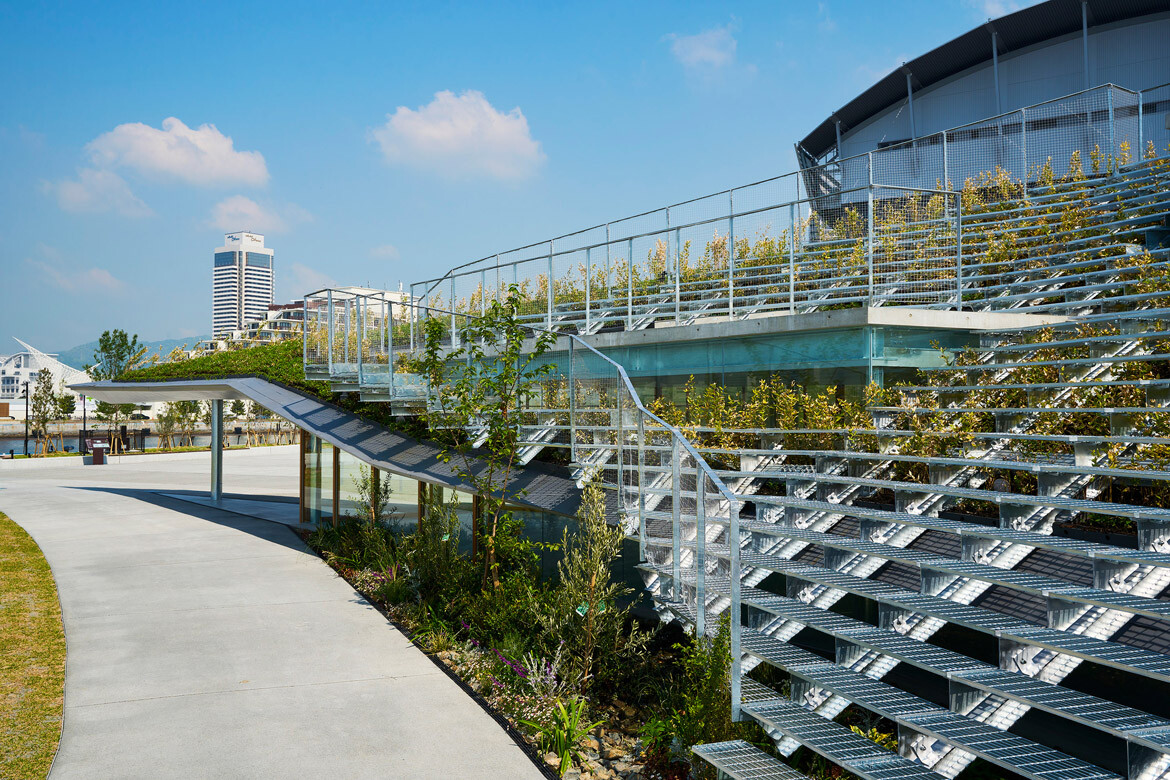
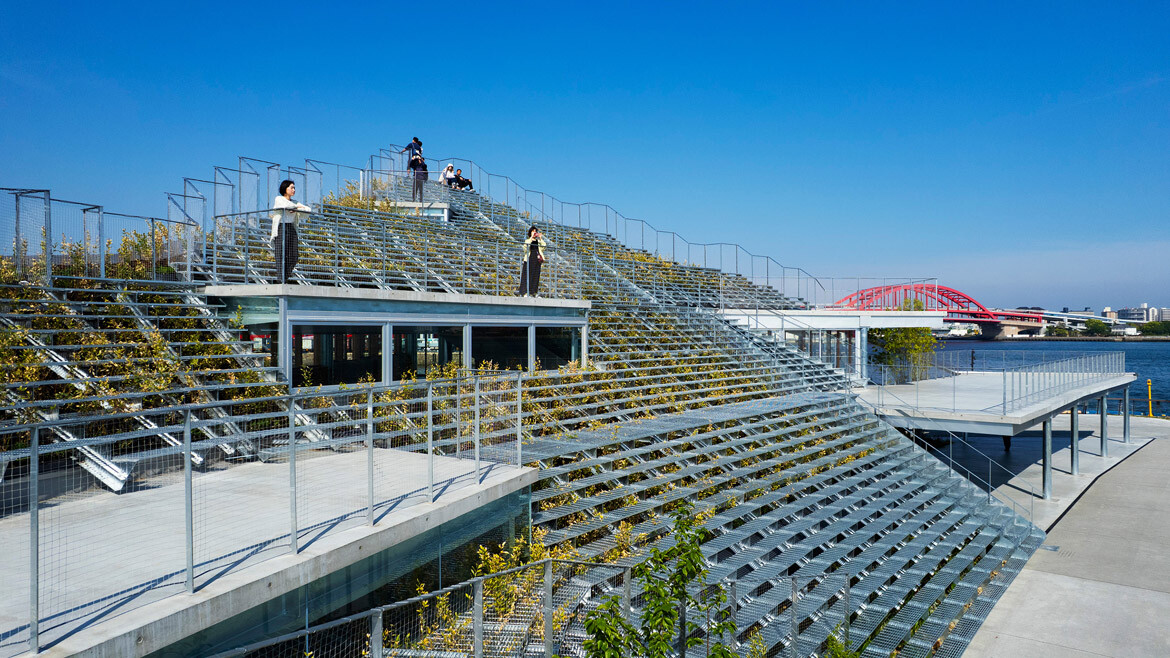
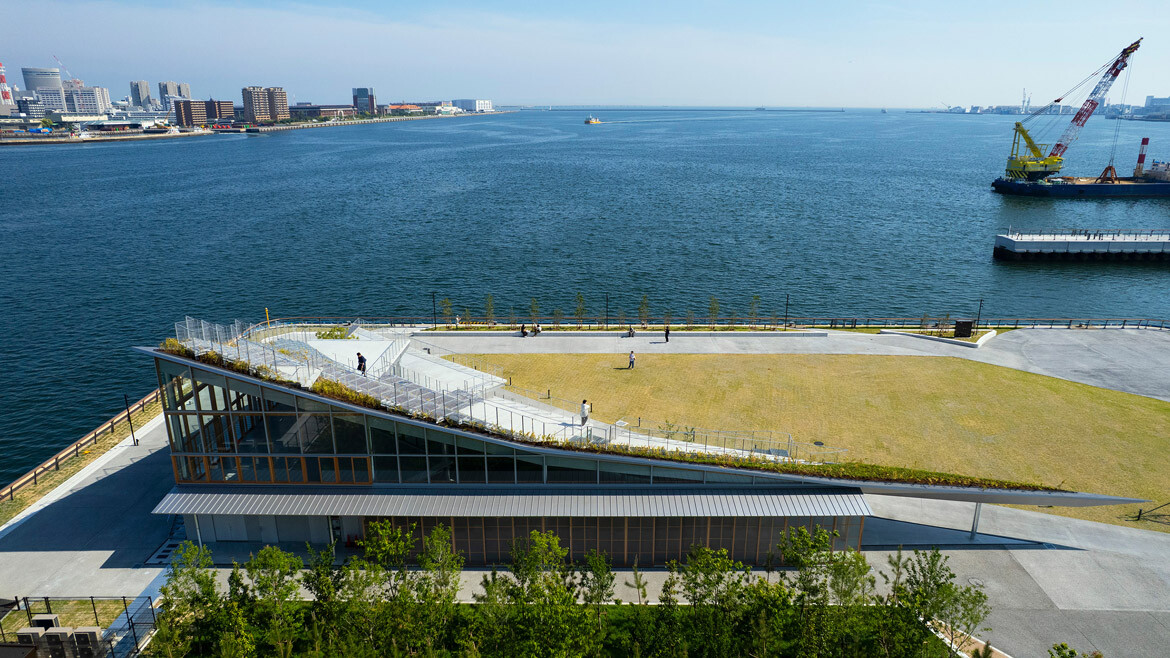
The initial image I envisioned was a waterfront space like an open-air theatre, where many people could gather freely around the Seto Inland Sea. In arriving at this image, I recalled the ancient Greek theatre at Taormina in Sicily. Ancient humans read the terrain and built outdoor theaters that harnessed its undulations.
These spaces offer us a spatial experience where, the moment we sit down, we become one with the grandeur that extends from the sea-rising land to the sky behind. For this project, a large plaza capable of hosting events was also required.
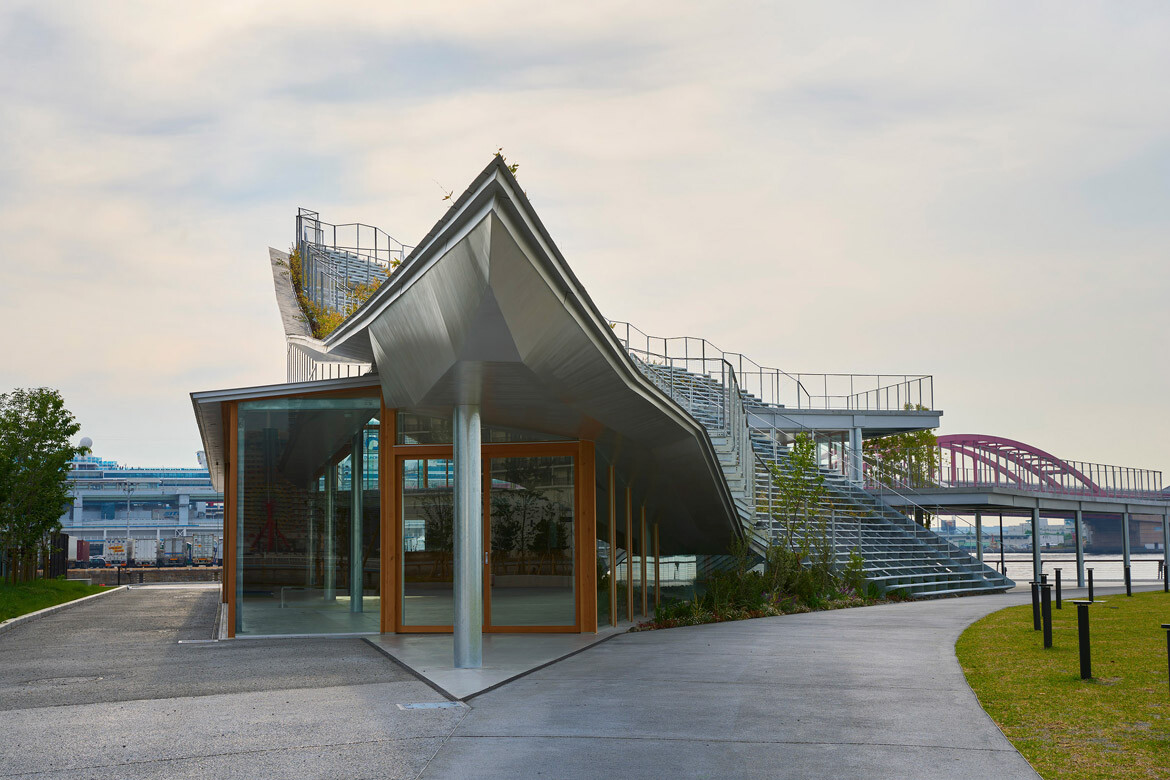
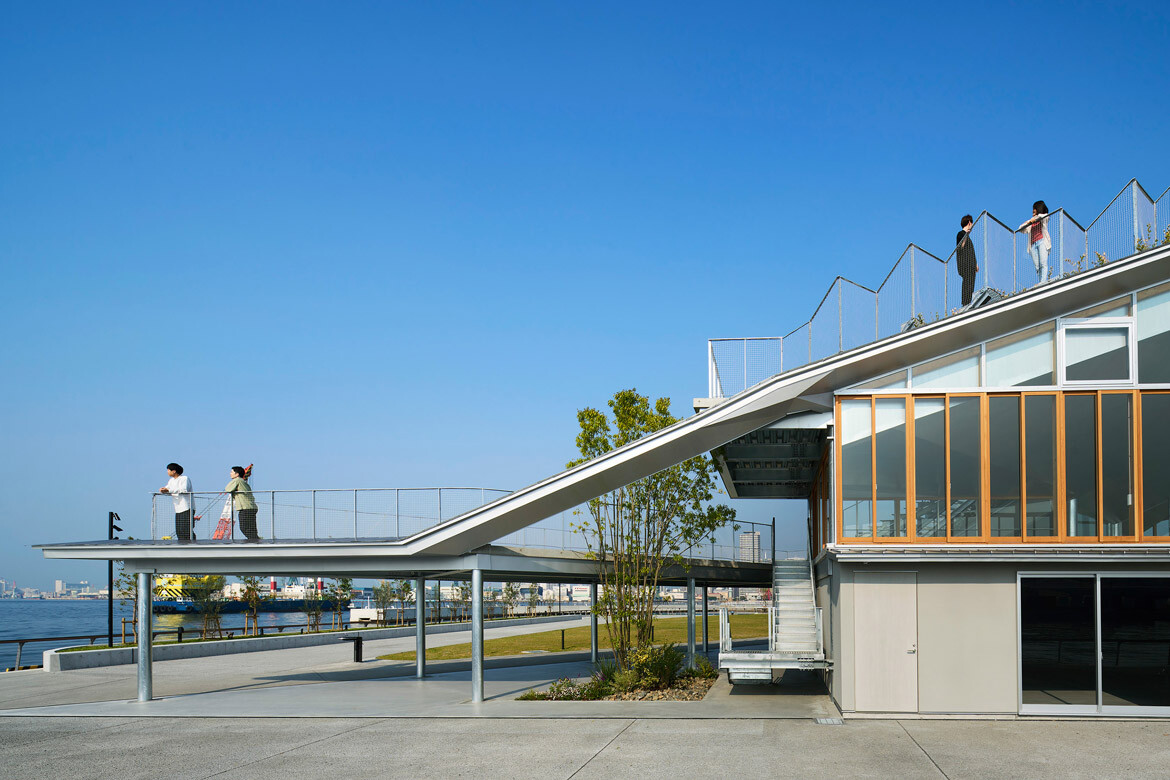
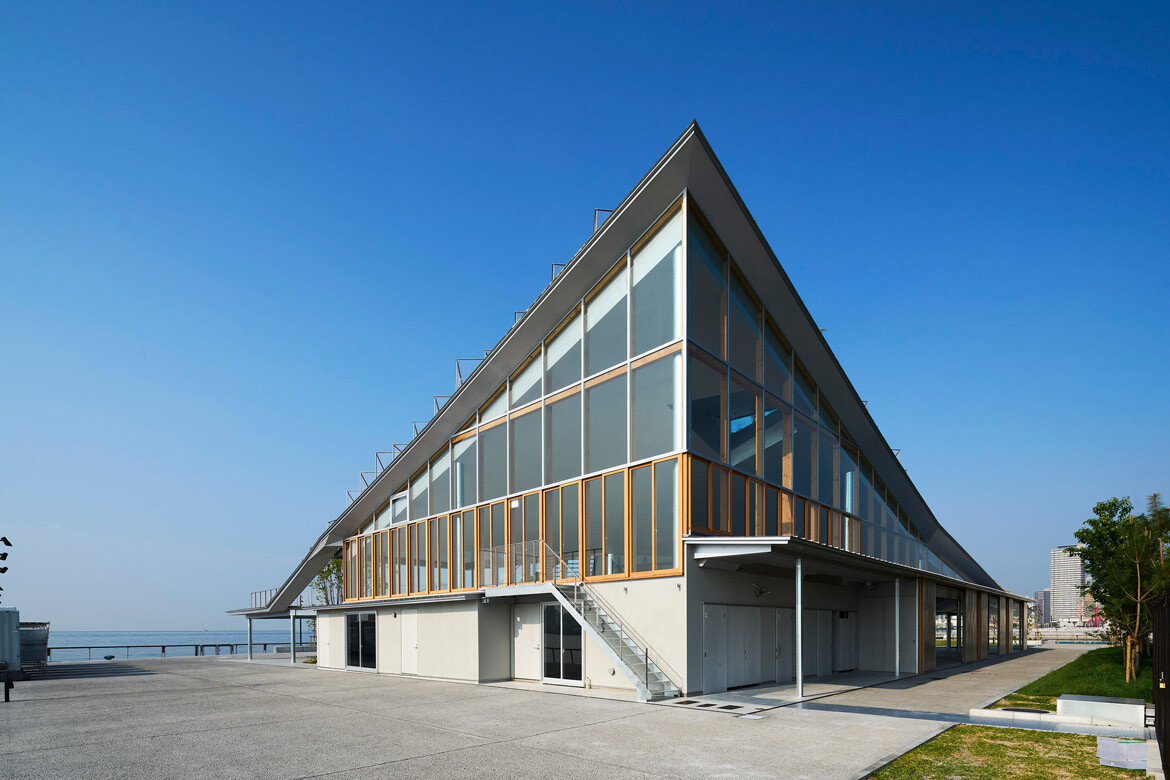
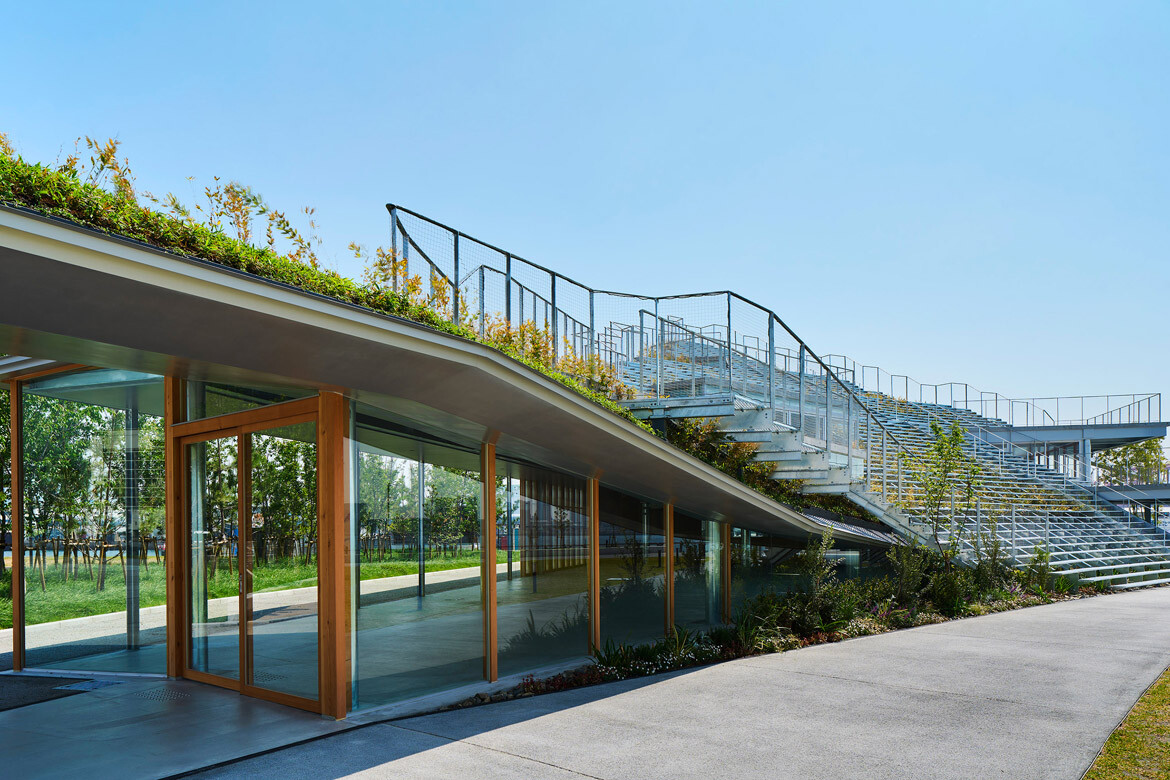
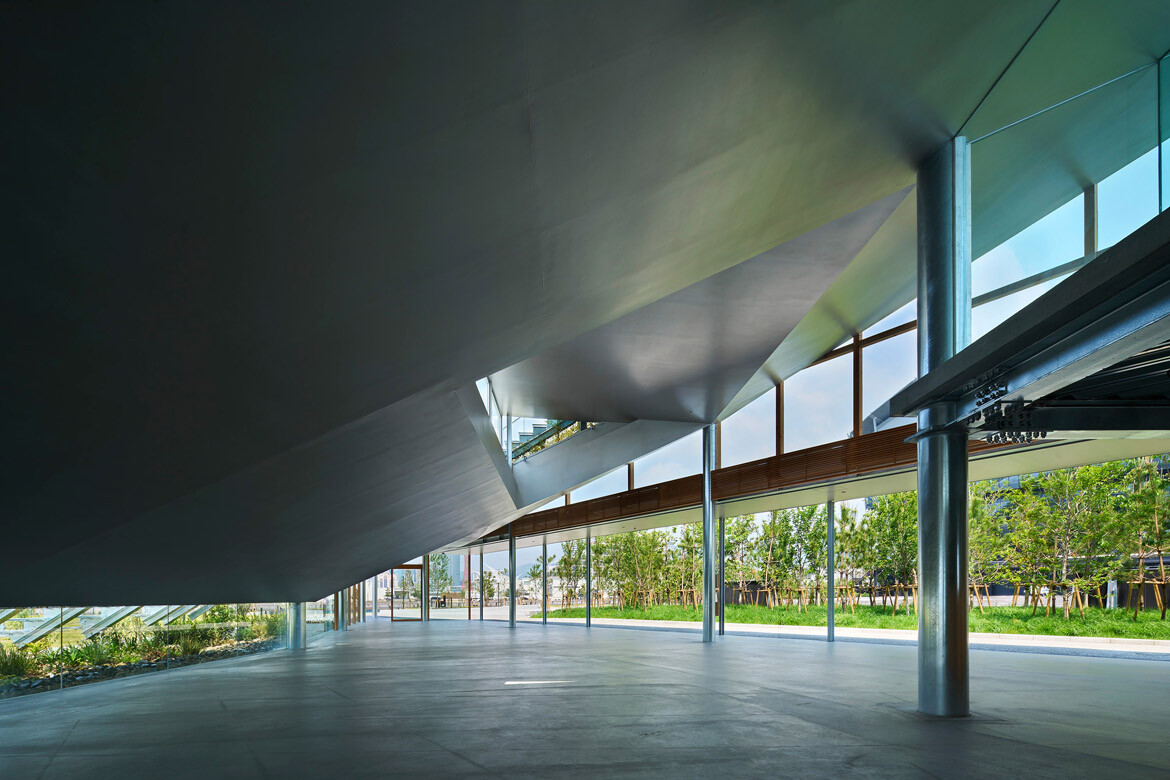
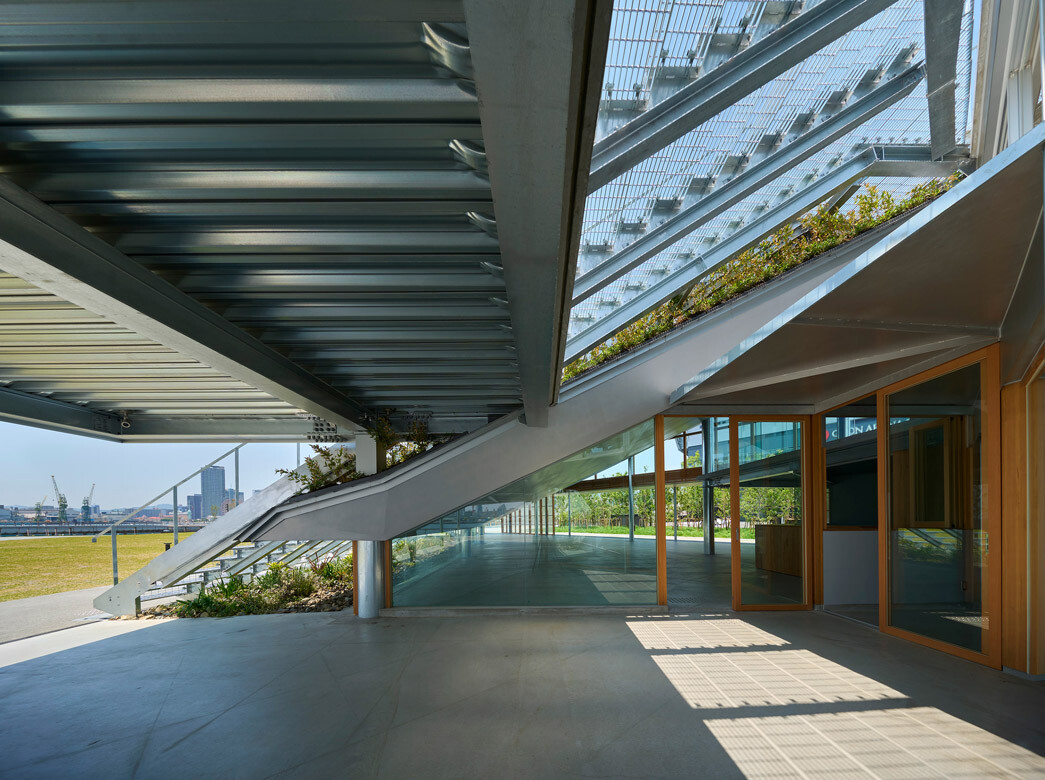
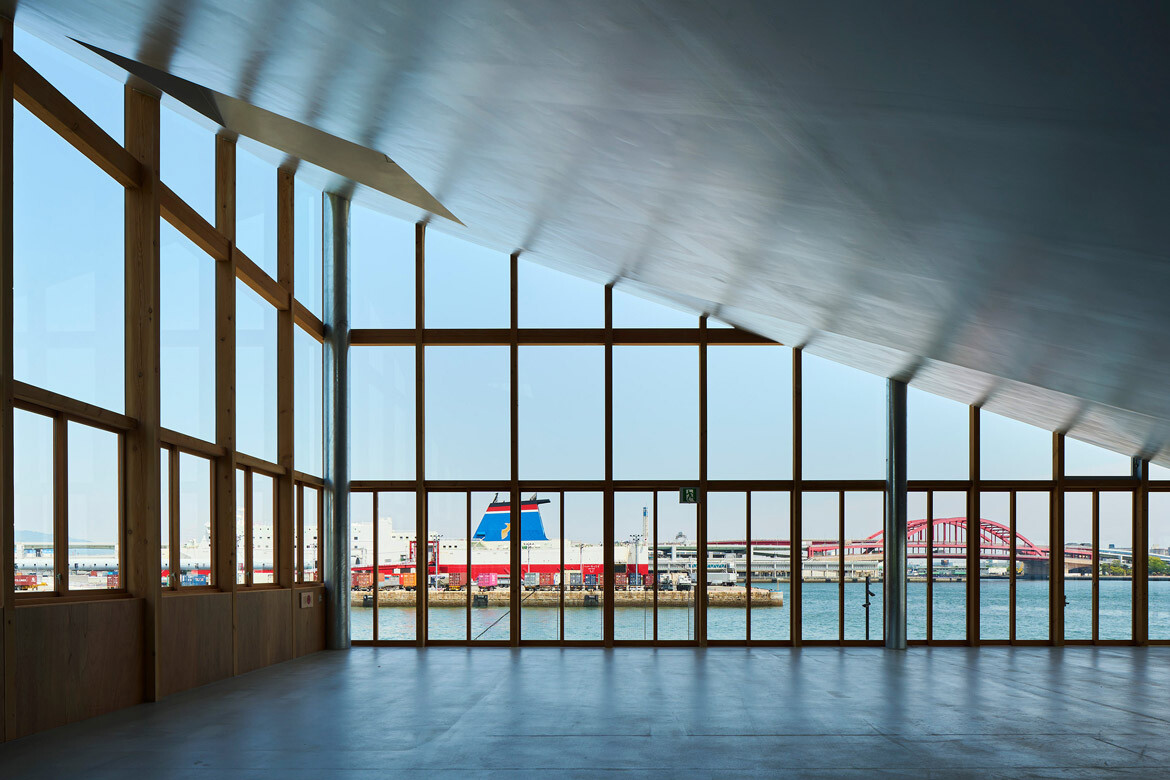
Therefore, I envisioned pinching up the edge of the plaza like a green picnic sheet to create a three-dimensional, hill-like topography. The top surface of this terrain functions as a bowl-shaped seating area connected to the plaza. The interior of the hill was conceived as a vibrant hub, usable as an extension of the plaza regardless of season or weather.
Through this architecture, we envision visitors experiencing a sense of becoming part of the grand landscape stretching from the Seto Inland Sea, through the Rokko mountain range, and up into the sky.
Tomohiro Hata Architect & Associates
hata-archi.com
Photography
Toshiyuki Yano