Scent needs time. It changes on the skin, gets tangled with memory and can rarely be understood in the first spray.
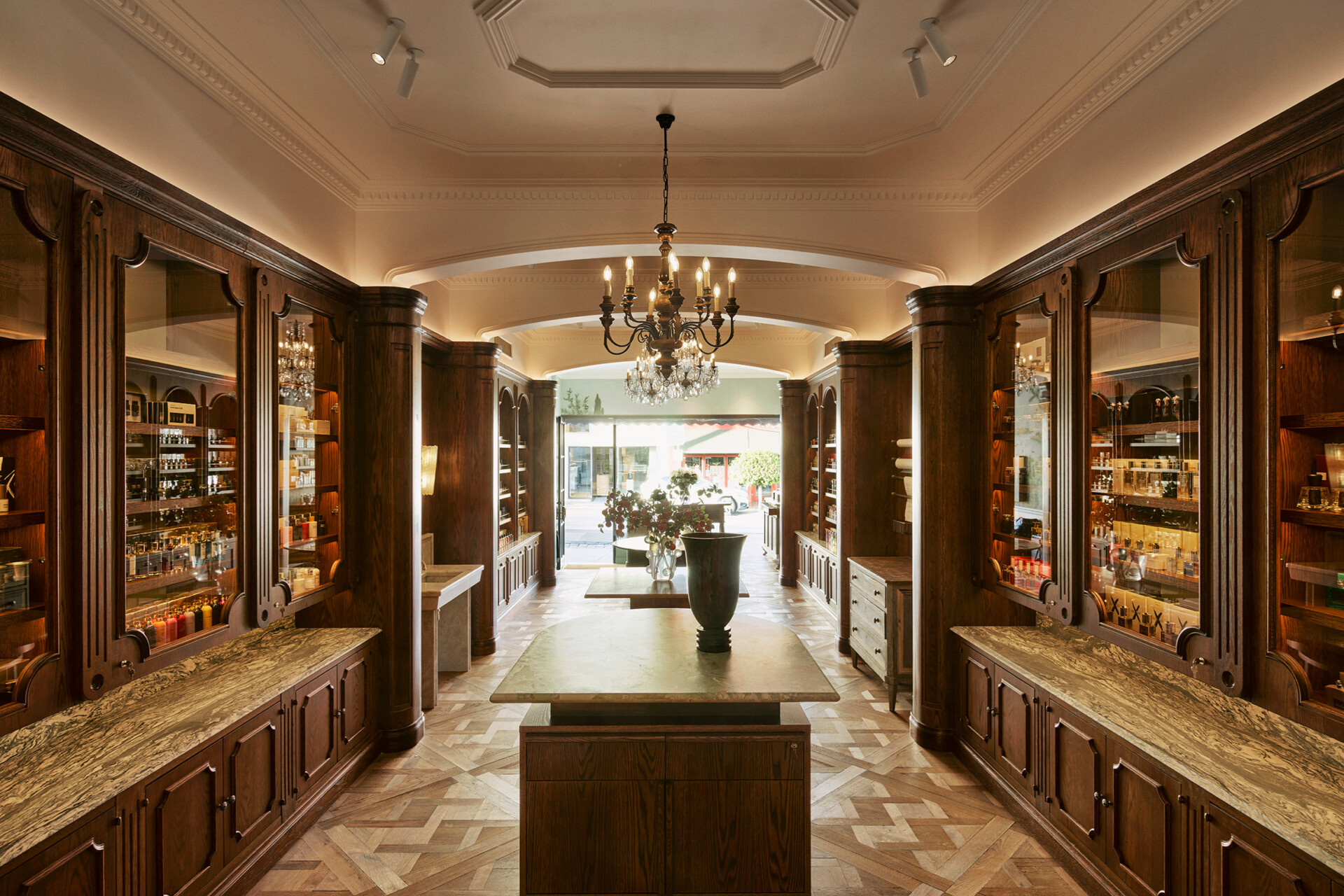
At Libertine Parfumerie’s new Melbourne flagship in Armadale, Tamsin Johnson has designed for that slow pace. The 140-square-metre boutique on High Street is warm, furnished and layered, with parquetry underfoot, dark timber joinery, vintage lighting, natural stone, seating and basins. It is still clearly a store, but it does not behave like one in the usual sense.
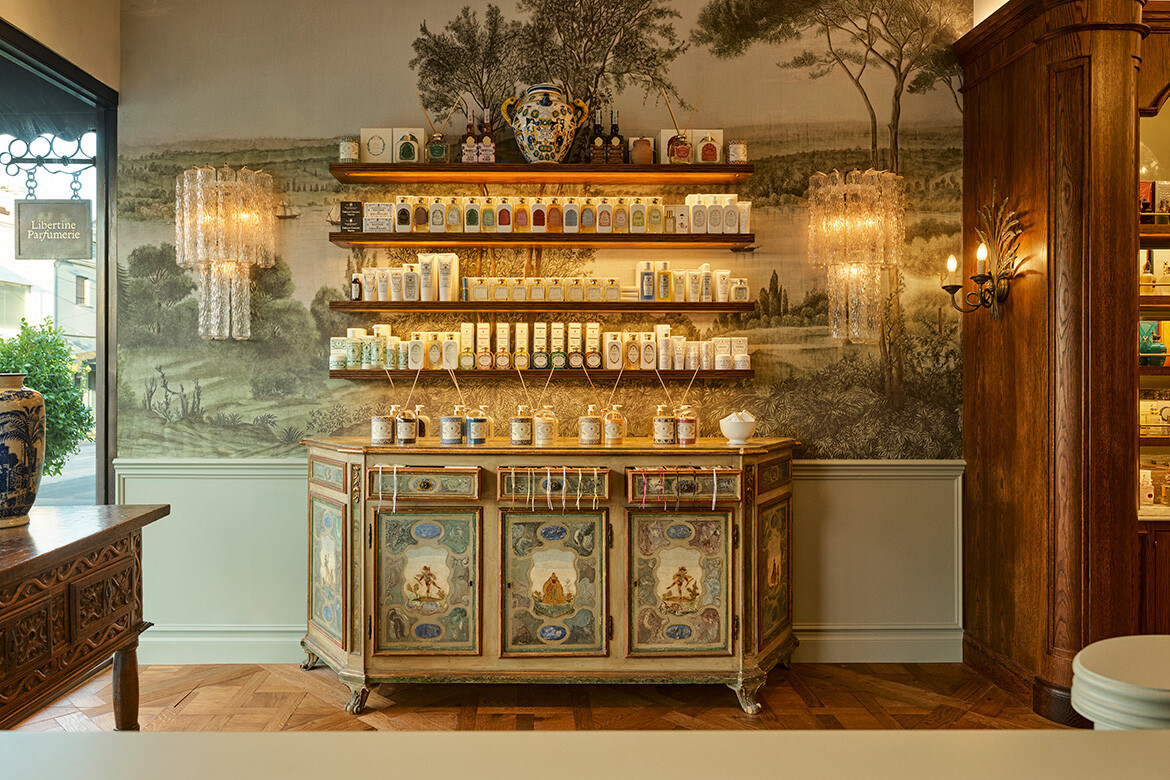
“The starting point for Armadale was the original Libertine Paddington store, which set the tone for the store interiors,” says Johnson. “We wanted to move away from the sparse, bright and clinical feeling typically adopted in these contexts and encourage a stronger and warmer feeling in the clientele, something more homely, welcoming and layered. Its intent is to slow the client down and journey them through the ranges.”
Libertine’s Armadale boutique houses a curated range of fragrance houses including Creed, Trudon, Amouage, Matiere Premiere and Santa Maria Novella, but the design avoids the endless-shelf feeling that can come with multi-brand retail. Instead, each section has its own cadence.
Related: Powerhouse Parramatta readies itself for late 2026 opening
“I like the way each cabinet space is its own theatre of interest, so you can move from station to station and be embedded in a particular theme for a period,” says Johnson. “The store naturally journeys the patron in that way. Seating invites you to stop and consider, and rested space, product-free, ensures the patron isn’t forced and has time to recover from the sensory information load.”
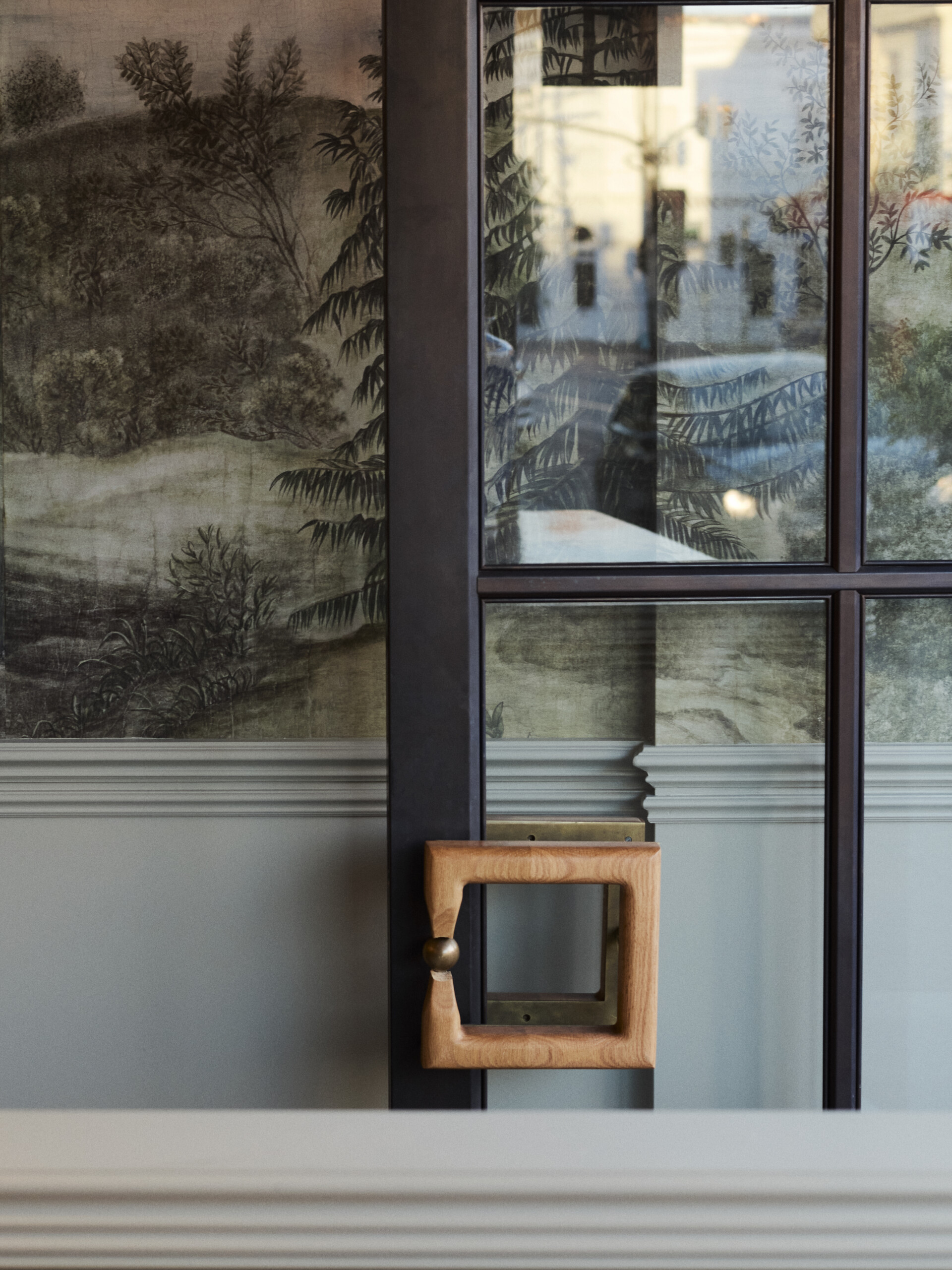
The store takes cues from European apothecaries and traditional high street shopfronts, but Johnson is careful about the risk of making reference too literally. The point was not to build a replica, but to borrow atmosphere, proportion and a sense of care.
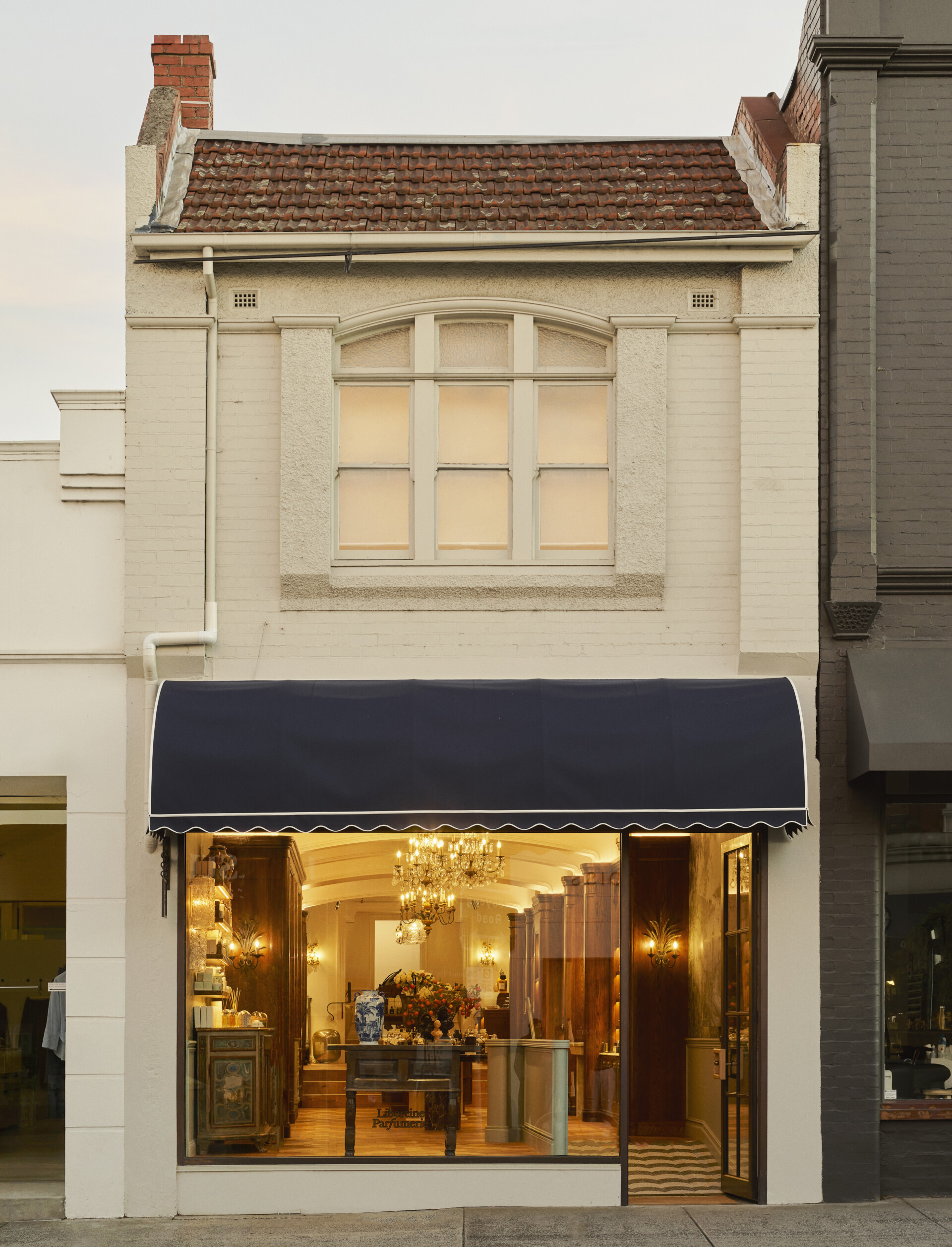
“It is always a fine line between referencing memories and feelings and it becoming pastiched or cliched,” she says. “Some of it is to do with the quality of the finishes, fixtures and furnishings, where no money was spared, and the many authentic antiques and vintage pieces carry the strong narrative effectively. Some of it is about calling on nostalgia’s warmth without replicating its components verbatim.”
There are domestic notes throughout: upholstery, basins, soft lighting and places to pause. “There is plenty to suggest aspects of a home here, not just a store, such as the basins and upholstery work,” says Johnson. “The furnishings are a mixture of powerful and slightly playful pieces, taking the space away from an apothecary’s more functional utility.”
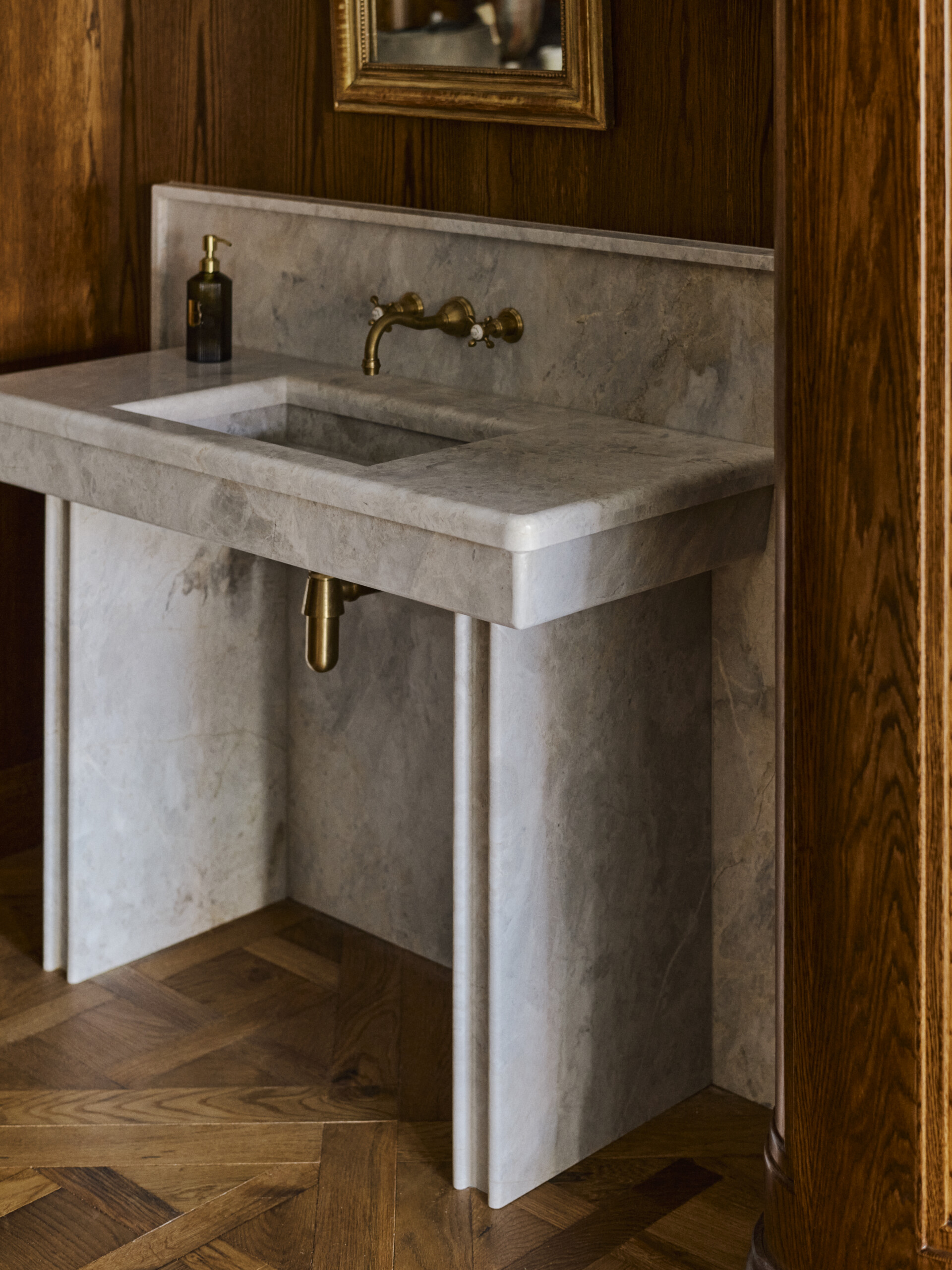
The floor plan is long and narrow, typical of High Street retail tenancies. Johnson uses that to create a guided movement through the boutique. Customers enter from the street and are drawn along the right-hand run of cabinetry, towards a slightly raised consultation area at the rear, before returning along the opposite side. A banquette and stone basin break the route, giving the journey punctuation rather than making it feel like a corridor.
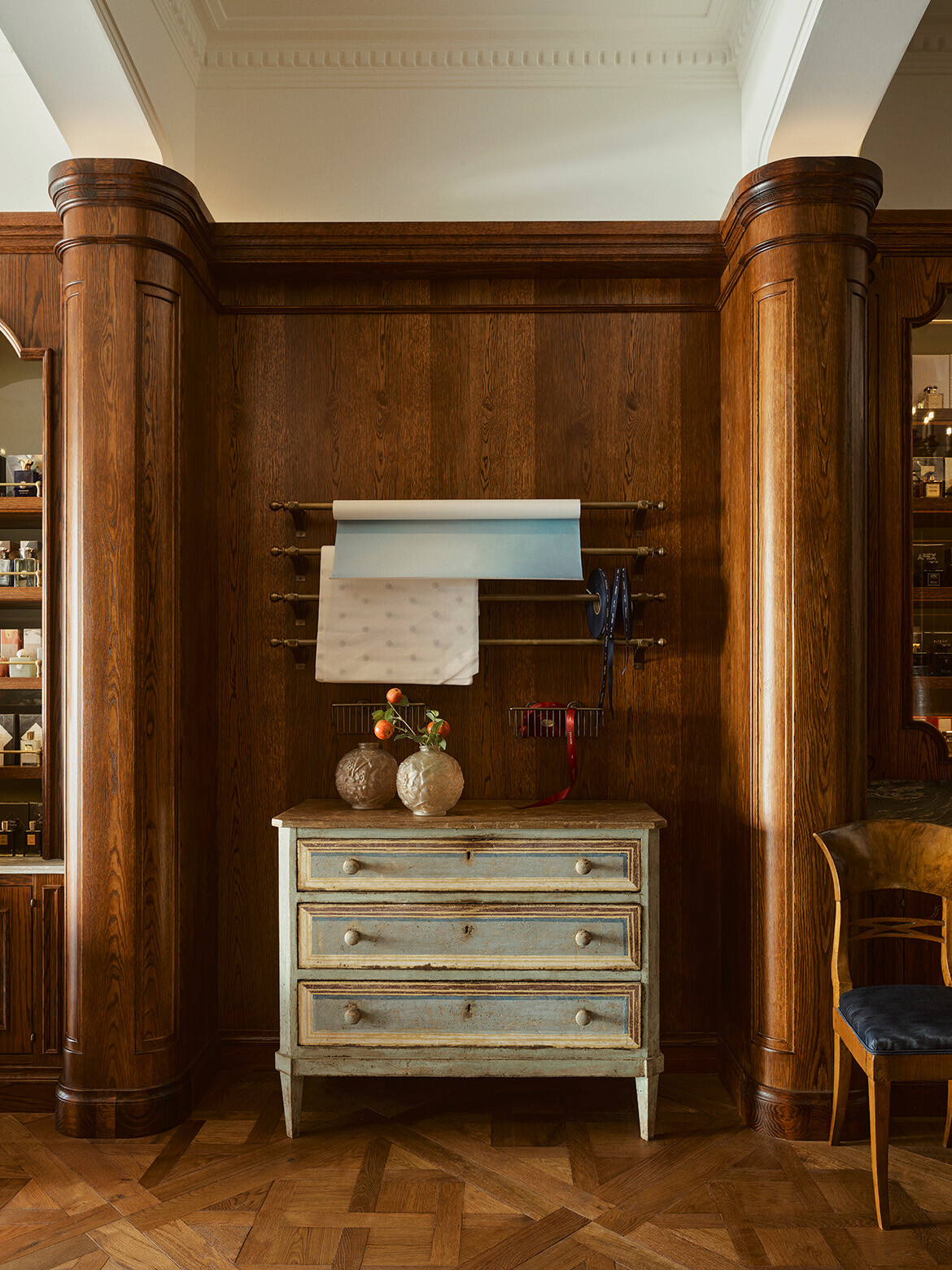
Materially, the boutique works through contrast. “While timber adds warmth, stone adds coolness — a traditional combination of opposites,” says Johnson. “It is important in this context that the stone wasn’t too light or vivid, so as not to shock the weighty warmth of the joinery, just to freshen it a little and add some cooler touch.”
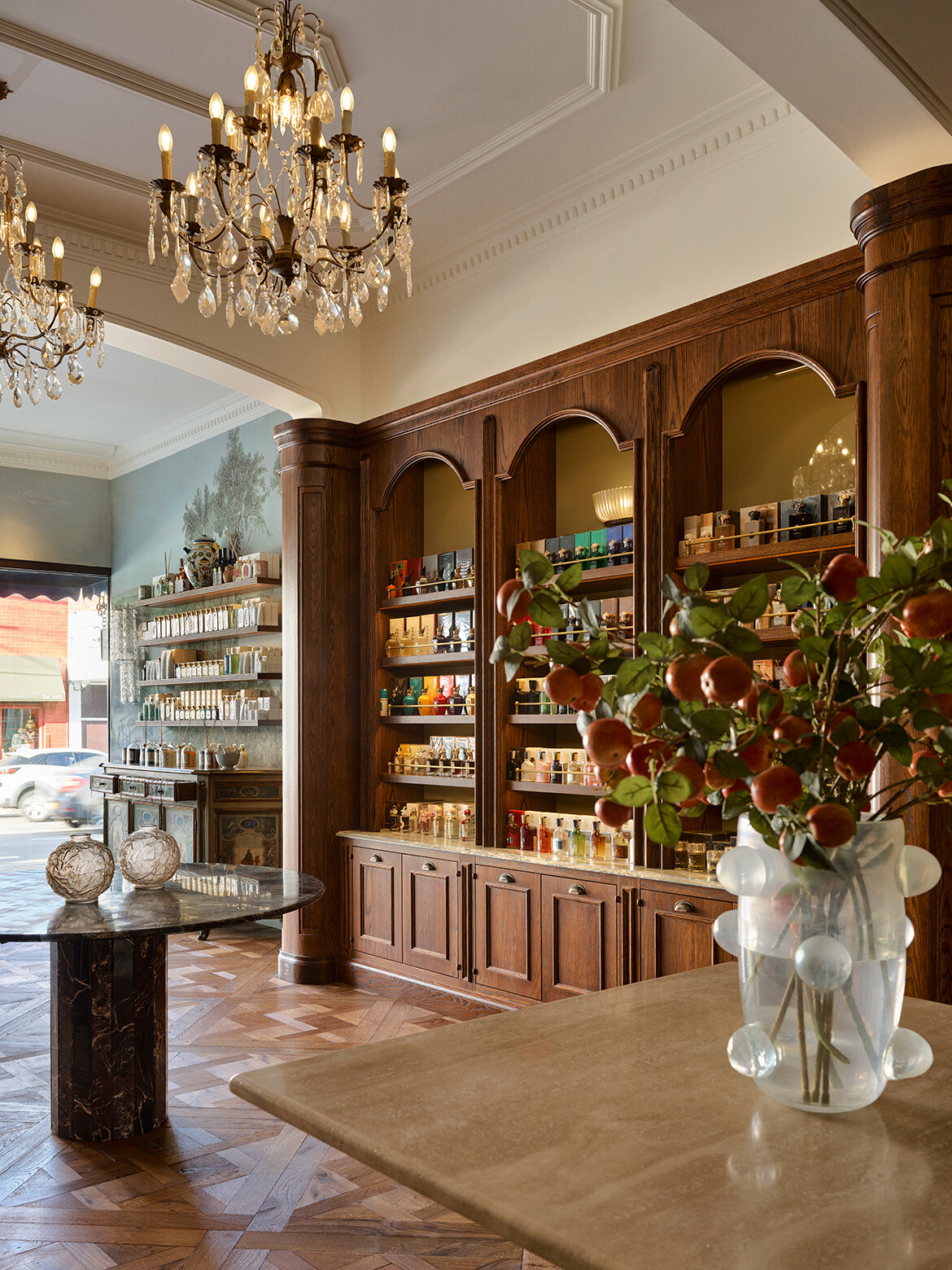
“Versailles parquetry is a favourite of mine. It adds some quiet and dampening underfoot, absorbs some light but not too much and adds dynamic geometries. I also don’t mind the occasional squeak, which brings things down to earth.”
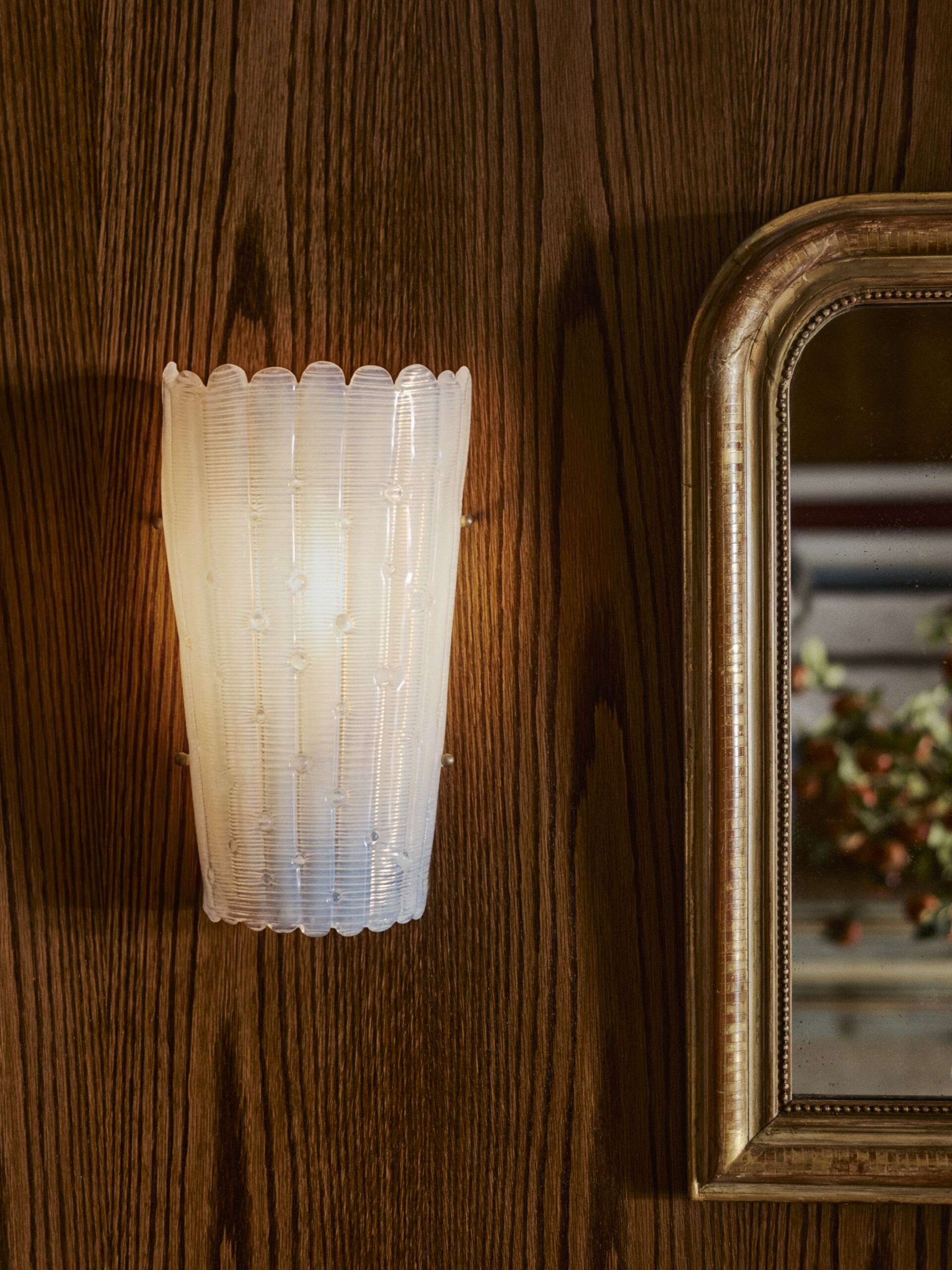
This is a boutique with polished detailing, but Johnson’s work often succeeds because it leaves room for the human and the slightly imperfect. The lighting follows the same principle. “[It] gently shimmers and yet is strong in form and voice at the same time,” she says. “It adds a little aloofness to the space, and some sense of permanence.”
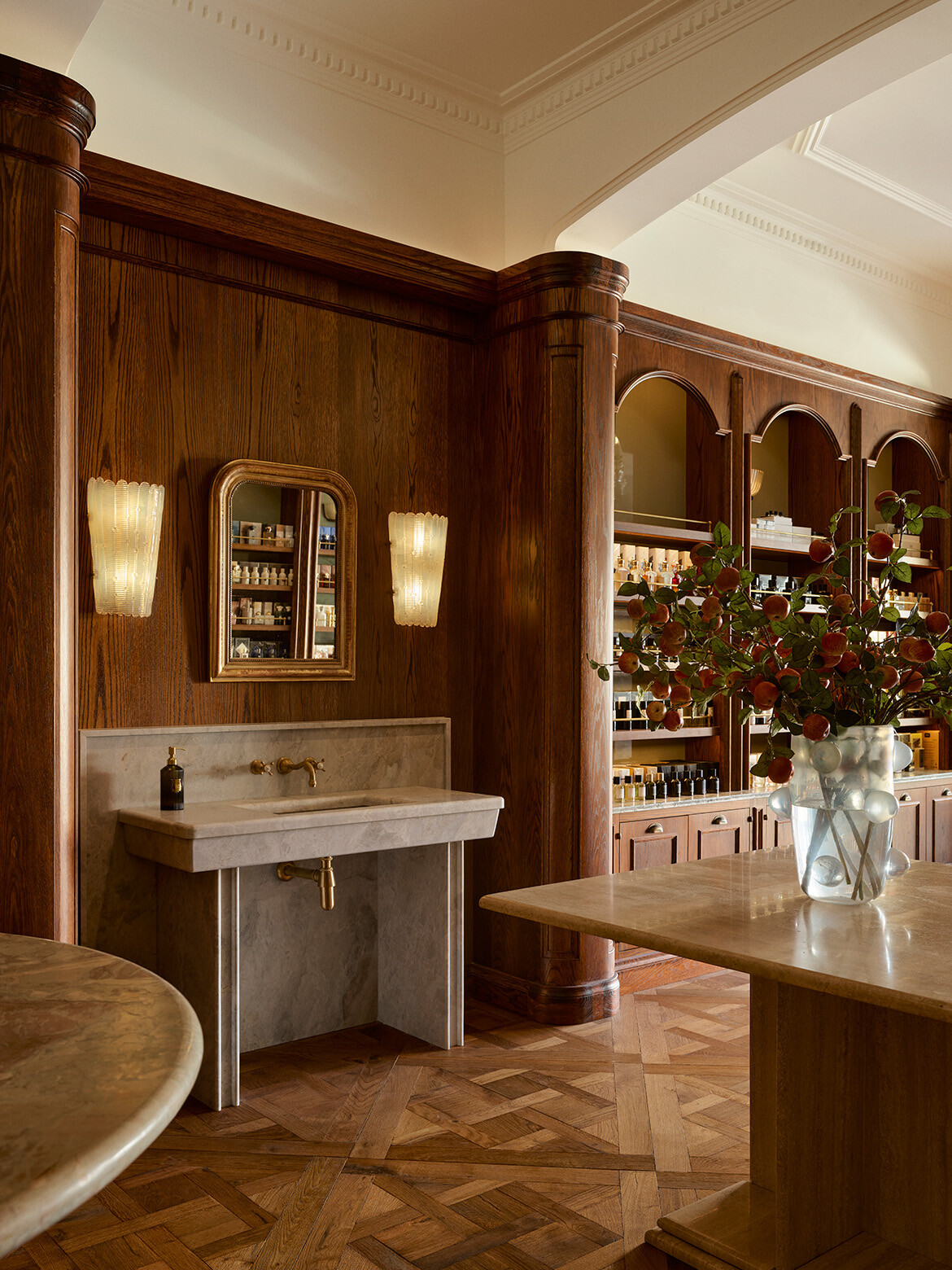
That permanence is important for Libertine. This is the brand’s Melbourne flagship, and the space needed to carry a strong identity of its own while still allowing many fragrance houses to be discovered within it. The joinery, ceiling archways, wall niches and consultation areas help break down the boutique into smaller moments, each with its own mood.
“I think intimacy has been somewhat forsaken in retail over the years and I’d like to think this approach helps bring it back,” she says. “Gearing things down and pausing the customer and enforcing their consideration by filling the space with unfolding beauty and detail. It says we care more about you and less about your money, or at least we really appreciate you spending it with us.”
It is a funny line, and probably the most honest summary of the project. The boutique is commercial, of course. But it understands that buying perfume is rarely just a practical act. It is personal, sensory and often a little irrational. Libertine Armadale gives that process a room of its own.
Tamsin Johnson
tamsinjohnson.com
Photography
Anson Smart