The home of architecture and design in the Asia-Pacific
Get the latest design news direct to your inbox!

Get the latest design news direct to your inbox!
The decision isn’t really about budget. It comes down to who designs the kitchen, who builds it, and whether those are the same people installing it in your home.
May 25th, 2026
Most Melbourne homeowners planning a kitchen renovation reach the same fork in the road. One path leads to a showroom of pre-configured options. The other leads to a builder who starts with your actual room. Whether those two paths produce the same outcome is worth understanding.
According to the 2026 U.S. Houzz Kitchen Trends Study, 79% of renovating homeowners choose custom or semicustom cabinetry. The study surveyed 1,780 homeowners in July 2025. Stock options account for just 10% of new cabinetry. Understanding what separates those outcomes starts with how each build model is actually constructed.
Flat-pack kitchens arrive as pre-cut panels, manufactured to standard dimensions at an external facility. A tradesperson assembles them on site, fitting components to the room as closely as the panel sizes allow. For a standard galley layout, this works well enough. For rooms with angled walls or irregular ceiling heights, the fixed panel dimensions become the limiting factor.
That constraint is not about component quality at the unit level. A well-made flat-pack kitchen uses solid materials. The issue is fit. A pre-cut panel cannot account for the ceiling slope of a converted roof space or the angled walls of a Victorian terrace.
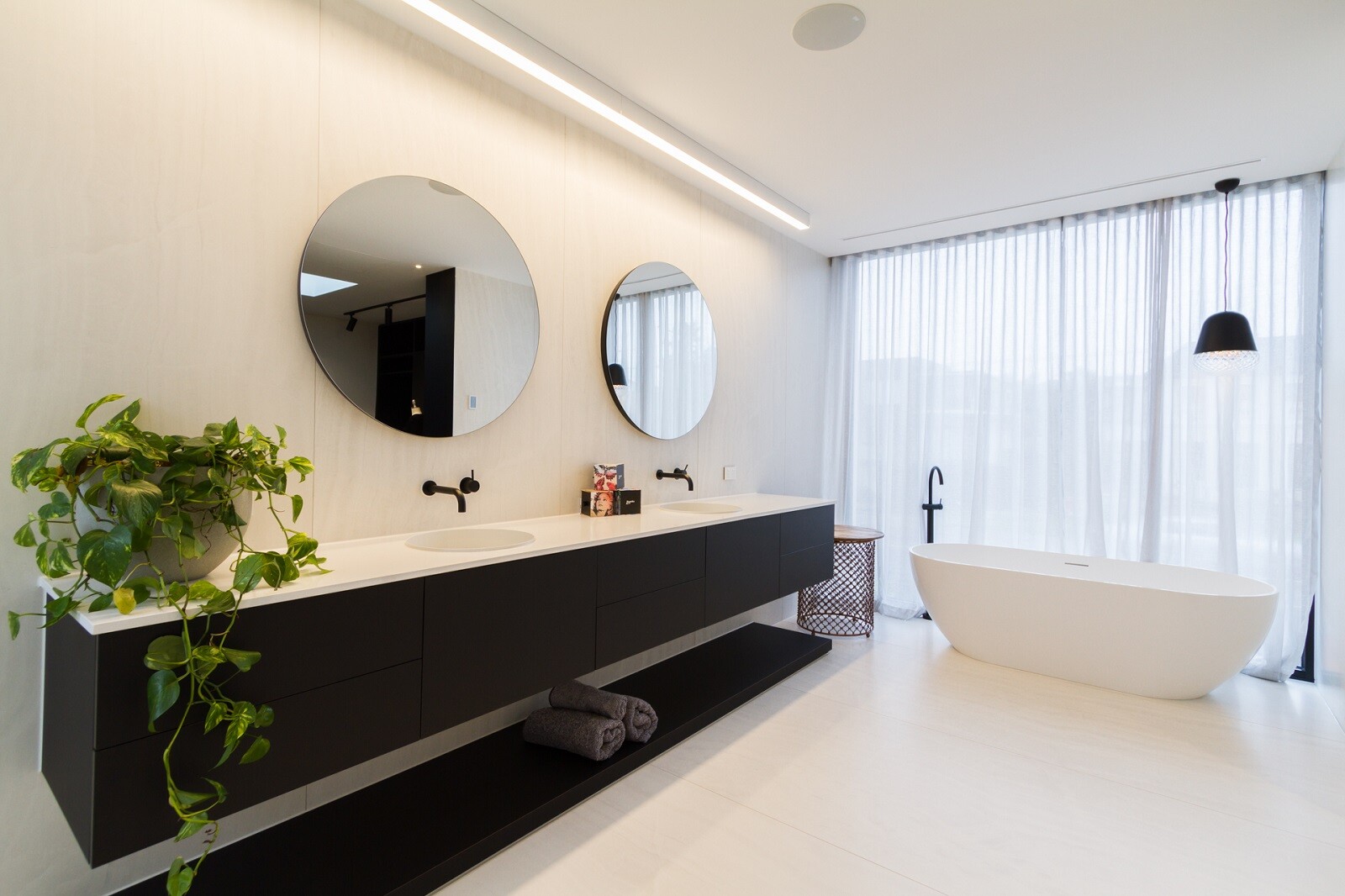
Custom kitchen construction starts with your room. A designer measures the actual space and produces drawings to precise dimensions, including conditions that a standard panel cannot match. The cabinetry comes out of manufacturing to fit those specific conditions, not the other way around.
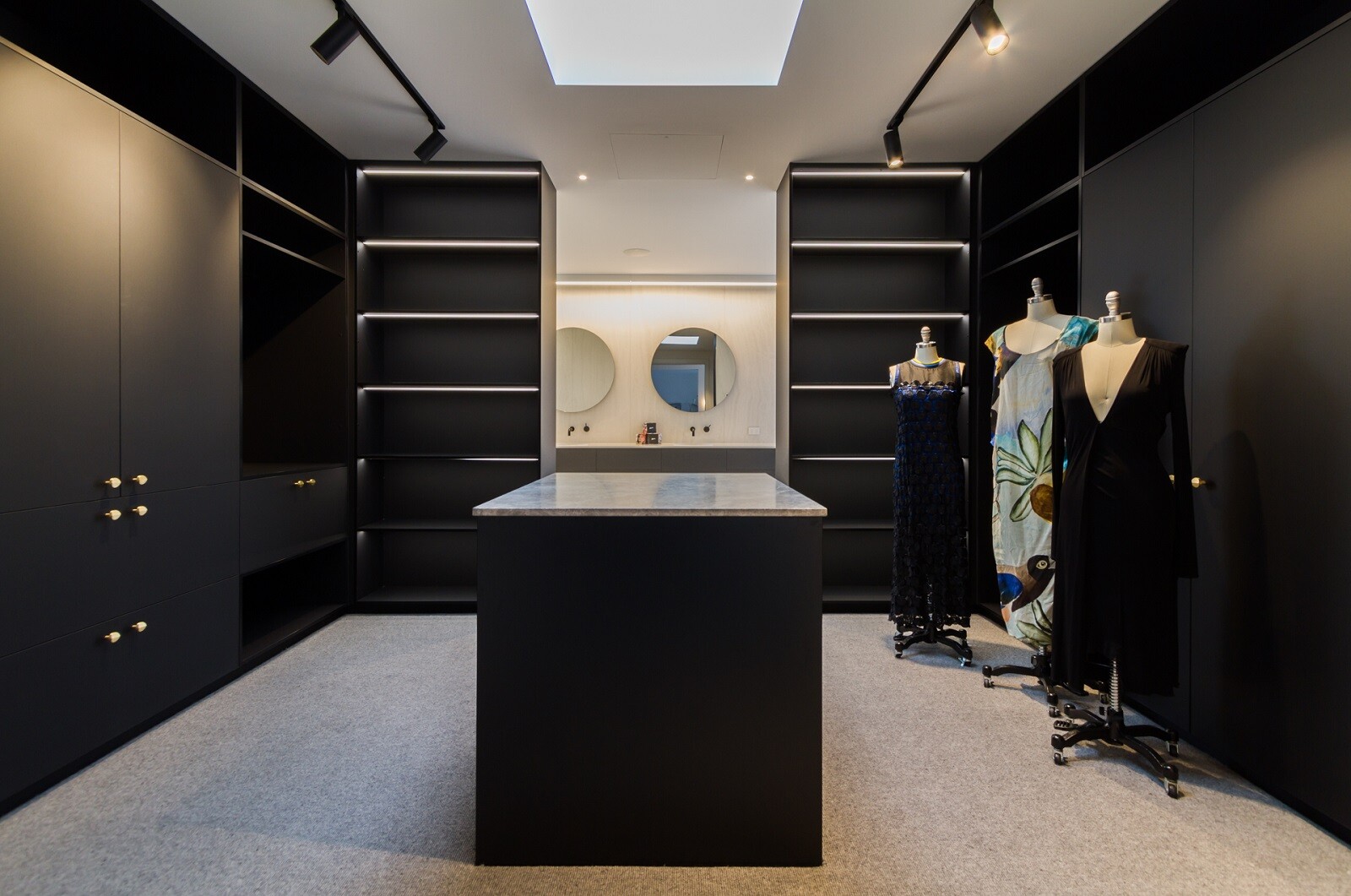
Founded in Melbourne by Michael Simpson and Peter Schelfhout, The Kitchen Design Centre manufactures every kitchen in its own Bayswater factory. That model has earned 10 Houzz Awards across 30 years of bespoke Melbourne projects. Together, they bring more than 50 years of combined building experience. Qualified cabinet makers build every piece before the same team installs it.
In flat-pack, design, supply and installation happen in three separate conversations. The gaps between them are where interpretation creeps in.
Custom cabinetry for bespoke kitchen renovations closes those gaps. One team carries the design from the factory floor to the finished room without a handover in between.
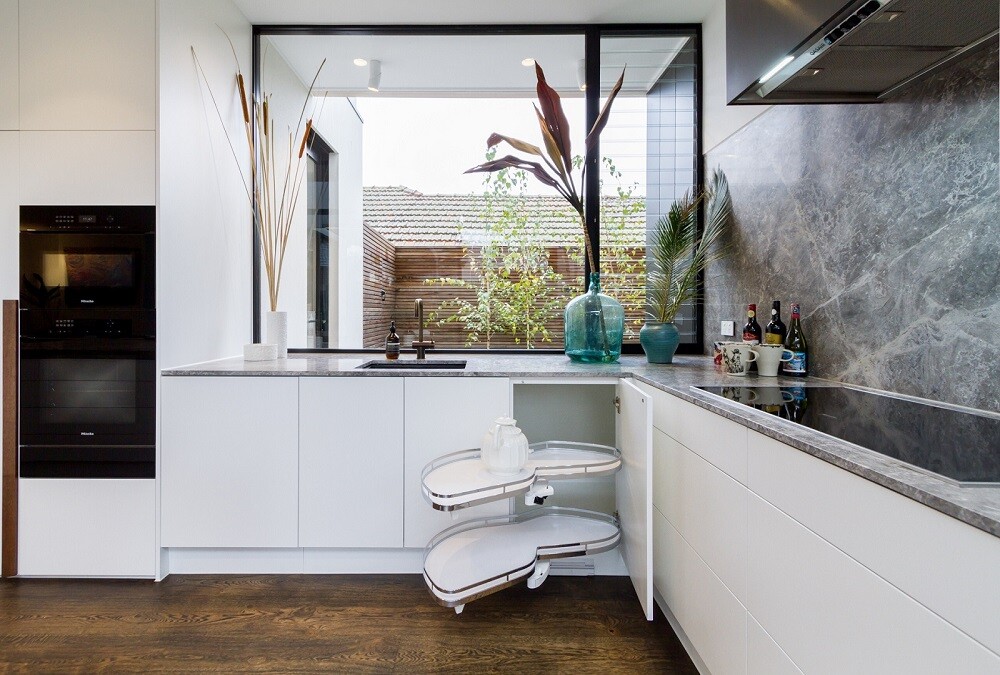
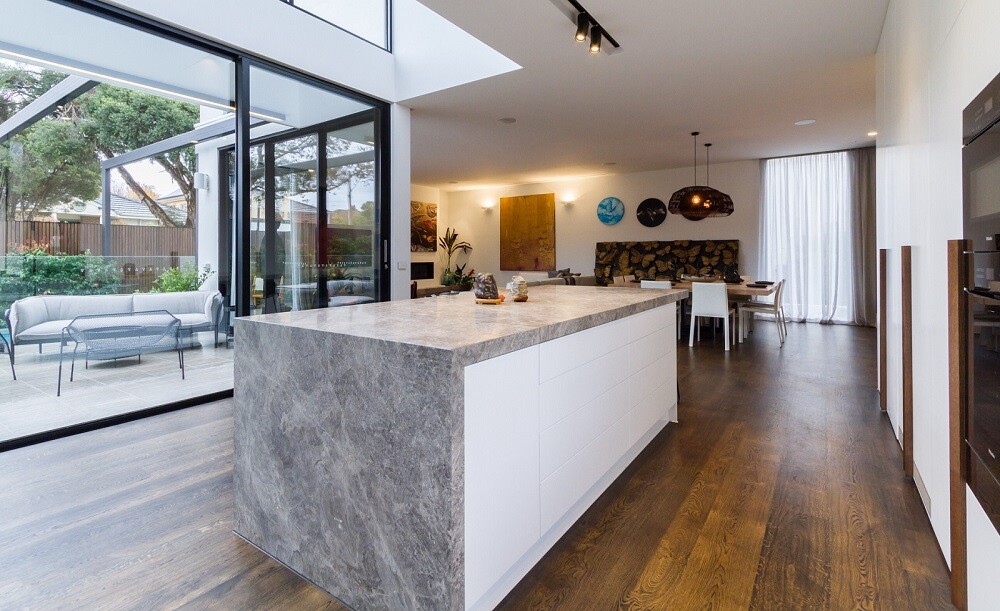
Kitchen decisions rarely stay in the kitchen. The material choices and cabinet profiles you select there tend to set the visual language for the rest of the home. Carrying that language into the laundry and bathroom requires a builder with joinery scope across the whole project. A kitchen designed in isolation rarely reads as a complete interior.
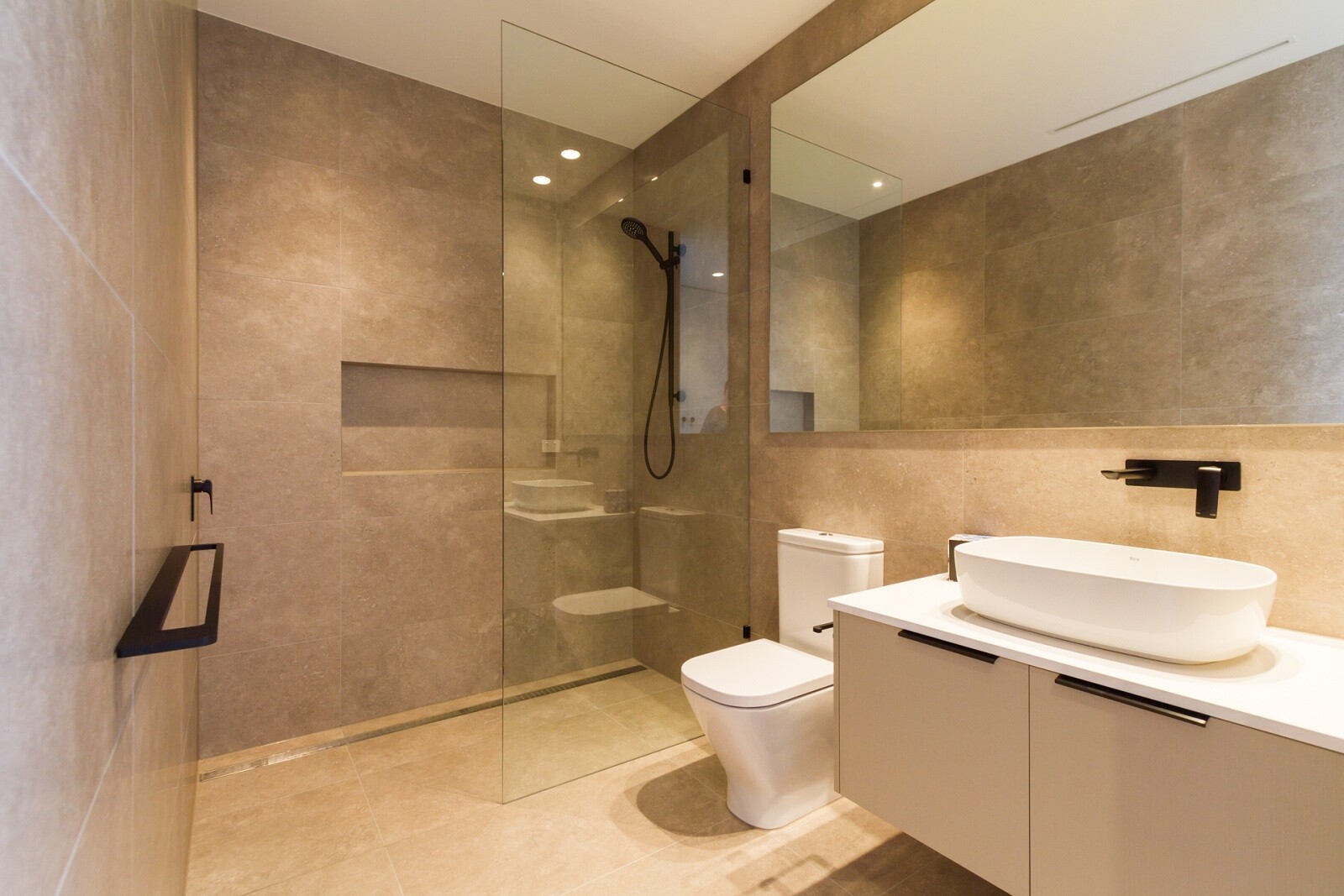
Whole-home joinery, covering butler’s pantries and bathroom vanities, calls for a builder who controls both design and manufacture. You can see how that extends to bathroom and laundry renovations at showrooms in Essendon, Eltham and Blackburn, where the team regularly refreshes full-size joinery displays.
Two questions cut through most kitchen marketing. Does the builder manufacture in its own facility, and can you see finished work in a showroom first?
For Morgan Hipworth, who worked directly with co-founder Peter Schelfhout on his 2023 kitchen, “authentic Australian quality was a non-negotiable.” A builder undertaking home renovations whose founding directors are registered builders makes that possible.
The difference between custom and flat-pack becomes most visible at the margins. Cabinet door alignment and the way materials meet at a corner trace back to whether the kitchen was manufactured to the room or assembled from standard sizes. Precision built in at the factory holds differently from precision achieved at the point of assembly.
The Kitchen Design Centre remains one of the few Melbourne businesses manufacturing bespoke kitchens from its own facility. Projects span contemporary and classic styles across light, dark and timber joinery, each one built to a specific room. The Essendon, Eltham and Blackburn showrooms let you see the work in person before committing to any design.
INDESIGN is on instagram
Follow @indesignlive
A searchable and comprehensive guide for specifying leading products and their suppliers
Keep up to date with the latest and greatest from our industry BFF's!
The internet never sleeps! Here's the stuff you might have missed