The home of architecture and design in the Asia-Pacific
Get the latest design news direct to your inbox!

Get the latest design news direct to your inbox!
The M+ Museum is the place to visit for a cultural journey but couple this with fine dining in a beautifully designed restaurant and the experience is complete. Mosu Hong Kong is certainly the place to visit not just for superb cuisine but a design experience that more than complements the dining occasion.


October 27th, 2022
M+ Museum is certainly a destination. As a cultural centre in Hong Kong, the museum, located in the West Kowloon Cultural district, is one of the largest museums of modern visual culture in the world. To enhance the visit to M+ Museum and sate the appetite, the Mosu Hong Kong designed by LAAB Architects (LAAB), is just the place to visit to savour fine Korean cuisine and experience excellent interior design.
The Mosu Hong Kong is adjacent to the roof garden of the museum at the intersection of the LED façade and the podium landscape. Here, technology meets nature and, in response, LAAB has conceived the idea of Digital Nature, where indoor landscape meets and complements animated digital lighting.

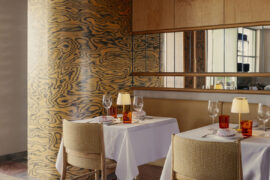
The 7,200 square feet (669 square metre) restaurant has been created from natural and raw materials that echo the culinary offerings of the executive chef. LAAB has designed the interior with architectural features such as pleated walnut timber walls and natural-cut granite counters. The focal point that grounds the floorplan is the outstanding lighting installation of glass spheres that hangs from the ceiling of charcoal-tinted bamboo scaffolding. The form resembles dozens of frothy bubbles and illuminates a natural foliage garden below.
Working with Hong Kong florist Flowerbed, LAAB created the Flower Bed installation that is a blend of preserved and naturally dried small flowers and wild foliage such as rhodanthe and acroclinium in organic white and pink. Reflecting the seasonal menu, the flower bed will also transform with the changes from spring to winter and autumn to summer.

Surrounding the lighting installation and garden are four leather and wood banquette seating alcoves and then more tables and chairs are positioned aside the periphery of the space. Guests can relax and enjoy the vistas of the landscaped garden outside and there is ample room to move inside. There is also a special space for intimate dining, with a long timber table placed in the Focus gallery. Here, the interior ceiling and walls are clad in honey-toned timber that is both flat and fluted. A glazed window provides views of the chefs at work in the kitchen. In all, the aesthetic is definitely contemporary, but it is also warm and textural.
The design approach is layered, the materiality minimal but used in various ways. For example, walnut timber (as used as pleating on walls) has also been employed on sculpted walls and slat walls as well as the frames for armchairs. Glass lamp shades appear in different shapes and textures to deliver disparate lighting effects that complement the polished limestone.

Mosu Hong Kong is a place of refined elegance. This is a restaurant to visit for an occasion or simply to enjoy exceptional food but it is the interior design that makes the visual statement. The saying that we eat with our eyes is well and truly at play as the interior provides a wonderful accompaniment to the culinary experience.
LAAB is well known for its inventive and original designs with every project it undertakes. The practice comprises 40 architects, designers, artists, engineers, makers and sociologists that together bring its unique creative visions to life. The studio works across multiple genre that includes commercial, hospitality, residential, gallery, art, event, public, education and retail projects. As with Mosu Hong Kong, expect the unexpected design approach from LAAB, where the result is always the same, an outstanding and sophisticated concept and delivery.
LAAB Architects
laab.pro


INDESIGN is on instagram
Follow @indesignlive
A searchable and comprehensive guide for specifying leading products and their suppliers
Keep up to date with the latest and greatest from our industry BFF's!
The internet never sleeps! Here's the stuff you might have missed