Vacant offices in every major city throughout Australia are a fact of life at the moment. However, with careful planning and innovative ideas, there is the opportunity to transform these former commercial areas into something new and meaningful.
An example of this is a recently completed adaptive reuse project in Melbourne’s CBD — Hester Hornbrook Academy’s City Campus, designed by Gray Puksand — that showcases just how great design can transform a space and truly make a difference.
The brief for the new campus from Hester Hornbrook Academy (HHA) to Gray Puksand’s Senior Associate, Nick Shearman and his team was to design a facility that would amalgamate three smaller campuses and provide a place for leadership staff to gather and collaborate.
The new interior would also be informed by HHA’s Healing-Oriented Program of Education (HOPE), a holistic model of education that has a student-centred approach to support both the individual and their educational needs.
As with any adaptive reuse project, there were challenges — how to transform a space of 2,100 square metres across two levels that was once a workplace into an educational facility with classrooms, meeting rooms and breakout spaces and all the support services unique to the HHA educational model.
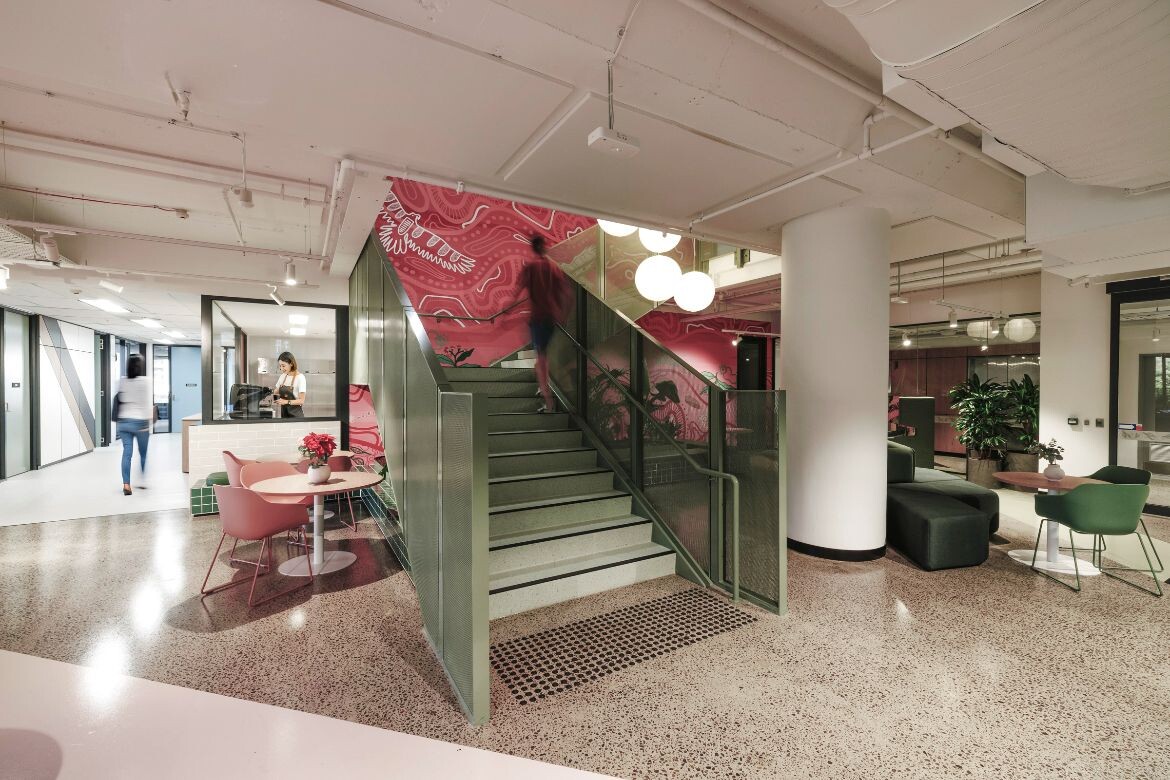
The concept from Gray Puksand included inserting a new staircase that would link the social spaces and activity areas on the principal floor to those on the level above.
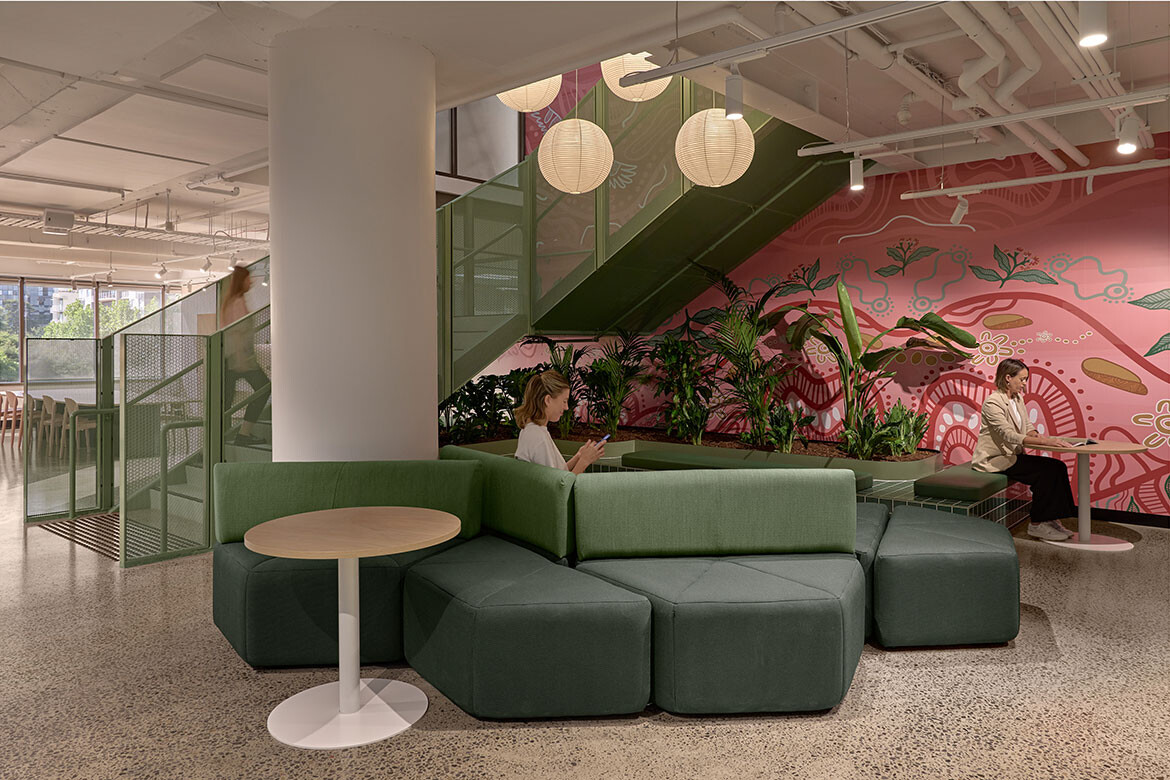
“It was a core part of the architectural concept and the design has been executed exceptionally well. The staff and students have the ability to connect directly between the social spaces on the main floor with the classroom neighbourhoods on the level above,” Shearman says.
There were certain requirements to be taken into account, such as wellbeing and security for students, staff and the public, ensuring emergency egress and including new hybrid teaching spaces in areas retained from the previous workspace fit-out.
Related: GroupGSA designs MUFG Pension & Market Services’ Sydney HQ
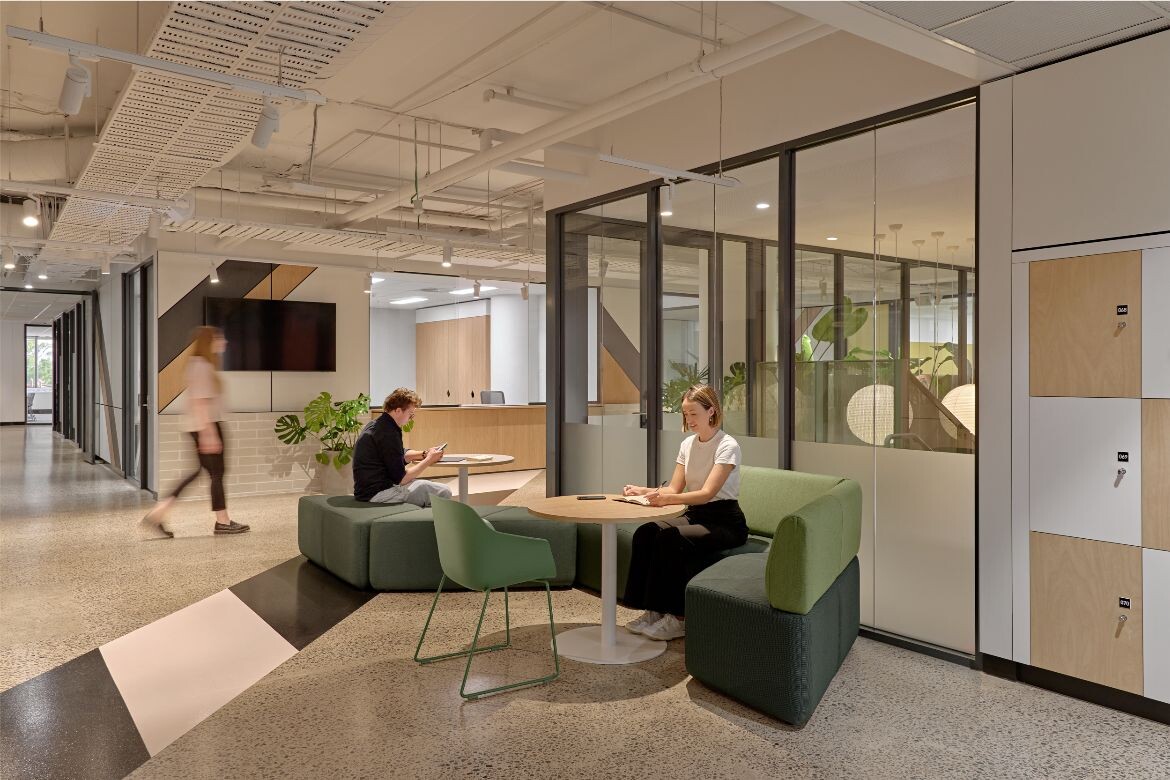
With the HOPE model of pedagogy, HHA is not just an educational facility but one that also provides physical and emotional care to its students through meals and travelcards, psychological and medical services and even legal advice. Each space was designed to embody the care and support central to these wrap-around services.
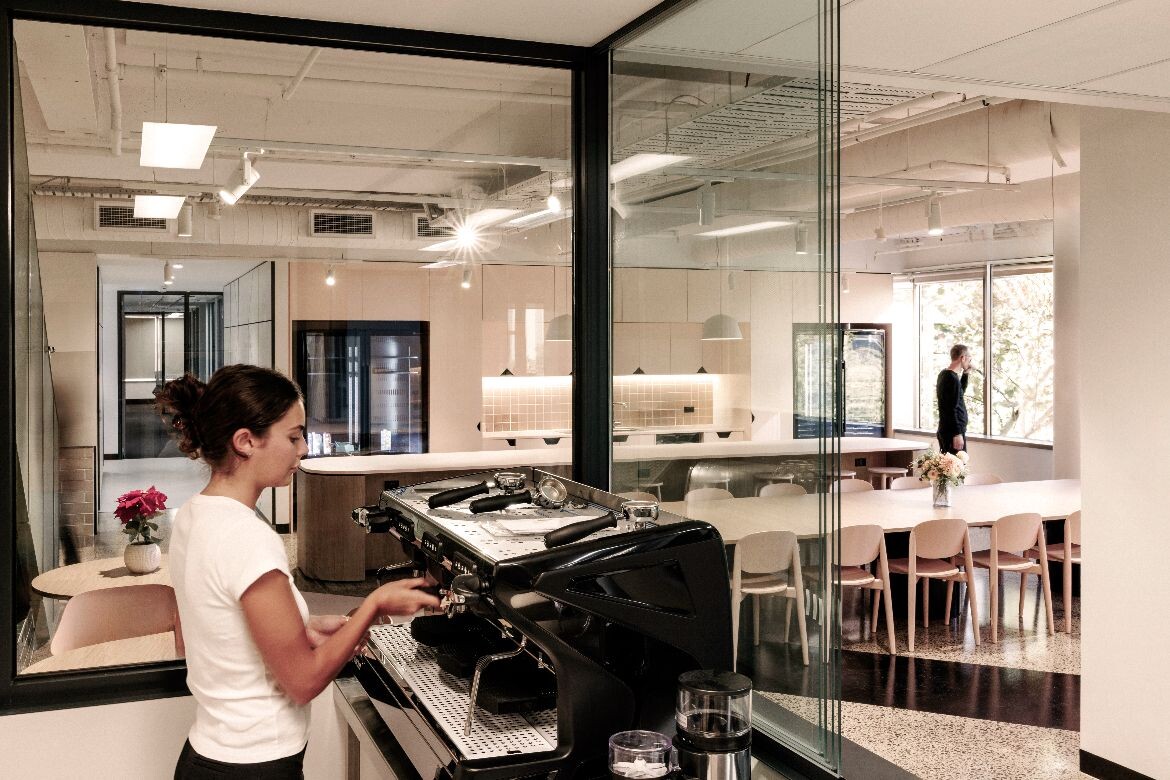
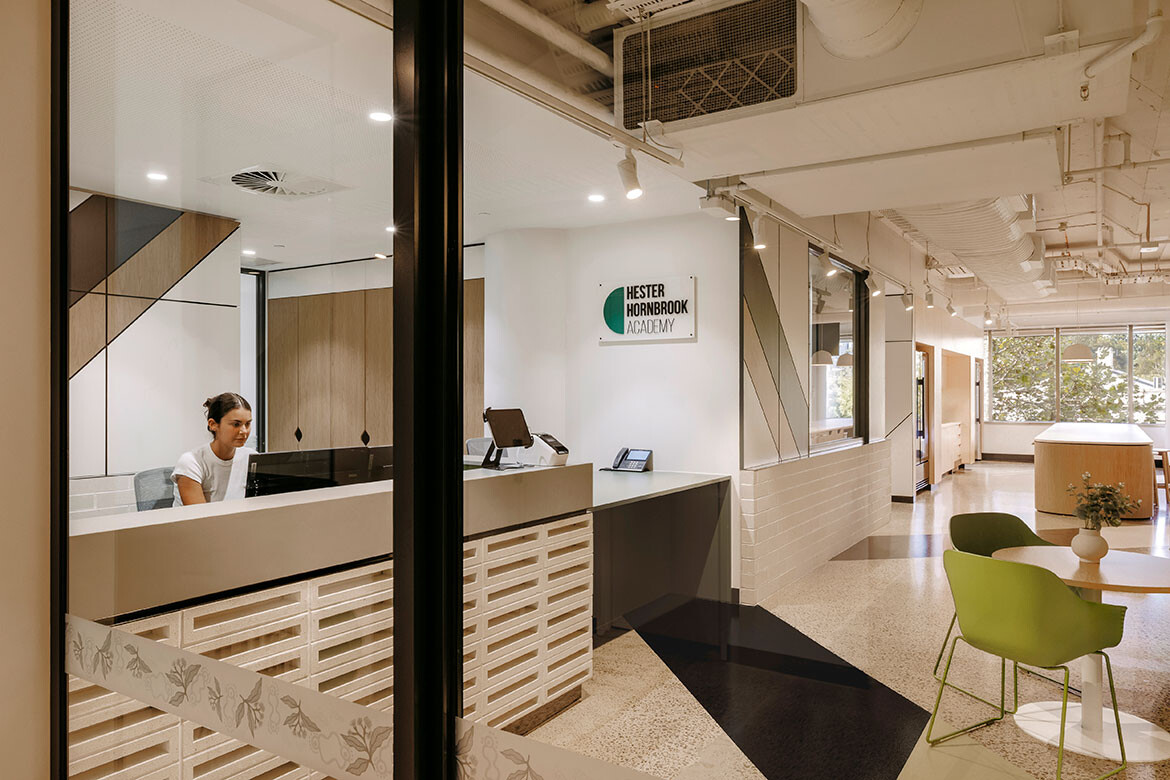
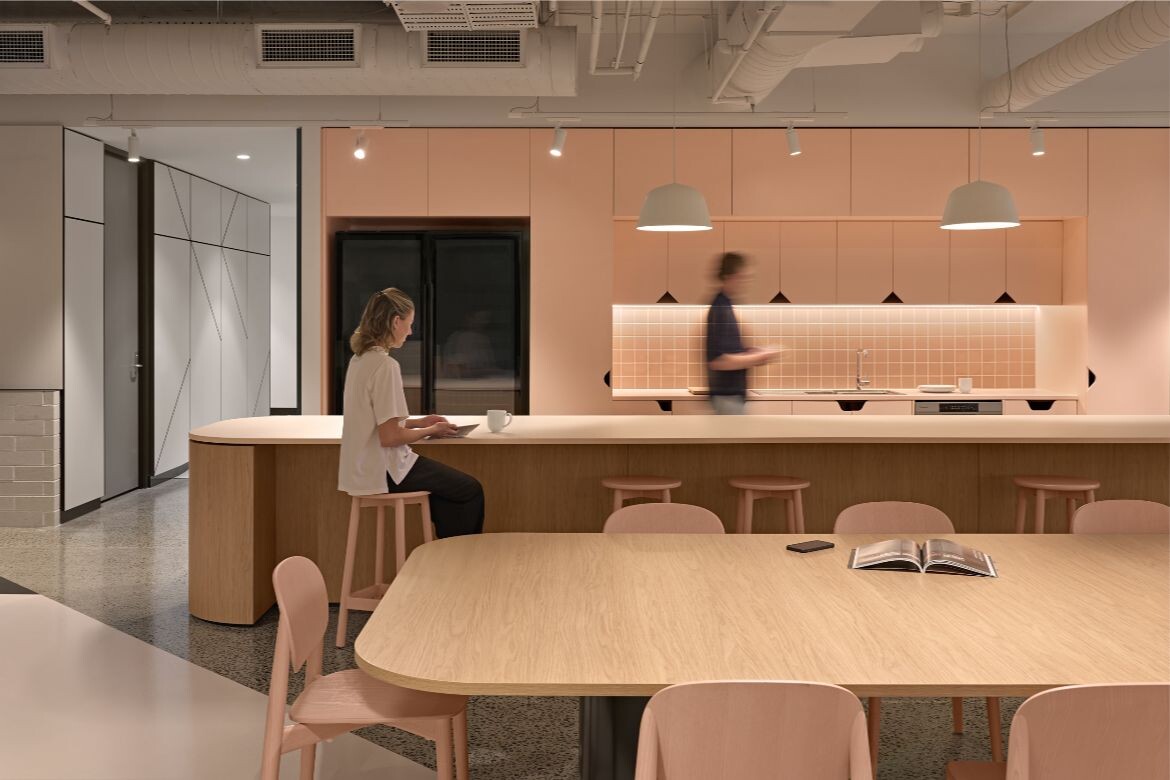
Entry to the campus is via lifts to the third level of the commercial tower, where visitors arrive at a reception and lobby area featuring staff meeting rooms, hybrid classrooms, student support and health services, a youth hub, kitchen, pantry, laundry and shower facilities, as well as a reheat area used for hospitality training.
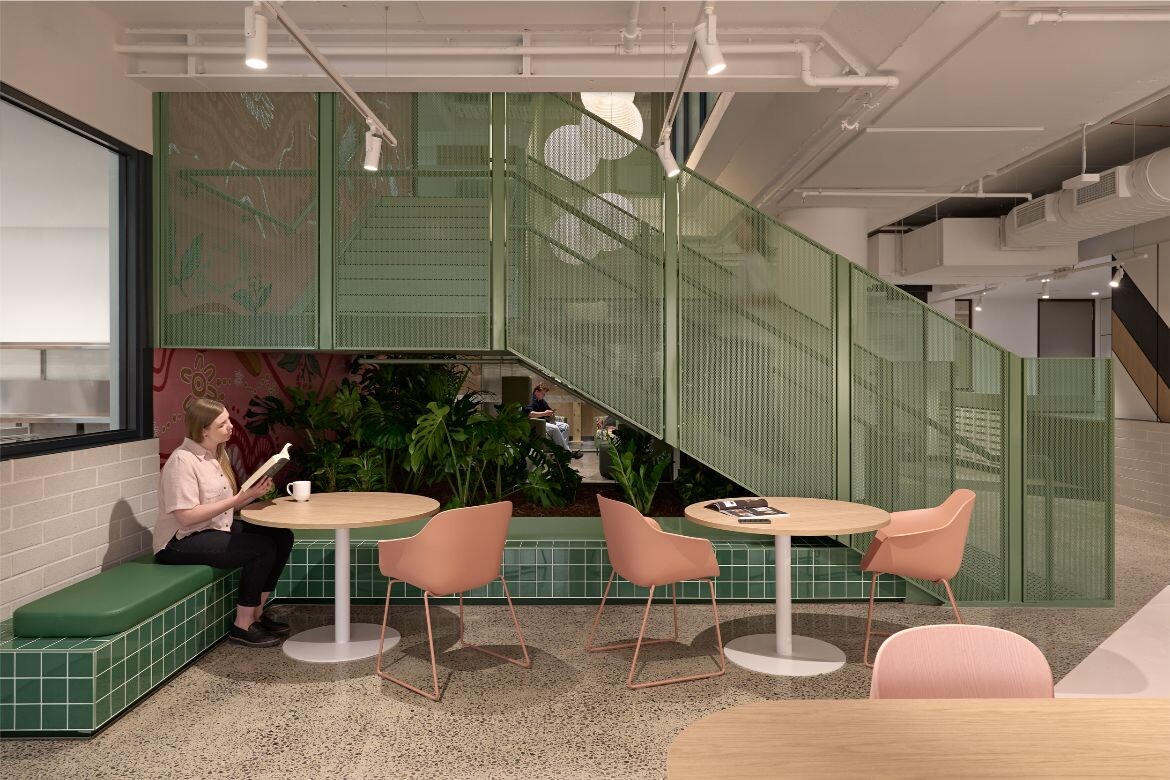
“I’m really pleased with how we’ve designed all the social spaces within this footprint. The existing footprint was very constrained, but from a student movement point of view, the quality and feel of the spaces when you come into the campus take full advantage of the sightlines. The campus is fortunate to have an incredible outlook on that side of the building, across the gardens and out towards the Exhibition Building,” reflects Shearman.
On the upper level are the main classrooms, planned as three distinct neighbourhoods, each with three classrooms, allowing the campus to accommodate up to 225 students at any one time. There is also a young parents’ room for students who have small children.
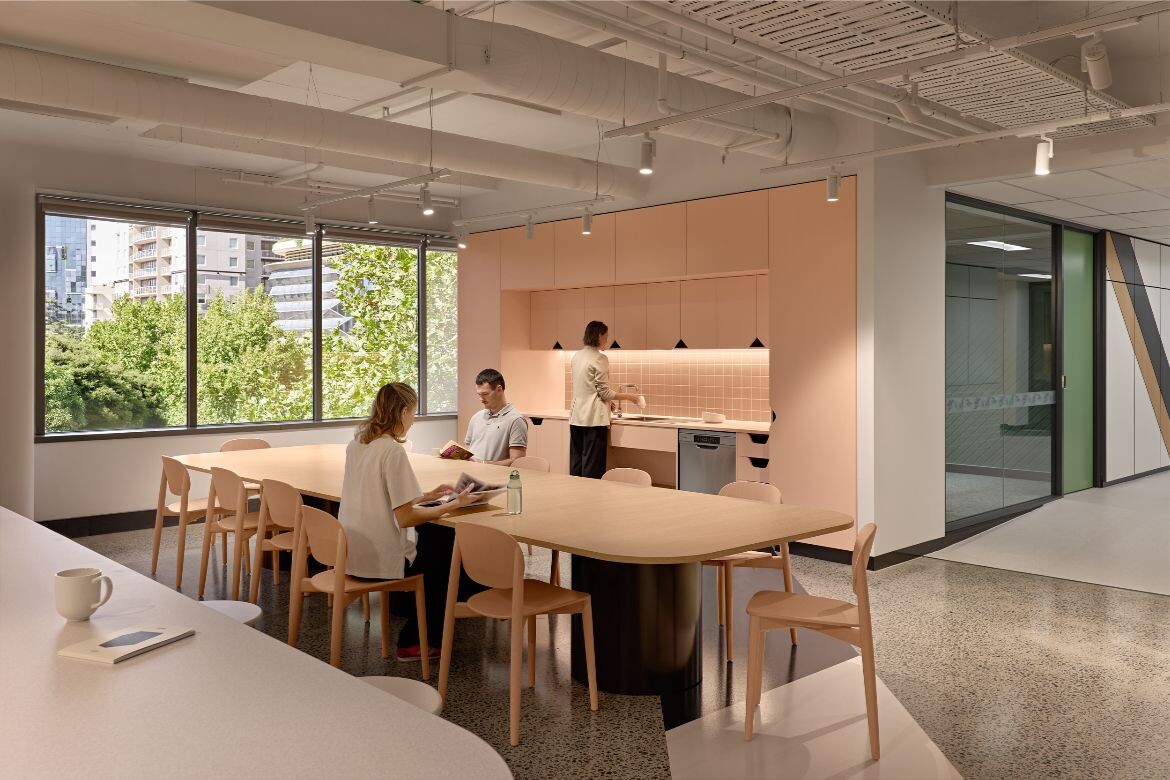
On level three, additional hybrid classrooms include an adjacent space for teachers to conduct remote learning. These are equipped with AV and video-conferencing technology for online teaching.
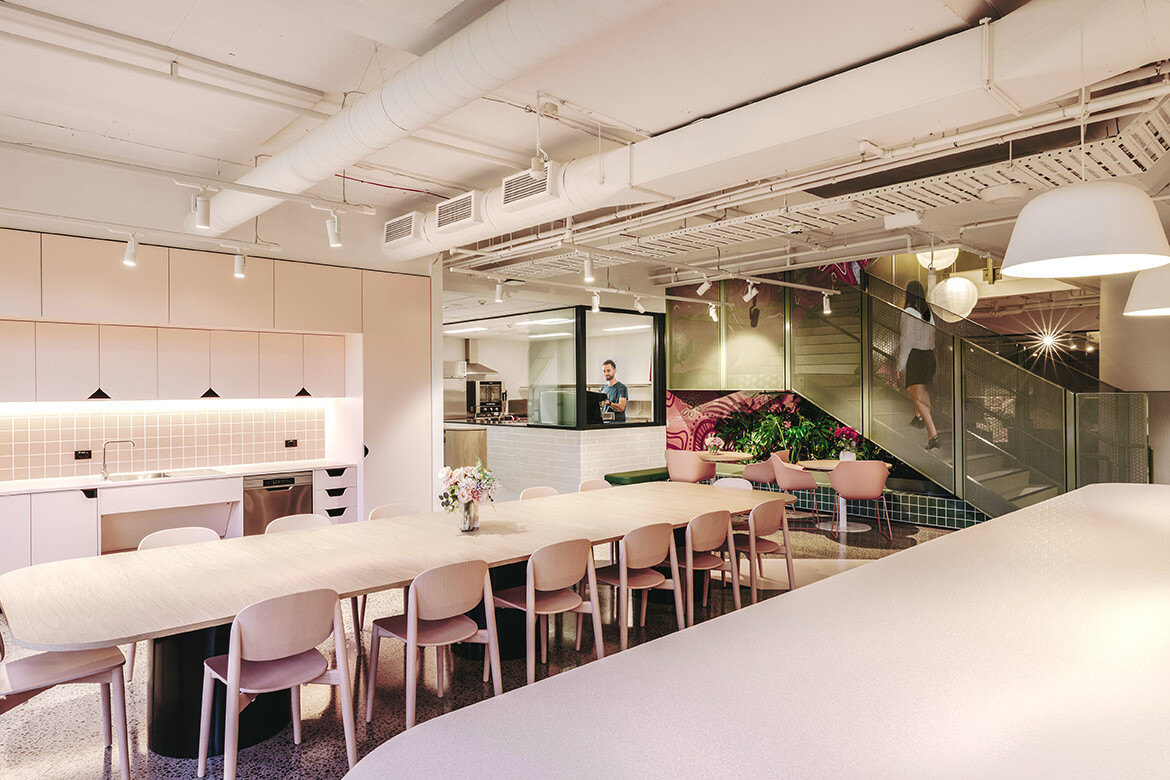
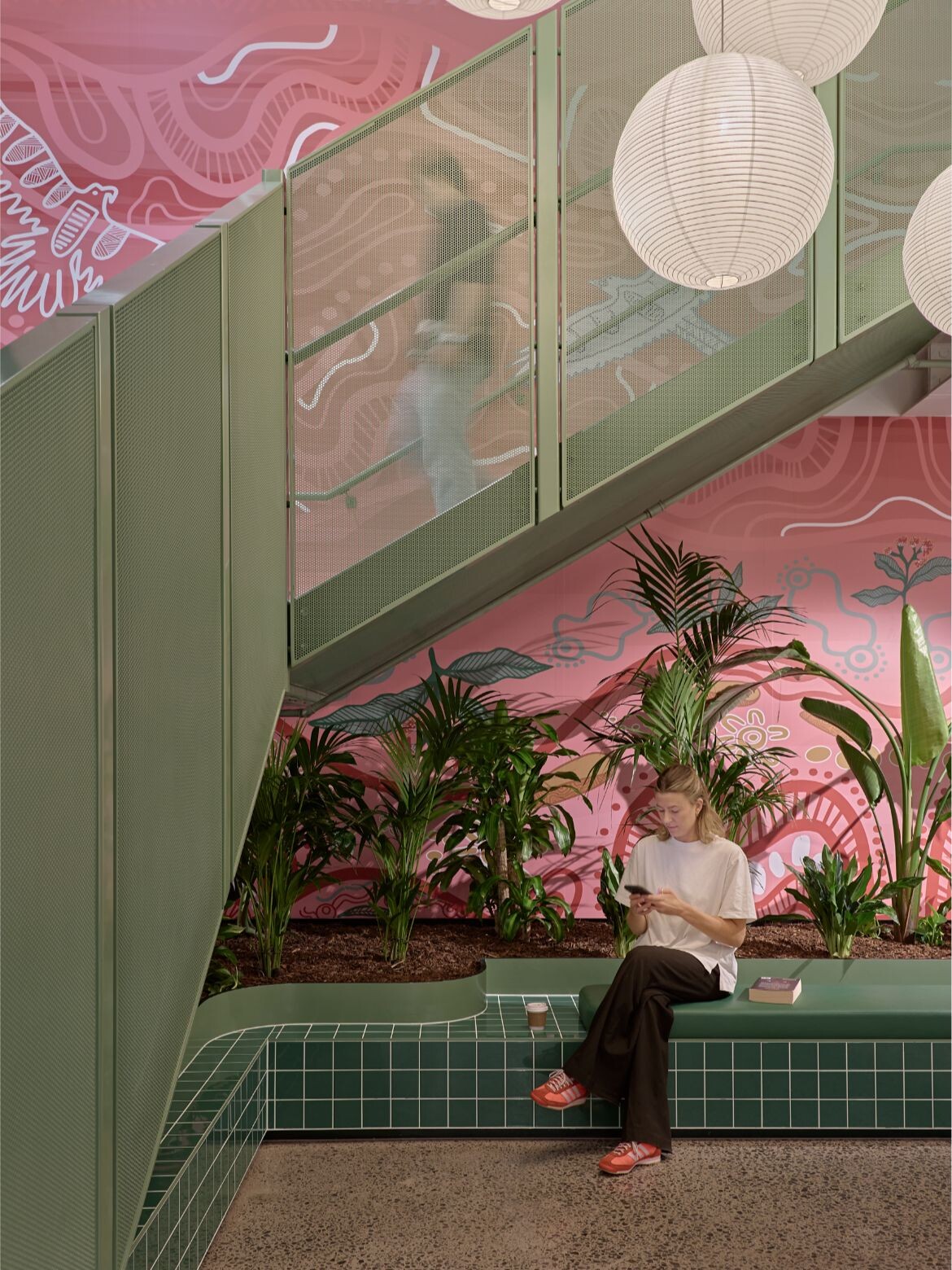
While the facilities and amenities of the school have been expertly planned, it is the execution of the design that truly dazzles. The colour palette of soft green and pink is a revelation and lifts the aesthetic away from the ubiquitous grey of a traditional school. Colour has also been used for wayfinding, with blues, yellows and greens for classrooms, pink for social areas and teals and blues denoting staff zones.
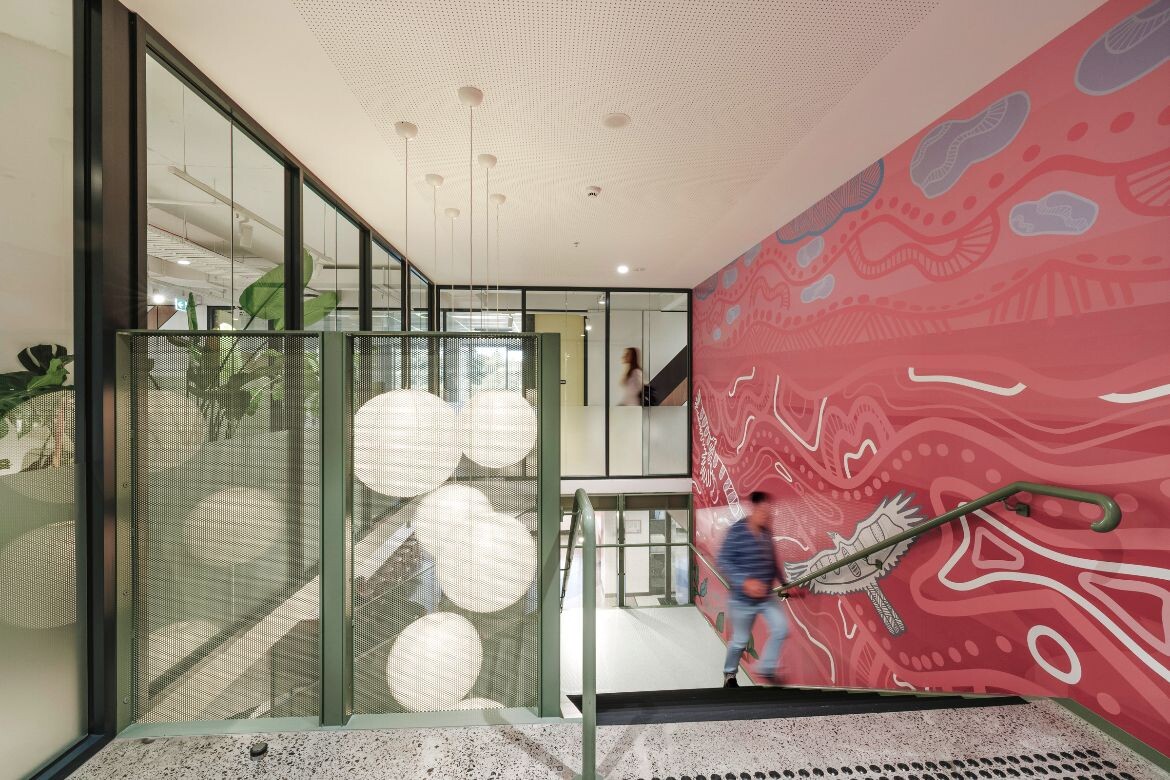
The exposed ceilings are painted in a very soft white and the floors are polished concrete. The staircase balustrade, made of perforated steel and finished in green, provides transparency and extends the visual connection between spaces. Square moss-green tiles with white grout cover the low bench seats, which are topped with comfortable green cushions.
Lighting is simple and effective, with overhead spotlights on tracks throughout and a cluster of paper-sphere pendant lights adding warmth and character to the void. However, the most visually striking inclusion is the beautiful artwork by Emma Bamblett on the wall behind the stair that links the two floors. The piece is a design concept by the artist that incorporates key attributes from the HOPE model, informed by Sally Lasslett, Executive Principal of the Hester Hornbrook Academy and tells a story of Country that brings both dimension and joy to the interior.
Gray Puksand has completed two other schools for HHA — a new build in Werribee and the adaptive reuse of a former commercial retail space in Sunshine — each designed to reflect its surrounding community and environment. With this third campus iteration in the city, the design intention and resolution have evolved and matured, resulting in a project that is a credit to both client and architect.
“Students have differing sensory needs, different learning modes and come from diverse backgrounds. The team has responded to this at each iteration and the design narrative continues to evolve with the school. We ensure honesty in our design response, reflecting the buildings we are working with. City Campus very much reflects the fact that we are repurposing a commercial building rather than a greenfield site or warehouse conversion. The design is honest about its topology and we always try to express each building’s unique qualities to provide its own sense of place,” comments Shearman.
The education provided by HHA makes a difference to many young lives and is an incredibly positive initiative in the sector. With this new campus, designed with such care and expertise, there is no doubt that learning will be enhanced and, most importantly, lives will be enriched.
Gray Puksand
graypuksand.com.au
Photography
Jack Lovel
James Thomas