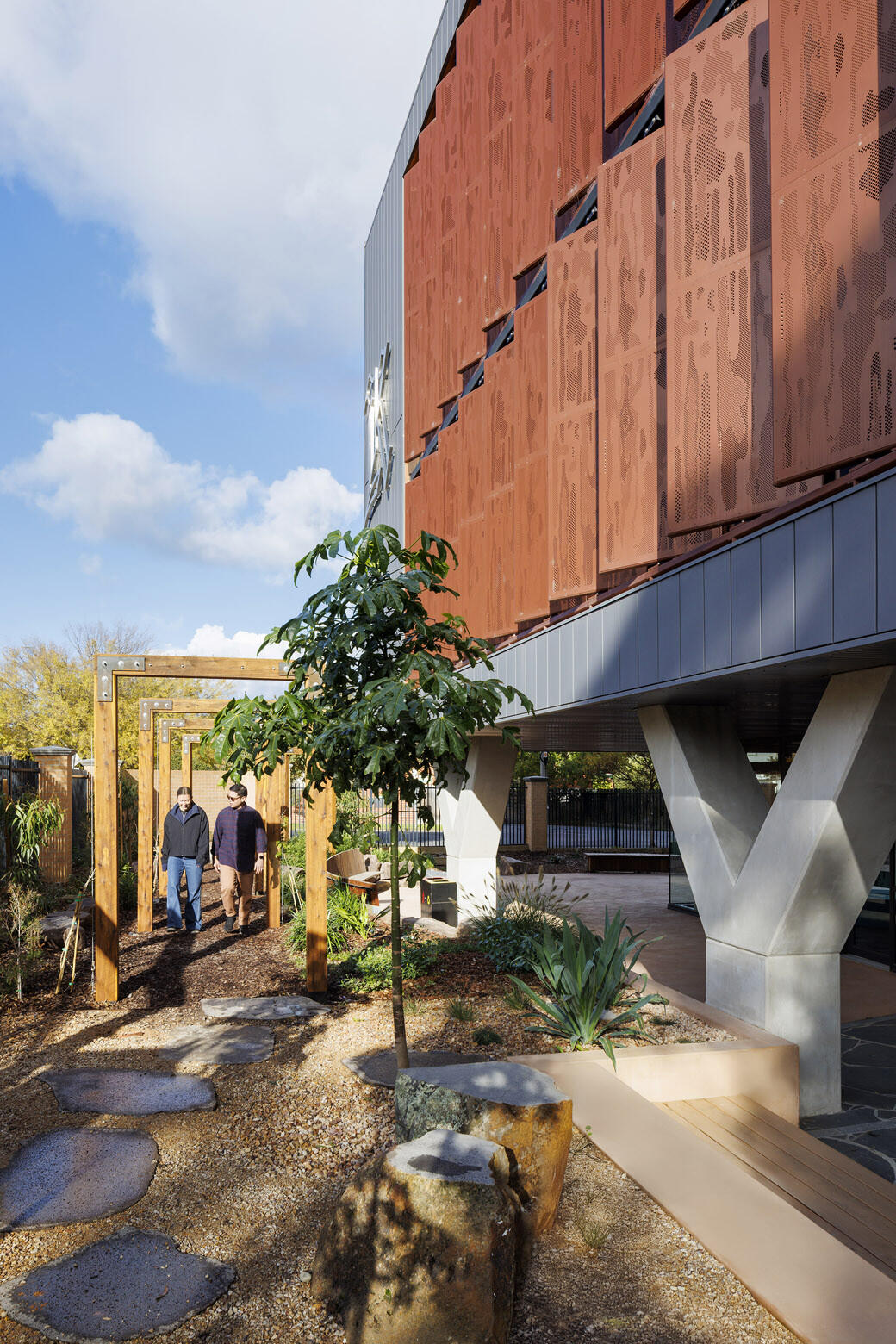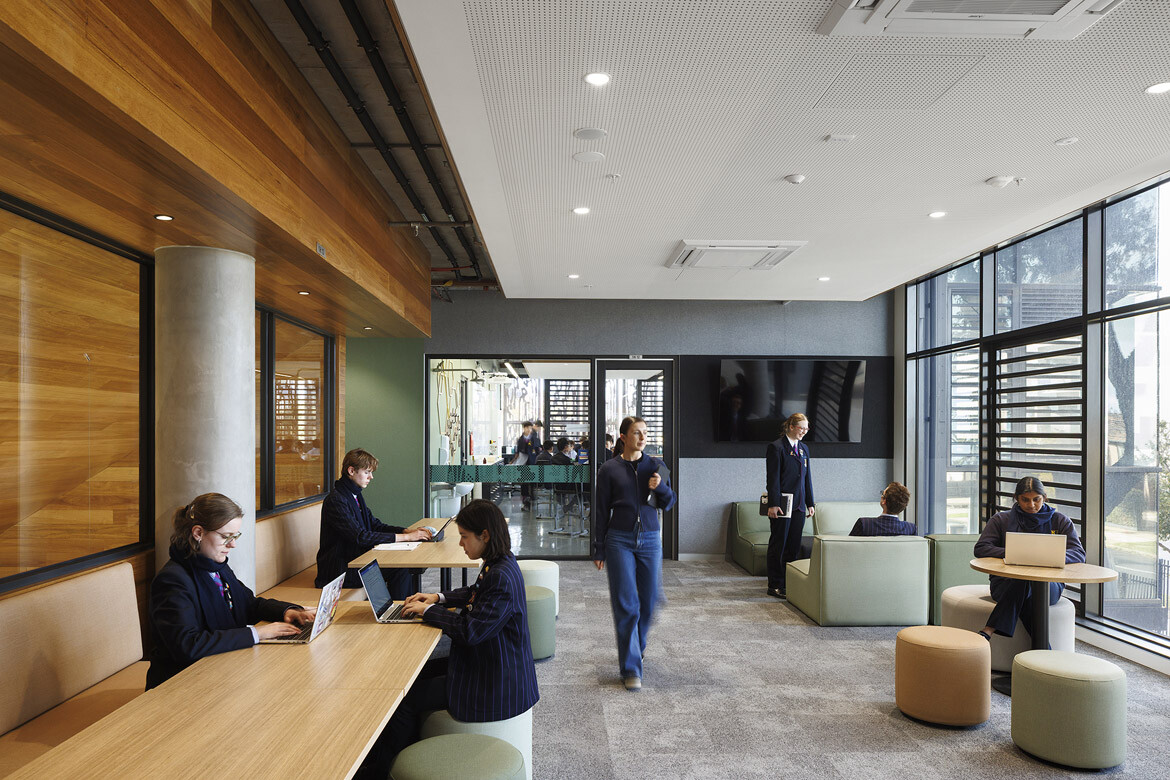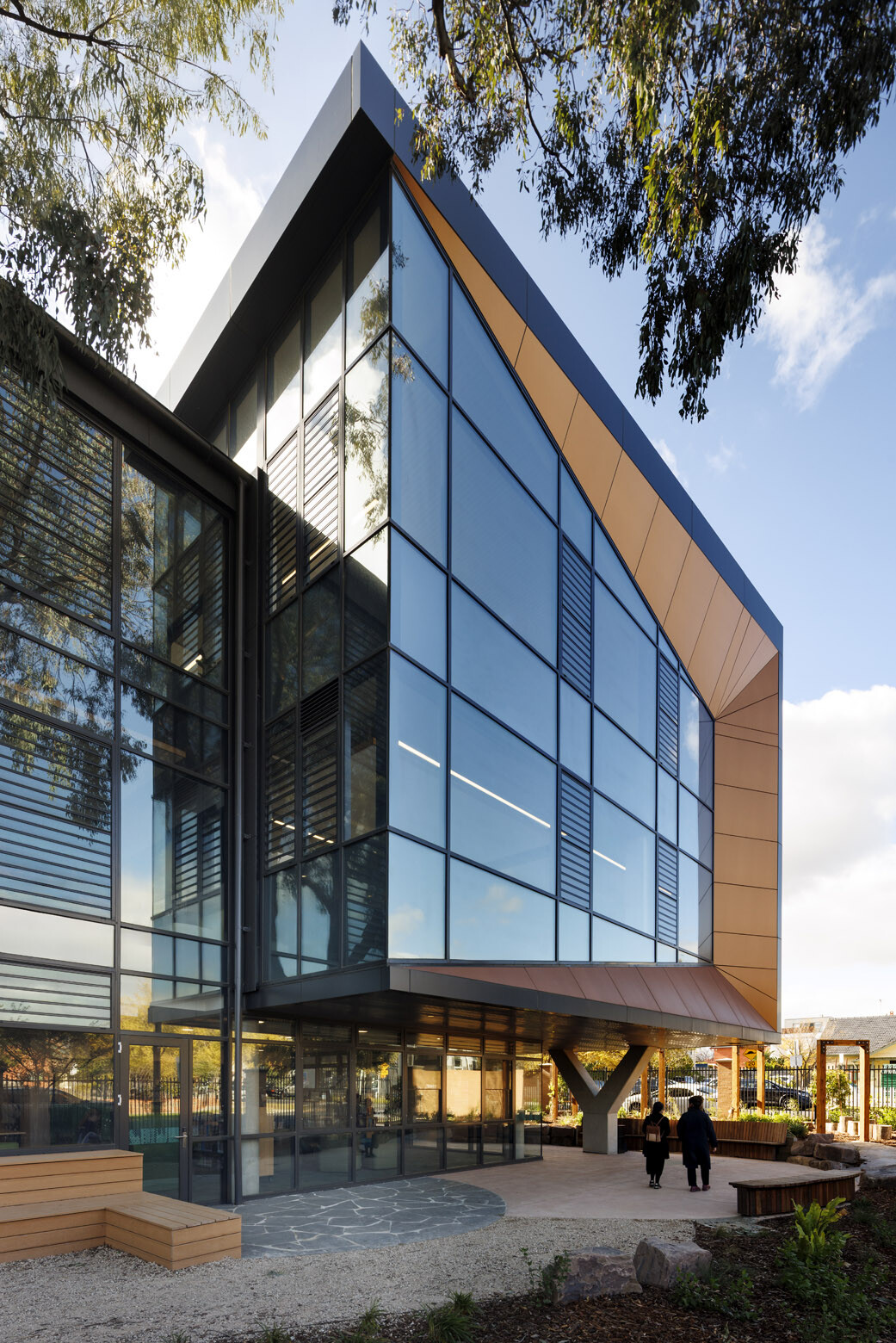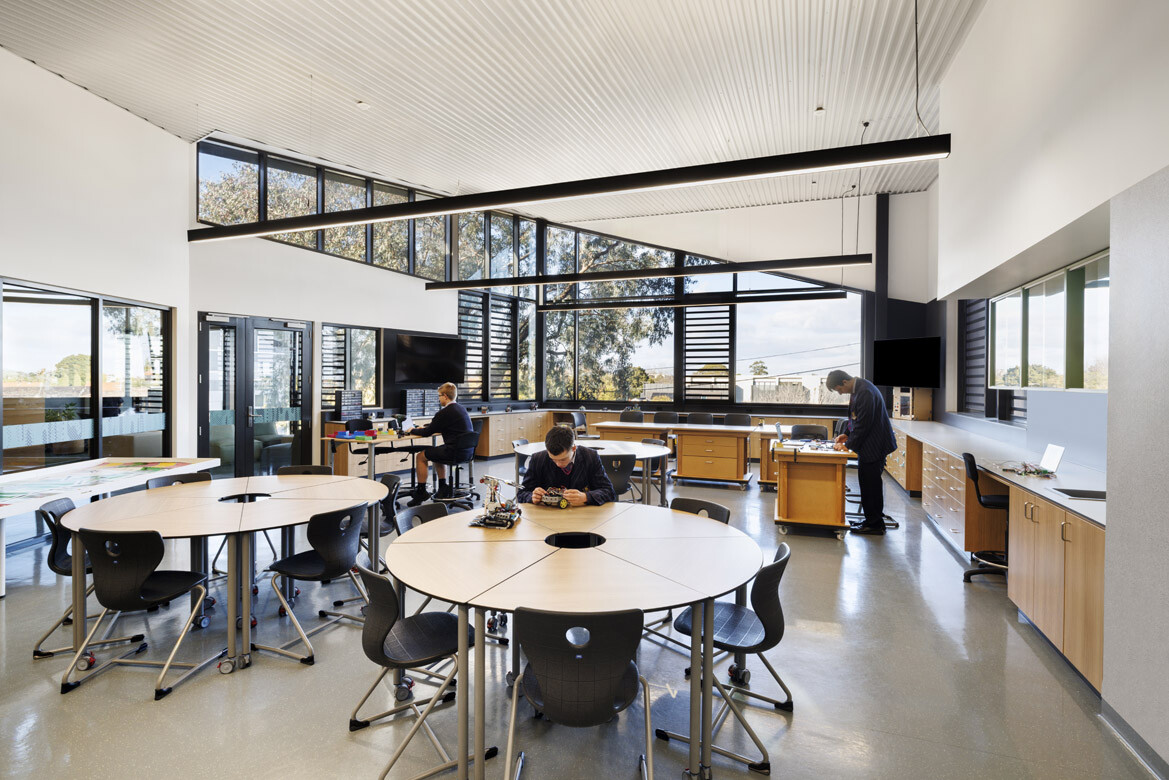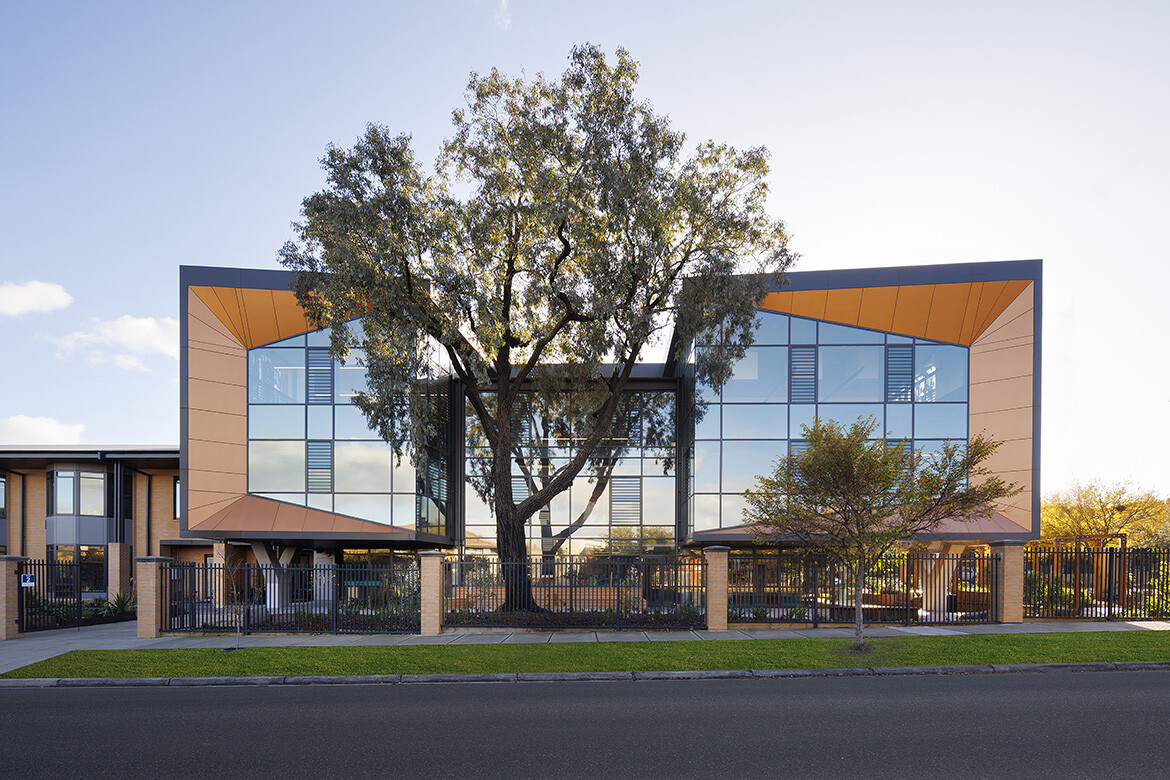
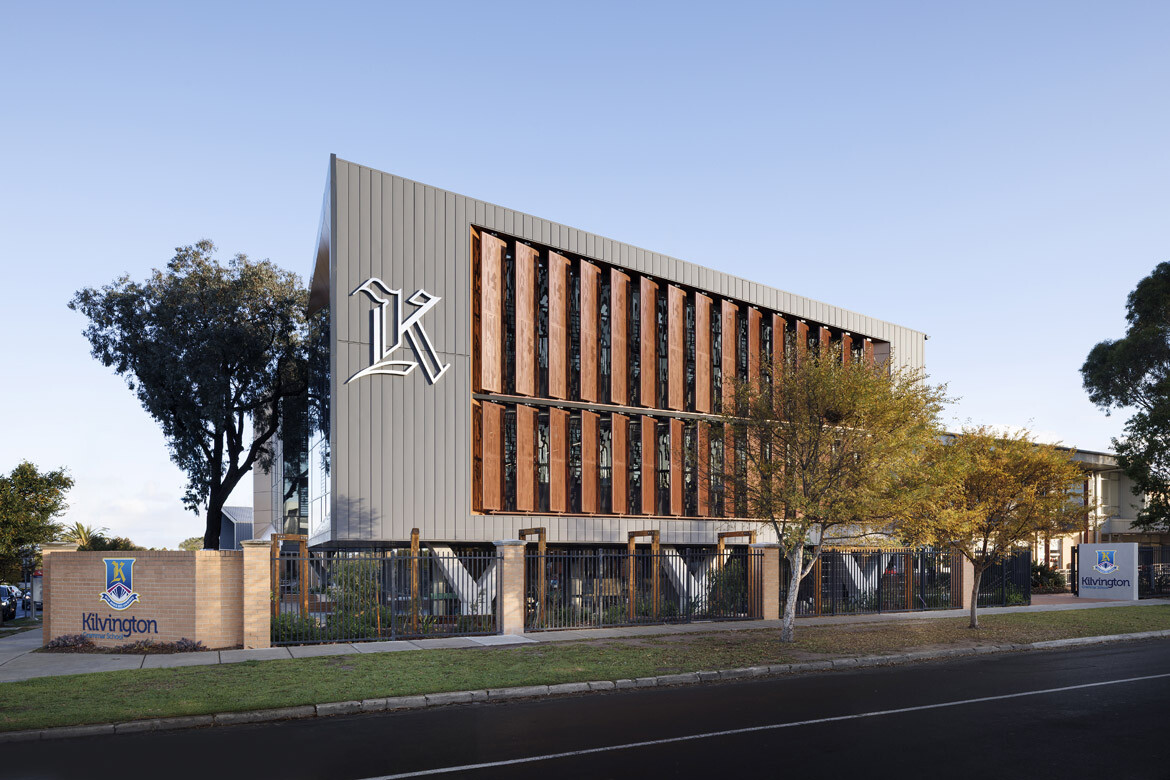
By placing emphasis on adaptable and collaborative spaces, biophilia and technology, CHC has decisively brought this site into the world of contemporary education design. ‘The Hive,’ as the project is titled, took an ageing single-storey library and turned it into three levels encompassing a variety of spaces and uses.
The overall aims of the project are summarised by the designers: to consolidate the school’s science and technology spaces, enhance cross-disciplinary collaboration, support future-focused teaching, enable curriculum growth, enhance street presence and reflect the school’s commitment to innovation, excellence and sustainability.
“Spatial planning reflects Kilvington’s teaching and learning objectives,” says CHC Partner, Simon Le Nepveu. “Collaboration zones are positioned between specialist spaces, a central tiered forum and strategic sightlines, enabling passive supervision, cross-disciplinary exchange and student agency.”
Director of Business at Kilvington Grammar School, Hirian Hinson, adds: “The Hive has become a symbol of Kilvington’s forward-thinking ethos. Working with ClarkeHopkinsClarke Architects we’ve achieved our vision for a collaborative, technology-rich environment that inspires curiosity and exploration.”
Related: Urban verticality in India
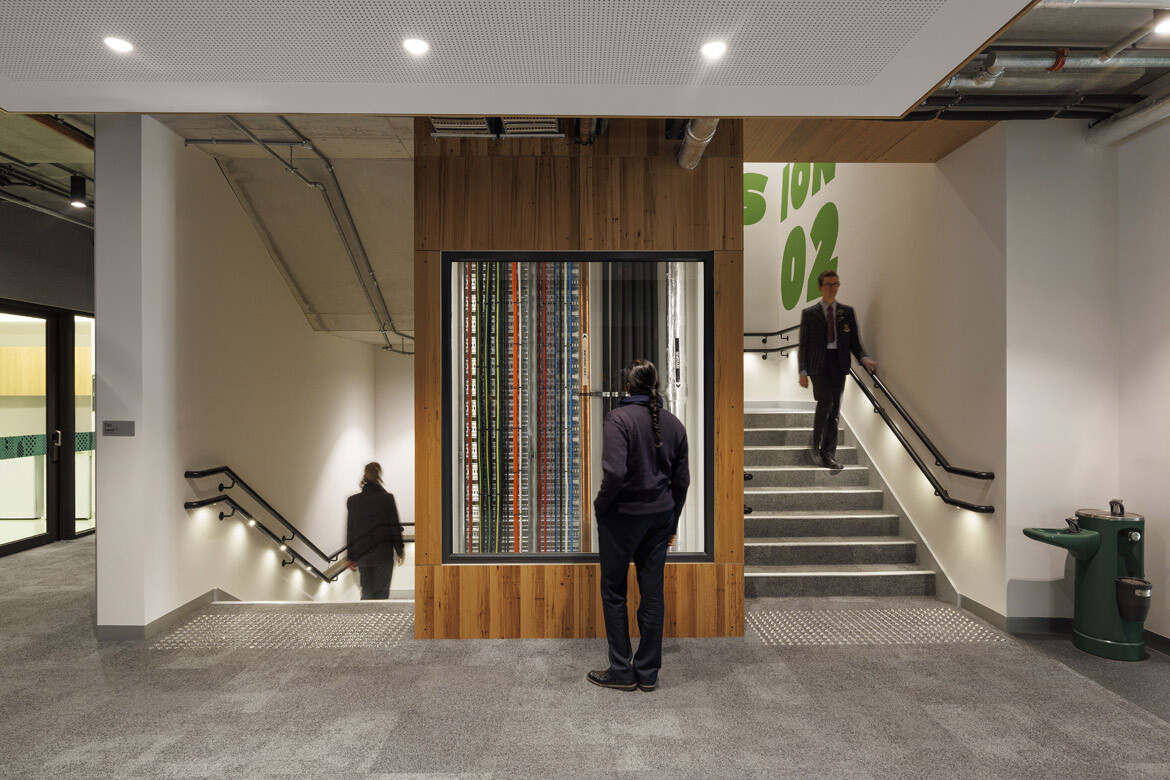
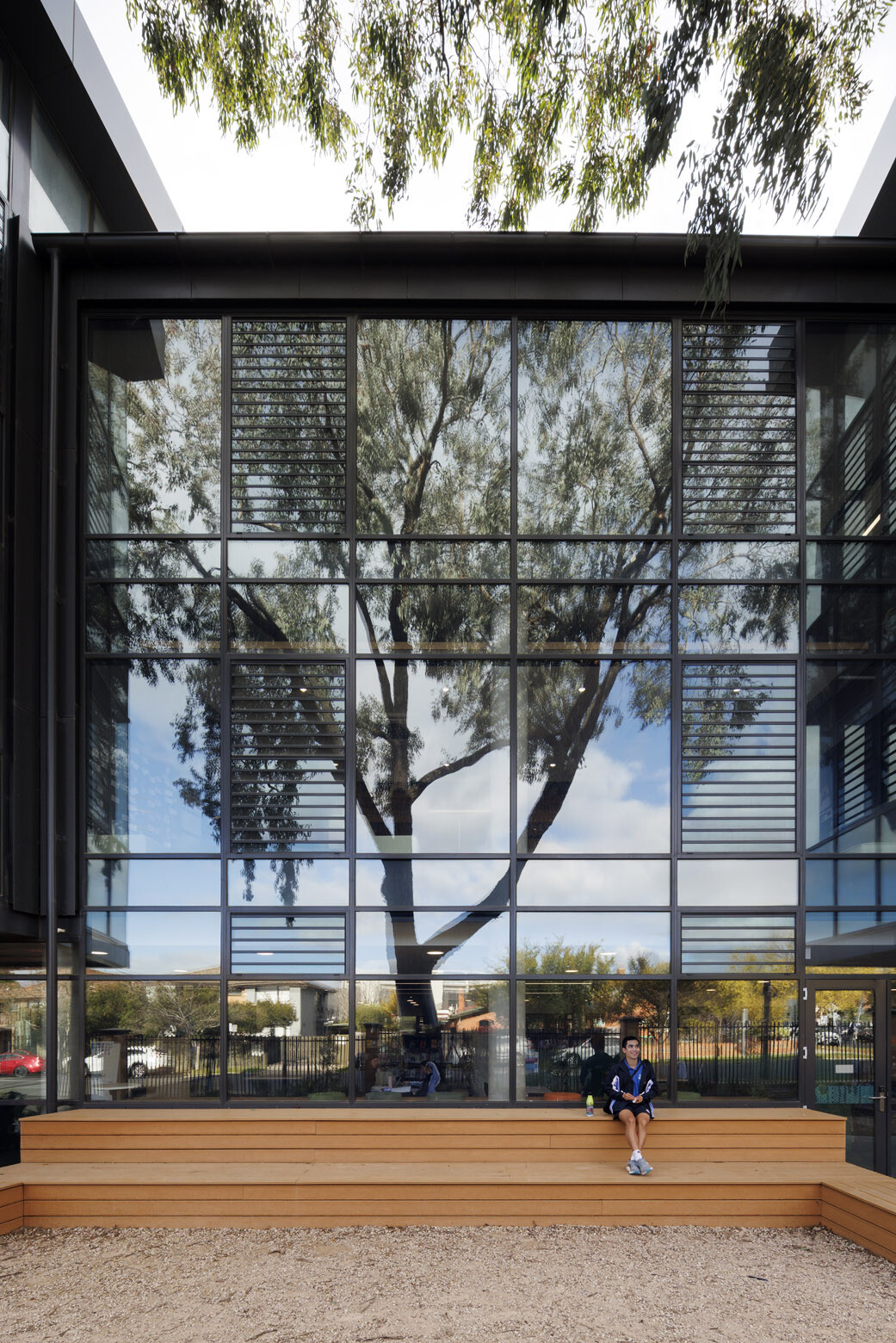
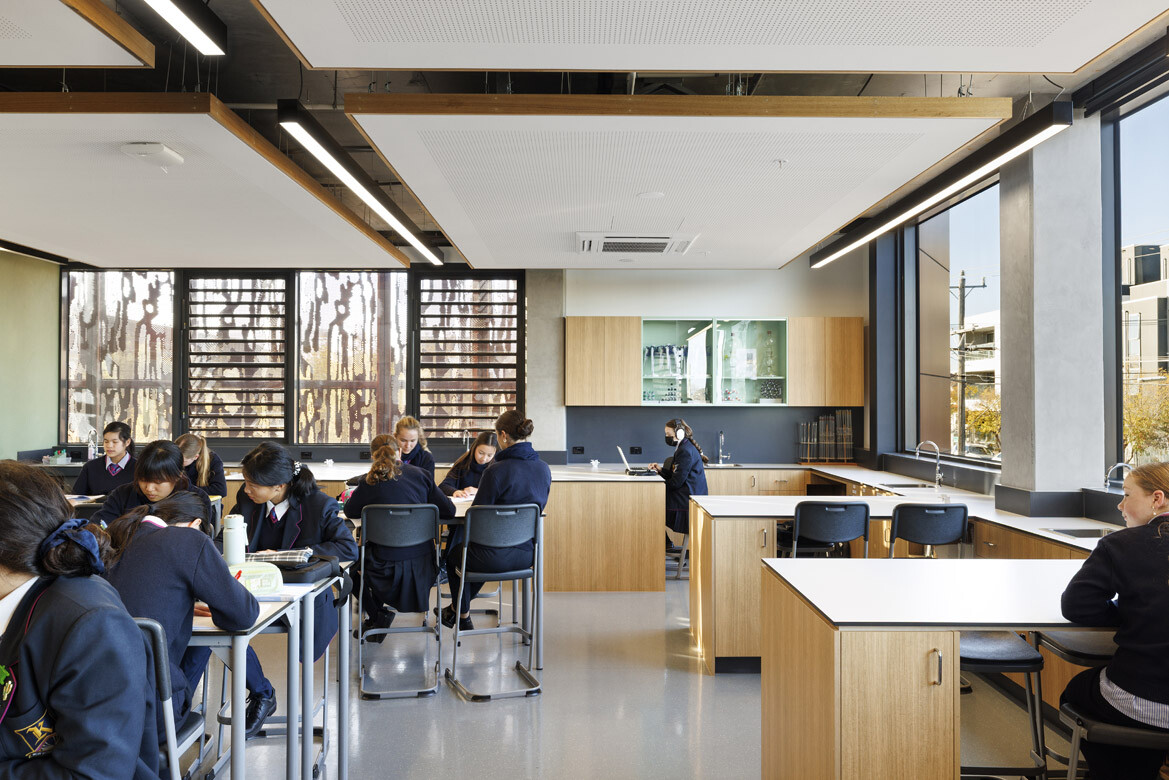
The technology of the project has a specific sustainability focus, including panels to monitor energy usage and operable louvres for shading. CHC Education Partner Stephanie Wan explains further: “Sustainable features such as solar panels, rainwater harvesting and exposed building services make the building itself a hands-on learning tool, allowing students to engage directly with environmental initiatives. By integrating nature, technology and pedagogy, The Hive shows how thoughtfully designed spaces can inspire, connect and empower the next generation of learners.”
Project Architect Anh-Tu Le adds that “biophilic design creates calming spaces, enhancing natural indoor-outdoor flow and supporting inclusion and wellbeing.”
Aside from the technology, the school maintains and deliberately centres a prominent mature Eucalyptus tree. As an anchoring point, it seems to go some way in balancing the future-focused ‘living laboratory’ approach with a longer term sense of belonging.
The Hive features multiple options for working modes, such as continuous perimeter benches as well as fabrication, media and VR capabilities. The designers also note that the process involved a significant briefing component to take student needs and perspectives into account. Above all, it’s a project that integrates library space with various STEM facilities in a multifaceted flexible setting.
The Hive has also been recognised at Learning Environments Victoria and Tasmania’s 2025 Awards, with both Overall Winner and the Award for New Building/s or Facilities (Small).
ClarkeHopkinsClarke Architects
chc.com.au
Photography
Dianna Snape