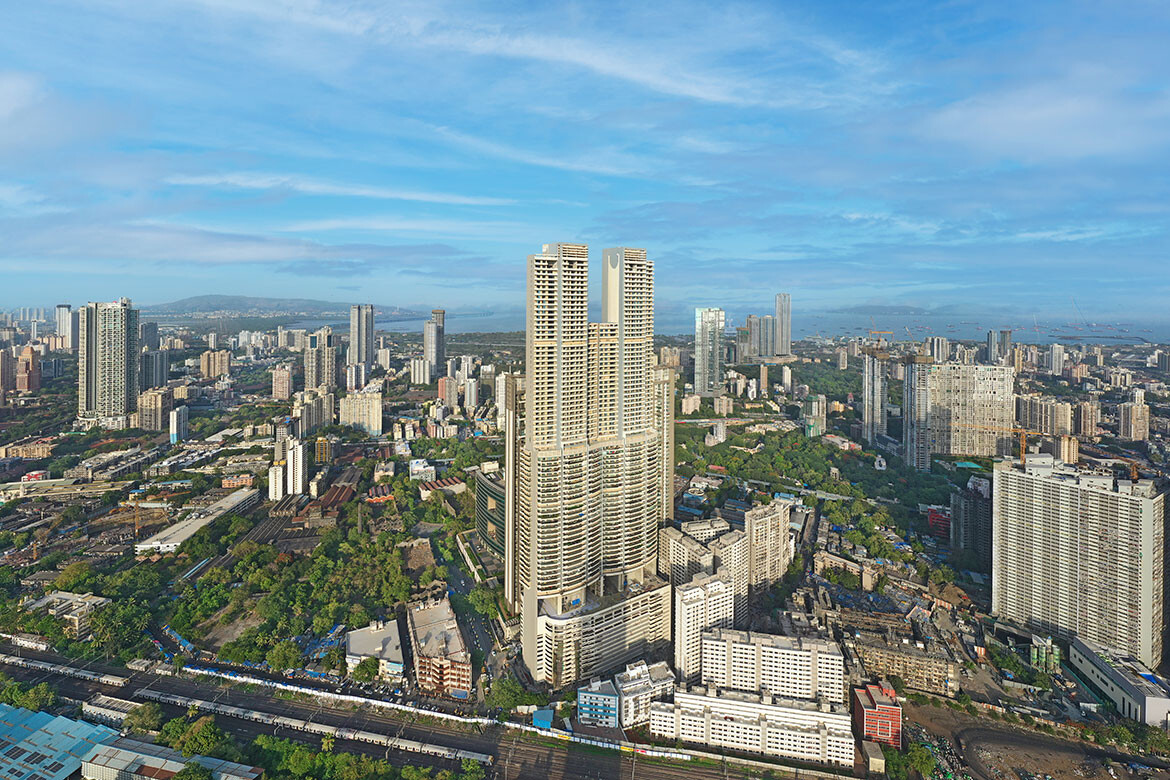
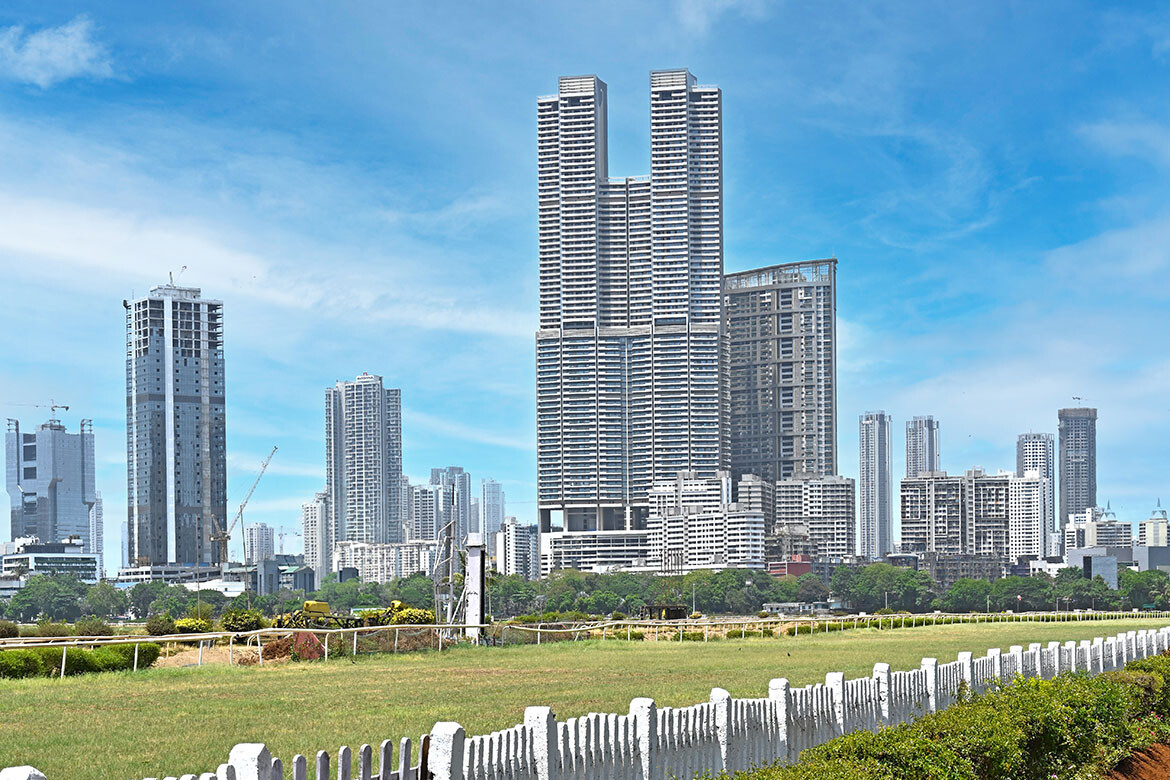
Rising 301 metres above South Mumbai and overlooking the Mahalaxmi Racecourse and the Arabian Sea, Minerva Tower is India’s tallest completed and fully operational residential tower, completed in November 2025. With 91 floors, the project delivers expansive living and performance-driven design at a height previously unseen in Indian high-rise architecture. Situated along the city’s coastal edge and in close proximity to metro corridors, Mahalaxmi railway station and the Coastal Road, the building has become a visible marker of Mumbai’s evolving skyline.
Yet before Minerva was a premium residential address, the land was densely occupied by informal housing. As Founder and Principal Hafeez Contractor of Architect Hafeez Contractor explains, the first step was not design but urban repair. Under Mumbai’s slum redevelopment scheme, the project required the rehabilitation of thousands of residents into permanent buildings complete with schools, clinics, shops and community infrastructure across 5 acres of the 6.5-acre site. Only after that obligation was fulfilled did a smaller 1.5-acre parcel remain for the sale component: Minerva itself.
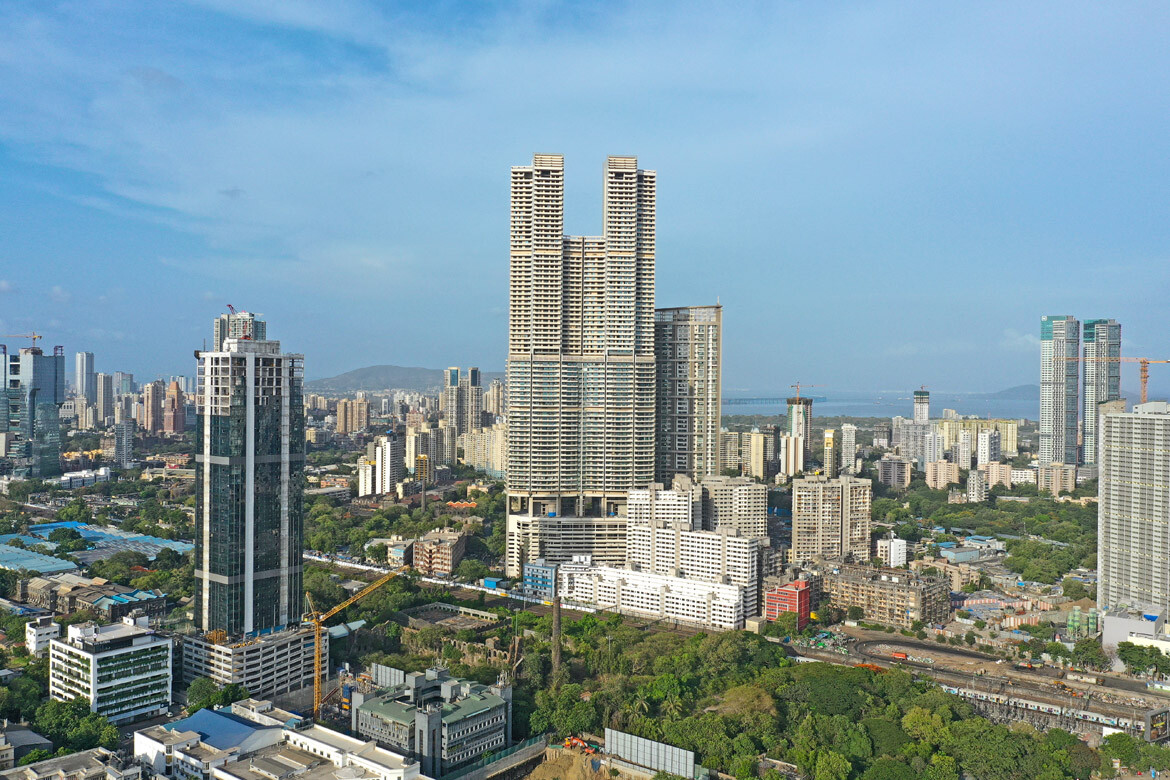
Height, therefore, was never conceived as spectacle. It emerged from planning controls, FSI mechanisms and the reduced land parcel available after rehabilitation commitments were met. The client directive was clear: views to the racecourse and sea had to be fully optimised, with every apartment oriented in that direction. Efficiency, compliance and long-term value were prioritised over icon-making, allowing the architecture to grow directly from constraint.
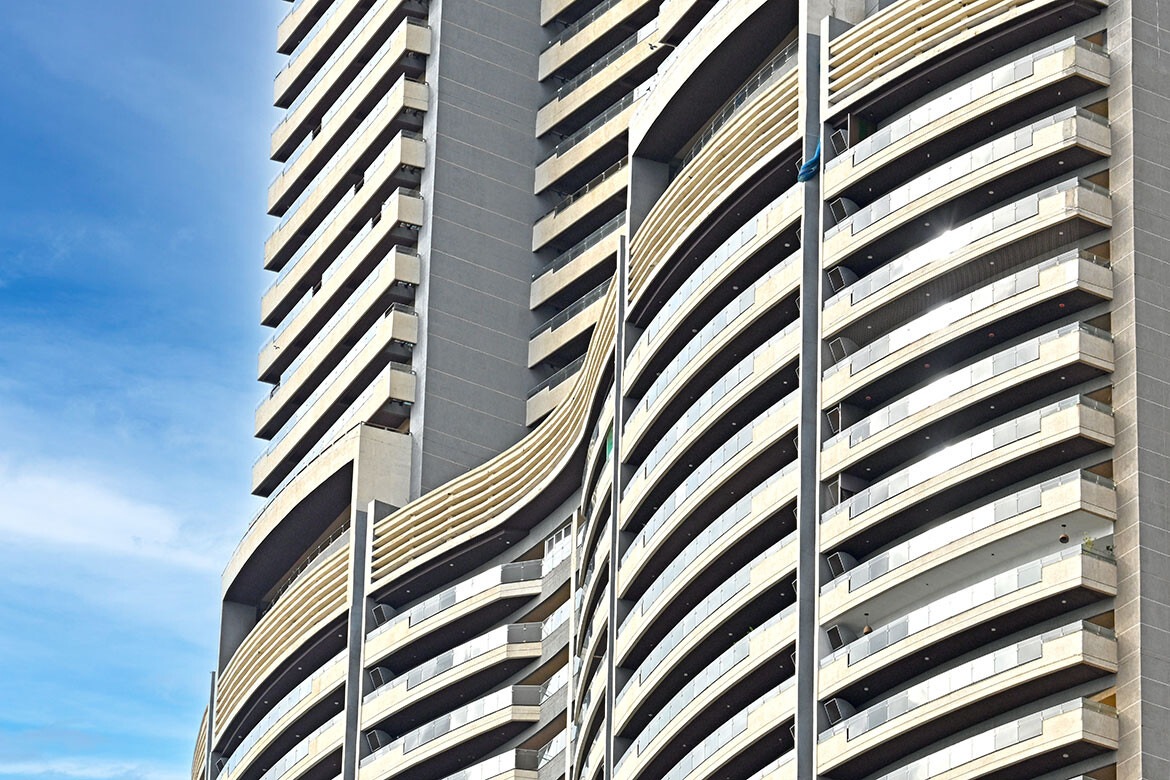
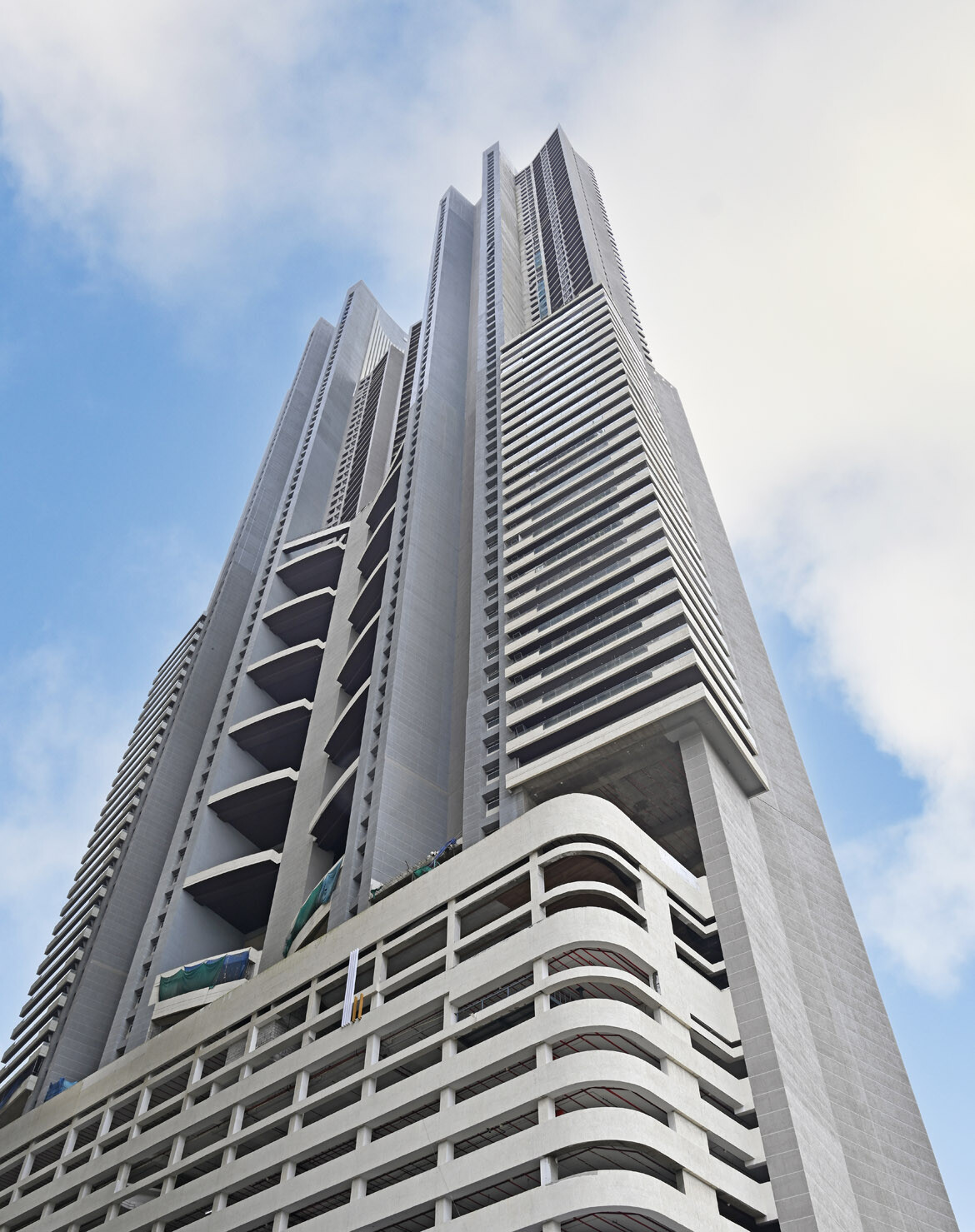
Minerva’s distinctive massing is defined by two towers rising from a unified base and diverging as they ascend, forming a sculptural “M”. Continuous curved decks wrap each level, framing panoramic views while giving the façade its signature rhythm. LED-lit façade recesses reinforce a vertical language from base to crown, strengthening the tower’s skyline presence.
Related: A Contemporary farmstead in Kyoto
The rectangular plan comprises two mirrored wings above two basement service levels, a ten-level parking podium accommodating 2,500 cars, three amenity floors and residential levels from 13 to 91. 3 BHK and 4 BHK units occupy the lower levels, while larger 4 BHK and 5 BHK residences are positioned above, culminating in two duplex penthouses. Four service floors operate as refuge decks and belt-truss levels, ensuring structural stability and fire-safety compliance — critical to supertall living in high-density urban conditions.
Light, air and view fundamentally drive the internal planning. Every residence addresses the racecourse and sea, with living fronts designed to maximise visual connection from the moment of entry. Cross-ventilation is encouraged where possible, while cultural expectations such as Vastu-compliant entries were carefully integrated. Parking, amenities and services are vertically stacked within the podium to avoid deep basements, which are notoriously difficult in Mumbai’s coastal soil conditions.
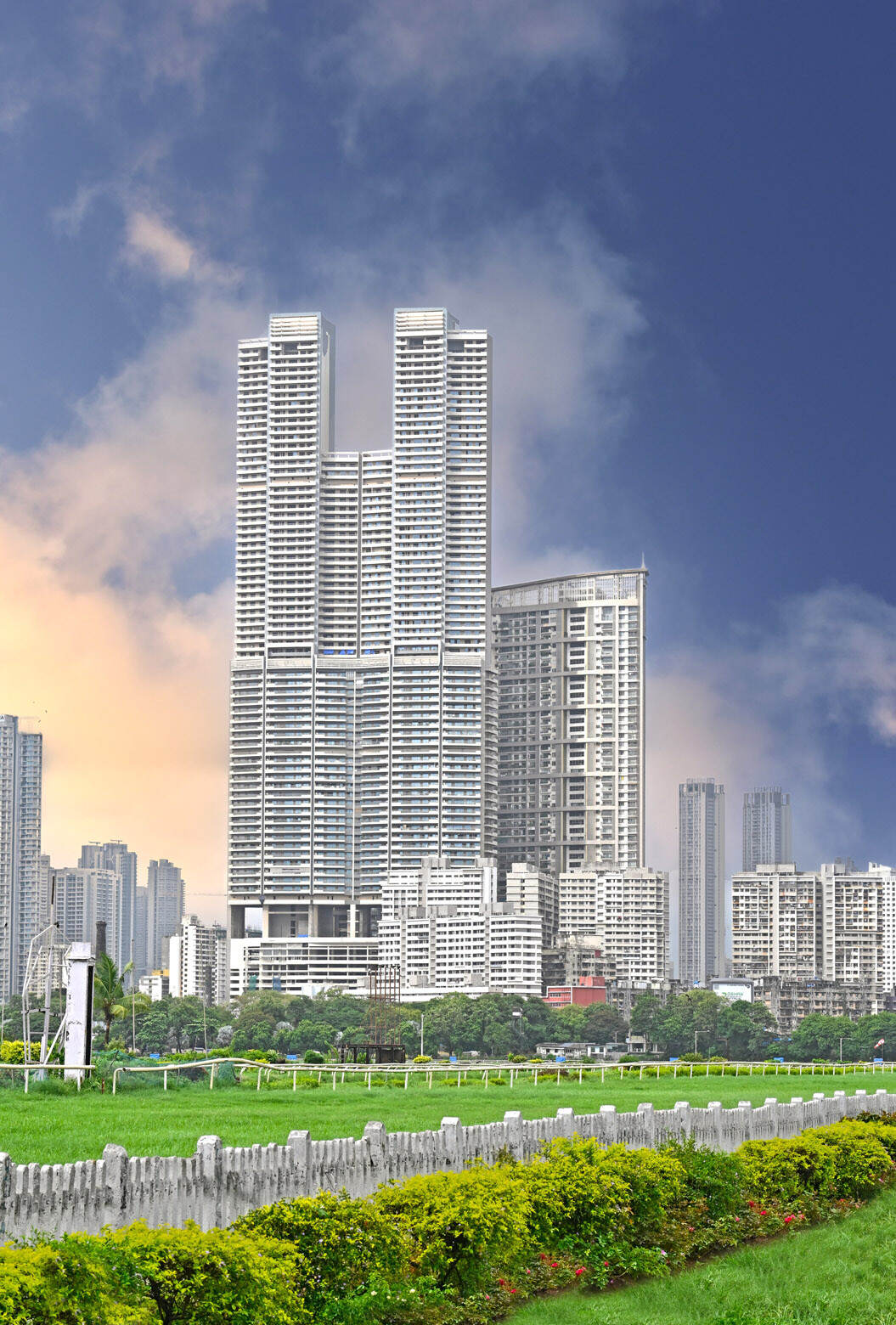
Reinforced concrete forms the backbone of the tower, selected for its durability in corrosive coastal environments and alignment with local construction expertise. The superstructure utilises shear-wall systems and post-tensioned elements, with aluminium formwork enabling precision and repetition across residential floors. At Level 51, regulatory shifts during construction forced a rare and technically demanding redesign. Revised FAR calculations required a reduction in upper-level floor plates, prompting the insertion of a 2-metre-thick post-tensioned transfer girder slab to redistribute loads and maintain structural integrity. Only lift cores and major shear walls remain continuous above this level. The tower adapted midstream — a defining moment in its evolution.
The deep raft foundation, supported by bored cast-in-situ piles, is engineered to resist both coastal wind loads and seismic forces. Shear walls taper upward to optimise performance, while refuge floors and belt-truss systems manage wind behaviour and minimise vortex shedding. High-speed elevators operating at approximately 6 m/s ensure sub-one-minute travel times to the 90th floor, with pressure-release vents mitigating piston effects within shafts.
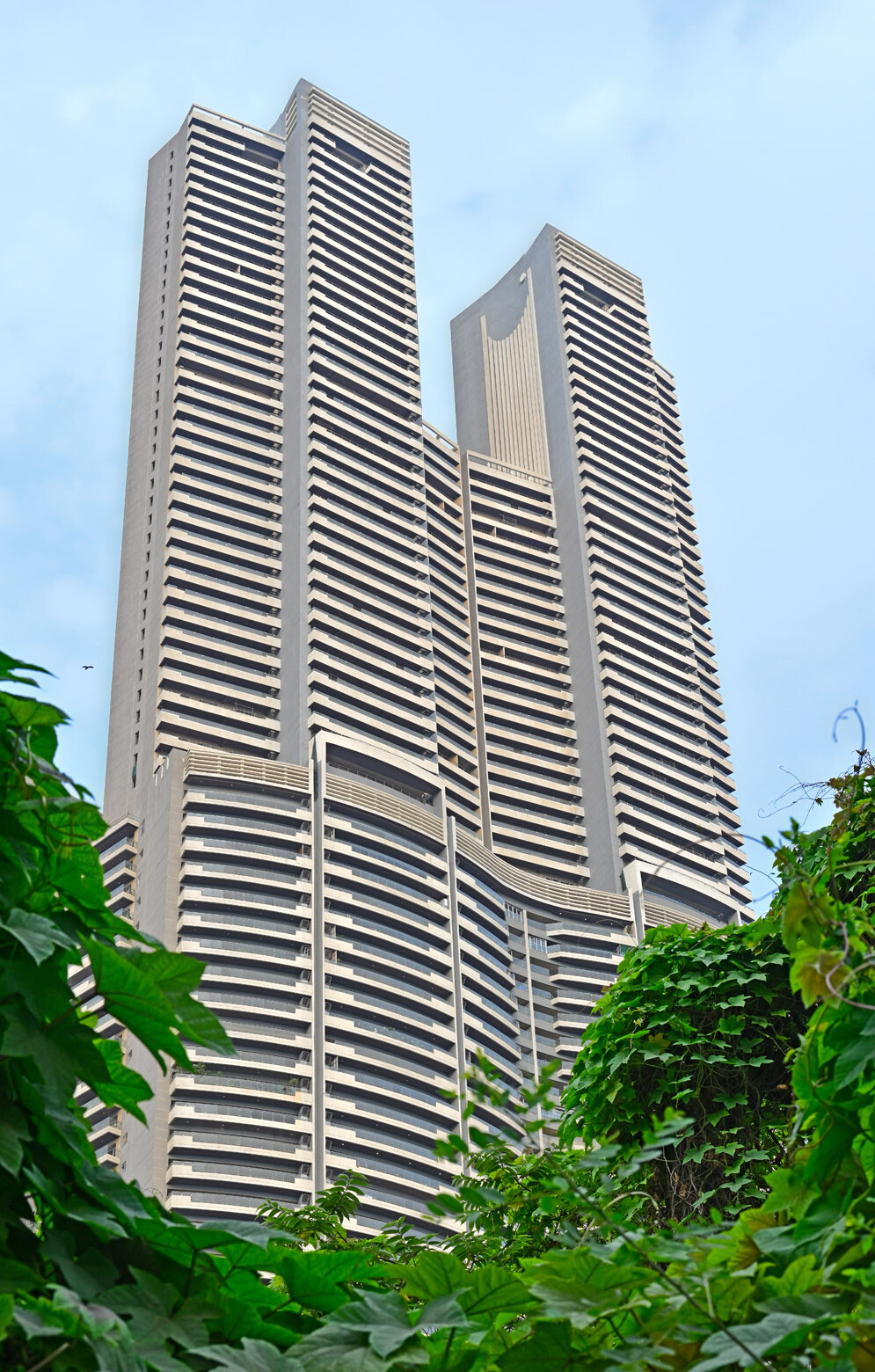
Amenities occupy Levels 11 and 12, forming an active podium with a pool, multifunction hall, cafeteria, jogging track, paddle court, bakery and crèche. At 200 metres above the city, a sky amenity level on the 54th floor hosts a business centre, salon and golf simulator, allowing the building to function as a vertical neighbourhood rather than a mere residential stack. Minerva is IGBC Gold certified, with deep balcony recesses, high-performance glazing and rooftop solar panels reducing operational loads by approximately 20 per cent.
For Contractor, the most compelling moment remains the beginning — the early sketching phase where rehabilitation obligations and refined residential ambition first intersected. The regulatory redesign later became another defining chapter. “Architecture is rarely a straight line,” he reflects. Minerva demonstrates how architecture can absorb regulatory shifts, reconcile land scarcity and still deliver a coherent residential vision. Its significance lies not only in height, but in its negotiation between density, policy and aspiration — a model for how future Indian cities may accommodate growth without abandoning complexity.
Architect Hafeez Contractor
hafeezcontractor.com
Photography
Noshir Gobhai