Cementing its position as one of Australia’s most diverse and dynamic cultural hubs, the Queensland Cultural Precinct welcomes a new landmark in the Glasshouse Theatre, a 1,500-seat venue that will play host to world-class ballet, dance, symphony, opera and musicals.
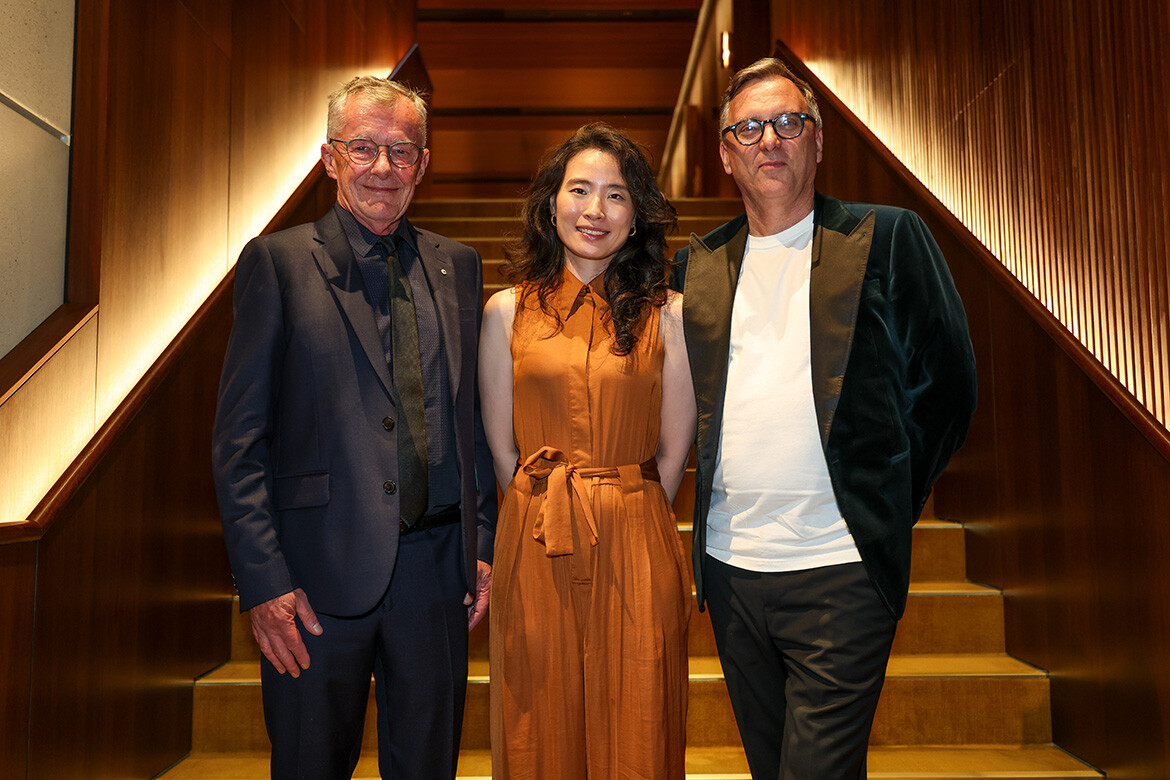
Back in 2019, when the international competition was announced, Blight Rayner Architecture invited Snøhetta to collaborate. It was an opportunity rooted in an earlier meeting between director Michael Rayner and Kjetil Trædal Thorsen at the Australian Institute of Architects National Conference.
“The partnership was especially successful due to the complementary strengths of Blight Rayner’s civic architecture and Snøhetta’s theatre design,” explain the architects. “Key consultants, including Studio Dovetail, Acoustic Studio and Schuler Shook, were also integral, making it a truly collaborative effort.”
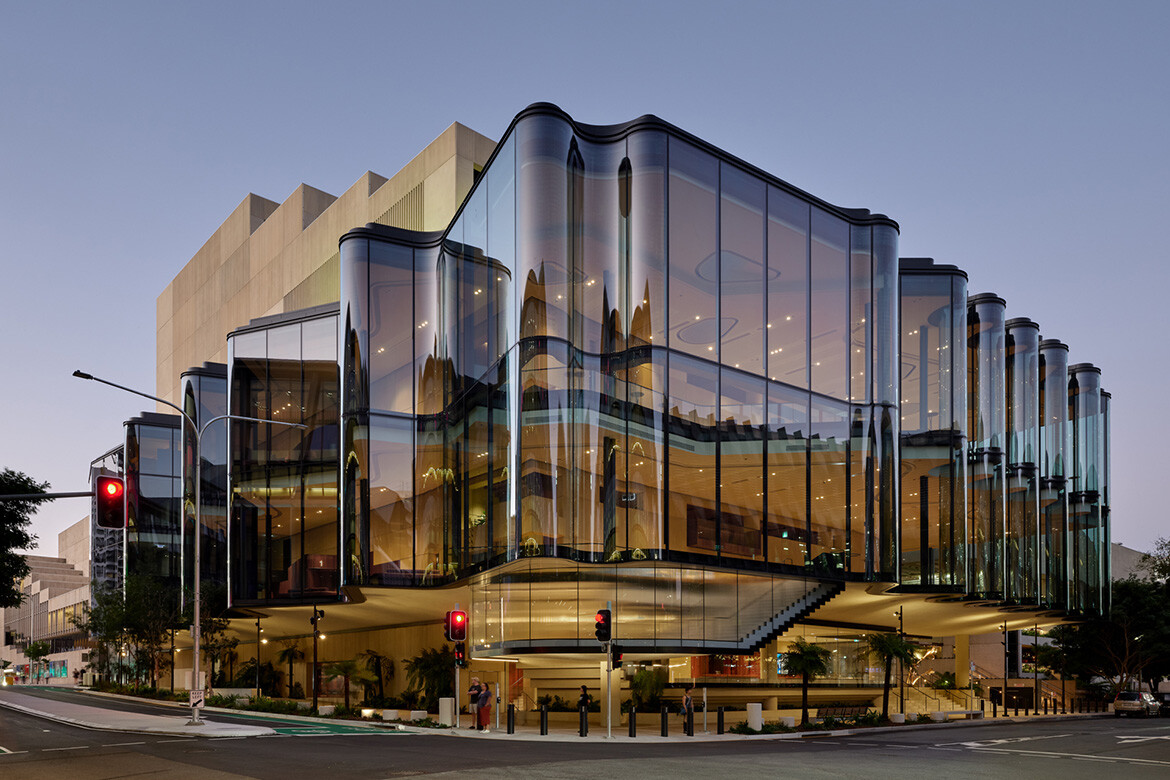
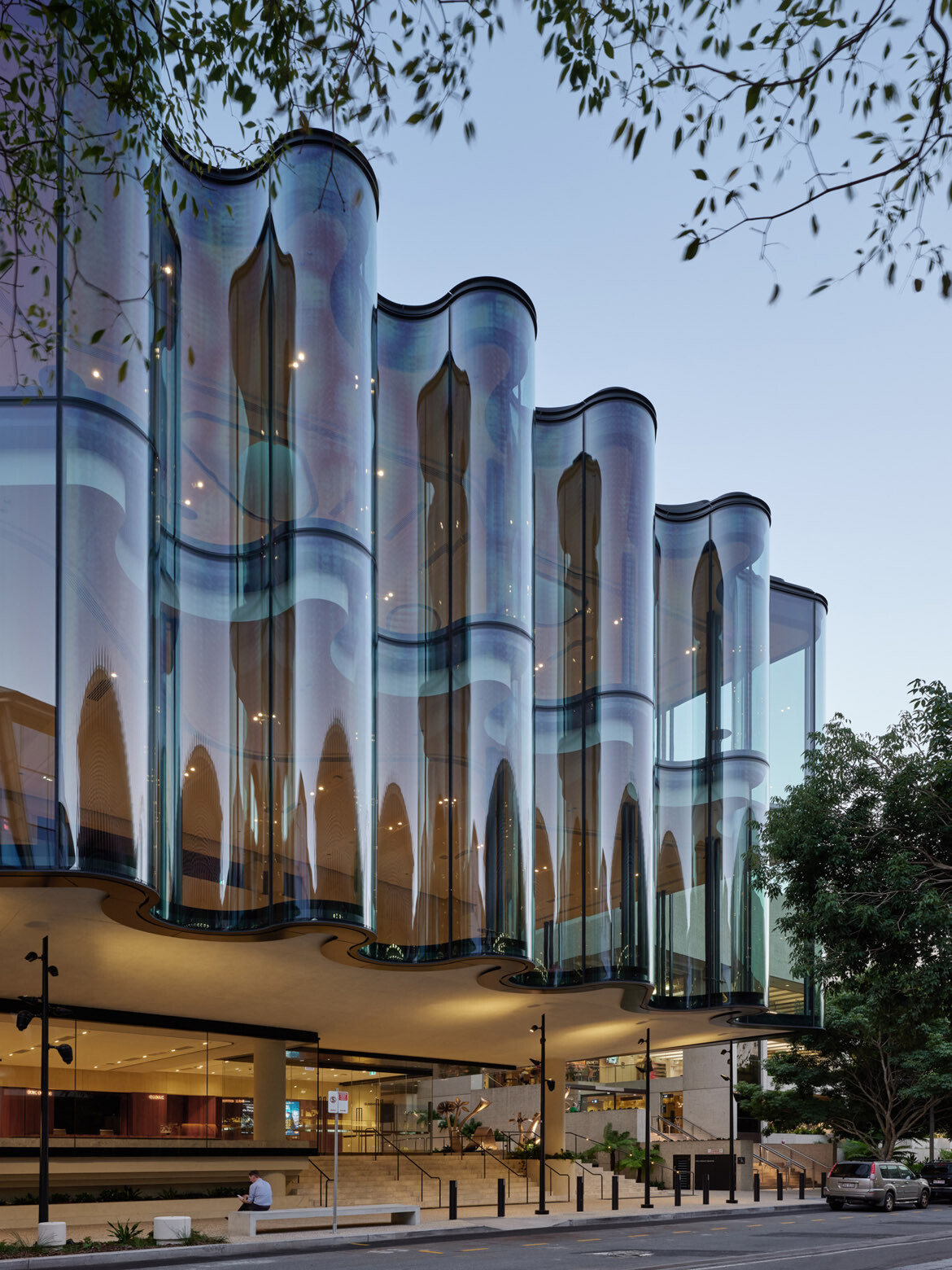
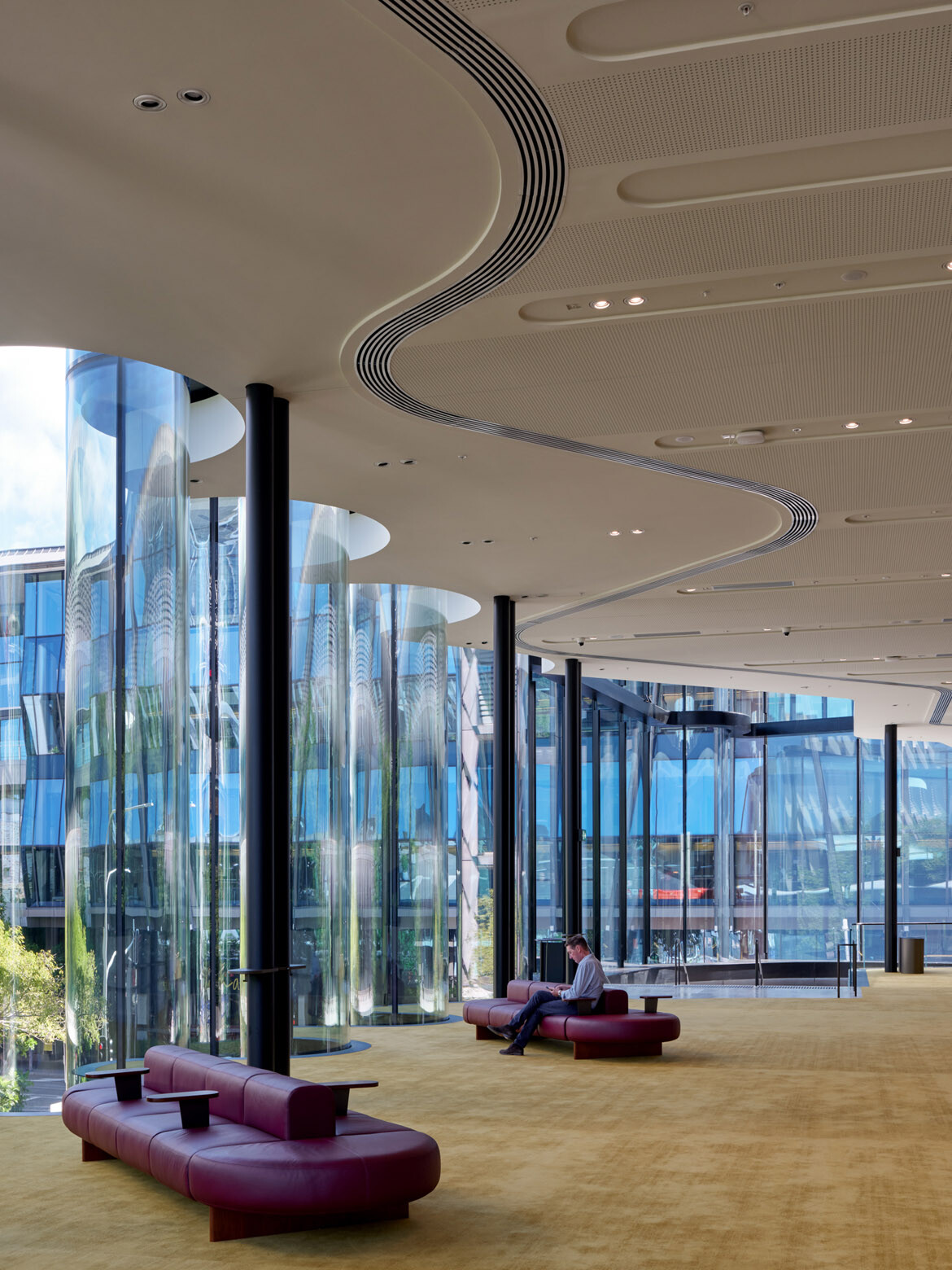
In response to the brief and site conditions, the design introduces a transparent edge to the cantilever, softening its visual impact. This takes form as an undulating glass façade, inspired by a prose-poem by Aboriginal Elder and artist Lilla Watson, evoking the rippling surface of the Brisbane River and the life within it.
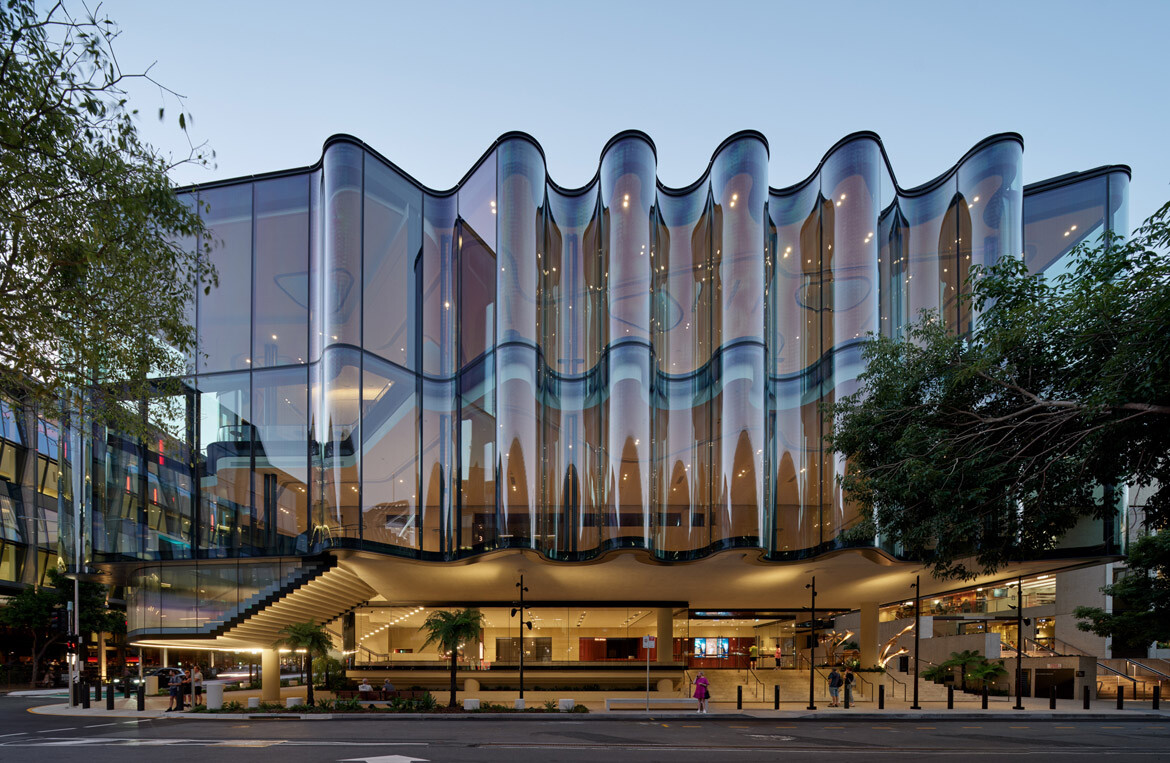
In contrast to the solid, Brutalist form of Robin Gibson’s QPAC building, the glass façade establishes the Glasshouse as a distinct new addition rather than an extension of the existing fabric.
“We imagined the transparent façade as a kind of public theatre, where people in the foyers are seen — at times clearly, at times blurred — from the street,” explains Michael. “We also sought to embed the beginnings of First Nations narratives connected to the site within the design.”
Another narrative is expressed through seven skylights in the roof, representing Queensland’s seven watersheds, informed by research from First Nations Elder Aunty Colleen Wall. “Through ongoing conversations with Aunty Colleen and other First Nations stakeholders, we came to understand the site not as a fixed place, but as one of performance, emphasising the connection between ground and sky.”
This is reinforced by Floriate, a sculpture by Torres Strait Islander artist Brian Robinson, which depicts seven flowering plants native to Queensland, extending First Nations perspectives and storytelling throughout the building.
The façade also lends a theatrical quality to the foyers while being engineered for thermal performance. It is fabricated in four layers with an intervening air gap. Facets that receive direct sunlight are embedded with a ceramic inlay that acts as an integrated louvre, reducing solar penetration while enhancing energy performance and minimising glare.
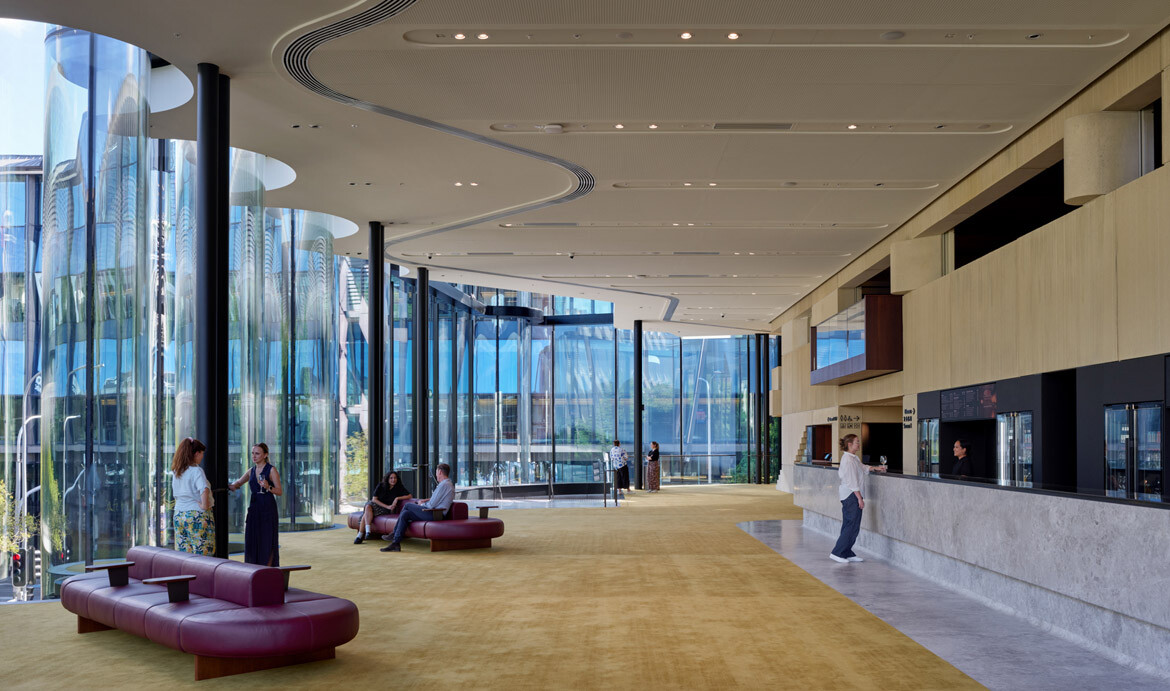
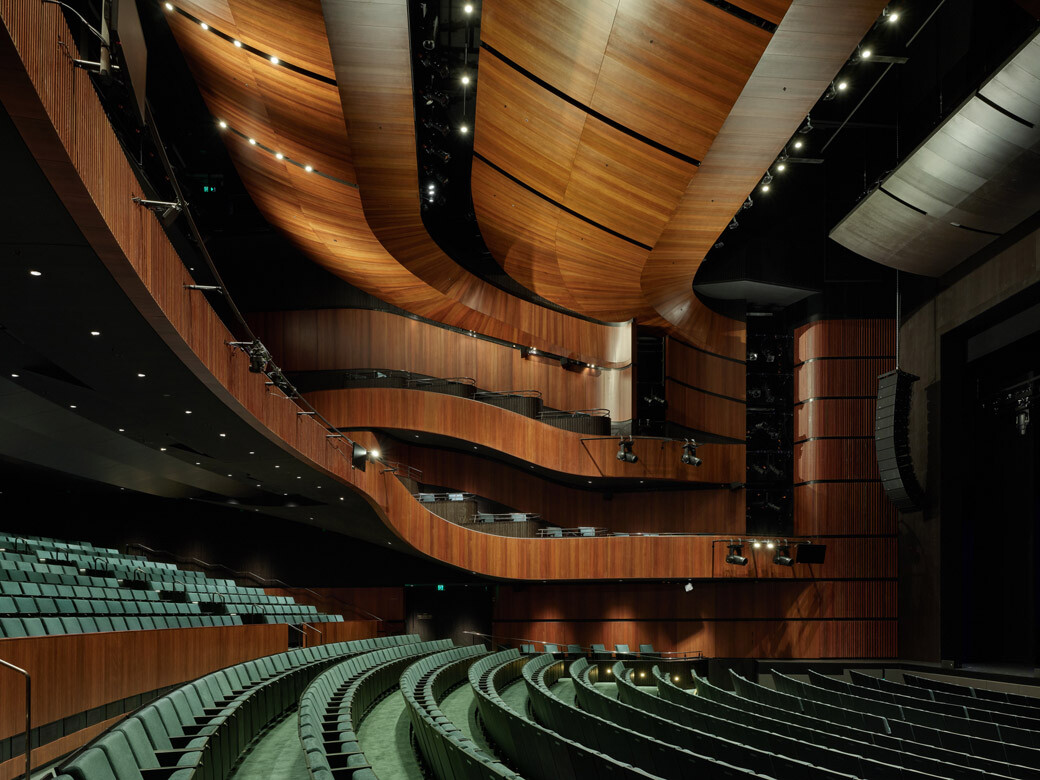
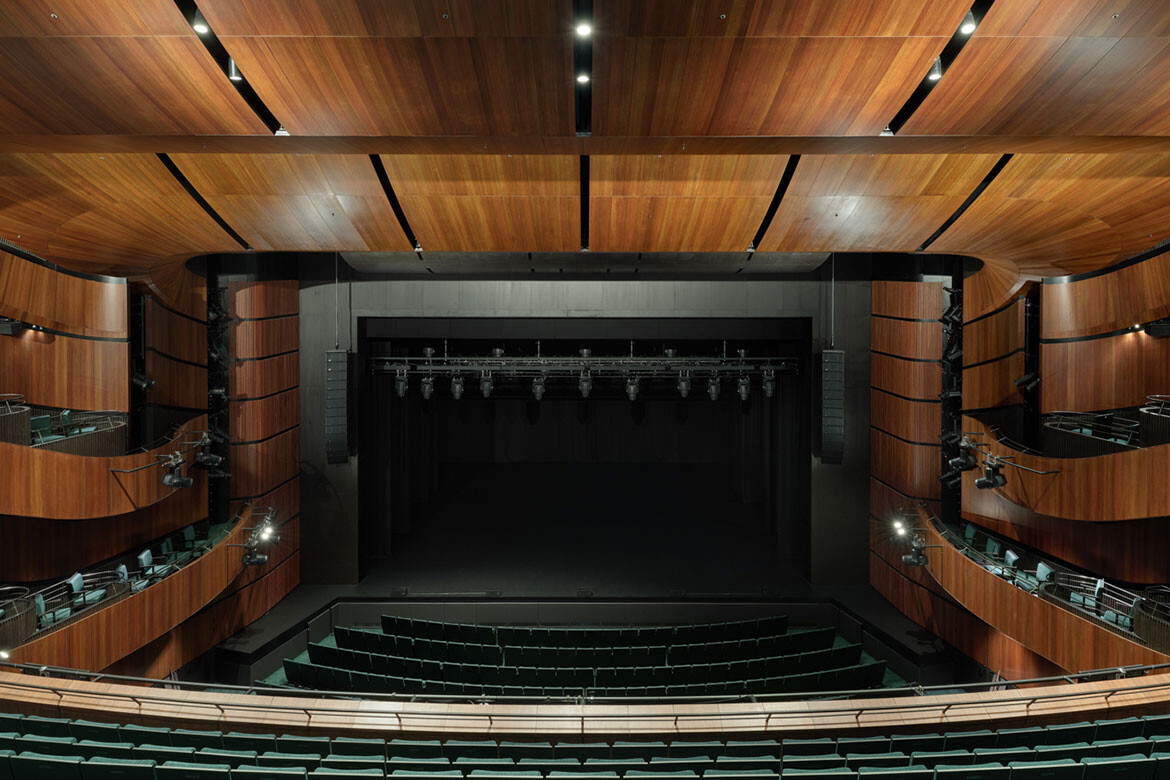
The lightness and openness of the foyers contrast dramatically with the theatre interior, conceived as a cocoon of dark ironbark walls and rainforest-green carpet. The interior also draws on the qualities of stringed instruments, expressed through layered timber ribbons chosen for their quintessential Queensland character.
Related: Canberra’s Lyric Theatre by COX
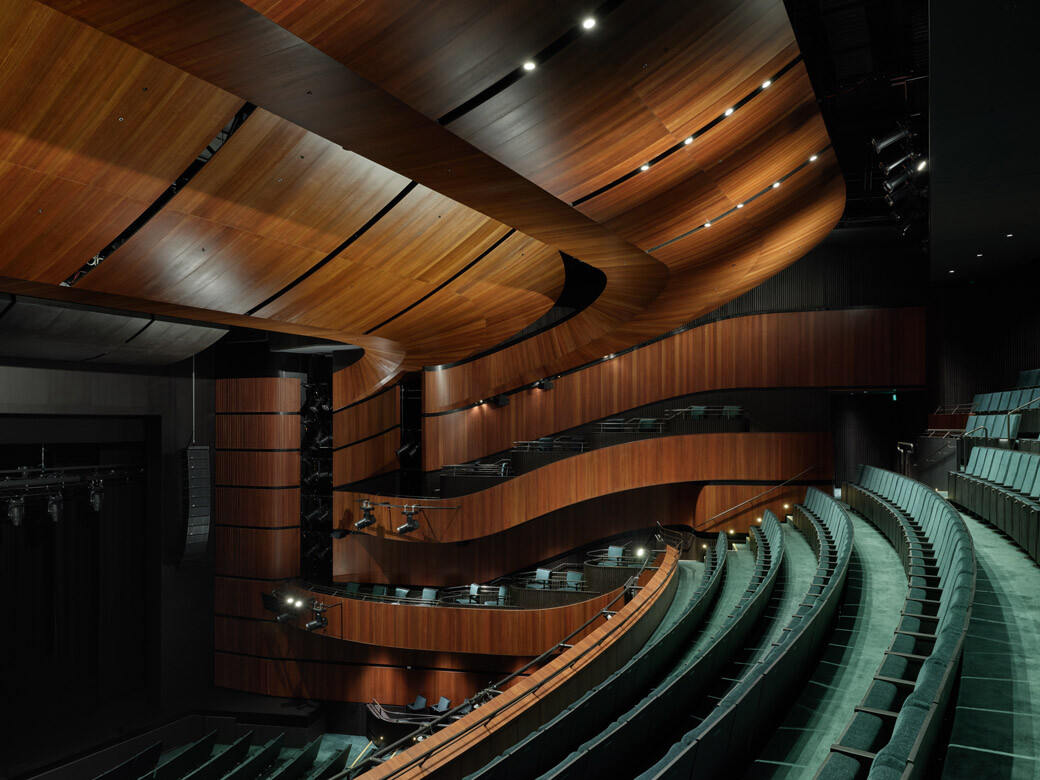
It is clear that the fundamental idea of performance, whether environmental or theatrical, underpins the project. “The auditorium was conceived as a highly adaptable performance environment capable of hosting a wide spectrum of artforms,” says Gumij Kang, managing director of Snøhetta Australasia. “The theatre was designed to operate like a finely tuned musical instrument, adjustable to support world-class opera, ballet, symphony, theatre and musical productions.”
Other impressive technical capabilities include an in-house digital broadcast suite, an automated fly system comprising 107 hoists and 29 kilometres of steel wire, and 1,000 seats at auditorium level with a further 500 at balcony level.
Visually striking and technically accomplished, the Glasshouse Theatre is expected to attract an estimated 1.6 million visitors per year, further strengthening Queensland’s reputation as a cultural tourism destination ahead of the Brisbane 2032 Olympic Games.
Blight Rayner Architecture
blightrayner.com.au
Snøhetta
snohetta.com
Photography
Christopher Frederick Jones