An art and architecture destination like no other, the island of Naoshima in the Seto Inland Sea of Japan has just added another masterwork to its collection of Tadao Ando architecture.
Thirty years from inception, Naoshima and the neighbouring islands have realised both the practical and philosophical intent of Tetsuhiko Fukutake, the founding president of Fukutake Publishing, and Chikatsugu Miyake, the then-mayor of Naoshima, who embraced the idea of creating an art island. stating: “If art with a message to modern society were placed on the islands of the Seto Inland Sea, where the unspoilt landscape of Japan still remains, it could change a region that was losing its vitality.” With this in mind, the symbiosis between the islands and art began on Naoshima in 1985, with Tadao Ando’s first project, the Naoshima International Camp, opening in 1989.
From a practical perspective, the island has been revitalised with art tourism bringing interest and collaboration to the island. To wit, many of the island’s older population took on the early role of docent. Showing the world through the art sites while creating a unique multi-cultural, socio-economic and generationally blurred discourse, the engagement celebrates the juncture between art and the beauty of nature. In the early days, the guidebook asked non-Japanese visitors to warmly greet the elder locals who were still unused to foreigners. Today, the sites have a far higher traffic flow and young art professionals have taken on these roles, bringing the hoped-for vitality back to the island. That said, the older residents remain engaged with the burgeoning community and continue the discourse with spontaneous conversations.
Philosophically, this fits with Fukutake and Miyake’s intent of developing a cultural and educational destination. The intervention is in keeping with the island being recognised as a national park in 1934, with Fukutake’s son, Soichiro, bringing contemporary art to the island after his father’s sudden passing. Showcasing work by artists as diverse as Yayoi Kusama, Hiroshi Sugimoto, Claude Monet, Lee Ufan, James Turrell, Walter De Maria and, as acknowledged by the Chichu Art Museum which lists him as an artist, Tadao Ando.
Ando’s contribution to the island has in fact been extensive, with the International Camp followed by the Benesse House Museum in 1992, Benesse House Oval in 1995, Minamidera (housing the artwork Backside of the Moon by James Turrell) in 1999, the Chichu Art Museum in 2004, Benesse House Park/Beach in 2006 (Hiroshi Sugimoto’s Coffin of Light and Concept of Moss were added in 2009), the Lee Ufan Museum in 2010, the ANDO MUSEUM in 2013, Valley Gallery in 2022 and, most recently, the Naoshima New Museum of Art in 2025.
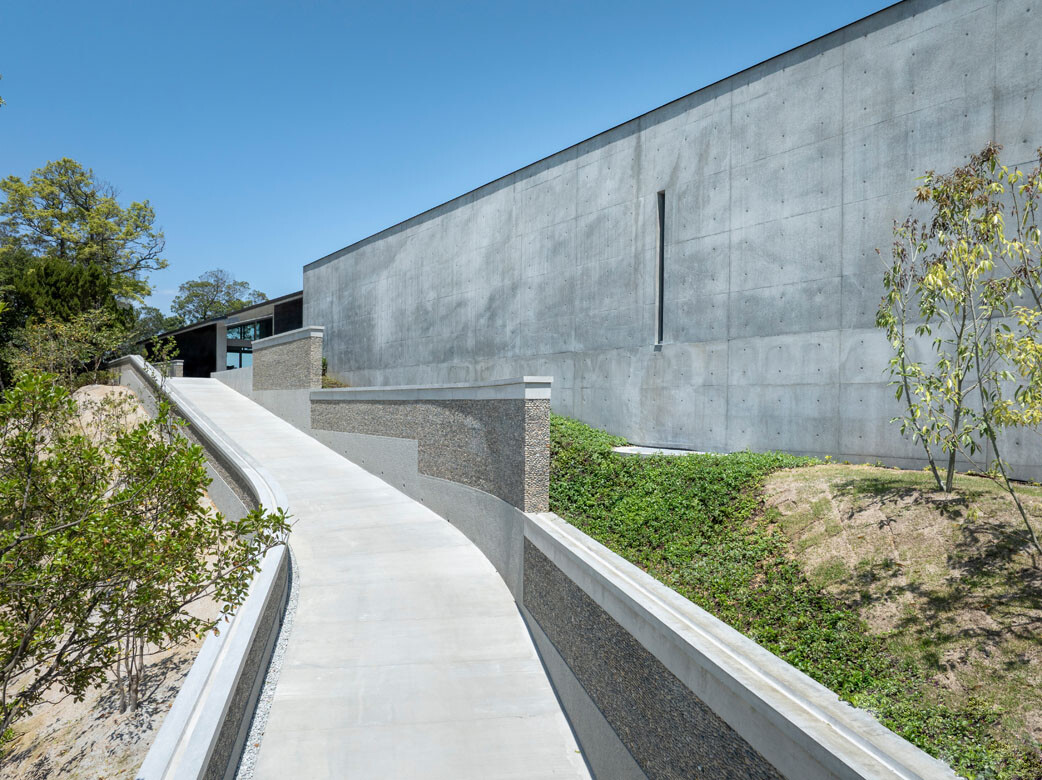
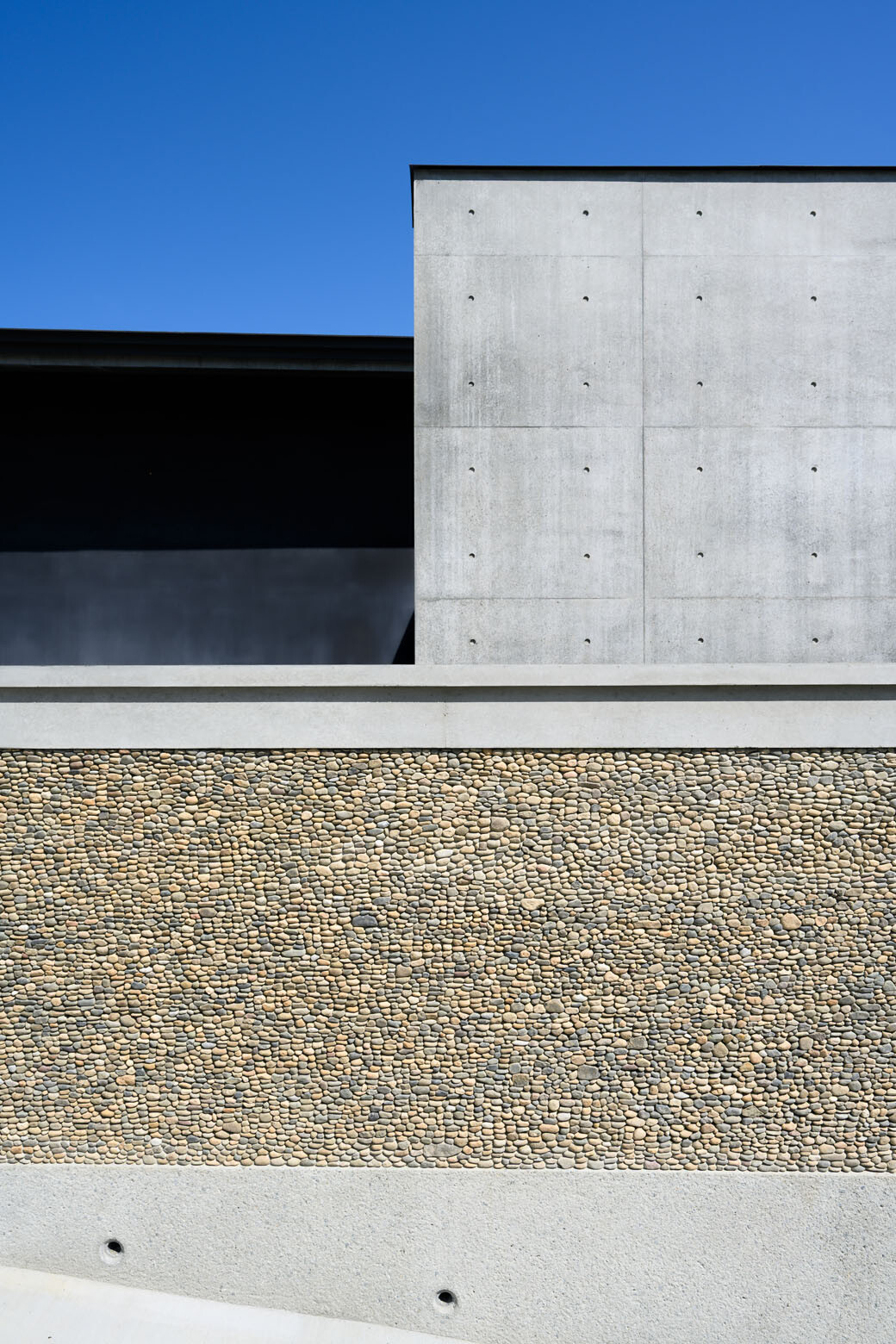
While the island of Naoshima has been dotted with Ando projects, this project is the first to be located within the village of Naoshima itself. As such, while the architecture is striking, it is also gently realised, with the external architecture picking up the local architectural language of Yakisugi charred timber and peddle construction. Landscaping and the elevated site further obscure the museum, with the access road spanning a large curve to allow a significant area of trees to hide the building. This is further augmented by rooftop gardens and large areas of landscaping which will perform as a buffer as they grow.
Related: Bathurst is fast becoming a hub for regional design and hospitality
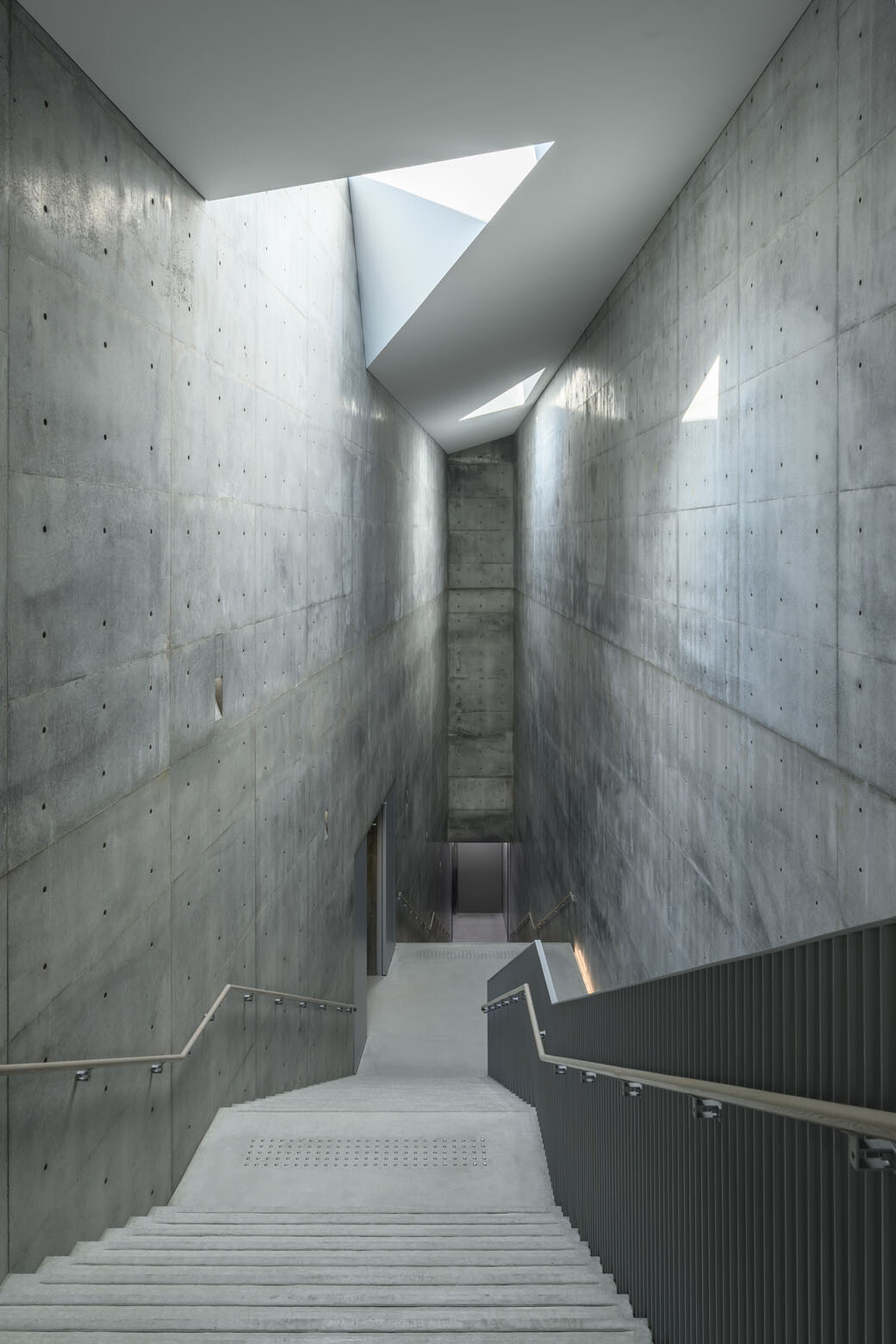
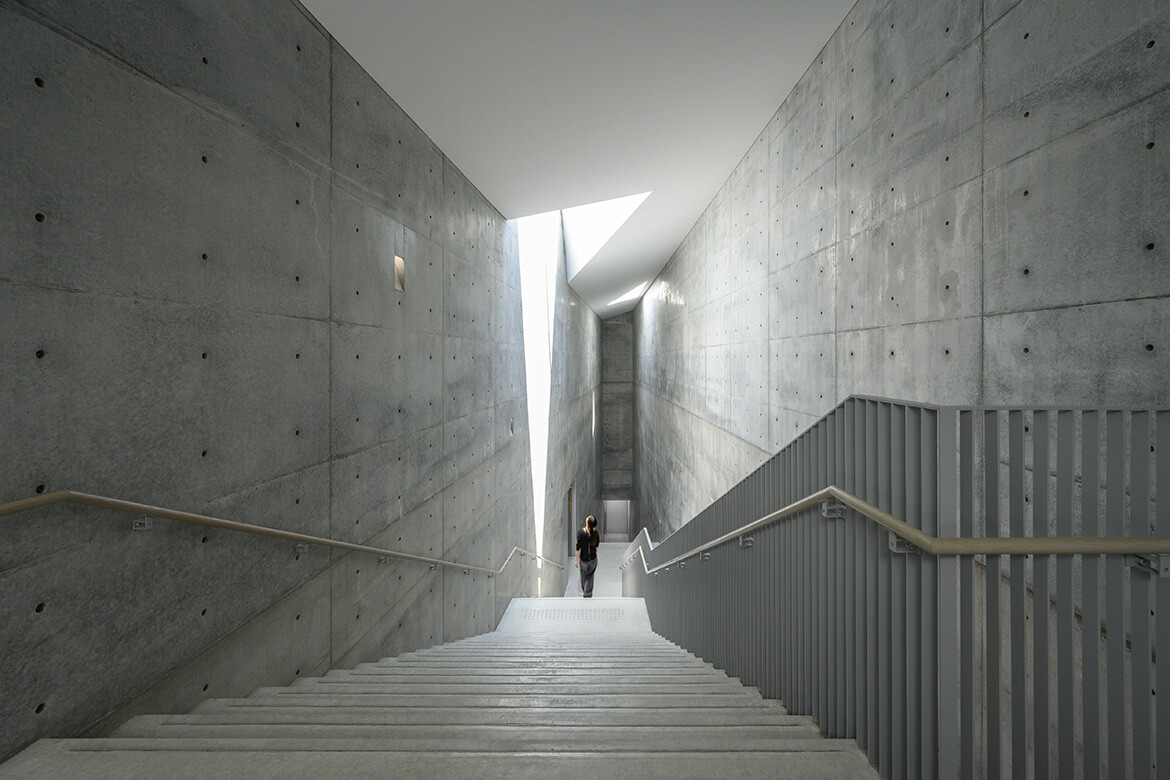
On arrival, the entrance paths span outwards as a pair of ramps divide, right towards the two lower levels and left to the primary ground floor entrance. These ramps, like the stairway within, are walled with Ando’s signature formwork concrete and really stamp the project as being within his oeuvre.
The internal stairway, traversing three floors as a single expression (the four galleries sit to the sides), is breathtaking in its monumentality and ability to play with perspective. Quite a feat, especially paired with the large skylight running through the centre of the roof. Here, light has been used in distinct ways, to gently illuminate within the galleries, but also to stream through as shafts of dynamic light within the passage.
“For the Naoshima New Museum of Art, I once again endeavoured to build a place that cultivates sensibilities and moves people’s hearts,” says Tadao Ando.
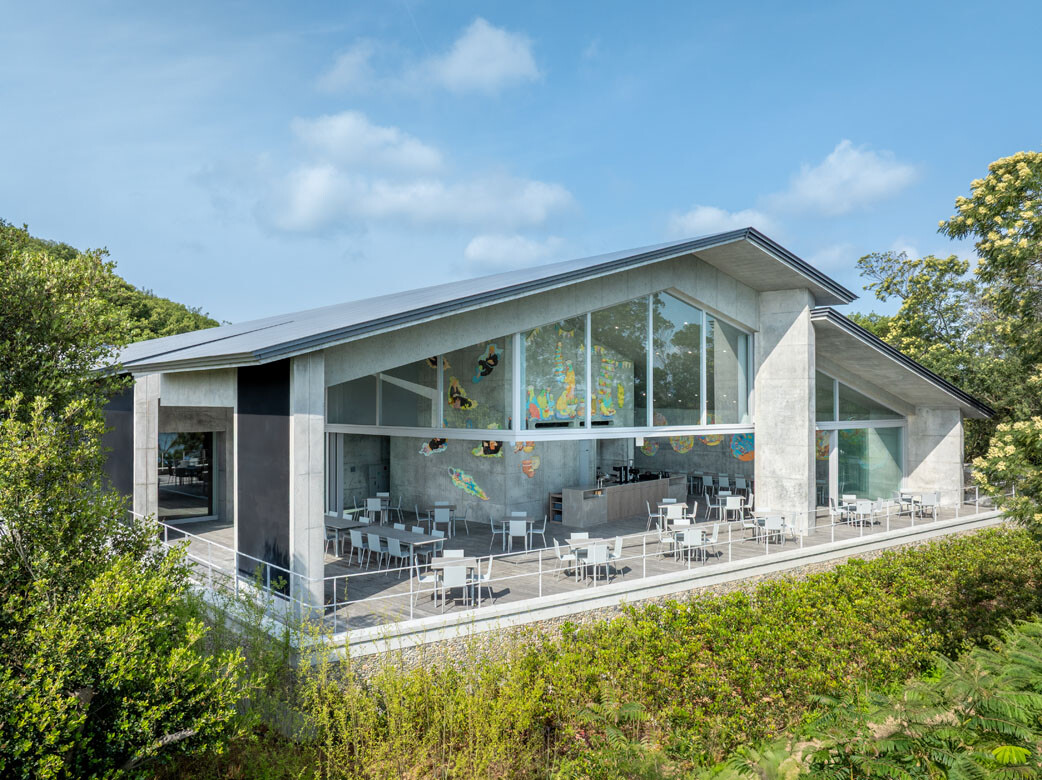
Augmenting the foundation’s direction towards site-specific work, the museum will offer a changing, tailored exhibition program. “With the addition of this new museum that mainly focuses on Asian contemporary art and features “dynamism” by changing exhibitions… we can offer visitors more opportunities to discover increasingly diverse artistic expressions and more reasons to come back,” says museum director, Akiko Miki.
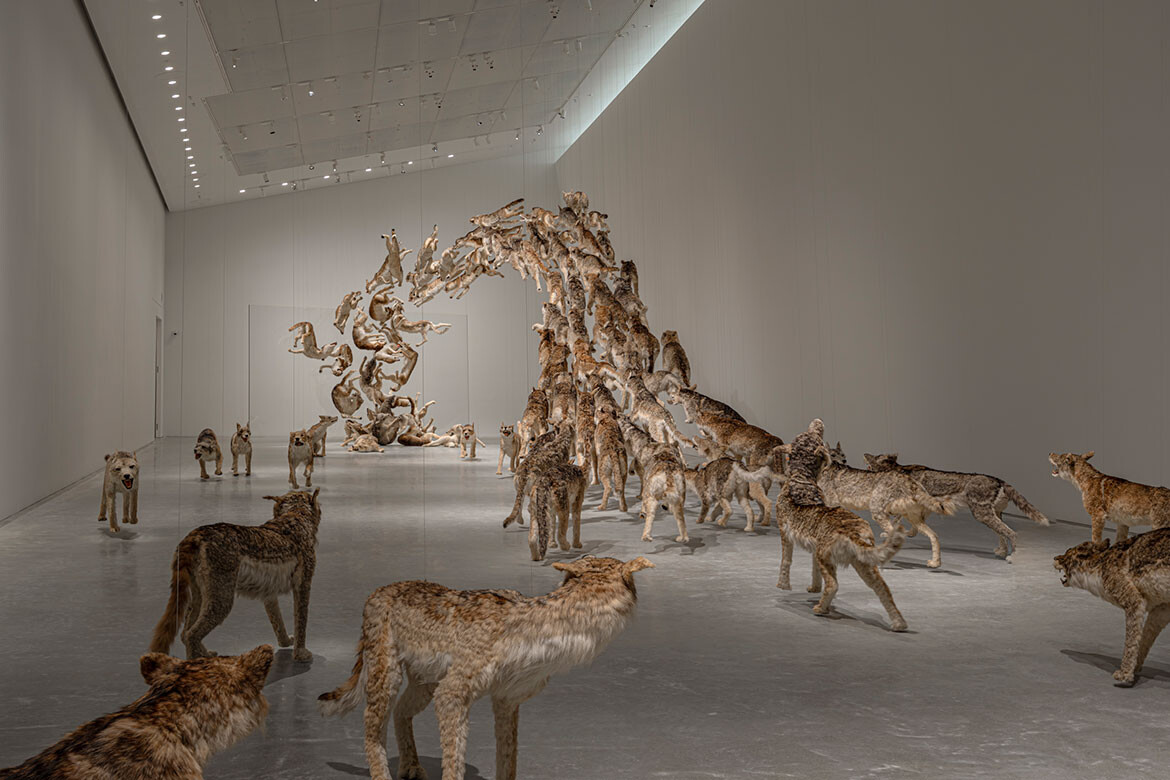
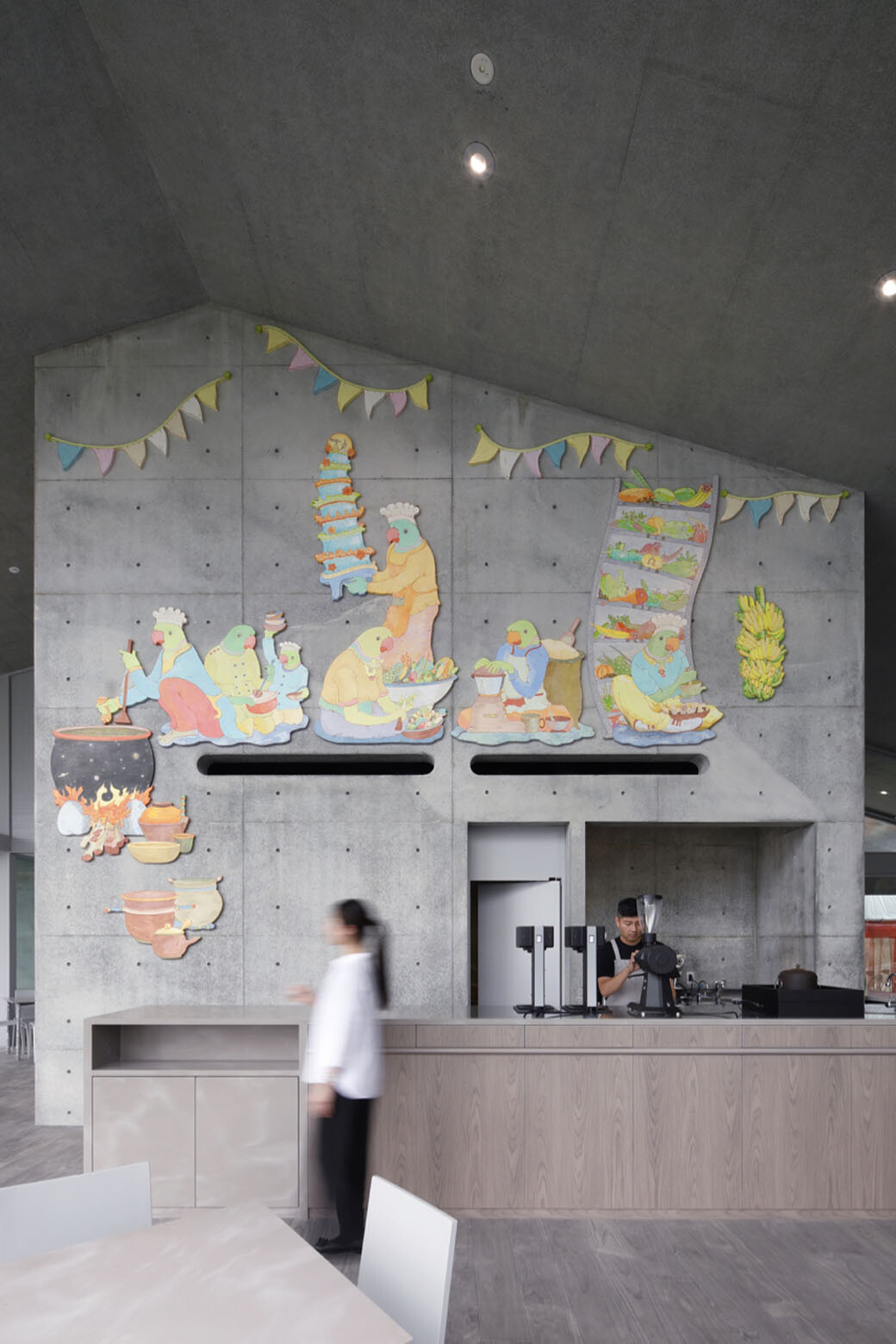
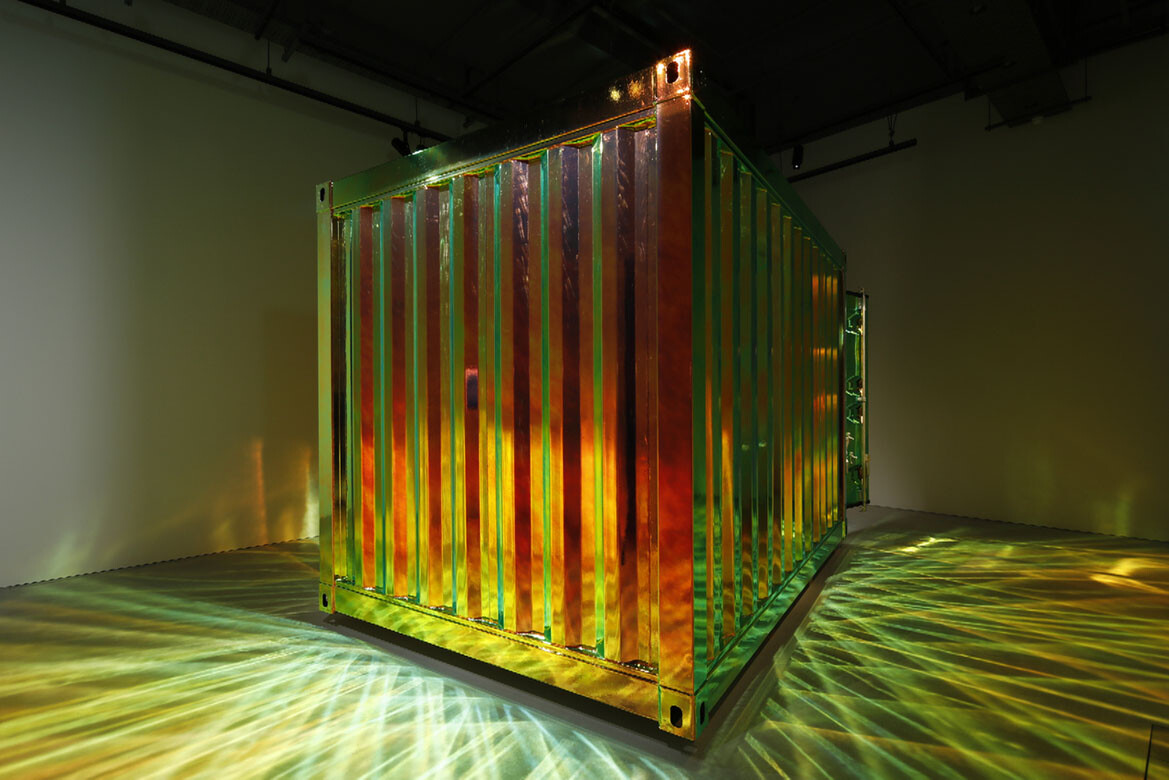
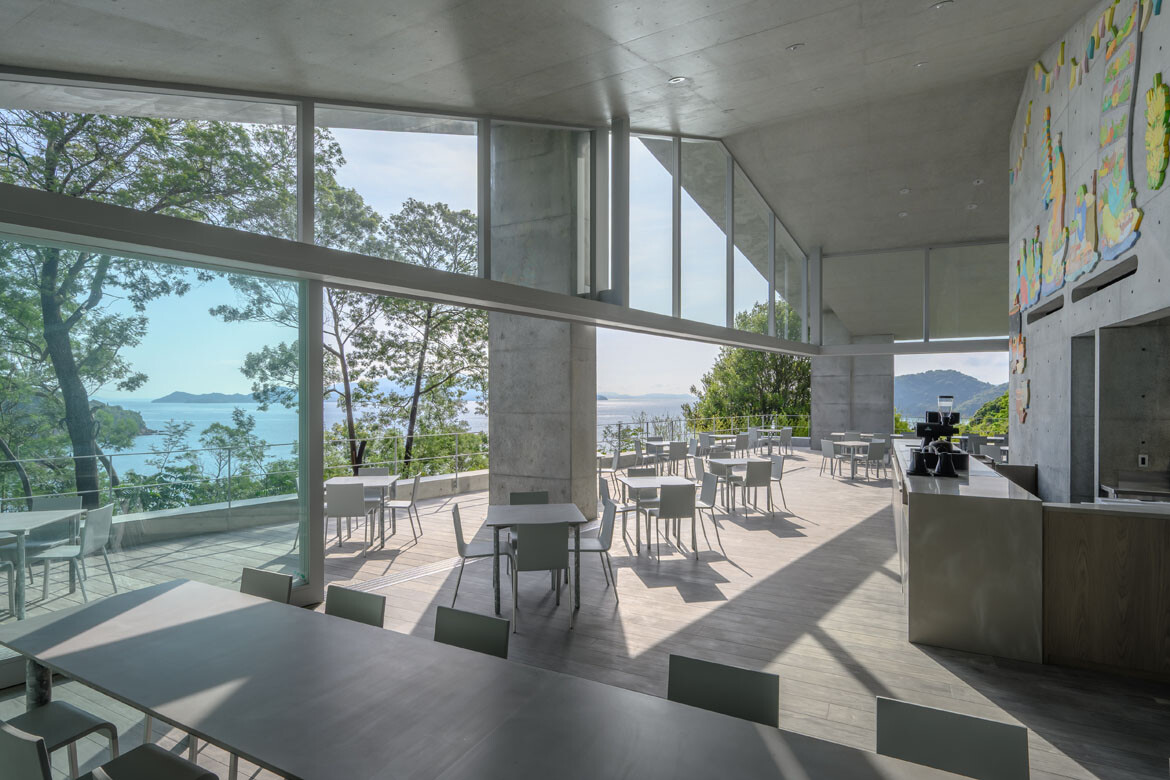
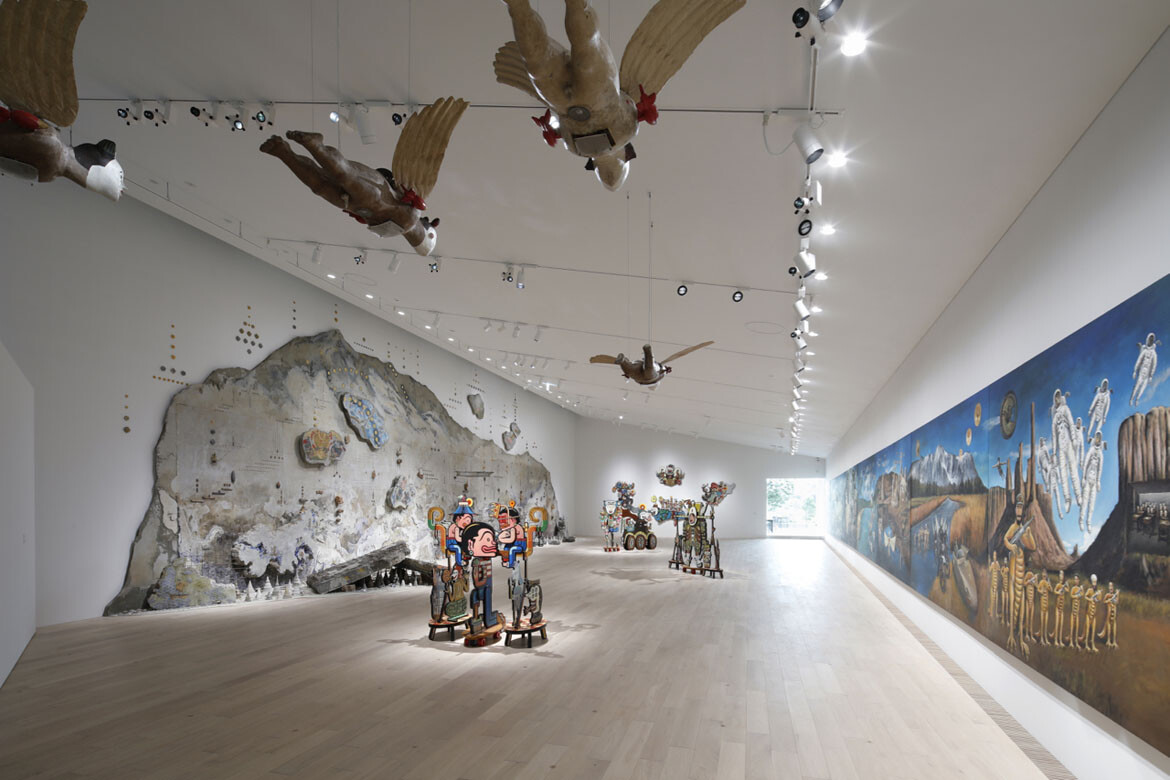
The opening exhibition is nothing short of extraordinary, with work by N. S. Harsha, who was commissioned for the cafe, Sanitas Pradittasnee, Chim-Pom from Smappa!Group, Makoto Aida, Motoyuki Shitamichi + Jeffrey Lim and Heri Dono. The site-specific works are spatially superb, with Takashi Murakami’s colossal piece Rakuchū-Rakugai-zu Byōbu, which Iwasa Matabei RIP revisited with additional characters and gold leaf. Cai Guo-Qiang’s Head On is another transported work, but just as extraordinary in this space where the glass wall (at the same height as the Berlin wall) is unrelentingly assaulted by a pack of life-sized wolves. Do Ho Suh’s delicate and personal work of stitched transparent rooms, Hub/s, Naoshima, Seoul, New York, Horsham, London, Berlin, continues to be spellbinding, with each iteration growing organically as he resides in more spaces. As such, this version includes a corridor from a house on Naoshima.
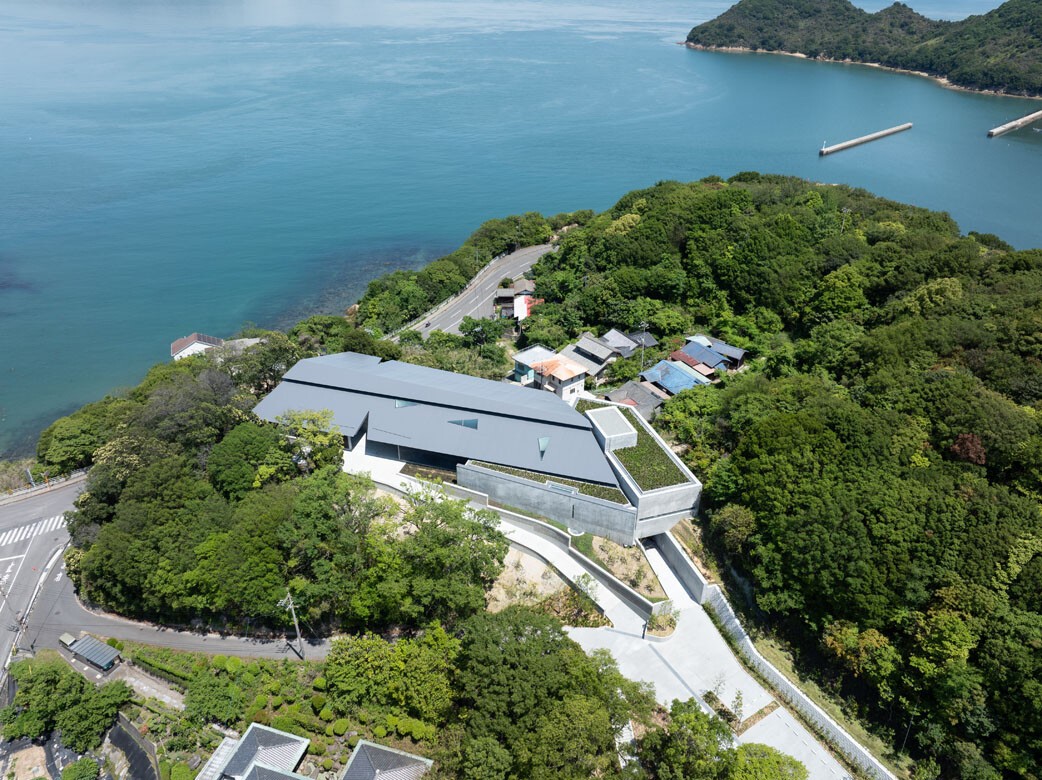
In many ways, architecture as art makes sense when emotion and context are driving factors. That said, for Ando, it is at the intersection of art and architecture where this is the case: the work with James Turrell, for example, or the angle of the light shafts in the Chichu Art Museum. For this project, however, Ando is working simply and purely as an architect, framing and housing a changing exhibition program with a knockout piece of architecture that is simply great just as it is.
Naoshima New Museum of Art
benesse-artsite.jp/en
Tadao Ando
tadao-ando.com
Photography
Kenryou Gu
Takeru Koroda
GION