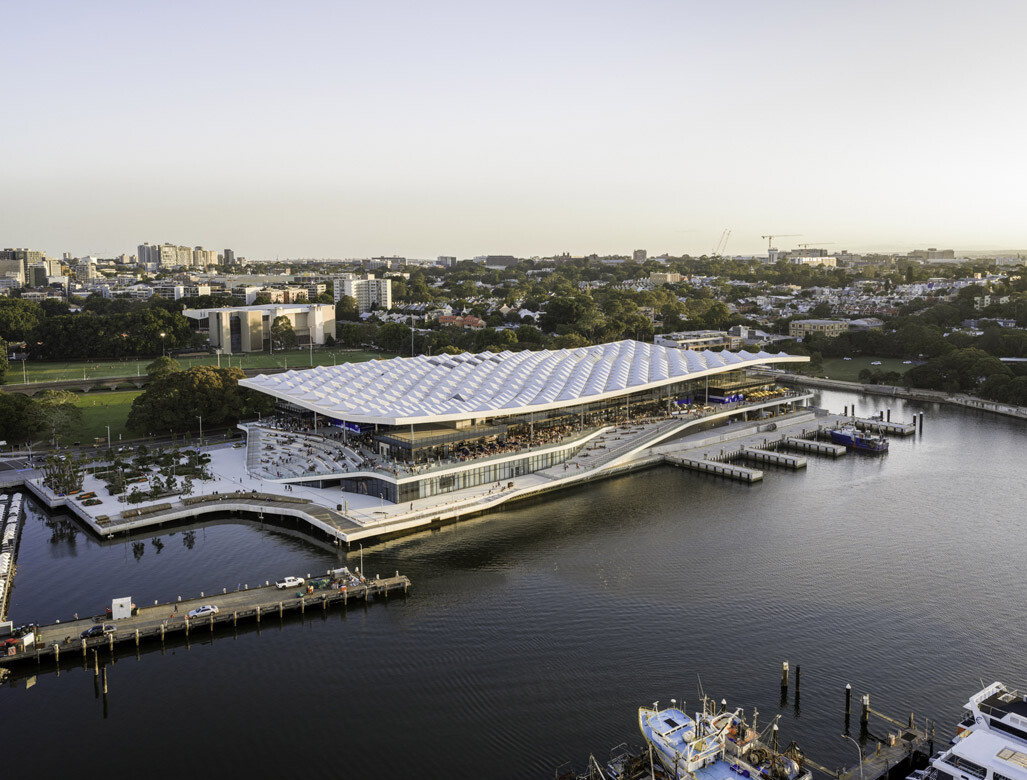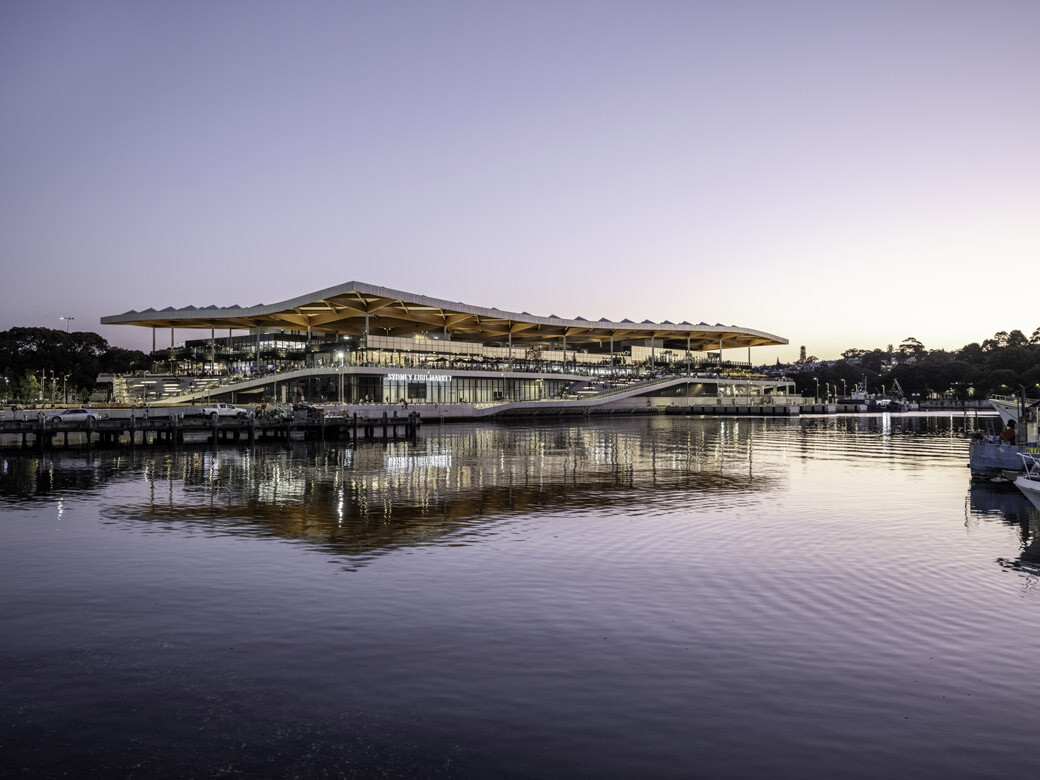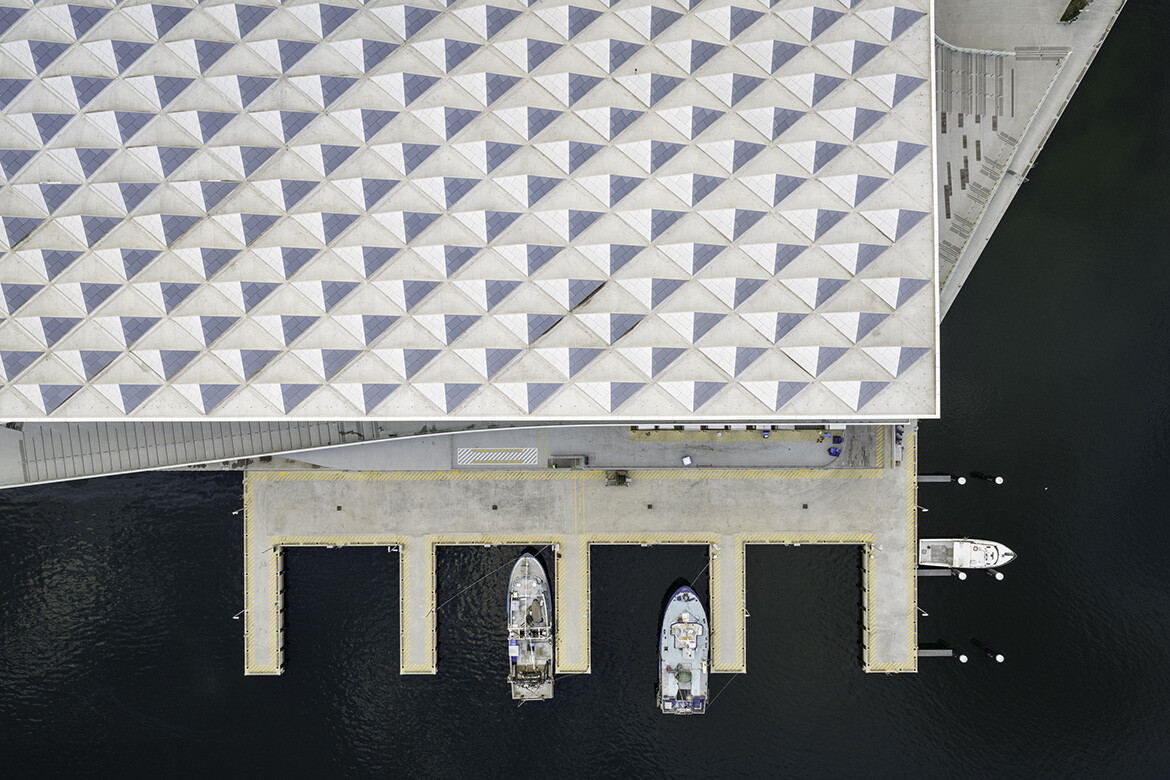
It’s been one of the city’s most prestigious projects in recent years: the new Sydney Fish Market, designed by 3XN, BVN and ASPECT Studios. Having opened to the public in January 2026, we are delighted to host representatives from each design practice for an in-person conversation hosted by The Commons, Surry Hills.
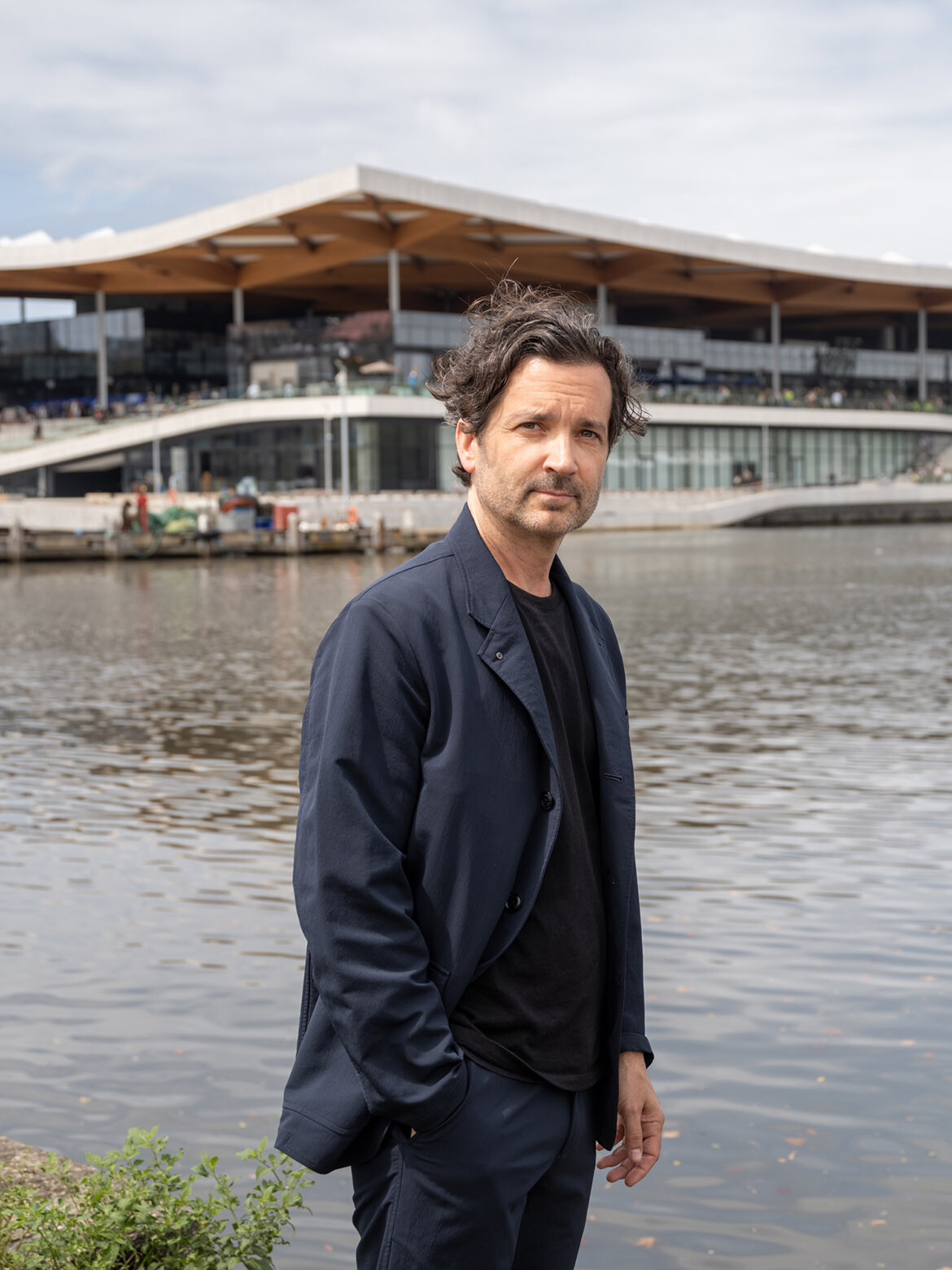
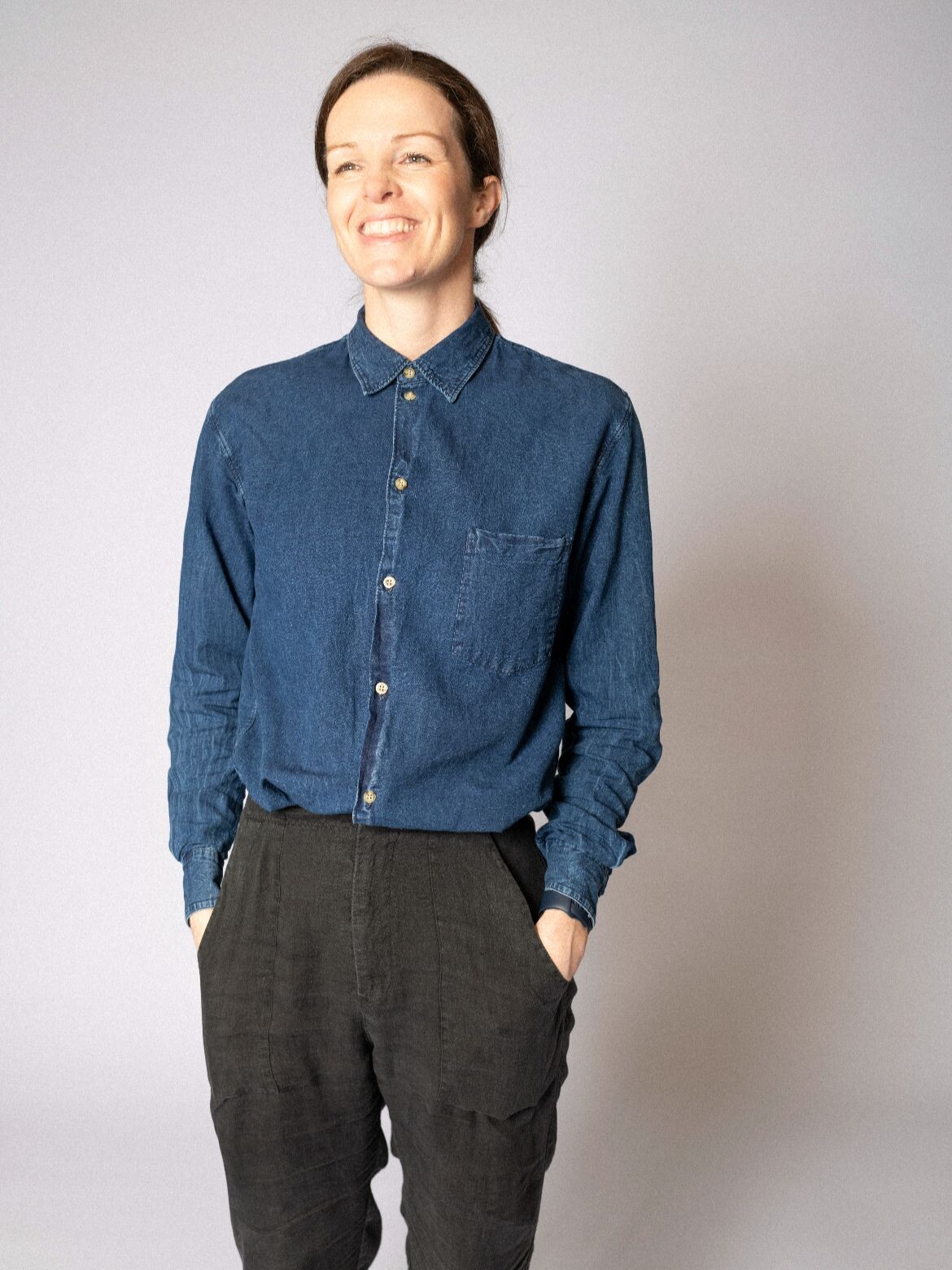
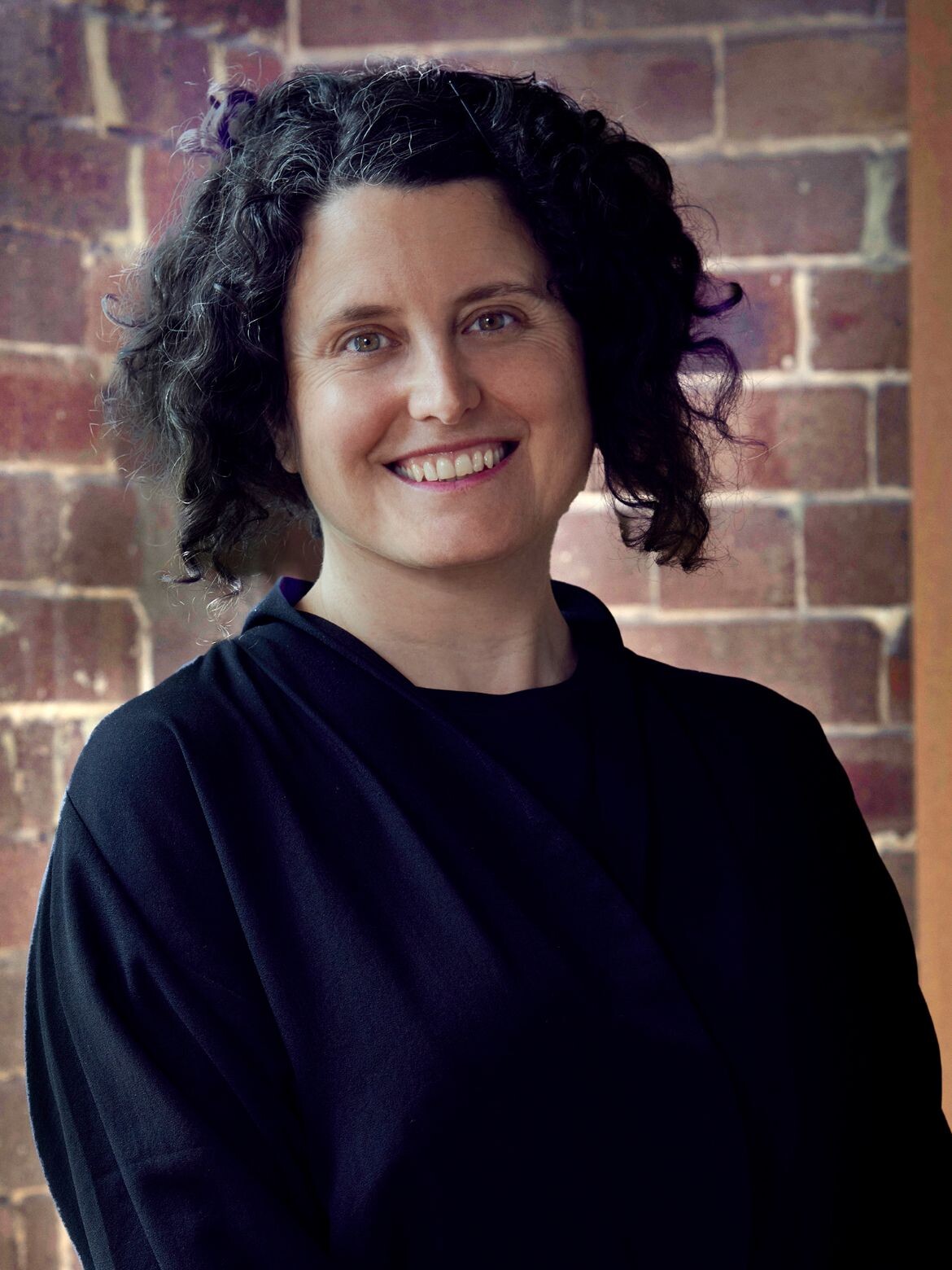
Fred Holt (3XN), Catherine Skinner (BVN) and Louise Pearson (ASPECT Studios) – pictured left to right, below – reflect on how the project ties together public space, working industry and waterfront access within a single precinct. A recurring theme throughout the conversation is the market’s dual identity as both an operational fish market and a civic destination. The guests describe the design approach as one that seeks to preserve the character and visibility of a functioning industry, while making the site more accessible to the public.
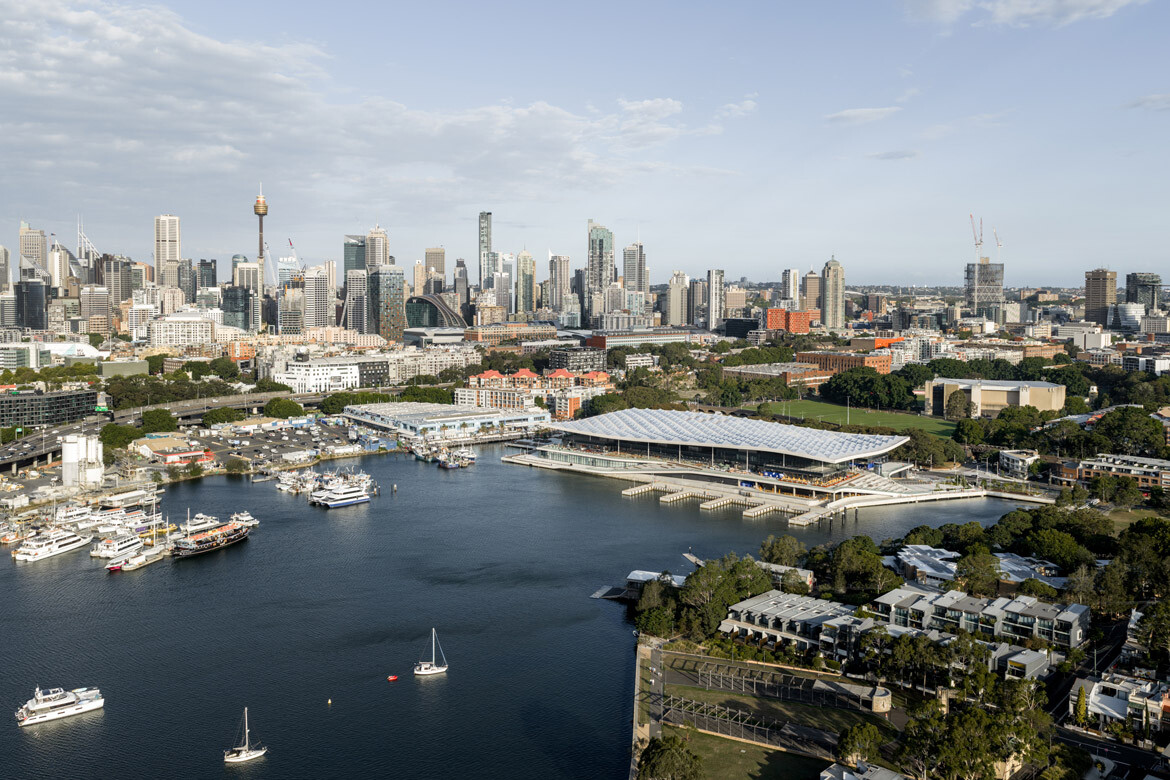
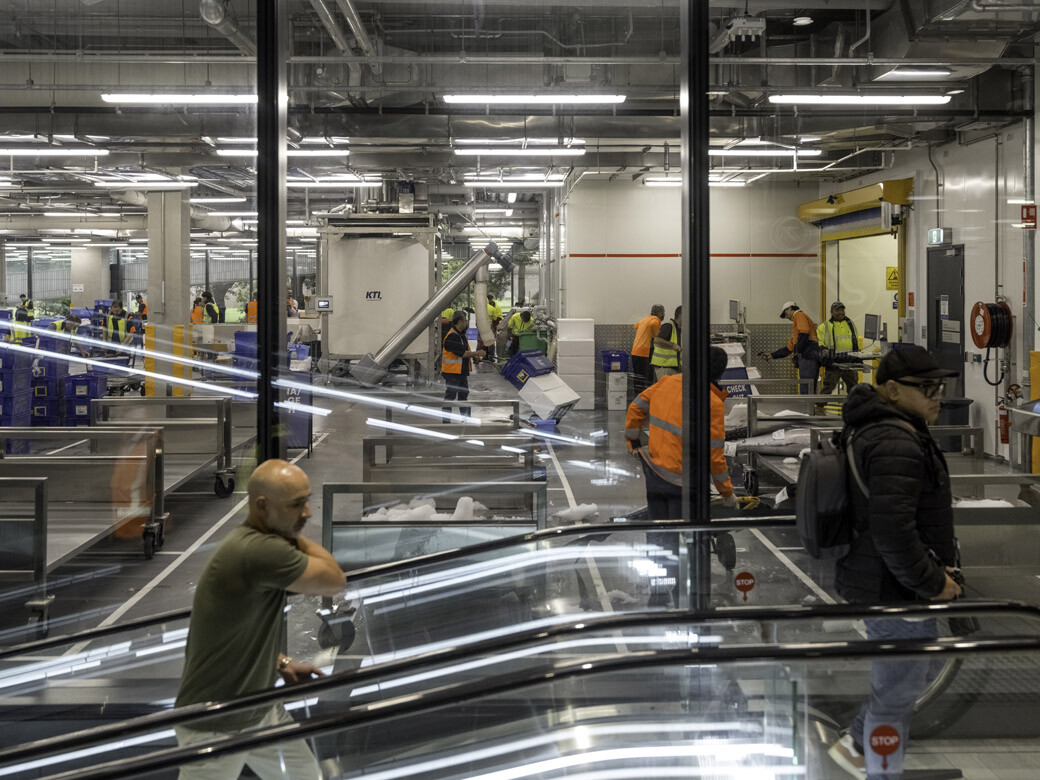
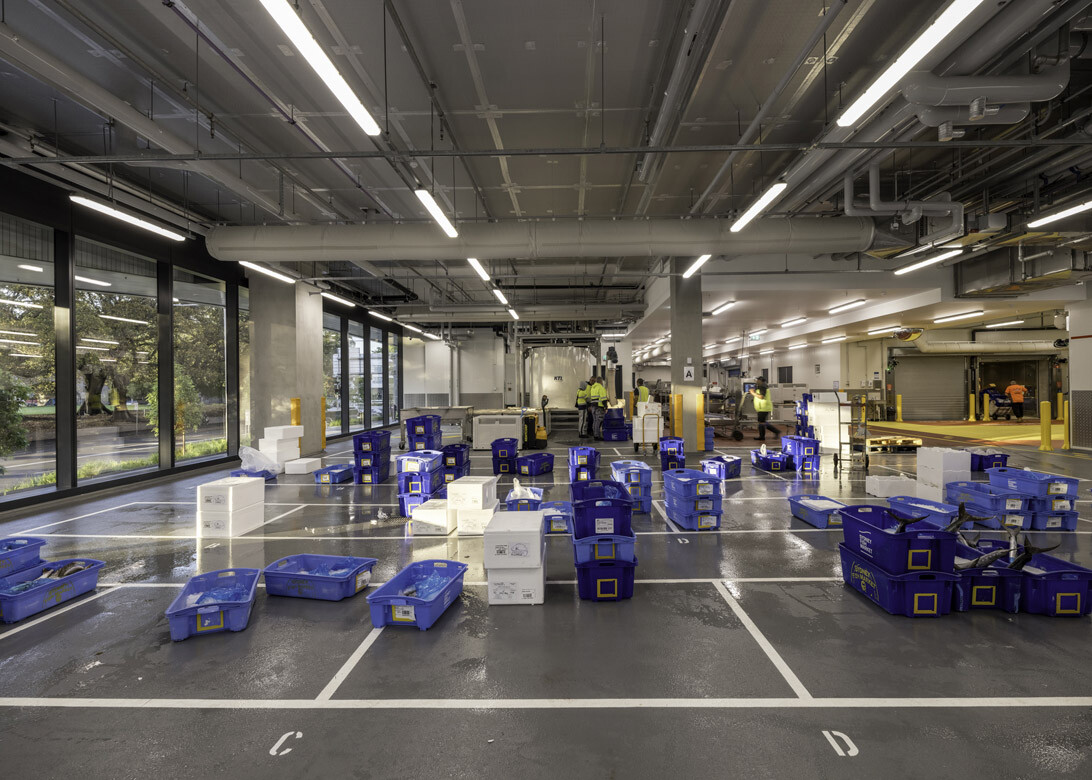
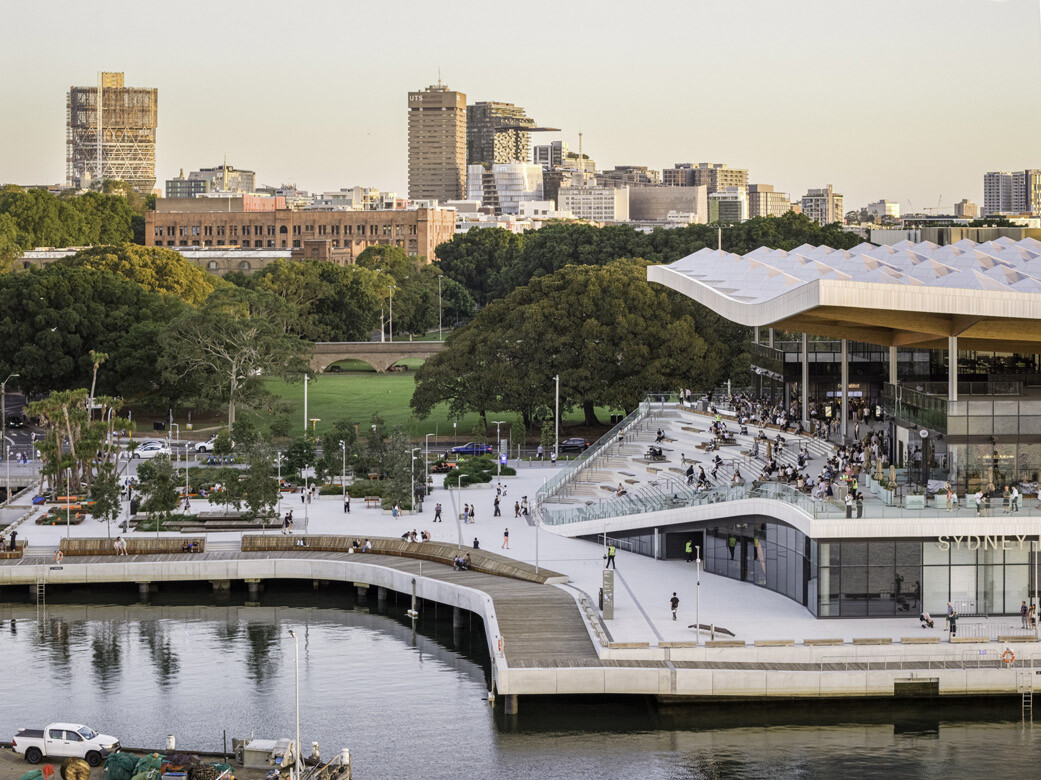
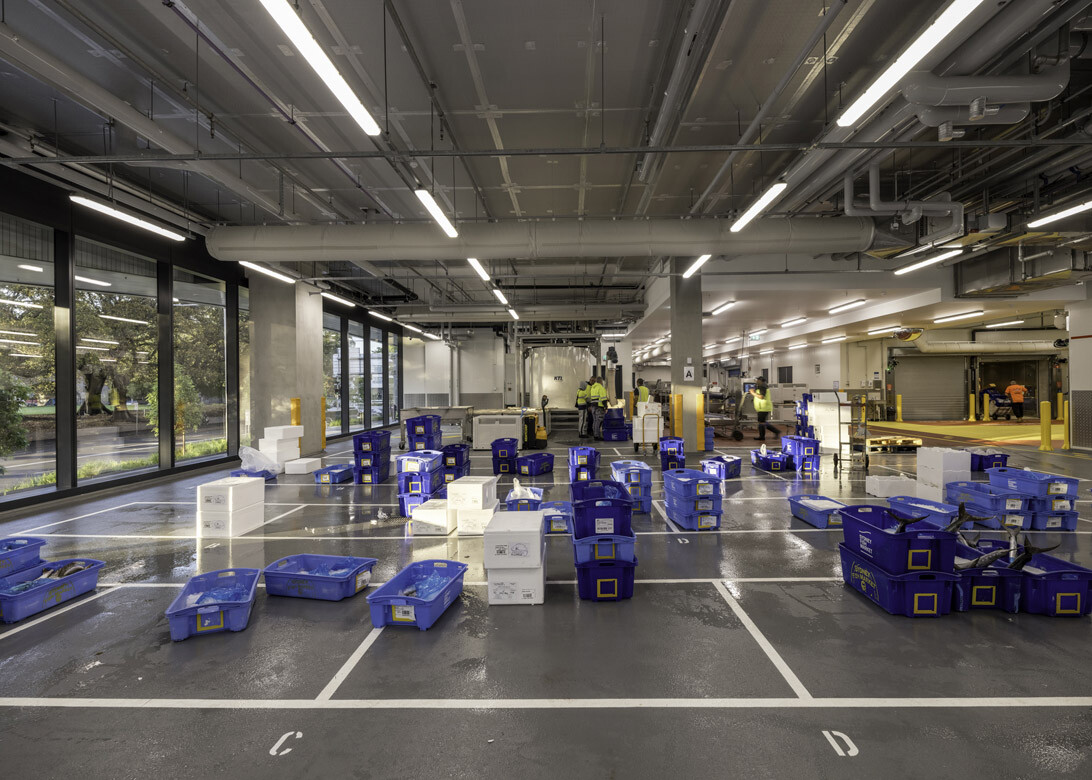
Rather than concealing logistics and wholesale activity, the building allows visitors to see aspects of the market’s operations. The conversation also traces the transformation of Blackwattle Bay from a largely industrial waterfront into a more open and publicly accessible environment. New plazas, planting and foreshore connections reposition the fish market as part of a broader harbour walk, with the project understood as one point within a growing network of public waterfront spaces.
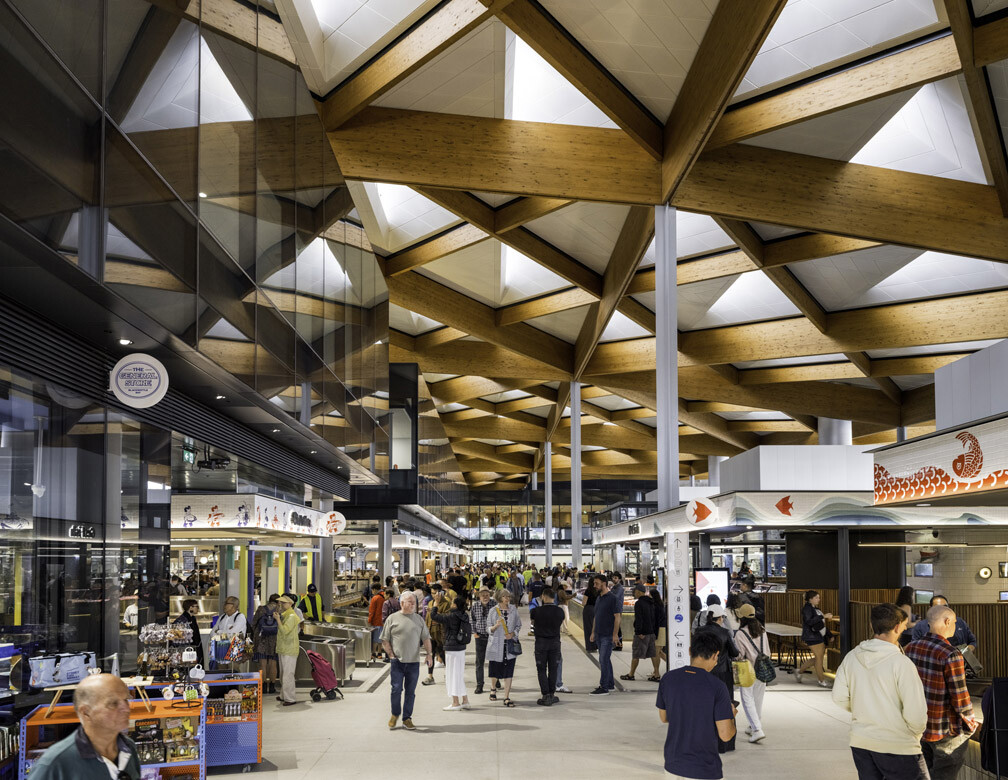
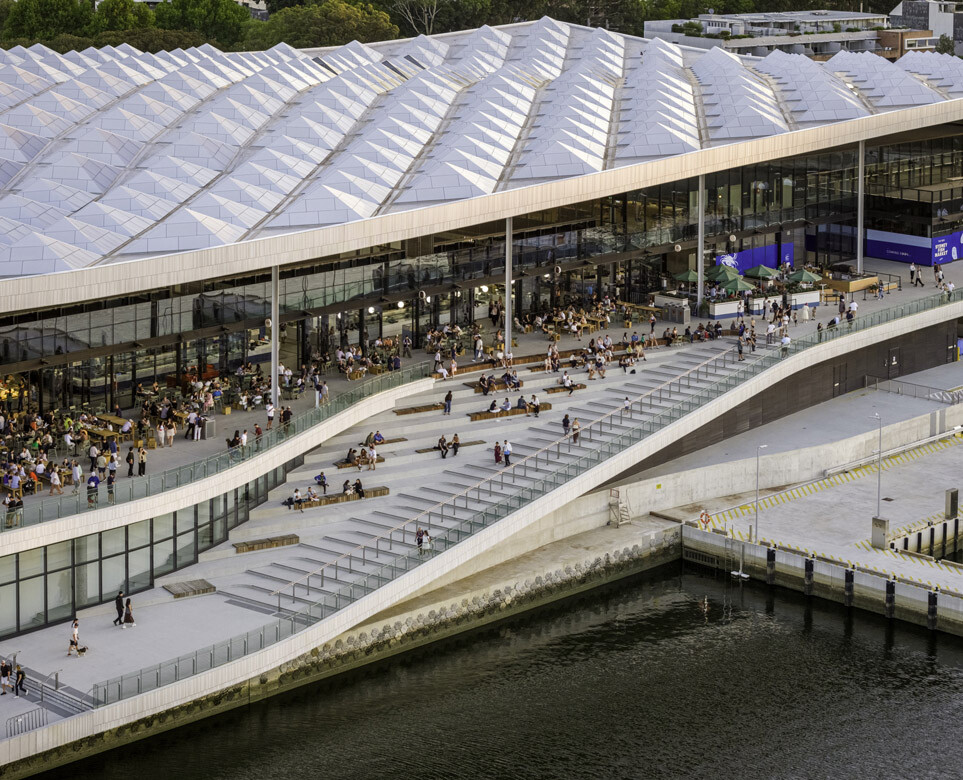
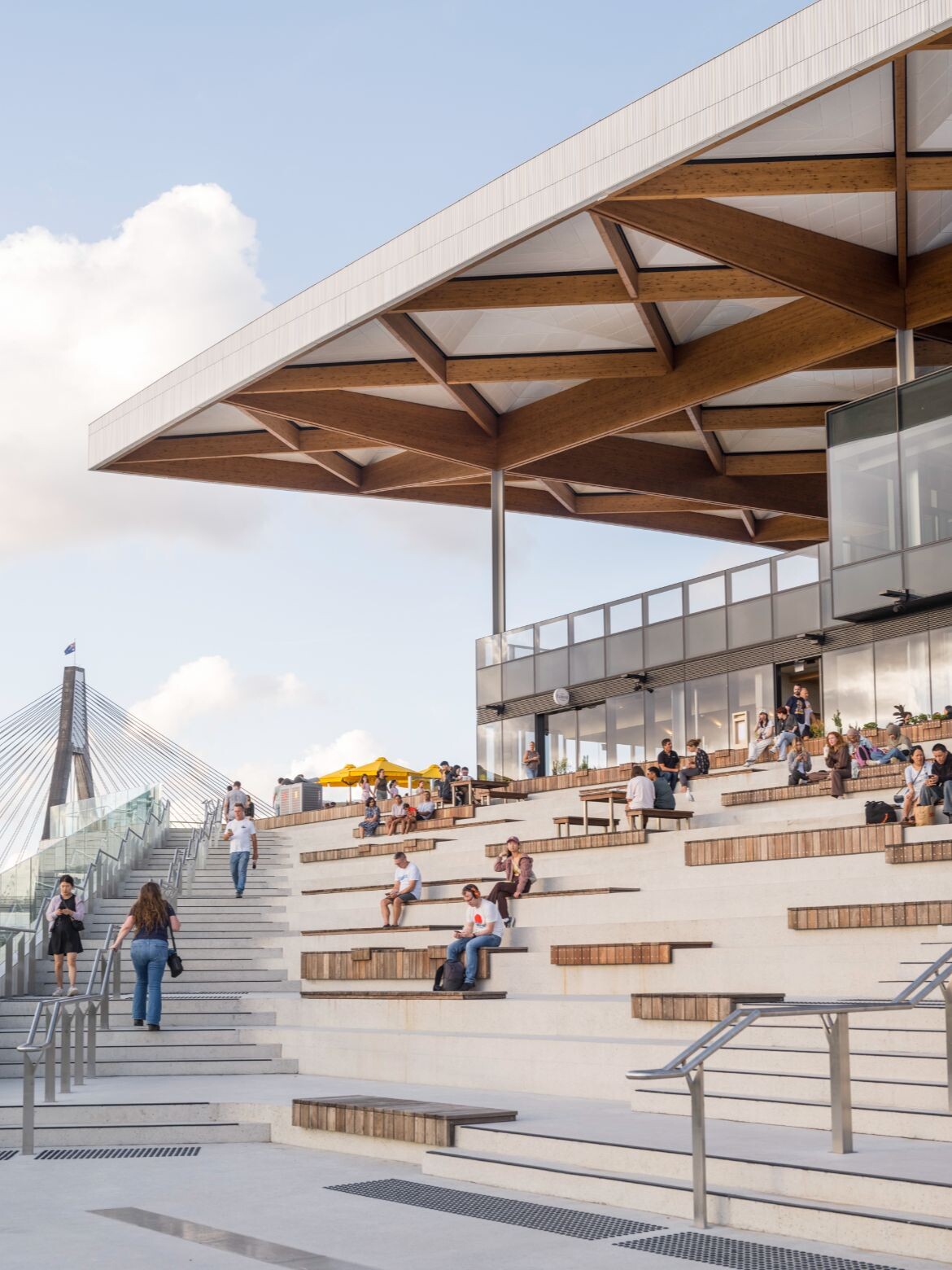
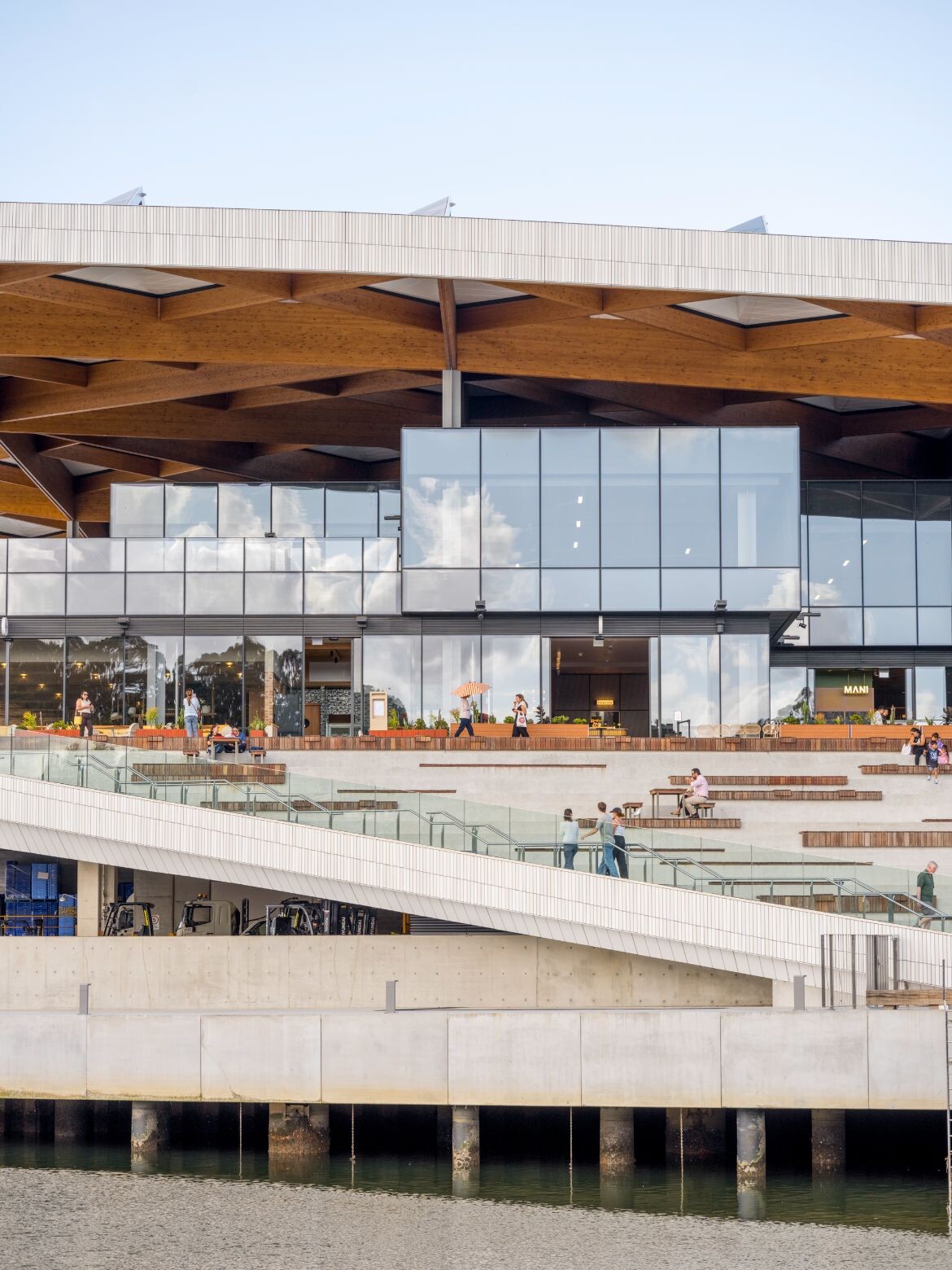
The eastern plaza and amphitheatre steps are discussed not only as circulation devices but as social spaces designed to accommodate everyday use alongside events and gatherings. The elevated market hall, described as an “upper ground,” continues this approach, functioning as an open, naturally ventilated street that maintains visual connections to the harbour, park and city beyond.
Related: Kengo Kuma on the podcast
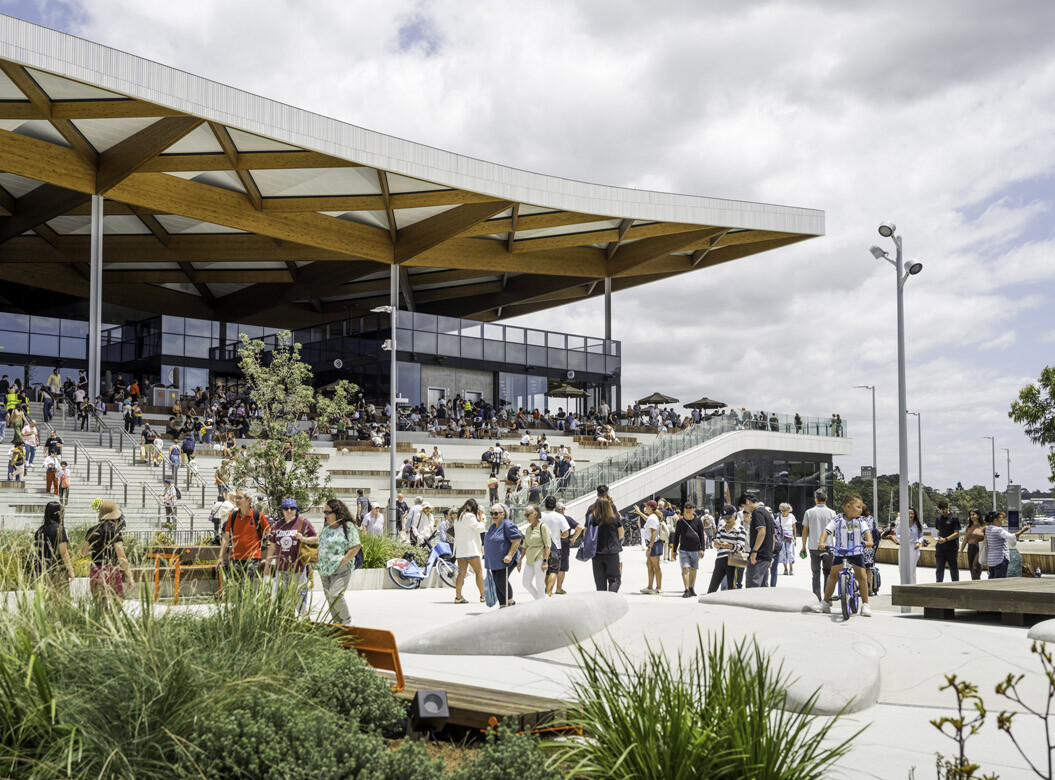
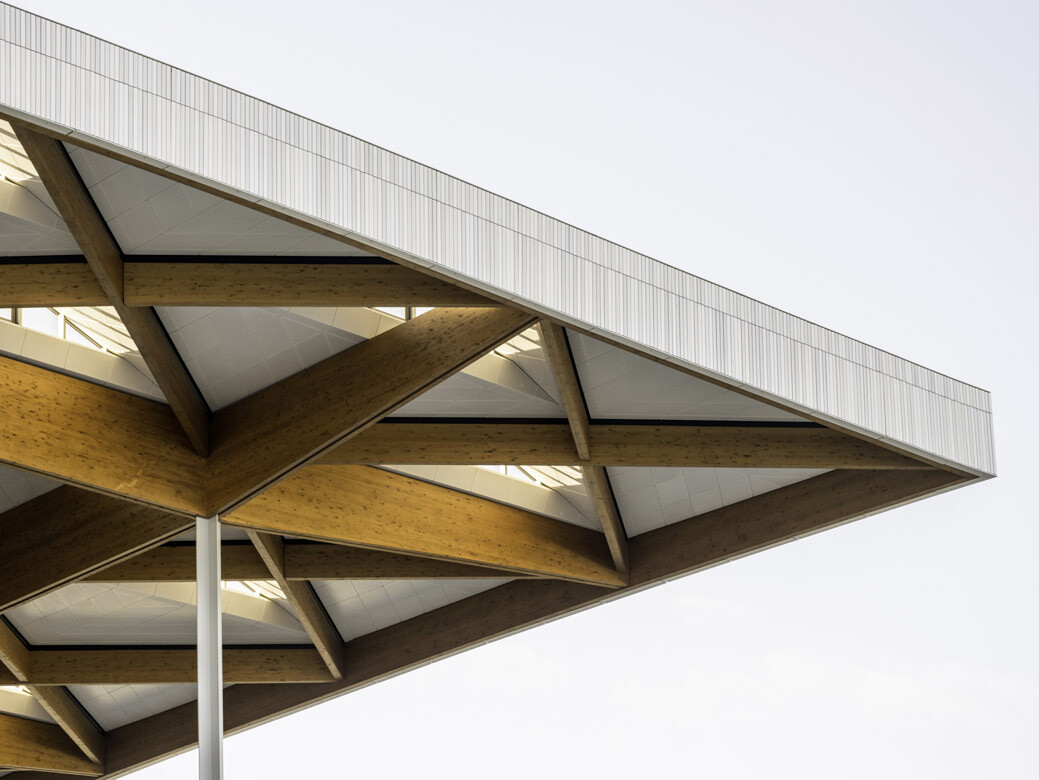
The roof canopy, now one of the project’s most recognisable features, is covered in terms of performance as much as appearance, explaining its form as a response to environmental requirements including daylight, water collection and energy generation.
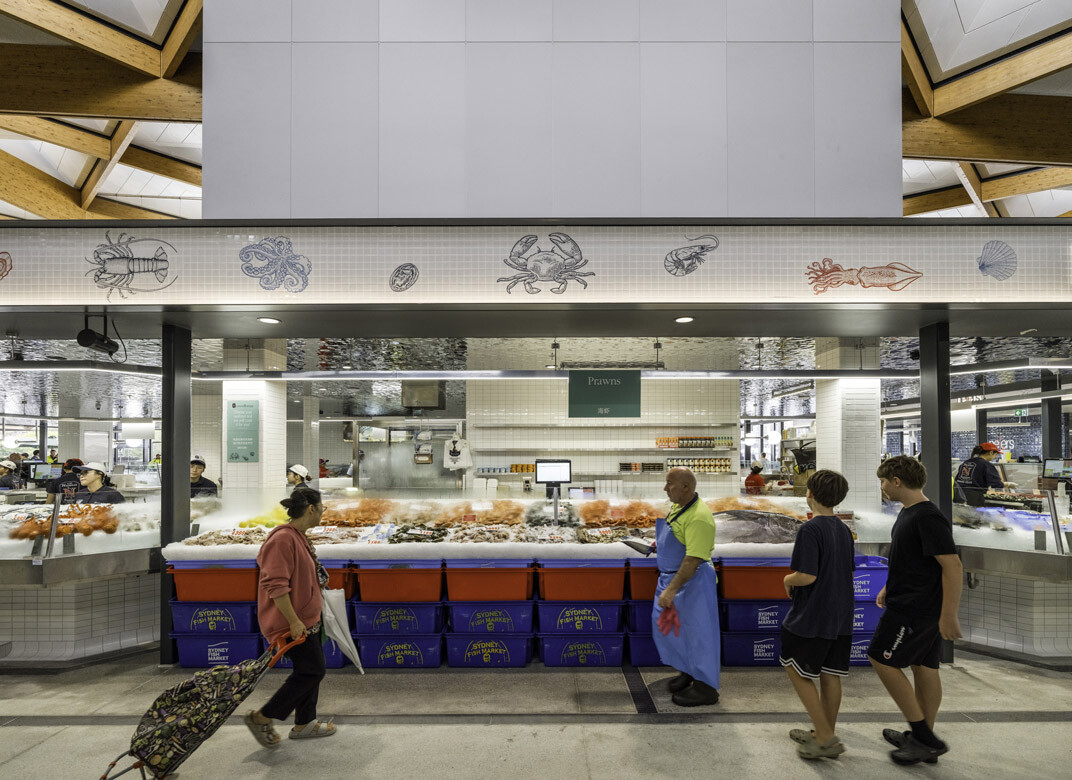
The conversation also considers why the project has attracted attention beyond architecture audiences. The guests agree that its appeal lies in its civic character: a building that prioritises public use and everyday occupation, where visitors can participate in many different ways.
Photography (excluding portraits of Catherine and Louise)
Rasmus Hjortshoj