Transforming a rare inner-city bungalow, Spacemen Studio creates an all-day dining and lounge destination defined by natural light, layered materials and a seamless shift from brunch café to evening bar.
In the dense fabric of central Kuala Lumpur, where commercial towers increasingly eclipse the city’s earlier domestic scale, Sun & Moon occupies a rare remnant: a standalone bungalow with a layered and somewhat unruly past. Rather than erase that history, Spacemen Studio has carefully reworked it, transforming a dilapidated structure into a hospitality venue defined by light, texture and time shifts.
Built over an abandoned bungalow that had endured years of piecemeal renovations, the site presented both opportunity and complication. “During our initial survey we found multiple layers of construction left behind from previous works,” notes director Edward Tan, including stacked gypsum ceilings from different eras. Much of the original structure was retained, but selectively opened and extended to allow the new spatial logic to emerge.
The brief from client Feast Dining Group was deliberately open-ended. Conceived as an all-day brunch destination that could transition seamlessly into an evening lounge and bar, Sun & Moon was to embody two distinct moods within a single architectural framework. The name itself became the guiding concept: clarity and restoration by day, atmosphere and rhythm by night.
Related: Keiji Ashizawa Design transforms historic Singapore restaurant
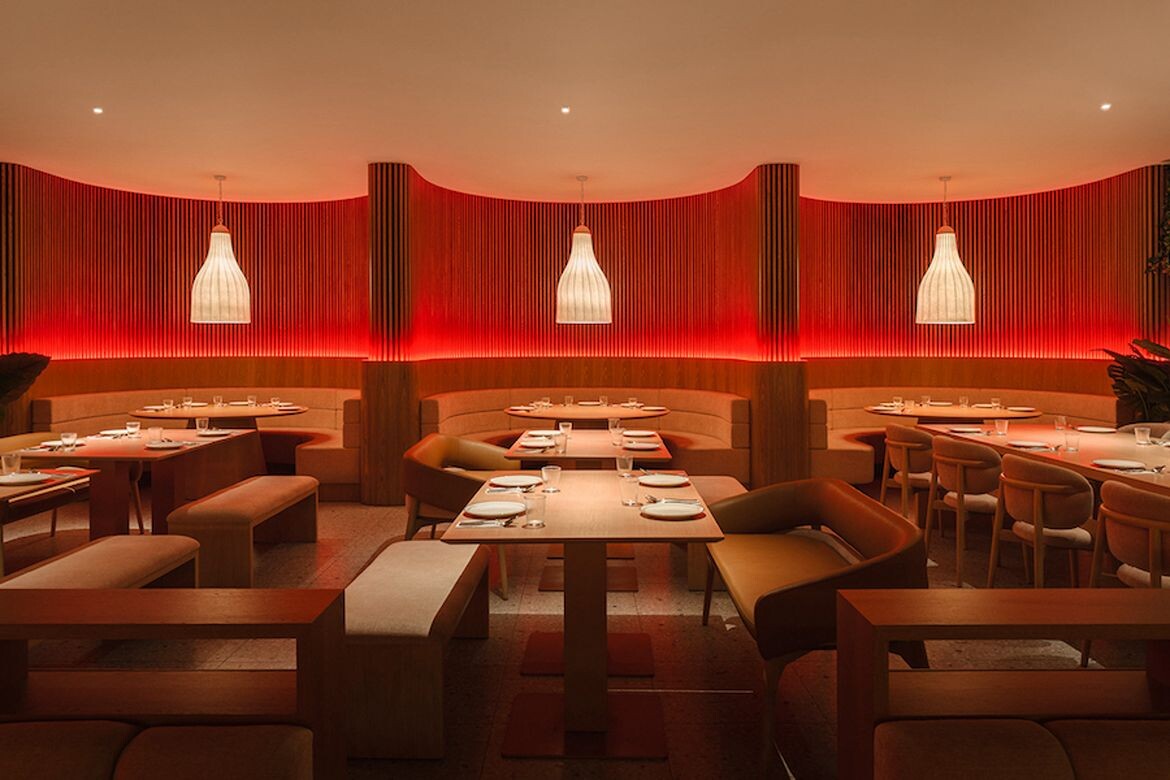
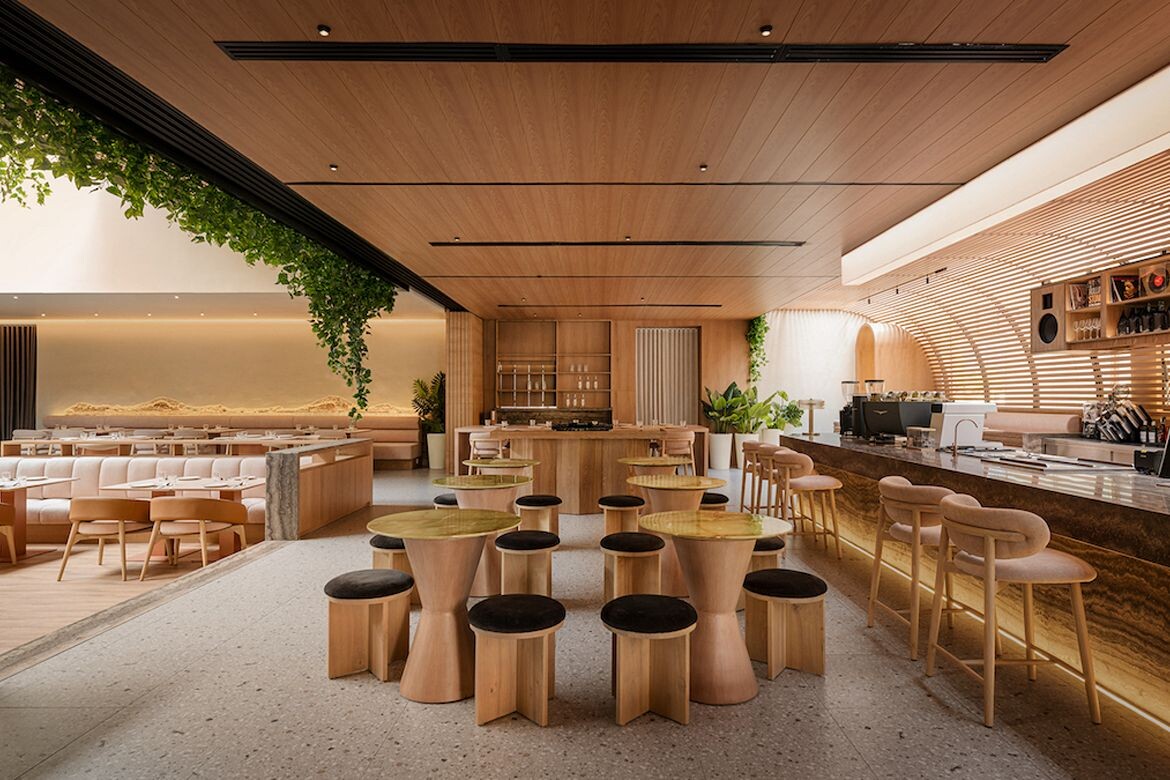
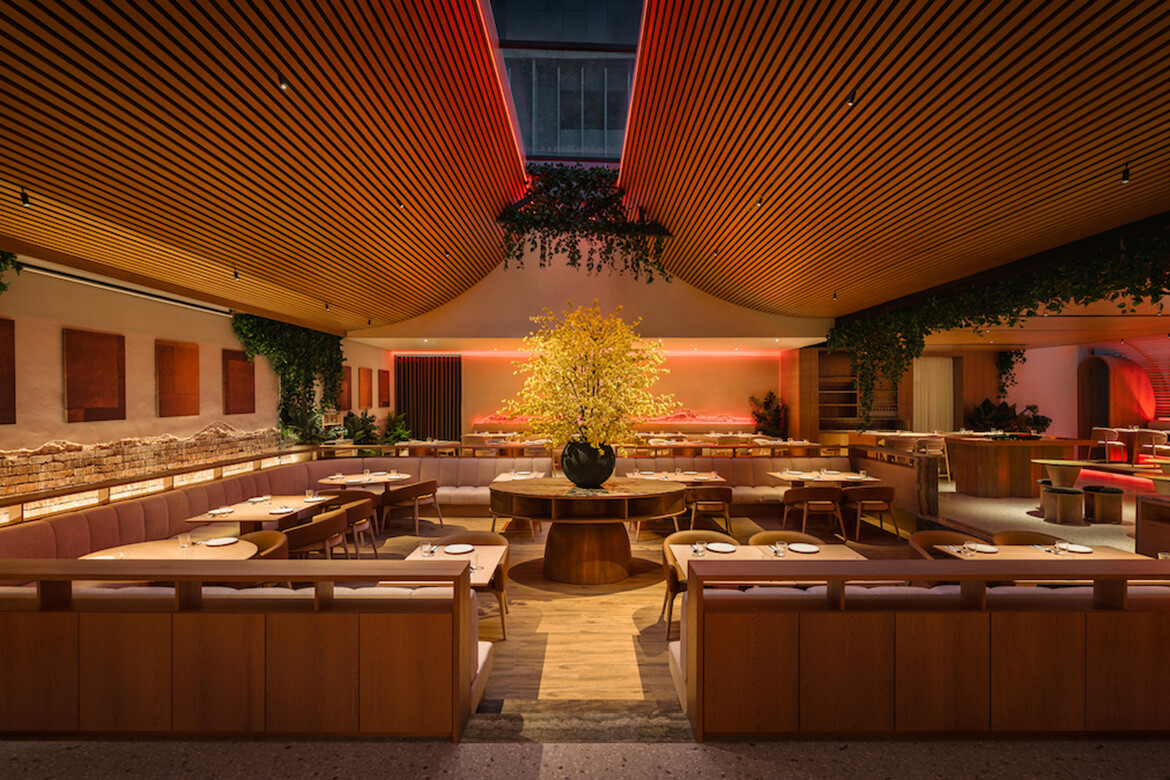
Spacemen responded by reshaping the building around natural light. Portions of the roof were raised to introduce a linear skylight, while a glazed extension now houses the Sun Bar, allowing daylight to penetrate deep into the plan. Throughout the day, light animates the interior, shifting across surfaces and drawing attention to material textures rather than decorative gestures.
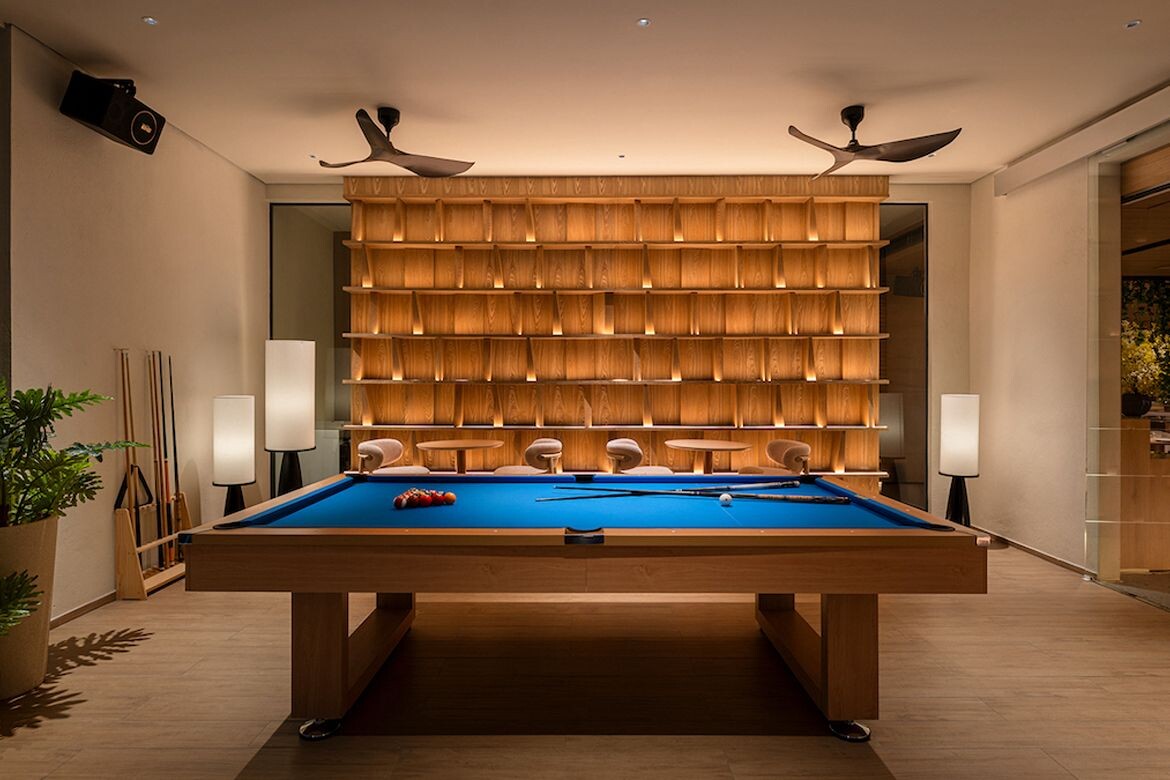
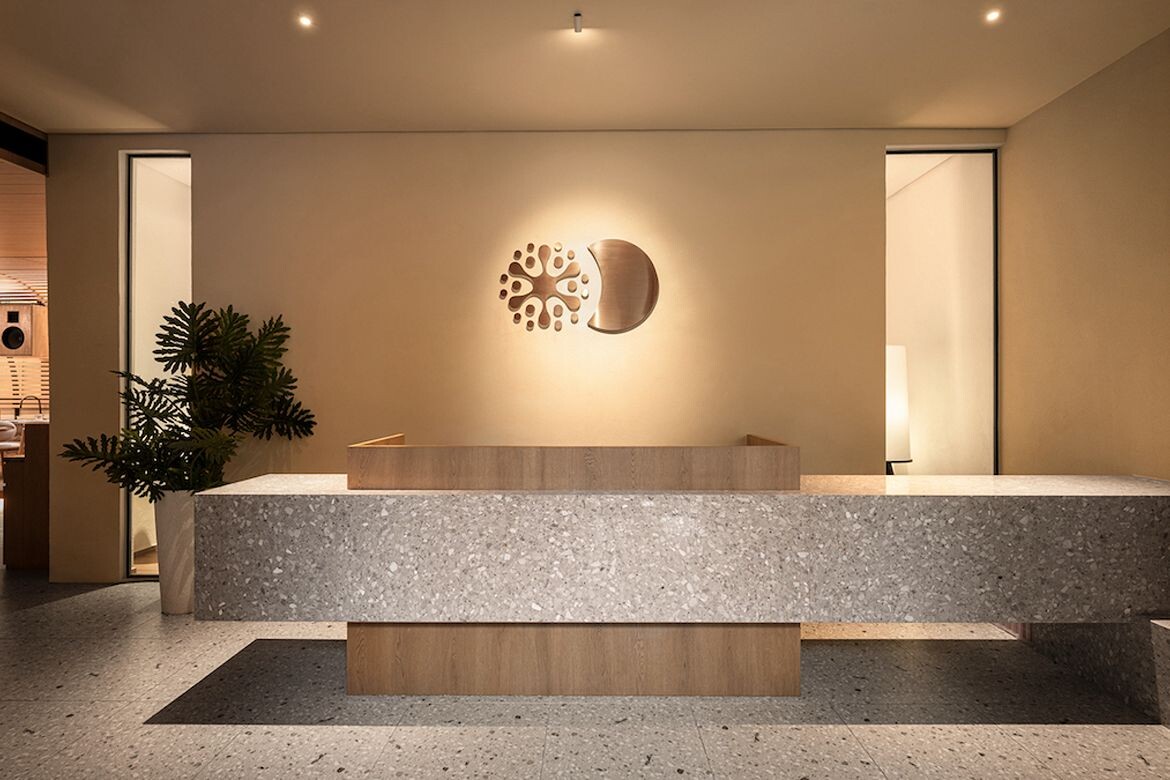
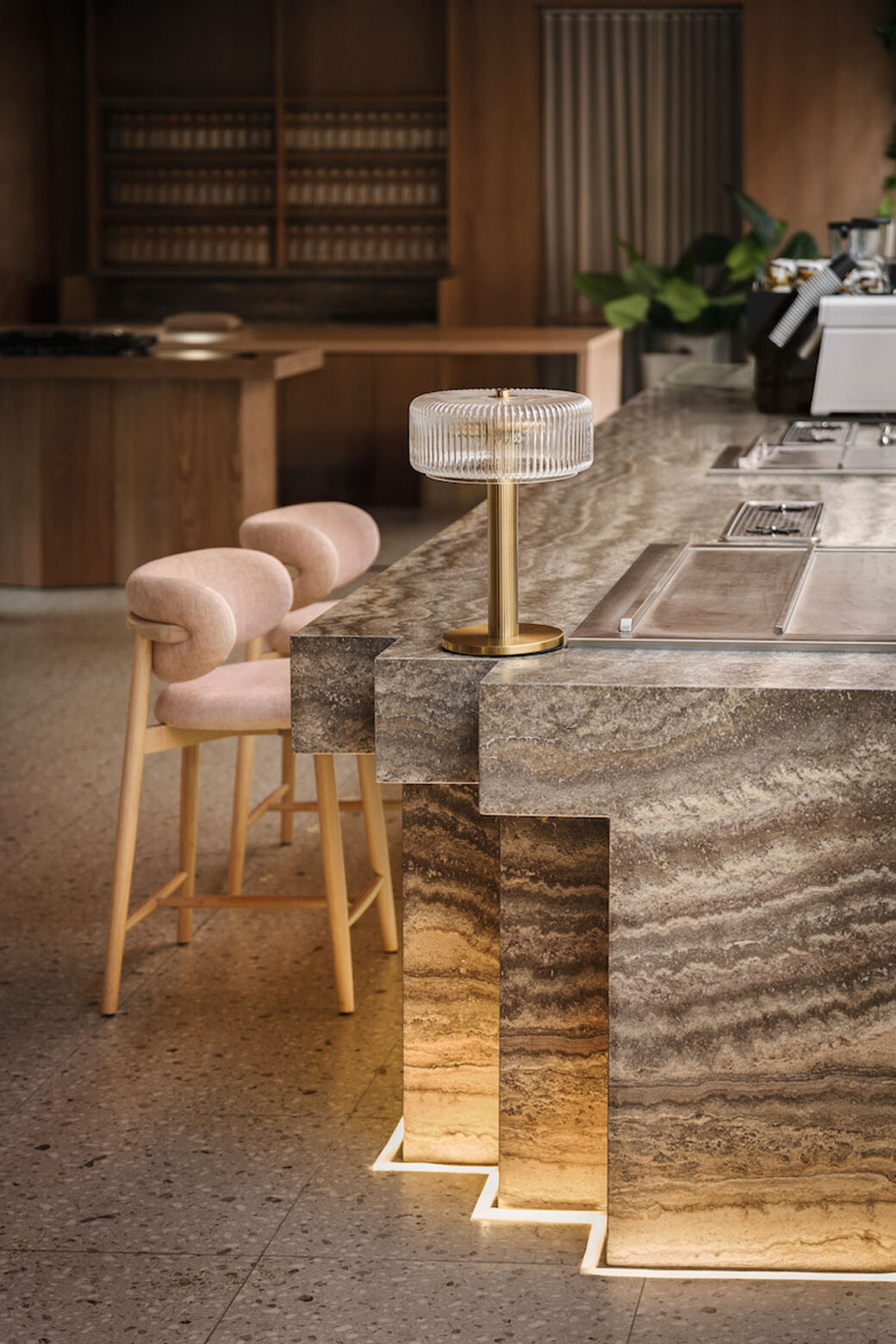
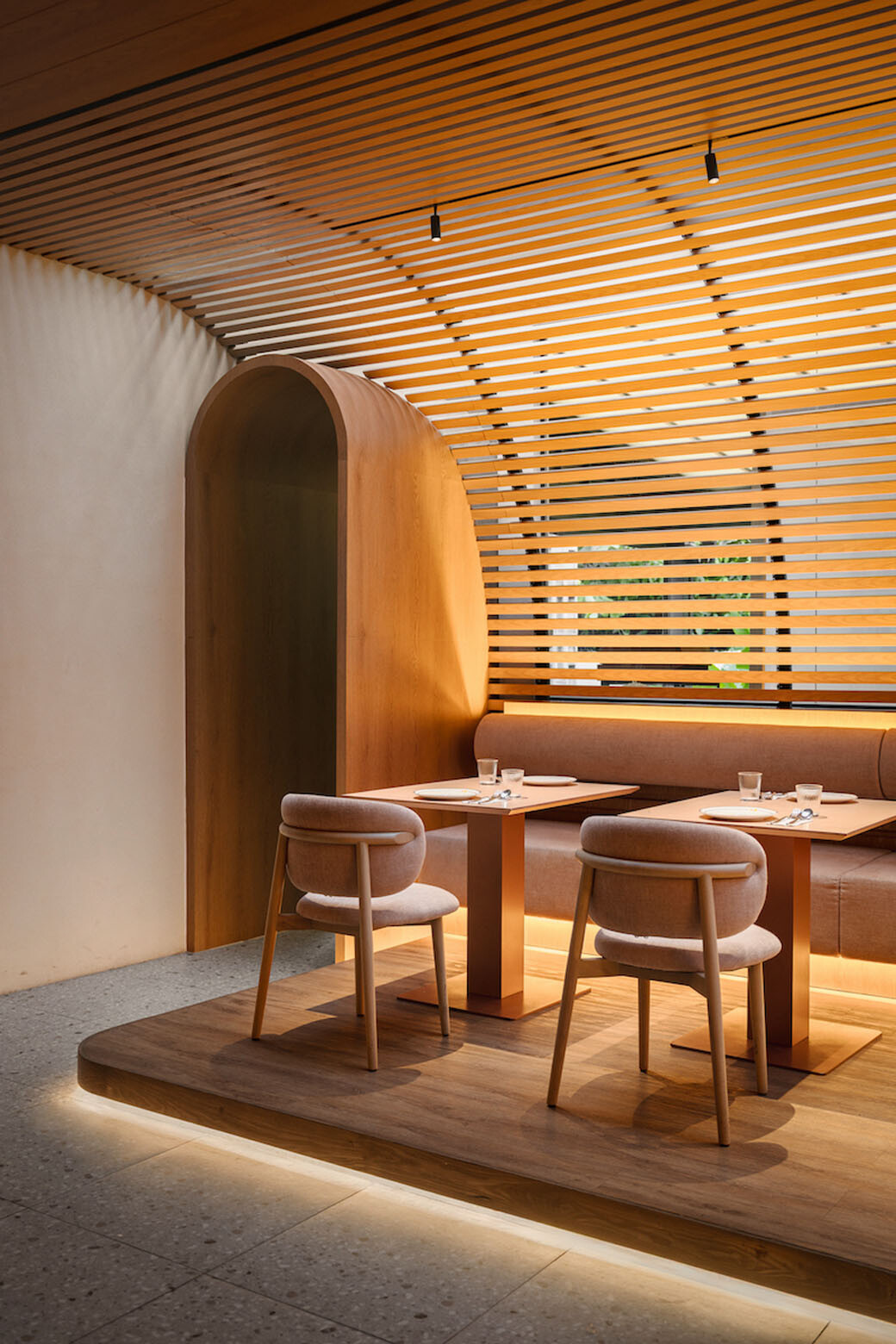
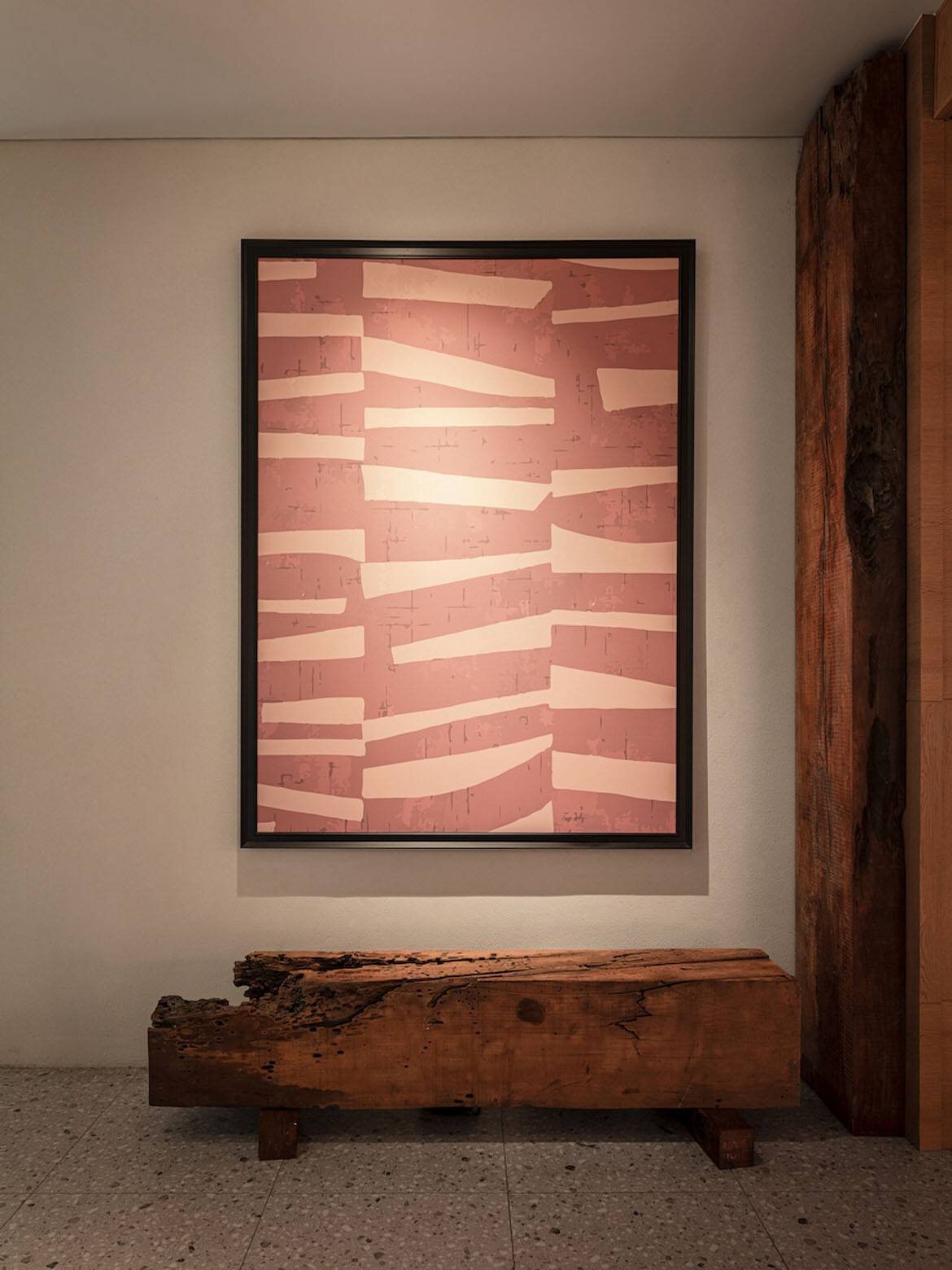
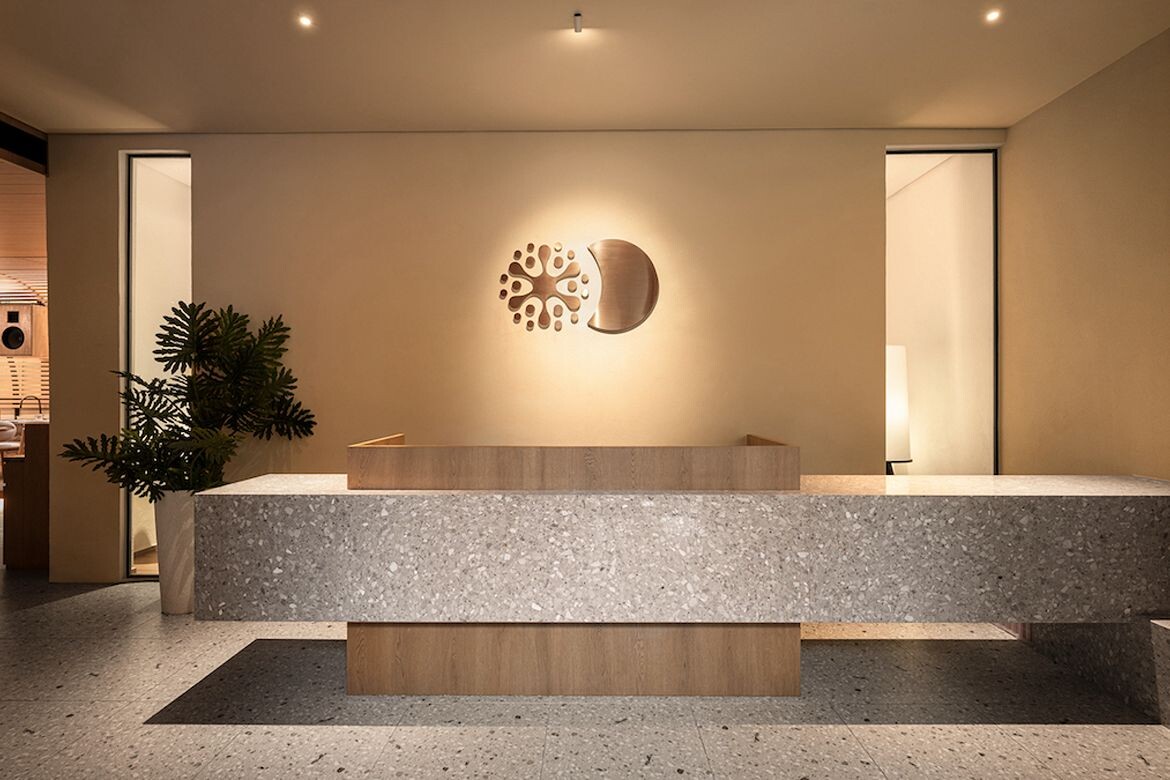
Material selection reinforces this restrained approach. Natural oak, reclaimed timber, terrazzo and silver travertine establish a calm, tactile palette, while exposed patina brickwork preserves traces of the bungalow’s former life. Aluminium slats and textured paint add subtle variation, and greenery is used strategically to soften thresholds and blur the boundary between inside and out.
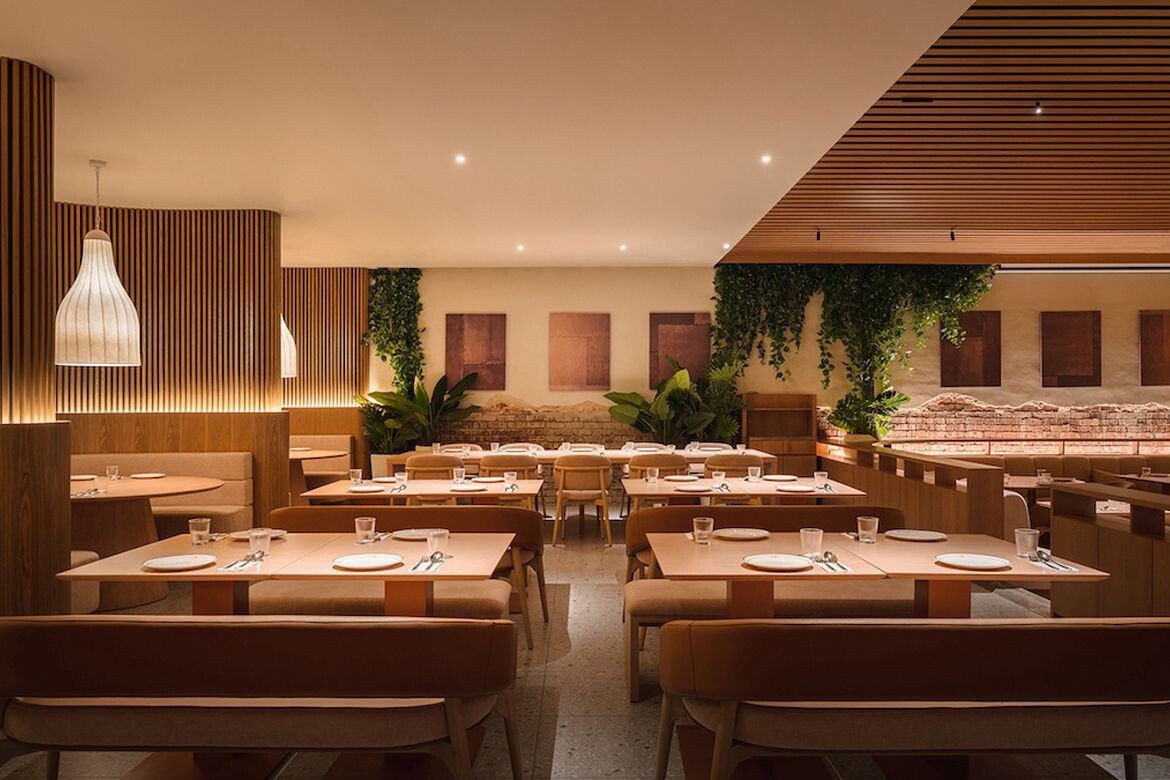
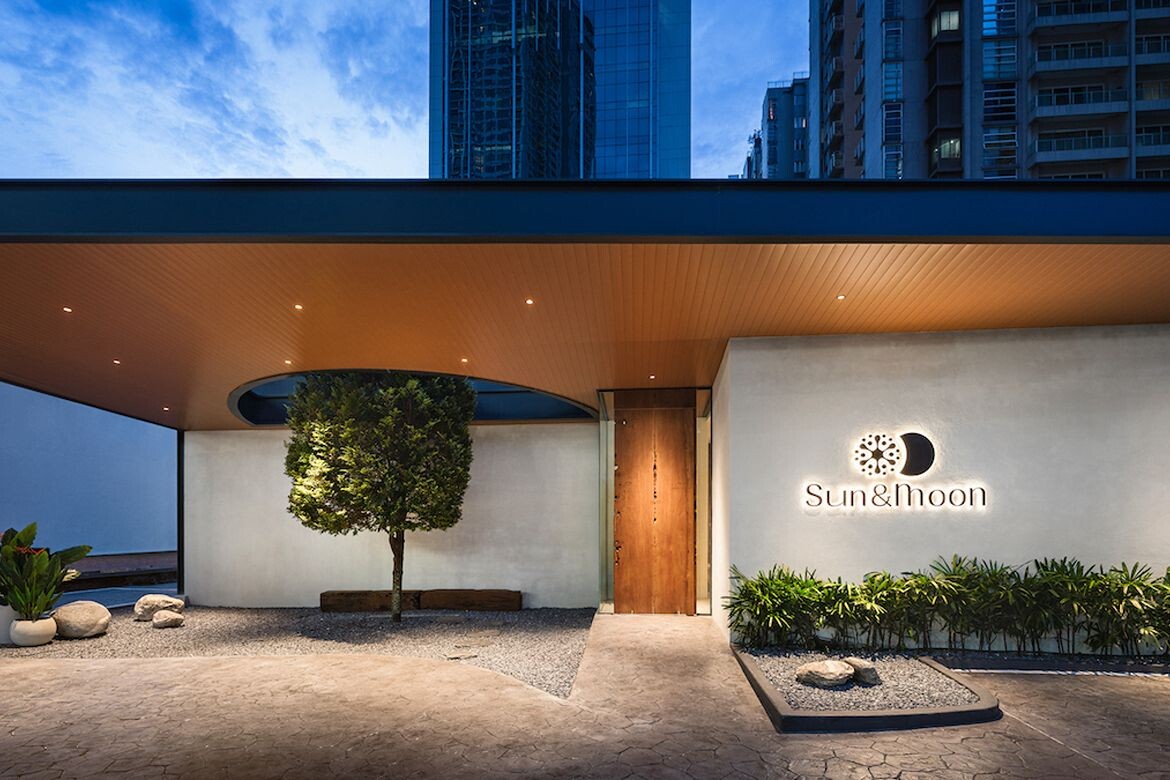
One of the project’s most distinctive moments occurs on arrival. Beneath a circular skylight at the entrance, an ebony tree appears to grow through the building itself, anchoring the waiting area and signalling the project’s relationship to daylight and nature. Inside, timber slats wrap the glazed ceiling above the bar, filtering sunlight and casting shifting shadows across the space as the day unfolds.
At the heart of the project is the sunken pit dining area, positioned beneath the linear skylight and conceived as the social and spatial core of the restaurant. By day, it is filled with soft, even light, creating an inviting and communal atmosphere. By night, it becomes the energetic centre of the venue, animated by layered lighting and DJ-led ambience while maintaining visual connection to the surrounding spaces.
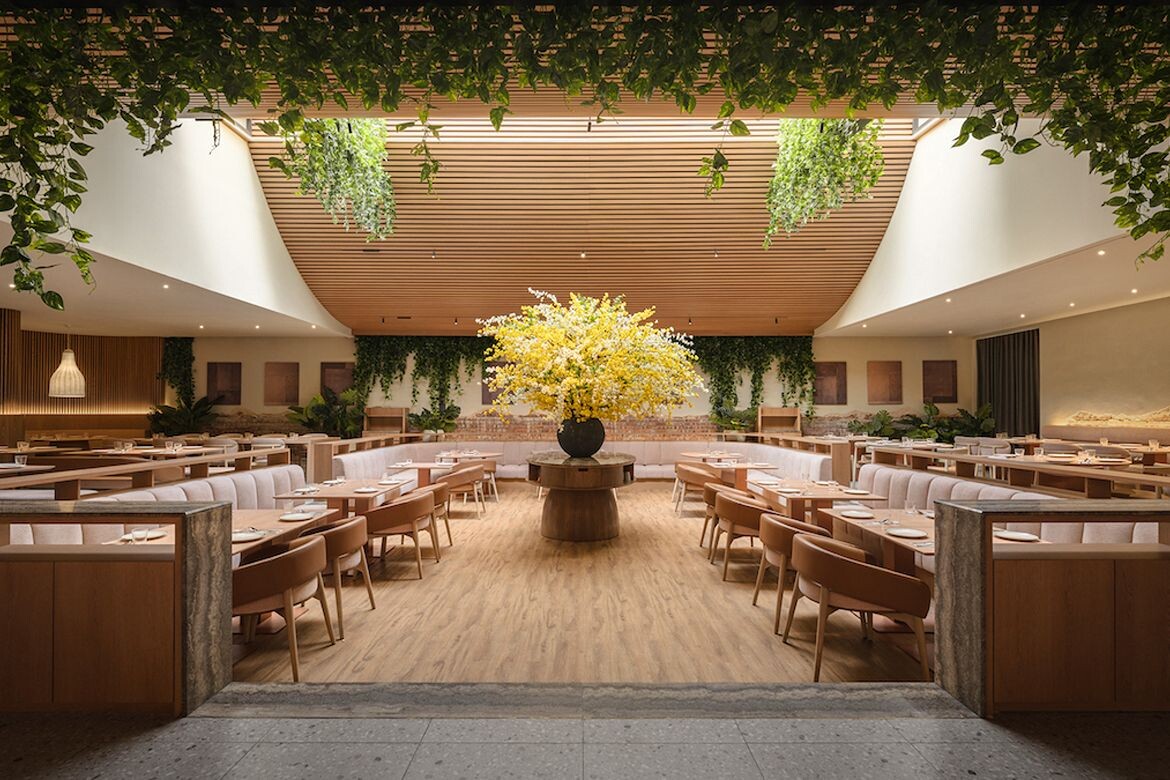
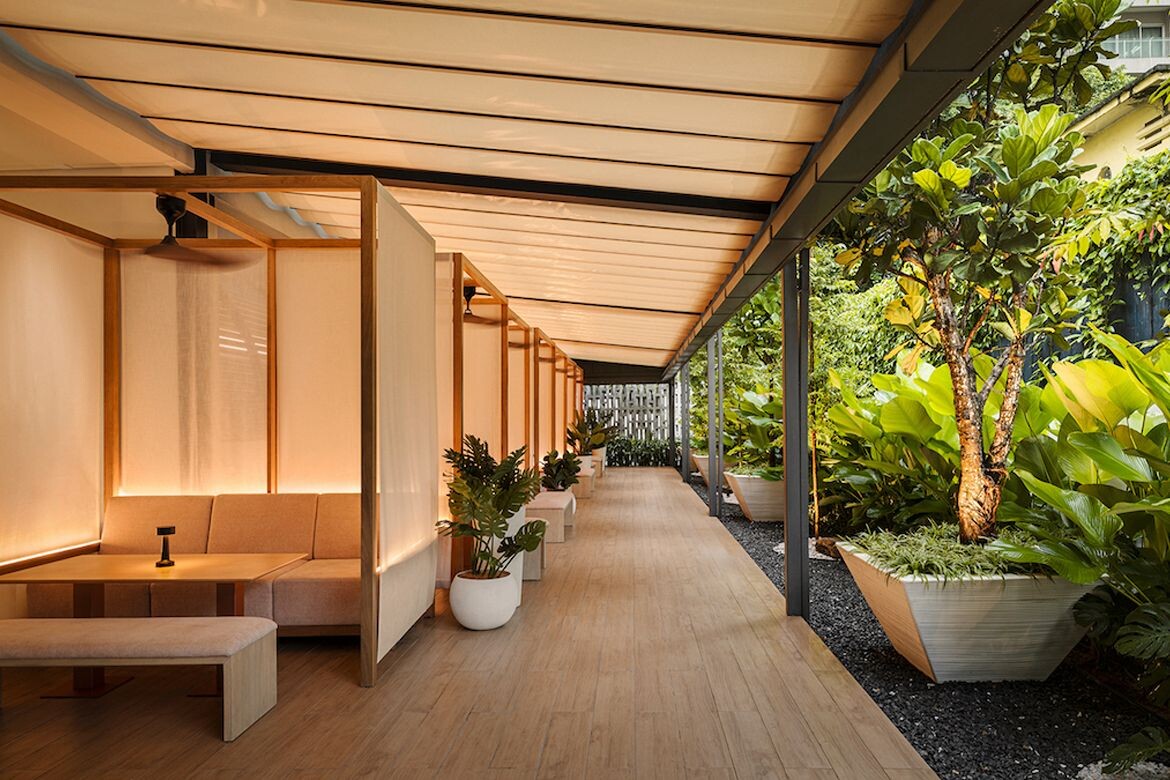
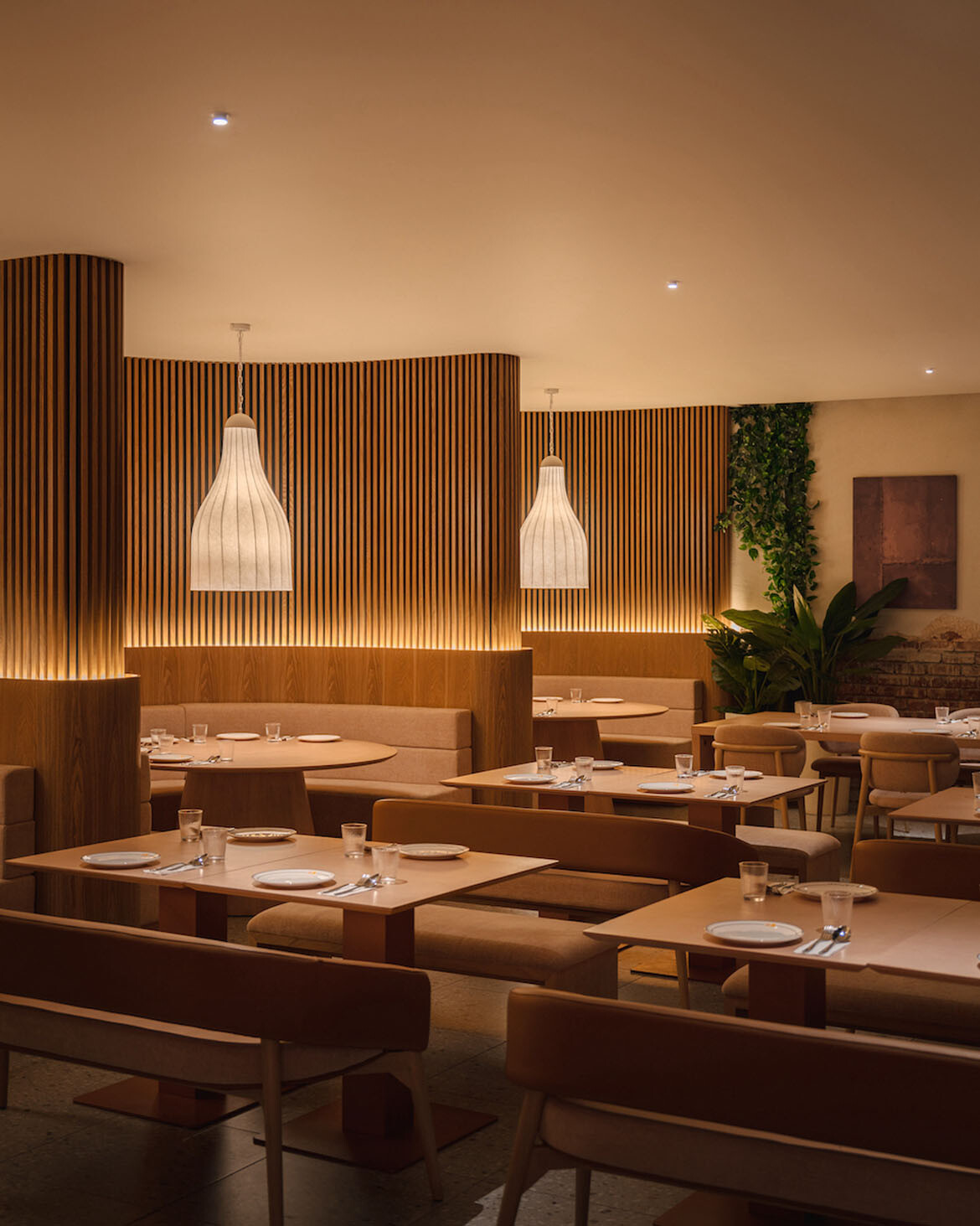
Semi-private dining niches line the perimeter, formed by vertical timber elements that offer enclosure without isolating guests. The effect is human-scaled and relaxed, balancing openness with moments of retreat.
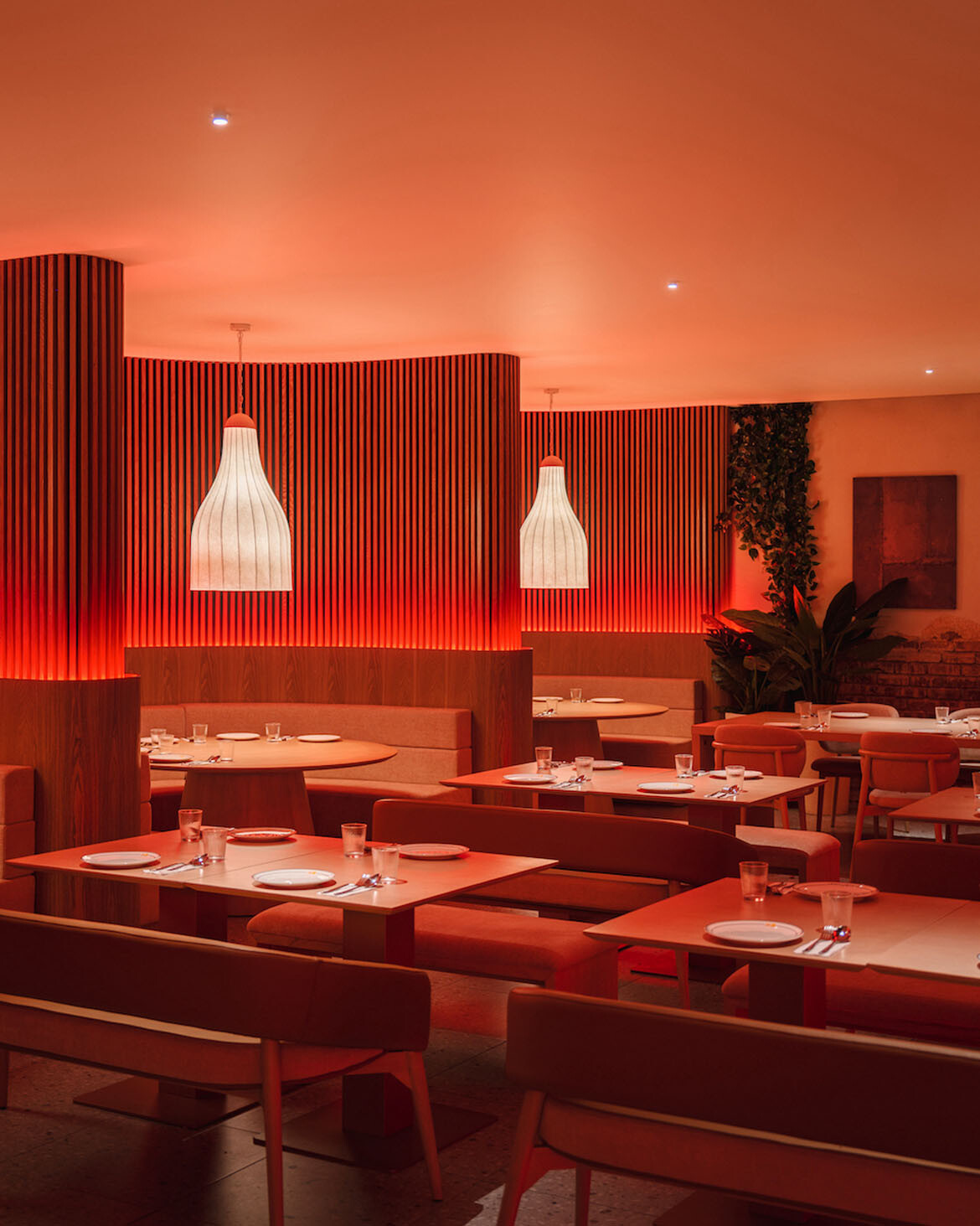
What distinguishes Sun & Moon is not a dramatic formal gesture, but its ability to shift character without losing coherence. As daylight fades, materials deepen in tone, lighting becomes more sculptural, and the sunken pit transforms naturally into a lounge environment. The architecture accommodates this transition effortlessly, reflecting the cyclical logic embedded in the project’s name.
In a city where adaptive reuse is increasingly rare, Sun & Moon demonstrates how a modest existing structure can be reimagined through light, restraint and careful material decisions. It is a project shaped less by spectacle than by atmosphere, offering two distinct experiences within a single, quietly resolved space.
Spacemen Studio
@spacemenstudio
Photographer
The Space Storyteller