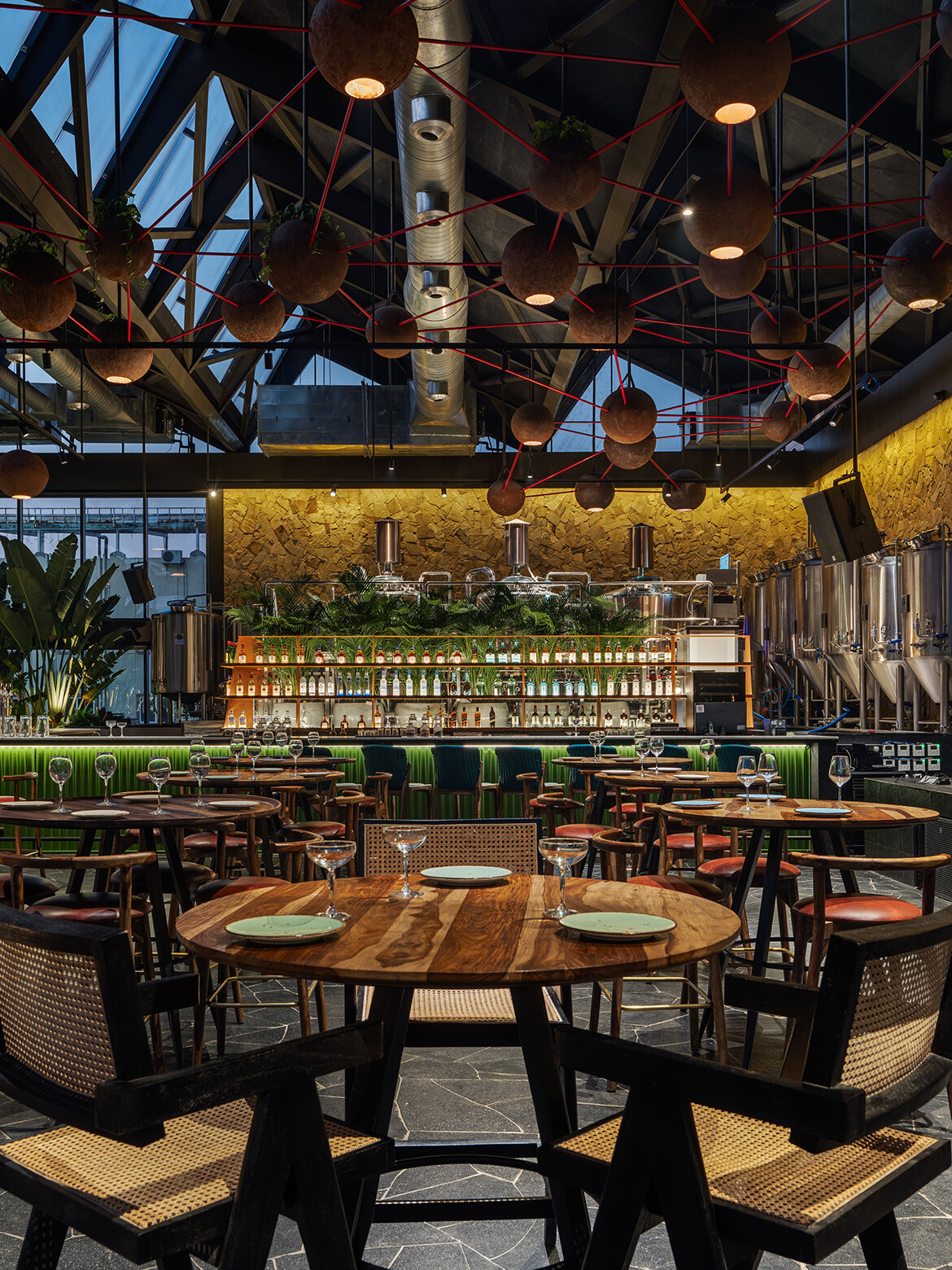
A brewery on a rooftop is already a kind of contradiction. It suggests weight, heat, machinery and production, lifted above the street into the open air. At Brunit, a new hospitality project by 23 Degrees Design Shift in Vijayawada, that contradiction becomes the basis of the architecture.
Located atop a commercial building on MG Road, Brunit is conceived as both a brewing unit and a social destination. Its name folds those two identities together – Brewing + Unit – and the architecture follows suit. Rather than disguising the practical demands of structure, services and climate, the project turns them into the atmosphere of the space.
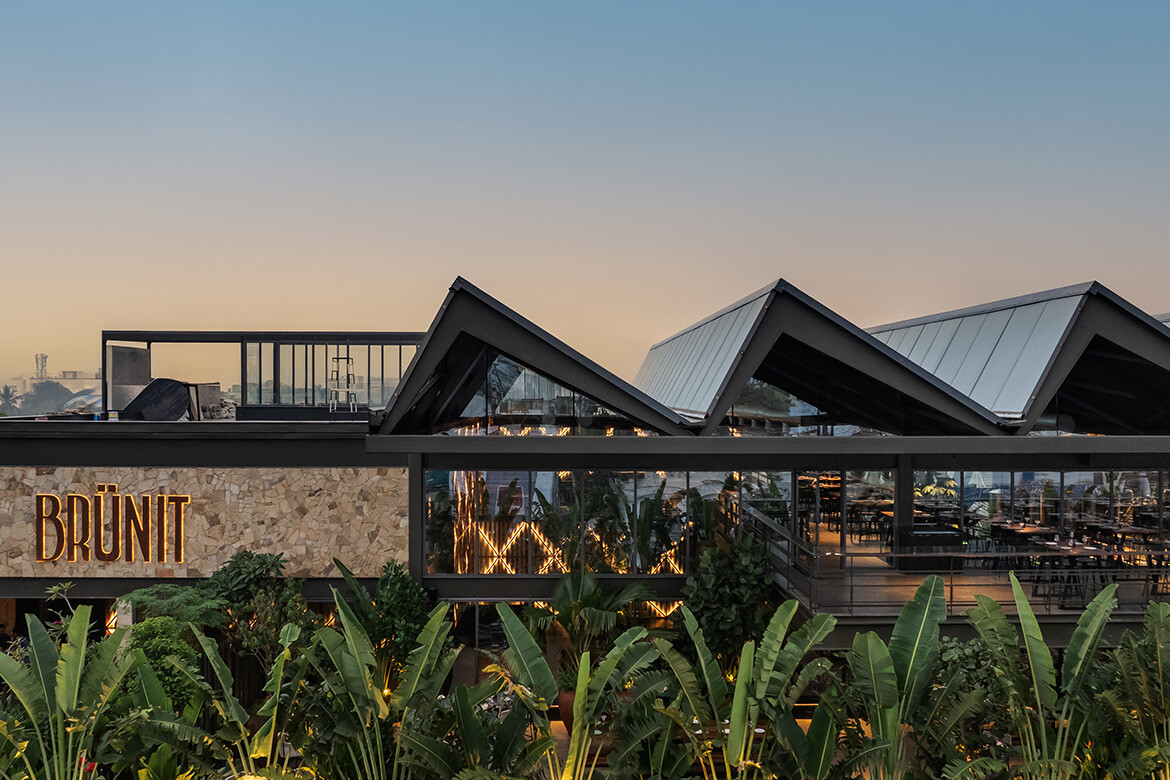
The 19,746-square-foot venue responds to a city with limited social and cultural infrastructure, creating a hospitality environment able to shift across the day from business lunches and group gatherings to evening leisure. Its rooftop position, however, came with clear constraints. The existing 30-by-30-foot structural grid became a defining condition, while the brief called for large, flexible interiors with minimal interruption.
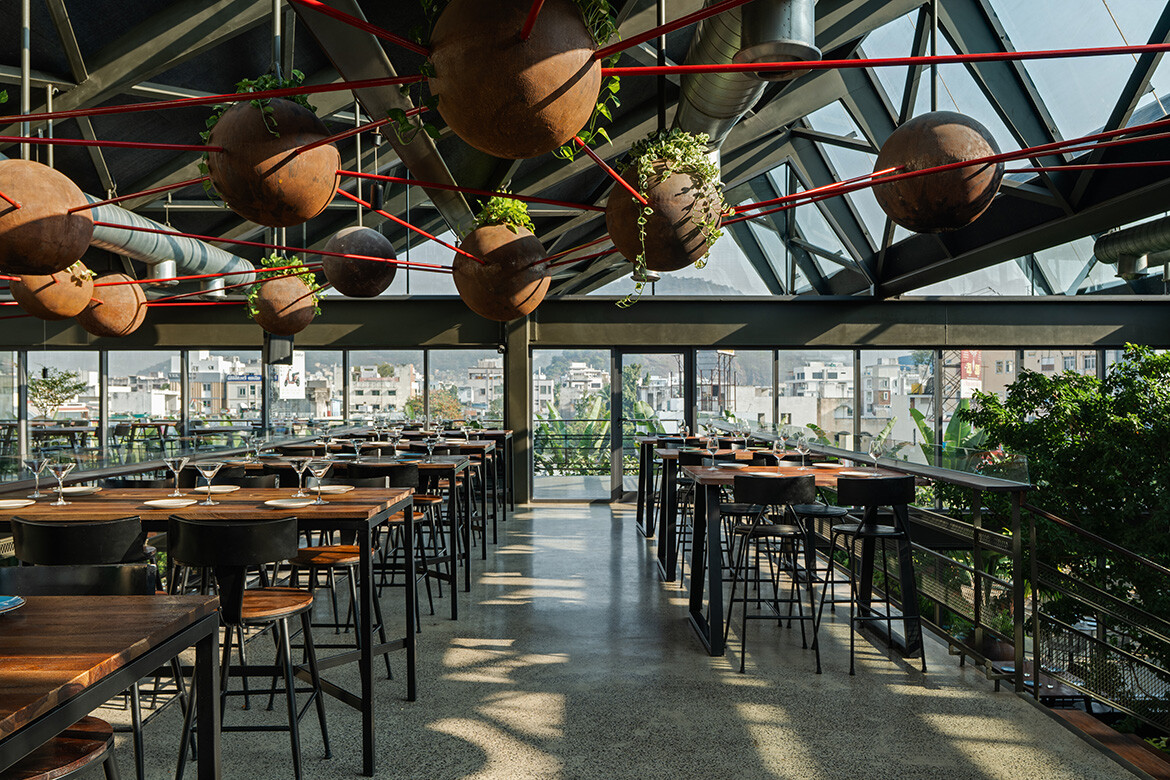
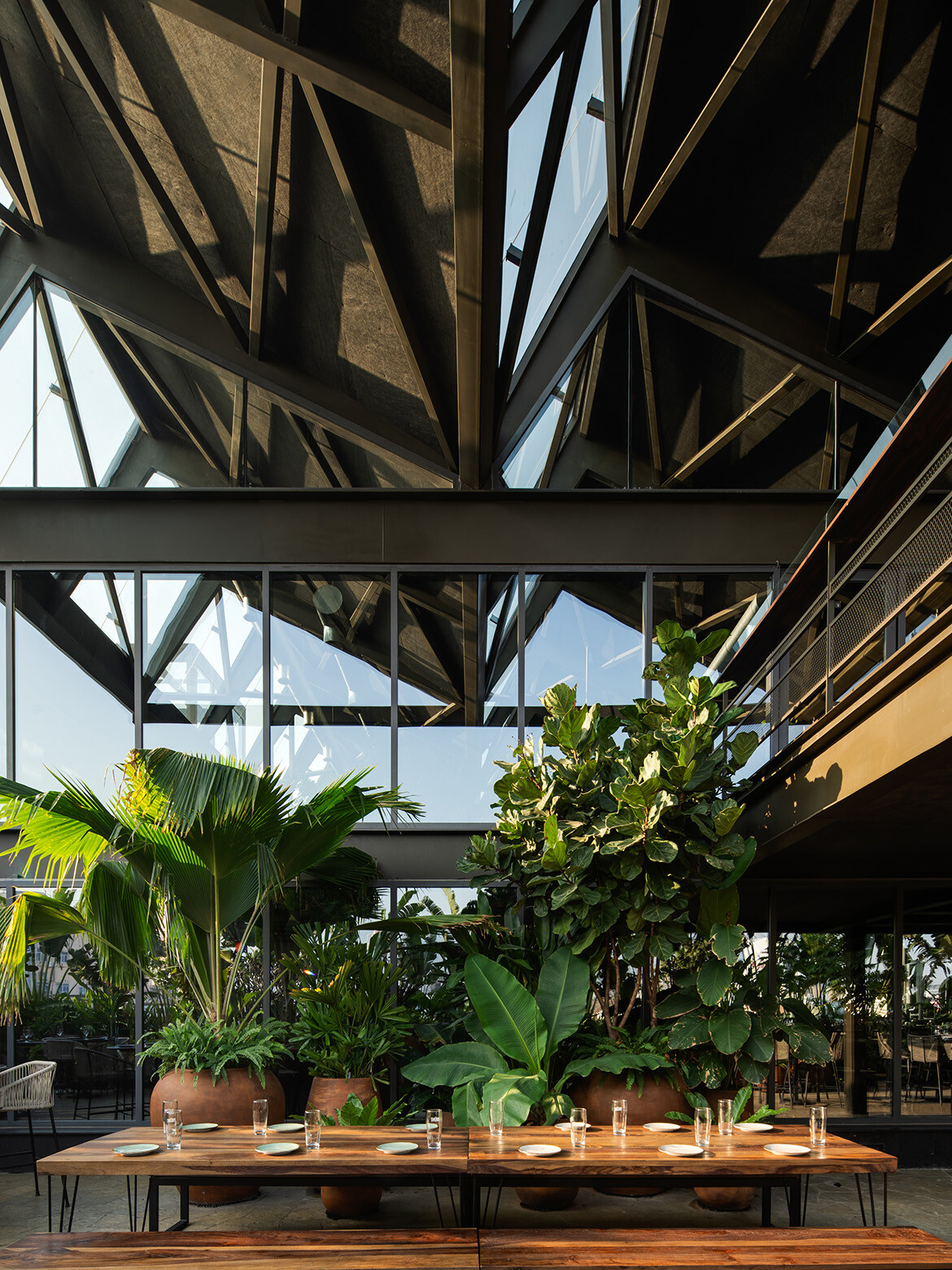
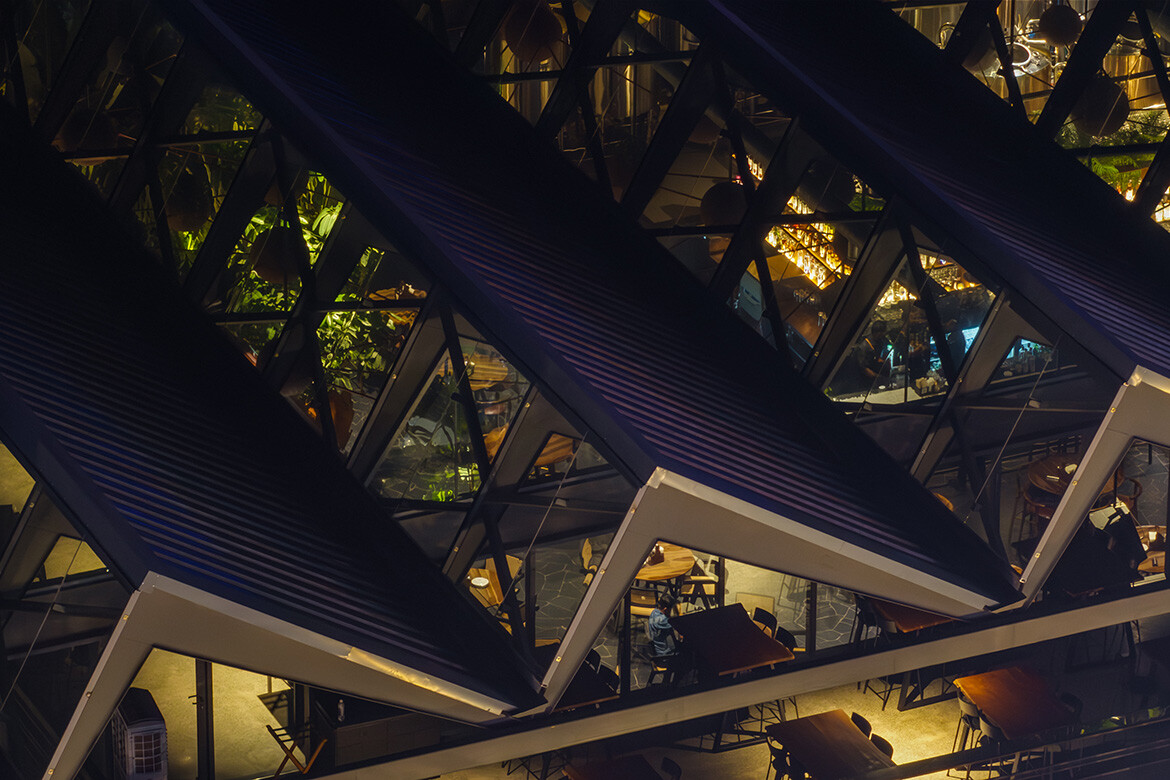
To achieve column-free spans of up to 60 feet, the architects developed a truss-based roof system. Crucially, this is not treated as a separate structural layer. Primary members, roof surface, skylights and ceiling are brought into a single architectural system, allowing the roof to perform structurally while shaping light, volume and spatial identity. The L-shaped roof profile carries this logic further, spanning the required distances while giving the project its recognisable form. At one edge, the trusses extend into a 30-foot cantilever, forming a compact outdoor seating area while maintaining the continuity of the roof system.
Related: La Marzocco finds its Sydney rhythm
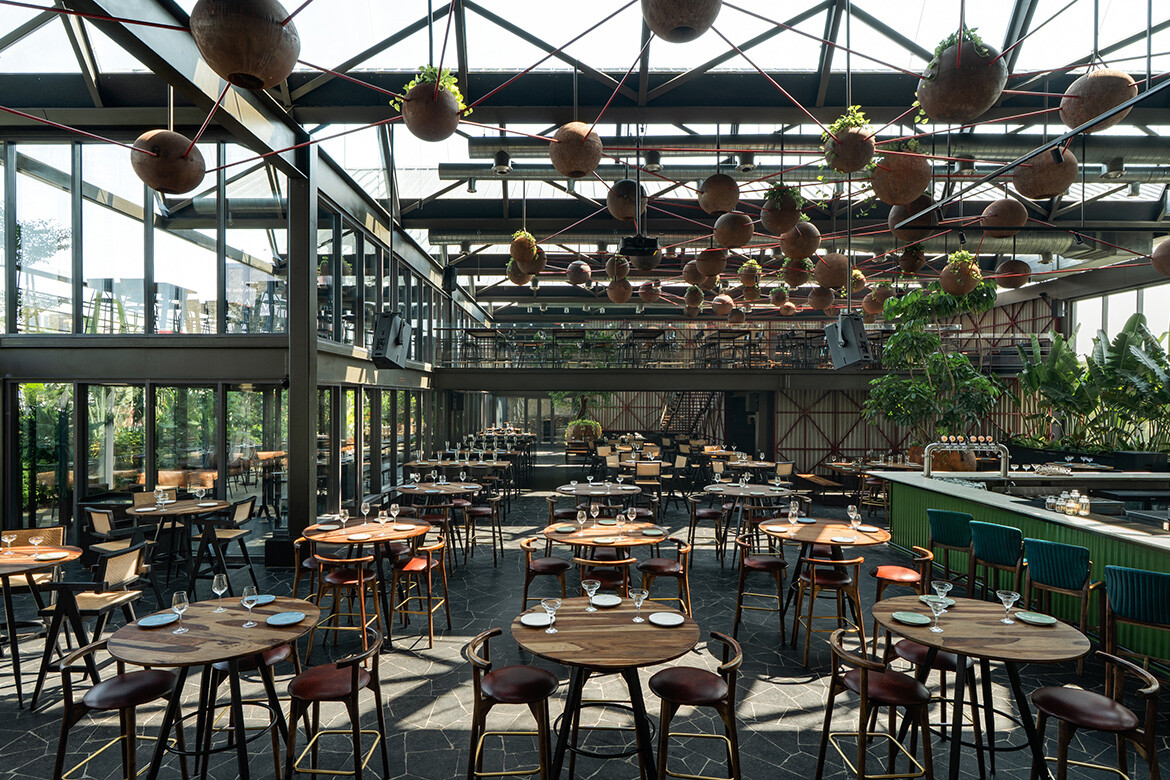
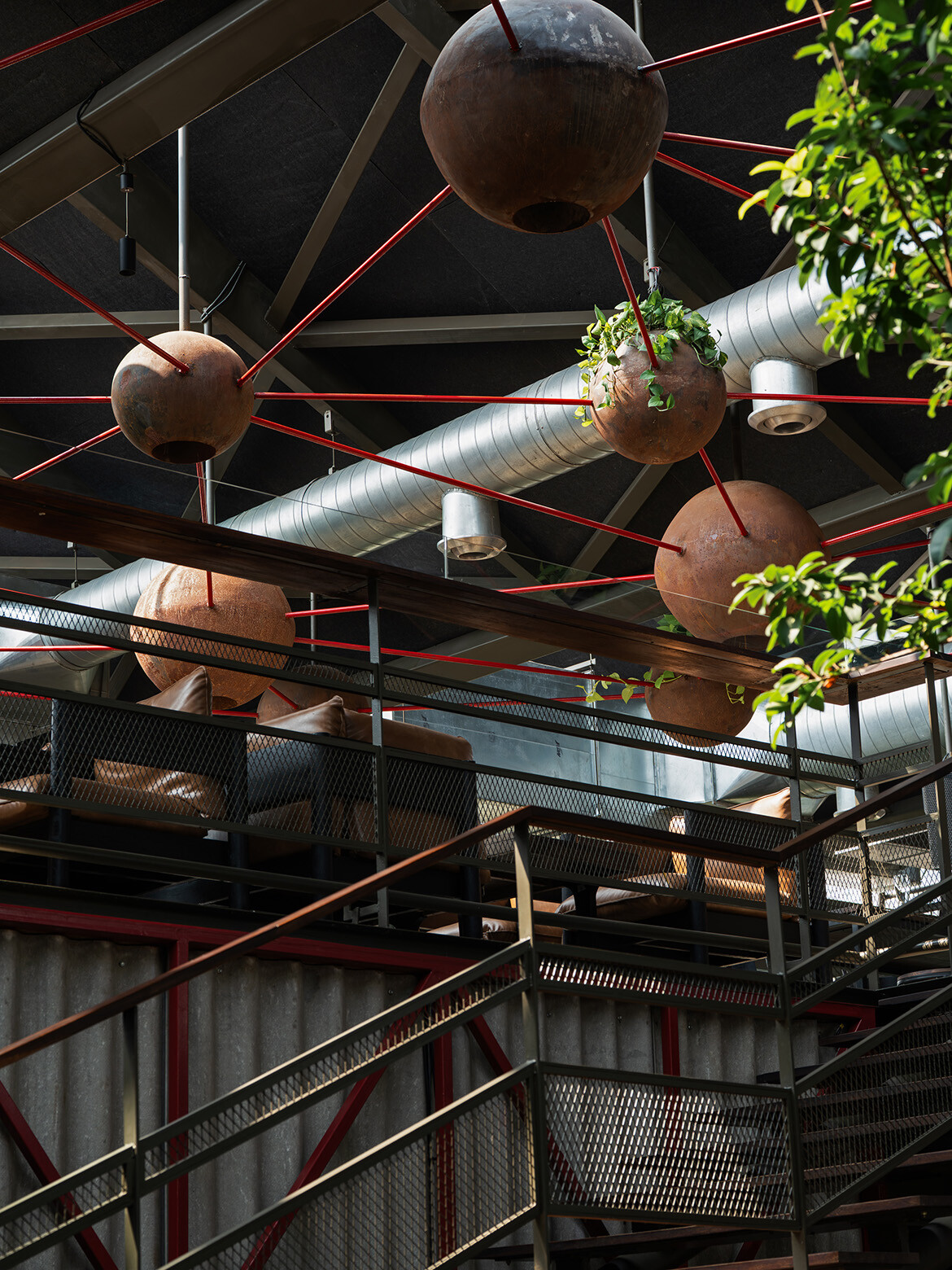
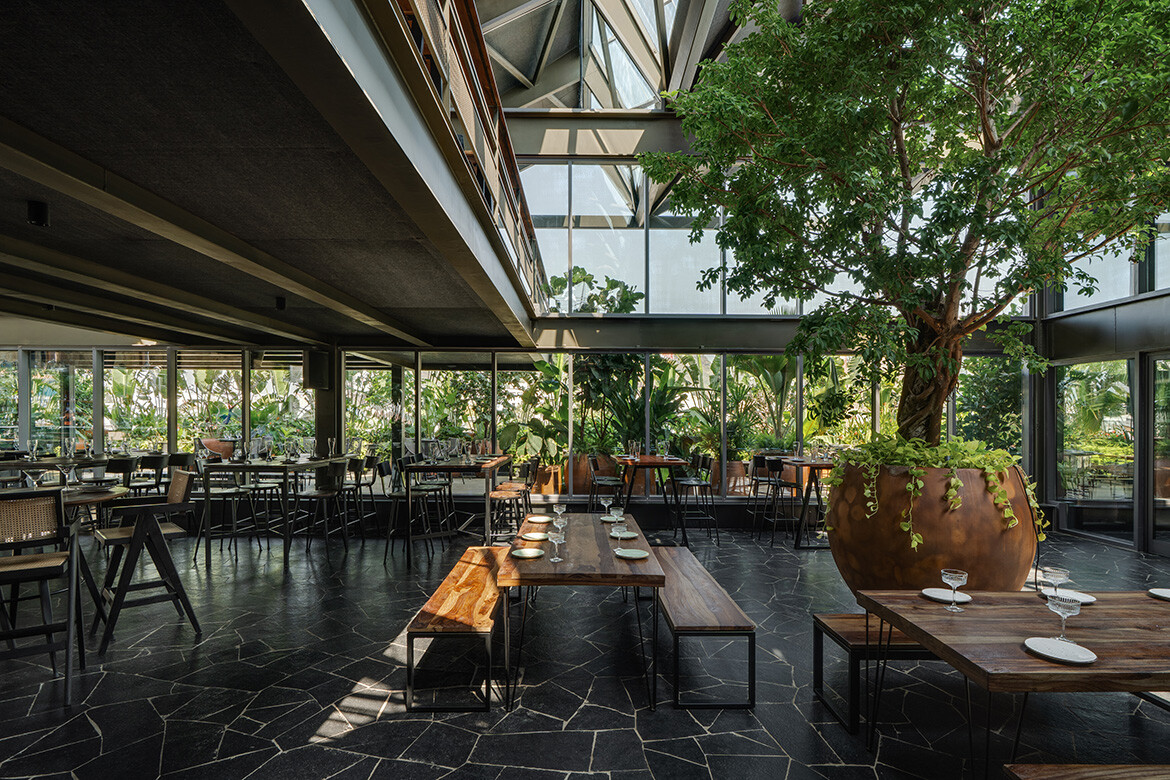
This integration of structure and expression gives Brunit its industrial character without reducing it to a theme. Exposed steel trusses, MS railings, steel mesh, skylights and visible assemblies establish a factory-like language, while black leather-finished Kadapa stone flooring and sandstone cladding behind the bar counter lend tactile weight. Corrugated asbestos sheets set against red-painted MS grids strengthen the sense of a working unit, but the material palette remains durable, direct and low-maintenance rather than decorative.
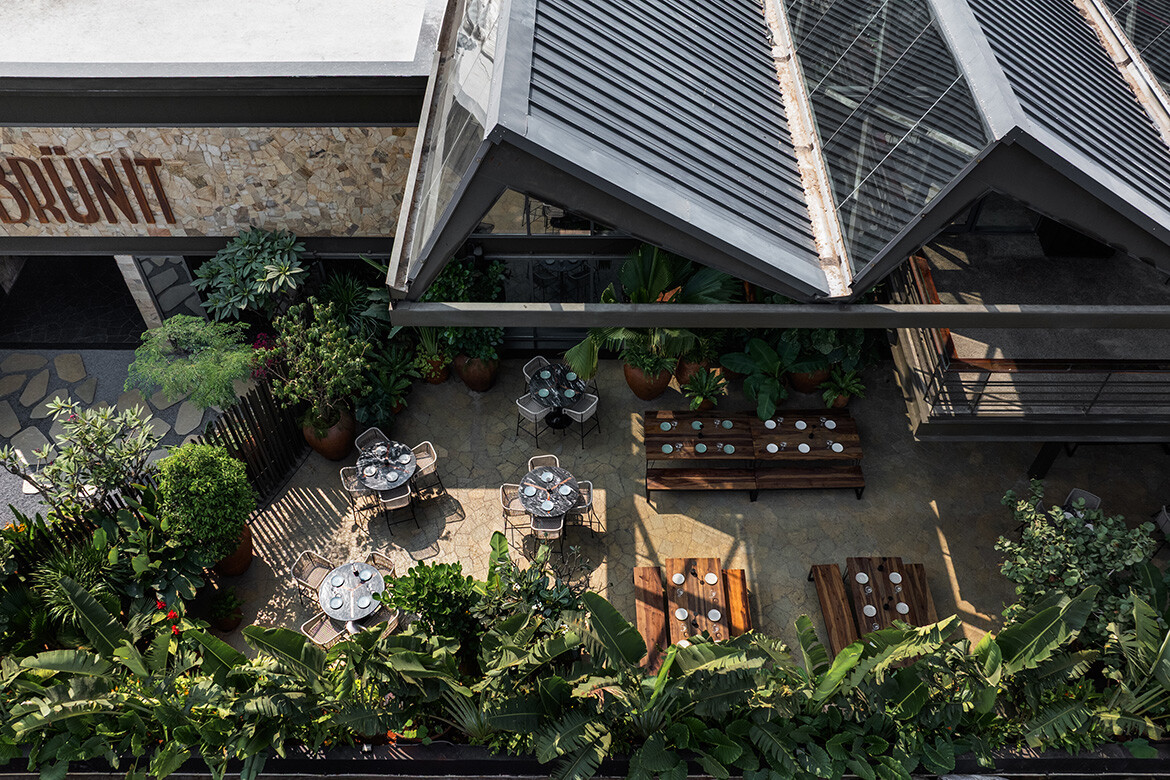
The experience is organised as a sequence of connected zones, with arrival beginning through a gravel and cobblestone courtyard before moving into a double-height reception. From there, the volume opens into the main hall, where seating clusters gather around the bar. A staircase leads to the upper level, with a bridge connecting semi-private seating to a smaller outdoor terrace.
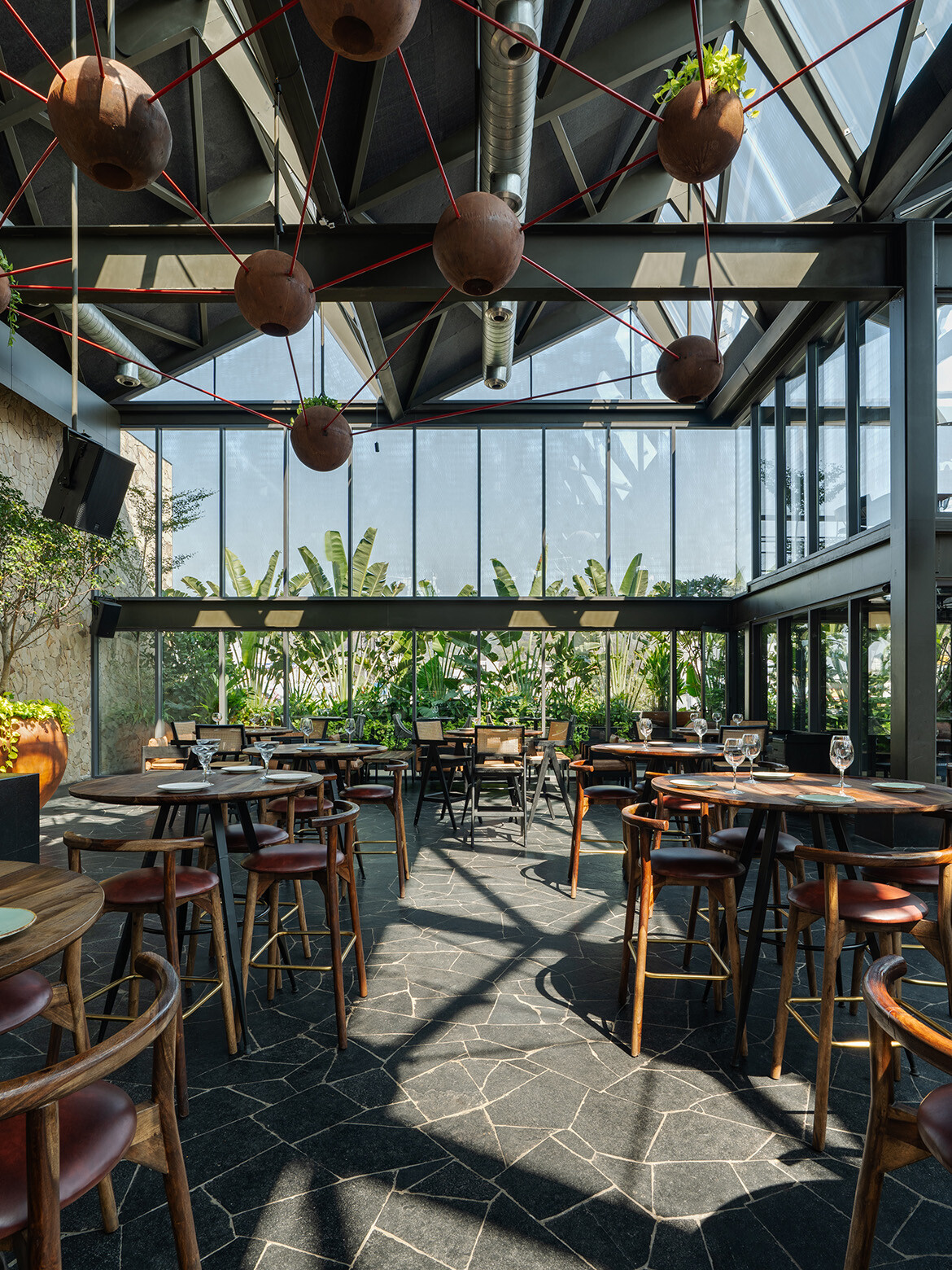
Landscape works against the hardness of the industrial frame. Potted palms, plumerias, heliconias and bougainvilleas wrap the outdoor areas, while a 15-foot-high ficus tree anchors the double-height interior. Overhead, a suspended installation of metal spheres runs through the main hall, integrating planter modules and breaking down the scale of the space. The result is not a softening of the concept so much as a balancing force: vegetation and industrial assembly held in productive tension.
In Vijayawada’s hot and humid climate, the building envelope is carefully controlled. The venue is kept predominantly enclosed, with outdoor seating limited to select areas. Solid south and west-facing walls reduce heat gain, while glazing to the north and east brings in daylight without the same thermal load. Skylights are angled to introduce diffused natural light while avoiding glare, allowing the large internal volume to remain bright without becoming harsh.
Additionally, HVAC, lighting and sound systems are suspended from the trusses, keeping walls and floor areas clear while preserving the visual clarity of the roof system. Lighting is designed to shift across modes of use, with kinetic lighting integrated into the suspended installation and programmed to respond to music tempo and operational setting.
Certainly, the rooftop grid, large-span requirement, climatic conditions and service demands are not hidden behind hospitality polish. They are allowed to generate the project’s character. In this way, Brunit introduces more than a new brewery. It proposes a hospitality typology shaped by structure, climate and urban need — a place where the logic of making becomes the language of gathering.
23 Degrees Design Shift
@23degreesdesignshift
Photography
Shamanth Patil