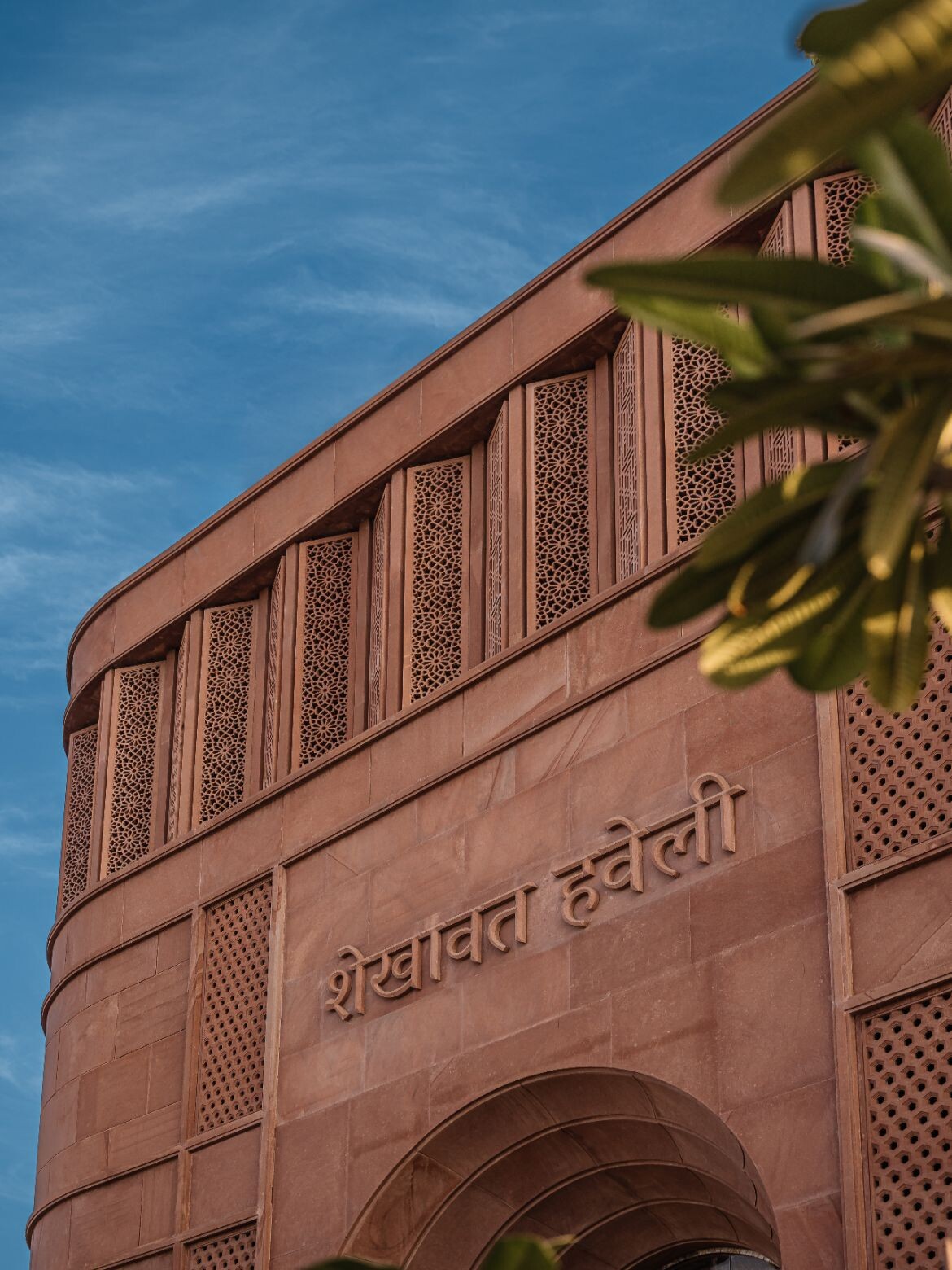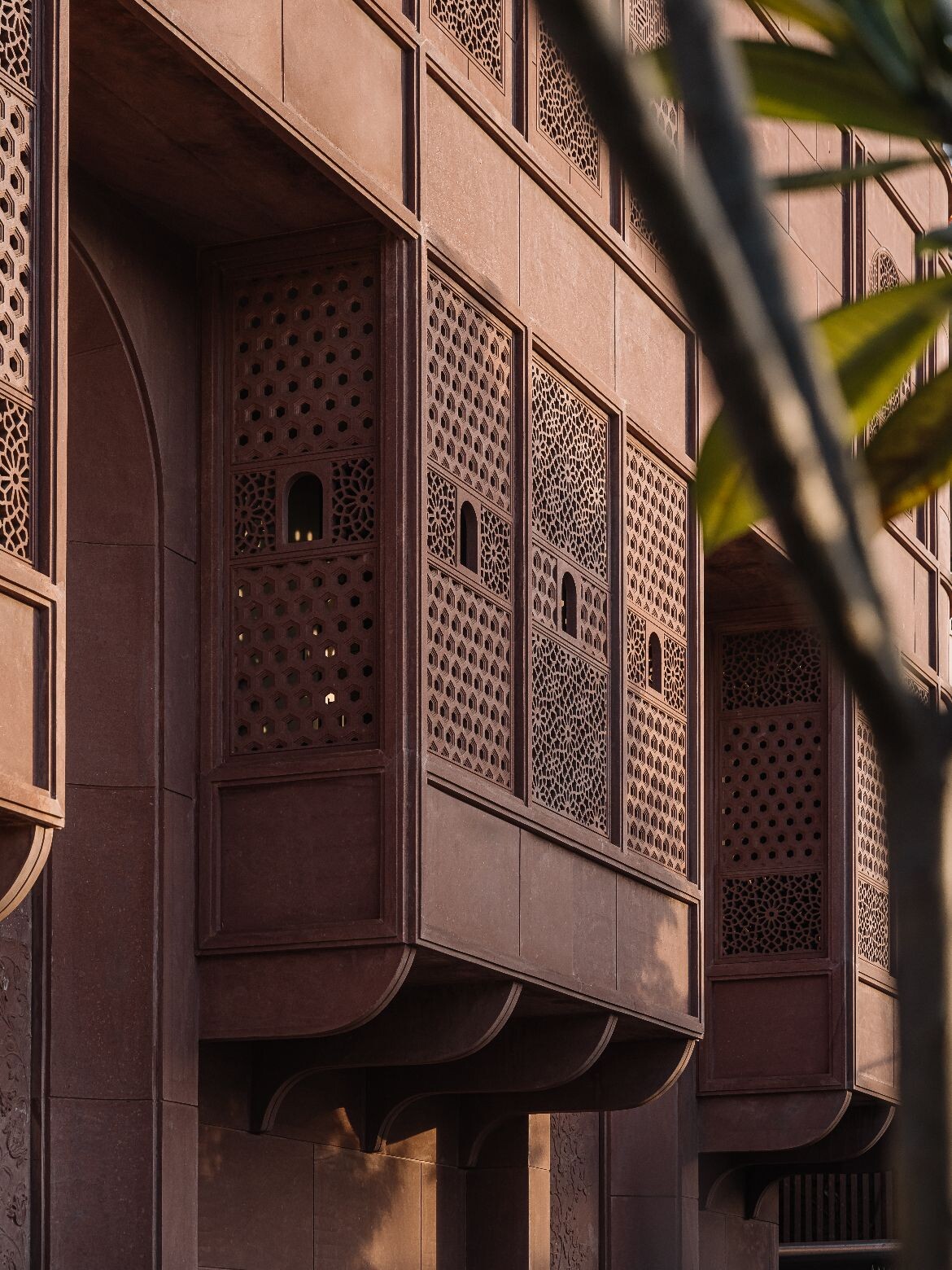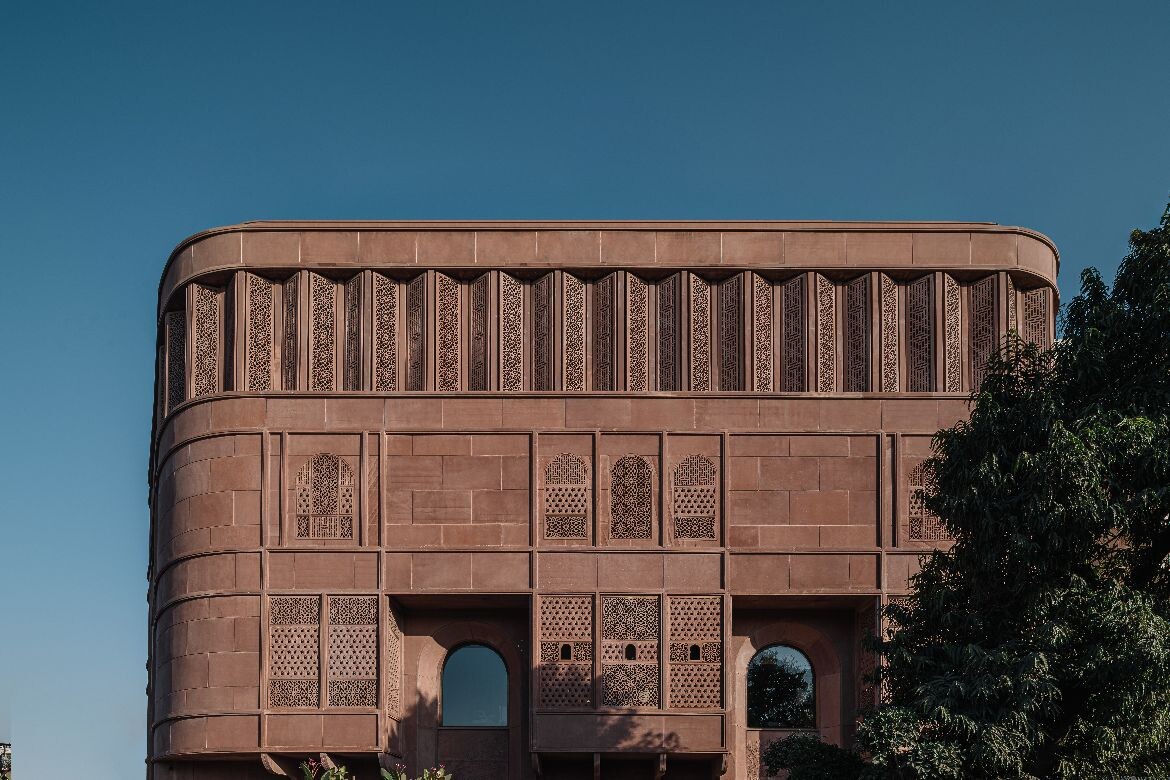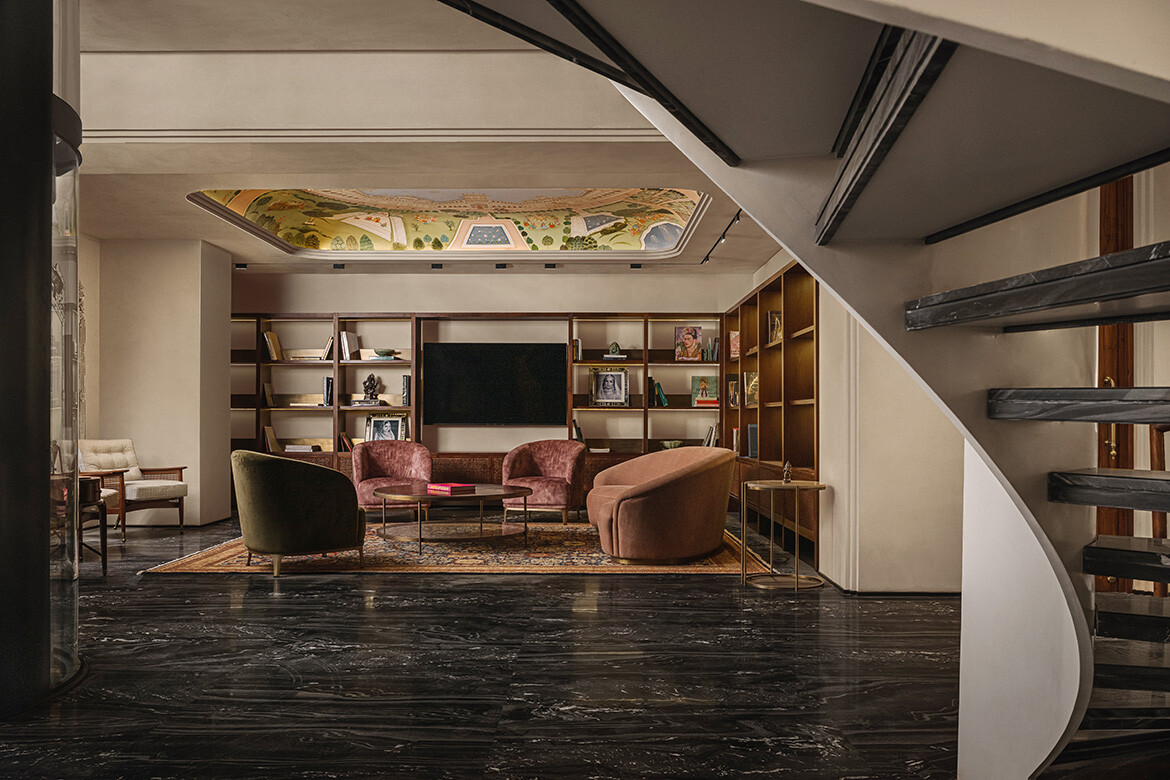
Extending the reach of a luxury jewellery house, Studio Lotus has designed a flagship for Sunita Shekhawat in Jaipur, India that operates as both retail destination and cultural archive.
As a project, the store is conceived as a museum and brand experience. The centre engages with clients but also provides a history of the art of Meenakari enamel work, in an exceptional space.
Meenakari is an age-old technique renowned for its vibrant and intricate designs on metal surfaces. While enamel work originated in Persia, it has flourished in India, particularly in Rajasthan where the craft is passed down through the generations and deeply embedded in the region’s artistic legacy.

This 16th-century art serves as the foundation for the work of renowned Indian jewellery designer, Sunita Shekhawat. Her eponymous brand adds a contemporary touch to the traditional methods of making jewellery and this is reflected in the design of the brand’s flagship store and Museum of Meenakari by Studio Lotus.
The five-level building is organised with the Museum of Meenakari Heritage at ground level, the retail store below, offices above and additional levels allocated to luxury tenancies and a restaurant.
When Studio Lotus was engaged, the existing concrete shell had already been erected, and while the practice was given carte blanche to conceive a design of its own, the architects decided to work within the bounds of the structure to minimise the embodied carbon footprint.
Related: Pod hopping
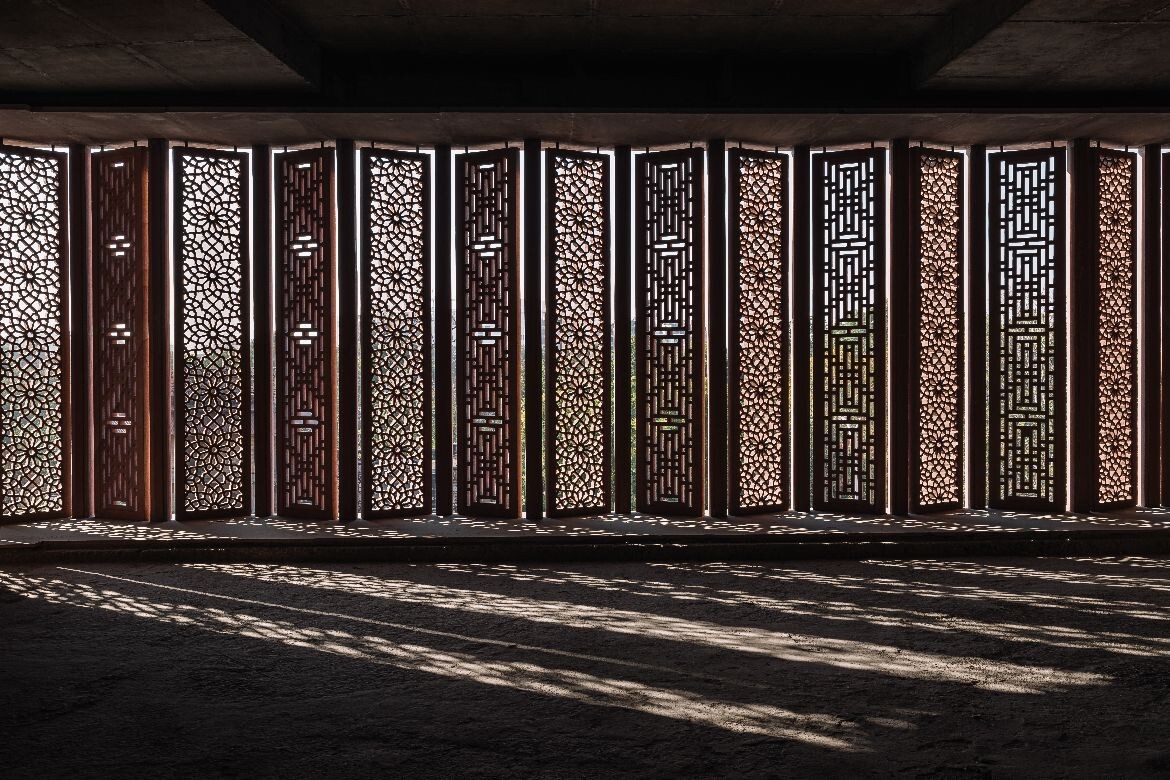
The design team of Pankuri Goel, Shoaib and Mubashri, led by Ambrish Arora, Founding Principal of Studio Lotus, conceived an identity for the project influenced by the historicity of Rajputana and Mughal styles from the region and the period of Art Deco. This design inspiration is also reflected in Shekhawat’s own approach to her jewellery, which is rooted in tradition but crosses over seamlessly into European and other contemporary iterations.
With a site area of 697-square-metres, the Sunita Shekhawat Flagship Store is large, however, every detail has been meticulously addressed.
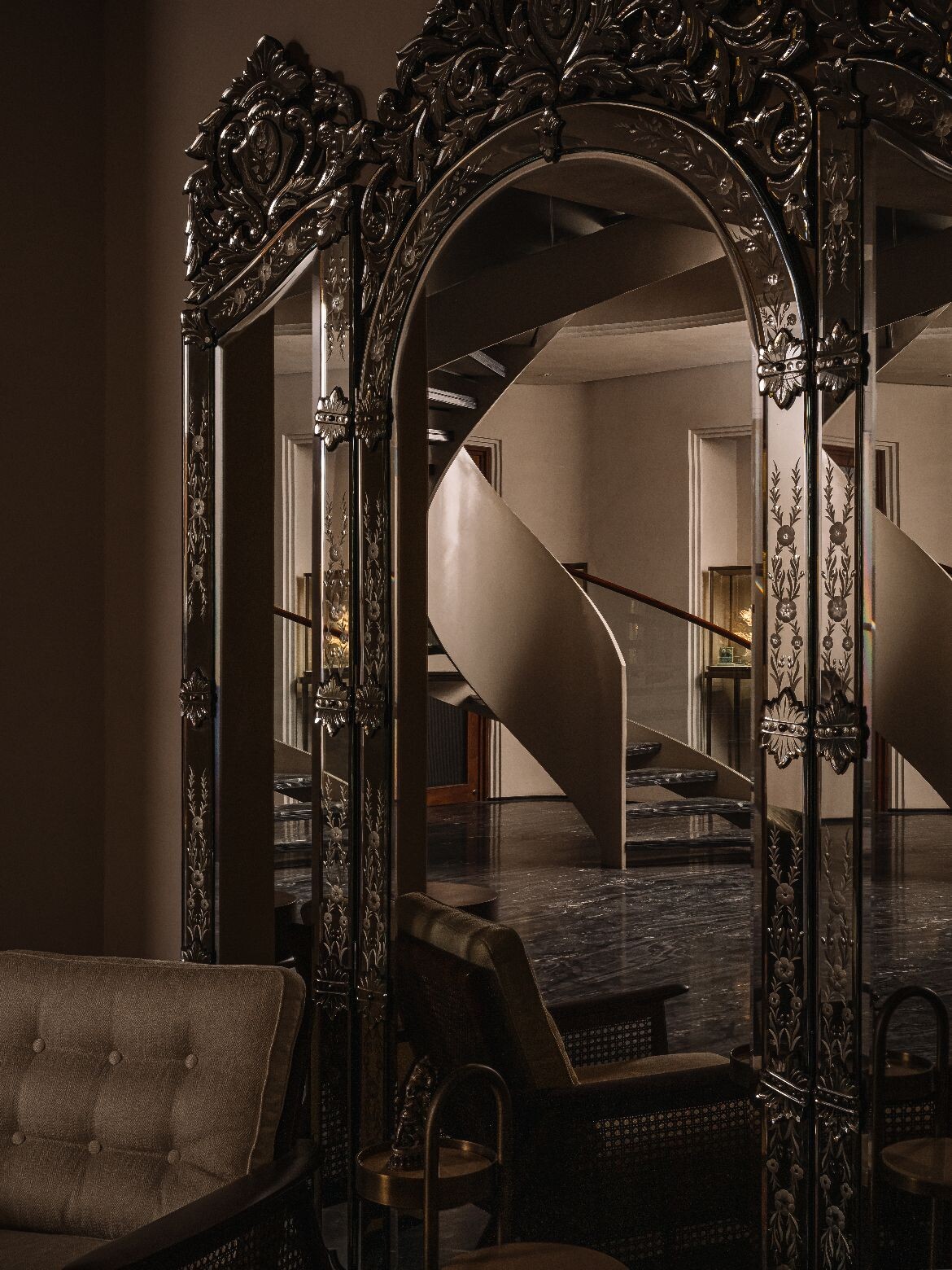
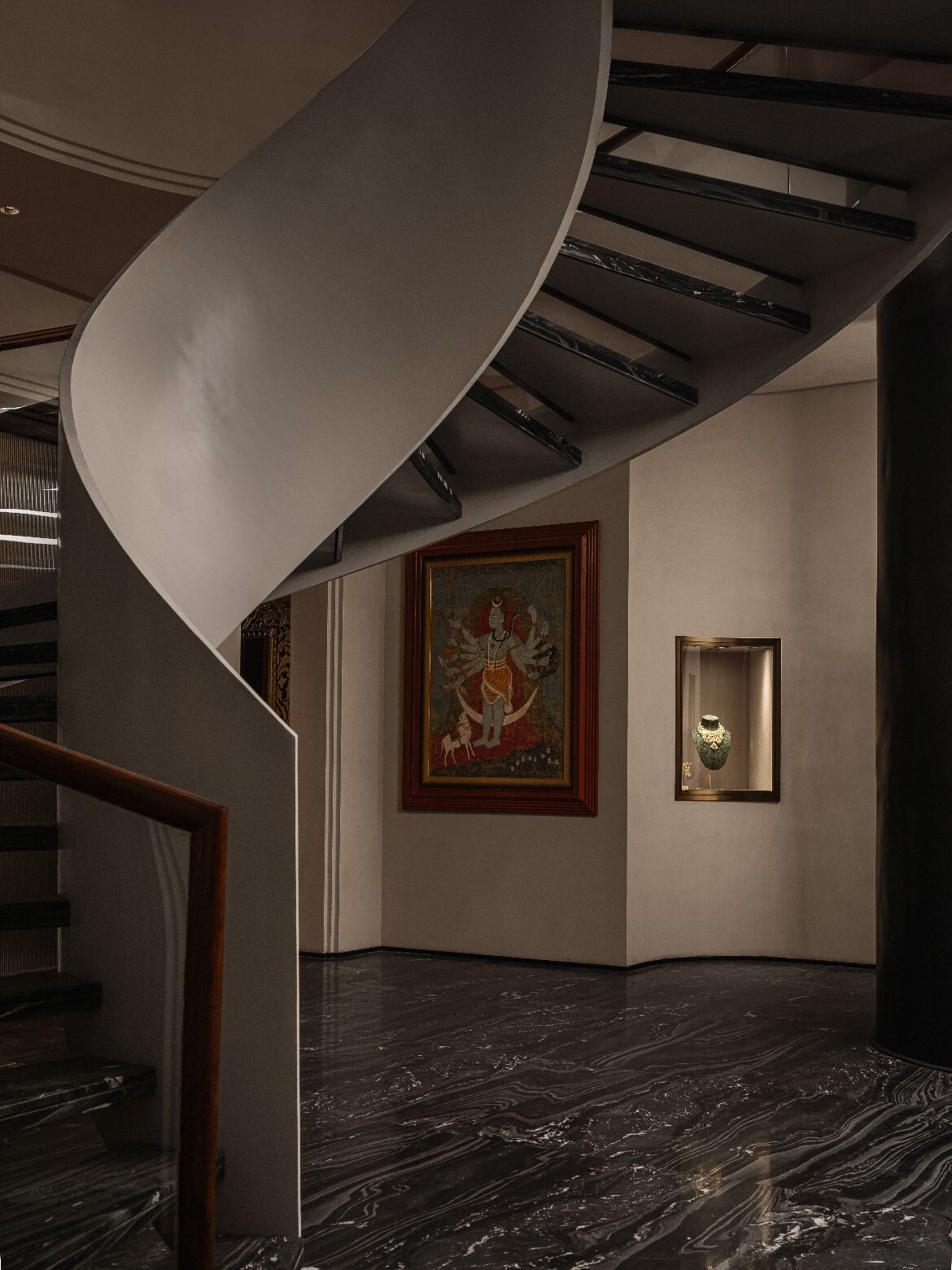
At the entry of the building, which is clad in hand-carved, Jodhpur red sandstone, the ground and first floors are articulated as one by a double-height arch. Inside, the client’s three floors are accessed by a sculptural staircase that winds through the centre of the space, anchoring the interior and establishing a sense of ceremony.
At the suggestion of the architects, the ground level, that encompasses 279-square-metres, has become a museum-gallery showcasing the provenance and history of Meenakari craftsmanship. By including a museum experience there was the opportunity for the Sunita Shekhawat brand to both own a storytelling space on the art of enamelling and also ‘give back’ to the arts and cultural heritage of the city. The museum experience was designed by Sidhartha Das, with the content curated by Usha Balakrishnan, a foremost expert on Indian jewellery traditions.
The lower ground floor is the store element, and with its wide floorplate and high ceilings, it is the perfect environment for the bespoke operations of the business. The lack of natural lighting was also a factor in the positioning of this area, as controlled lighting is necessary for jewellery display.
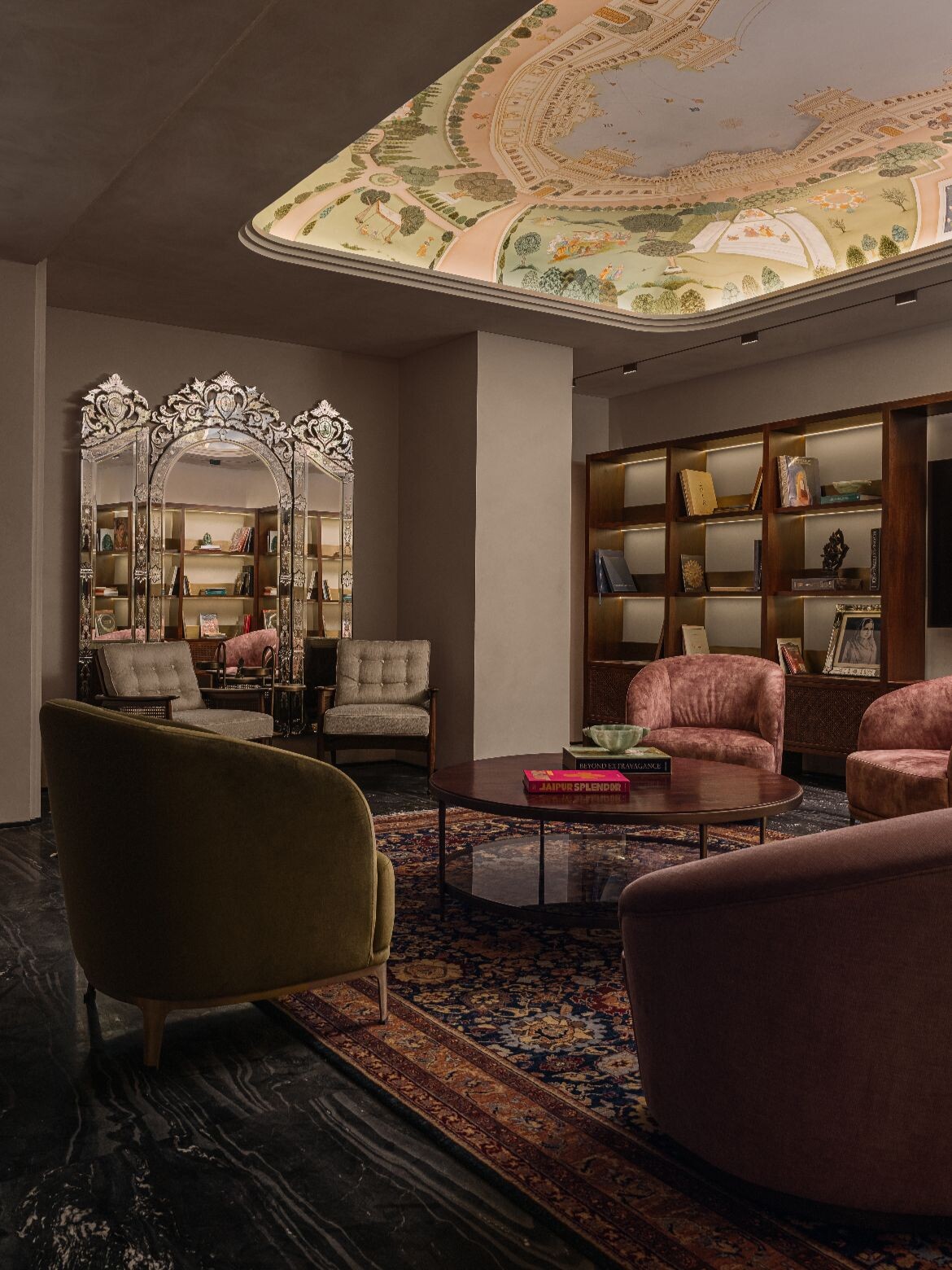
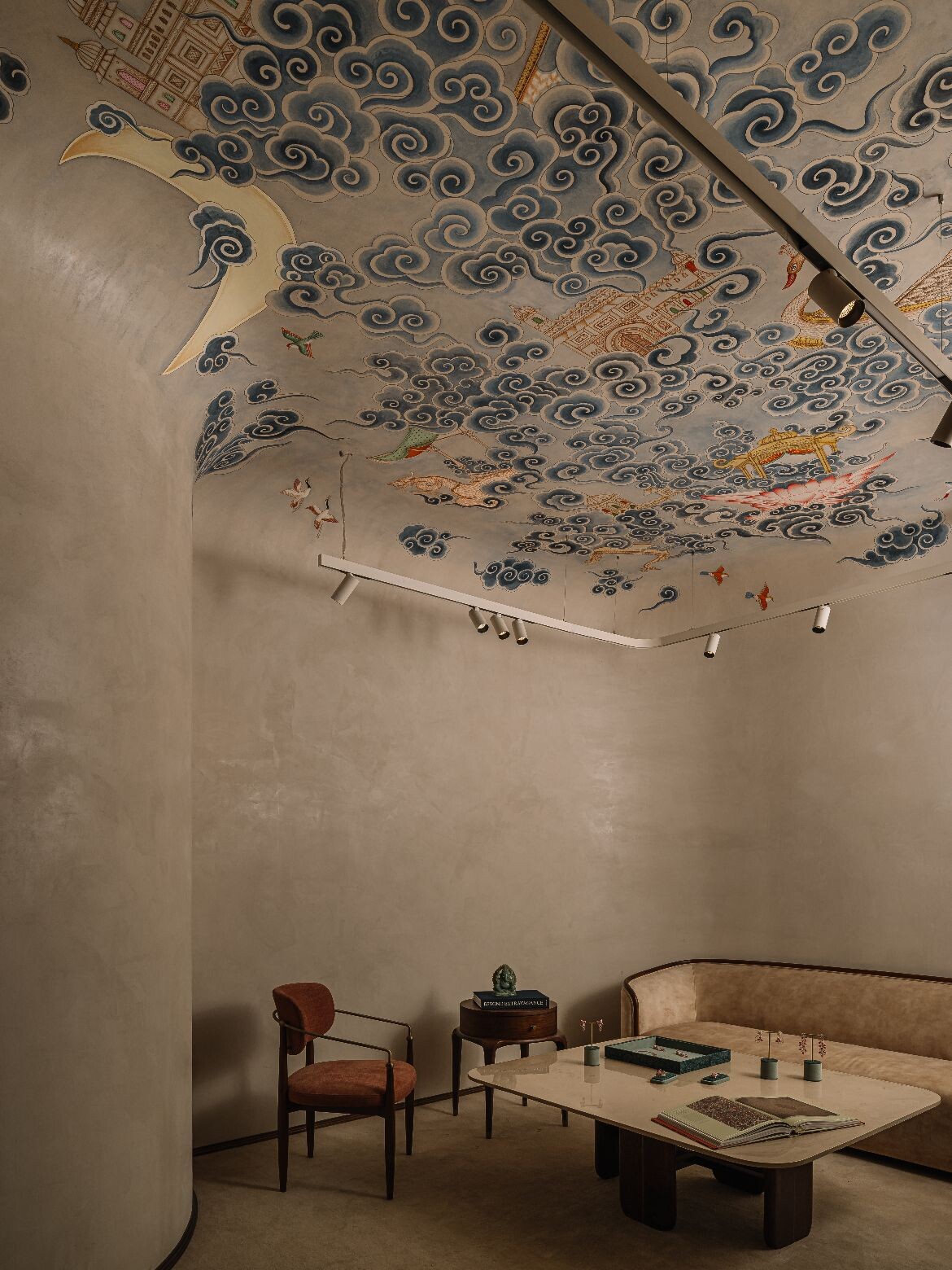
The client experience begins at the library/lounge space and then moves to the four private pods, each designed for one-on-one interaction. This floor also accommodates a jewellery finishing unit, strongrooms, workshops for karigars or artisans and areas for administration. There is discreet circulation and servicing of the pods through a dedicated service corridor that wraps around the periphery of the floorplate.
The pods are clad in an off-white araish (a lime and marble plaster stucco) and the semi-vaulted ceilings are embellished with frescoes by artists that specialise in miniature painting. Twelve artisans laboured in situ over several months to complete the frescoes that express the region’s architecture, flora and fauna.
The outstanding interior decoration is not only a testament to the skill of the craftspeople but a luxurious artistic inclusion that celebrates the collaborative vision of the architects, the client and Nisha Vikram of CraftCanvas. To complement the ornamentation and the jewellery displays, the remaining surfaces are designed with a monochromatic palette.
The level above the ground floor is the client’s office and design studio, a bright daylit space crafted from lime plaster, stone and terrazzo.
In all, the Sunita Shekhawat Flagship Store is itself the jewel in the crown of the eponymous jeweller. The project re-invents the nature of retailing, where history is embraced through a museum and the modern day is celebrated by personal amenity and service. The interior decoration reflects the artistic substance of the product and does it with both style and grace.
Studio Lotus has again realised a project that speaks of finesse, detail and re-invented retailing on a grand scale.
The Sunita Shekhawat Museum Gallery & Flagship Store was shortlisted in The Retail Space at the 2025 INDE.Awards. The Retail Space was proudly partnered by Polyflor.
Studio Lotus
studiolotus.in
Siddhartha Das Studio
siddharthadas.com
CraftCanvas
craftcanvas.com
Photography
Ishita Sitwala