Chandigarh is easily the greatest attempt at an architectural utopia the world has ever seen and is now a must-see destination for architects and their contemporaries the world over. Forming the capital city of the northern Indian states of Punjab and Haryana, Chandigarh was dreamt up by India‘s first Prime Minister, Jawaharlal Nehru, who, in 1949 engaged the Swiss-French modernist architect Le Corbusier to design his vision. Buildings designed by Le Corbusier of note include the Capitol Complex with its High Court, Secretariat and Legislative Assembly, and the Open Hand Monument, but more than that, Chandigarh is acknowledged as one of the boldest experiments in urban planning and modern architecture of twentieth century India.
But Chandigarh fell from grace, as more people moved in and the grand areas became clogged, then abandoned and finally desolate. Chandigarh academic, Pratyush Sarup, sums up how this happened, writing, “Impressive as it was, the main problem with Chandigarh was its lack of ‘Indian-ness’ and Corbusier’s imposition of Eurocentric ideals on a population rooted in a very different, pluralistic culture. What I find mind-boggling is that the newly formed Indian government (Chandigarh was commissioned in 1949, two years after the British left), thought that it was a good idea to exchange cultural imperialism for political subservience.”
Sarup’s view has become increasingly out of step with contemporary Chandigarh, as the city sets its sights on the future and reinvents itself with smart city initiatives and a sustainable economic model. To this end, green spaces, improved infrastructure, the implementation of Donut Economics (a theory balancing human and planetary needs), environmentally sustainable practices and public amenity have all been increased. The city is also embracing its architectural legacy with a greater understanding of architectural tourism.
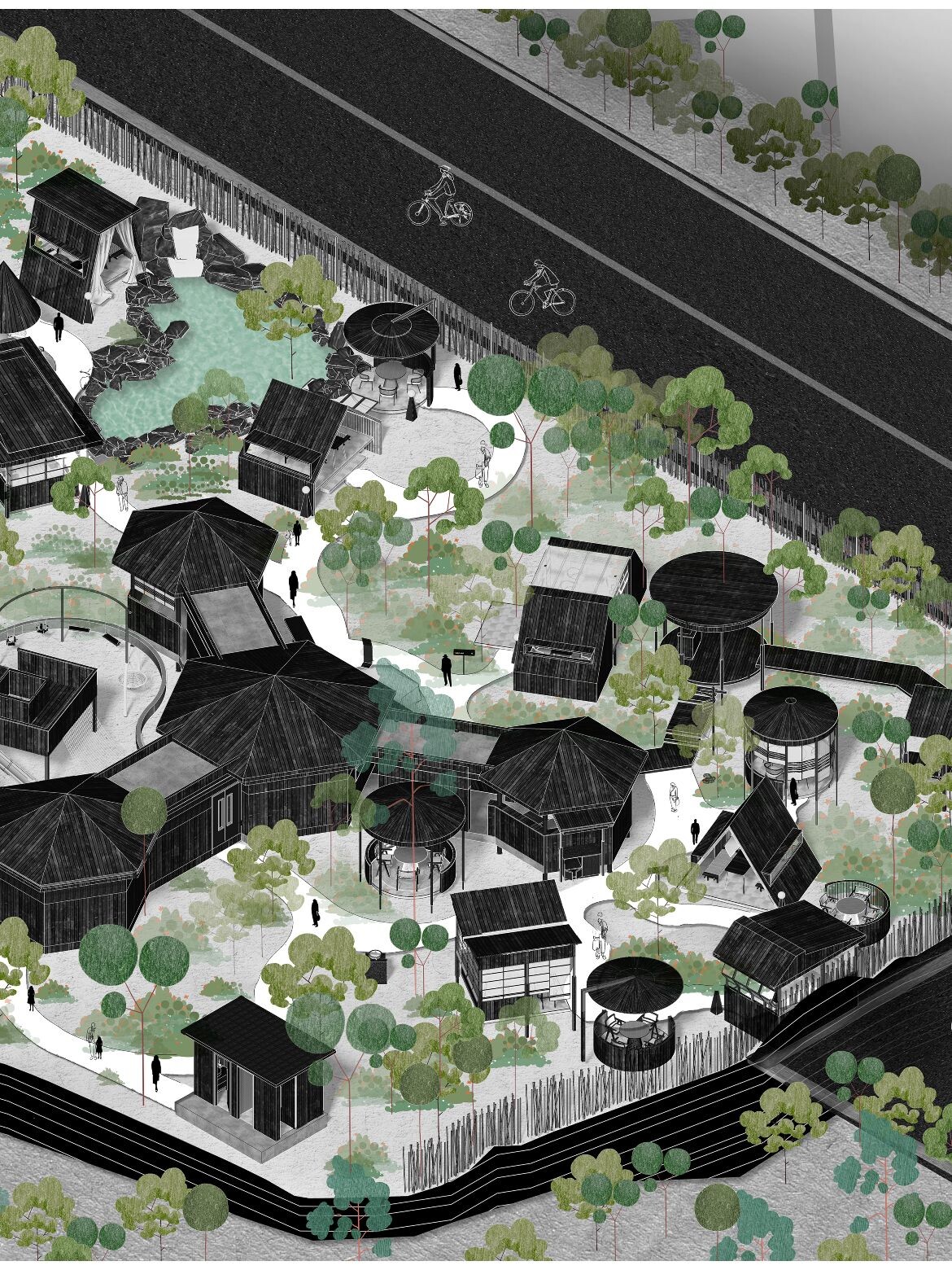
Chandi, the goddess of power (and where Chandigarh, in combination with garh, meaning fort, takes its name), is an apt emblem for TuBu, the female-owned, LGBTQ+ friendly burger restaurant that has claimed Chandigarh as its home. Working with the new direction of the city, TuBu has been designed by Studio Renesa as a scattering of six styles of pods across the 1.5-hectare site. The ratio of built to unbuilt sits at around 1:3, with the existing 250 trees remaining untouched. Instead, walkways and paths amble through the landscape which transitions from forest to lush tropical areas with a lake, plus waterfalls and rivers flowing throughout.
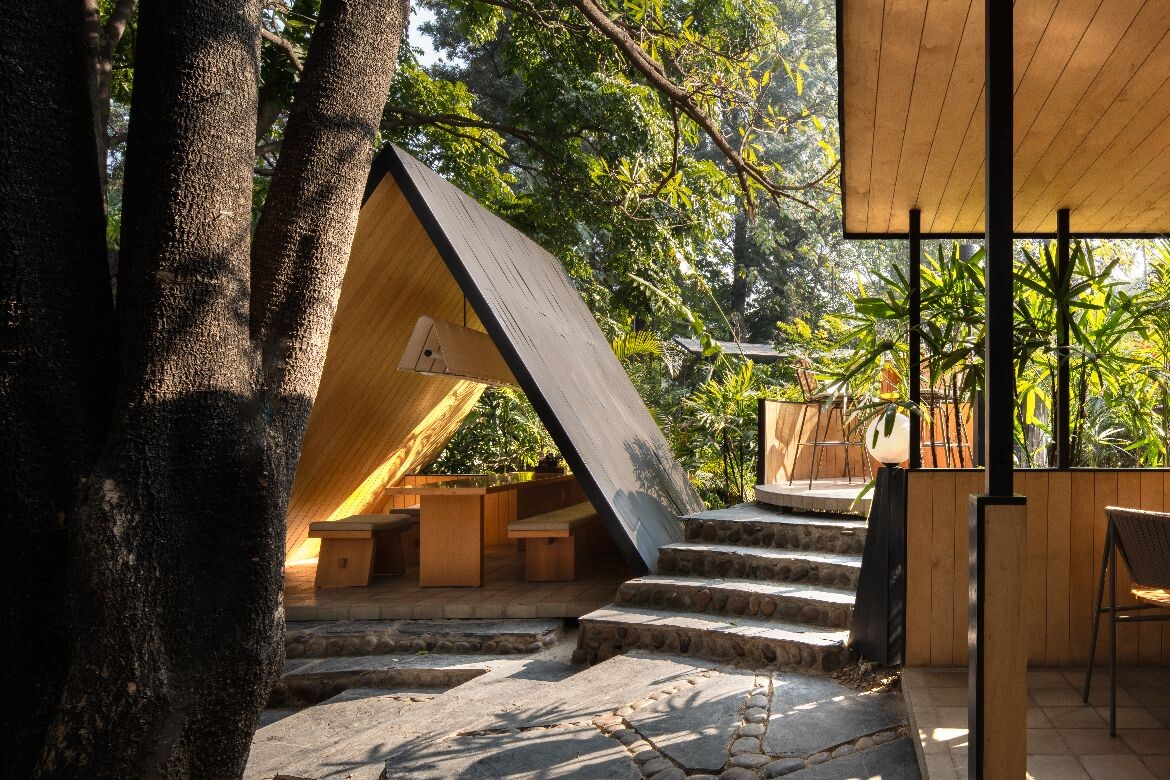
At the centre of the site is the pre-existing kitchen blocks, which have been retained in acknowledgement of Chandigarh’s history. As such, the space remains somewhat as it was, albeit brought up to compliance and fitted with new amenities and overlain with a series of connected hexagonal black pavilions.
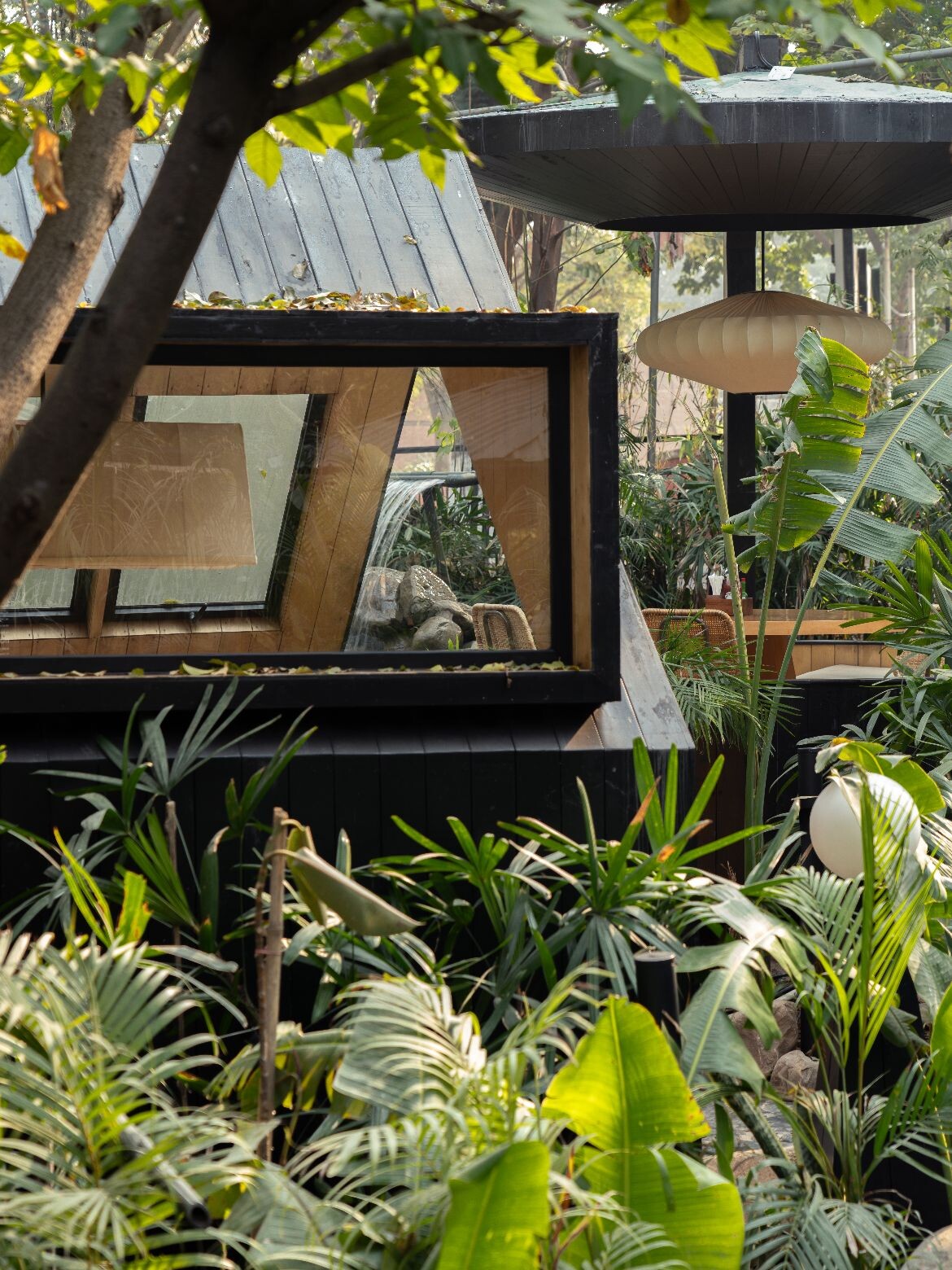
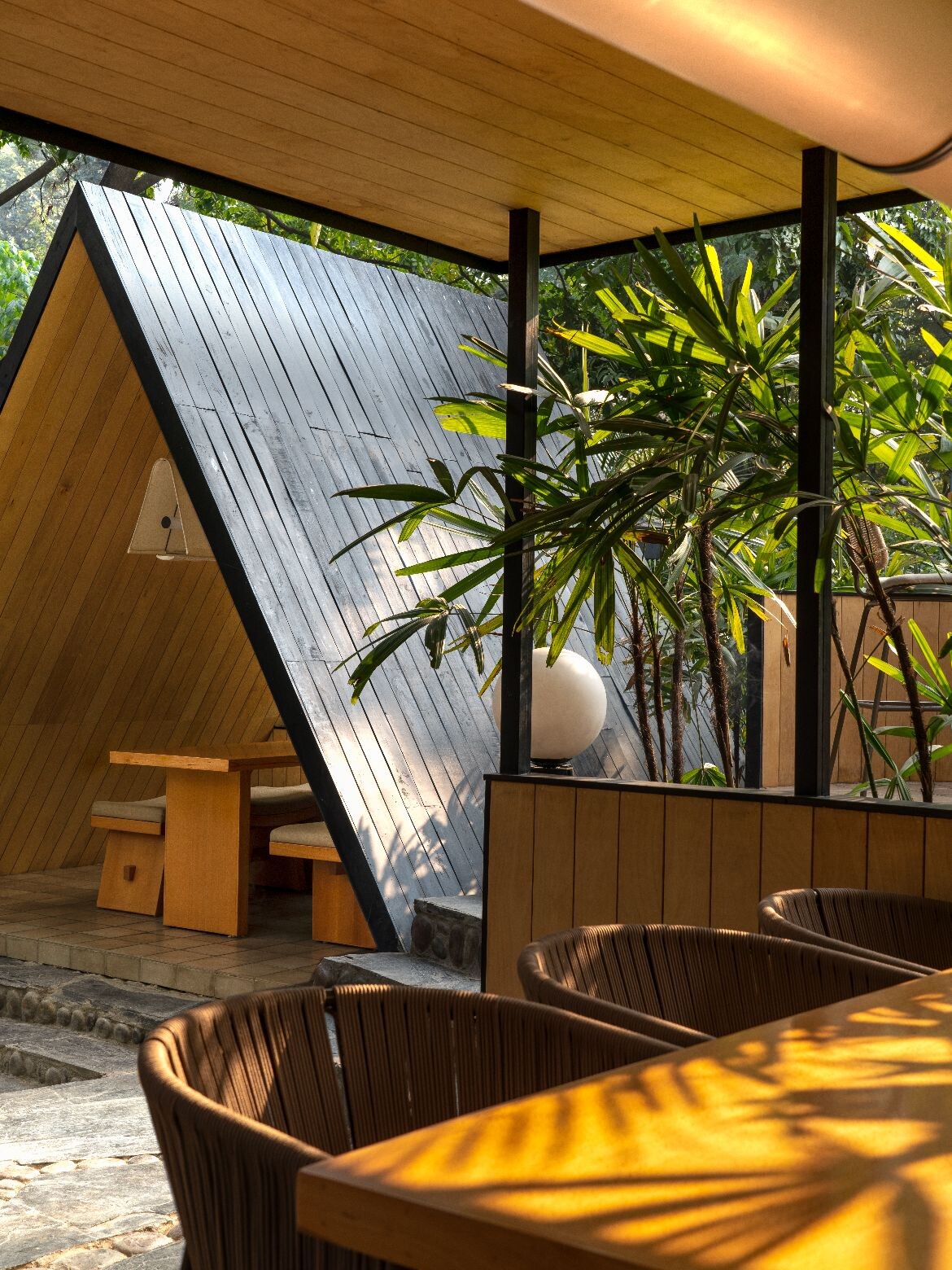
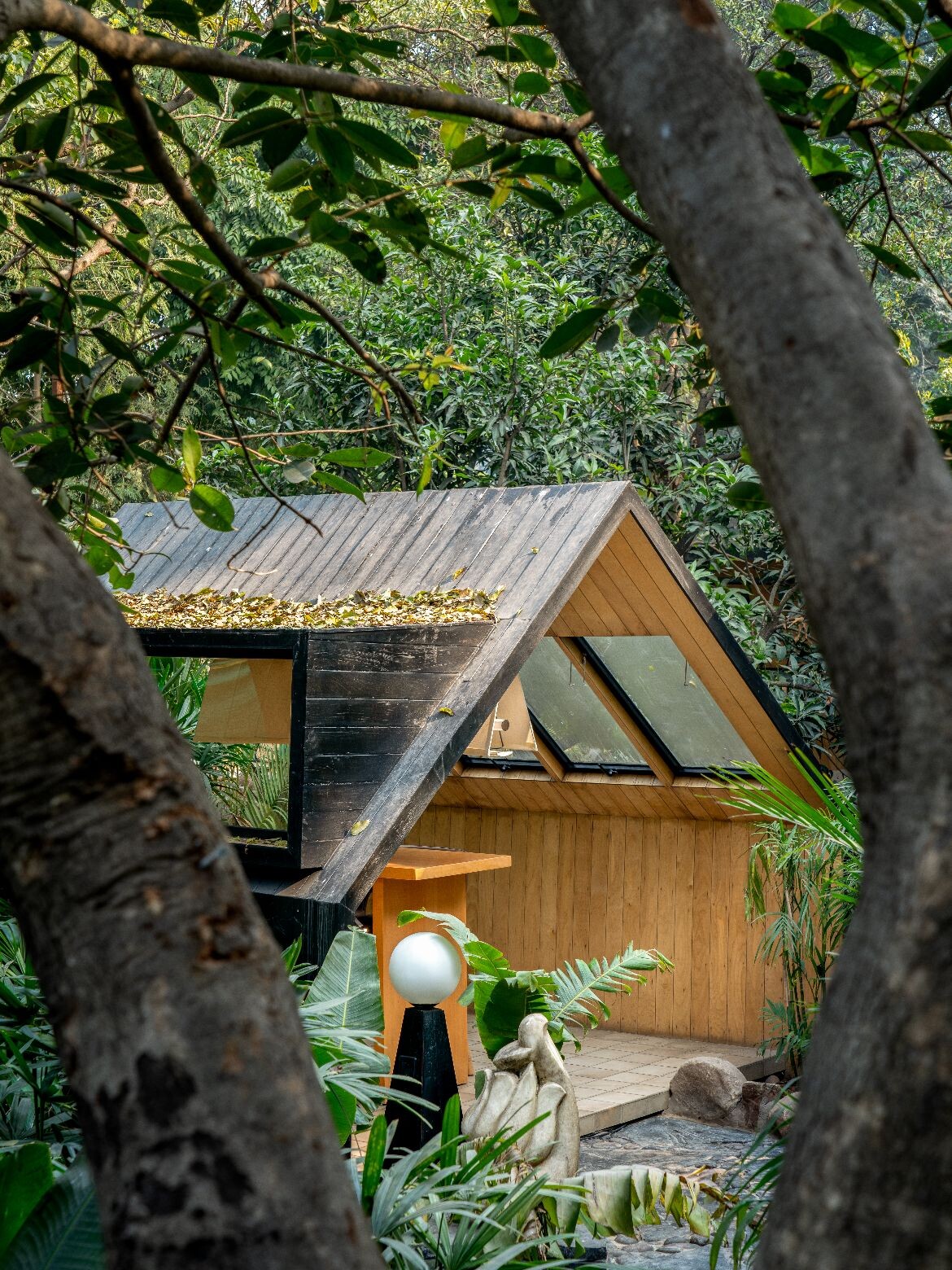
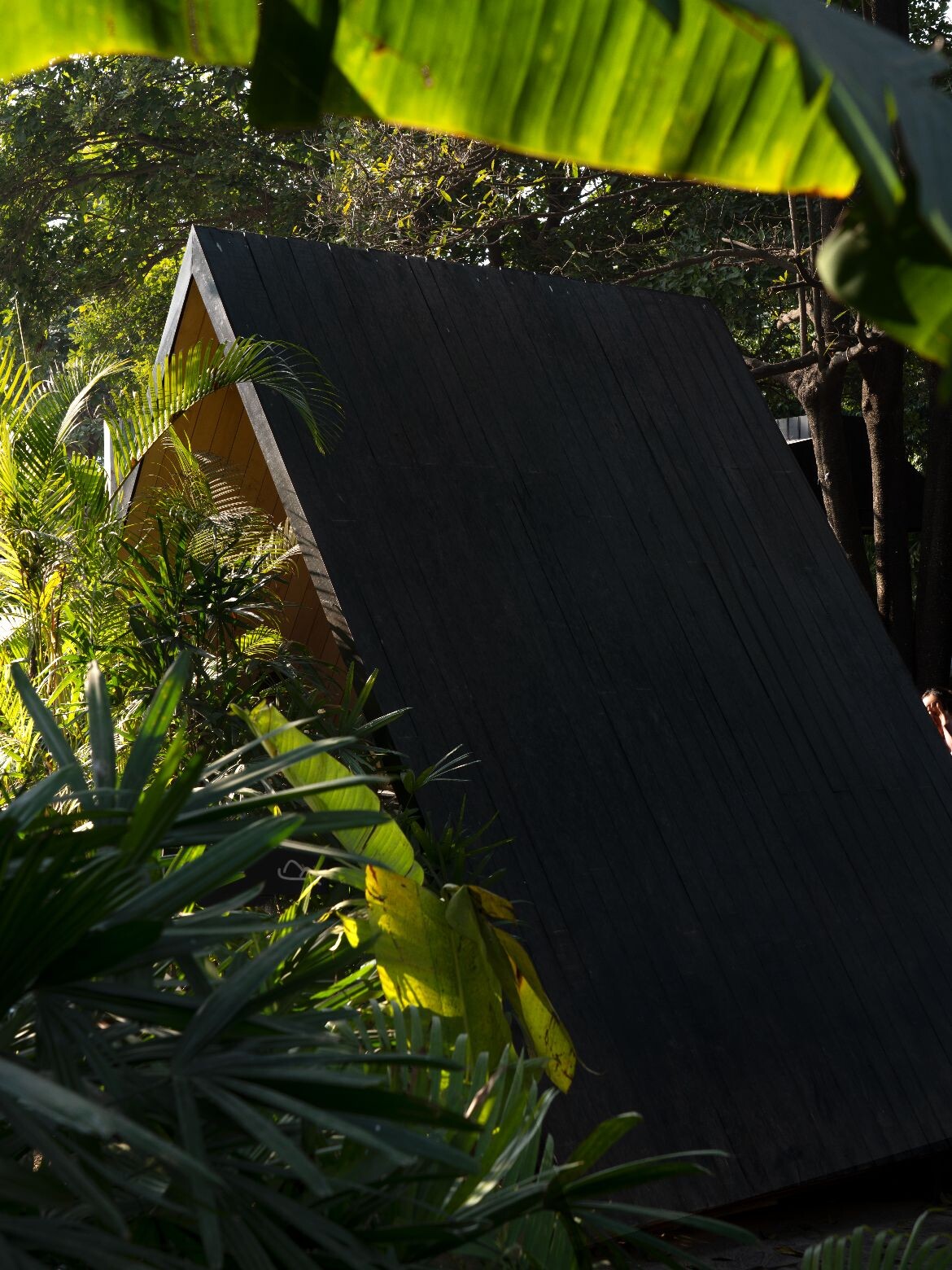
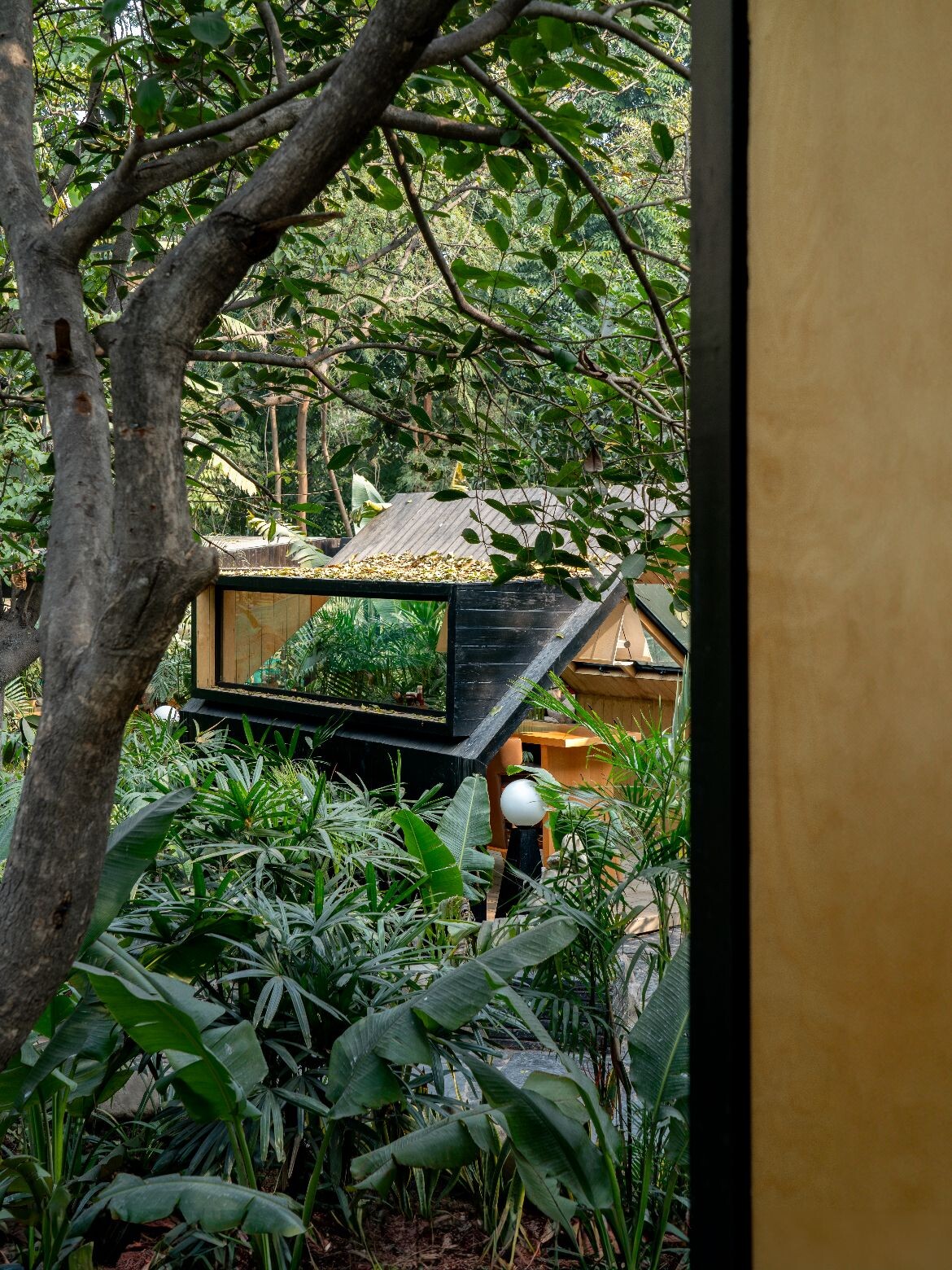
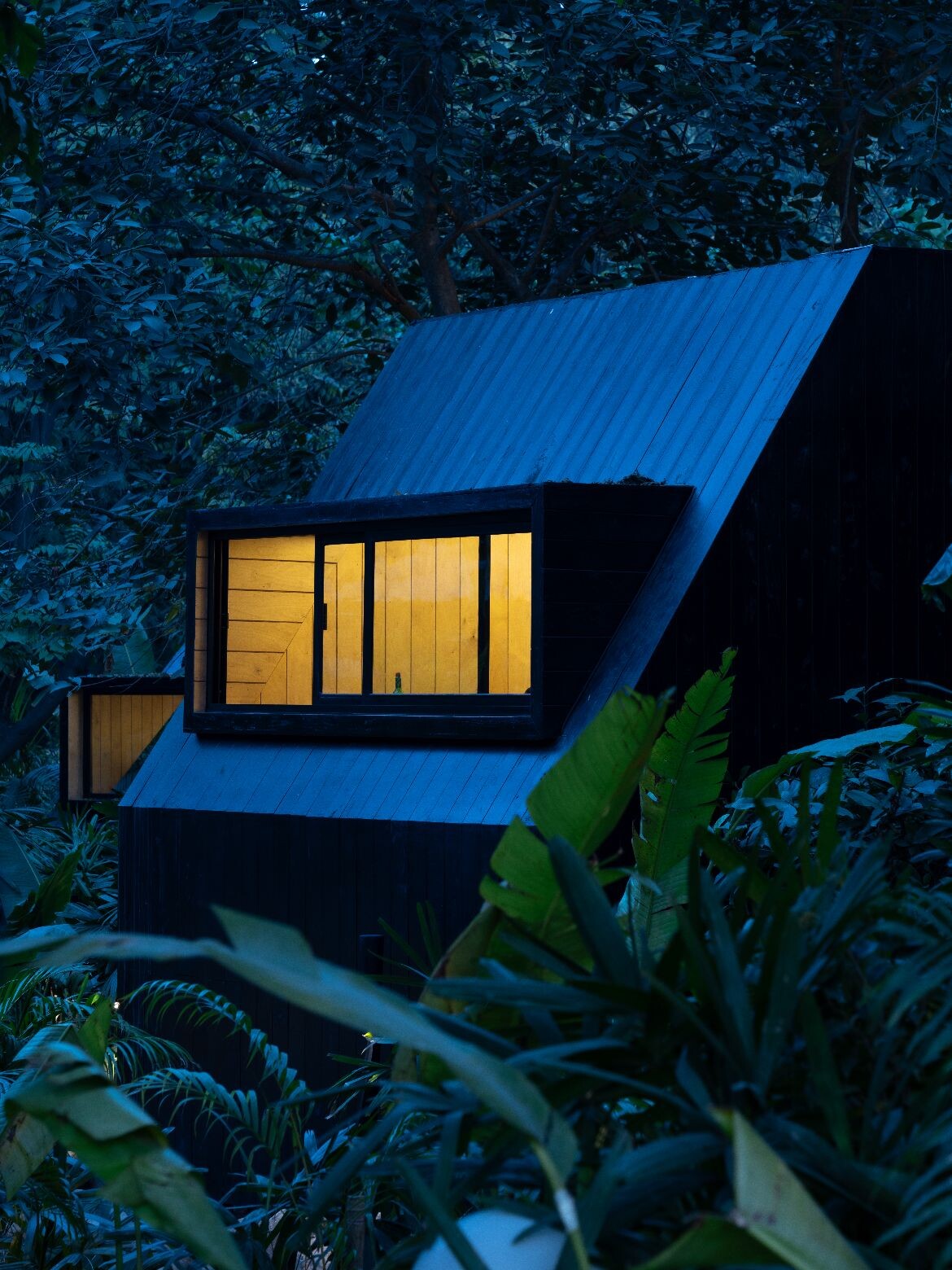
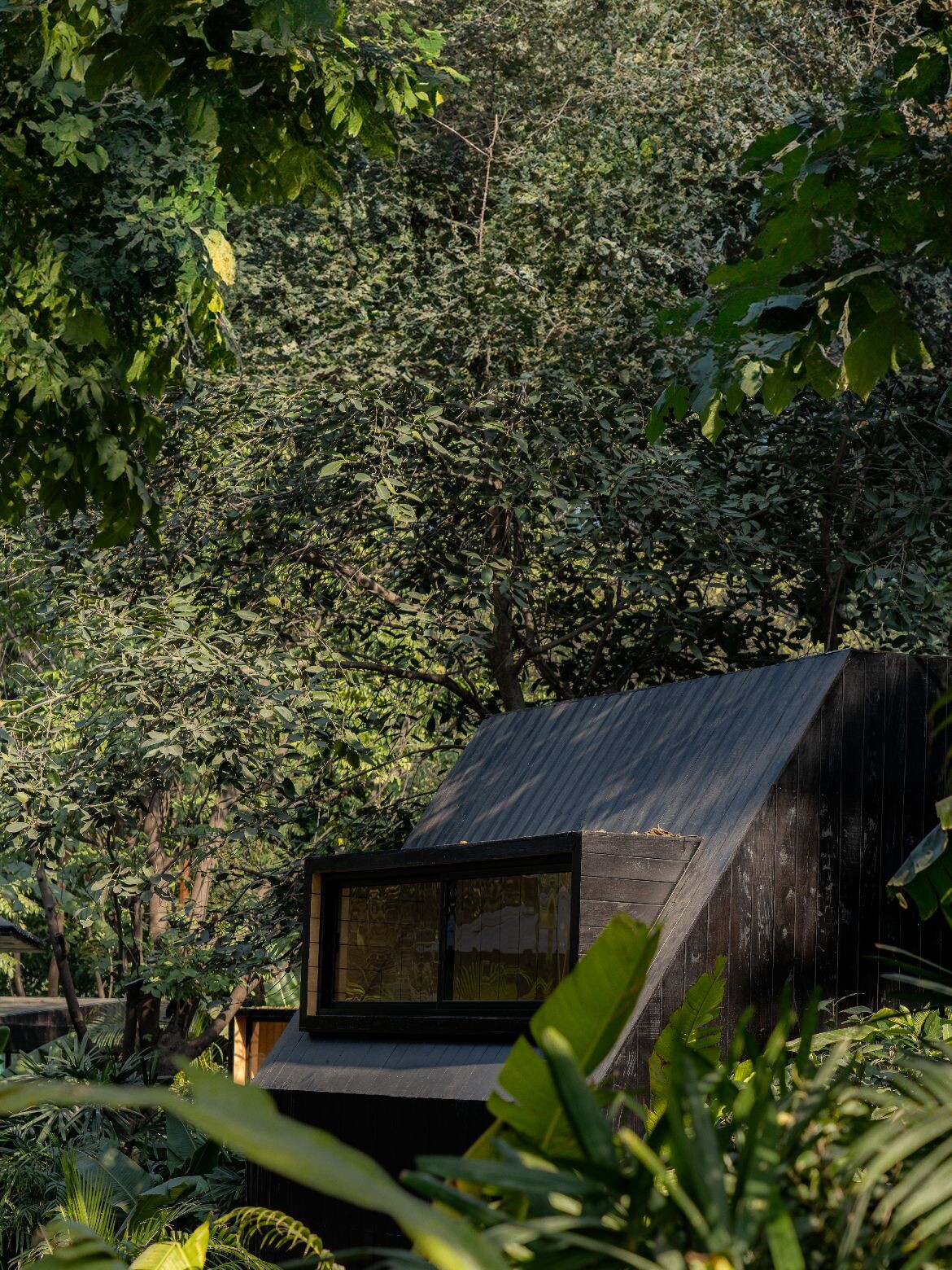
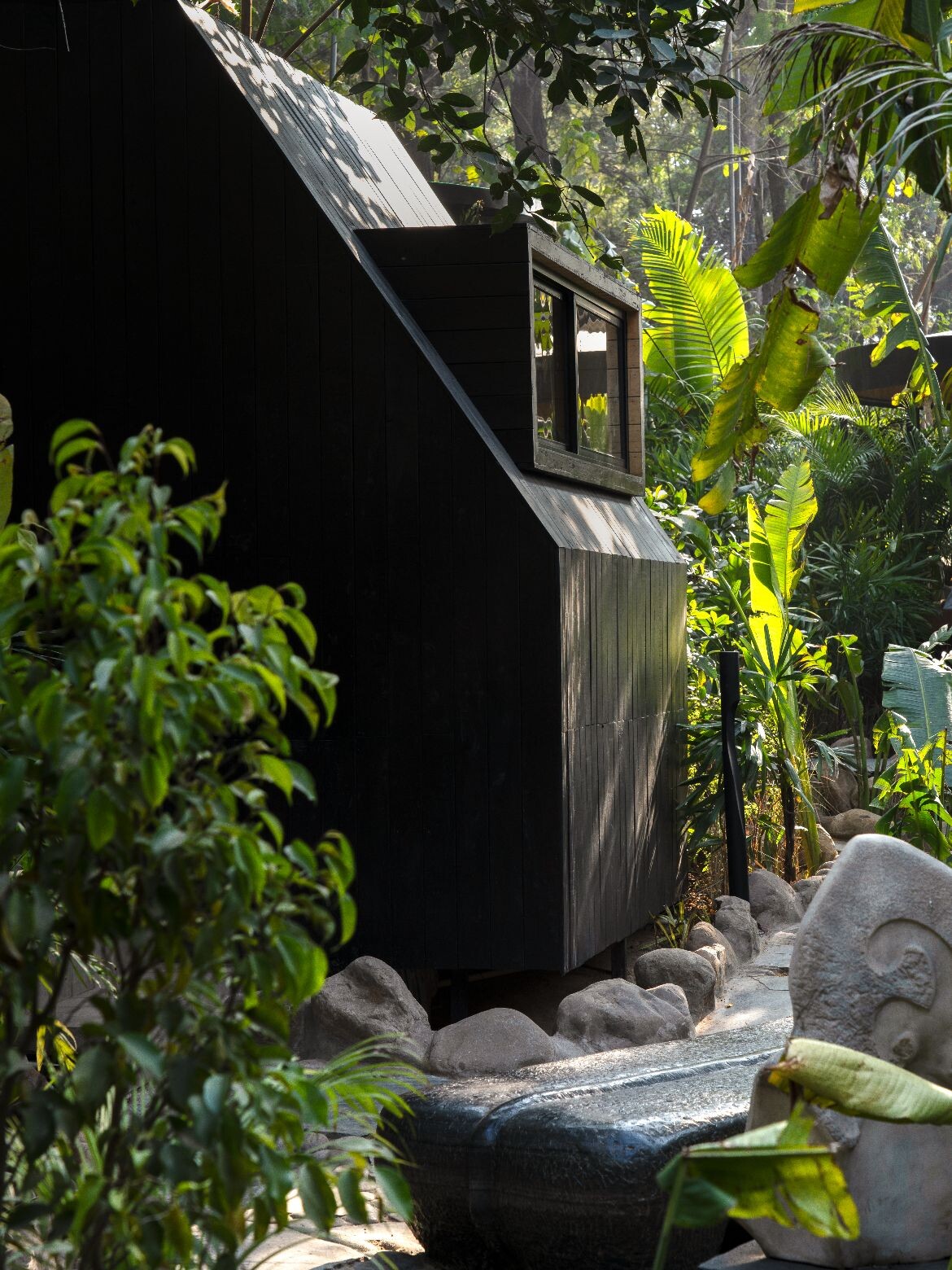
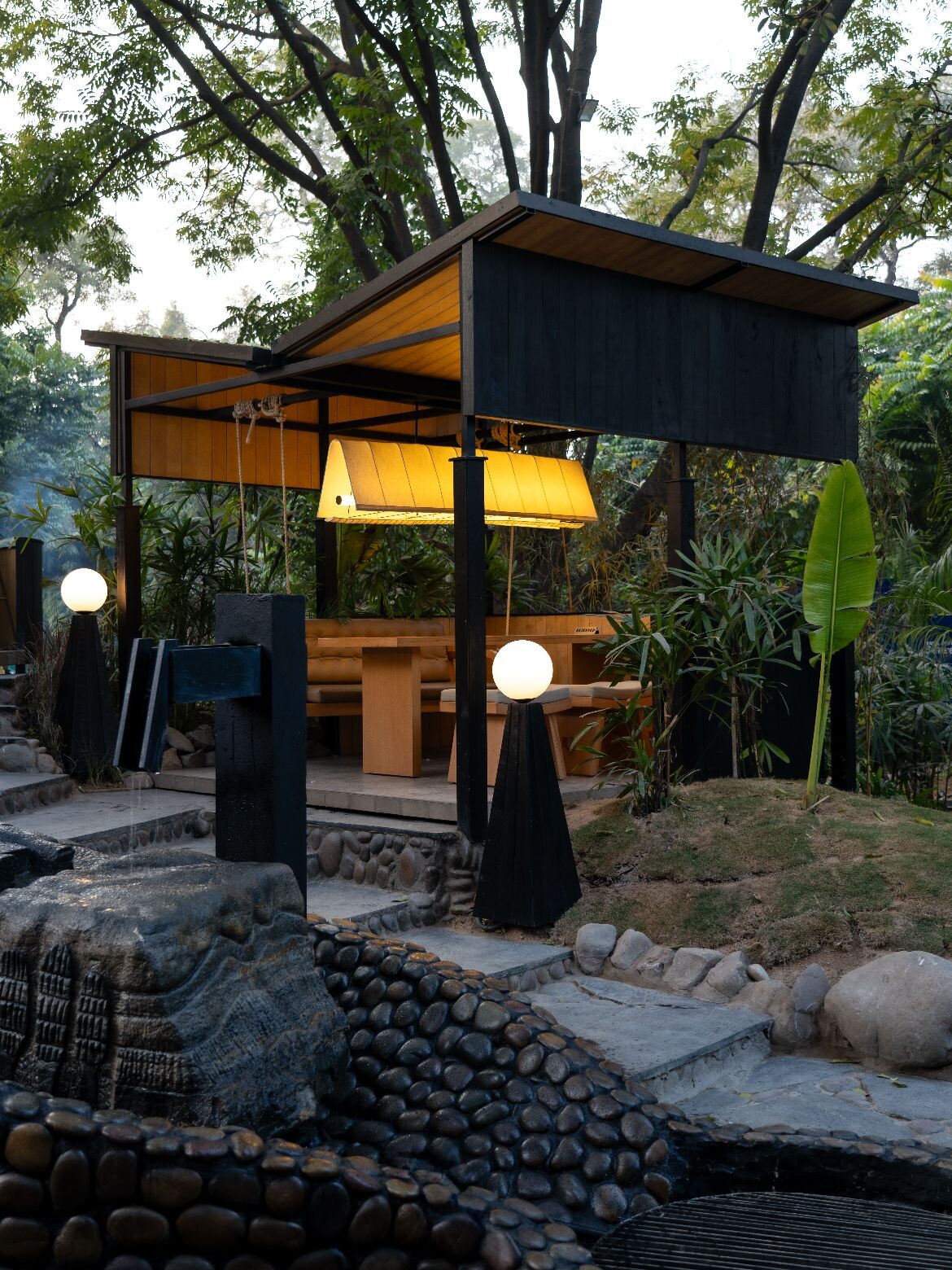
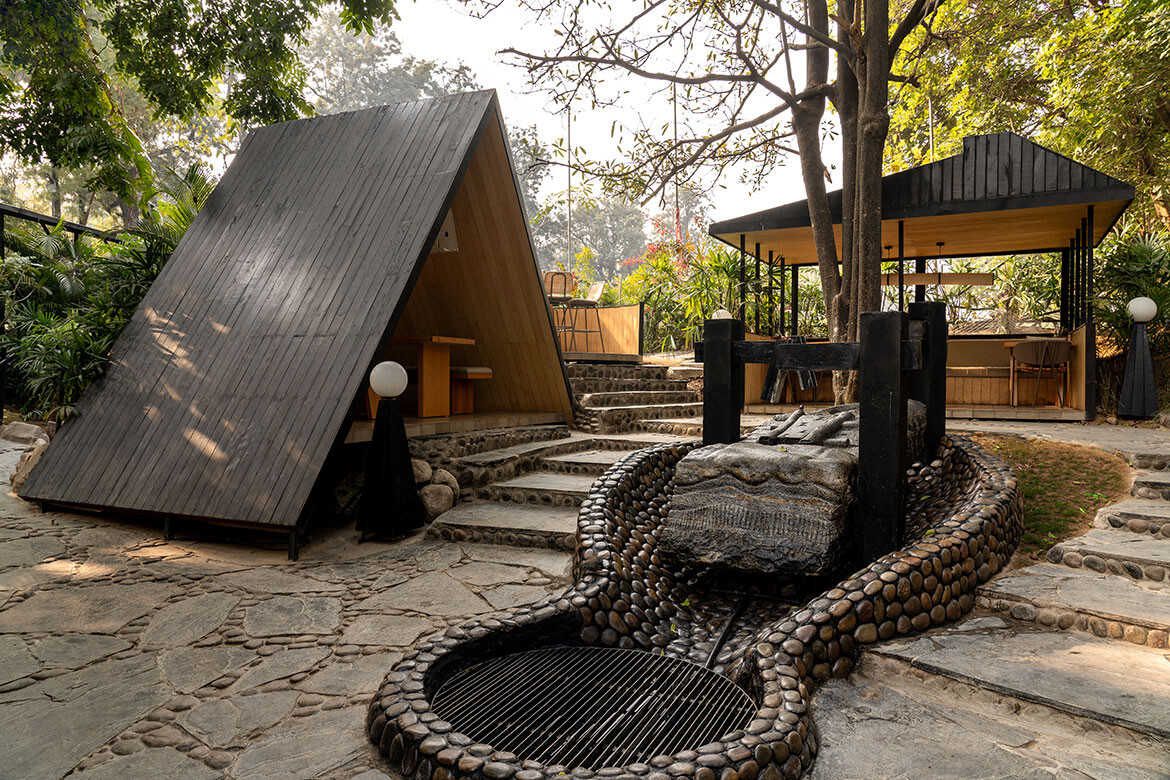
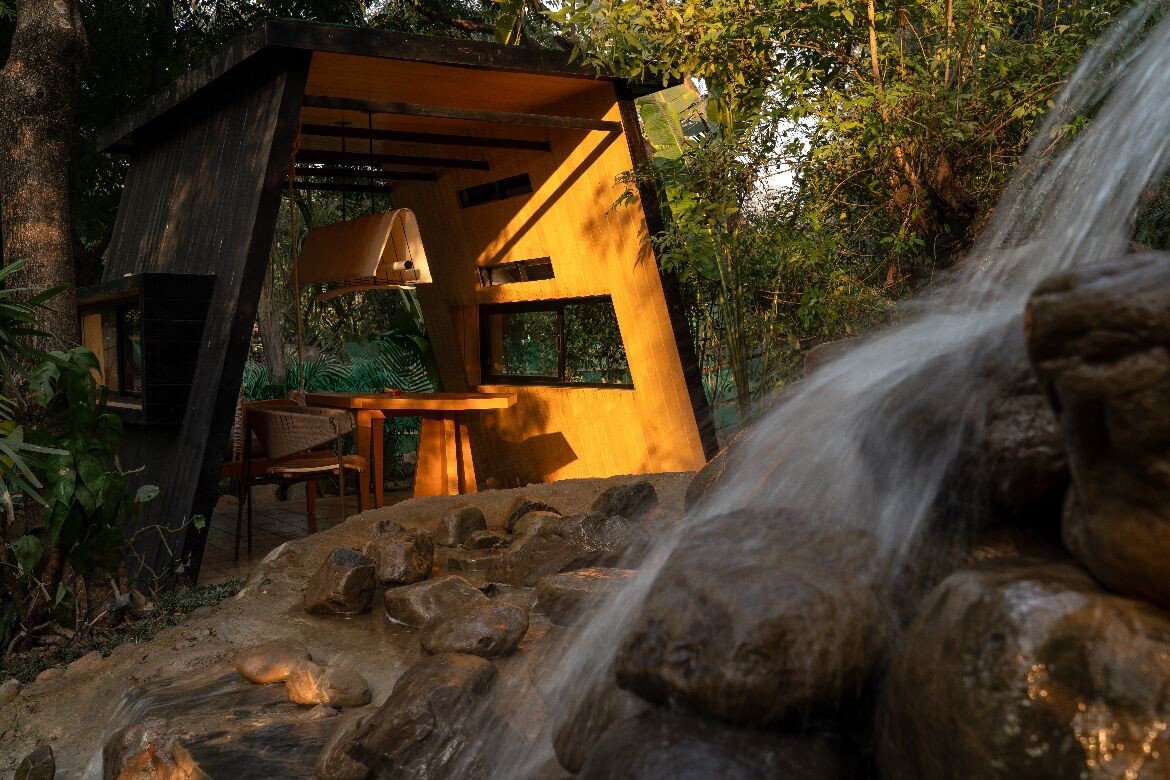
The pods surrounding this site, however, are the main game, with blackened timber exteriors designed to be visually recessive and warm birch interiors for a welcoming embrace that speaks directly to the surrounding nature. The style is somewhat Scandinavian with A-frames, asymmetrical buildings, and large glowing pendant lamps. But there is something uniquely quirky to the collection of buildings that is very much its own. Extrapolating the six designs to around 20 pods, each iteration is slightly different. The simple round form, for example, is explored both with and without walls, with and without roofs, fully enclosed, curtained, or raised. The version where it is a suspended roof alone with a large disk-shaped pendant light is particularly elegant. Windows afford another variable, with operable side windows and skylights, expressed in response to each pod’s distinct view, shelter, and proximity to water.
Related: Anything but standard
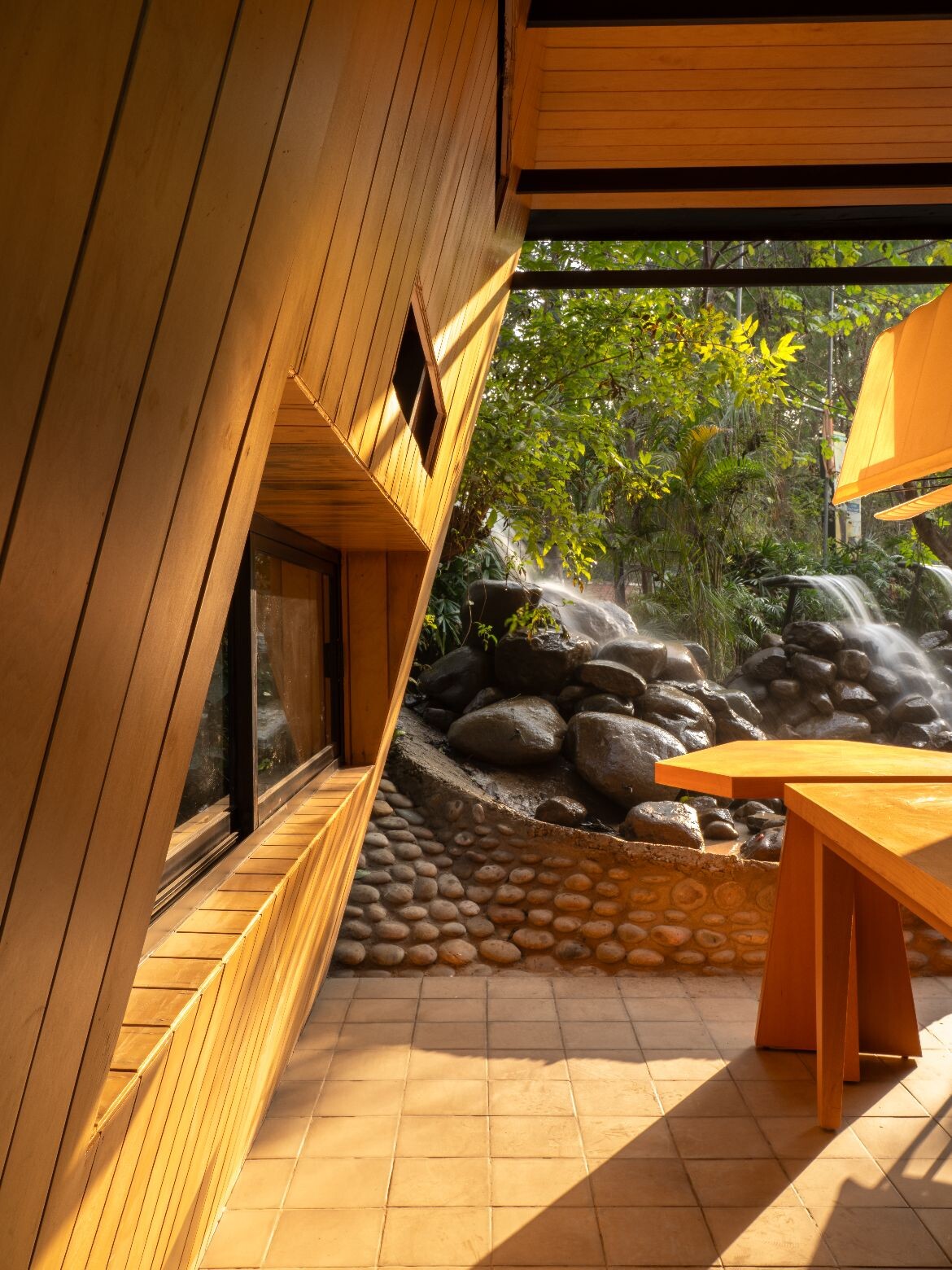
The hardscape – that is, the built structures incorporated into the landscape design – are impressive, with local grey stone arranged as paths, low walls, waterspouts, casual seating and as decoration and edging on any expanse of concrete. Ancient and very large carved stones have also been incorporated and woven into the design to good effect. Each of the pods makes use of the landscaped elements. whether for ease of bringing a large group together or as a discreet entrance for a smaller pod with a directly engaged view. A truncated A-frame pod, for example, sits adjacent a waterfall cascading over huge boulders and is entered from the path at the rear.
The site itself is fenced on the sides facing the road and its neighbour but is entirely open to the bike and pedestrian path, working as a direct conduit from the local College of Art and the CLTA Tennis Stadium. A more conventional entranceway is located just off the main road for guests arriving from the Museum and Art Gallery.
Intentionally democratic and welcoming to all, the site has been designed to be part of Chandigarh’s public realm and to knit itself into the city’s fabric. It is also attuned to architectural tourism, with Studio Renesa rejecting mimicry in favour of creating a visual dialogue with Chandigarh’s unique aesthetic. Importantly, it is also palate friendly for dusty pilgrims yearning for a burger.
Studio Renesa
studiorenesa.com
Photography
Avesh Gaur