“Being in our Homelands means that the land owns us. Our identity comes from this land. Our Homelands have stories behind them, which are told through bark paintings, sung in our songlines, danced in our dances. Our language comes from this land, and the history of our land has been handed down from generation to generation.”
— Y Munungurr, Laynhapuy Homelands Statement, 22nd March 2009
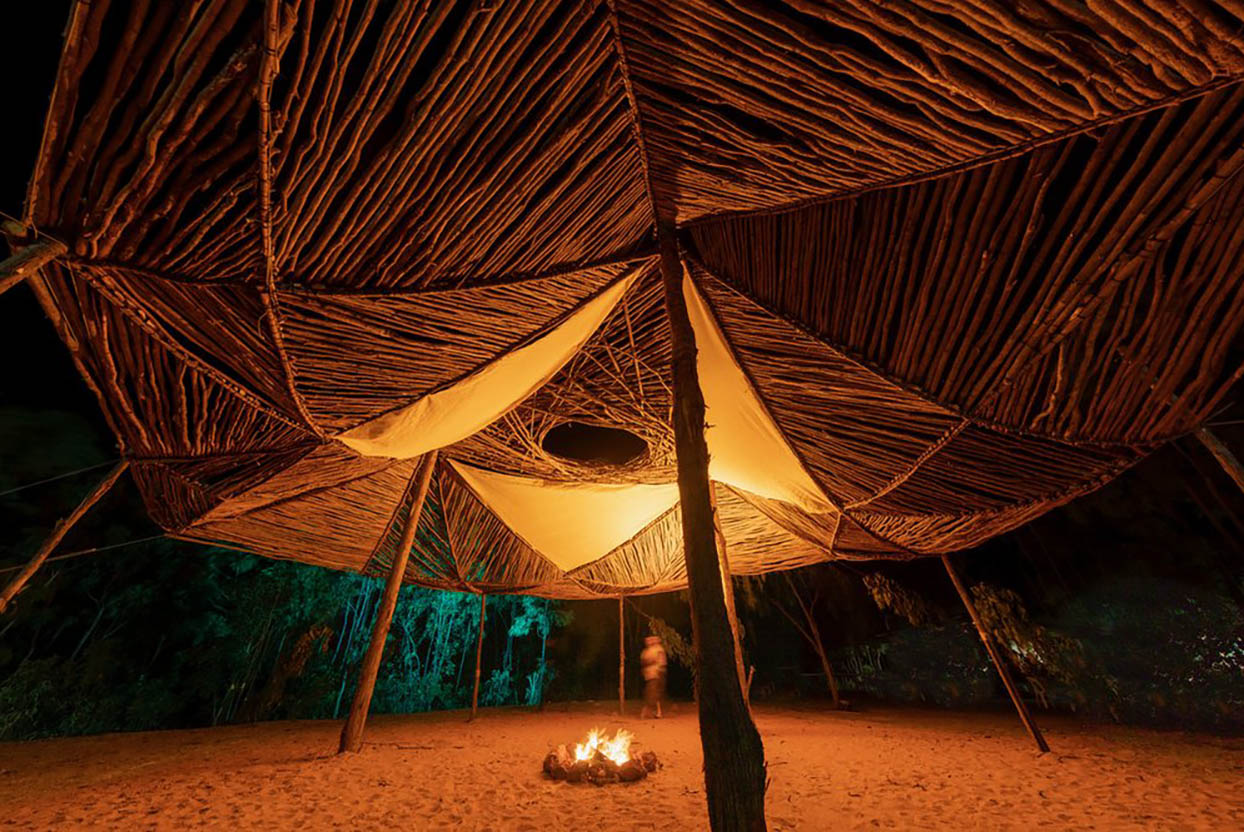
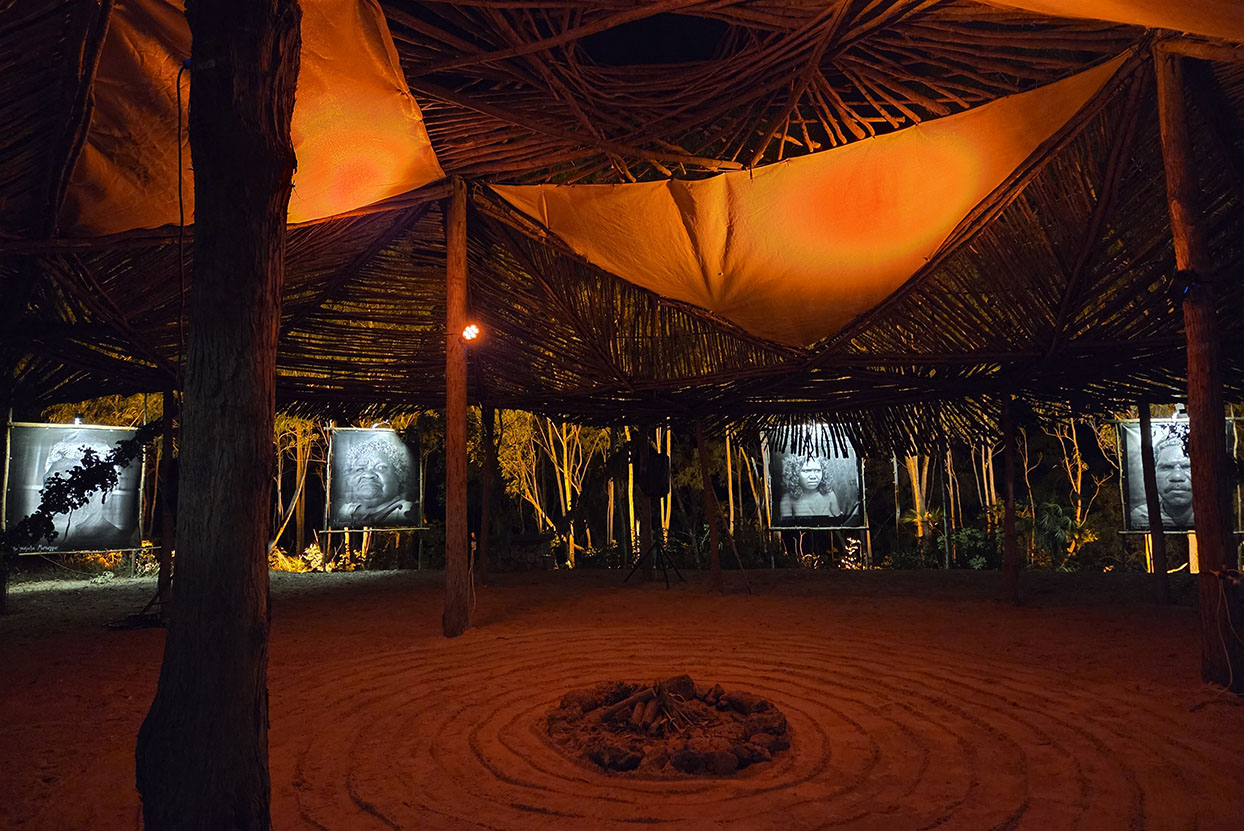
Cave Urban was invited by the Yothu-Yindi Foundation to create a cultural gathering space for the 2022–2026 Garma Festival at the Gulkula ceremonial site in northeast Arnhem Land, Northern Territory. Dhäwu’mi Wäna (House of Stories) was designed as a place for discussion, art, ceremony and storytelling, with the architecture providing a setting for cultural exchange, while maintaining a direct relationship with Country.
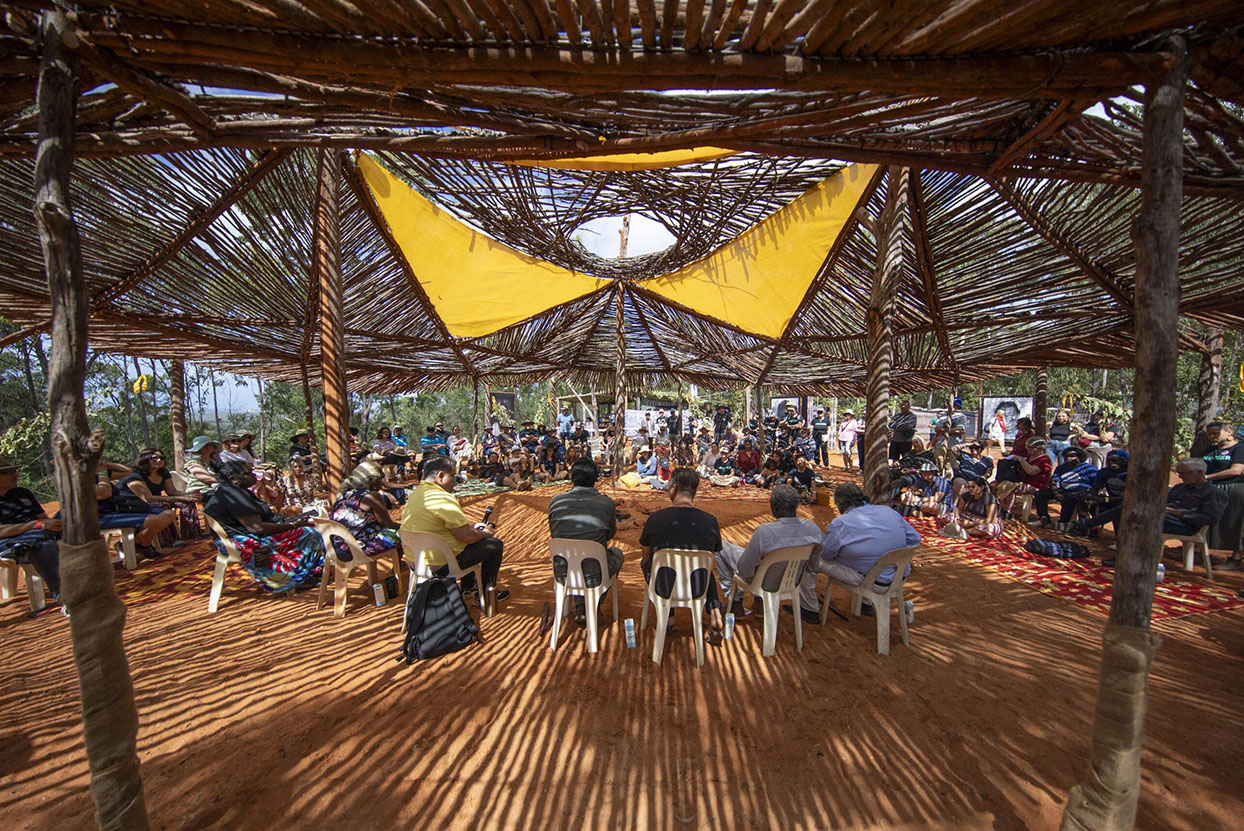
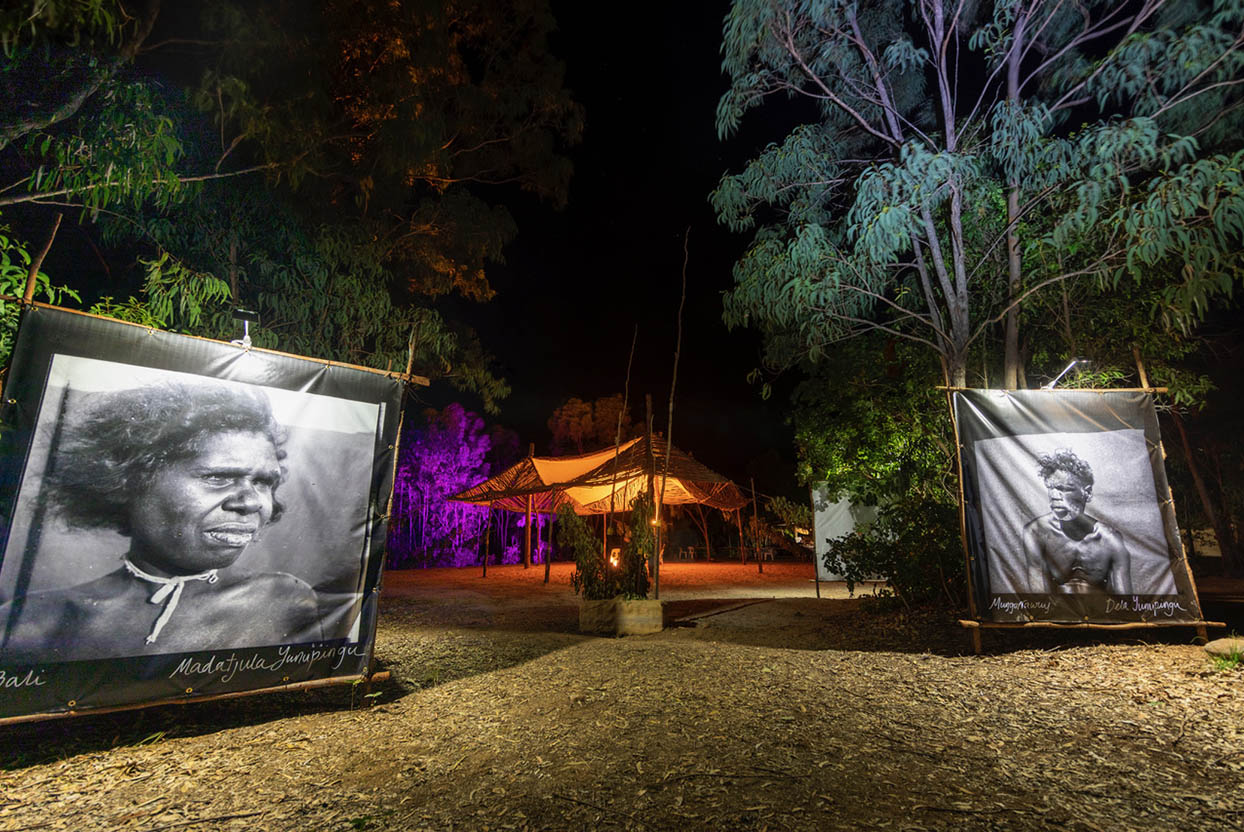
It was named by Mayatili Marika, a Rirratjingu Traditional Owner and Yolŋu woman, in 2023. The name brings together dhäwu, meaning story, word, information or message, and wäŋa, a term that encompasses place, home, country and homeland. Together, the name speaks to the pavilion’s role as a site where people congregate to listen, speak and connect with Country.
The project forms part of Cave Urban’s broader COLA (Covered Outdoor Learning and Living Area) project, which has emerged from 15 years of research and prototyping into low-cost, climate-responsive shade structures for community gathering, learning and cultural exchange. Moving away from conventional enclosed buildings, the COLA approach explores open, breathable structures that provide shade, maximize airflow and respond to the tropical climate of Arnhem Land while maintaining a direct connection to Country. The designs draw inspiration from traditional Bala-Bala or bough shelters: places to gather, make, teach, perform and tell stories.
Related: Yarning with the Venice Architecture Biennale team
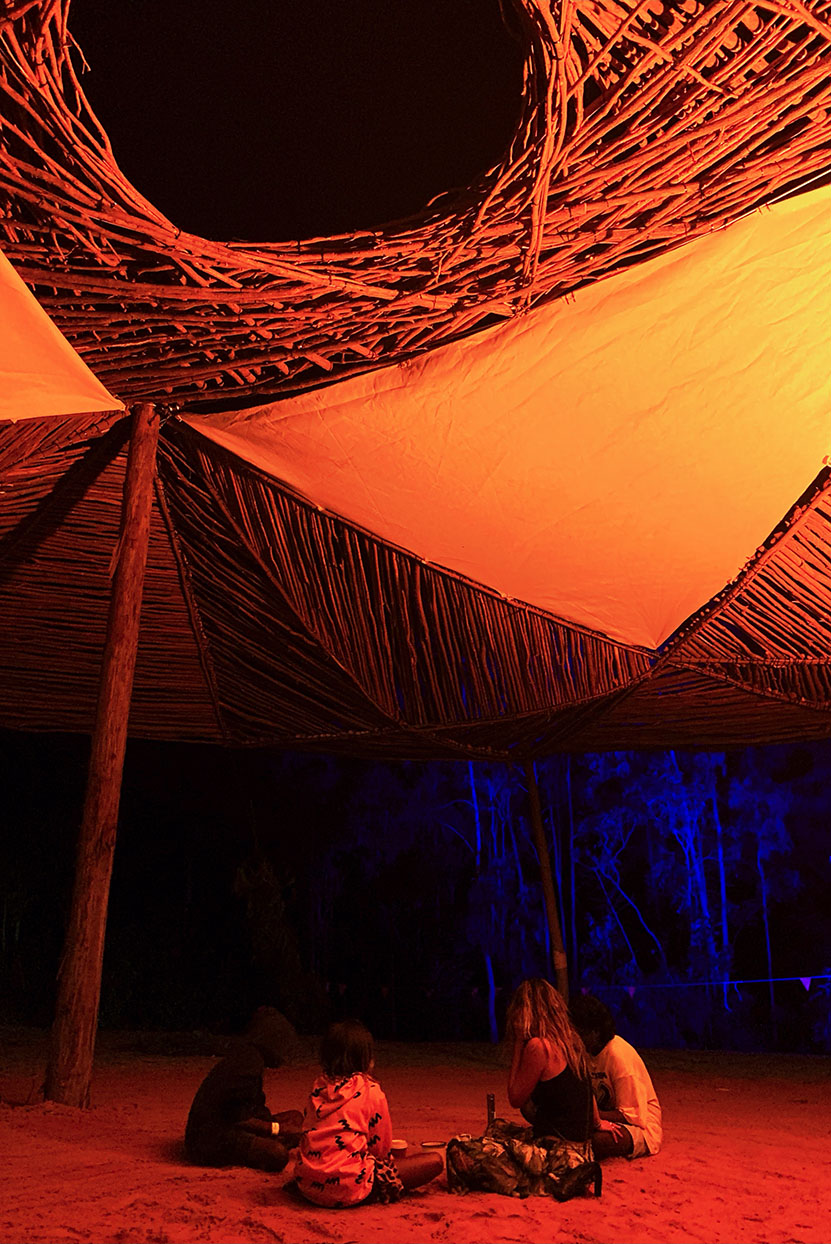
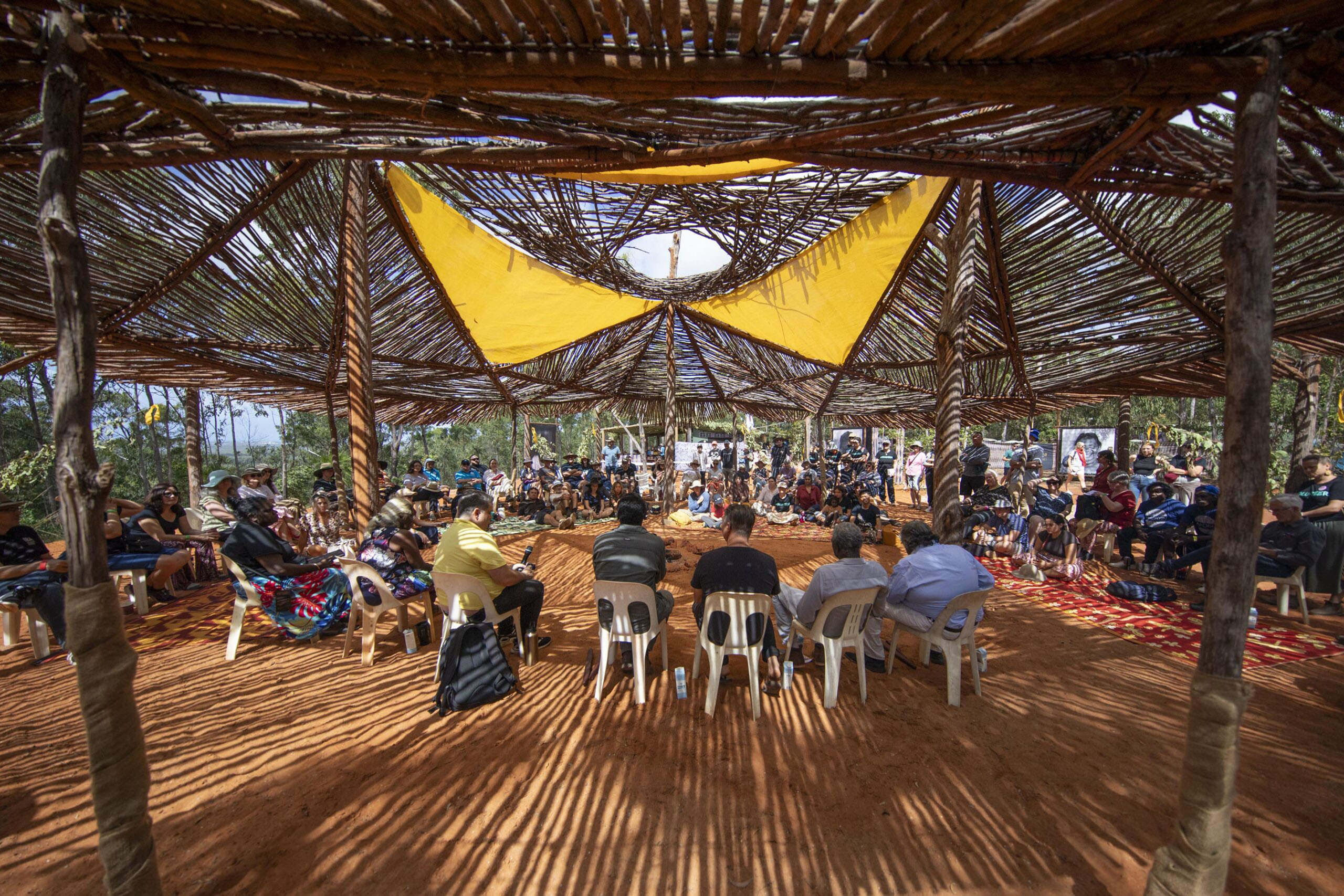
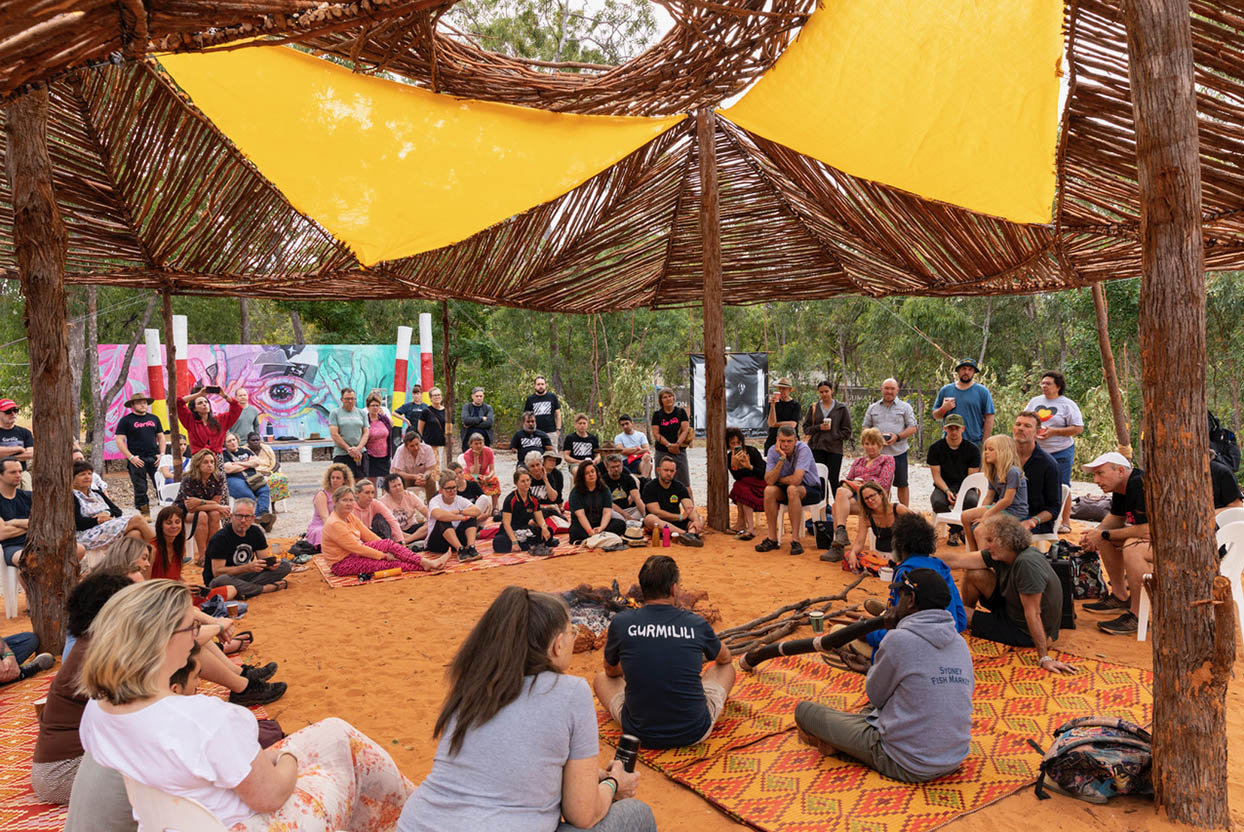
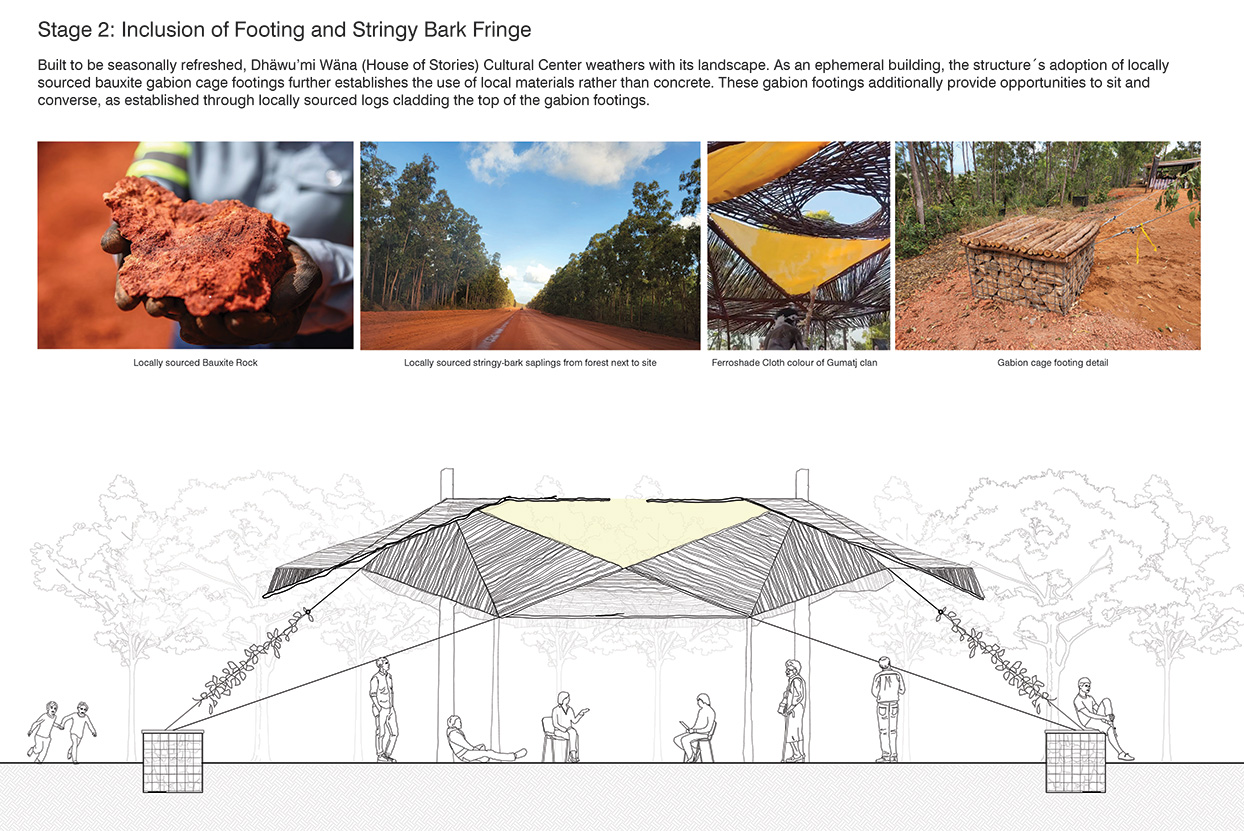
Dhäwu’mi Wäna puts this approach into practice at the Garma Festival. Developed in collaboration with Agency Projects and Event Engineering, the 8m x 8m x 5m pavilion is a lightweight tensile structure built from locally sourced stringybark tree trunks, saplings and branches, steel cables and gabions filled with bauxite rocks from the site. Its material palette connects the structure directly to its setting, while the combination of timber and cable creates an open, permeable form that provides shade while keeping the surrounding landscape visible and accessible.
The canopy was created from self-seeded stringybark saplings selected by Elders to protect land and spirit. The trees were harvested and the structure made in collaboration with the local community and Garma Festival volunteers, making the sourcing and construction process an integral part of the project. This reflects the wider COLA proposition of structures being harvested and built by the community, for the community, from the local land.
The architecture is activated through light and shadow. As the sun moves across the canopy, it casts changing patterns onto the sand, making the passage of time and the landscape part of the experience of the pavilion. At the centre, an oculus framed in the colours of the Yolngu clan creates a focal point within the open structure while reinforcing Yolngu identity and drawing the sky into the space.
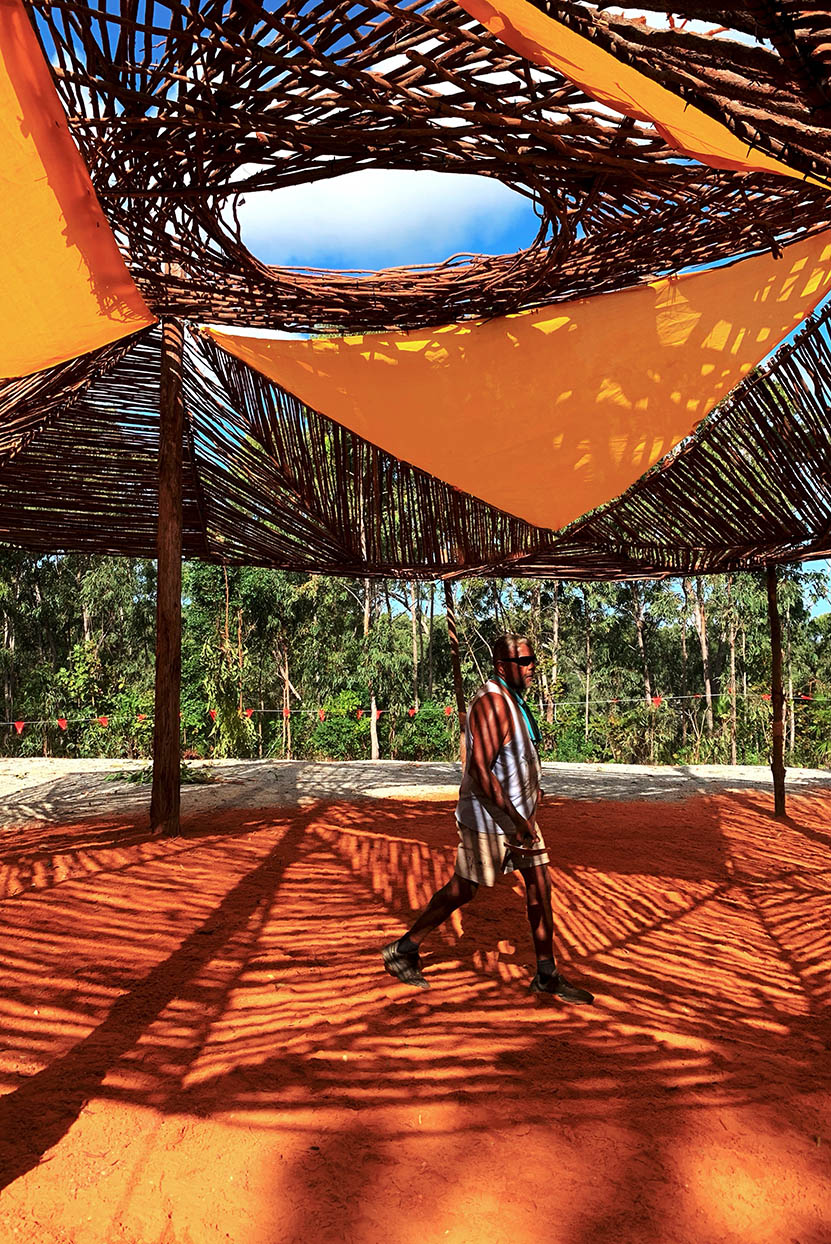
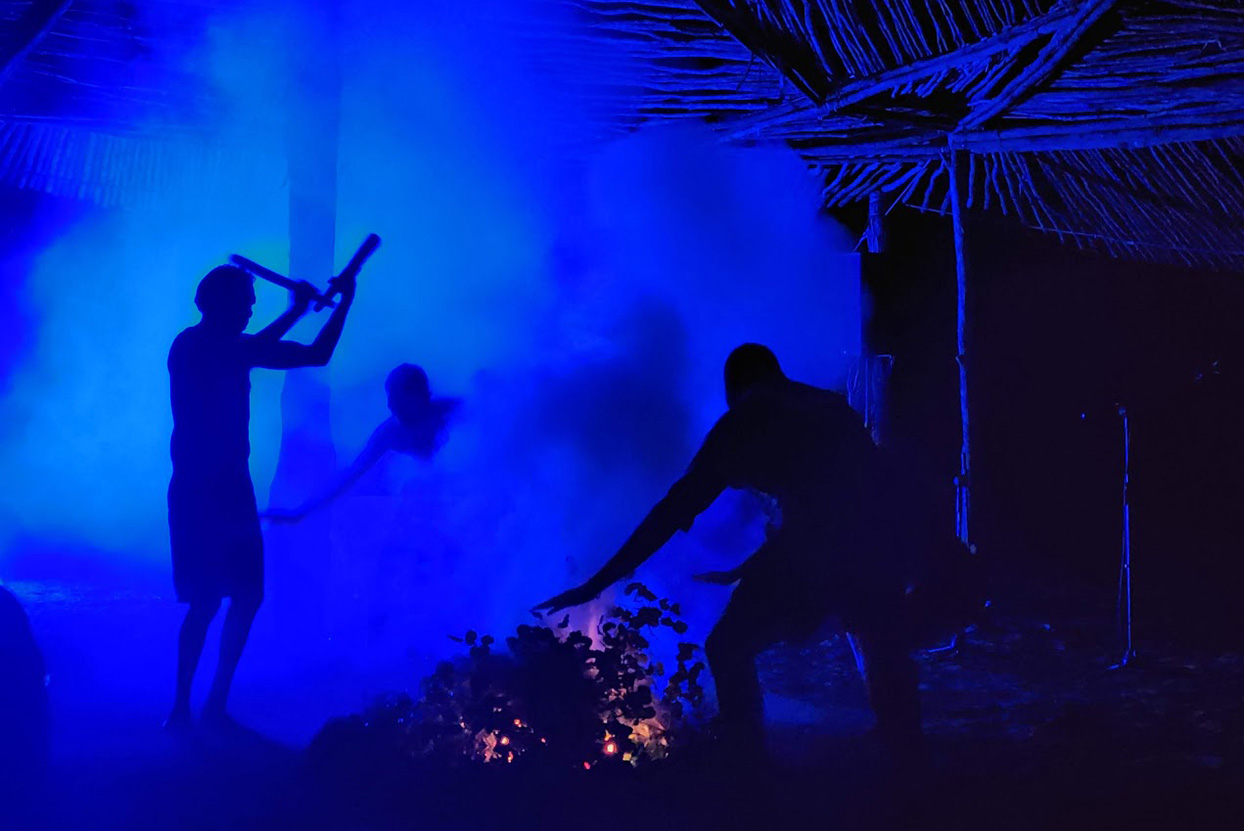
Dhäwu’mi Wäna is activated differently throughout the festival. During the day, it hosts cultural forums and storytelling; at night, an open fire becomes the centre of gathering. The pavilion therefore operates as both shelter and setting: a place where stories are shared, recorded and connected to the location in which they were told. These recordings can remain geographically associated with their source, allowing people to revisit, learn from and celebrate the stories over time.
Dhäwu’mi Wäna demonstrates how the principles behind COLA can create an open framework for gathering, learning and cultural exchange. The broader COLA project builds on this body of research to explore how similar structures can be developed with communities across the Northern Territory, using less construction, lower costs and greater community participation.
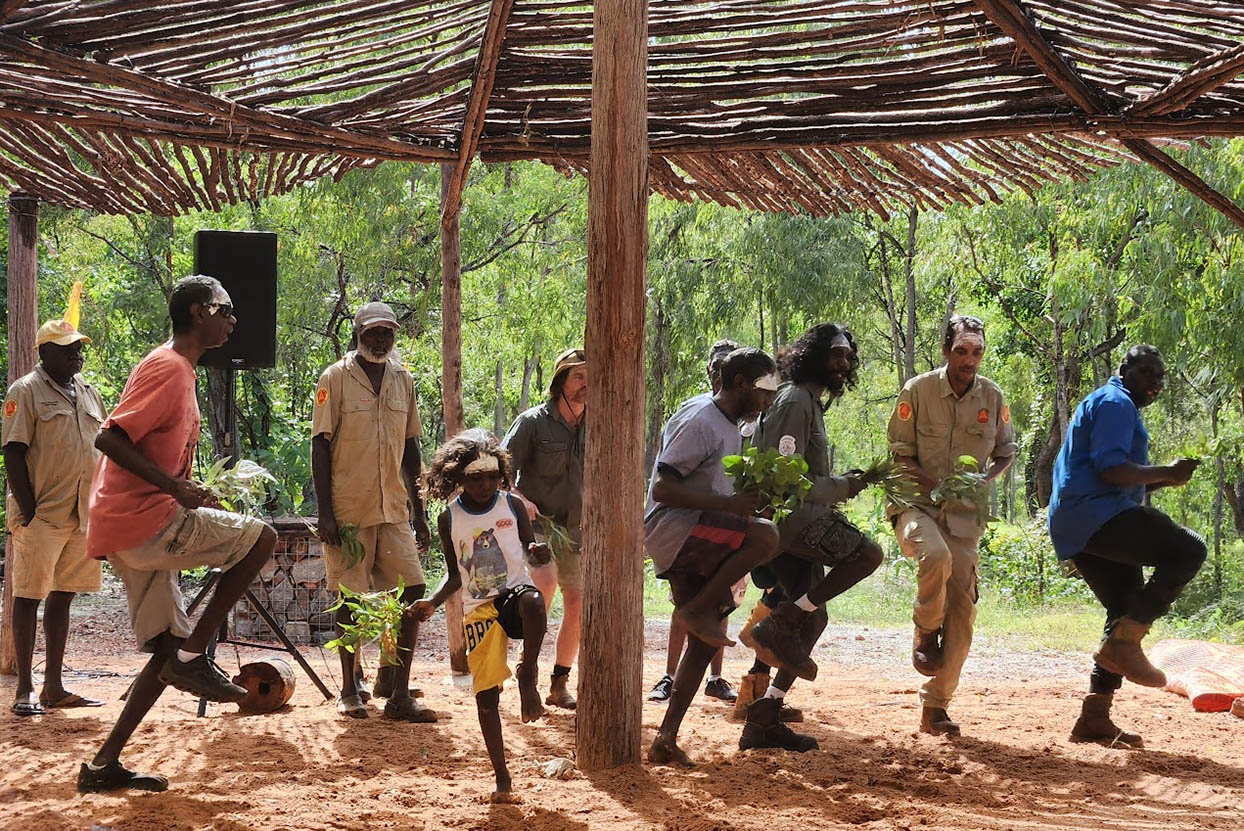
Located at Gulkula site, East Arnhem Land, NT, the project was led by Cave Urban with Garma Volunteers, engineering by Jeremy Sparks and Event Engineering, and Agency Projects.
Cave Urban
caveurban.com
Garma Festival
yyf.com.au
Photography
Nici Long, Peter Eve, Tim Hillier