The home of architecture and design in the Asia-Pacific
Get the latest design news direct to your inbox!

Get the latest design news direct to your inbox!
Pairing his honed expertise with a unique design language, Zachary Frankel is shaping his own world his way.


June 19th, 2025
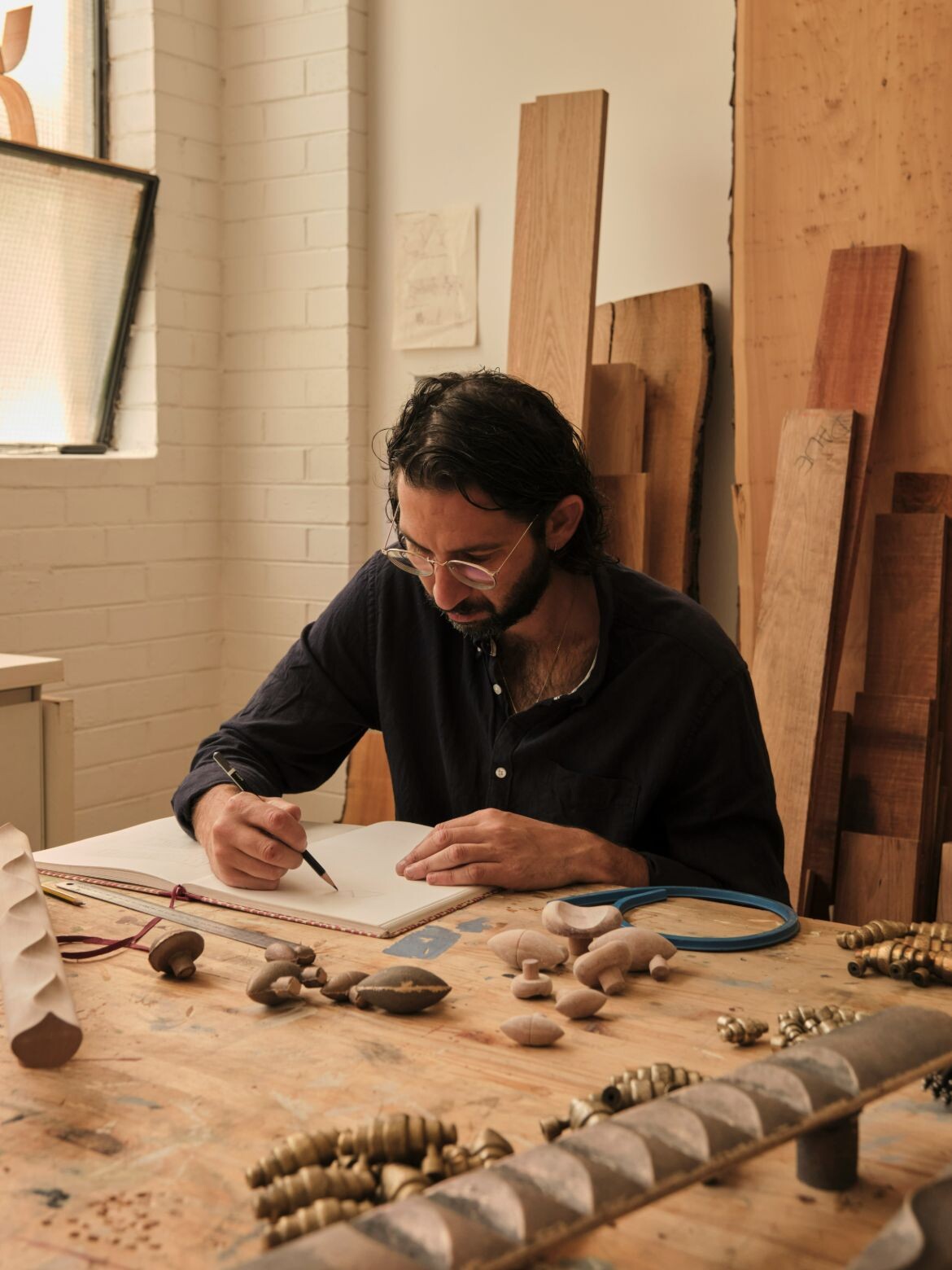
Within the Zachary Frankel oeuvre there are, granted, pieces that are recognisably of his studio, Hotel House. More often than not, however, there is nothing that links them other than craftsmanship. His degree in fine arts (majoring in silversmithing with applied arts his first choice for electives) has given him the tools he applies to his practice.
It’s a nice story, and one he freely admits to mythologising. But having finished his degree and worked in silversmithing for a few years, he had a change of heart. “I didn’t fall in love with it like I thought I would. My girlfriend at the time had a book on Balkan folk art, and there was this really nice, really simple wooden chair in it – and I thought, I would like to make something like that,” says Frankel, who took a career pivot and commenced a pre-apprenticeship at Homesglen Institute.
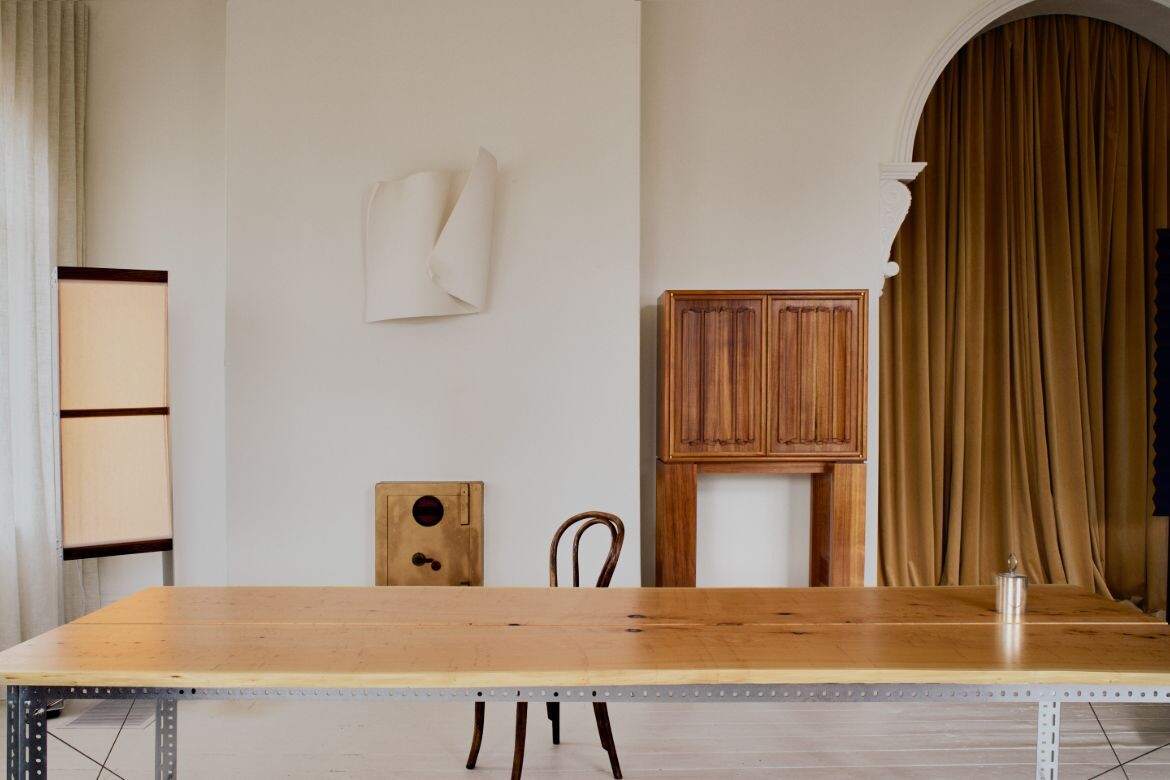
What followed was not the best learning experience as far as furniture technique or safety were concerned, but “I learned a lot about getting things done and self-reliance.” This was followed by a good studio position with Pop and Scott that allowed him to hone his skills and gain the necessary confidence in his craft to shift gear again and step out on his own.
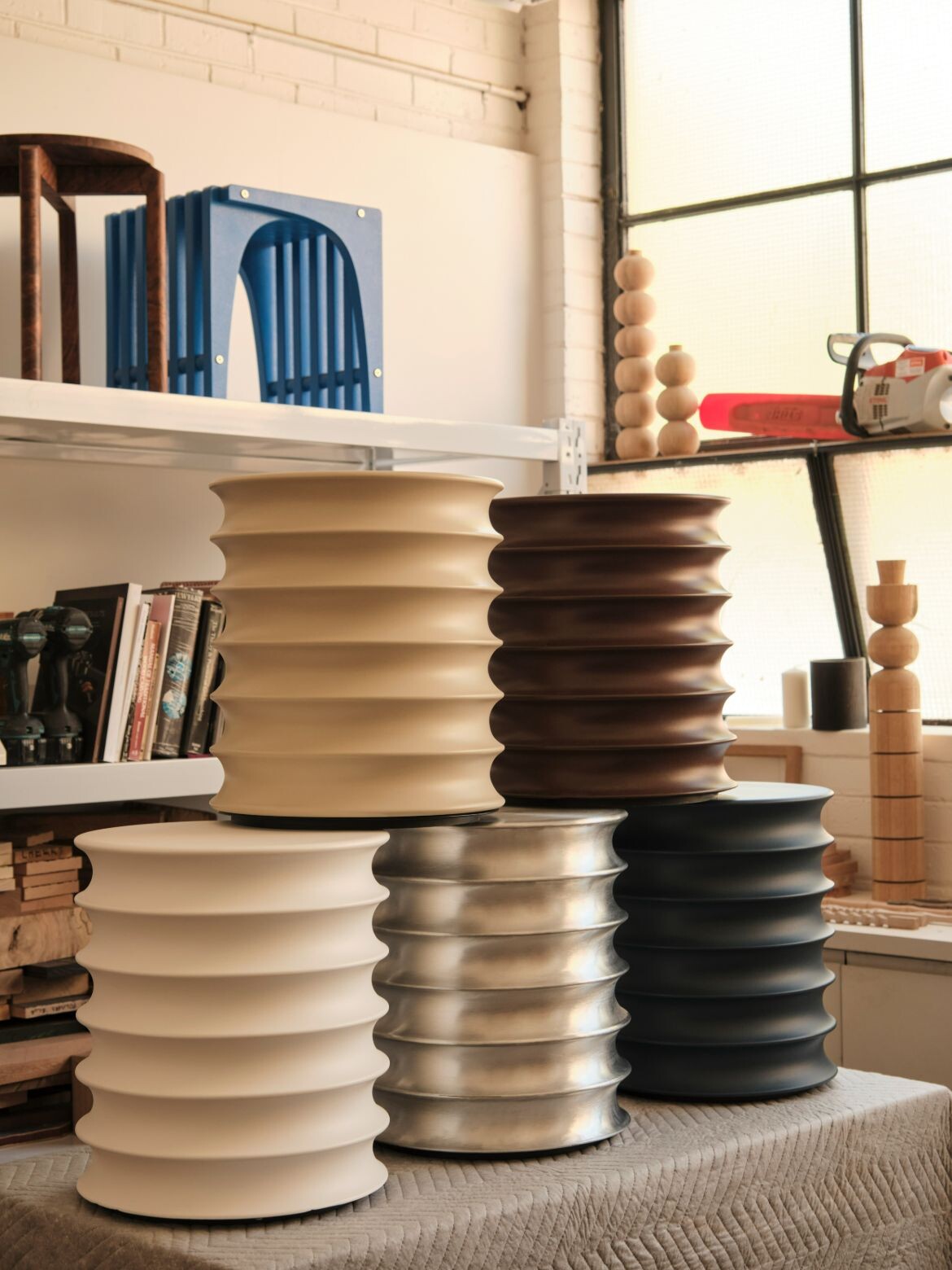
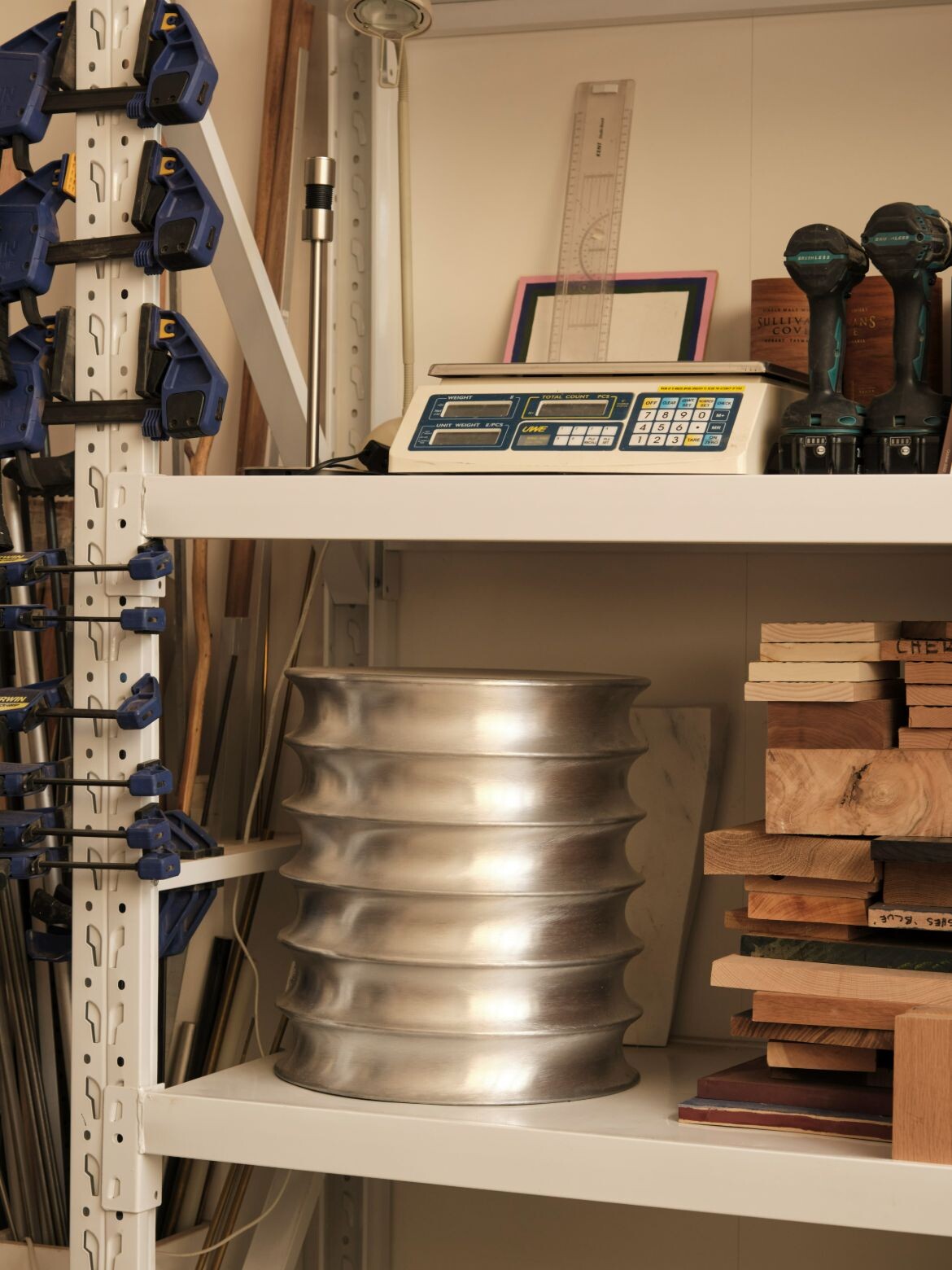
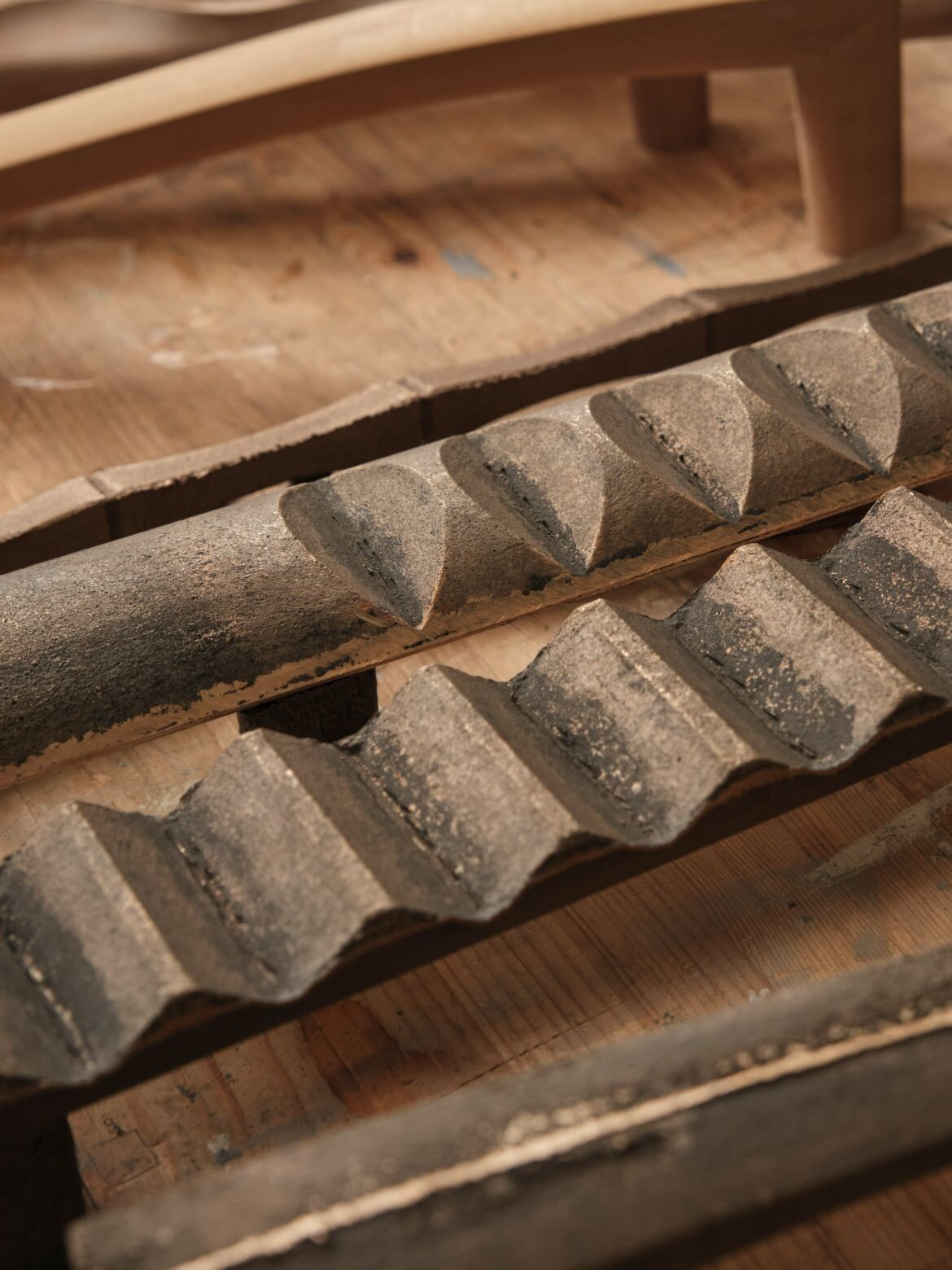
The flute stool, possibly his most recognisable piece is becoming more so thanks to Kennedy Nolan’s inclusion of the stool in Melbourne Place. The original version is crafted from a solid piece of salvaged Cypress, from the short-lived trees grown all over Victoria for use as wind-breaks. “There’s a person who collects and mills the Cypress pine in country Victoria, and then he gets them across to Charlie Sandford [one of Melbourne’s leading manufacturers and traditionally woodturners]. He turns them for me on these massive lathes,” says Frankel who then cleans, shellacs, and forces cracks and textures into the surface. “I sometimes paint them, sometimes burn them to get different effects. And the paint I use is a traditional paint called Milk Paint, which is like a pigment and milk protein, so it’s non-toxic. I mix it and I brush it on. You see all the brush marks.”
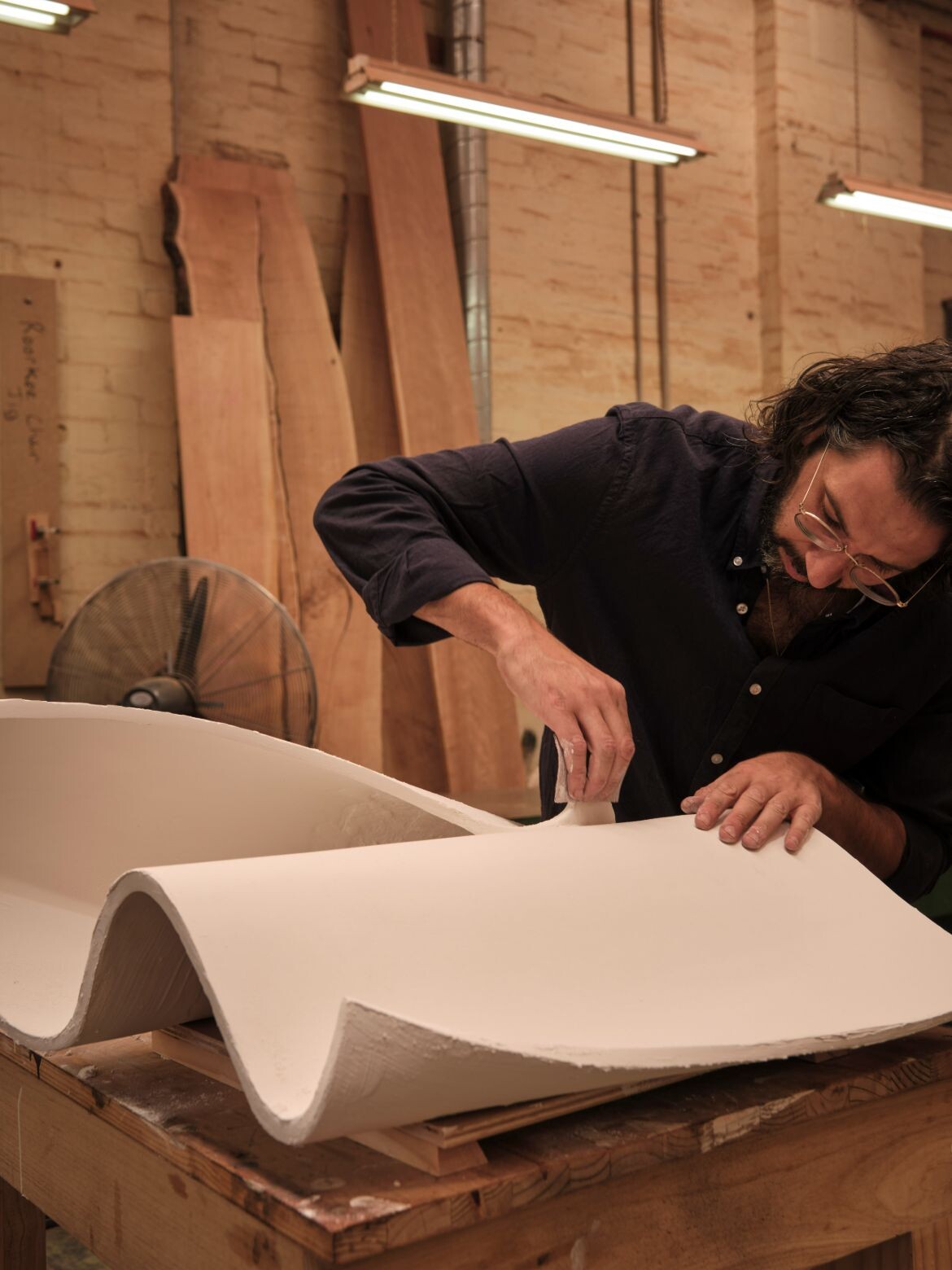
The result is a dense creamy surface that is matt and silky, and quite different to his latest iteration which is created using spun aluminium. “The ones I did for Melbourne place for the wet areas, I did them in this aluminium. And there’s spun aluminium, but it’s very skilled spinners in Melbourne who spin these pieces out of one large sheet of aluminium. I’m doing them in the brushed aluminium finish and then a range of textured powder coat finishes.”
His ease in shifting materiality to answer a need speaks to the way he designs. “I enjoy everything from hand-crafting timber to working in industrial design settings.” It also speaks to an ability that sees him working on bespoke pieces for architects and interior designs that don’t fit the regular collaboration model. Instead he has his own particular aesthetic, which can be explored in scale or material but only to a certain extent. “I don’t really want to make things that other people have designed,” he notes. “It’s not my business model. I did that a long time ago.”
Related: Diplomacy and design with Hicham Lahlou
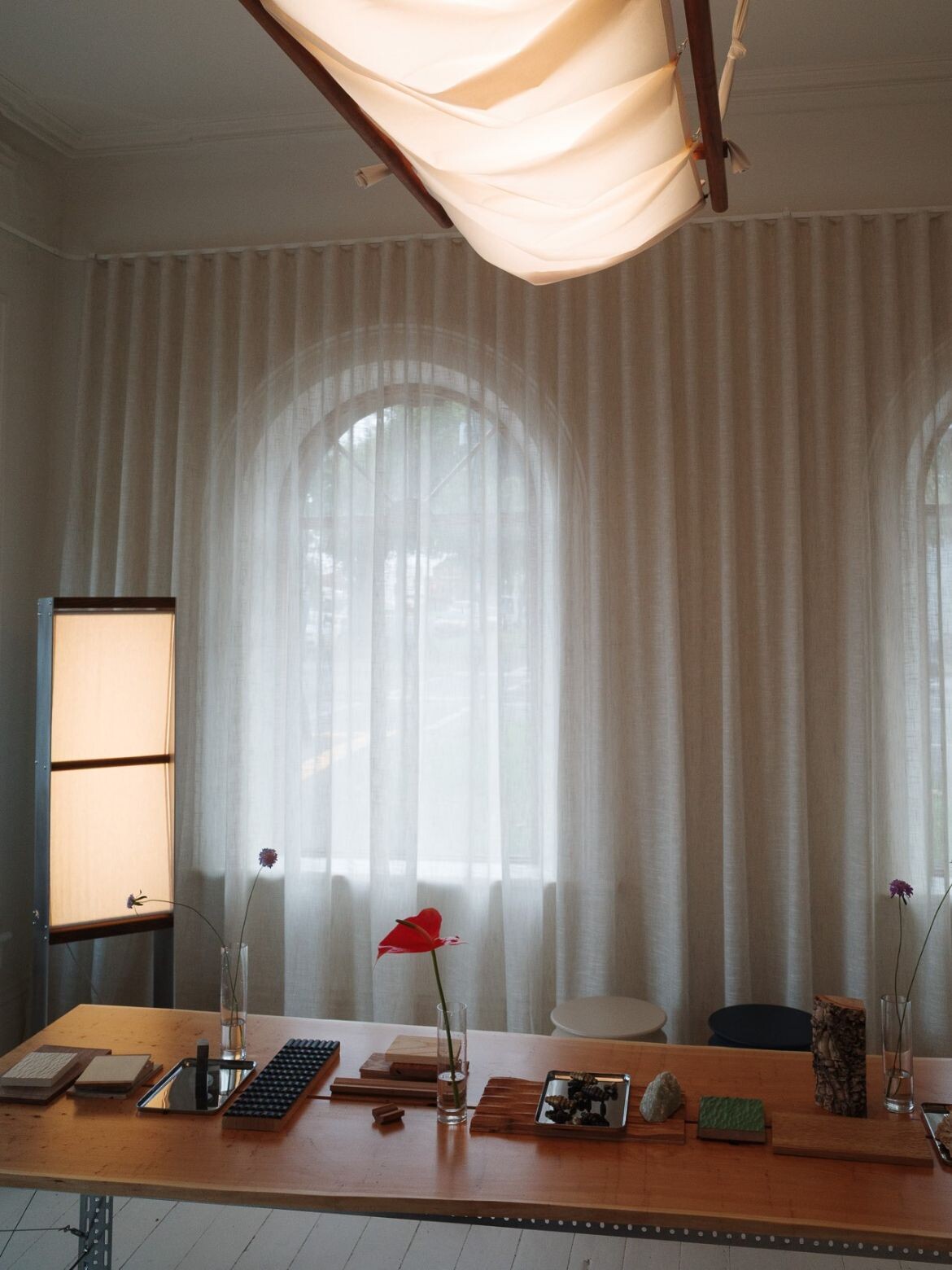
Effectively, he is creating as an artist and as is becoming increasingly clear, it is an artform that is appreciated, with architects and interior designers including BVN, Golden and Annabel Kerr Interior Design specifying regularly. “Making things for the industry gives people a look to my work, its unique personality. And then people come to me and say, ‘I like what you did there. Could you do that for us in this setting?’ Hopefully I have somewhat of a unique voice, which is always what I wanted. I mean, in a very selfish way my business model is loosely to make what I like and hopefully other people will too.”
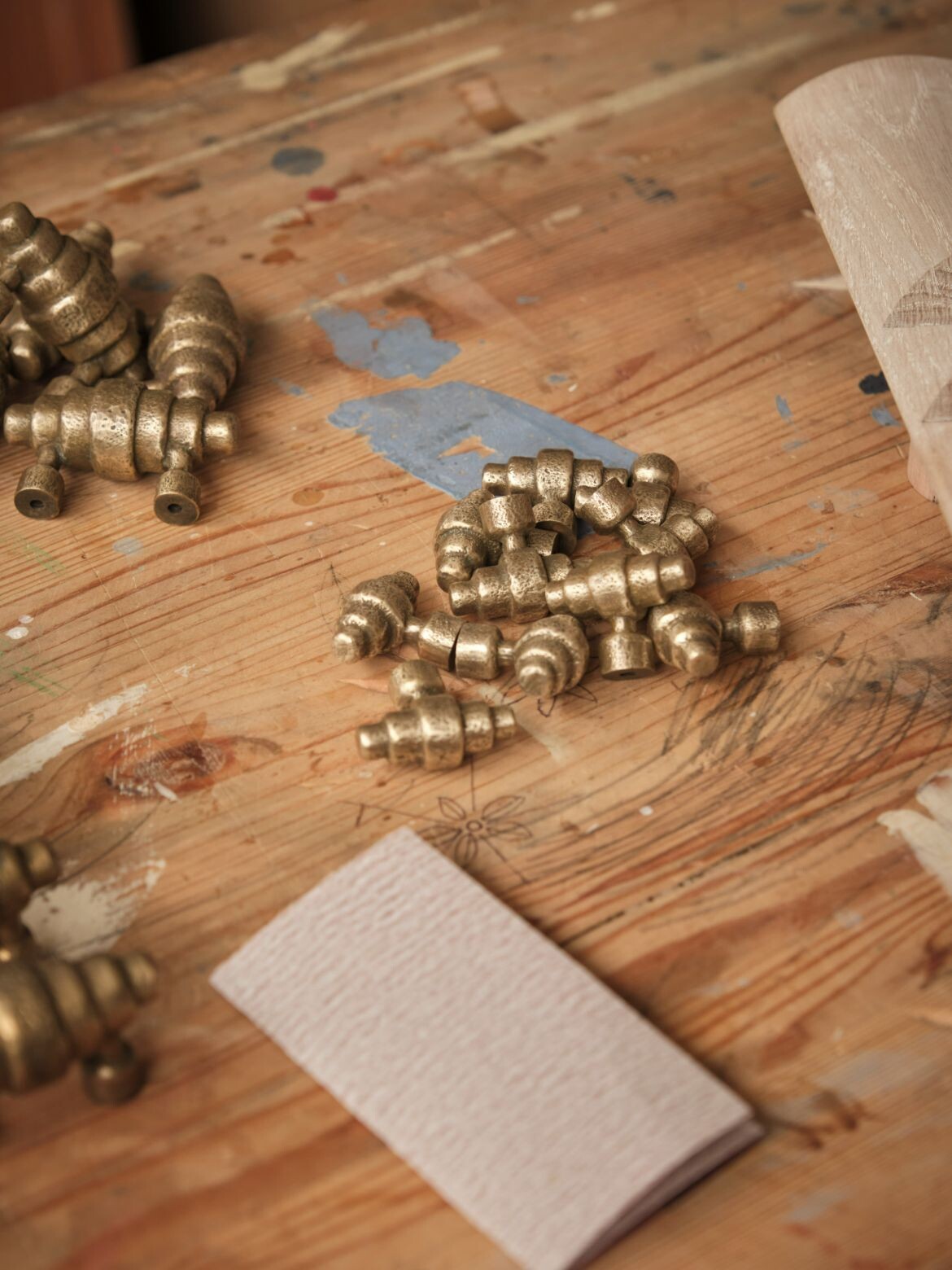
For Annabel Kerr Interior Design, Frankel was approached to design a piece for one of her first Viktoria & Woods stores. “I started the business four or five years ago and Annabelle commissioned me to make a few furniture pieces. And then every year they’ve opened up three or four more stores, and every year she commissions me to make more. This year I’m making the point of sale displays like the big counters, as well as the loose furniture and the bronze cabinet handles and the bronze front door handles,” says Frankel.
For BVN, the uniqueness of Frankel’s work is bringing a particular artisan quality to workspaces as the mood shifts from corporate to an inviting environment of tactile and earthy elements. Frankel explains further: “I wondered why people were commissioning me to make work for office fit-outs when my work isn’t very office, it’s more sculptural. It’s often really heavy and not commercial finishes usually. It was pretty surprising to me. And then I realised that designers want to put in things that make it warmer and more human. There’s the hand of the maker. And that’s what I’m interested in, not these perfect objects.”
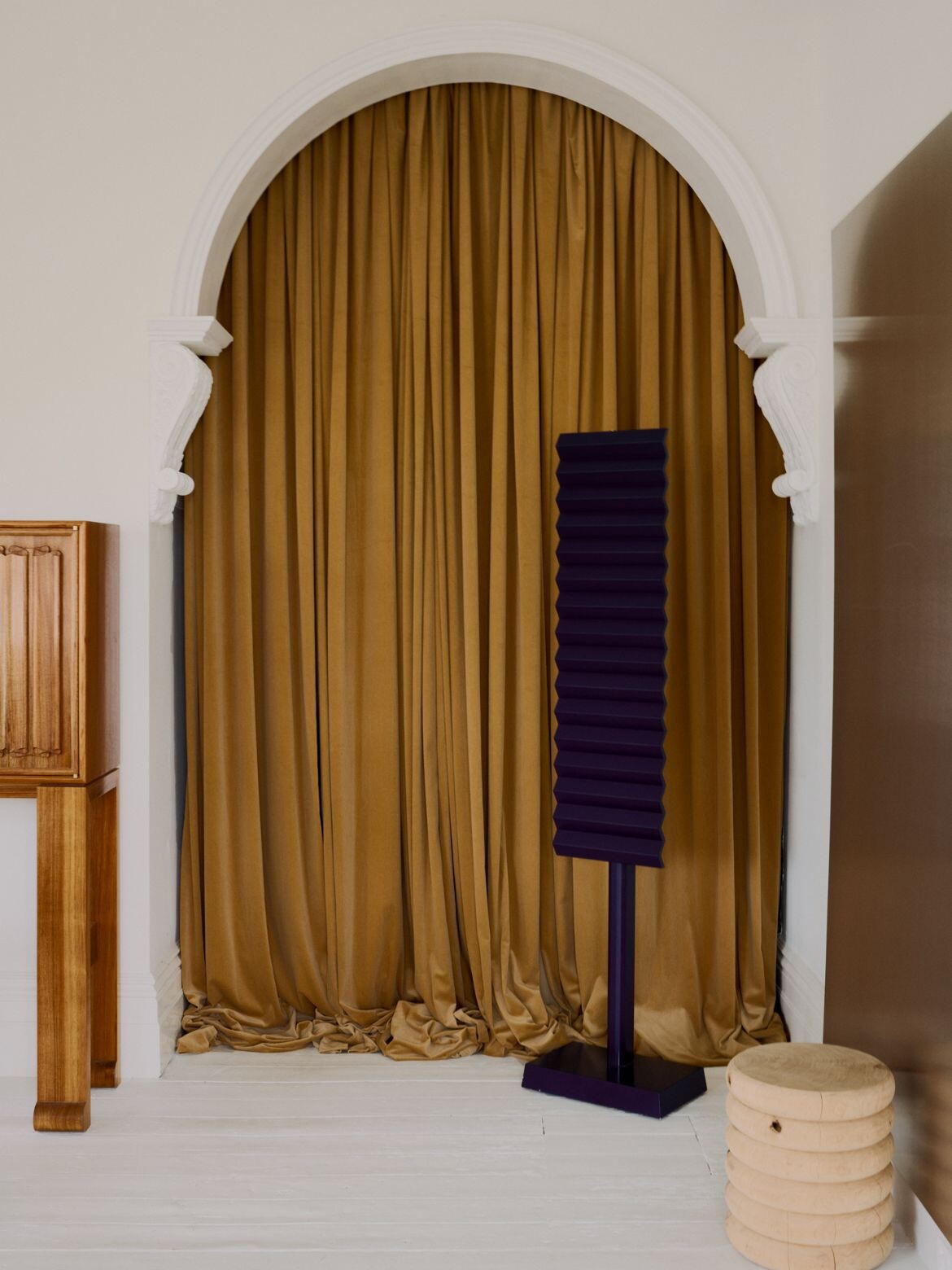
Explaining his practice as the sum of three parts, there is the range of products which can be ordered from the website or studio; there are bespoke pieces that are specified across materiality and size; and then there are the exhibition pieces. “I enjoy the process of making something that can be used as a product and commission work, but always making one-off pieces can have its own challenges. So, the idea was they would feed into each other. It works for me as far as it’s interesting for me, so it keeps me motivated and I enjoy my job.”
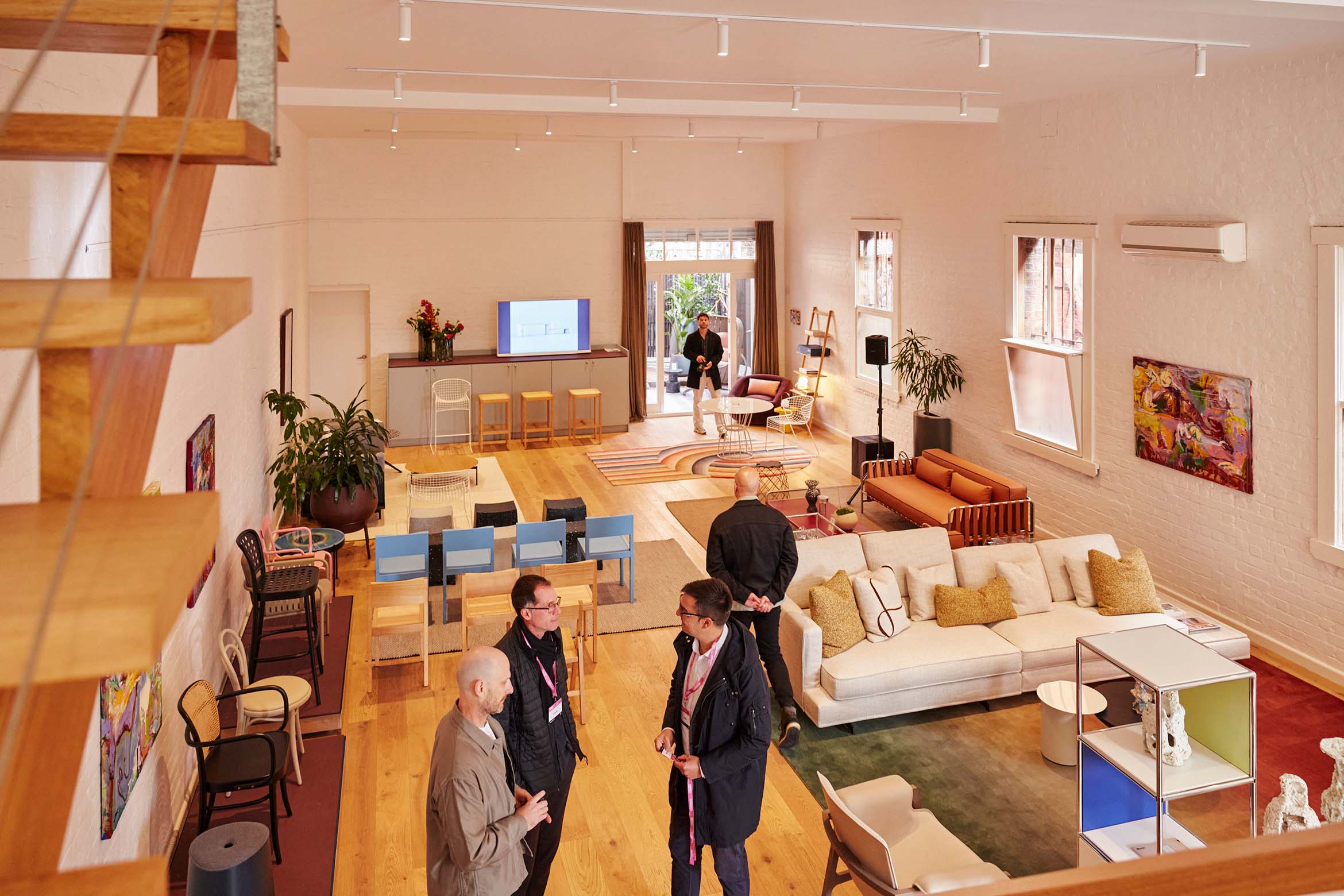
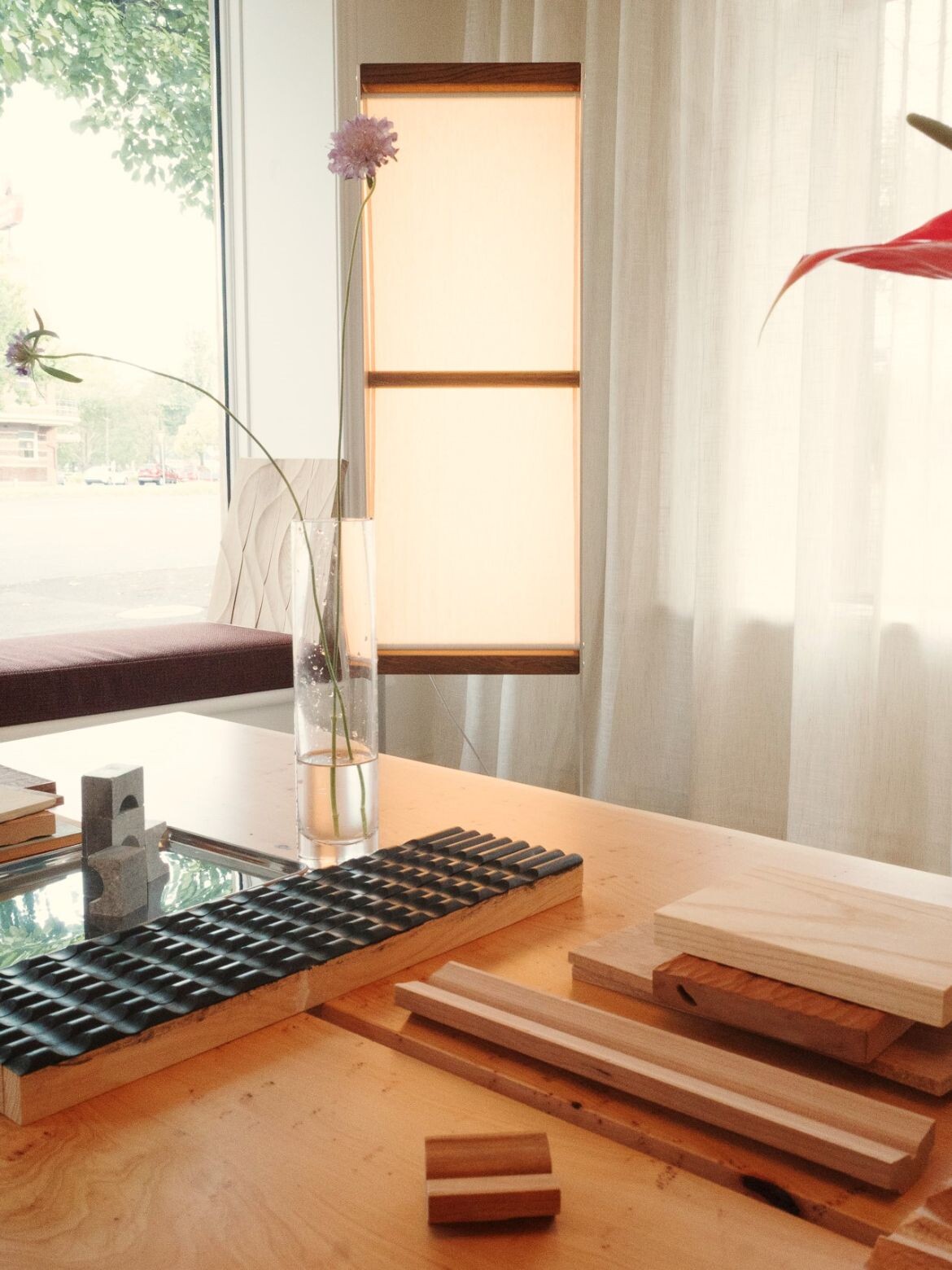
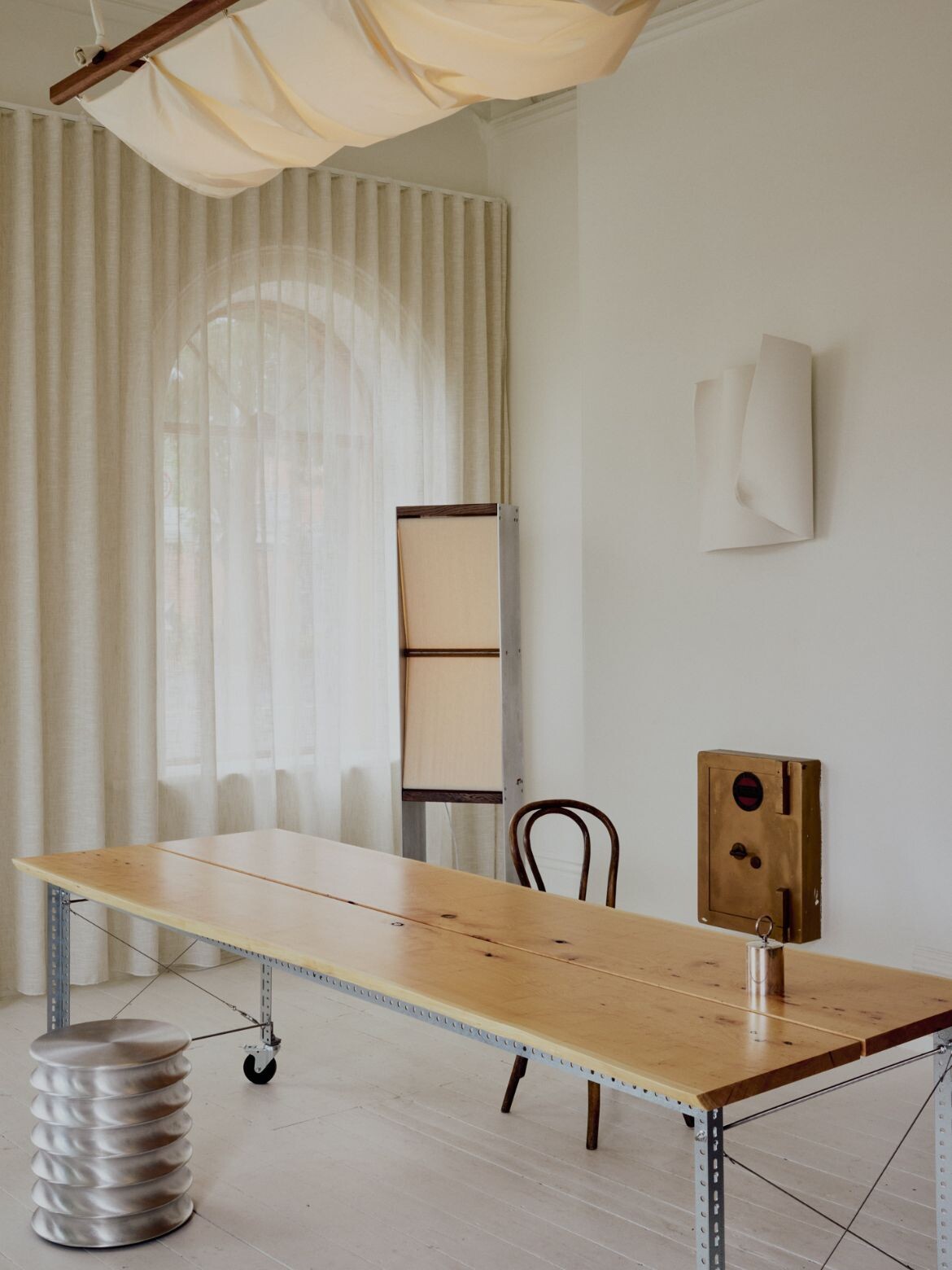
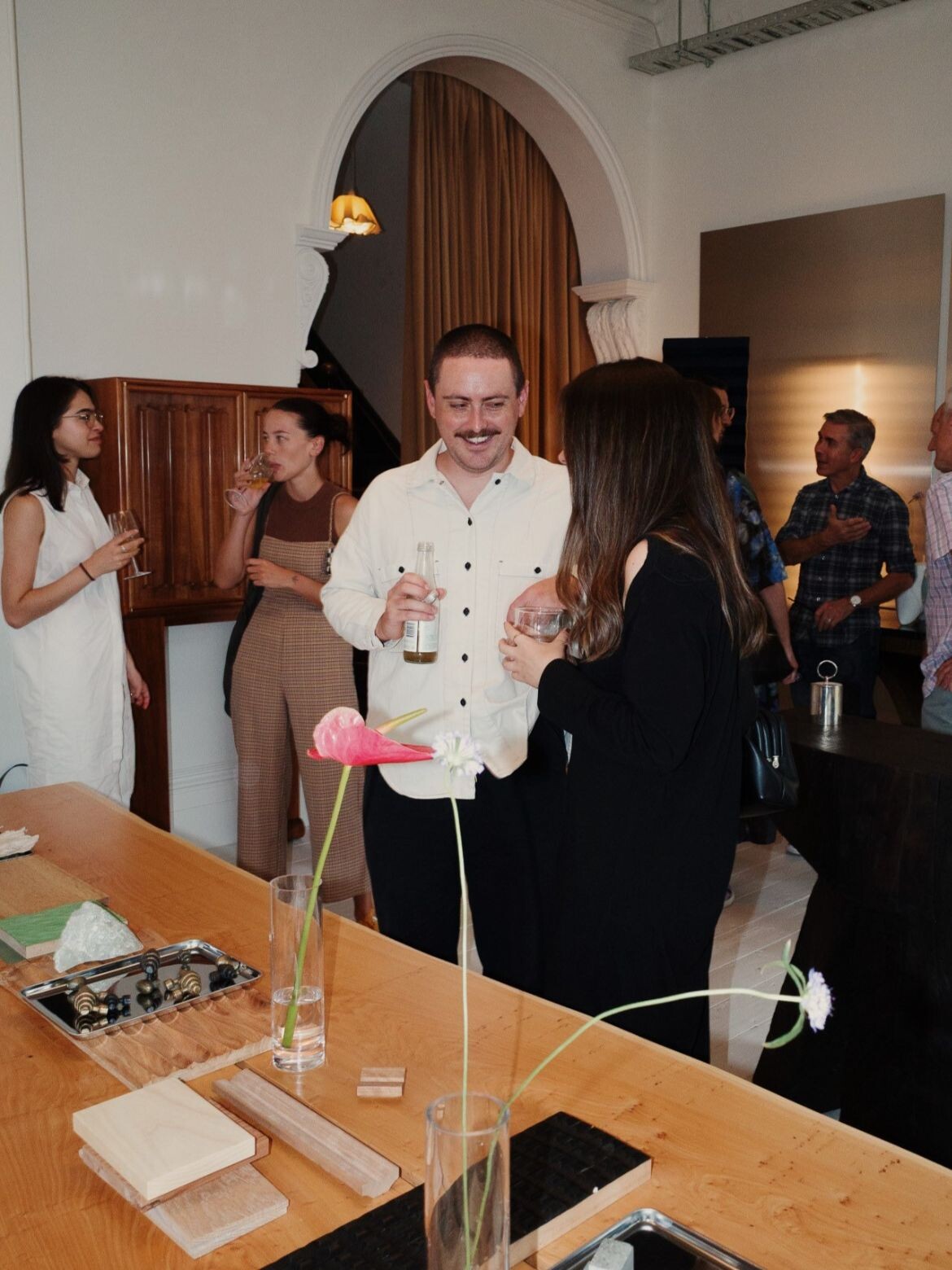
The new studio effectively answers this need with ample space for designing and making. As Frankel describes it, the studio is a work in progress and will operate as its evolution determines. Currently by appointment only, the studio could shift to include open days, and as a ground level corner space is perfect for events and exhibitions, pop-up restaurants or anything else his creative mind turns to.
Zachary Frankel
zacharyfrankel.com
Photography
Madeline Burke, Justyn Burrows (launch event), Peter Ryle (showroom)
INDESIGN is on instagram
Follow @indesignlive
A searchable and comprehensive guide for specifying leading products and their suppliers
Keep up to date with the latest and greatest from our industry BFF's!
The internet never sleeps! Here's the stuff you might have missed