The home of architecture and design in the Asia-Pacific
Get the latest design news direct to your inbox!

Get the latest design news direct to your inbox!
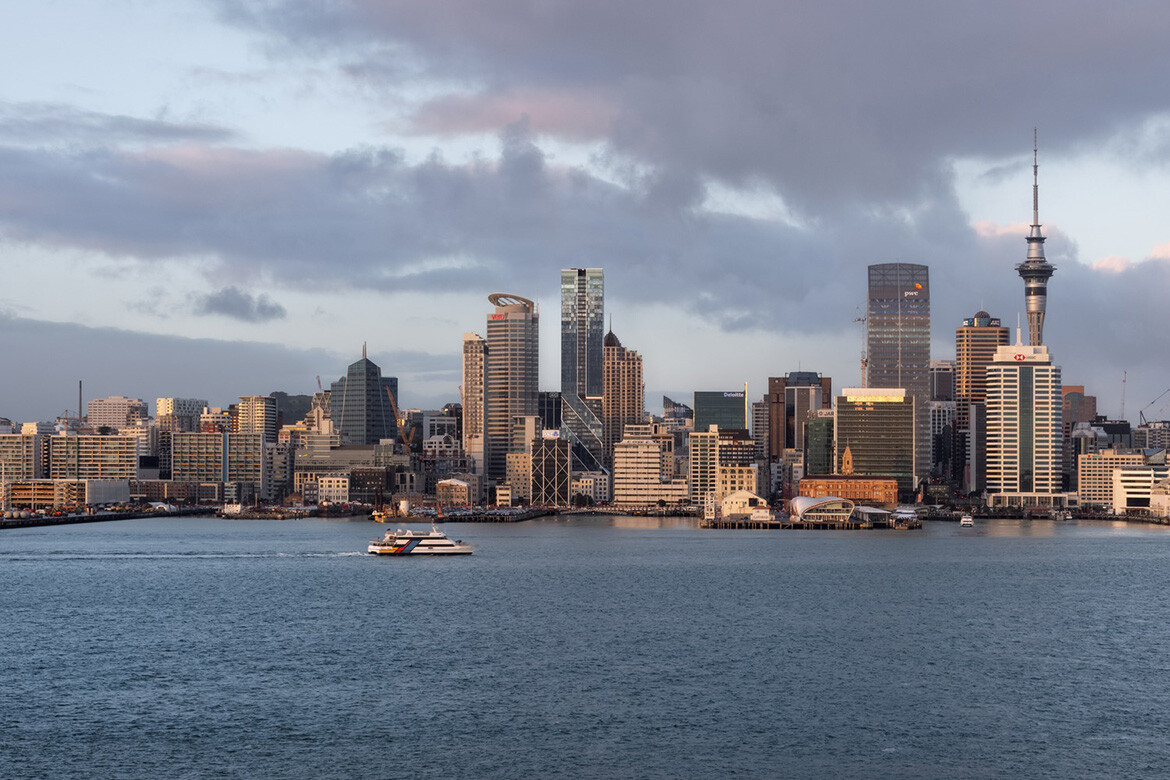
Designed by Plus Studio for Hengyi, The Pacifica reveals how climate-aware design, shared amenity and ground-plane thinking can reshape vertical living in Auckland.
February 6th, 2026
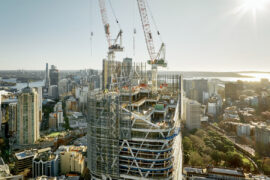
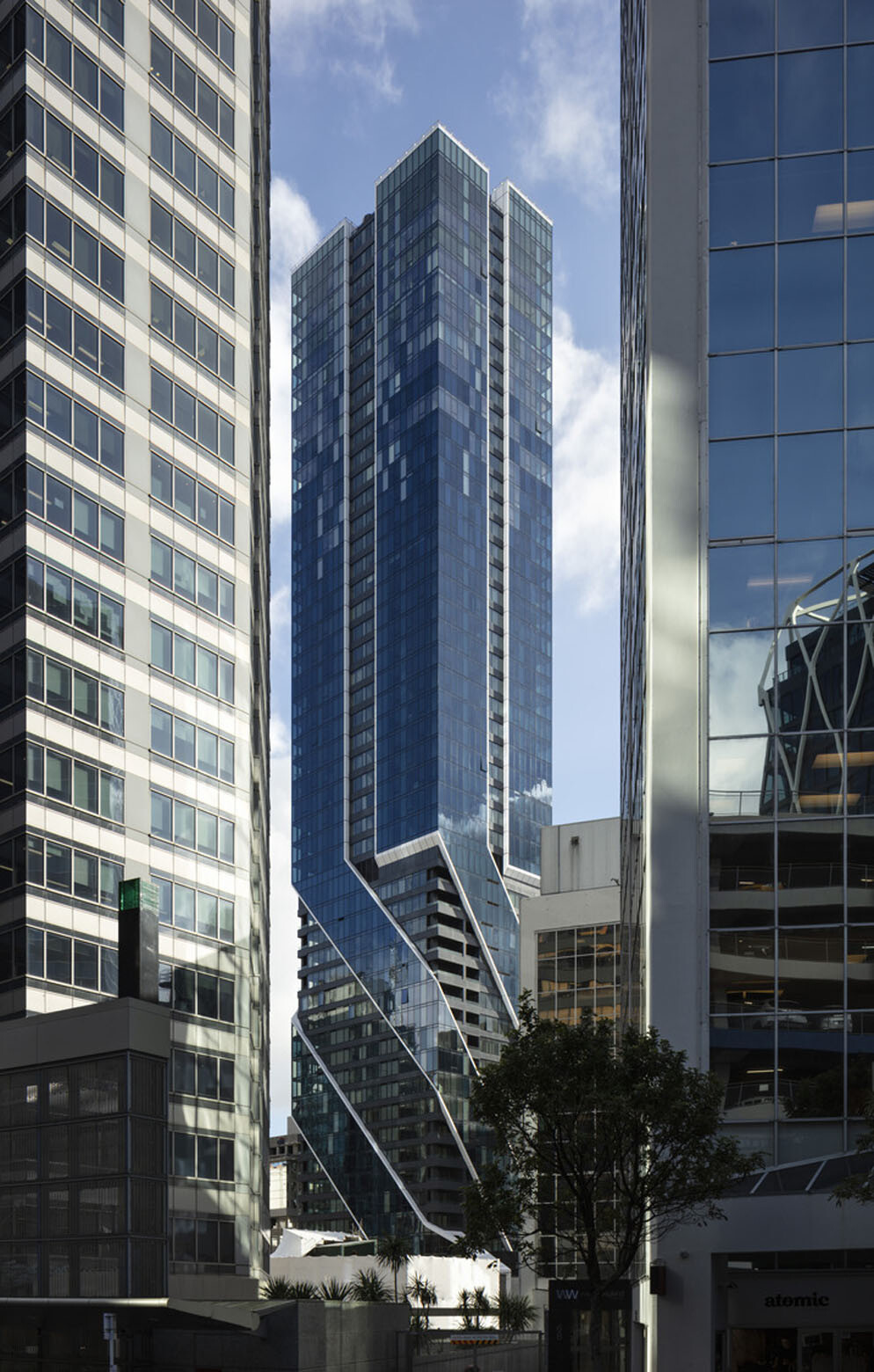
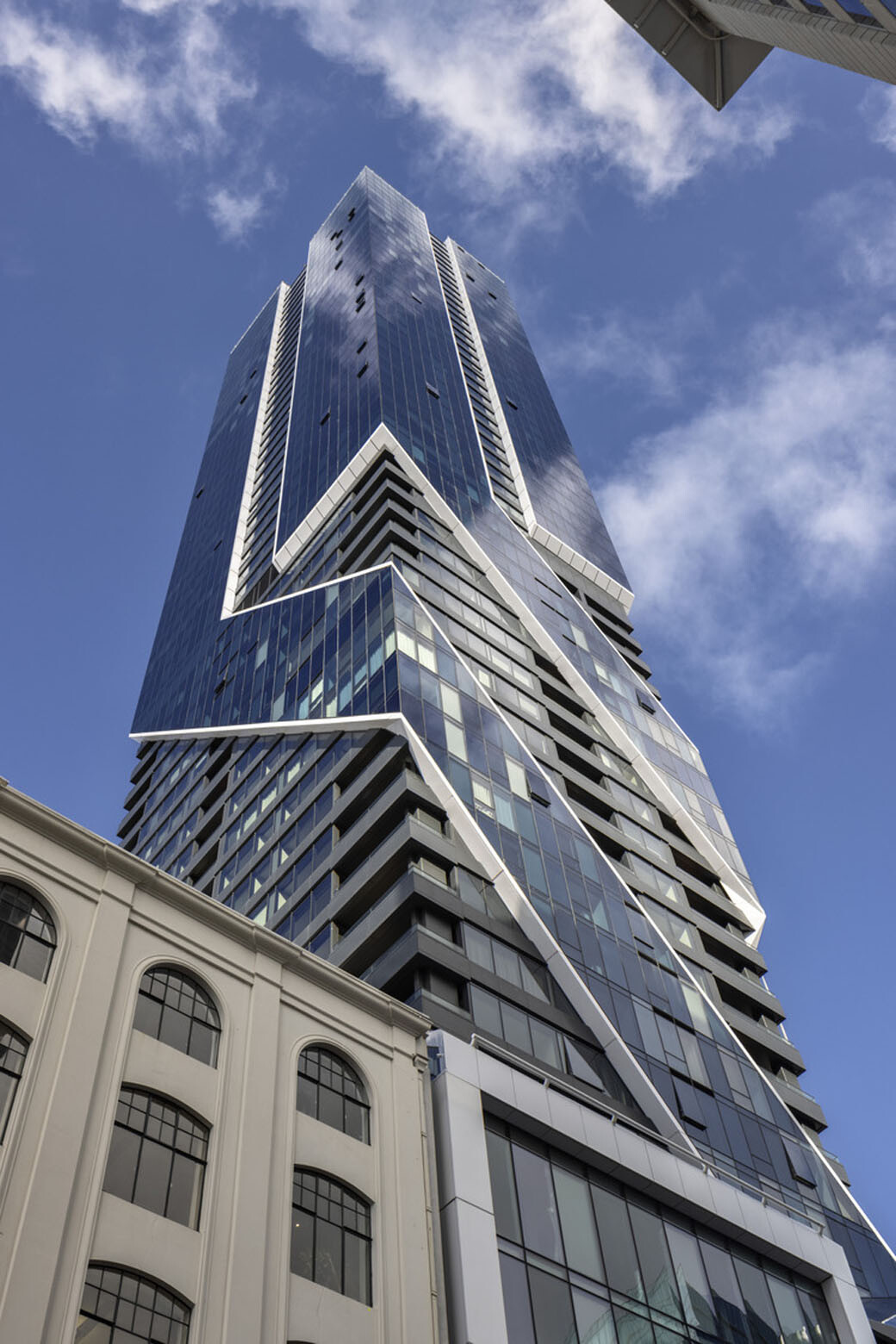
Five years after its completion, The Pacifica continues to shape conversations about density, liveability and tall residential design in Aotearoa New Zealand. Designed by Plus Studio for developer Hengyi, the 178-metre tower remains the country’s tallest building, but its significance lies less in its height than in what it has revealed about how vertical living can work in an Auckland context.
From the outset, The Pacifica was conceived as a test case rather than a trophy project. Located one block back from the Waitematā Harbour near Britomart, the tower set out to explore how climate-aware design, community infrastructure and long-term liveability could coexist within a high-density model. Five years on, with consistently strong occupancy and demand, the project has provided valuable feedback for the design team on what endures and what meaningfully contributes to city life.
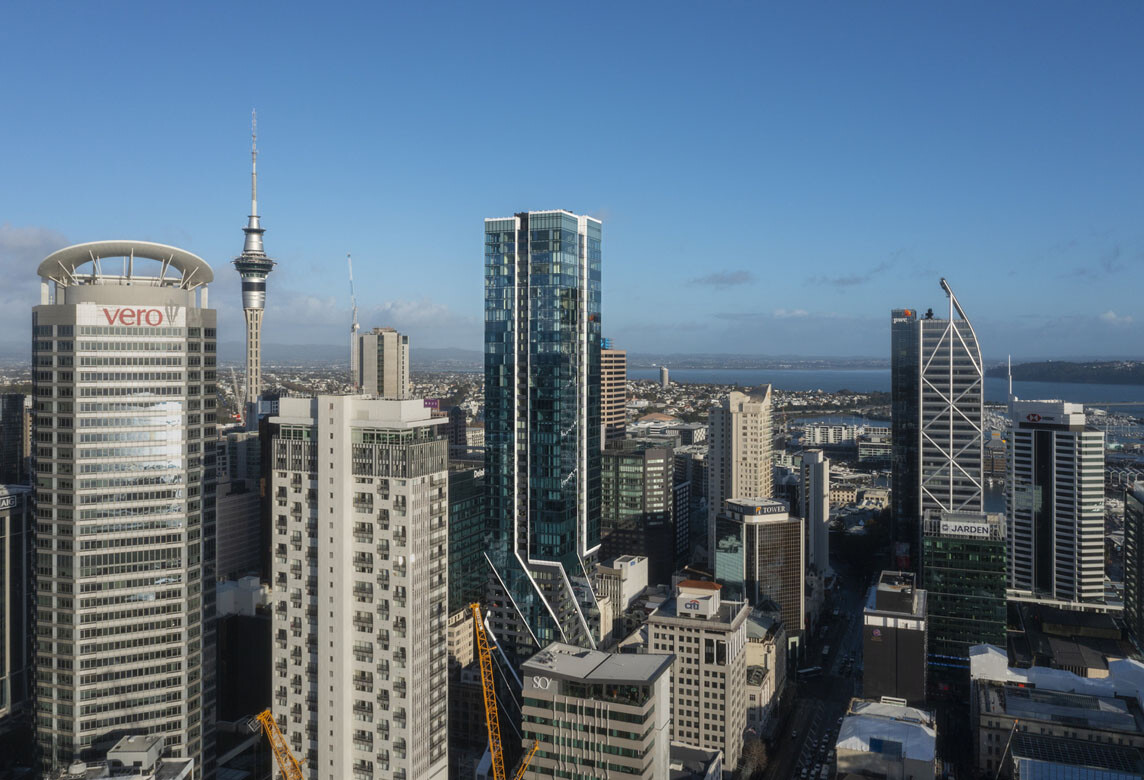
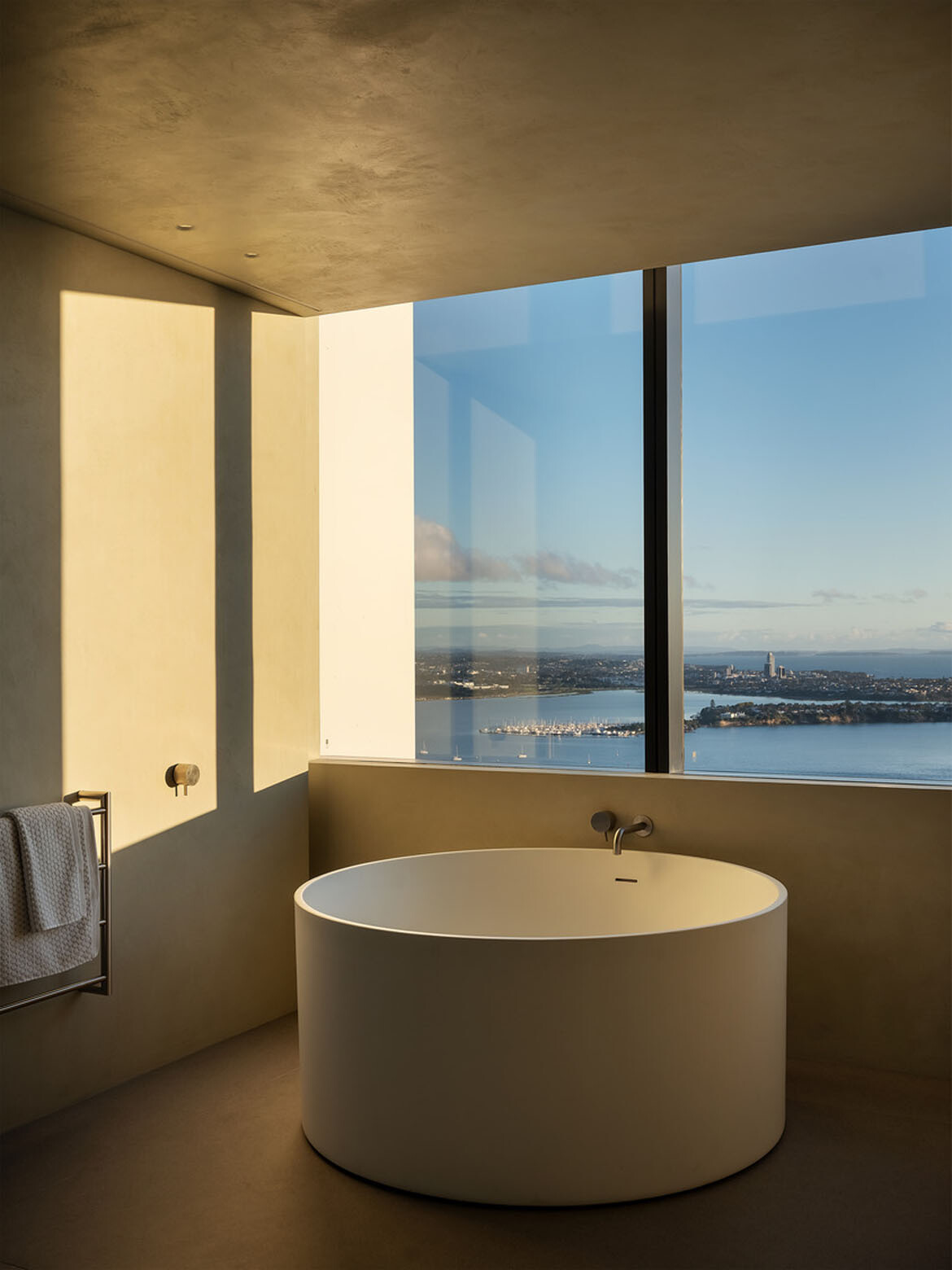
One of the clearest lessons has been the importance of prioritising quality and amenity over maximising yield. The Pacifica confirmed that resistance to density in New Zealand is less about height and more about poor design. Decisions such as incorporating enclosed winter gardens reduced net apartment area but created flexible, weather-resilient spaces that support everyday living. A generous suite of shared amenities further reinforced the idea that long-term comfort and wellbeing should guide design decisions, rather than short-term efficiency alone.
Another enduring insight relates to the role of the ground plane. While The Pacifica’s twisting form is a recognisable feature on the skyline, its success is equally tied to what happens at street level. The project treats the ground plane as civic infrastructure, extending Auckland’s laneway culture through the site via an active podium and through-link. Rather than maximising commercial frontage, the design prioritised permeability and connection, embedding the tower into the surrounding warehouse fabric and public realm.
Related: Rodd & Gunn reimagined
Structurally, the project challenged conventional high-rise solutions. A constrained CBD site, reclaimed land and a high water table made a traditional basement approach inefficient and risky. Instead, parking was lifted into the podium and wrapped with commercial uses, supported by a perimeter mega-column structure and post-tensioned slabs. These strategies accelerated construction while expanding local expertise in complex high-rise delivery. Importantly, they demonstrated how constraints can prompt more intelligent and adaptable solutions rather than limit ambition.
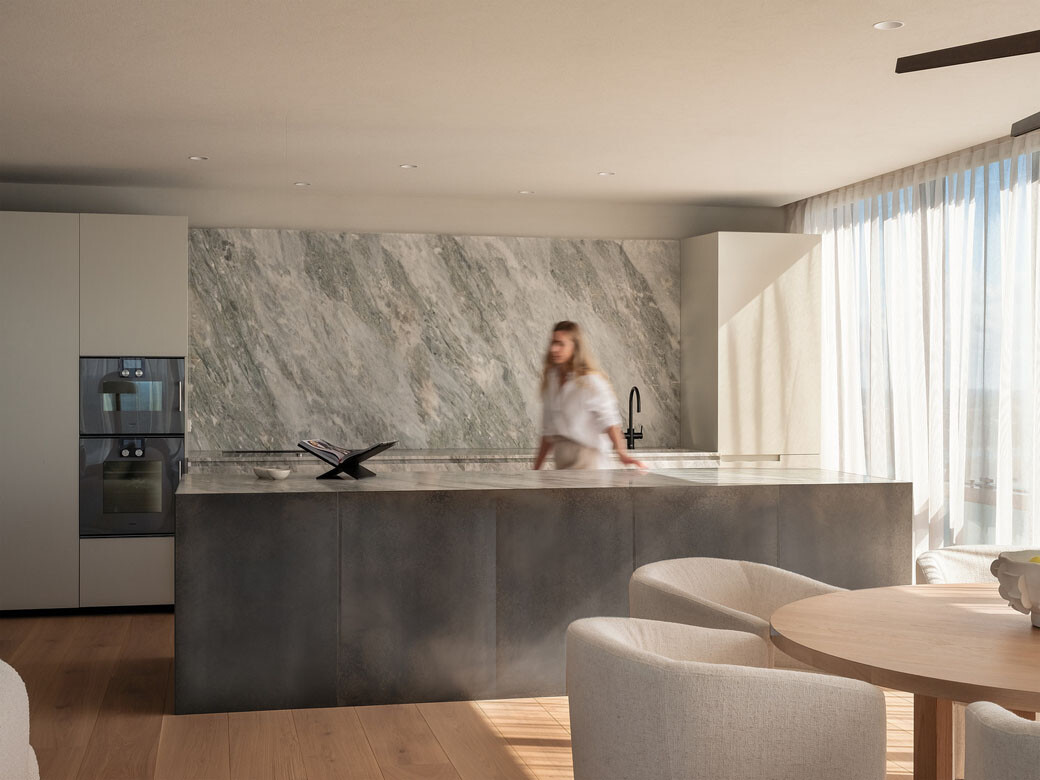
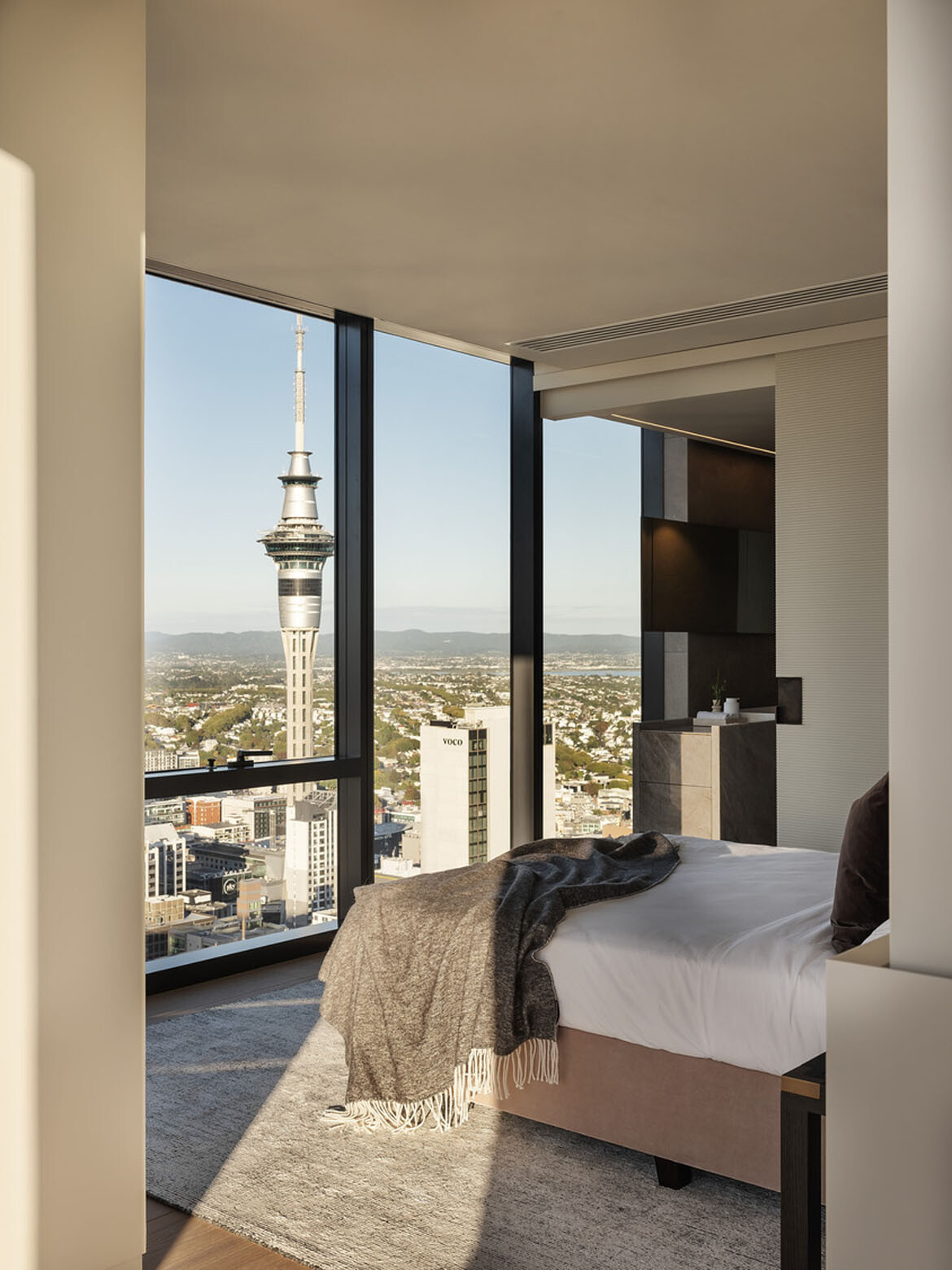
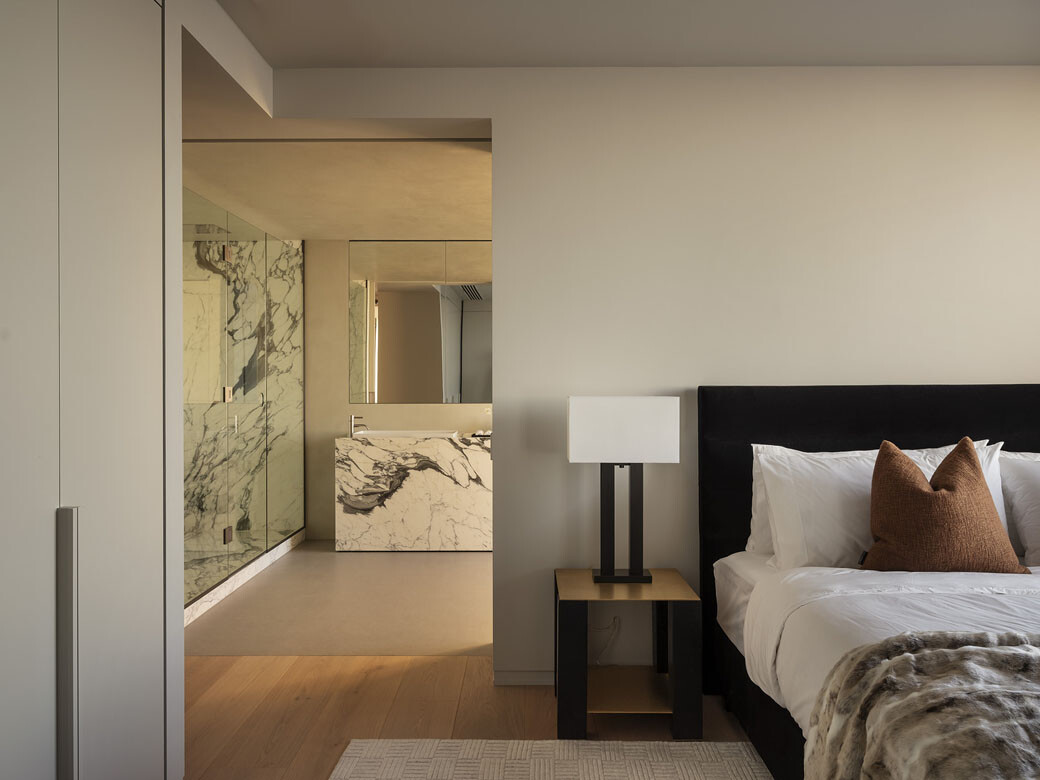
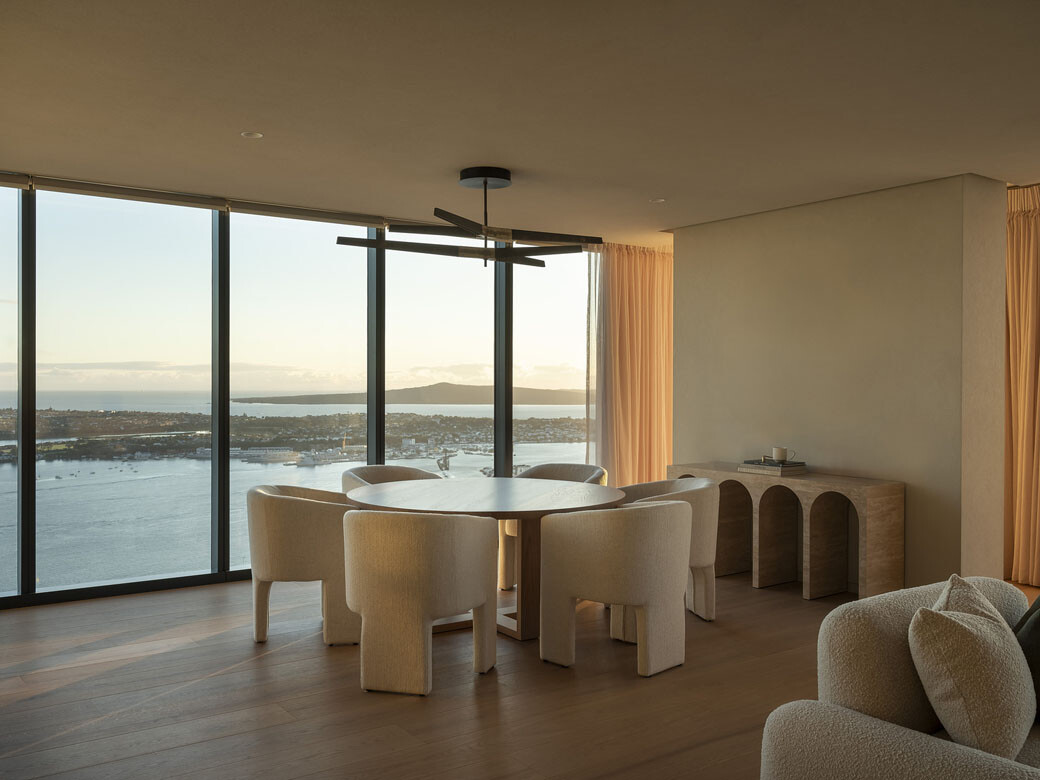
The Pacifica also underscored the value of deeply embedded collaboration. Interiors and apartments were developed through close coordination between Plus Studio’s Melbourne and Auckland teams, alongside local makers and suppliers. This trans-city dialogue sharpened responses to light, climate and material culture, helping the project avoid a generic high-rise aesthetic. Darker timbers, natural materials and narrow-framed glazing respond directly to Auckland’s atmospheric conditions, while winter gardens act as adaptable thresholds between inside and out.
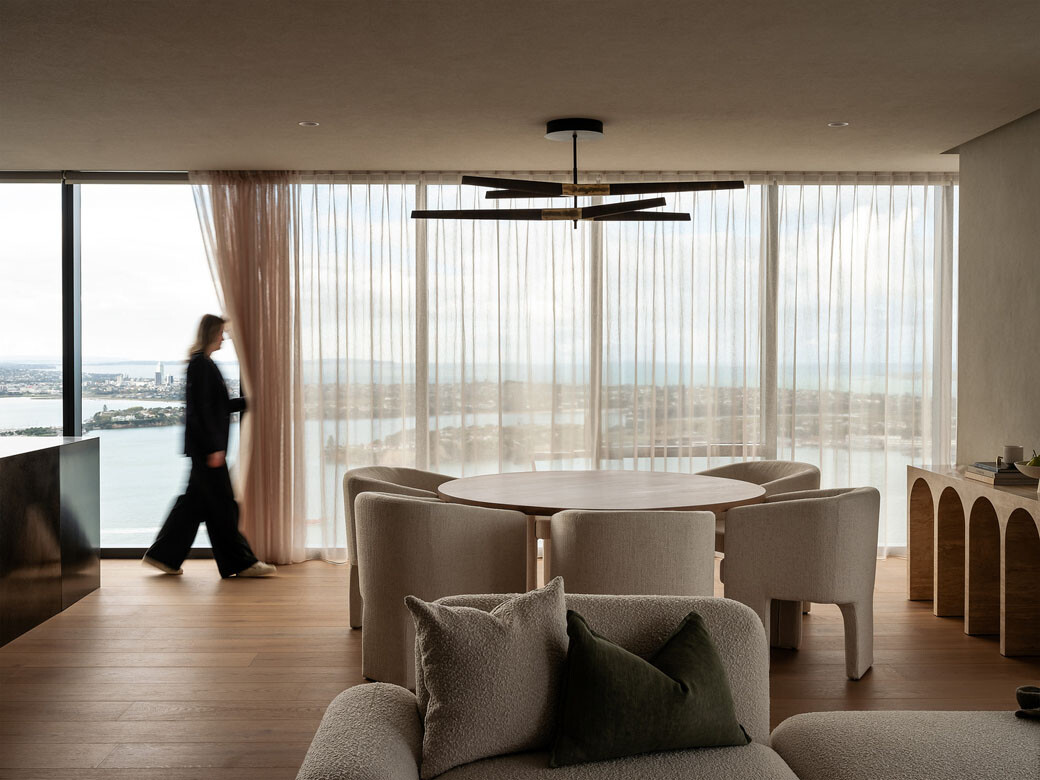
Perhaps most significantly, The Pacifica established a genuine trans-Tasman feedback loop. While it has helped normalise vertical living in Auckland, its influence has also flowed back into Plus Studio’s Australian work. Ideas around vertical communities, amenity placement and climate-responsive design have informed subsequent projects, reinforcing the notion that lessons in density are not location-specific but transferable when grounded in lived experience.
Five years on, The Pacifica’s value lies in what it continues to teach. It suggests that tall residential buildings can be climate-aware, contextually specific and genuinely desirable when conceived as long-term communities rather than isolated objects. In that sense, The Pacifica remains relevant not simply as a landmark, but as evidence of how cities on both sides of the Tasman might approach density with greater care, intelligence and ambition.
Plus Studio
plusstudio.co
Hengyi
hengyi.com.au
Photography
Courtesy of Plus Studio



INDESIGN is on instagram
Follow @indesignlive
A searchable and comprehensive guide for specifying leading products and their suppliers
Keep up to date with the latest and greatest from our industry BFF's!
The internet never sleeps! Here's the stuff you might have missed