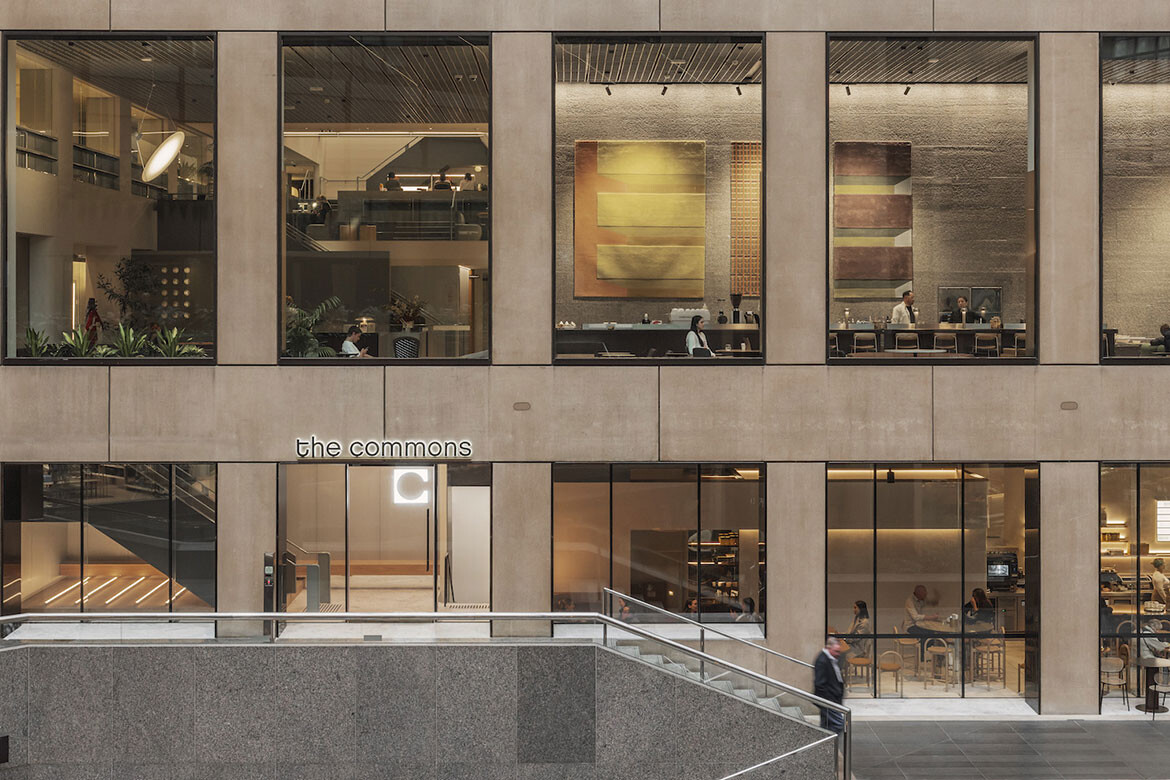
The Commons has opened two new coworking locations at Martin Place in Sydney and Collins Street in Melbourne, continuing the brand’s expansion into centrally located, design-led workplaces. Designed by DesignOffice, both projects reflect a broader shift in office culture, where hospitality spaces play a central role in how people move through the workday.
The hospitality spaces act as an antidote to overly prescriptive office environments, offering flexibility, informality and enjoyment throughout the day. Rather than positioning cafés and bars as secondary amenities, the new locations treat them as spatial anchors. These are workplaces organised around shared spaces that encourage informal meetings, moments of pause and social connection, responding to growing demand for flexible “third spaces” that sit somewhere between home and the traditional office.
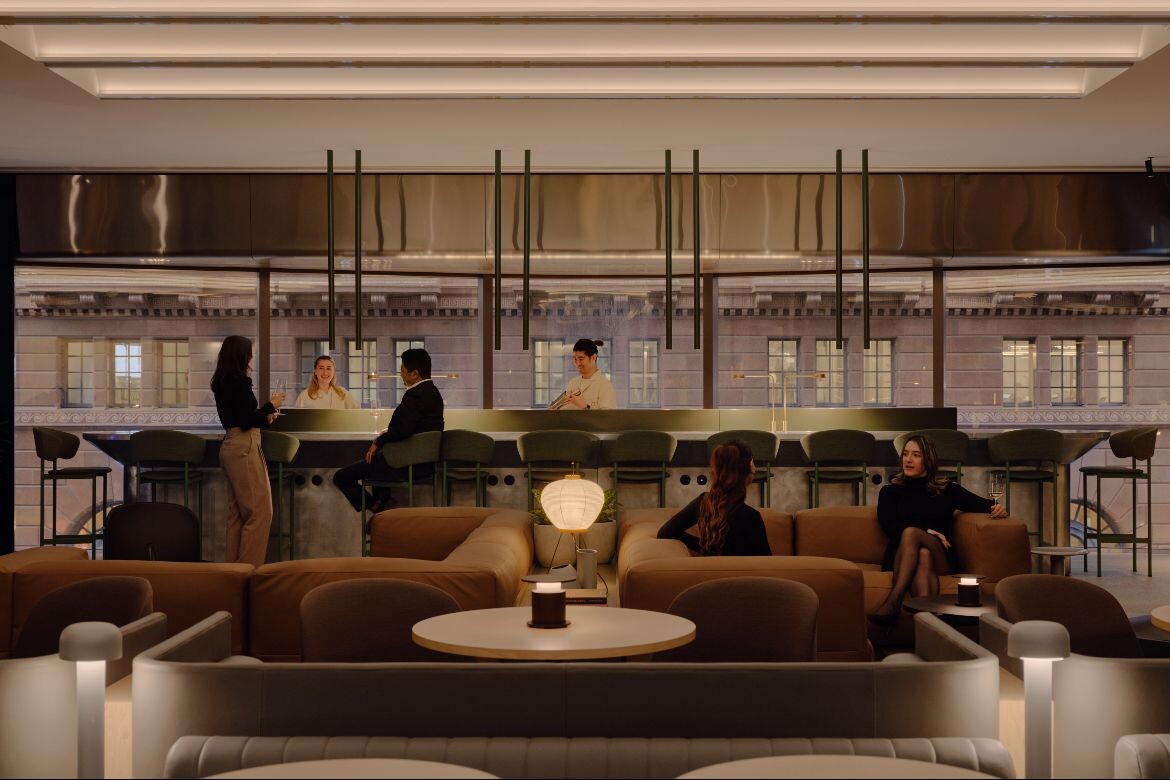
“Our vision has always been to create spaces where our members feel inspired and connected,” said Cliff Ho, Co-Founder and CEO of The Commons. “Hospitality plays a vital role in how people work today. The workplace is no longer just about desks, but it’s about community and belonging. These new spaces embody this, providing the freedom to move easily between focus and connection, and encourage members to feel more energised and socially supported.”
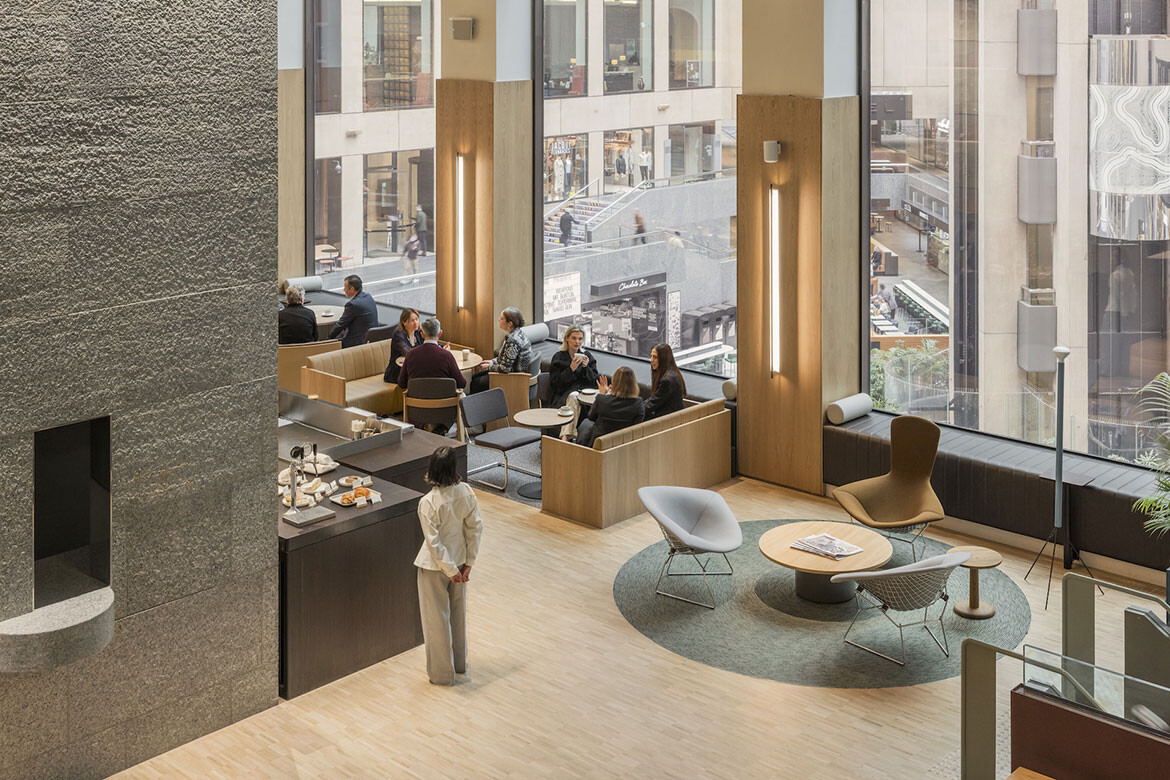
At Martin Place, the hospitality area extends directly from the building lobby, blurring the boundary between public and private space. A zinc-wrapped bar forms the centre of the plan, paired with a reflective ceiling that tracks changing light conditions throughout the day. The space is designed to shift in tone as the day unfolds: open and casual in the morning, then more intimate in the evening as lighting softens and joinery elements reveal concealed bar functions behind sliding smoked-oak panels.
Related: Inside the quiet beauty of Setouchi Retreat Aonagi on Shikoku
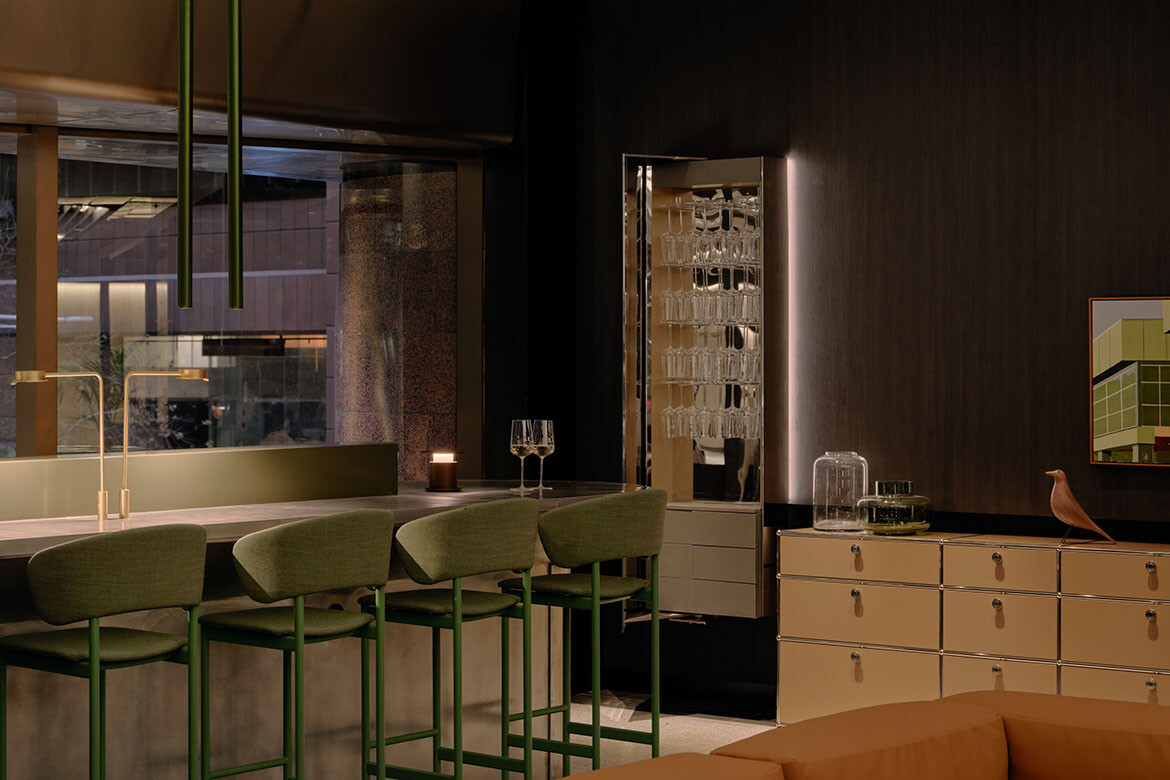
These moments of transformation are not decorative gestures but functional ones, allowing the space to move seamlessly between café, meeting zone and evening venue. The design reflects how members increasingly expect workplaces to accommodate different modes of work without requiring a change of location.
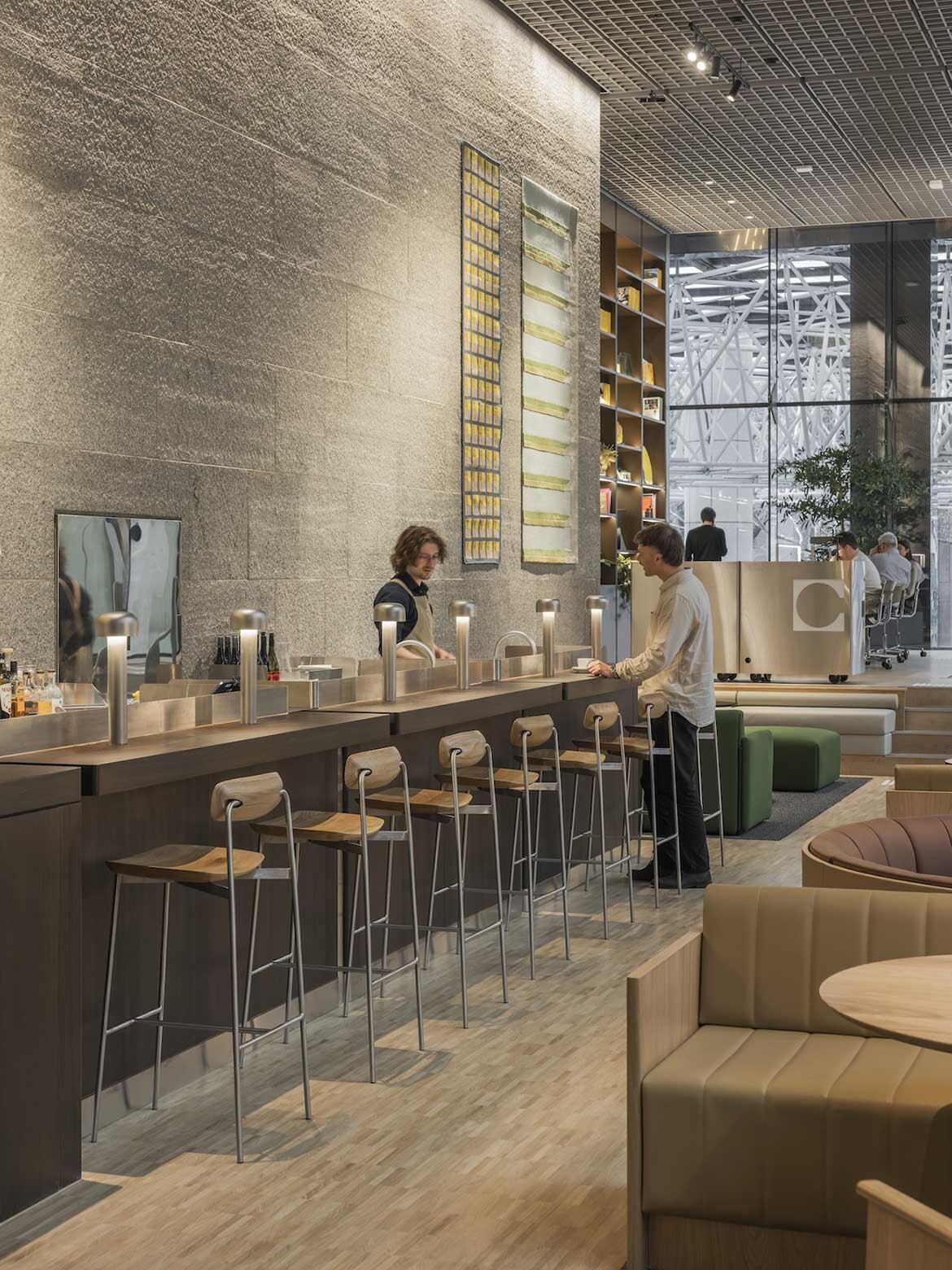
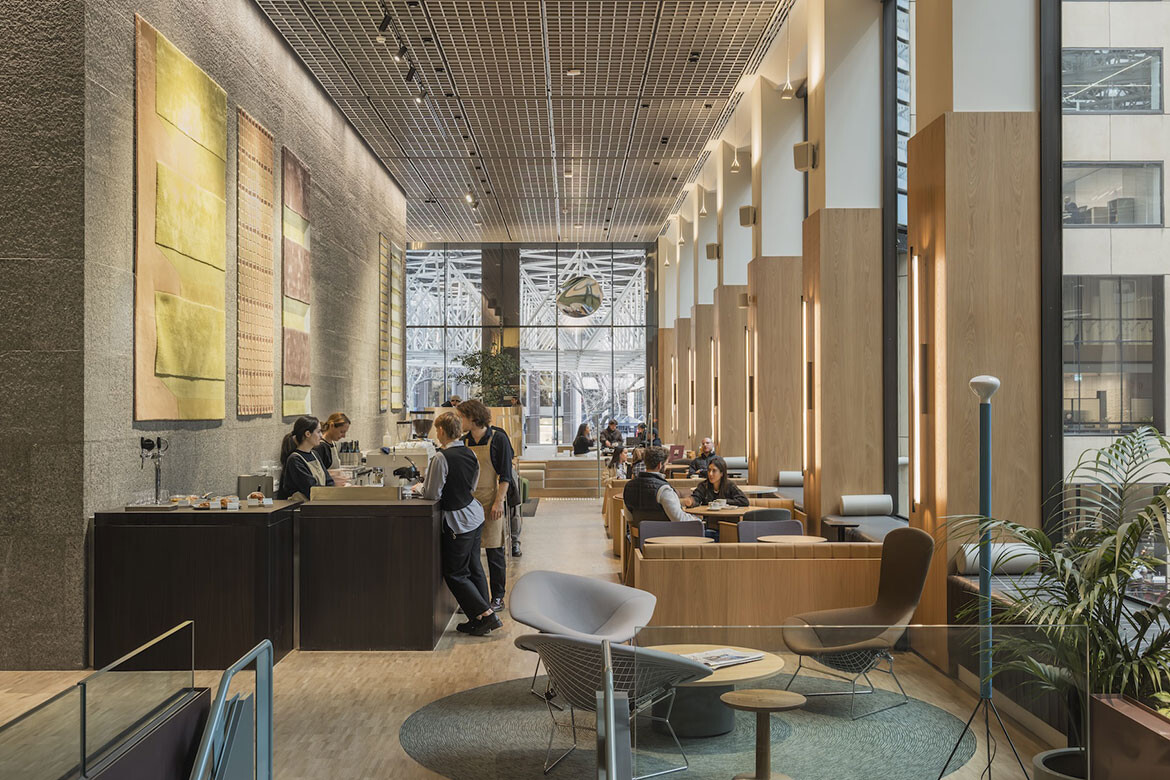
Melbourne’s Collins Street location occupies the granite-lined lobby of I.M. Pei’s Collins Place, where DesignOffice has introduced a more subdued material palette to counter the building’s monumental scale. Smoked oak counters, parquet flooring and custom wall hangings establish a quieter, more domestic atmosphere, positioning the café-bar as a place to meet clients, host events or work independently throughout the day.
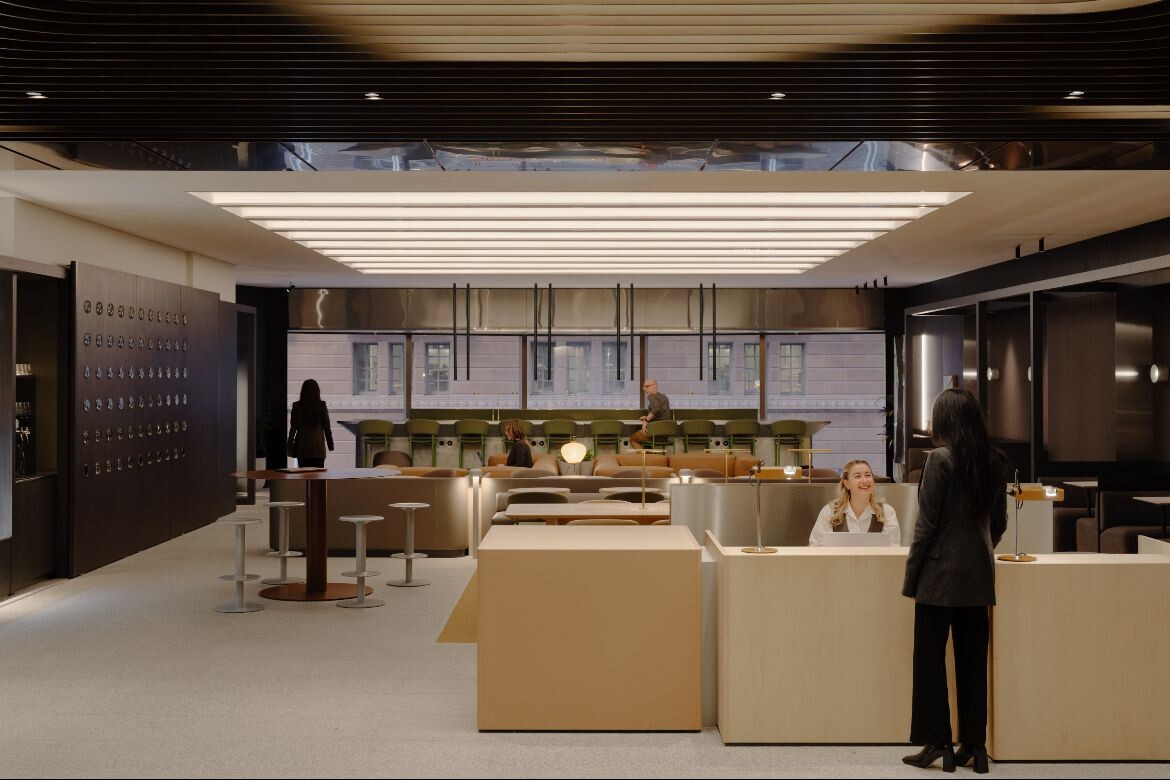
Reflecting on the design intent, DesignOffice’s Co-Founder Mark Simpson said: “Our approach was shaped by daily rhythms of members and their guests. We wanted to create places that support the full flow of the day, where someone might pause for a coffee, gather with colleagues or settle in for focused work.”
Damien Mulvihill, Co-Founder at DesignOffice added: “Both locations offer a range of layered settings including booths, tables and lounges that function as zones for both focussed work and casual meetings during daylight hours, and transition into hospitality areas later in the day.”
What emerges across both projects is a recalibration of workplace priorities. Rather than asking people to return to offices through mandates or rigid layouts, The Commons leans on spatial quality and service as the incentive. These environments prioritise experience over prescription, acknowledging that productivity today is closely tied to comfort, autonomy and social connection. With member programming, including creative workshops, meditation and social events from Halloween parties to cocktail soirées, these experiences reinforce the design intent and ensure every element actively contributes to productivity and wellbeing.
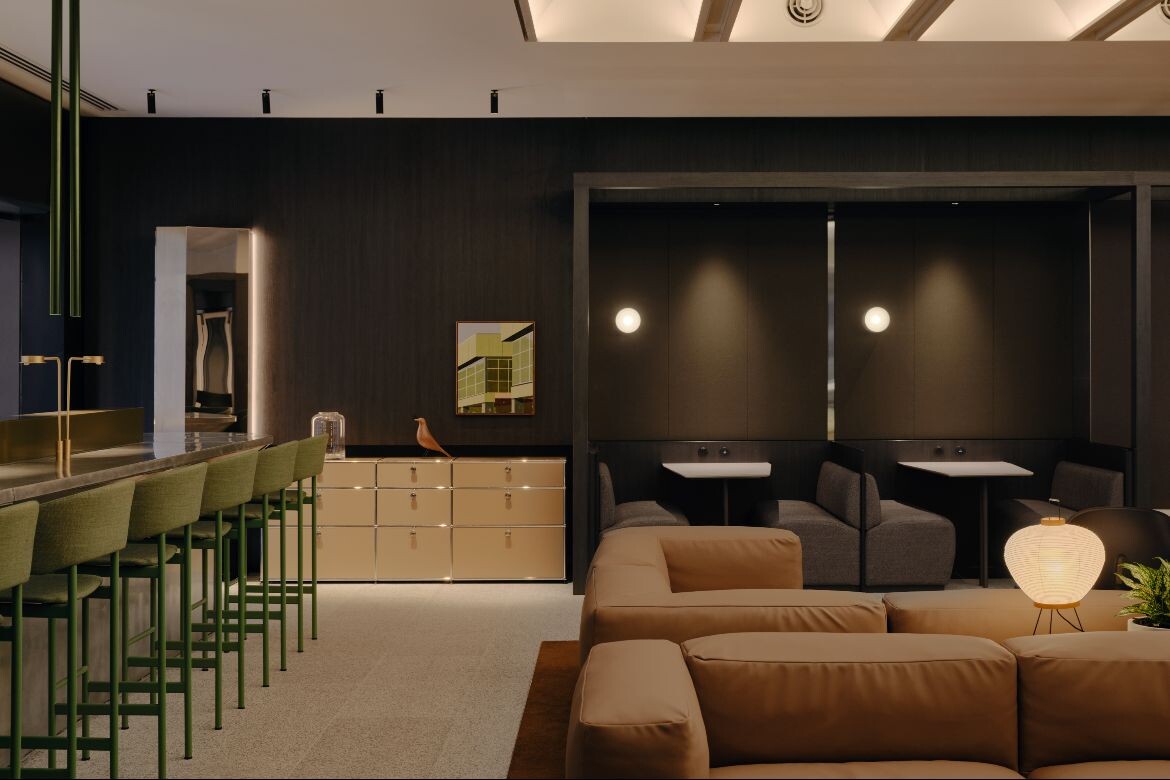
The opening of Martin Place and Collins Street represents a broader shift in how people experience work. By creating common areas that feel closer to a bar, cafe or lobby, the design encourages moments of connection while still supporting professional work. For The Commons, this approach reflects their community-driven ethos – hospitality as a natural extension of the culture, the workplace as a social and cultural environment, where design supports not just how people work, but how they gather, pause and belong.
DesignOffice
designoffice.com.au
Photography
Tom Ross
Sean Fennessy