The home of architecture and design in the Asia-Pacific
Get the latest design news direct to your inbox!

Get the latest design news direct to your inbox!
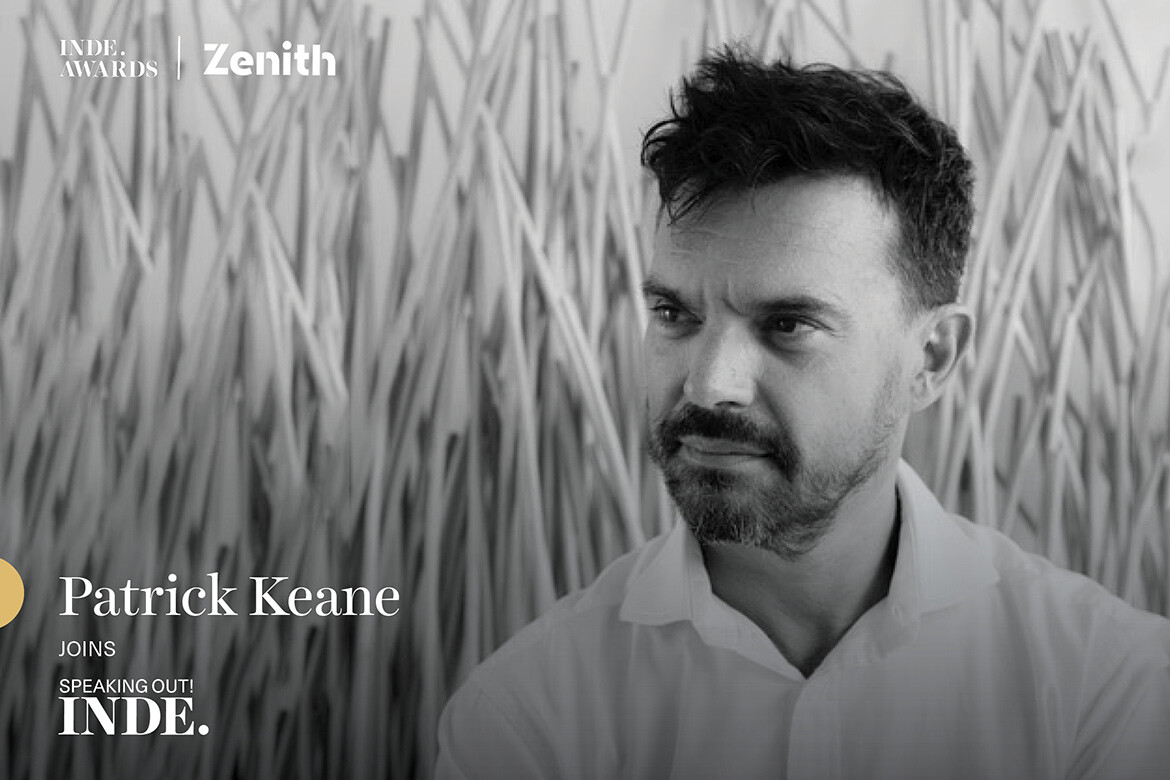
Founder of Enter Projects Asia, Patrick Keane shares the thinking behind his Best of the Best-winning airport interiors, where natural materials and sustainability drive design at scale.
February 6th, 2026
As part of the SpeakingOut! series for the 2026 INDE.Awards, we sit down with past winners, jury members and industry leaders shaping the future of architecture and design across the Indo-Pacific. Proudly supported by Zenith, our INDE.Awards Platinum Partner and category partner for The Best of the Best, the series offers a platform for candid conversations around craft, innovation and impact.
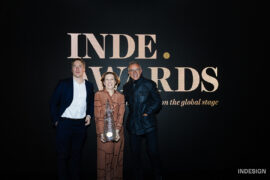
In the first episode of 2026, a milestone year marking the 10th anniversary of the INDE.Awards, host Jan Henderson is joined by architect Patrick Keane, Founder of Enter Projects Asia. Keane’s practice recently received the program’s highest honour, Best of the Best, for the Terminal 2 interiors at Kempegowda International Airport in Bengaluru – a project that challenges conventional ideas of scale, materiality and sustainability.
At the heart of Patrick Keane’s work is a belief that architecture should feel human, tactile and deeply connected to nature, even at vast scales. Speaking from his Bangkok-based studio, Keane reflects on how Enter Projects Asia approaches design by combining grassroots sustainability with advanced digital tools and local manufacturing expertise.
Rather than defaulting to steel, glass and plastic, the practice explores fast-growing natural materials such as rattan and bamboo, elevating traditional craft into immersive architectural experiences. For Keane, sustainability isn’t just about reducing carbon, it’s about questioning what the construction industry has come to accept as “normal” and offering viable, scalable alternatives.
Keane’s journey into architecture began early, sparked by a childhood love of building – first with Lego, then with real structures. However, it was a high-school exchange program in the UK that truly set his path. As a teenager, he found himself captivated by historic cathedrals and churches, drawn to their structure, scale and spatial drama.
That early fascination later evolved through his move to Southeast Asia, where exposure to local arts, crafts and manufacturing traditions reshaped his design philosophy. What began as admiration for handmade objects soon became a deeper exploration: how could these materials and techniques be scaled up to meet the demands of contemporary architecture?
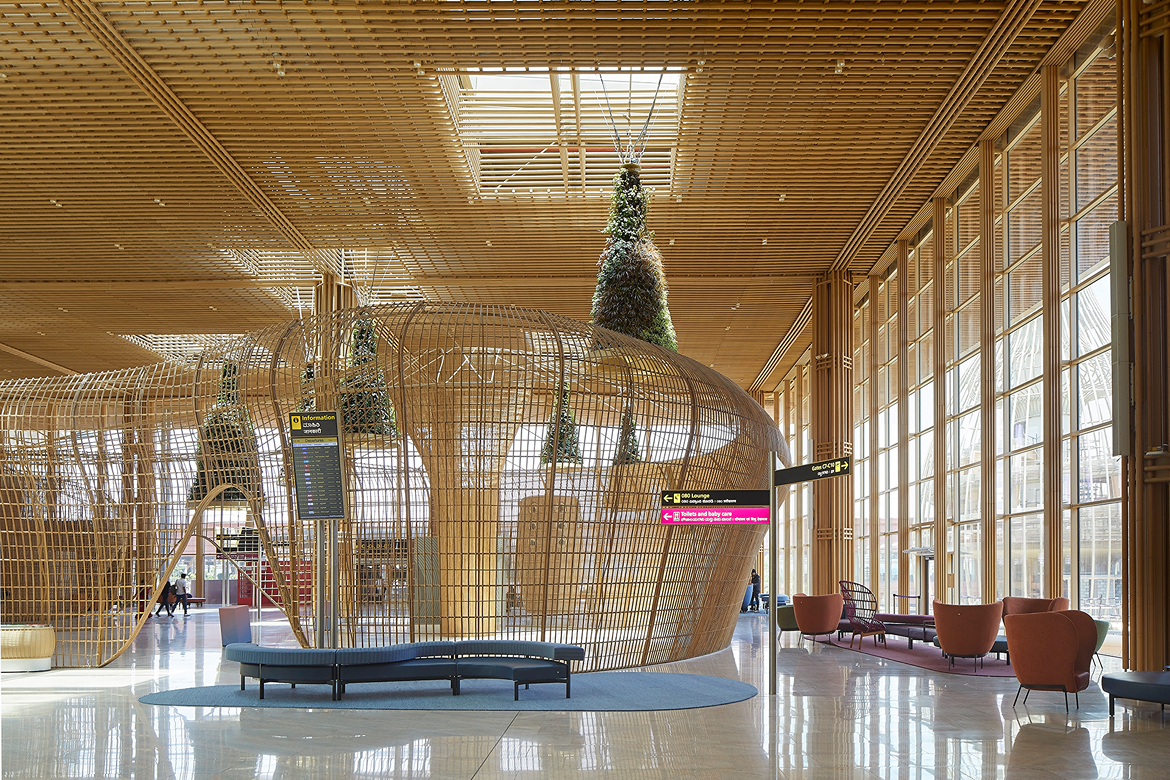
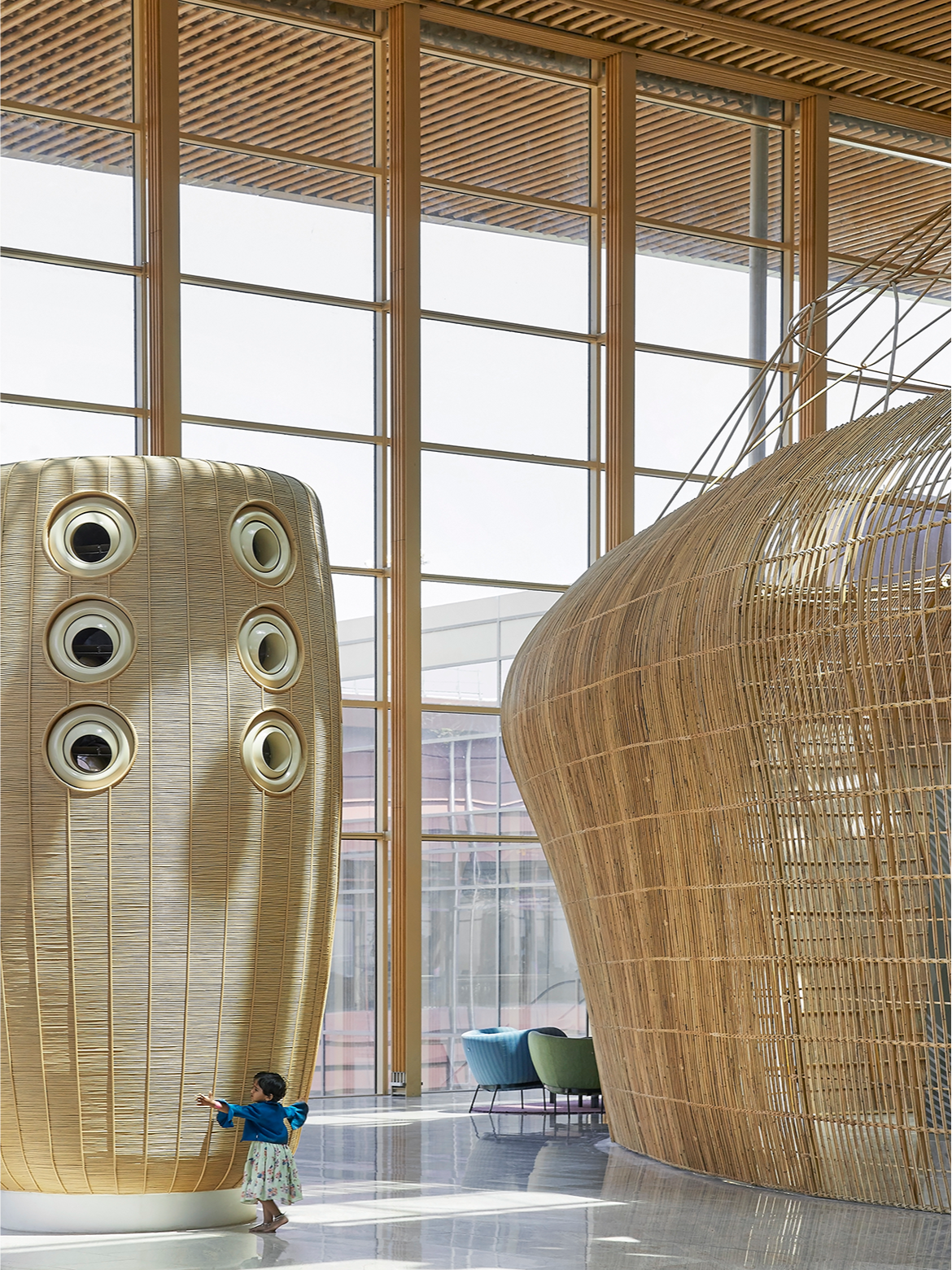
The Terminal 2 interiors at Kempegowda International Airport represent the most ambitious expression of this thinking to date. Spanning approximately 12,000 square metres, the Departures Hall is defined by vast, flowing rattan pods that replace conventional walls and signage with an intuitive, nature-inspired journey.
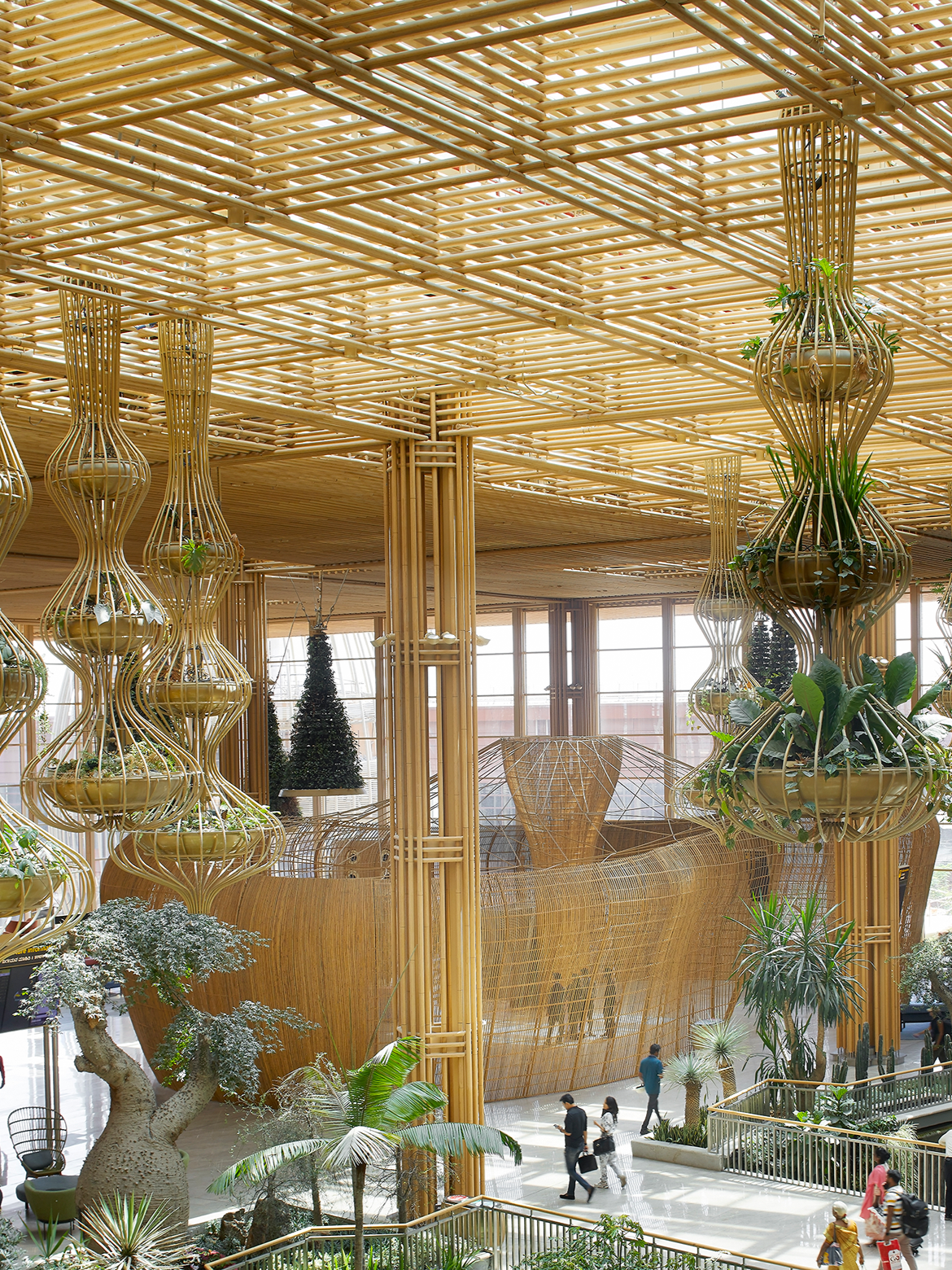
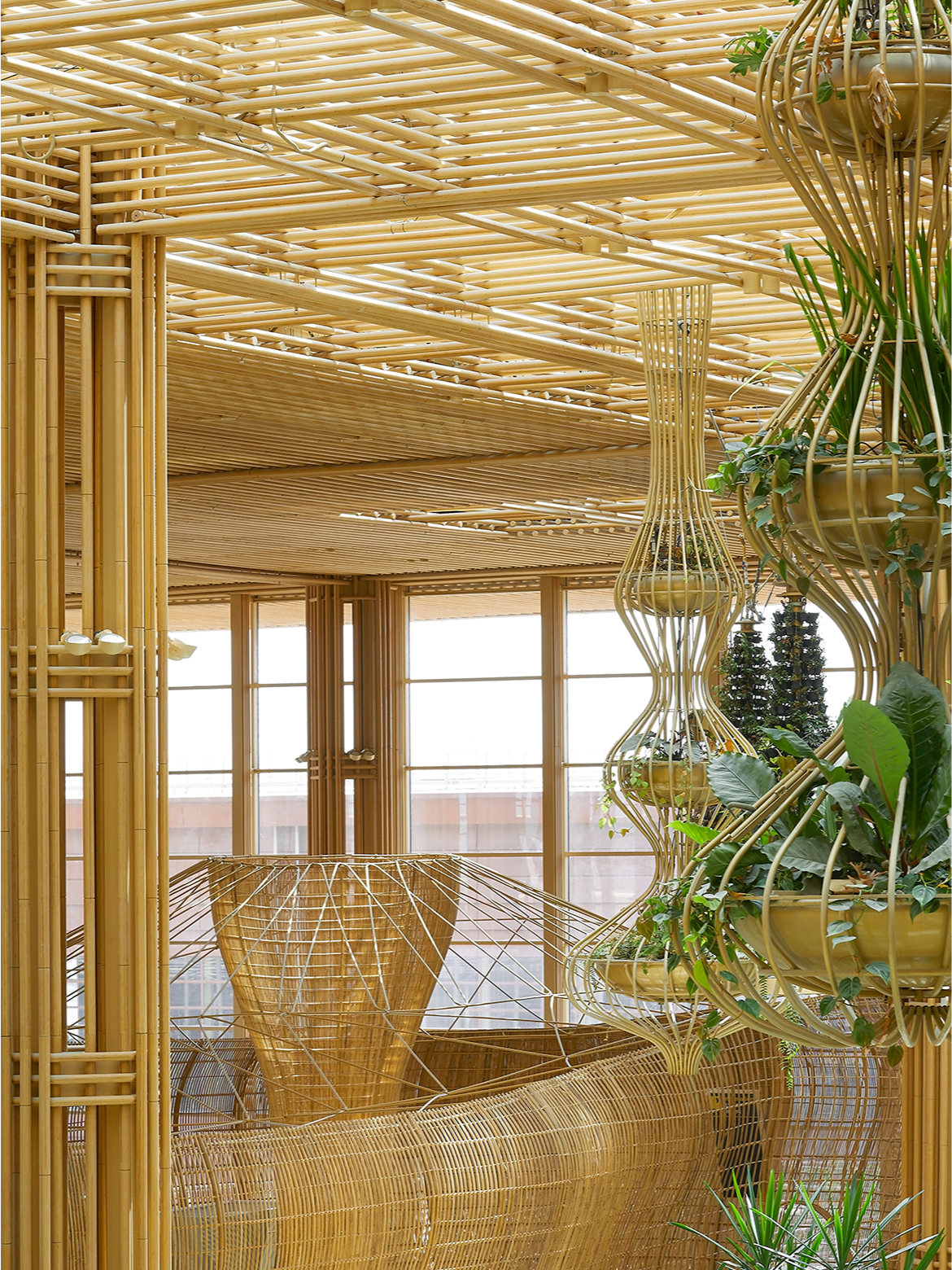
Using nine kilometres of rattan, the project substitutes materials such as steel, paint and plastic with a fast-growing, renewable alternative. The interiors were designed as modular, lightweight panels – fabricated off-site, numbered, transported and assembled with precision, much like an aircraft monocoque structure.
Advanced parametric modelling allowed the team to control gradients of openness and enclosure, creating spaces that are simultaneously transparent and functional. The result is an environment that feels more like a landscape than an airport – uplifting, immersive and deeply tactile.
Beyond its visual impact, the project raises important questions for the global construction industry. Keane highlights how lightness, efficiency and material intelligence can dramatically reduce environmental load, and how re-engaging with local manufacturing can create more ethical, resilient design processes.
Enter Projects Asia’s work is rooted in collaboration: digital designers working alongside fifth-generation craftspeople, infrastructure specialists and global manufacturing experts. This blending of old and new – human skill and advanced technology – challenges the idea that sustainability requires compromise. Instead, it positions natural materials as a credible, scalable alternative for major public infrastructure.
We thank Patrick Keane for sharing his insights, experience and vision, and Zenith for their continued support as Platinum Partner & Best of the Best category partner at the 2026 INDE.Awards.
To hear the full conversation and explore the ideas behind this groundbreaking project, listen to the complete SpeakingOut! Interview here.
Entries are now open for the 2026 INDE.Awards, start your submission today by visiting our website here. Your work could be next to redefine what’s possible.
INDESIGN is on instagram
Follow @indesignlive
A searchable and comprehensive guide for specifying leading products and their suppliers
Keep up to date with the latest and greatest from our industry BFF's!
The internet never sleeps! Here's the stuff you might have missed