Get the latest design news direct to your inbox!
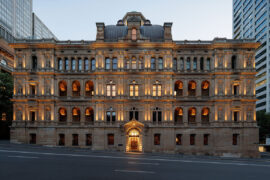
At The Lands by Capella, Hassell and Purcell take a restrained approach to adaptive reuse — working with the existing building to reintroduce it as a public, mixed-use destination.
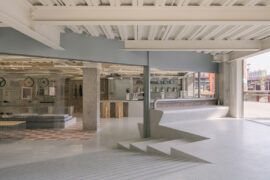
Cycling culture and heritage seldom converge, yet the AITASHOP flagship in Beijing is a space where both coexist.
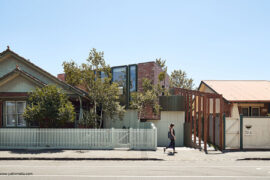
In Melbourne, Justin Mallia Architecture reshapes a compromised heritage site into a flexible, multi-residential home — balancing density, landscape and long-term adaptability through a careful reworking of form, light and ground.
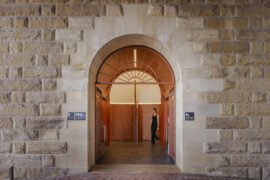
HDR reimagines Pyrmont Bridge East Amenities through adaptive reuse, elevating civic design with inclusive, sustainable intent.
At Kilvington Grammar, ClarkeHopkinsClarke Architects (CHC) has converted an old single-storey library into three levels of flexible, collaborative learning spaces.
FK’s Nicky Drobis takes us through a recent poll of 1,000 office workers across Sydney, Melbourne and Brisbane that suggests a preference for reuse – despite an ‘awareness gap’.
Set among the rice fields near Shanghai’s Xinchang Ancient Town, The Catcher by TEAM_BLDG reworks two rural houses into a guesthouse that mediates quietly between architecture, landscape and time.
A simple and stark silver box juts out into the street. It can be no other than architectural practice TAOA’s new studio.
Spacemen Studio transforms a rare Kuala Lumpur bungalow into Sun & Moon, an all-day dining venue shaped by ambient light and curated material.
The Japanese firm brings elements of calm into Loca Niru, a fine-dining restaurant housed in a 146-year-old mansion in Singapore.
Recalling the warehouses of yesteryear and reflecting the label’s own sense of restraint, Henne’s new retail outlet is turning heads in Melbourne.
The revitalisation of the United Nations’ Africa Hall in the Ethiopian capital has been named the winner of the 2026 World Monuments Fund (WMF)/Knoll Modernism Prize.