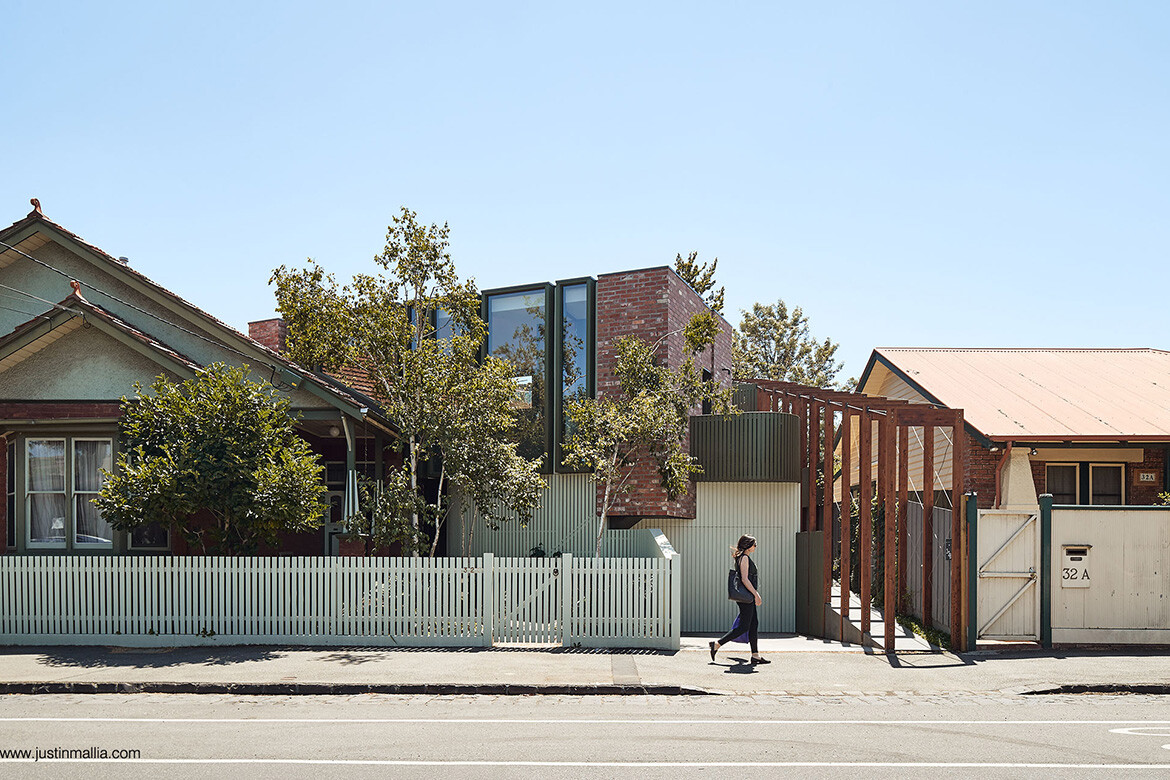
Scarborough and Welkin by Justin Mallia Architecture reconsiders how density, landscape and long-term living can coexist within a heritage context. Located on an angular intersection in Melbourne, the project transforms a compromised site into a flexible, light-filled environment that supports evolving patterns of occupation. Through careful manipulation of form, ground and circulation, the design retains the presence of the original home while introducing a layered and adaptable approach to contemporary housing.
Can you describe the site context?
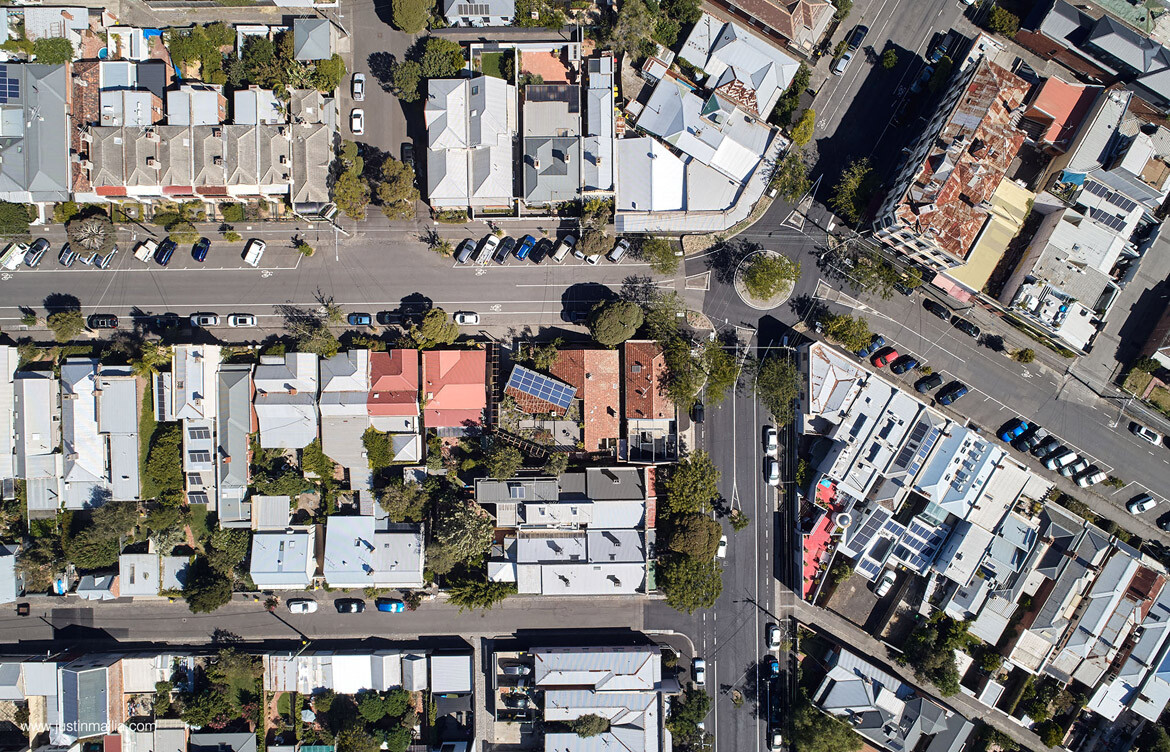
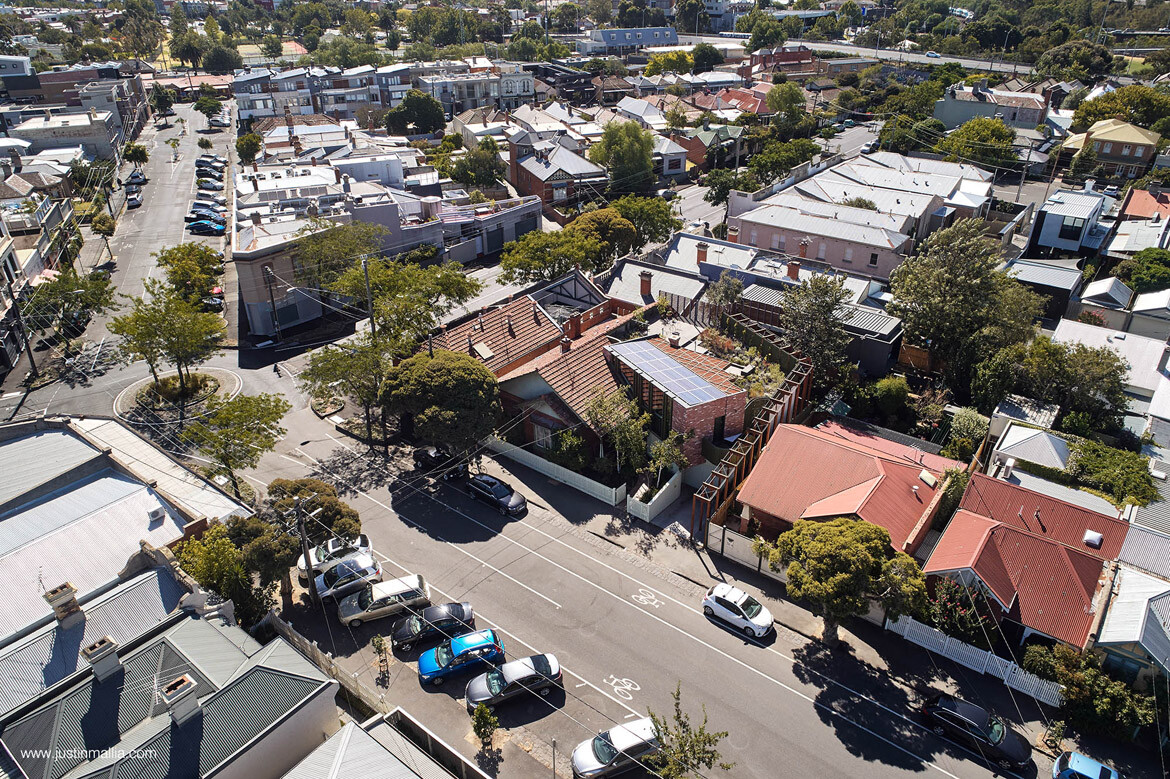
Scarborough and Welkin is a small, multiple residential project that builds upon an existing house with a previously sunny garden that had become overshadowed by a neighbouring house extension. The site is located within a significant heritage neighbourhood in Melbourne, positioned at an angular intersection of streets.
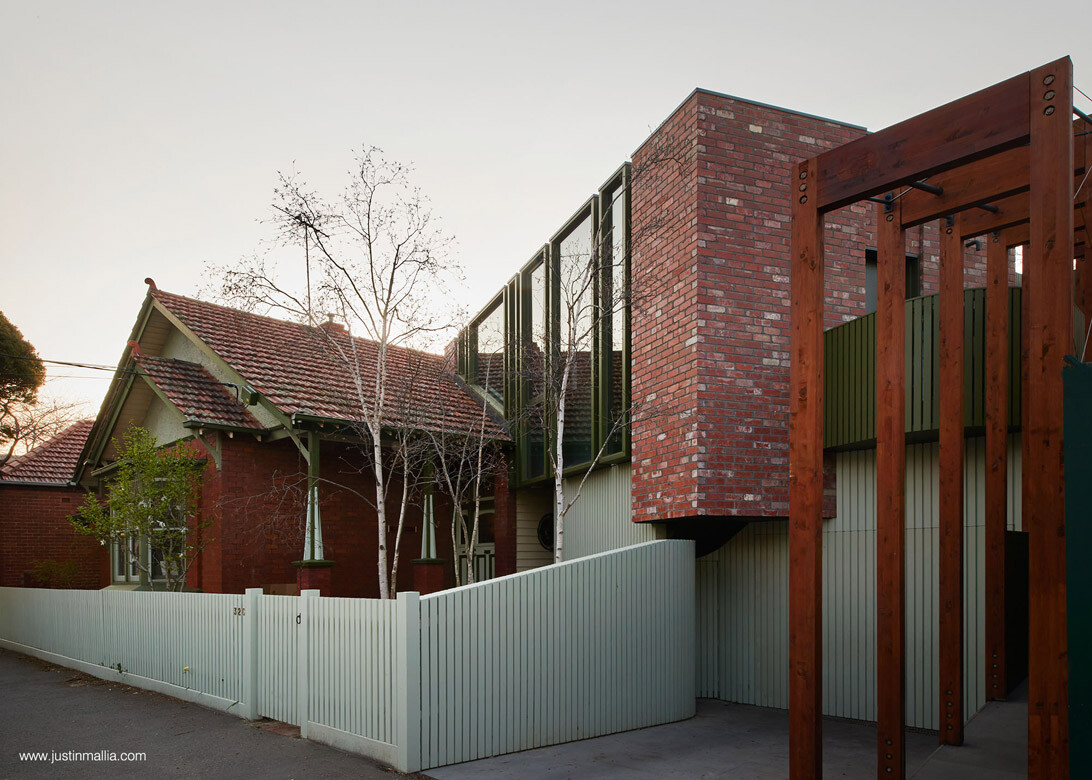
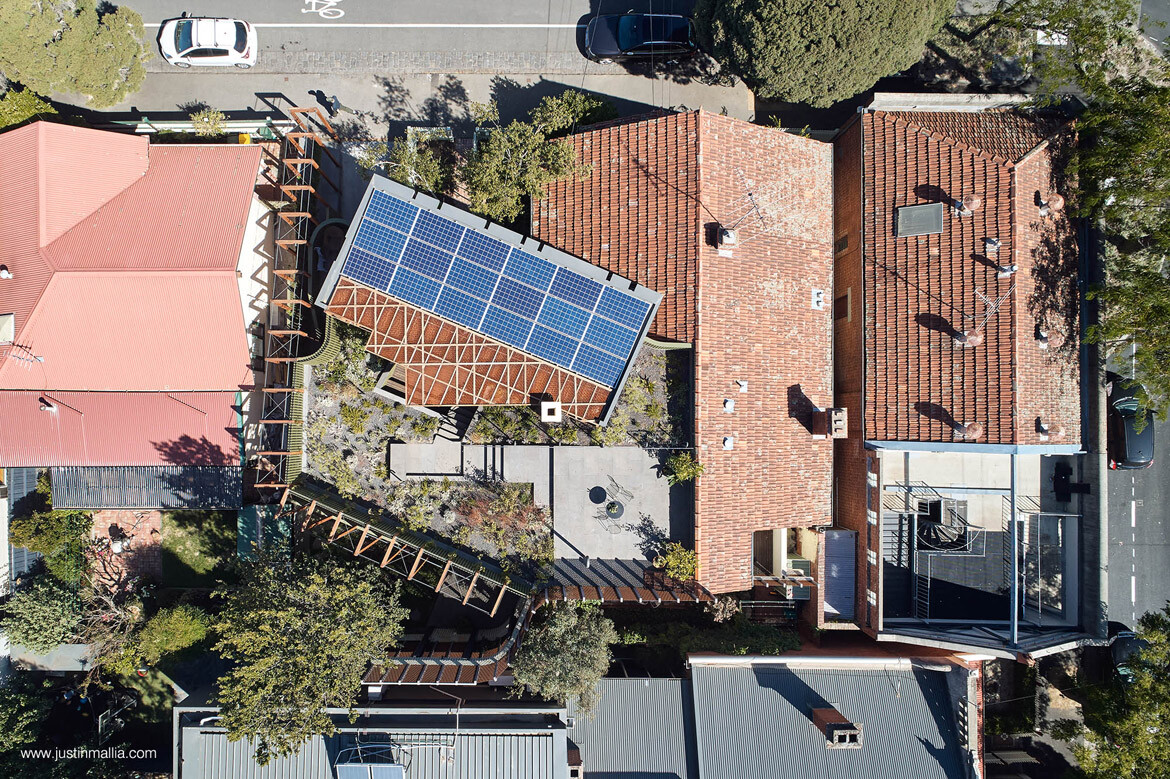
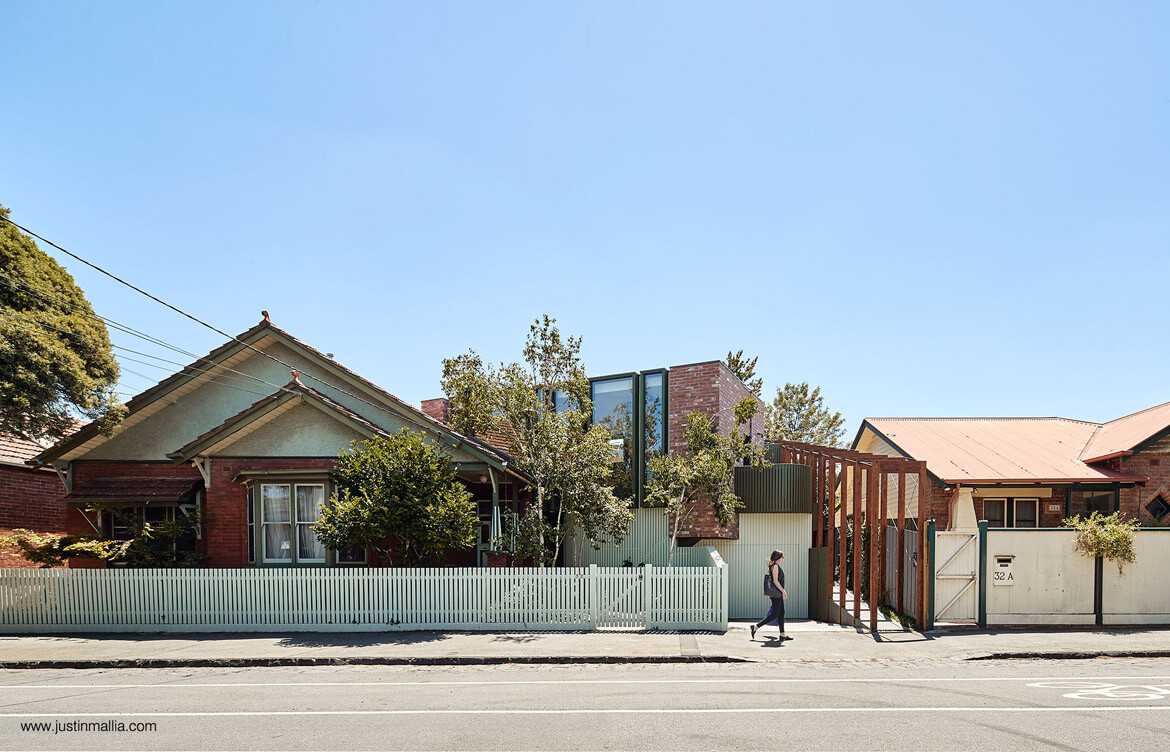
The primary urban gesture of the design is the placement of a raised rectangular building form facing directly north, creating an angled relationship to the street. This withdraws the new building’s presence in the streetscape while setting up a dialogue with the varied façade orientations of the surrounding context. It also maintains a generous relationship to the existing house — preserving the front garden, established trees and the dignity of the ornate front porch.
What was the client brief?
The clients are an extended family who have lived at the property for over forty years, with living arrangements that shift between relatives, friends and visiting international students. The overshadowing of the garden became a catalyst for expanding the accommodation on site.
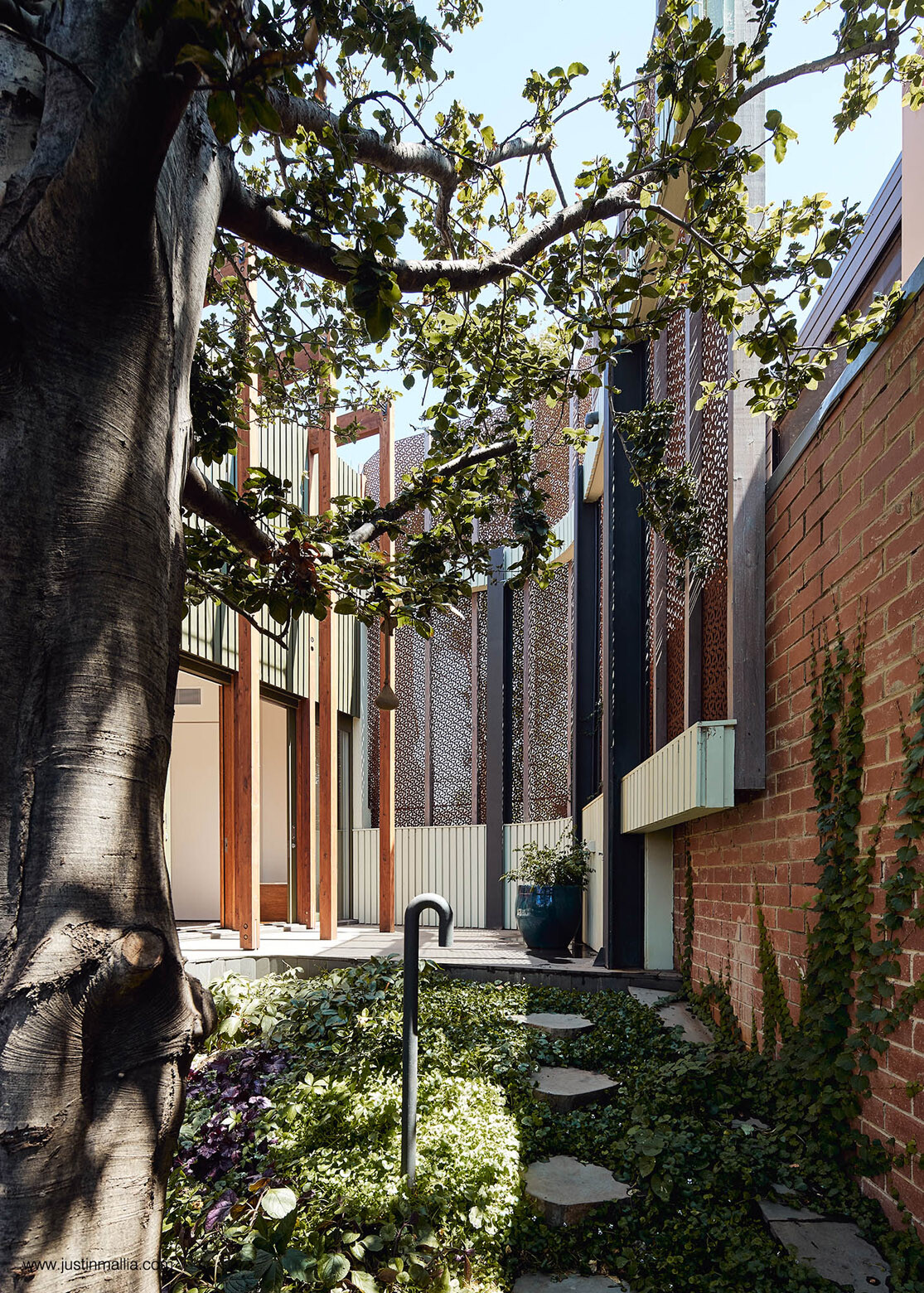
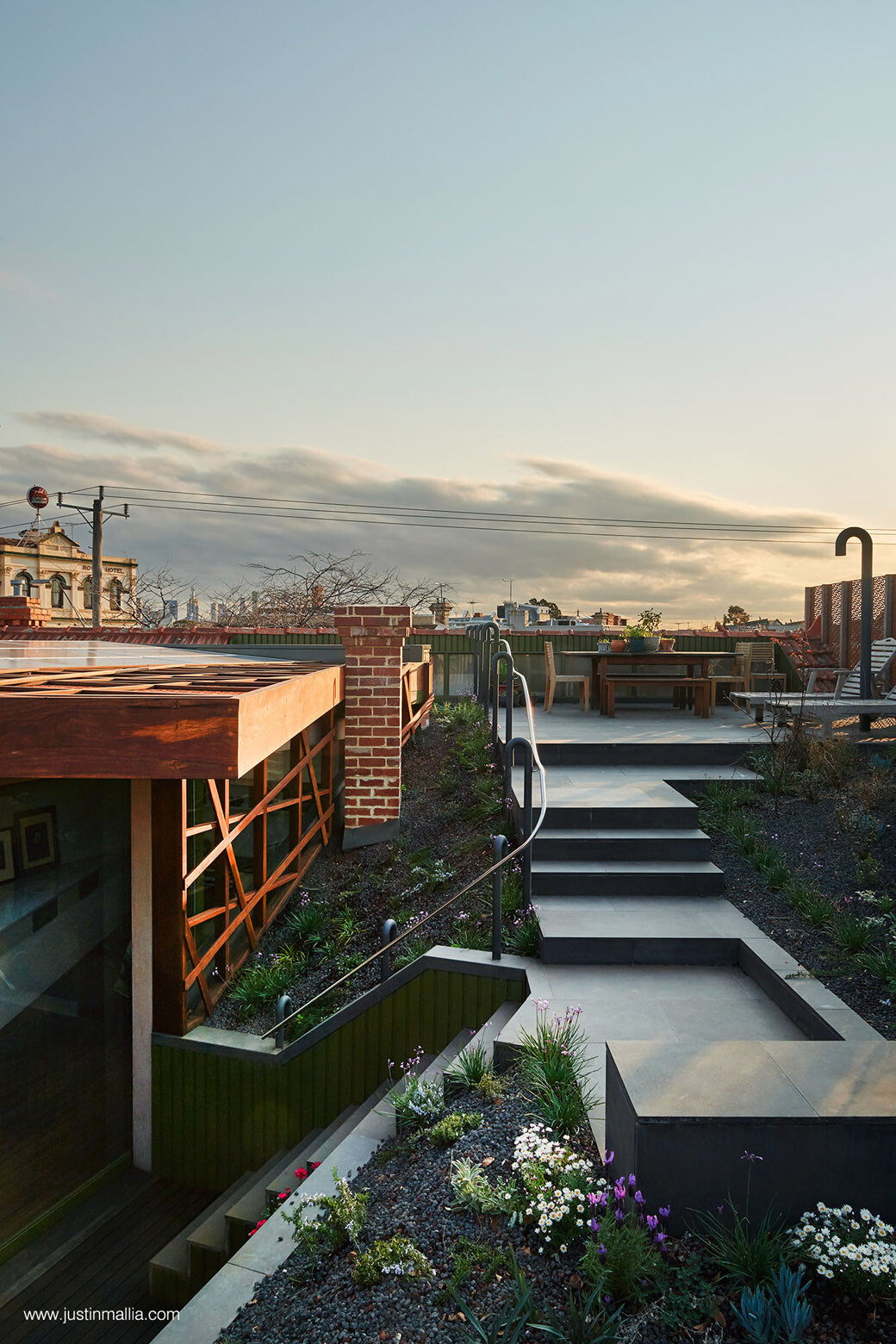
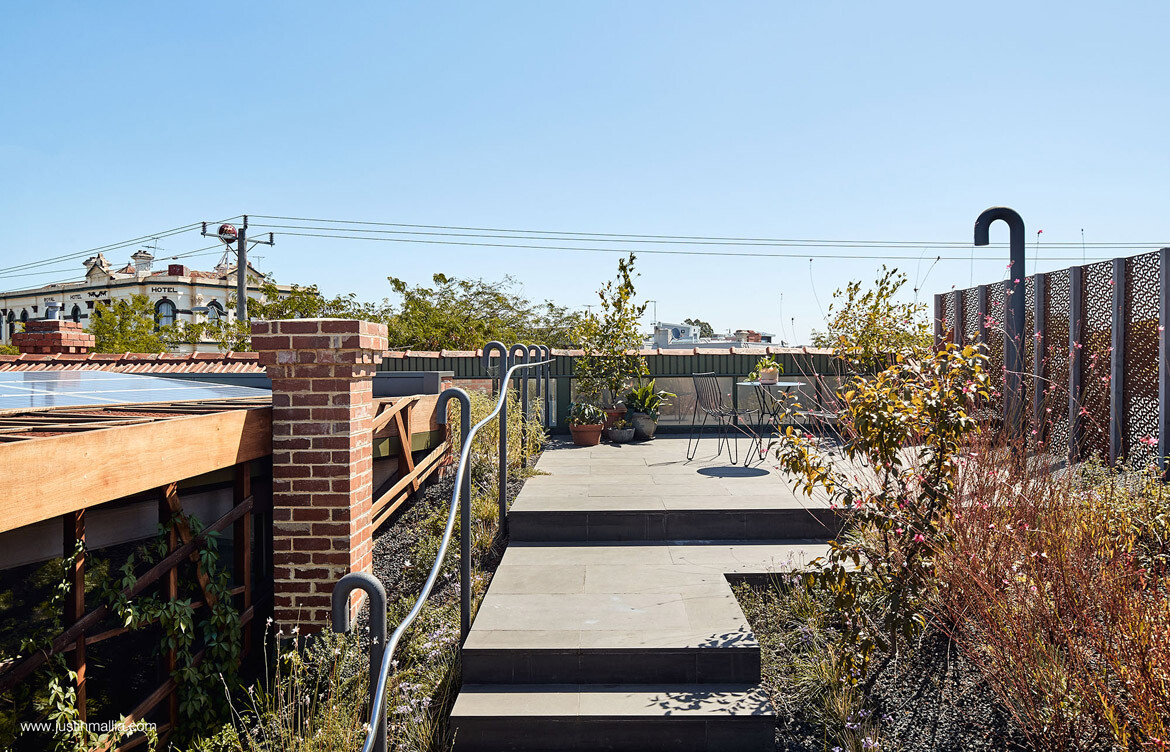
While the initial brief proposed replacing the compromised garden with a conventional townhouse, this was reimagined to enable multiple configurations of occupancy. Through sun-modelling, interconnected building elements are selectively positioned across the site, returning interior and exterior spaces to sunlight. Existing trees are retained and the natural topography is sculpted into deep soil embankments, roof gardens and bluestone terraces.
This approach more than doubles the number of occupants while maintaining the same amount of permeable garden space. The flexibility of the design allows spaces to be customised and avoids underutilised rooms, supporting long-term adaptability.
Related: One Two Five by Hub expands flexible work in Perth
What informed the material and structural approach?
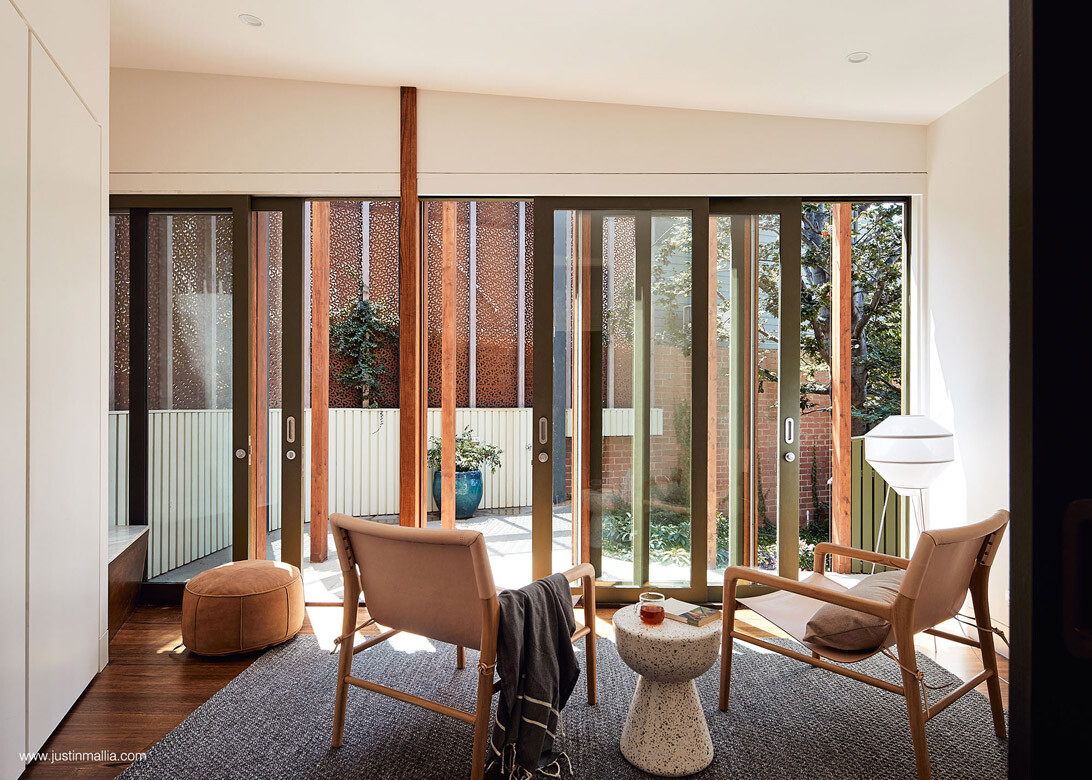
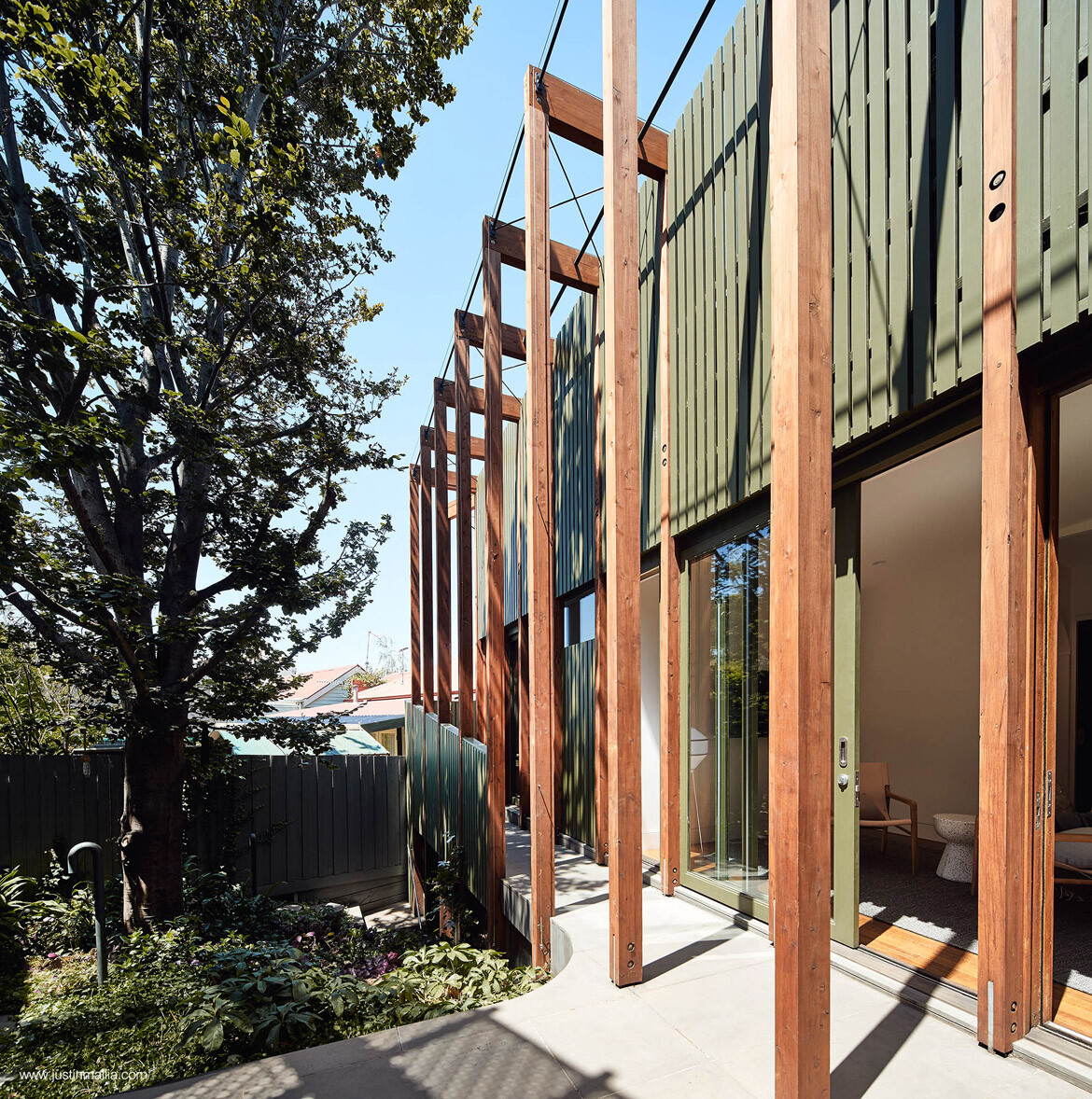
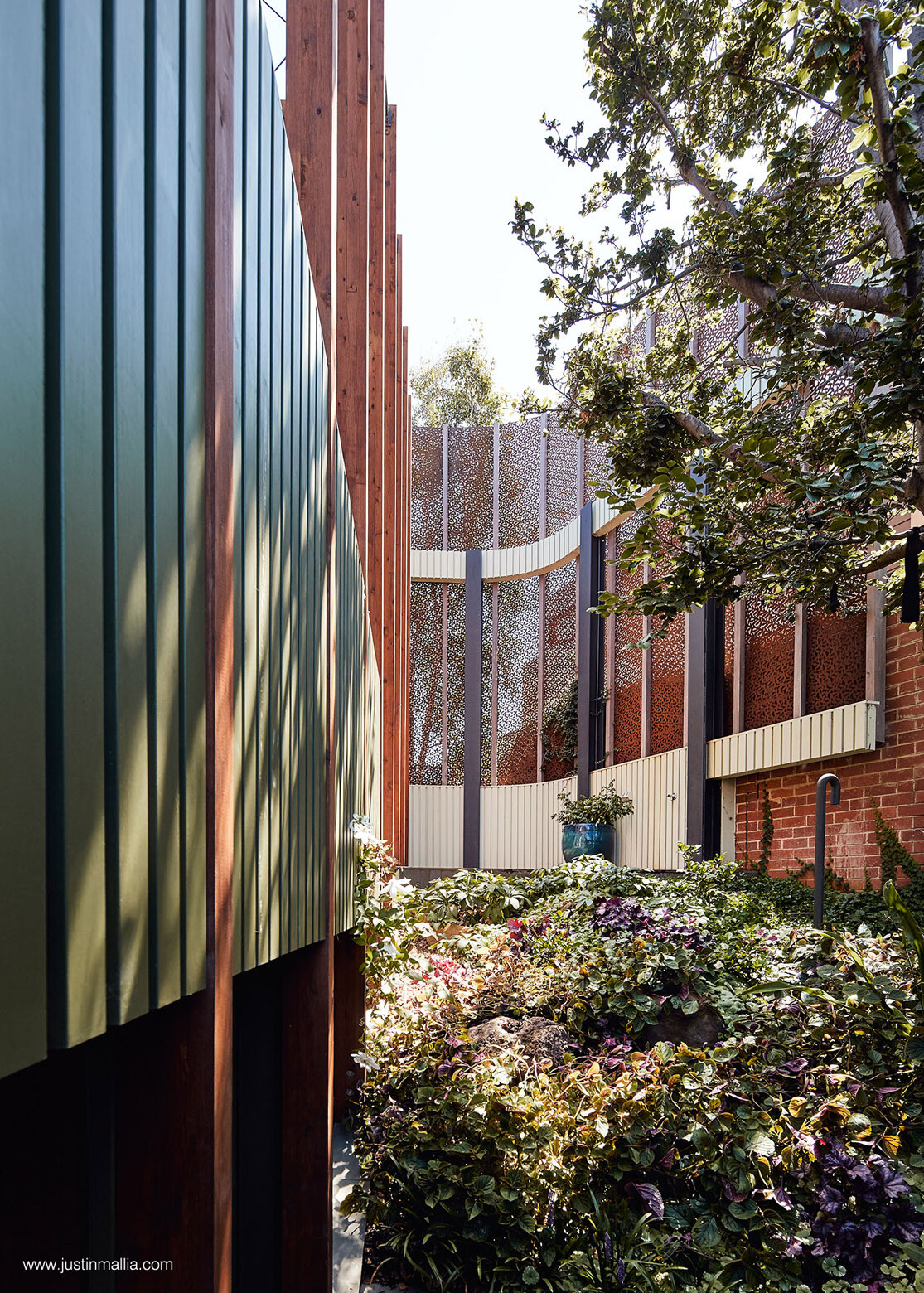
The glass, recycled brickwork and timber picketing of the new façades respond directly to the materiality of the existing house and the heritage context. Angular glazing, similar to the old bay window, allows moments of transparency while reflecting trees, ornamental features and the broader surroundings.
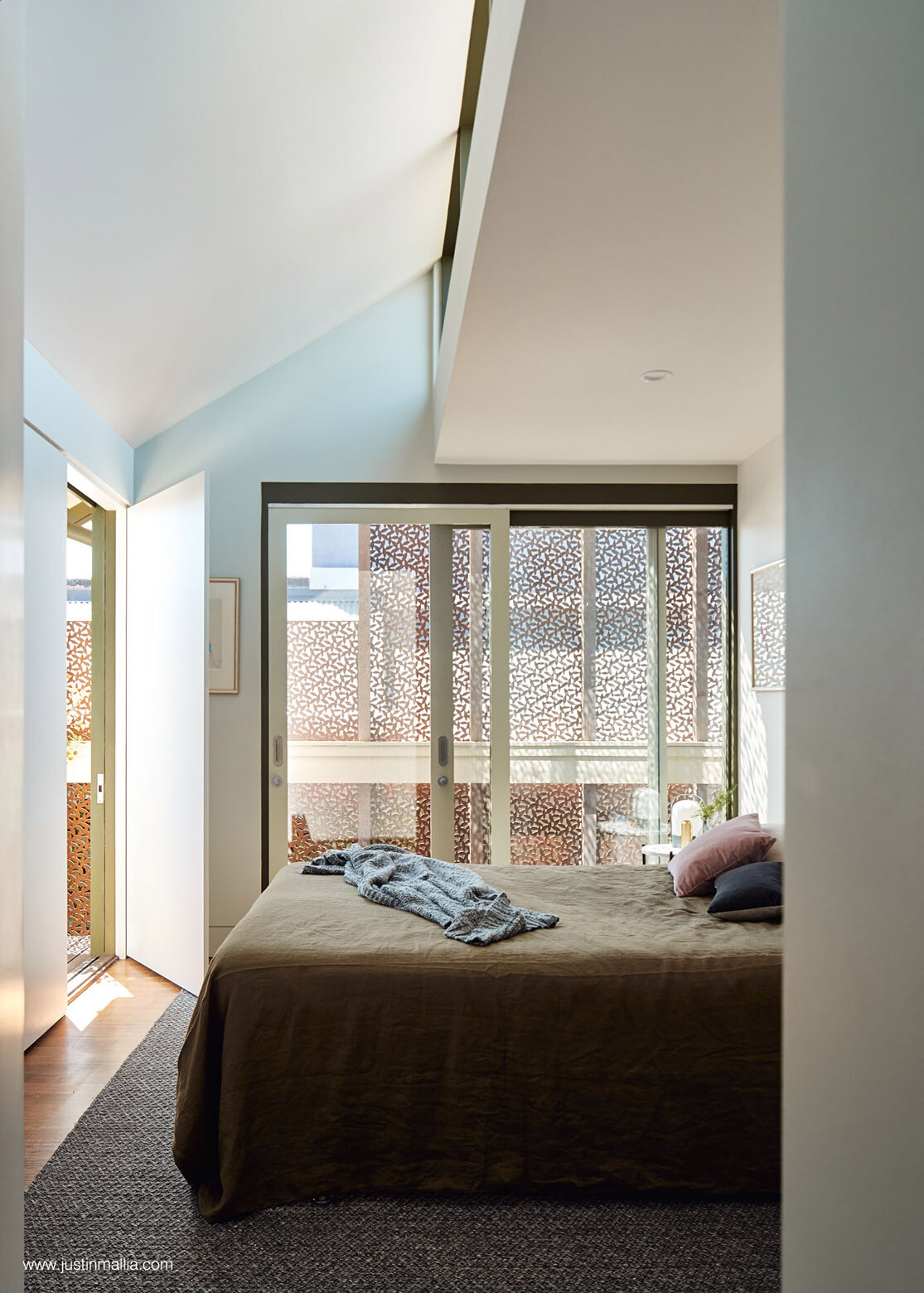
A skeletal timber and steel arbour walkway is exposed across all levels, forming a clear entry sequence and acting as a rhythmic organising element along the side and rear boundaries. This structure connects with a serpentine, filigree rusted steel veil that wraps around retained trees, screening neighbouring development while providing privacy and sun shading.
The project also incorporates solar panels, battery storage, heat pump hot water and rainwater reuse. Car parking is integrated as a flexible, daylit space with electric vehicle charging, connected directly to other occupiable areas.
How does the design respond to functional requirements?
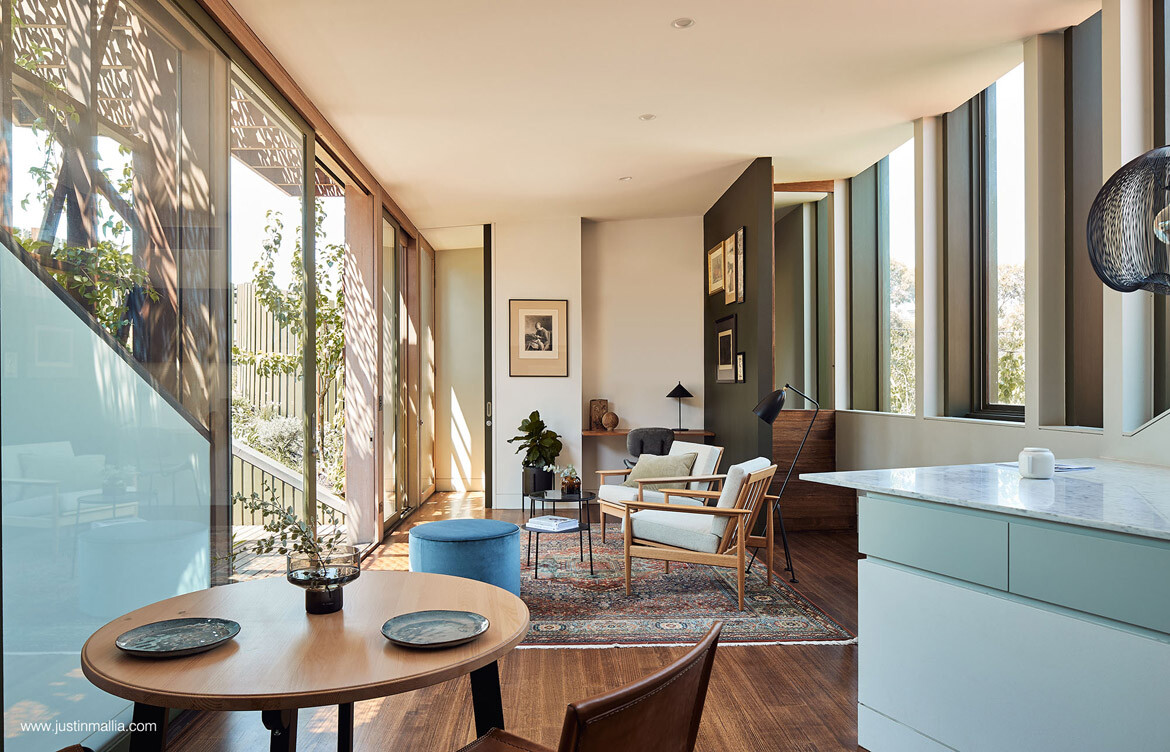
The project is conceived as two connected buildings that can be flexibly divided. Through careful detailing and craftsmanship, the spaces remain accessible and coherent in all configurations, maintaining identity, permanence and privacy.
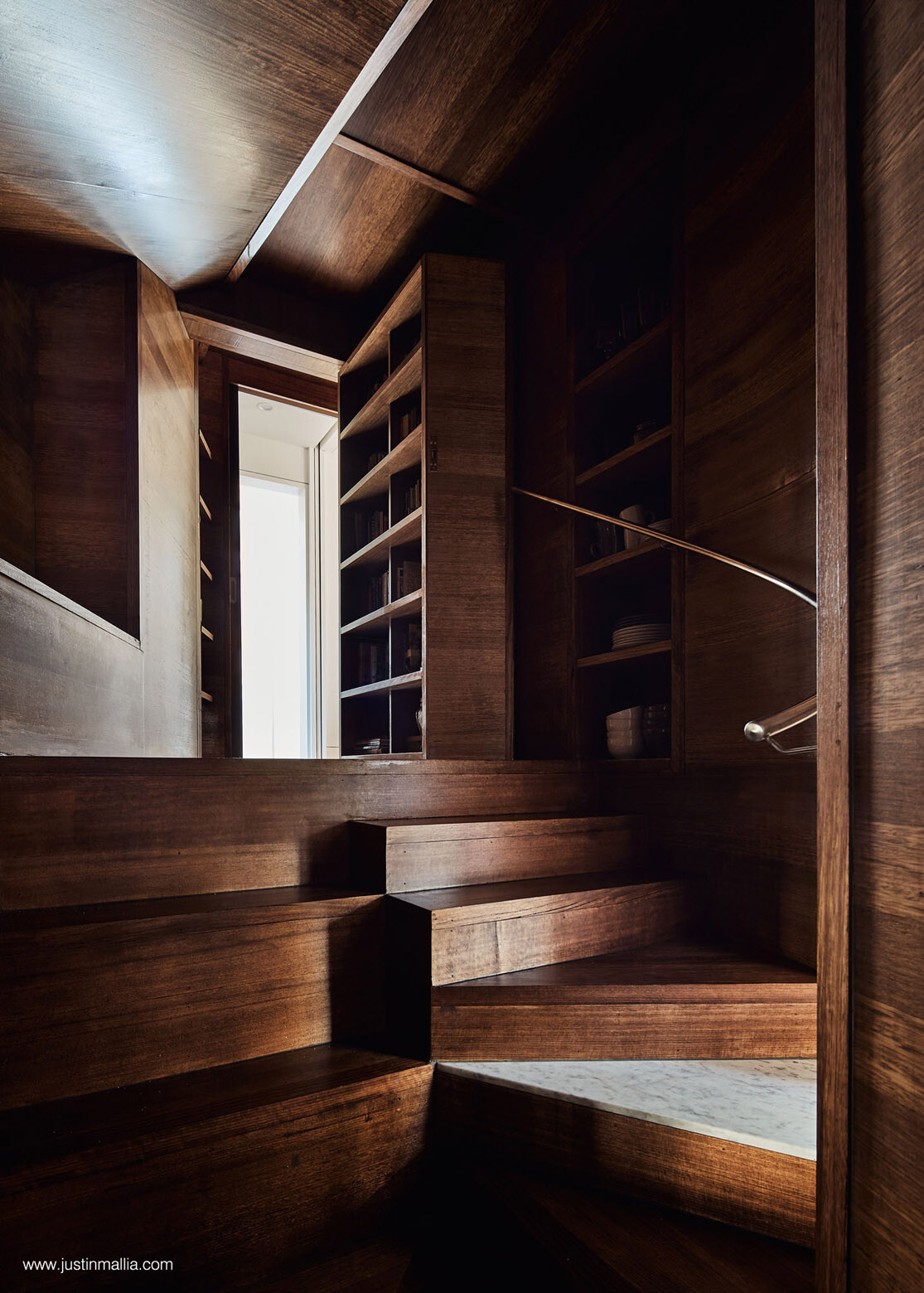
Hidden operable wall panels and a hinged bookshelf allow spaces to be reconfigured, while a complex circulation network — including ramps, paths, stepping stones, stairs, sloping floors and garden embankments — enables independent movement throughout the site.
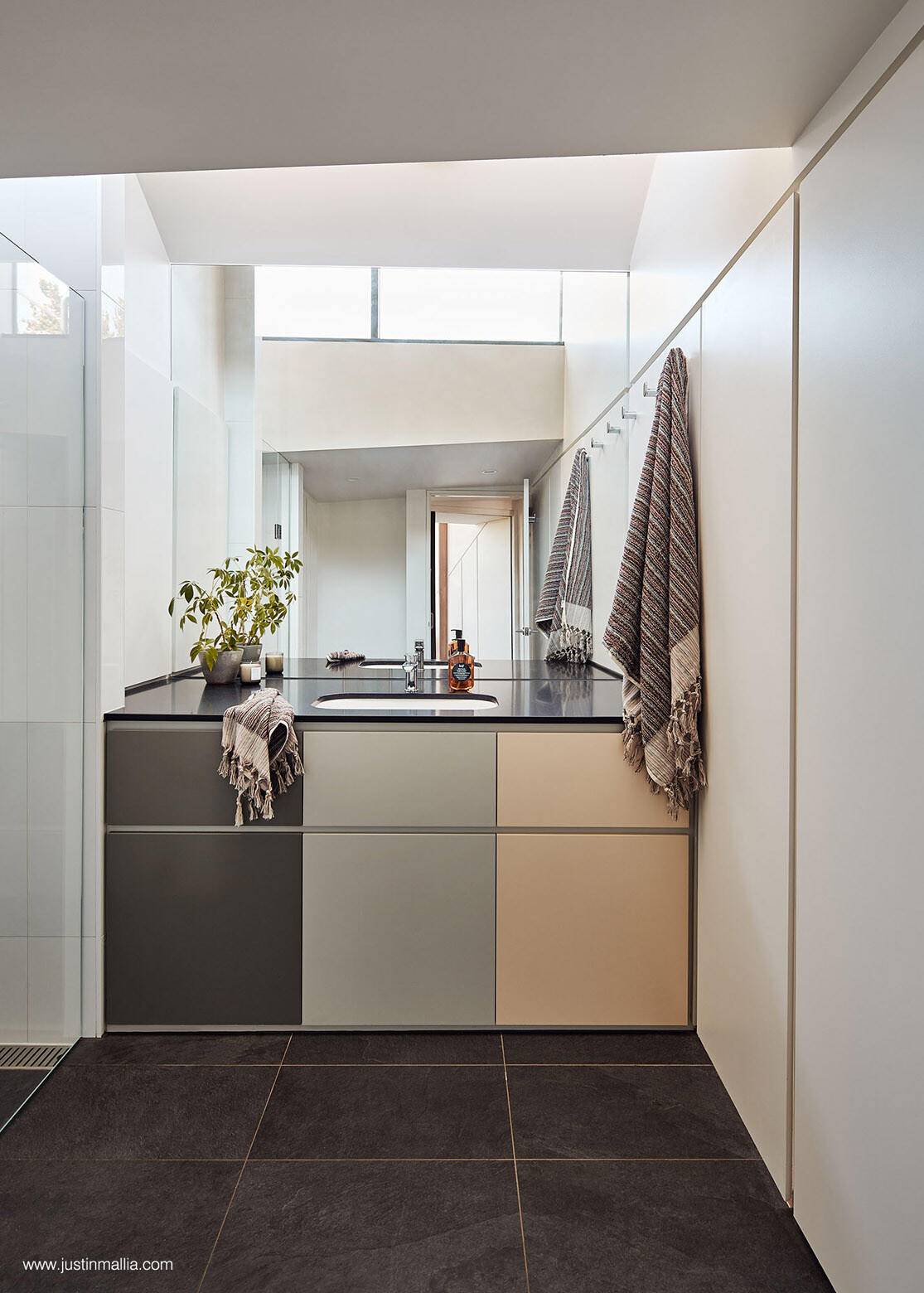
Despite the integration of complex services and sustainability systems, these elements are not visually dominant. The building mass is articulated through half-levels, angled intersections and curved transitions, creating varied internal and external volumes. Openings and fissures allow natural ventilation and filtered northern light to penetrate deep into the plan.
Justin Mallia Architecture
justinmallia.com
Photography
Peter Bennetts