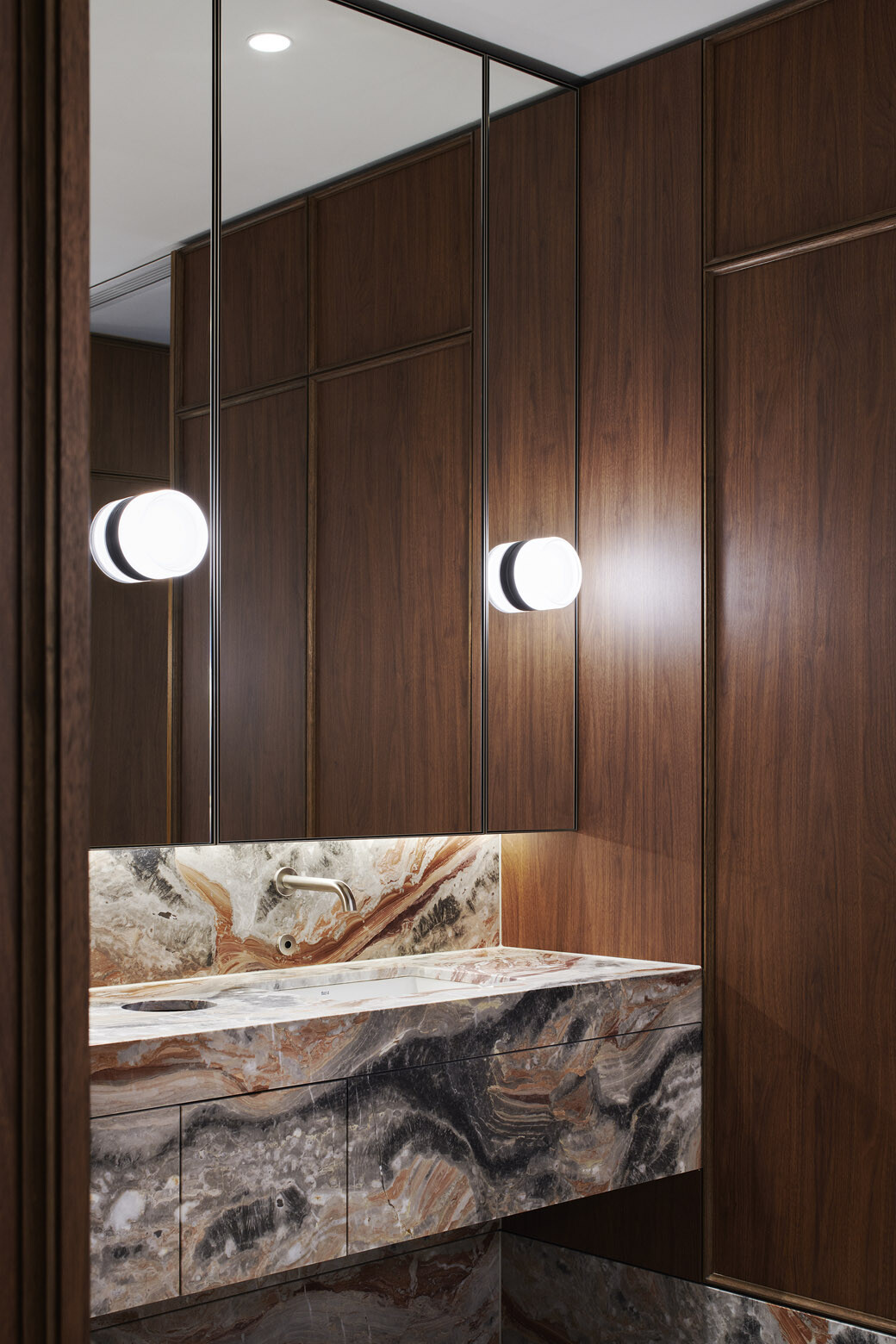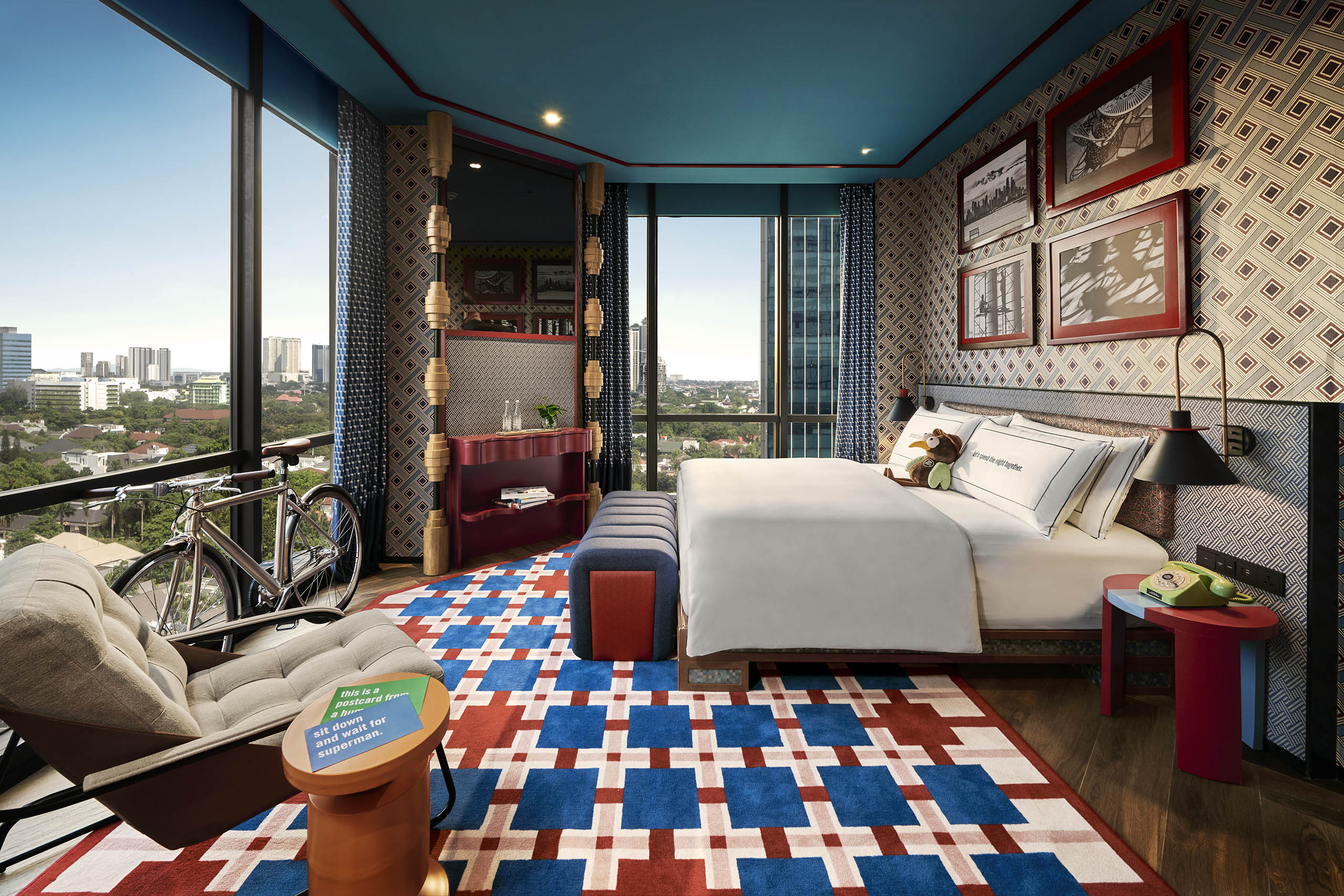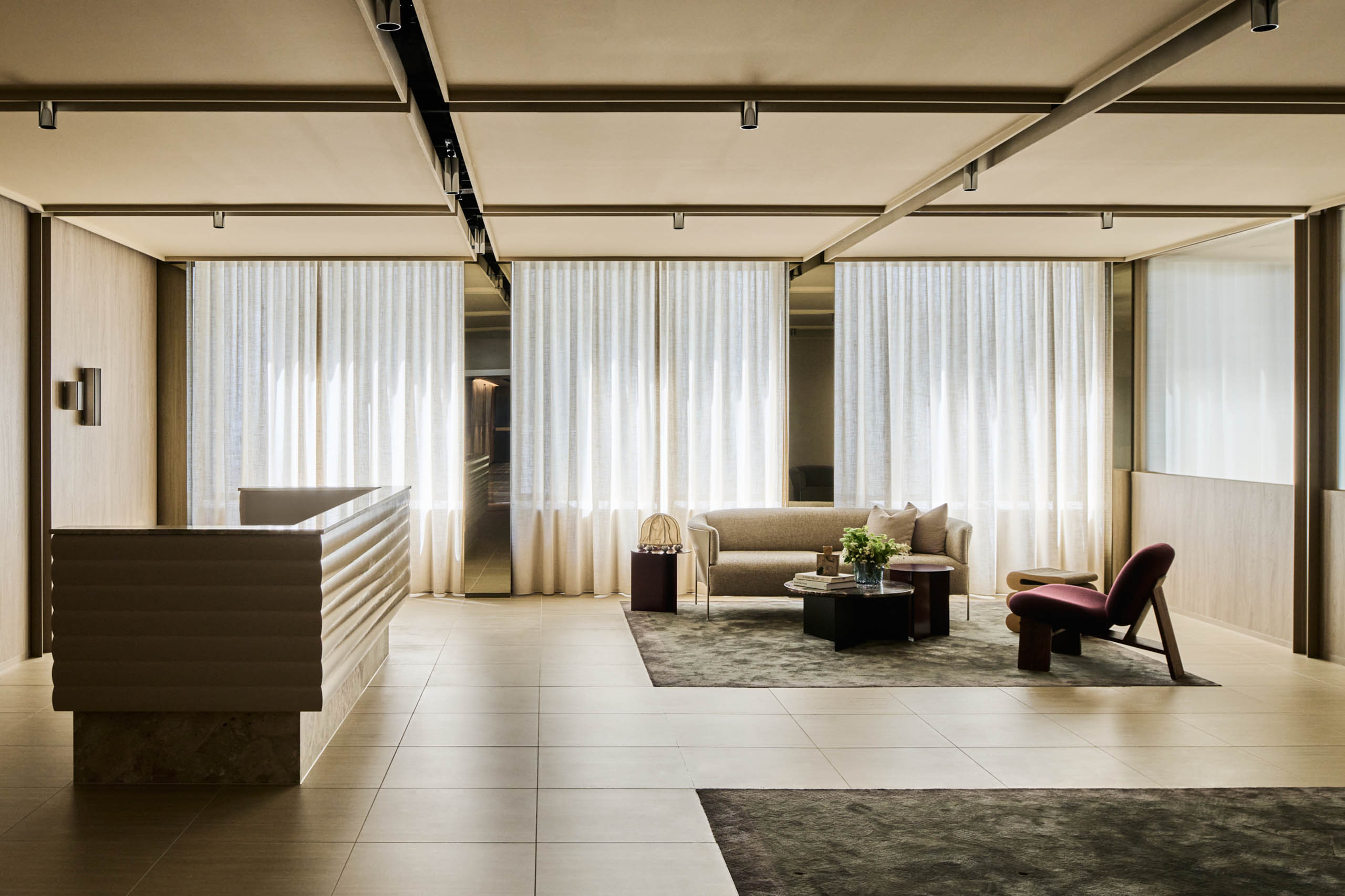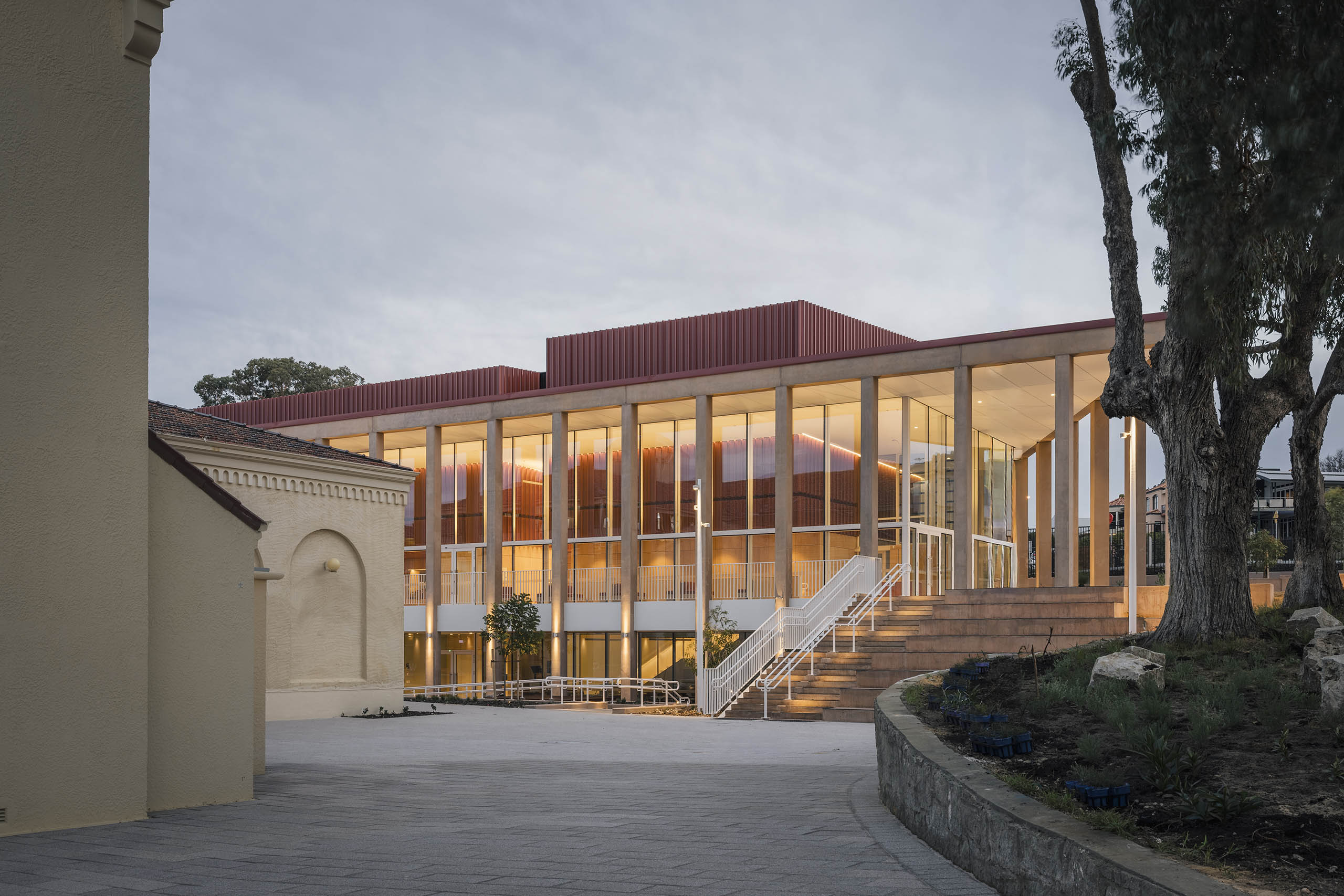
There’s always a risk, with buildings like this, of doing too much.
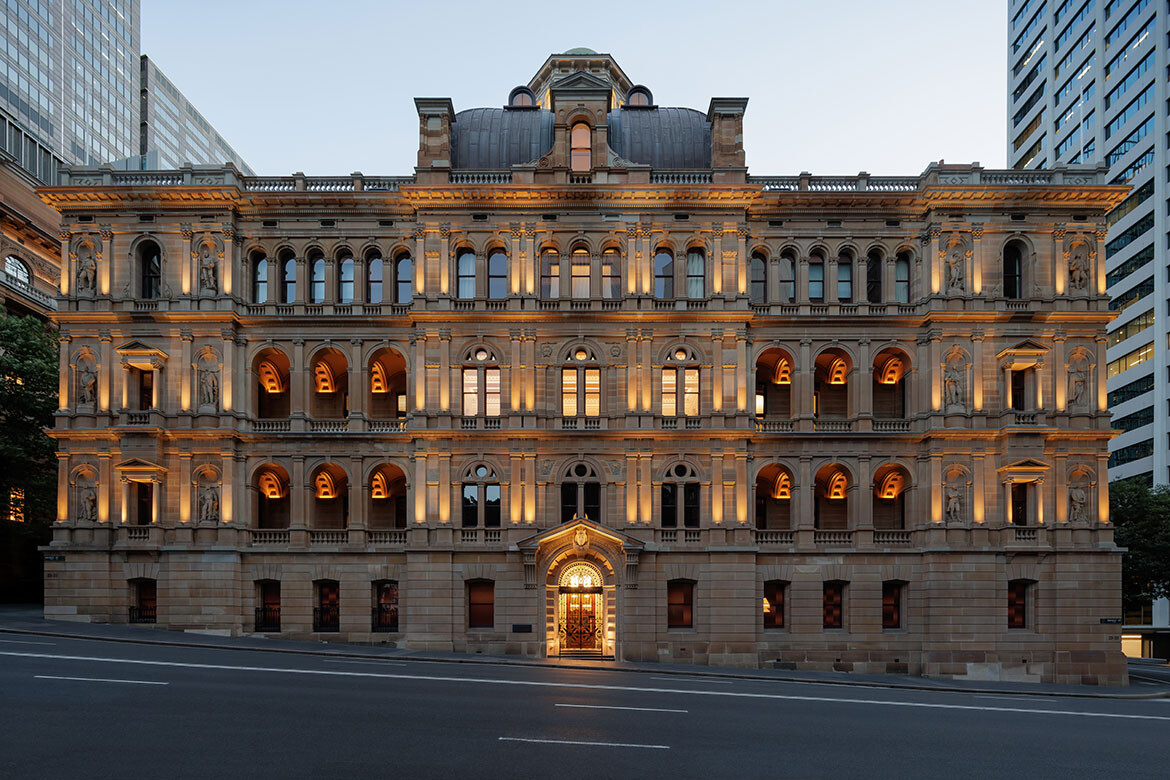
Sydney’s former Department of Lands building doesn’t exactly need help asserting itself. It’s already one of the city’s most recognisable civic buildings — heavy, formal and for a long time, largely inaccessible. The challenge isn’t how to make it more impressive. It’s what to do with it now that it’s no longer what it was.
The Lands by Capella — designed by Hassell with heritage input from Purcell — approaches that question with a restraint that feels increasingly rare. Rather than forcing a new identity onto the building, the project works from a more basic premise: figure out what the building already wants to be, and work with that.
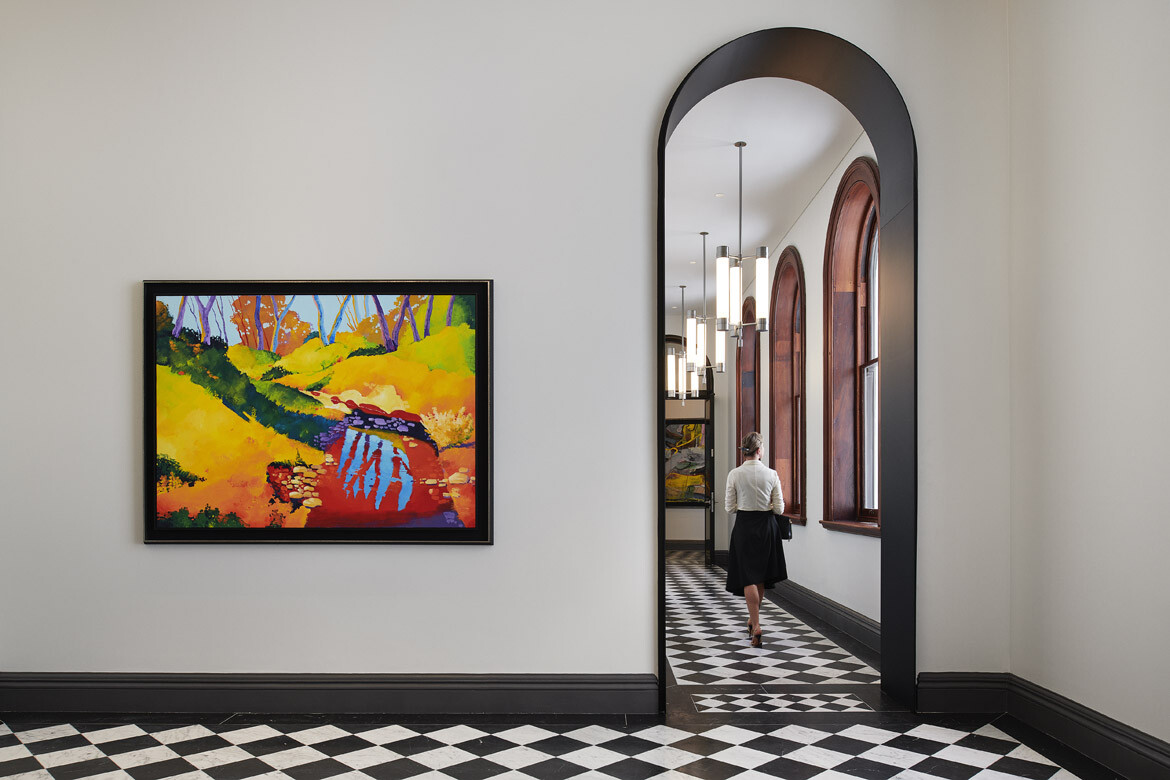
“Our design approach followed a simple principle: make the use fit the building, not the building fit the use,” says Hassell’s Jeff Morgan.
It sounds obvious, but it’s not how these projects usually go. More often, heritage buildings risk being bent into shape to suit a single, highly defined program. Here, the logic runs the other way. The building’s existing rooms — their proportions, their hierarchy, their relationship to light — are used to determine what happens where. Event spaces sit naturally within the grand drawing rooms. More intensive uses are pushed into areas that have already been altered over time.
“The balance came from working with the existing spatial hierarchy of the building rather than competing with it,” Morgan says.
Related: Reuse research by FK
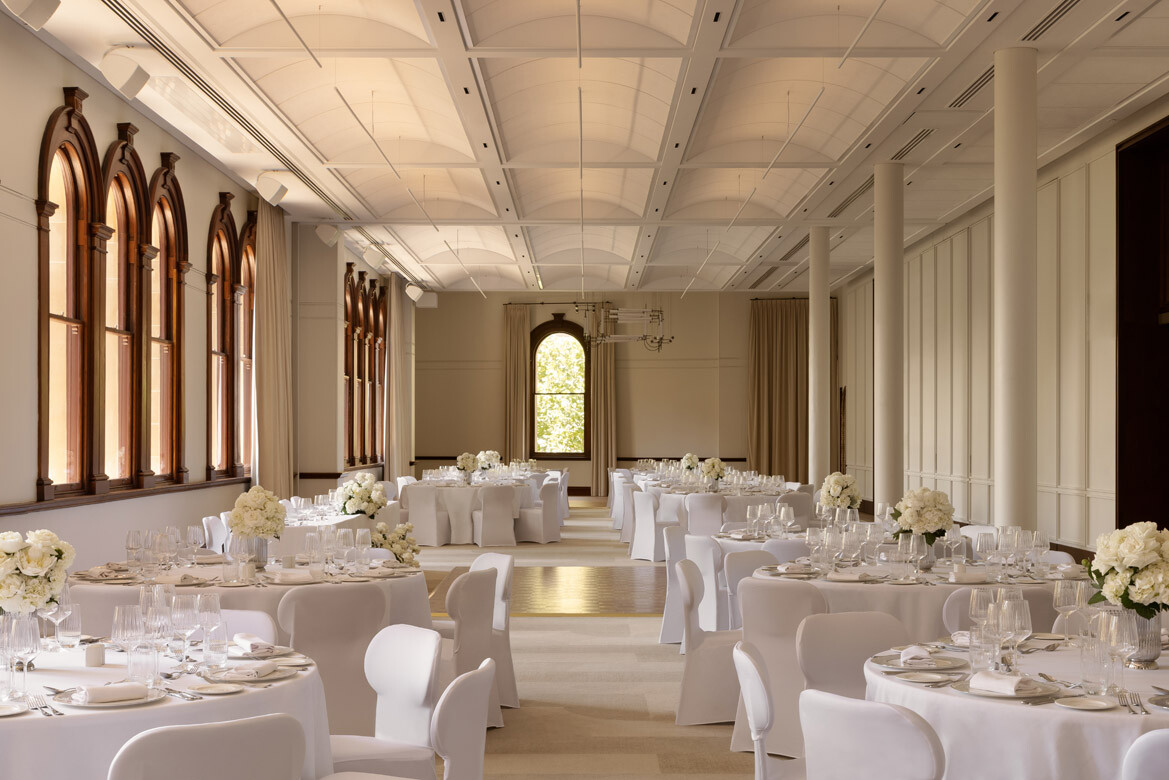
That approach is as much about removal as it is about addition. Over time, the building had accumulated layers that obscured its original form — partitions, services and insertions that made it harder to read. Stripping those back was a key part of the process.
“Intrusive later additions that had obscured the original architecture were removed, unlocking areas that had long been inaccessible,” explains Tracey Skovronek.
What that does, more than anything, is give the building back its sense of sequence. The corridors reconnect. The courtyards reopen. Spaces that were once closed off start to feel part of a continuous experience again. Even the former strongroom — not exactly the most public of spaces — is reworked into a three-storey void, pulling light down into the middle of the plan.
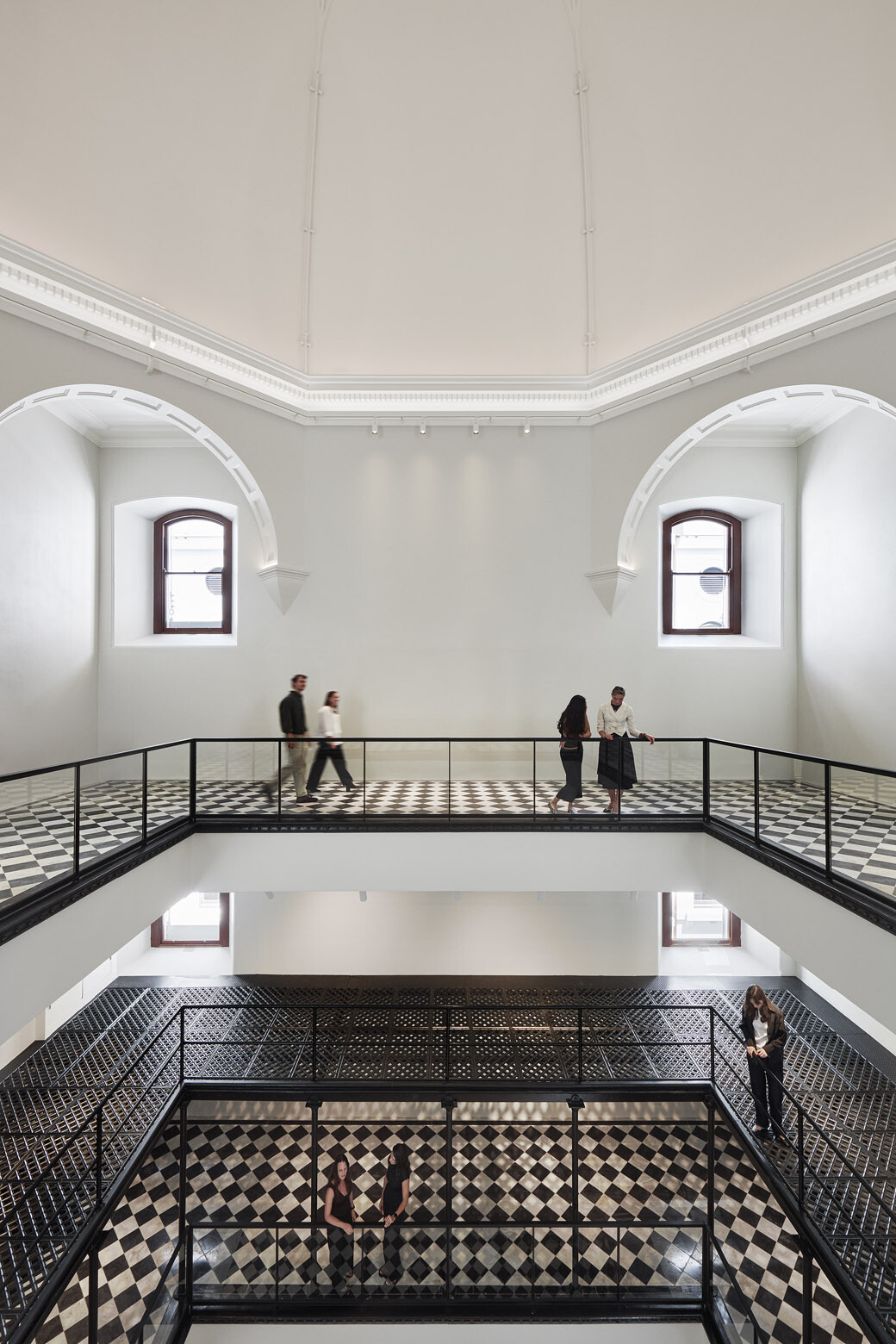
There’s a clarity that comes from that kind of editing. You start to understand how the building works, not just how it looks.
Of course, none of this happens without compromise. Bringing a 19th-century government building up to contemporary standards — accessibility, fire, services — is a technical problem as much as a design one. “The primary challenge was technical rather than spatial,” Morgan says.
And it’s here that the project is probably at its most careful. A lot of the work is deliberately hard to see. Services are threaded through existing voids. Circulation is adjusted rather than reconfigured. The idea is to meet current requirements without rewriting the building in the process.
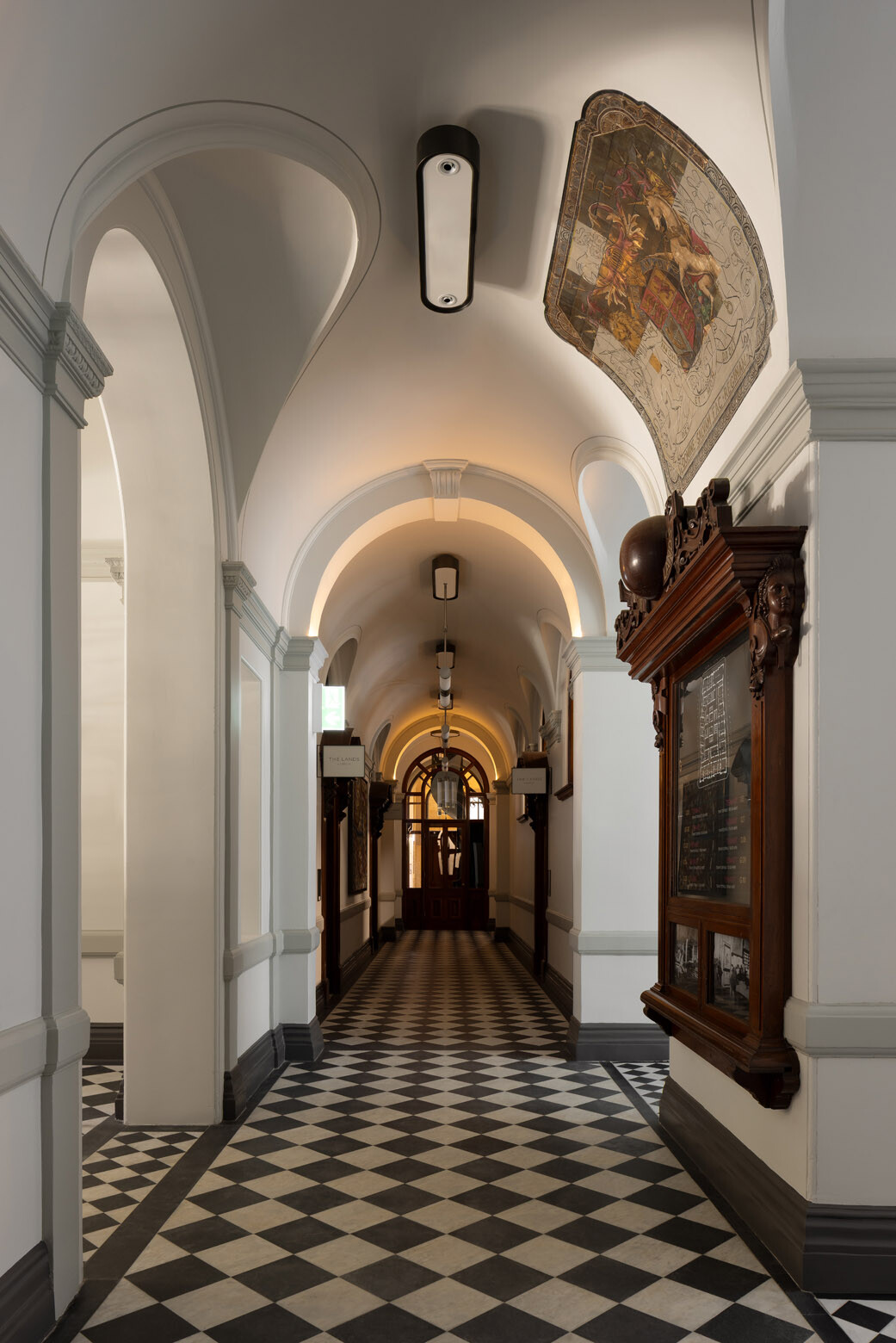
“Careful planning was required to integrate modern services… without compromising significant heritage elements,” Skovronek adds.
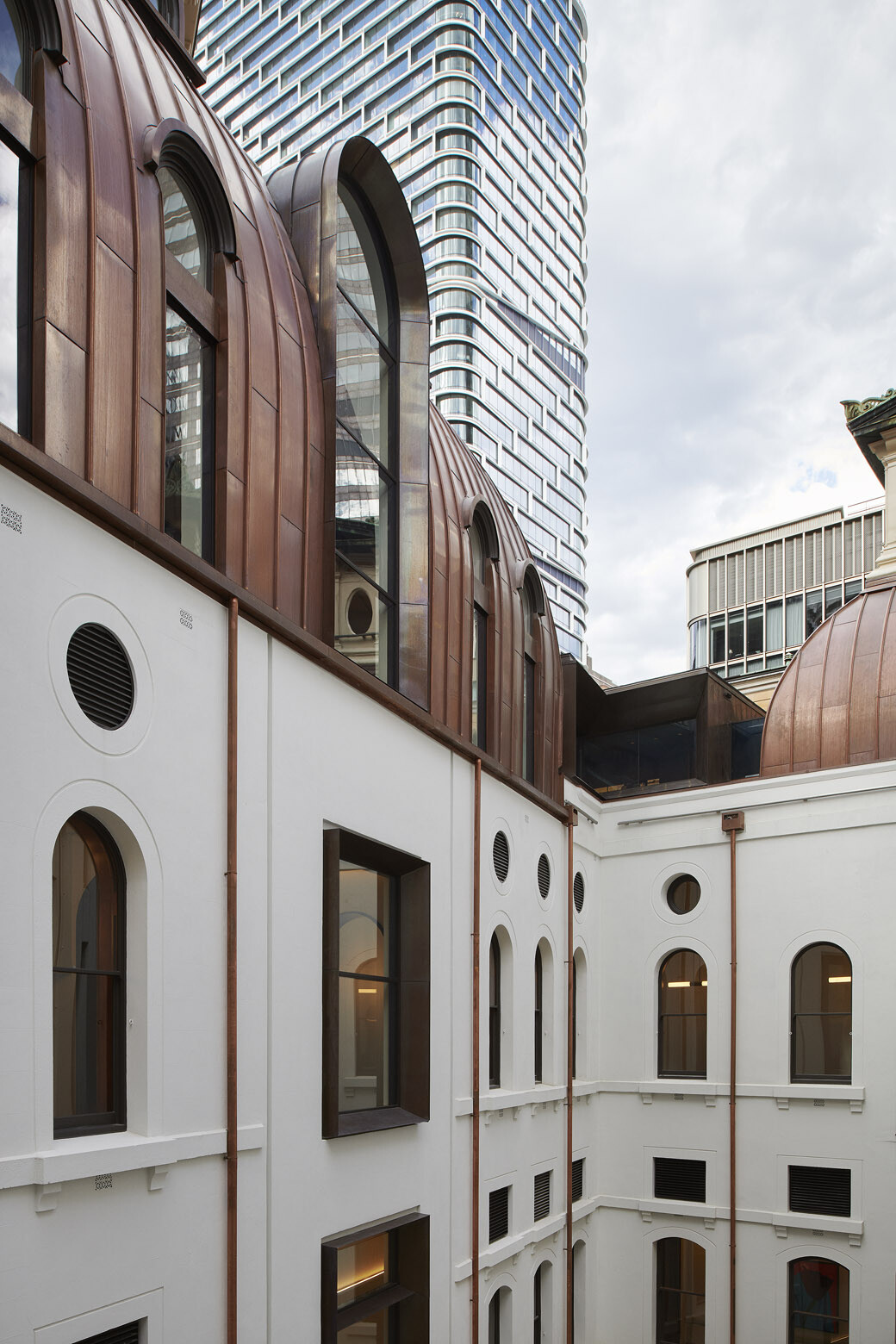
Up at the roof, the approach shifts slightly. The domes — long a defining feature of the building — are opened up and reconnected as a series of hospitality spaces. There are new insertions here, including a mezzanine that links terraces across the interior of the dome, but they’re handled in a way that still reads as secondary to the original structure.
It’s probably the most visible moment of change in the project, but even here, it doesn’t feel overplayed.
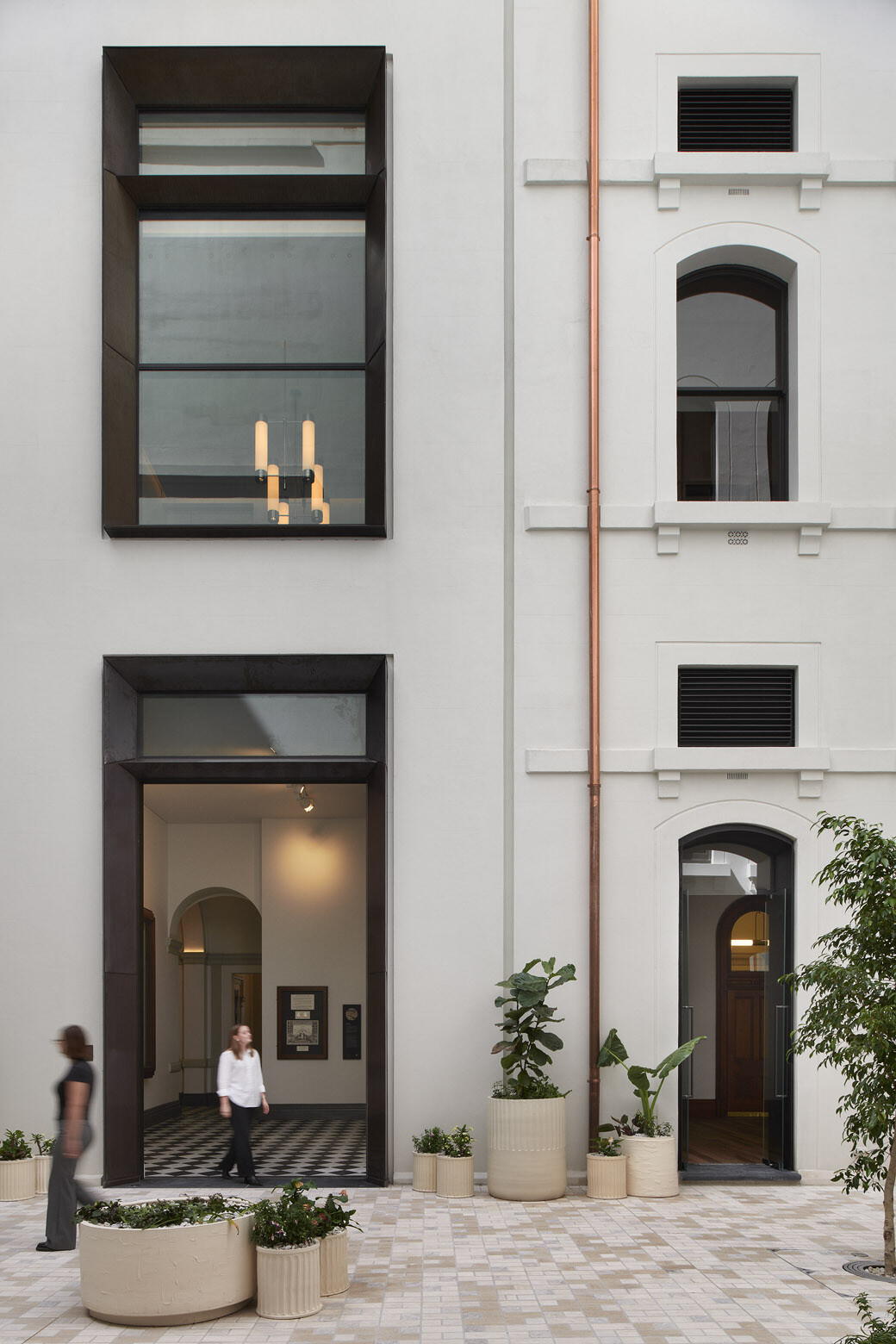
What’s more interesting is what the building is becoming. For most of its life, it was a place you couldn’t really enter unless you had a reason to be there. Now, it’s being repositioned as something far more open — a mix of retail, hospitality, workspaces and event spaces, organised around two central courtyards.
That shift — from closed institution to public destination — is where the project starts to move beyond architecture.
“Rather than treating our heritage assets as static or purely symbolic, thoughtful adaptive reuse enables these places to take on new life and meaning,” Morgan says.
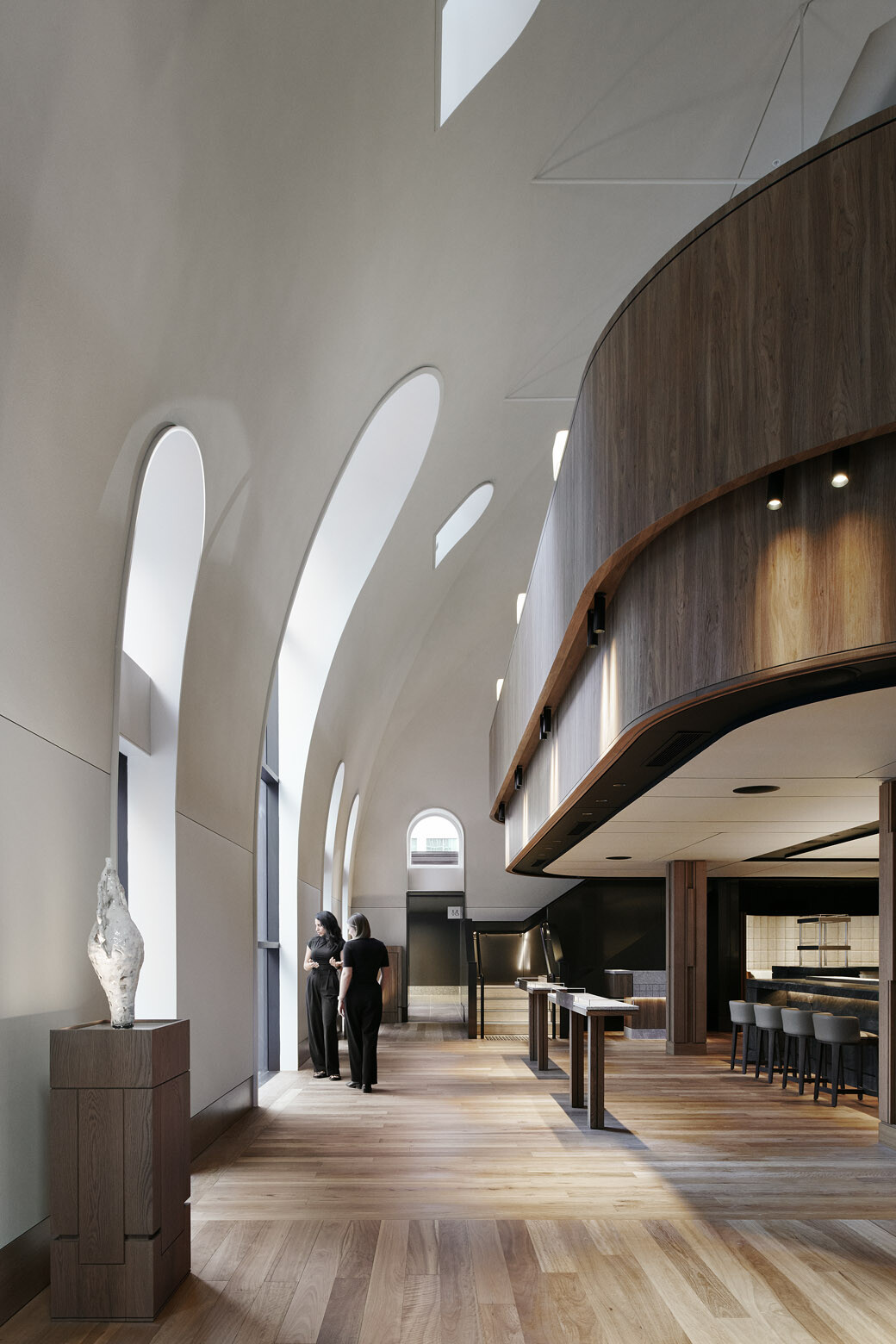
Purcell frame it in similar terms, but with a slightly longer view. “We believe that conservation of the past and designing for the future are inseparable,” Skovronek says.
It’s an idea that comes up a lot in projects like this, but here it feels grounded in the actual decisions that have been made. Nothing is frozen. Nothing is overly precious. At the same time, nothing feels arbitrary.
The building is still very much itself. It just works differently now. And maybe that’s the point. Not to transform it beyond recognition, but to let it keep going — in a way that makes sense for the city it’s now part of.
Hassell
hassellstudio.com
Purcell Architecture
purcellarchitecture.com
Photography
Nicole England, Timothy Kaye