The home of architecture and design in the Asia-Pacific
Get the latest design news direct to your inbox!

Get the latest design news direct to your inbox!
Joyce Wang Studio transforms Sha Tin Racecourse into Genso, a retrofuturist dining and entertainment world with a cinematic atmosphere.
May 4th, 2026
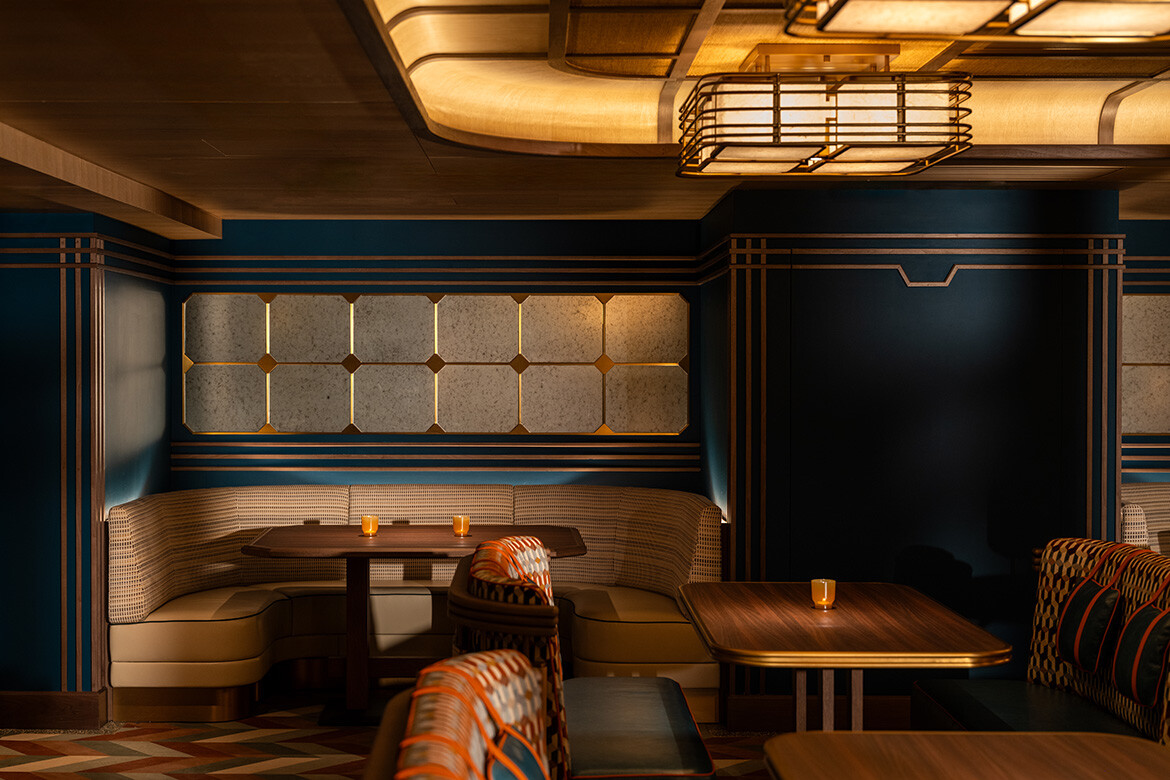
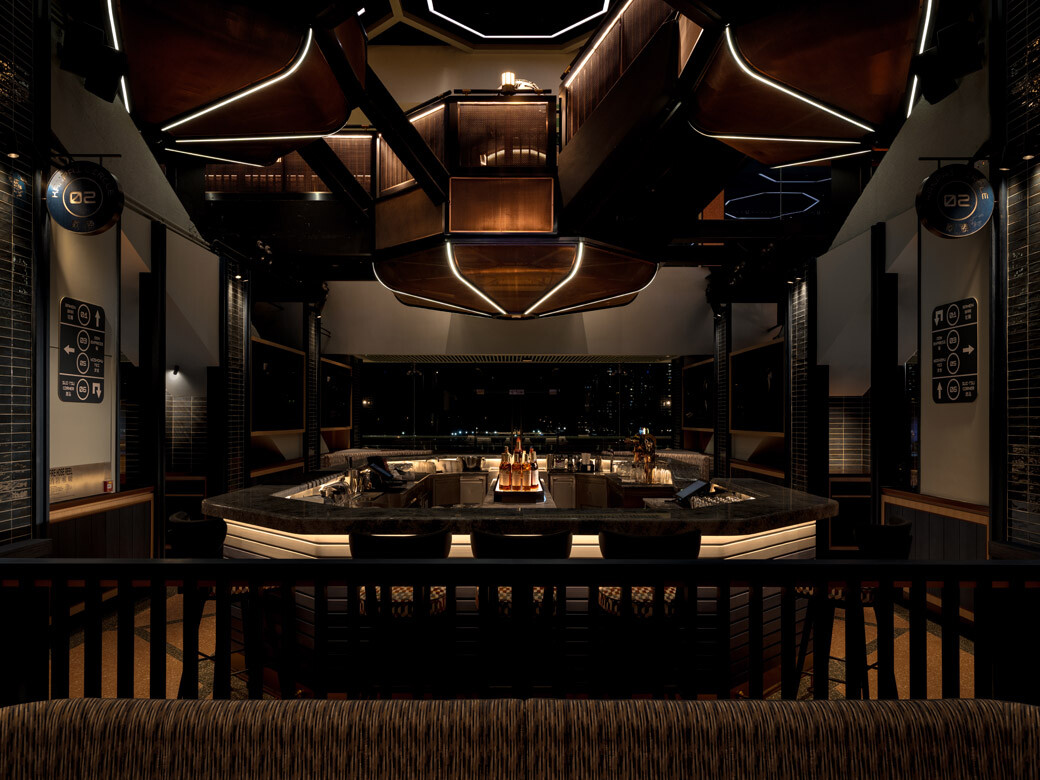
Designed by Joyce Wang Studio for the Hong Kong Jockey Club’s Sha Tin Racecourse, Genso is part dining destination, part entertainment venue, part constructed fantasy — an interior that borrows from the visual language of cinema as much as it does from the rituals of hospitality.
Described as a retrofuturist world, Genso doesn’t lean on nostalgia so much as it destabilises it. “There’s something compelling about a time that is difficult to pinpoint or place,” says Joyce Wang. “It feels less prescriptive and the ambiguity naturally allows it to resonate further across generations.”
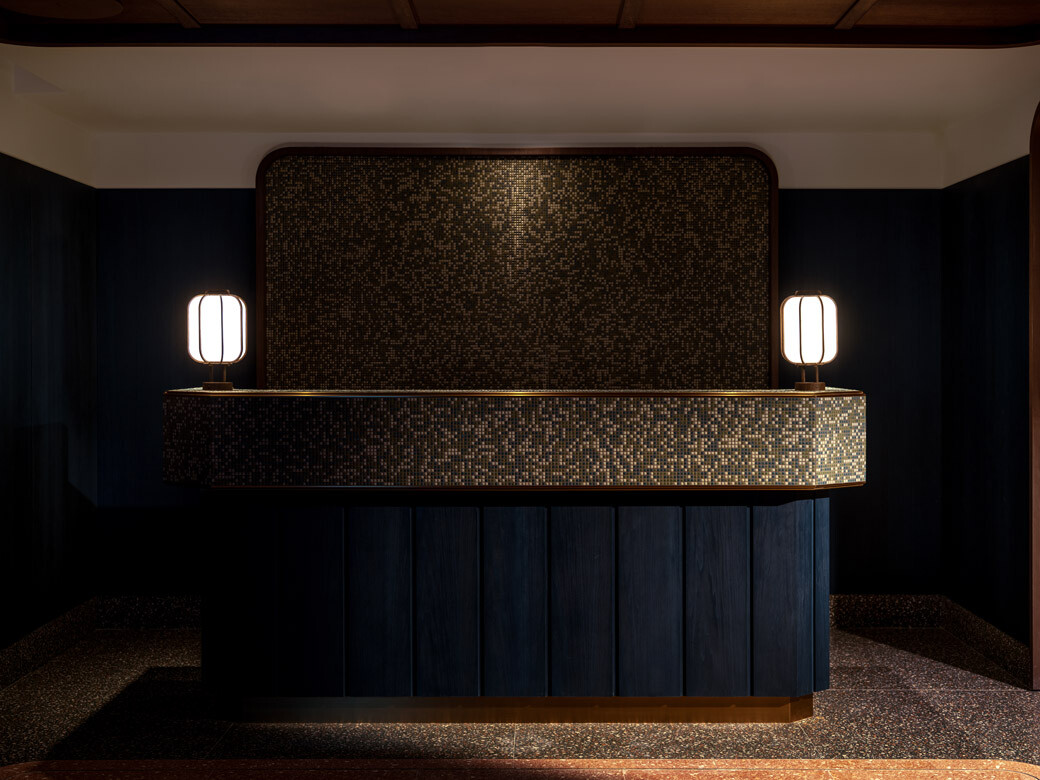
Rather than anchoring the space to a singular reference, Wang frames it as an open-ended possibility — one that reflects both the layered identity of Hong Kong and the evolving culture of horse racing. The result is less a themed interior than a loose, shifting atmosphere.
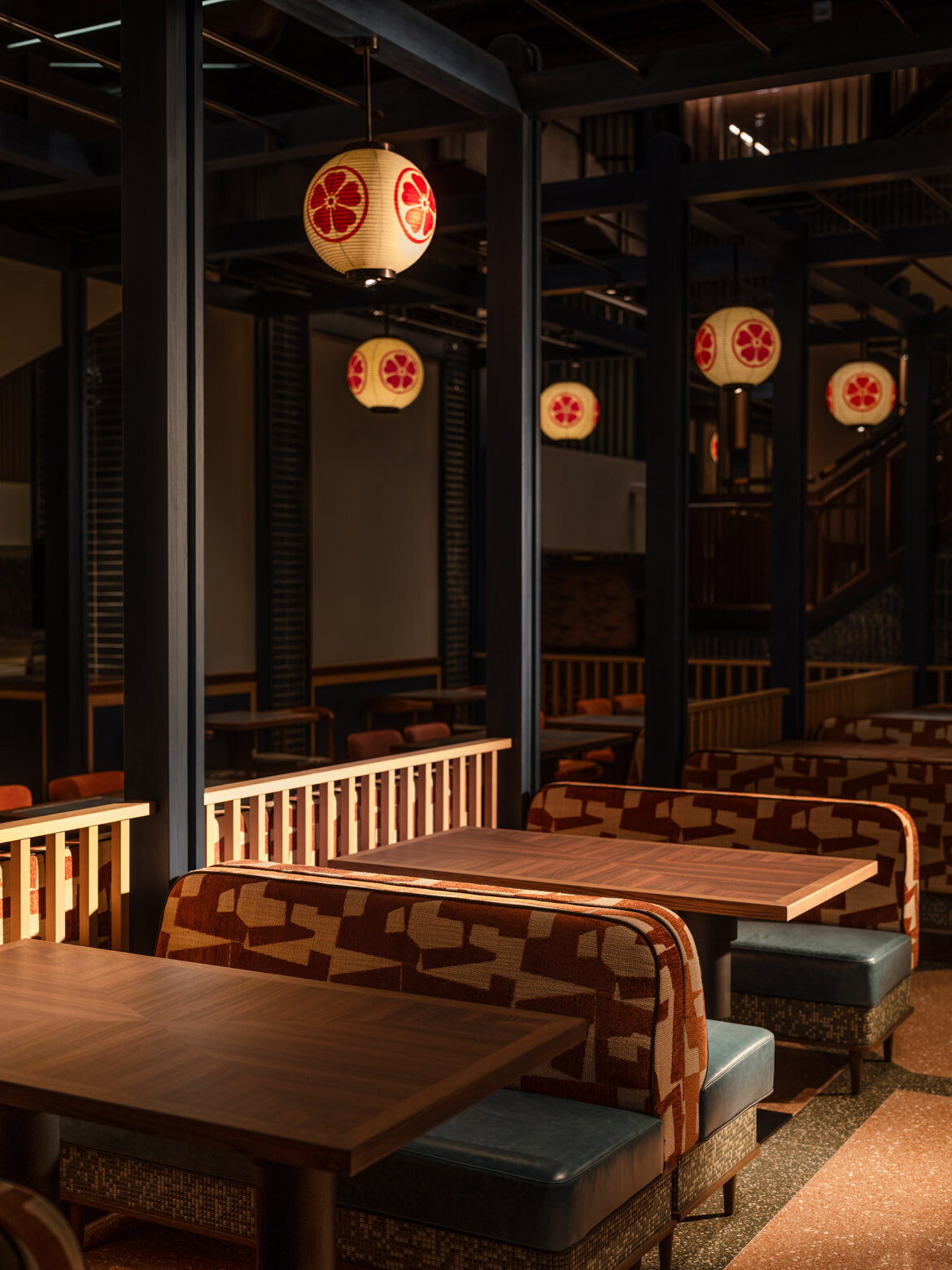
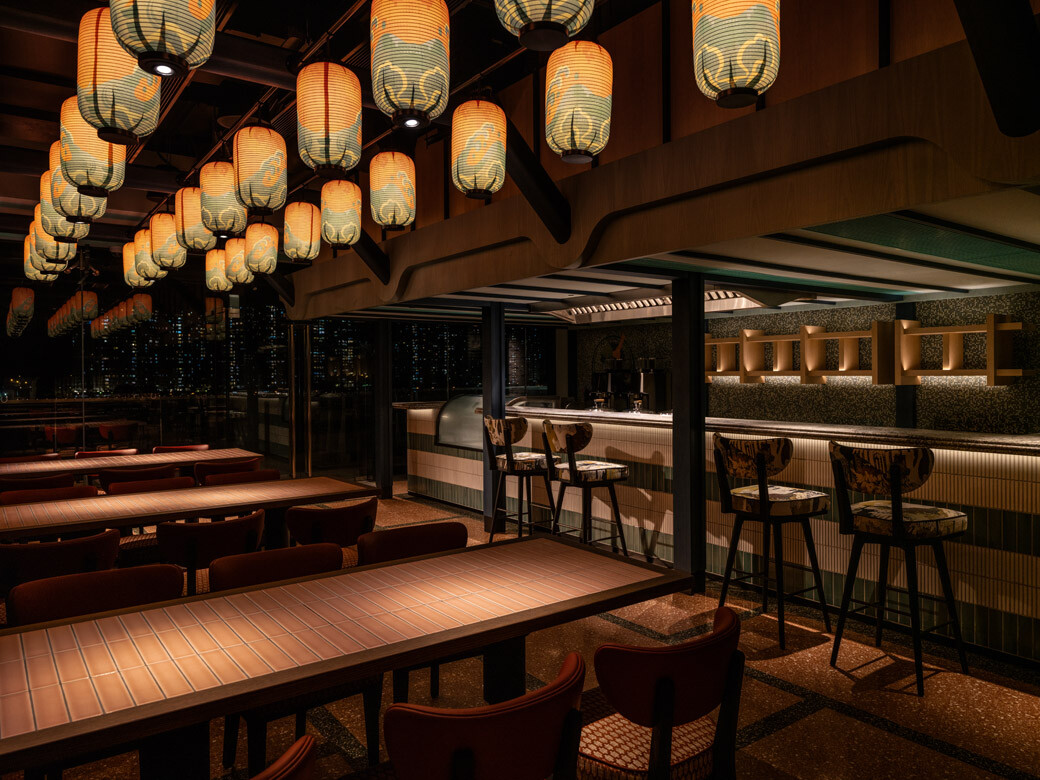
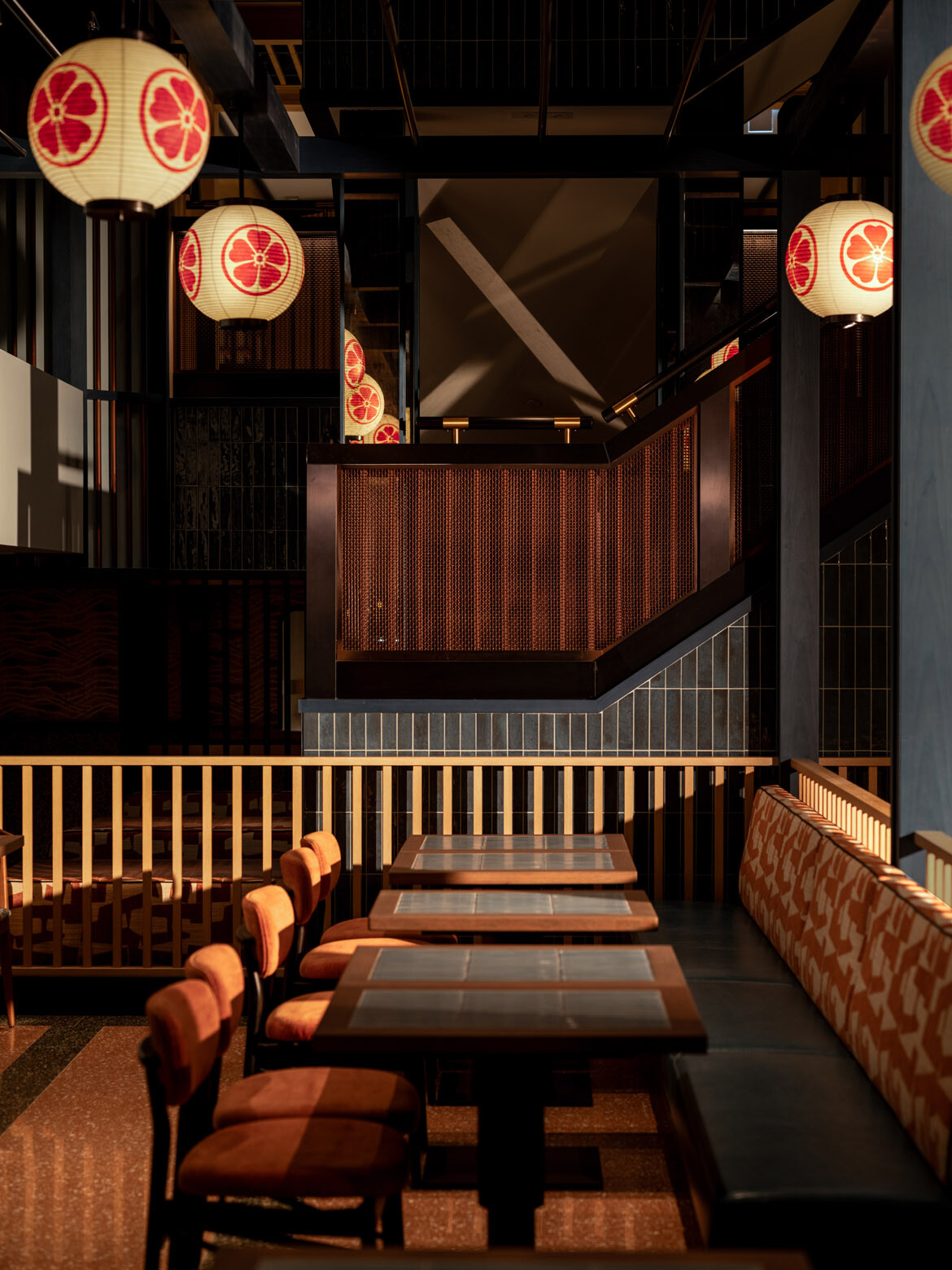
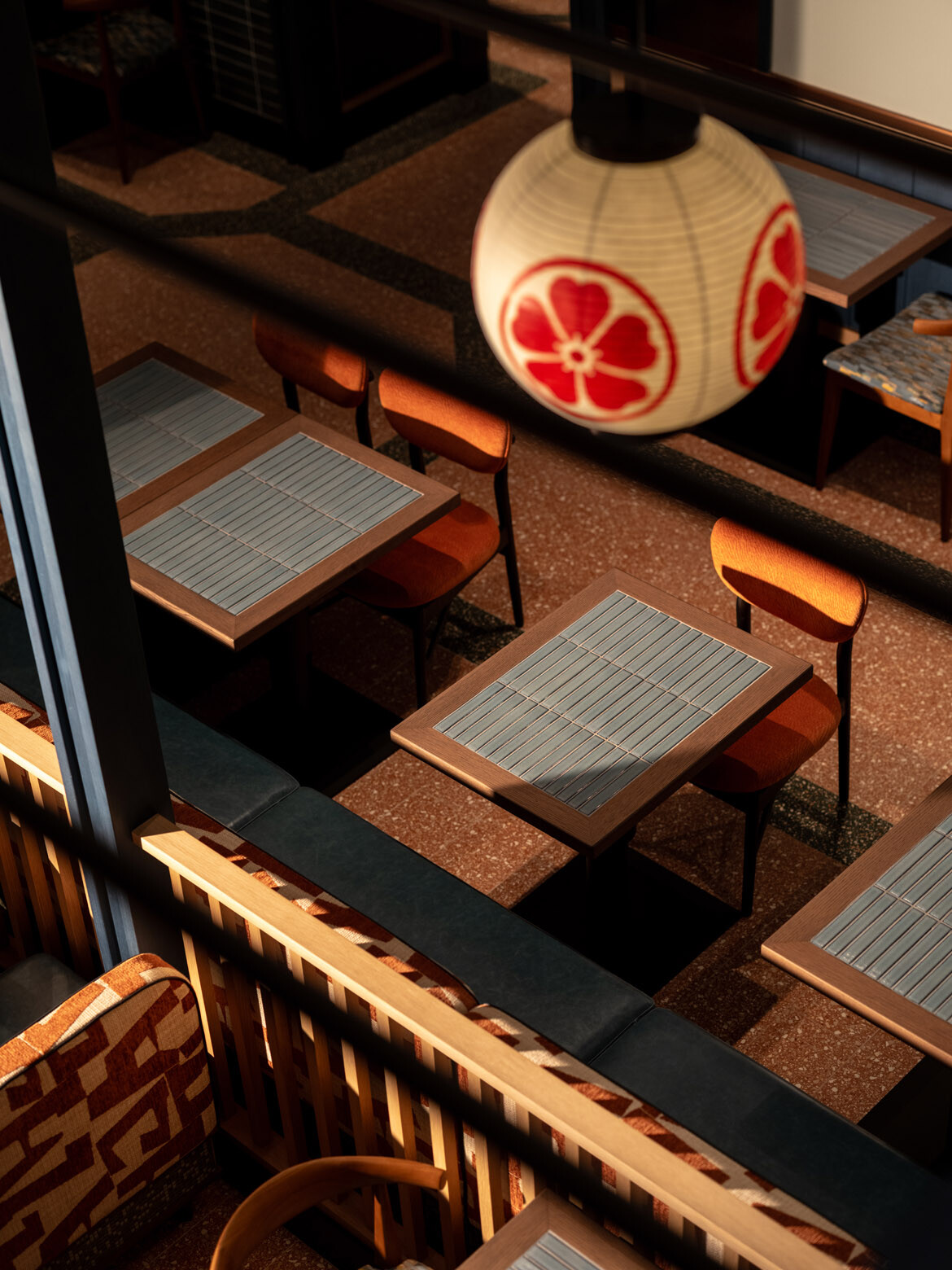
The experience unfolds across two levels. The ground floor, Fudo Town Food Hall, channels the density and immediacy of a street market — bright and kinetic. Above, the Izakaya level slows the tempo, introducing a series of suspended dining zones connected by a dramatic walkway of neon-clad “floating islands.”
If the references — Tokyo’s Golden Gai, manga culture, the glow of Blade Runner — feel familiar, they are never literal. “It was always about crafting and distilling an atmosphere rather than reproducing an image,” Wang explains. “We wanted to celebrate the futuristic glow… carving out different levels and layers whilst capturing the diverse experiences that exist in a vibrant city.”
Related: Materia makes the case for expressive Passivhaus
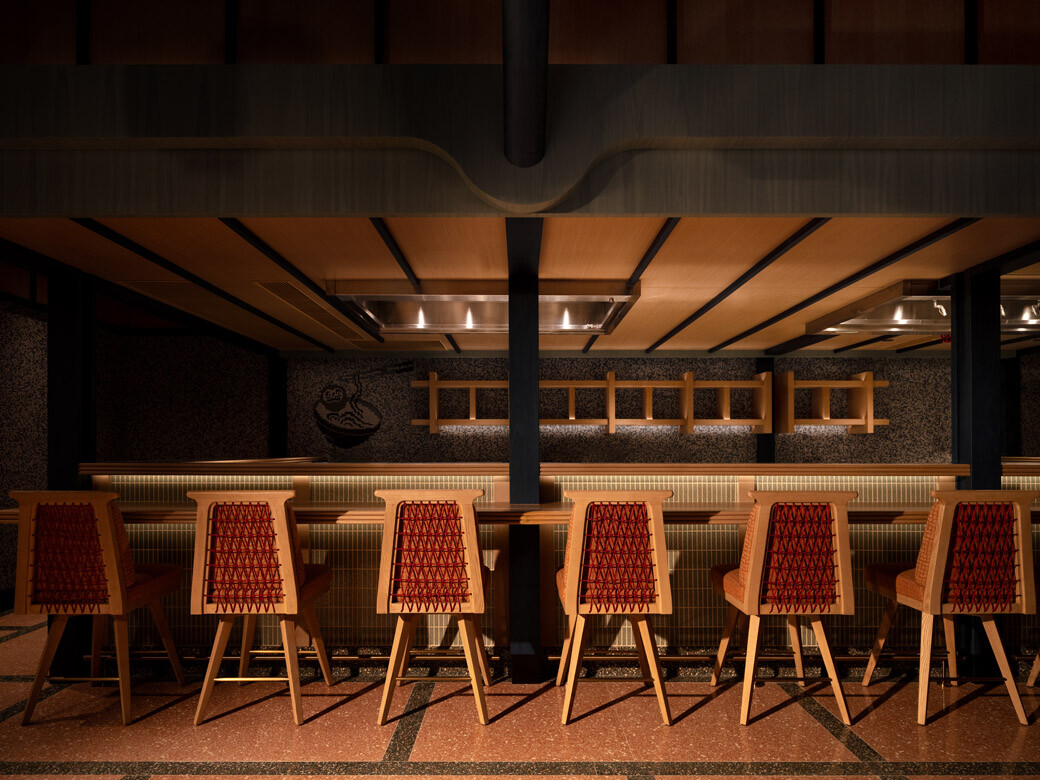
That sense of layering is central, as Genso is not designed to be discovered in fragments — an interior that reveals itself through movement. “We invite guests to journey through the space… much like flipping through manga,” Wang says.
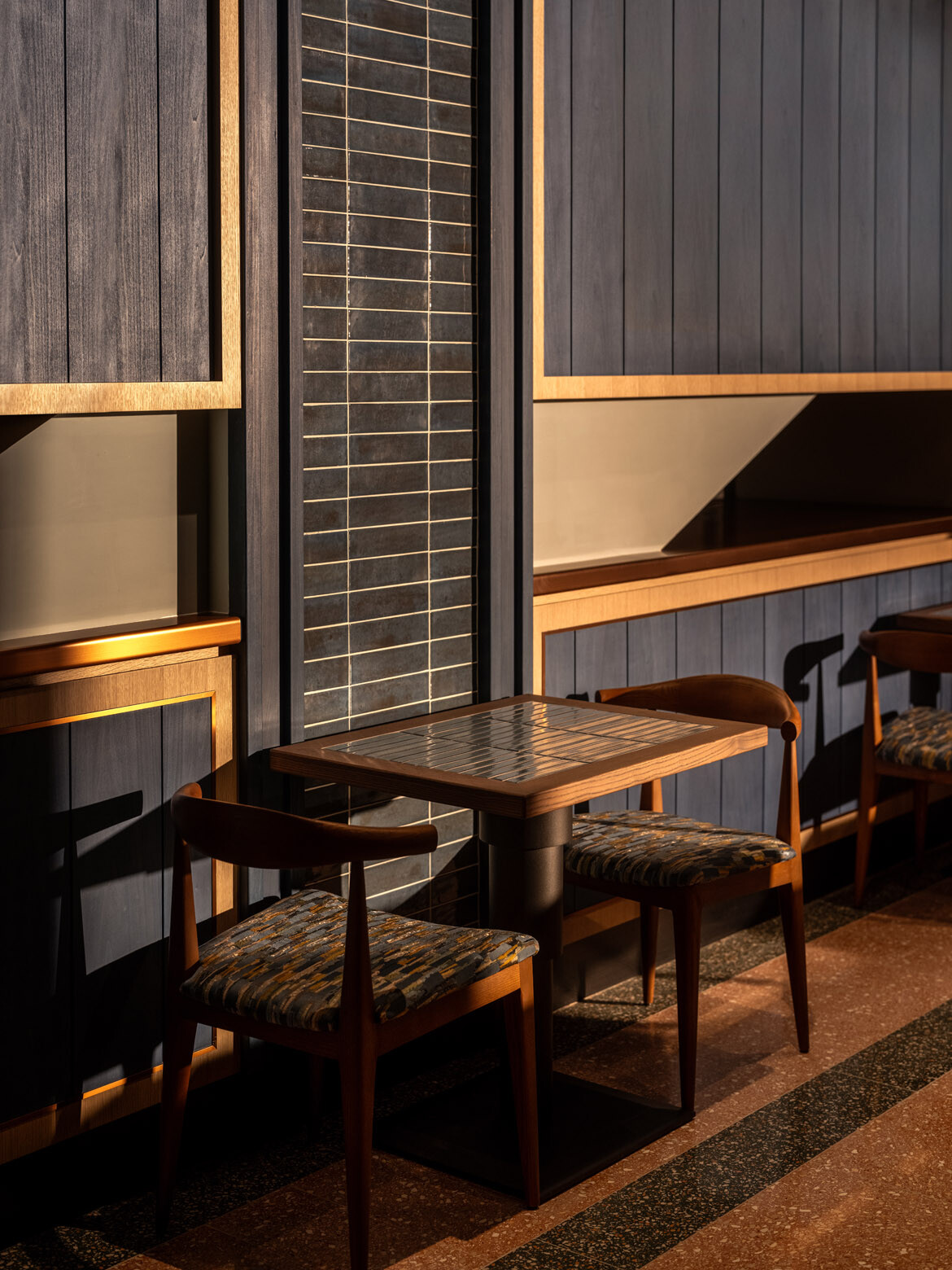
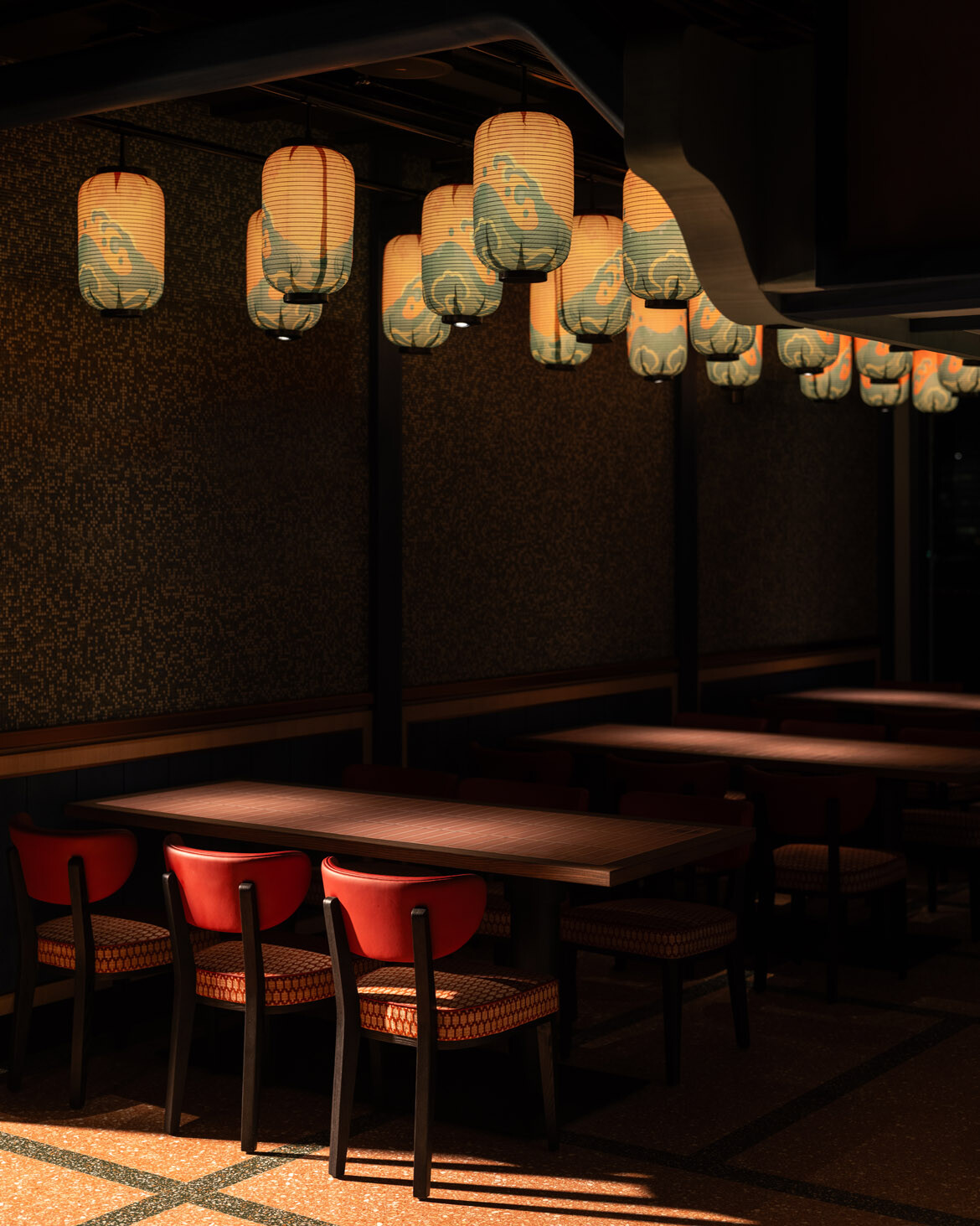
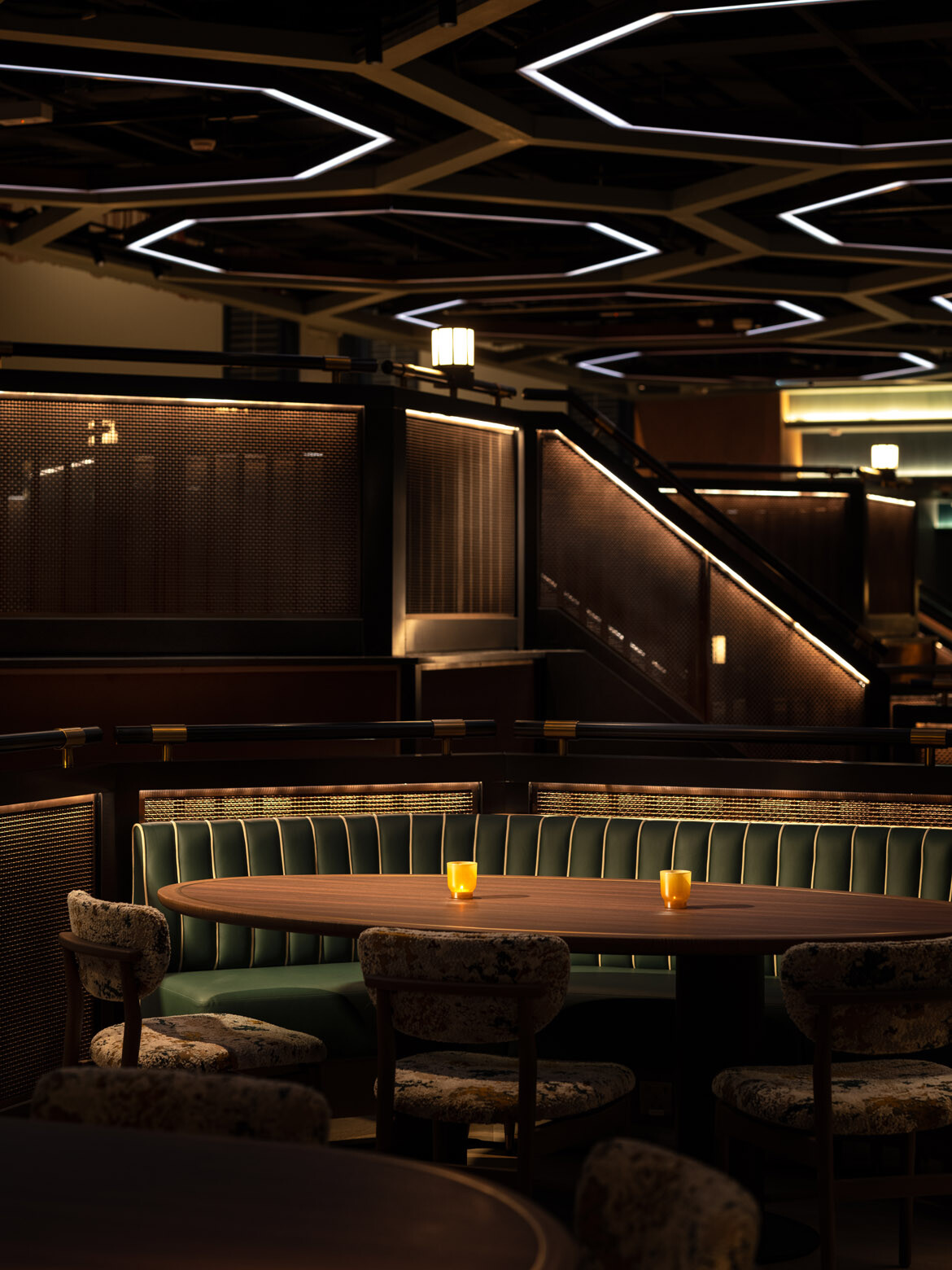
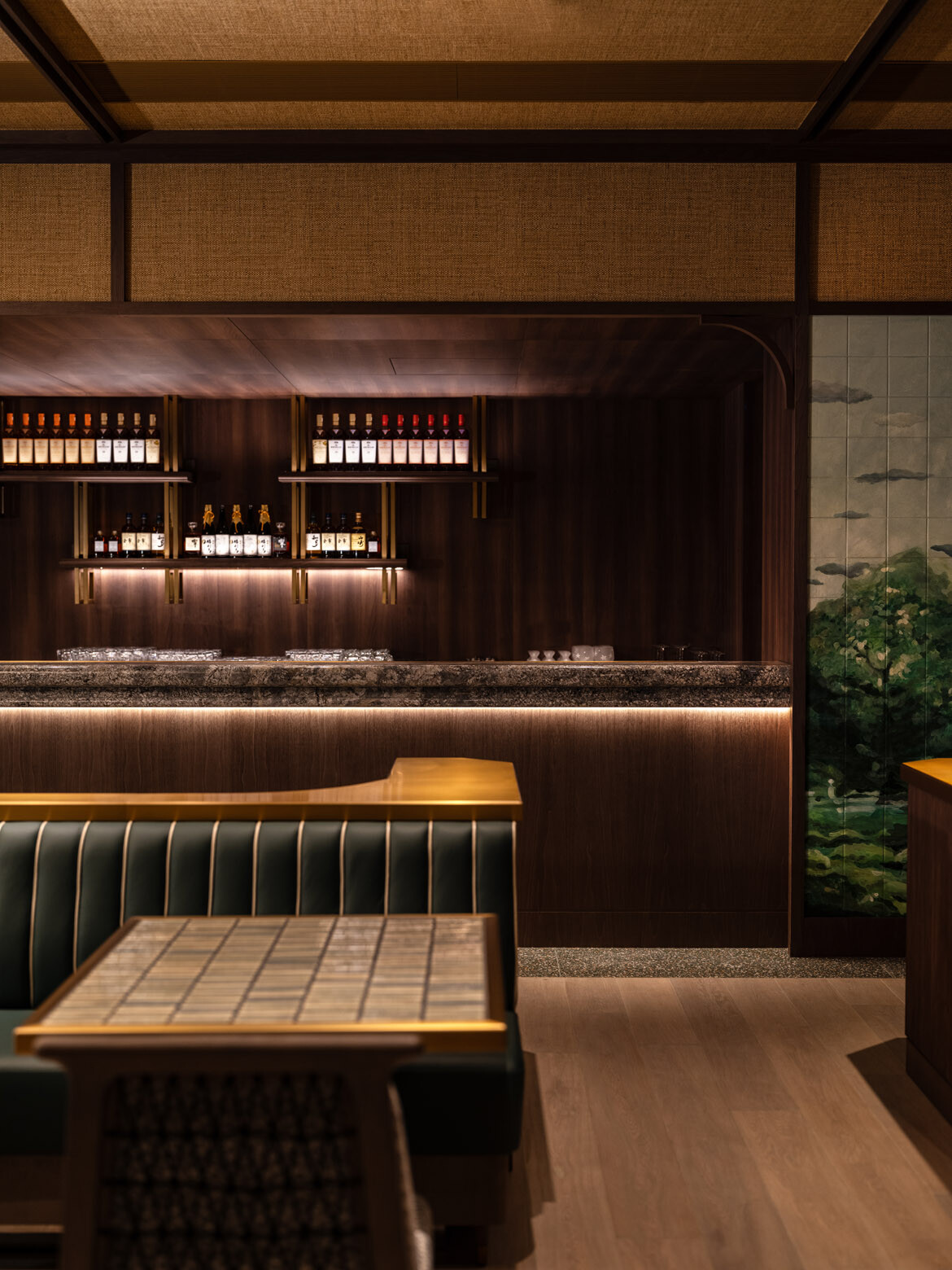
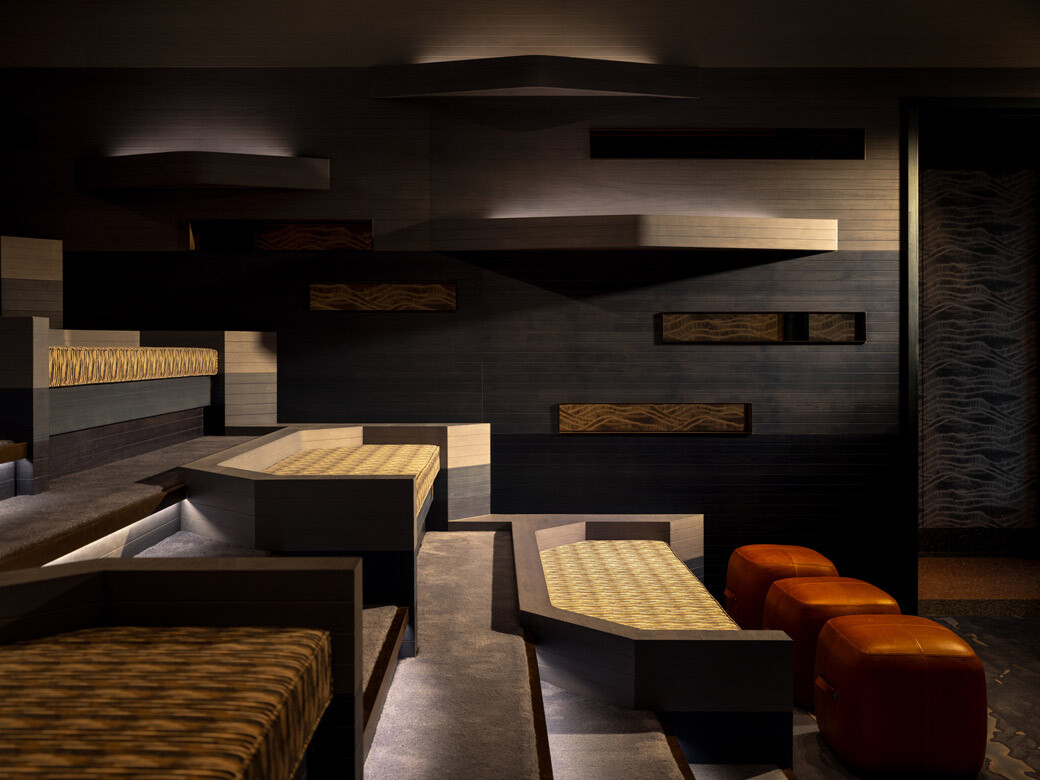
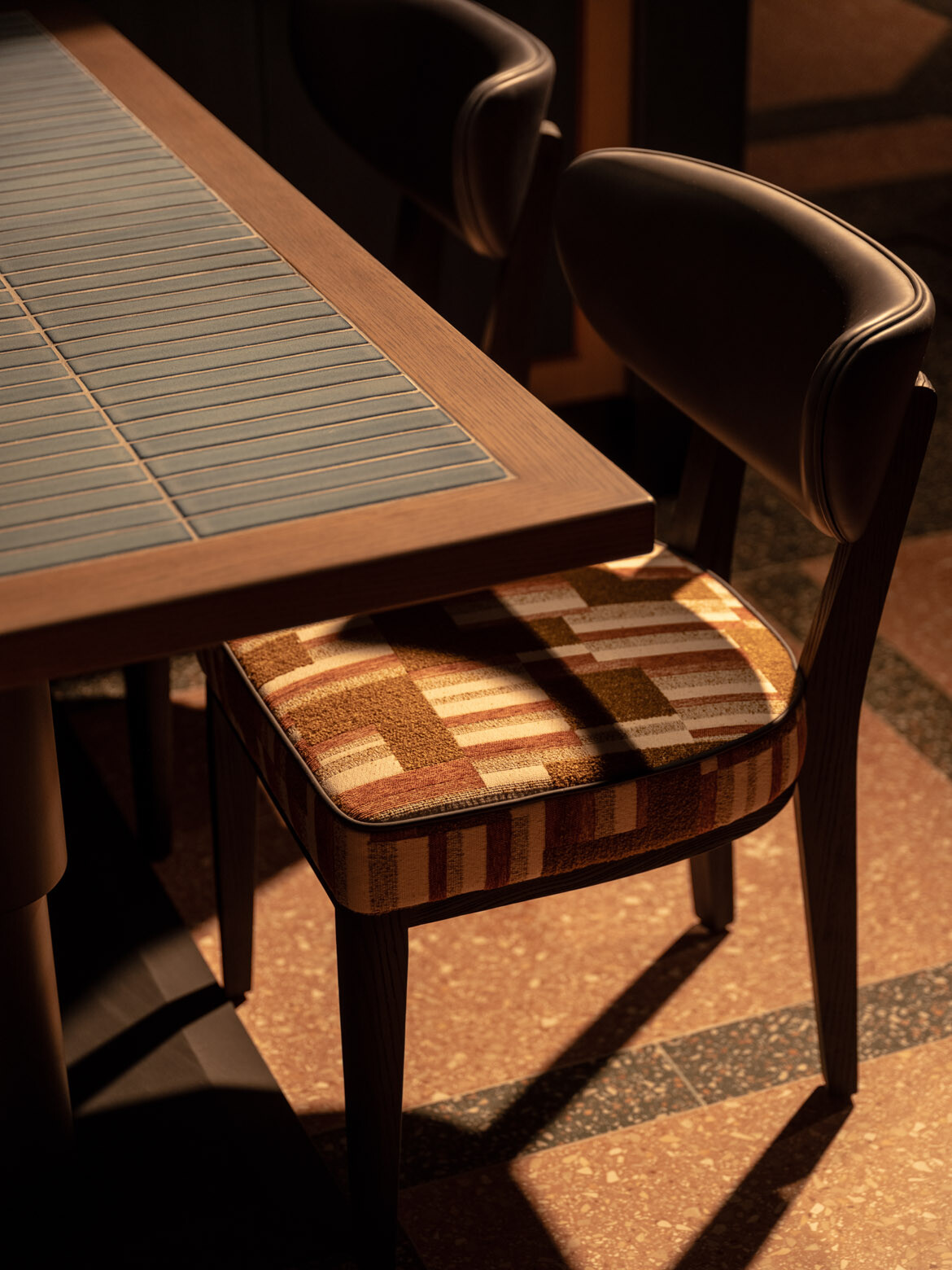
This narrative approach is embedded in the architecture itself, with intimate nooks and sculpted partitions setting the rhythm, while lanterns and neon elements punctuate the ceiling, casting shifting fields of light across timber, upholstery and tiled surfaces. Each detail — down to floor patterns and railing profiles — forms part of a larger composition. “The experience evolves continuously, revealing different perspectives as you move through the space,” she says.
For all its visual intensity, Genso remains surprisingly calibrated. The palette of teal and aqua offset by orange and peach is familiar one, grounding the experience even at its most theatrical. “The sense of familiarity… is key in driving warmth and comfort,” Wang notes. Strategic screening and layered lighting further temper the atmosphere, allowing moments of intimacy within the broader spectacle.
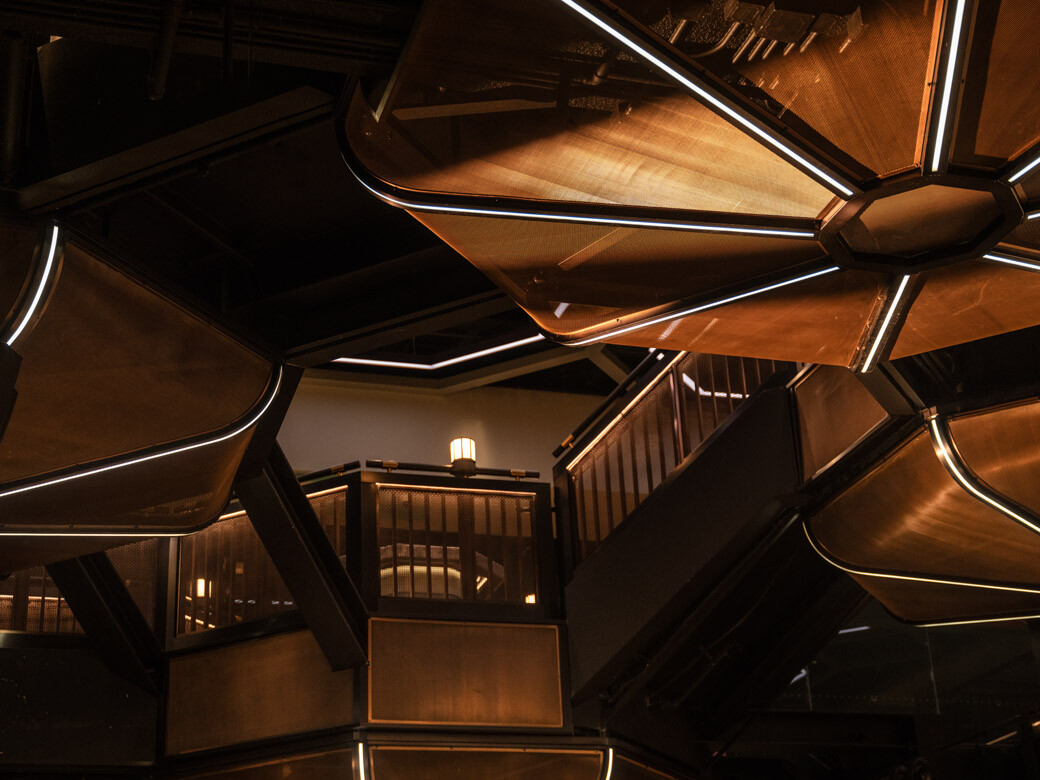
Context, too, plays a decisive role. Inserted into the established identity of the racecourse, the project negotiates between immersion and function. Sightlines are carefully choreographed, with platforms and levels doubling as viewing points oriented toward the final stretch of the race. “Whilst the interior is immersive, as the lighting inside shifts to dim, the exterior races come into foreground,” Wang explains.
It’s here that Genso’s duality becomes most apparent as equally backdrop and stage, environment and event.
“The turning point… is the awakening of the senses,” Wang reflects. “Creating moments of surprise and wonder which encourage guests to feel as though they are really part of an unfolding scene rather than simply occupying a space.”
In Genso, the race may still be the main event — but the architecture ensures it’s no longer the only one.
Joyce Wang Studio
joycewangstudio.com
Photography
Common Studio
INDESIGN is on instagram
Follow @indesignlive
A searchable and comprehensive guide for specifying leading products and their suppliers
Keep up to date with the latest and greatest from our industry BFF's!
The internet never sleeps! Here's the stuff you might have missed