The home of architecture and design in the Asia-Pacific
Get the latest design news direct to your inbox!

Get the latest design news direct to your inbox!
The Australian marketing and advertising community is mourning the loss of Murray Robert Pope, a distinguished marketing strategist and community leader who passed away peacefully at his home on October 20th, 2025.
November 9th, 2025
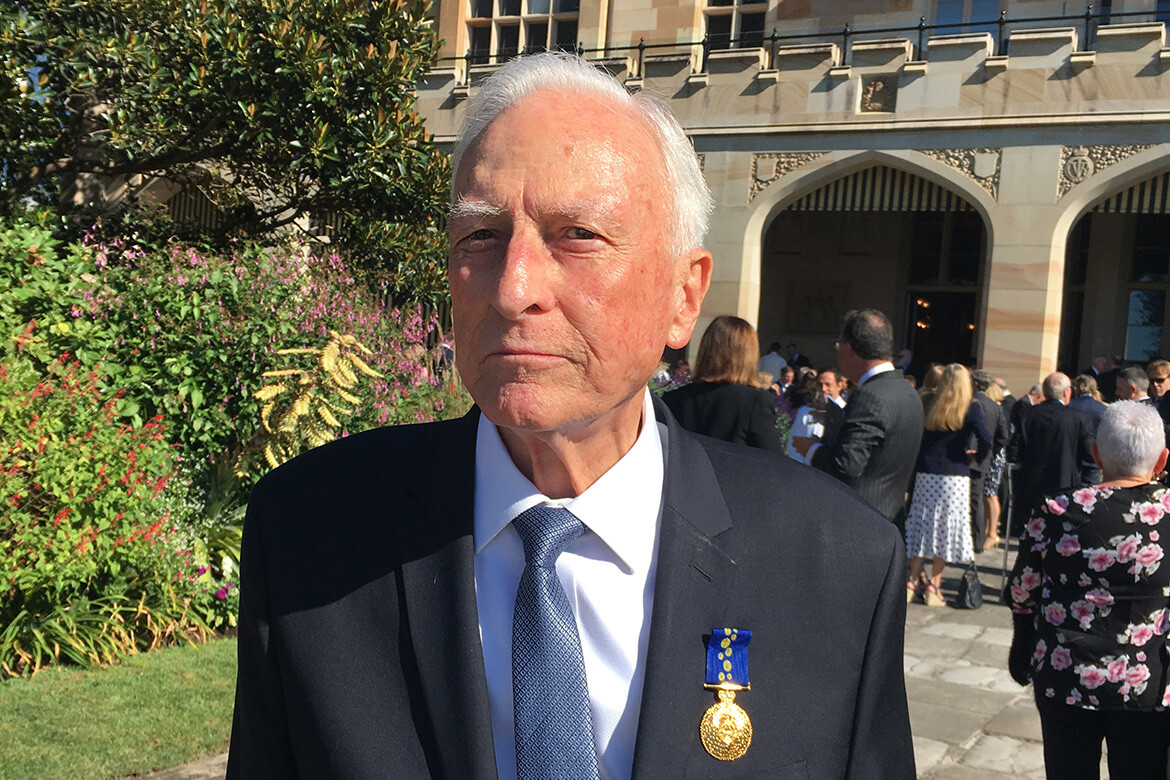
Born in 1932, Murray Pope has sadly passed away on October 20th in Sydney. With a career spanning several decades, Pope left an indelible mark on the industry, from his early days in advertising, as the founding partner and CEO of PKB – Pope, Kiernan & Black – an influential agency of Sydney’s Mad Men era, to his pivotal roles at Zip Industries and his own successful consultancy, Bounty Concepts.
Educated at Knox Grammar School, Murray Pope embarked on a career that would see him become a respected figure in Australian marketing. His journey began in the dynamic world of advertising, where he honed his skills in creating compelling campaigns for a diverse range of clients. In 1987, he founded Bounty Consulting Group, where he served as Managing Director for eight years. At the helm of his own agency, Pope was responsible for producing a wide array of advertising materials, including print, radio and television campaigns for notable clients such as Rothbury Wines, publishers including Hamlyn and Collins, major international airlines, Bi-Lo supermarkets (for Coles Myer), Hudson Timber, Goodyear, Honda, Akai, Mutual Pools, Estee Lauder and many more.
In 1996, Pope joined Zip Industries, a company he would be associated with for over 15 years, in two separate stints. He first served as Marketing Director and a Board Member from 1996 to 2003. In this role, he was instrumental in shaping the marketing strategy for Zip’s iconic instant boiling water appliances. His responsibilities were extensive, covering everything from product design and branding to advertising and sales promotion, not only in Australia but also in the United Kingdom and other key export markets. His strategic vision and marketing prowess were key to the company’s domestic and international success.
After a brief period as the NSW State Manager for Architectural Information Services, where he led the expansion of the company into New South Wales and Victoria, Pope returned to Zip Industries in 2006. This time, he served as the Marketing Advisor to the Executive Chairman, a position he held until 2014. During this period, he played a crucial role in the development and promotion of Zip’s expanding product line, which by then included filtered chilled drinking water appliances and washroom flushing systems. His guidance helped Zip penetrate over 60 export regions, solidifying its position as a global leader in the industry. He also oversaw Zip’s principal sponsorship of the Sydney Festival for three years, a testament to his commitment to the arts and community engagement.
In 2017, Pope founded Bounty Concepts Marketing Strategy, where he served as a Senior Marketing Advisor. He described his approach as one of crafting “tailored strategies… ensuring that each marketing investment translates into substantial growth.” His LinkedIn profile states: “The advisory role at Zip Industries, where we expanded a diverse product range into over 60 export regions, showcases a track record of dynamic market penetration.”
Beyond his professional achievements, Murray Pope was a dedicated community man. In recognition of his contributions, he was awarded the Medal of the Order of Australia (OAM) in January 2019 for his “service to community history.” His volunteer work included serving on the Fundraising Committee for the National Boer War Memorial Fund from 2016 to 2017, and overseeing the commissioning, realisation and installation of the massive memorial sculpture of four mounted Lighthorsemen in Canberra. He was also a supporter of Odyssey House and the Red Cross Calling Appeal.
Murray Pope’s legacy is one of innovation, strategic thinking, and a deep commitment to both the brands he represented and the community he served. He will be remembered as a marketing luminary who not only built successful brands but also contributed to the cultural fabric of Australia.
INDESIGN is on instagram
Follow @indesignlive
A searchable and comprehensive guide for specifying leading products and their suppliers
Keep up to date with the latest and greatest from our industry BFF's!
The internet never sleeps! Here's the stuff you might have missed