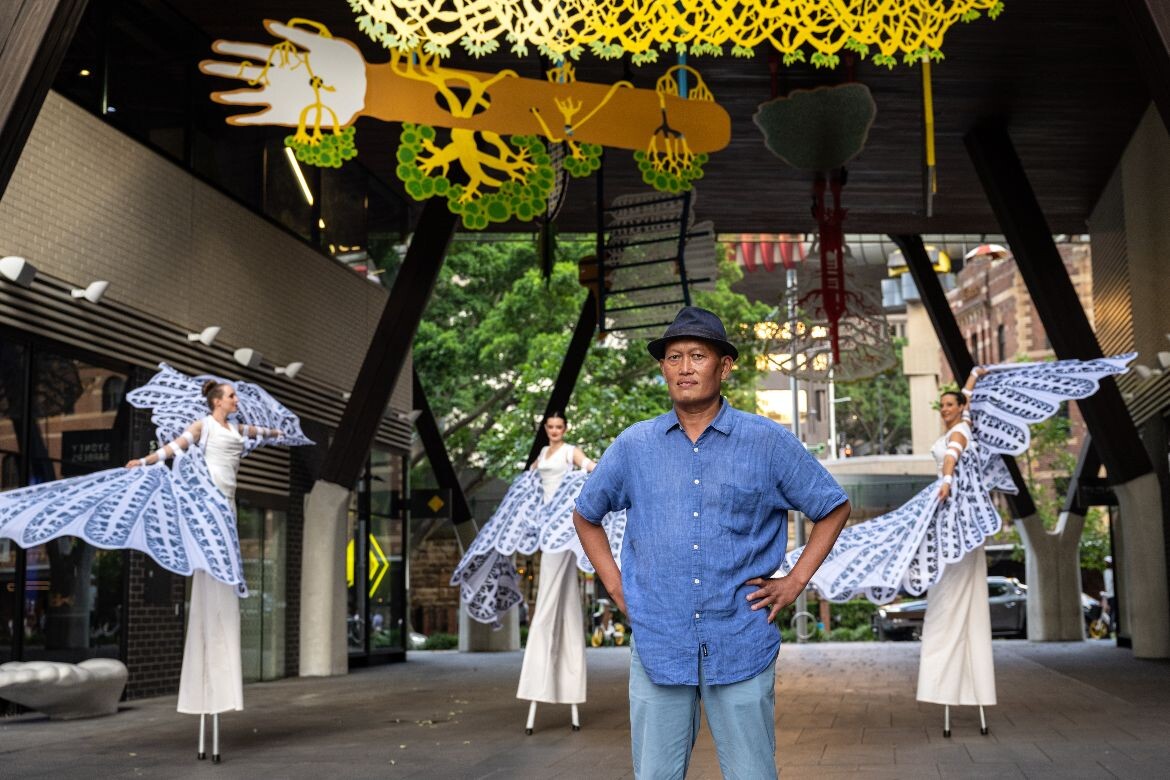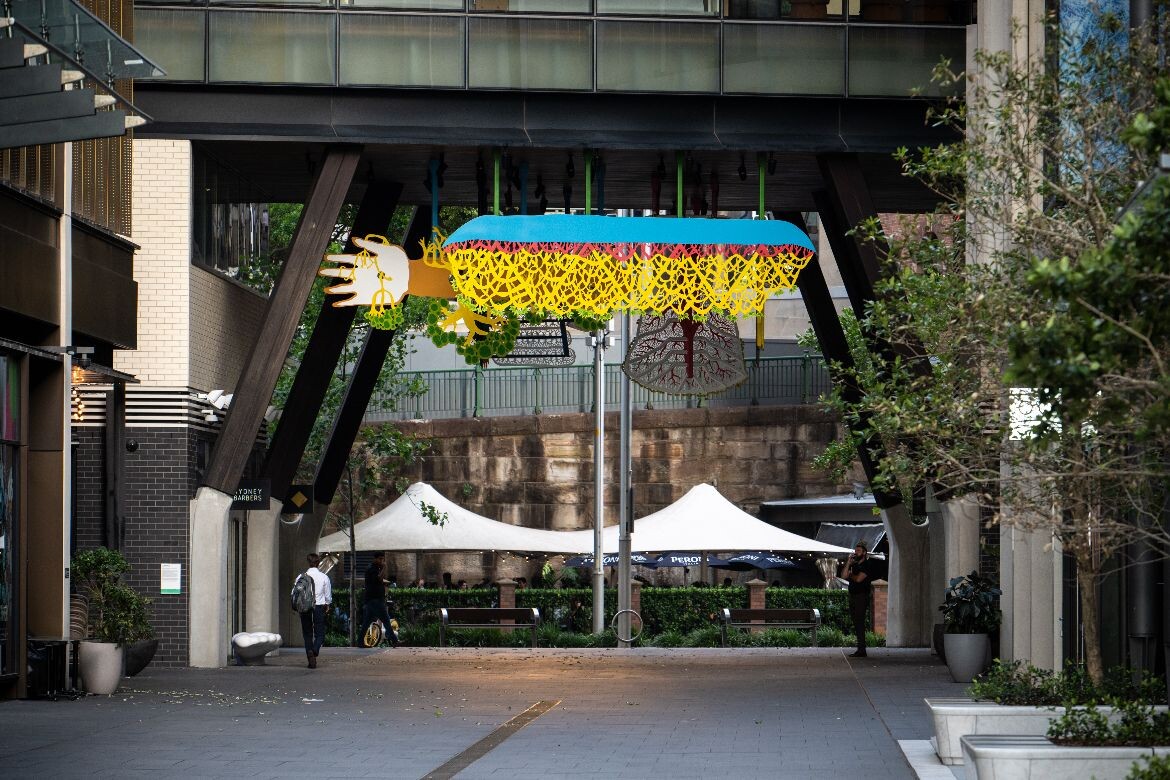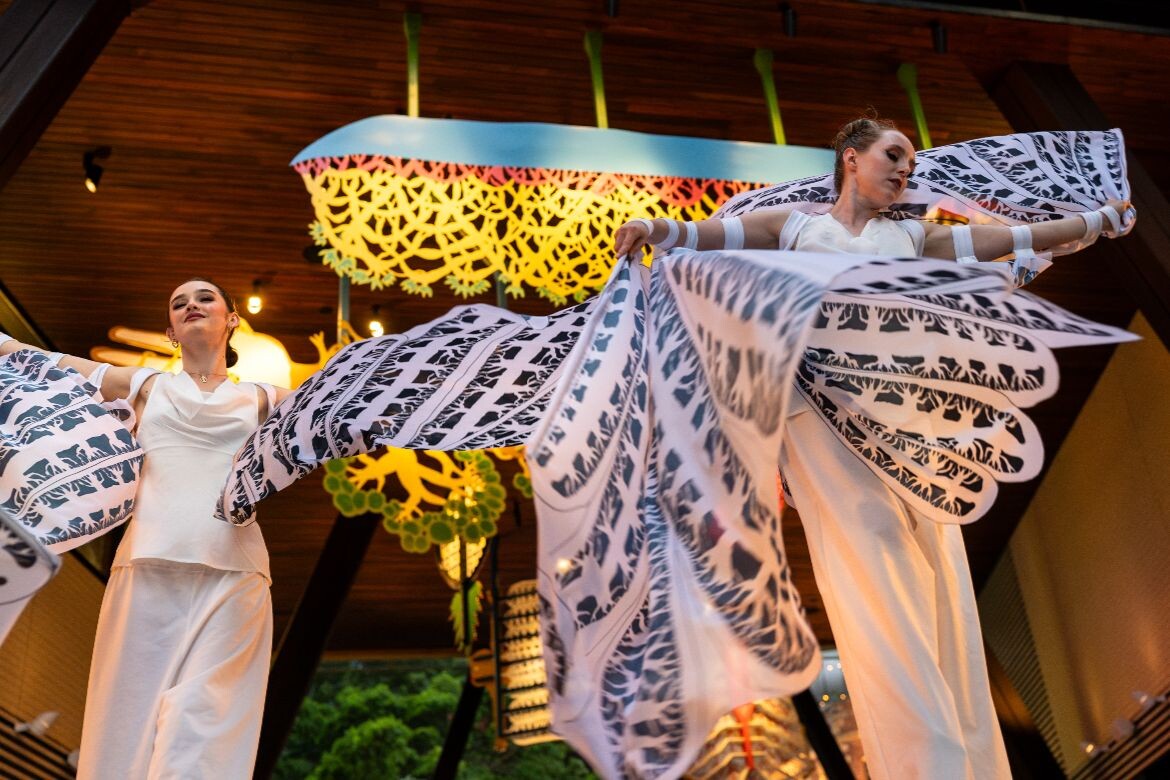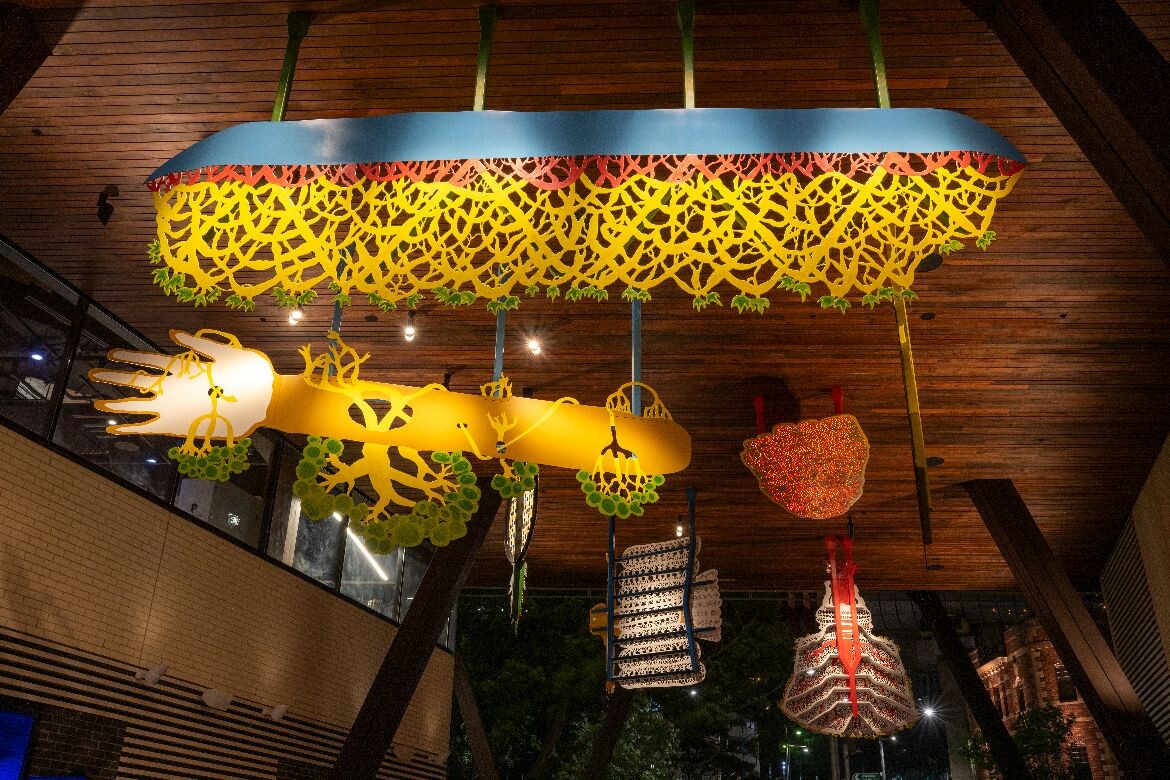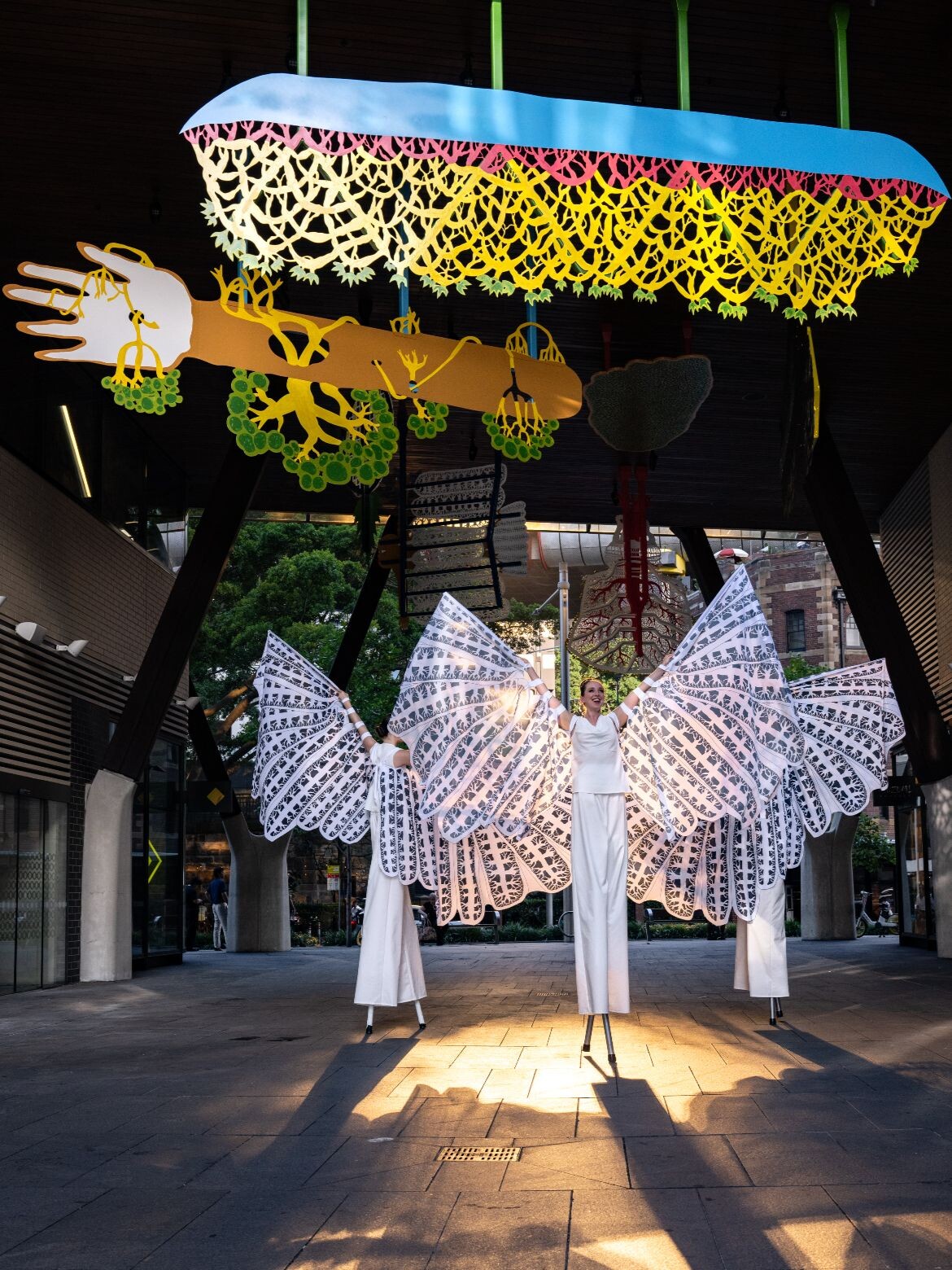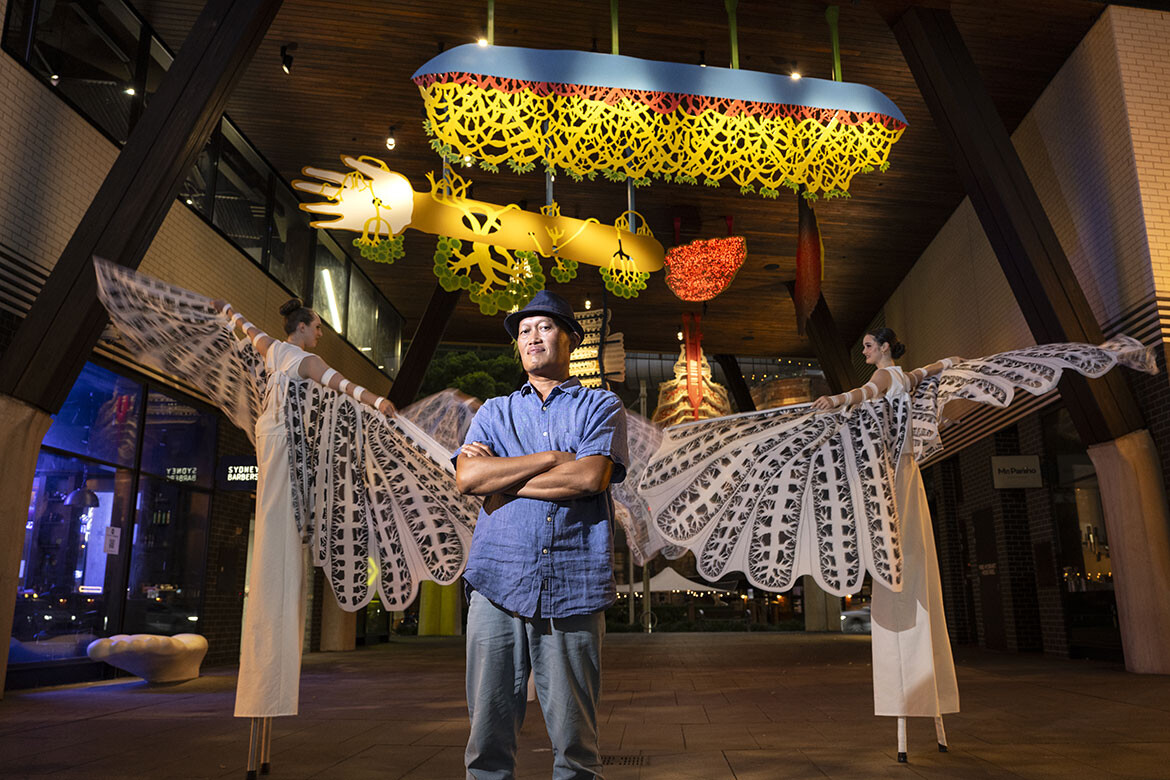
A new permanent artwork has quietly taken root at Barangaroo South, transforming a busy pedestrian link into an immersive, otherworldly environment. Titled Upside-Down Garden, the installation marks the first public artwork by Indonesian–Australian artist Jumaadi and one of his most ambitious projects to date.
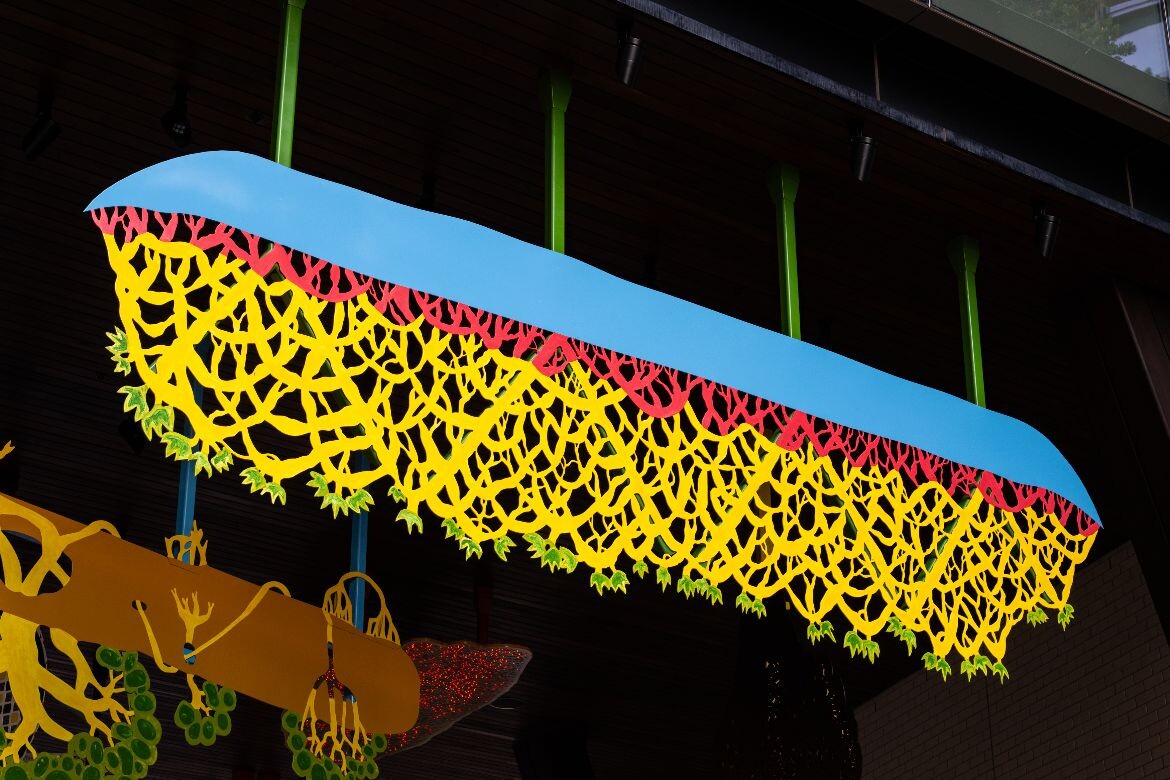
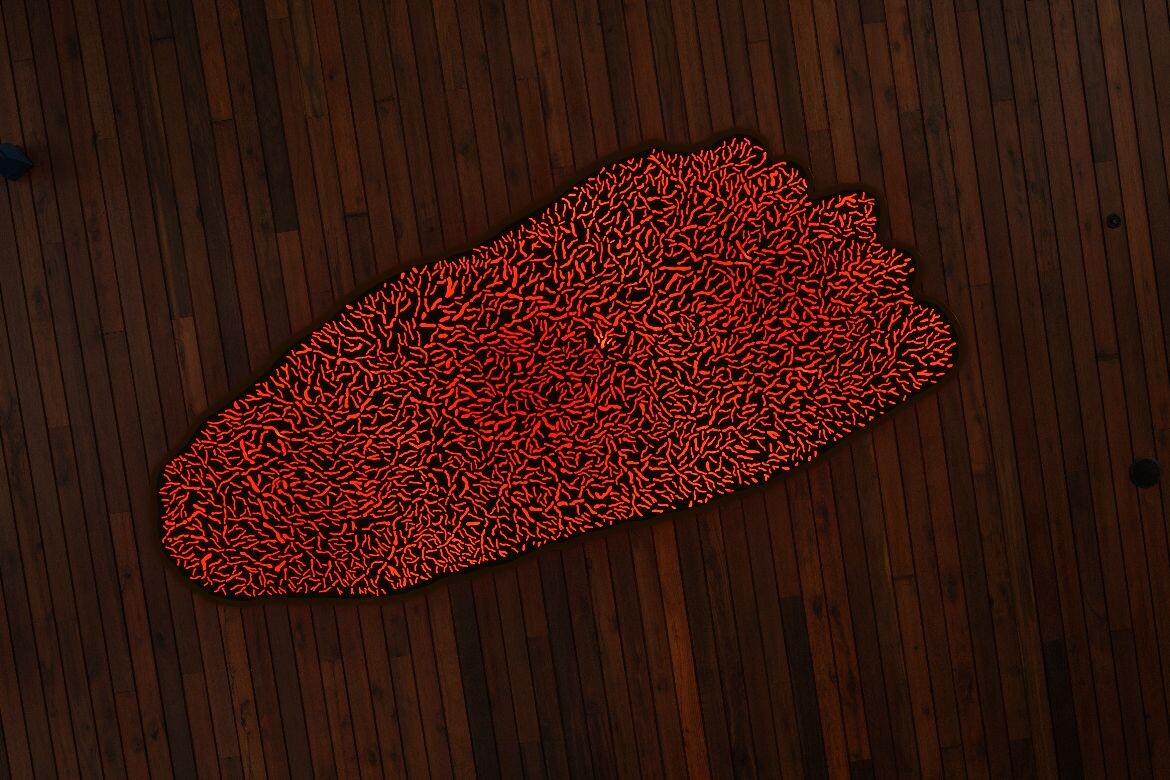
Located within the through-site link of International House, the work comprises a constellation of suspended metal forms that appear to float overhead. Drawing on botanical references as well as mythical and fantastical imagery, the sculptures blur distinctions between the natural and the fabricated, the familiar and the uncanny. By day, sunlight filters through the forms, casting shifting silhouettes onto the surrounding architecture; by night, carefully placed lighting extends this play of shadow, lending the space a distinctly theatrical quality.
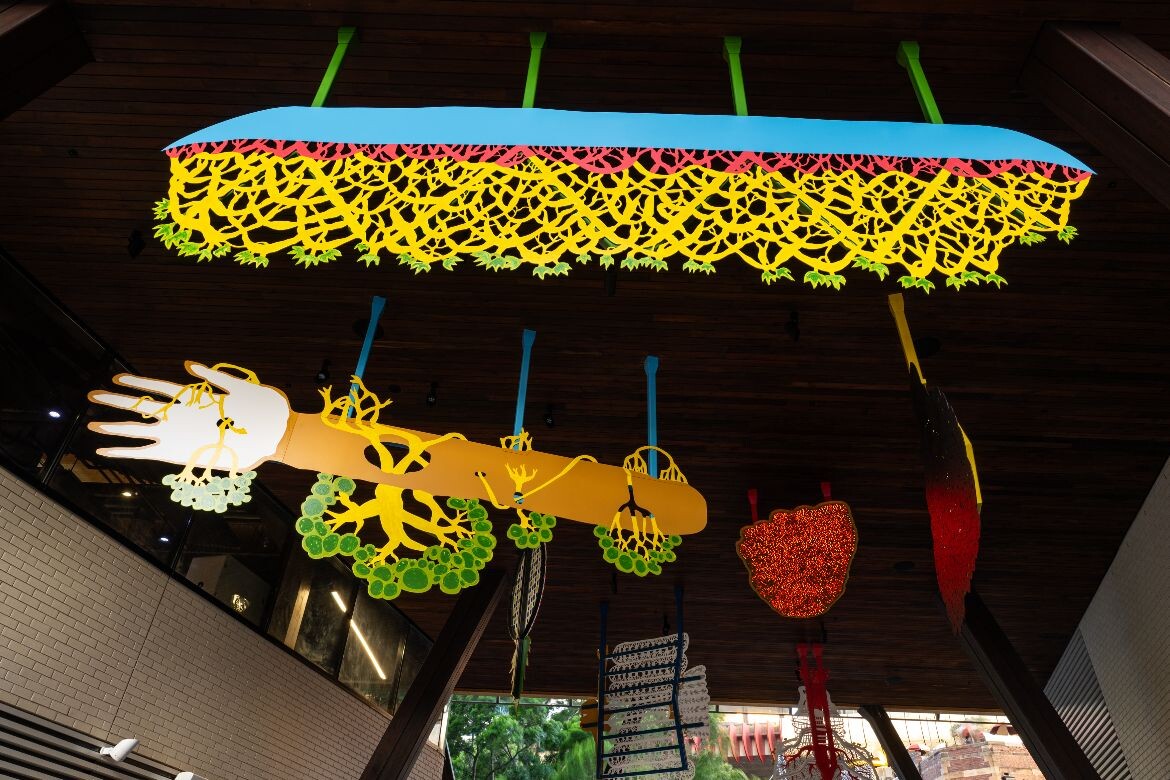
For his first-ever public artwork, Jumaadi’s Upside-Down Garden features hanging sculptural metalwork forms drawn from real, fantastic and botanical worlds. Developed in close collaboration with Artwork Project Architect Caroline Comino, the artwork features a soundscape based on sun and moon cycles created in collaboration with composer Michael Toisuta, and a lighting element to play with shadows. Together, sculpture, sound and light transform what is typically a transitional space into a place of pause and reflection.
For Jumaadi, the work continues a long-standing exploration of storytelling, hybridity and the relationship between humans and the natural world. His practice, informed by Indonesian cultural traditions such as wayang kulit shadow puppetry, often navigates themes of memory, displacement and belonging. In Upside-Down Garden, these ideas are expressed through a cast of archetypal forms that collapse boundaries between human, vegetal, animal and object, creating a layered narrative that reveals itself gradually as viewers move through the space.
Related: Brahman Perera’s contemporary cocoon for One Point Seven Four
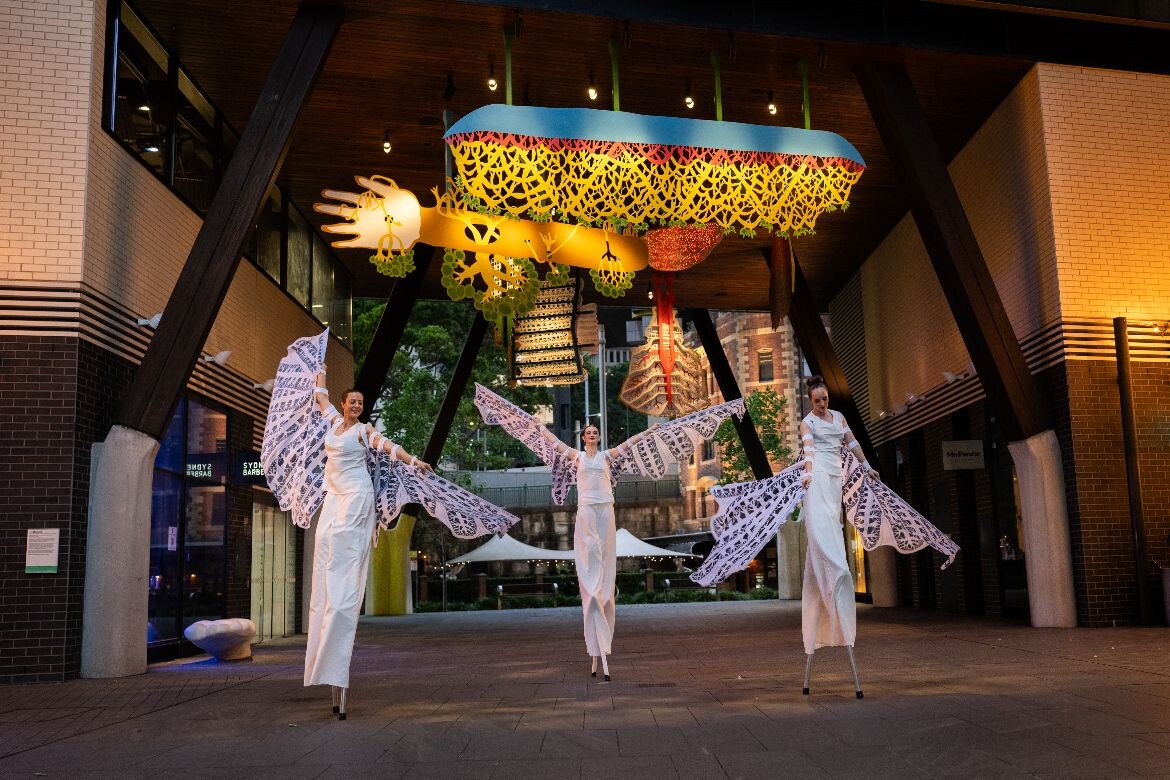
Curated by Glenn Barkley and Holly Williams, the installation has been commissioned by Lendlease in partnership with Infrastructure NSW as part of the broader Barangaroo Public Art and Cultural Plan. The work joins a growing collection of permanent artworks at Barangaroo South, contributing to a precinct-wide strategy that positions public art as a core component of place-making rather than an afterthought.
More than an object to be viewed at a distance, Upside-Down Garden operates as an atmospheric intervention, inviting repeated encounters and multiple readings. As Barangaroo continues to evolve, the artwork offers a reminder of the capacity for public art to enrich everyday urban experience — not through monumentality alone, but through intimacy, imagination and a sensitivity to context.
Upside-Down Garden is now on permanent public display at Barangaroo South.
Jumaadi
Jumaadi’s Instagram
Photography
Mark Pokorny