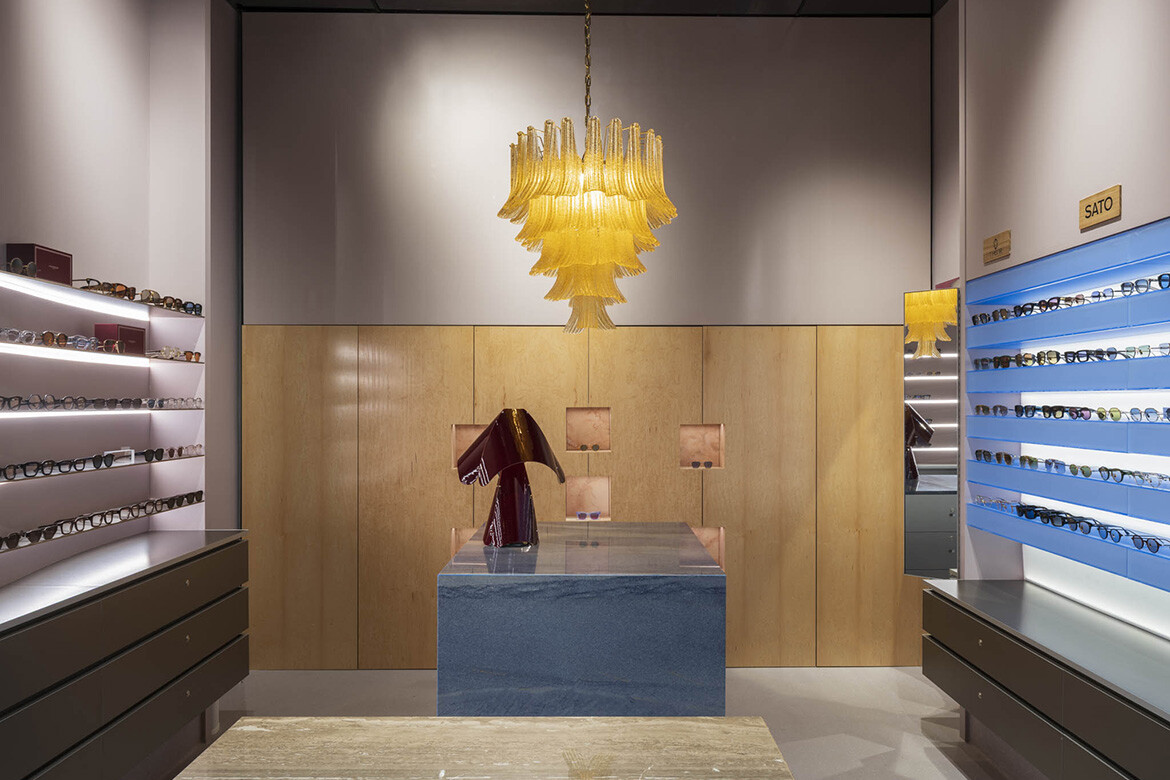
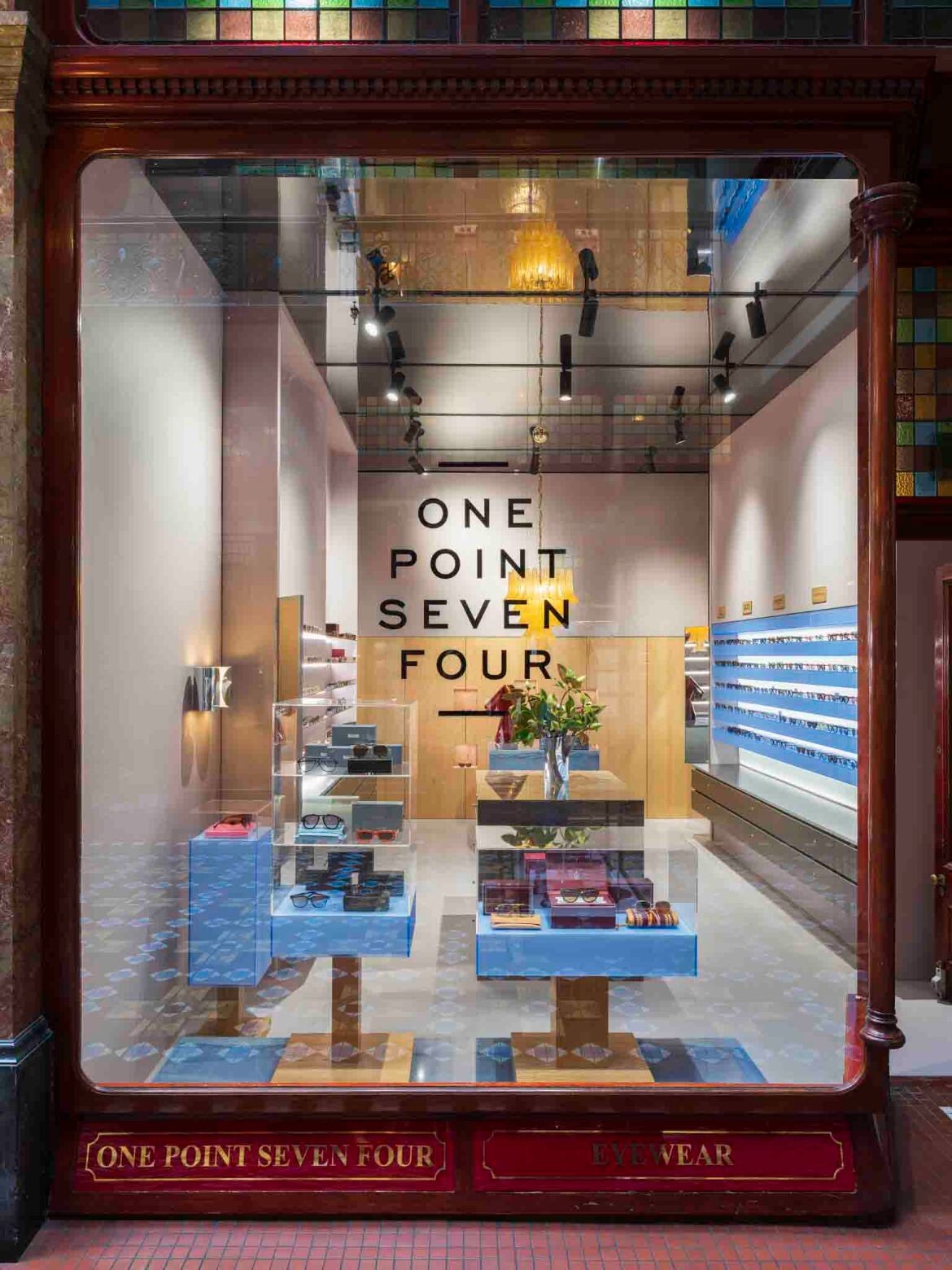
When luxury eyewear retailer One Point Seven Four—known for stocking collections from Jacques Marie Mage, Mykita, Thom Browne and Dior—sought to establish a presence within Sydney‘s historic Strand Arcade, they turned to Brahman Perera to create something more than a conventional retail space. The result is a refined, gallery-like boutique that treats eyewear as collectible objects and offers visitors a serene break from the energy of the CBD.
We spoke with Perera about crafting intimacy within a heritage context, the material choices that define the space and how the design reflects One Point Seven Four’s evolution as a contemporary Australian luxury brand.
What was the core idea or emotional experience you wanted to create for One Point Seven Four in this heritage context?
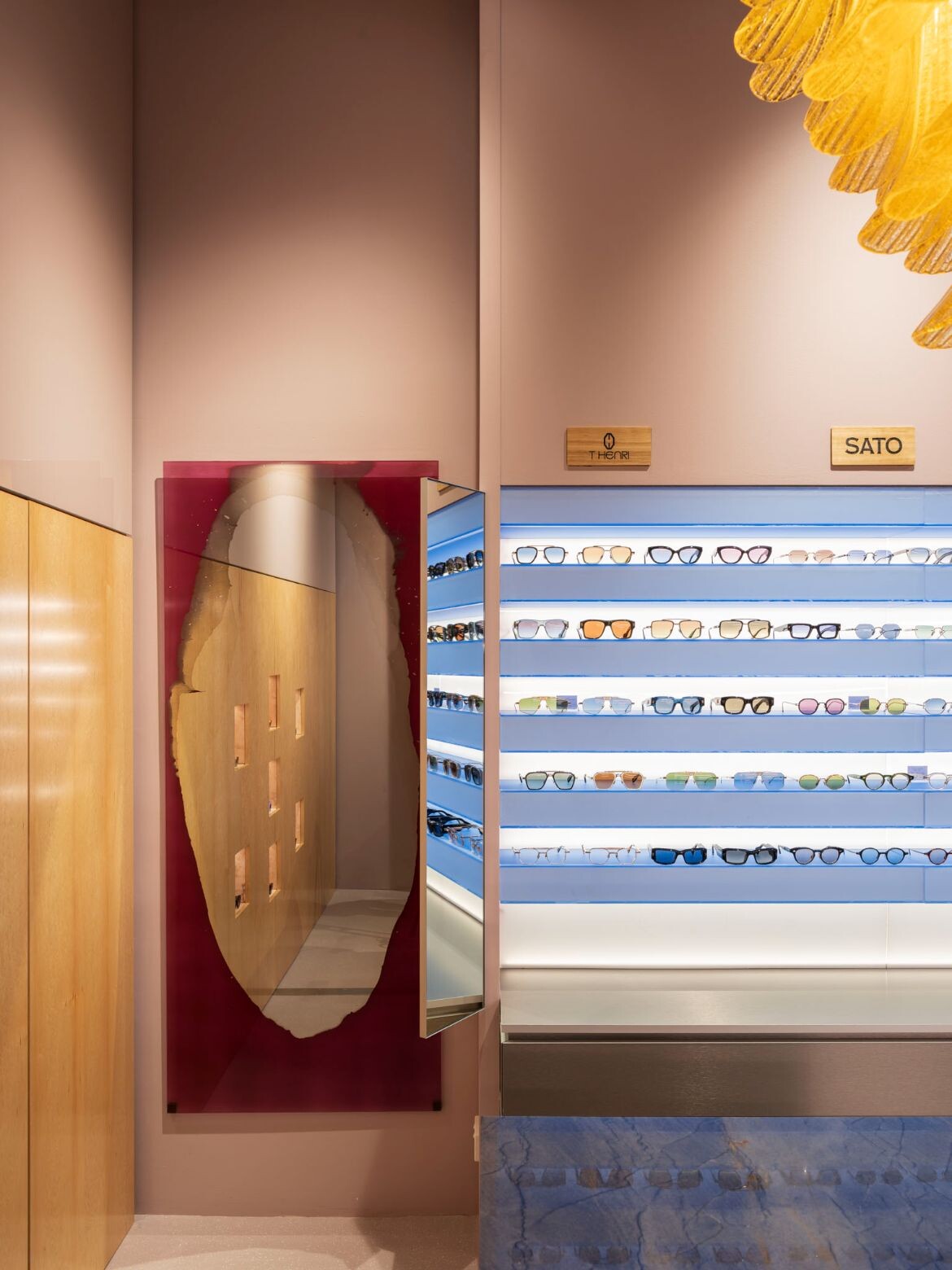
The starting point was the idea of a softened reprieve from the CBD—a space that feels calm, tactile and quietly immersive inside the energy of The Strand. Rather than competing with the arcade’s heritage ornamentation, the store acts like a contemporary cocoon: gentle in colour, warm in touch and atmospheric in light. The emotional experience is one of pause and intimacy, stepping off the arcade into a refined, almost gallery-like space where time slows and product discovery feels considered rather than transactional.
Related: Where architecture meets athletic performance
How did the heritage character of The Strand inform your material palette, scale or spatial gestures?
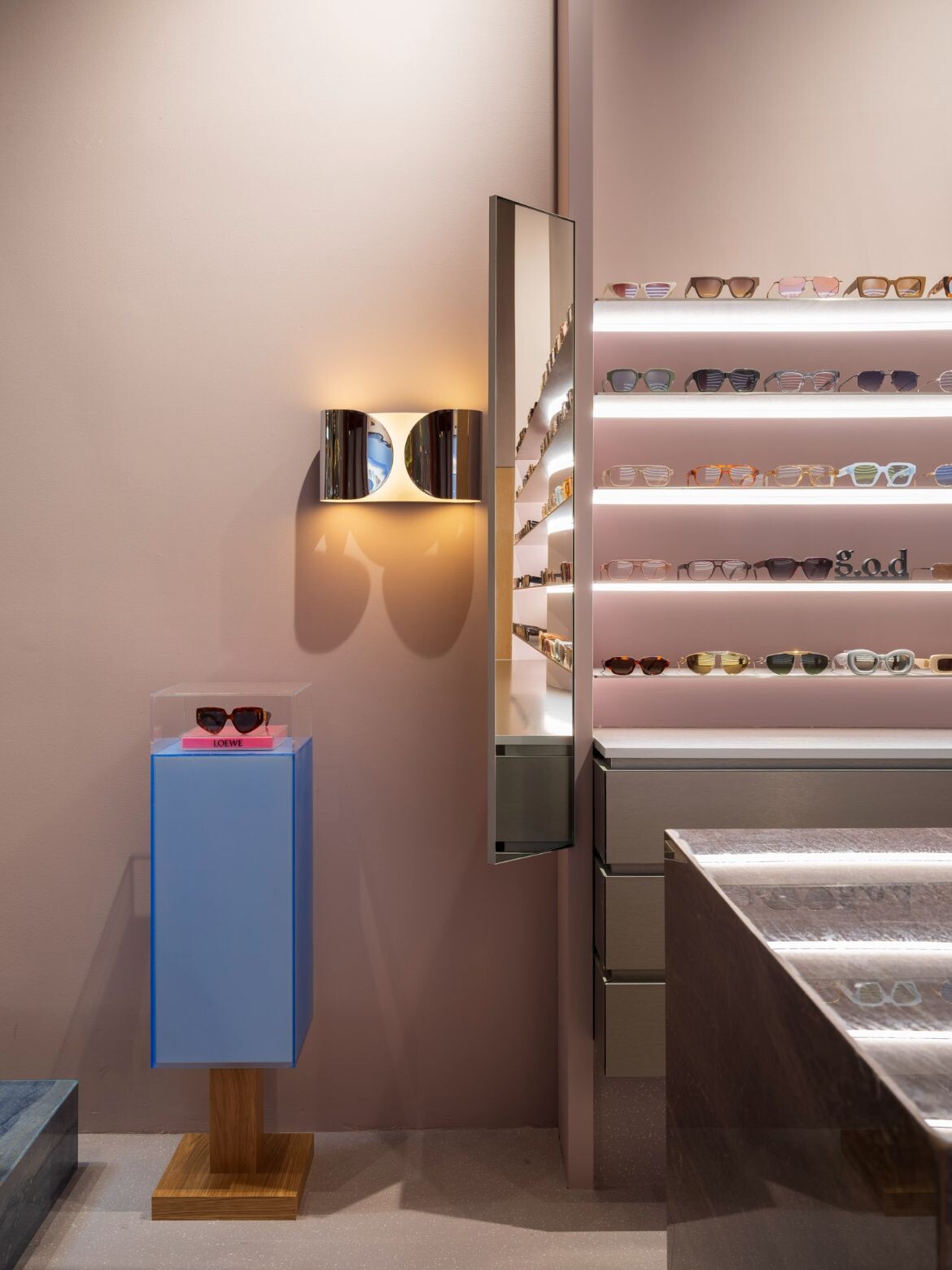
The Strand’s heritage character guided the approach in two ways: respect the existing shell and introduce contemporary elements as insertions rather than replacements. The palette balances historic softness with modern precision—the lilac vinyl floor and walls bring warmth and quietness, while stainless steel, chrome, mirror and blue acrylic add a crisp contemporary counterpoint.
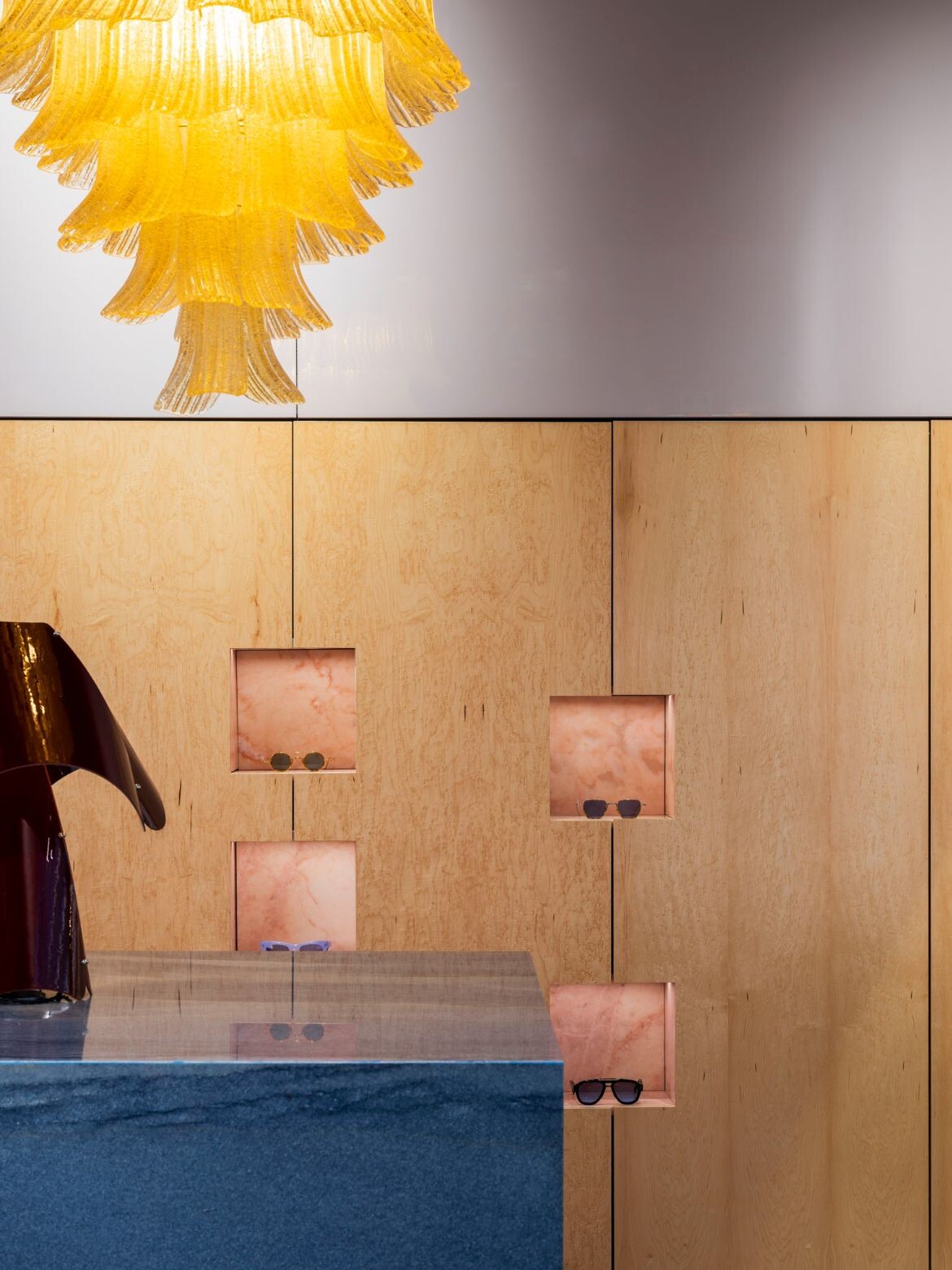
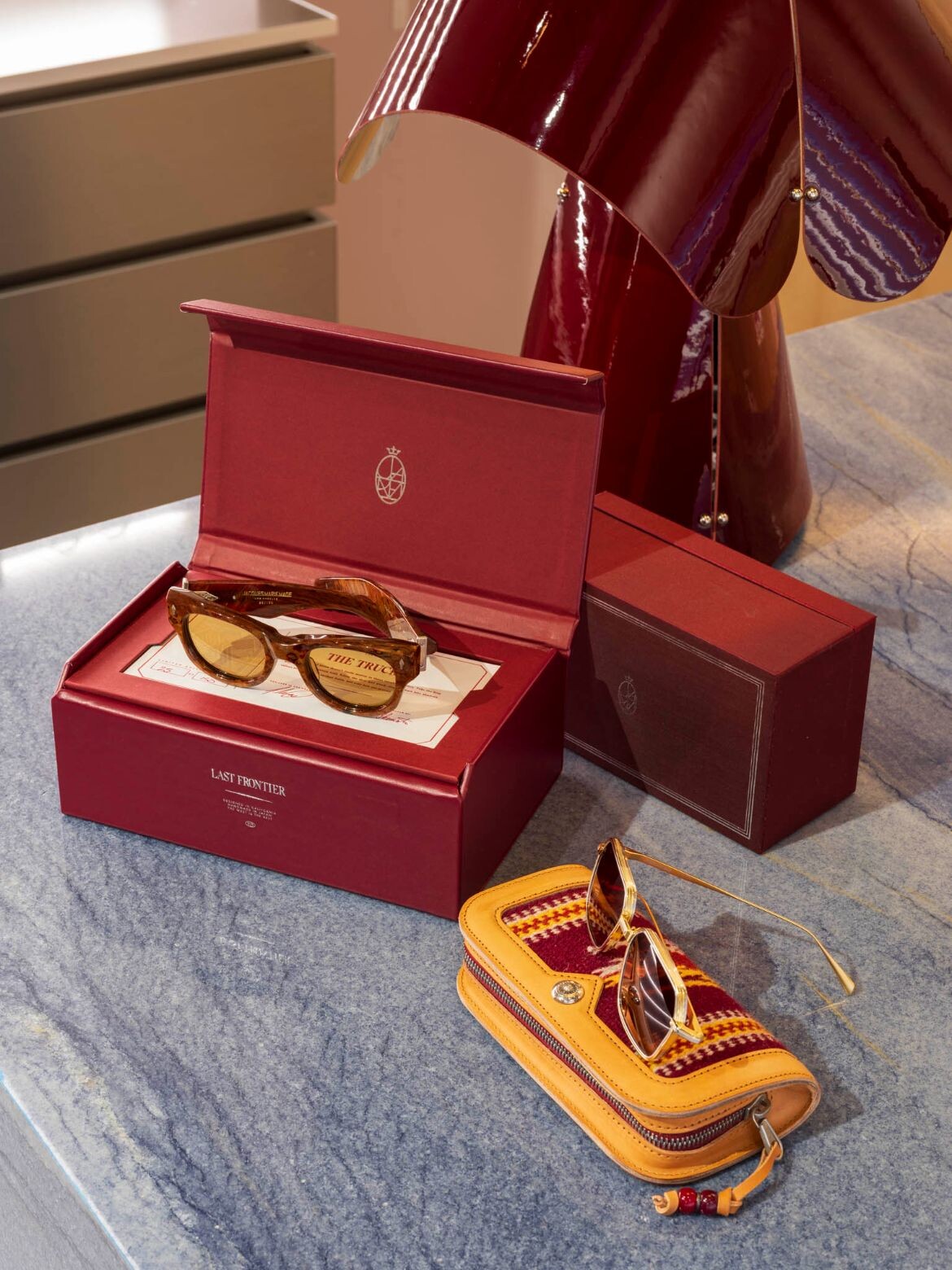
Scale was also key. Because the tenancy is small, large monolithic gestures do more work than lots of smaller moments. The mirror-clad ceiling expands the perceived volume and reflects the arcade’s light and verticality in a subtle way, while the travertine and blue marble counters read as sculptural “plinths”—a nod to the gallery language and to the solidity of heritage stone detailing.
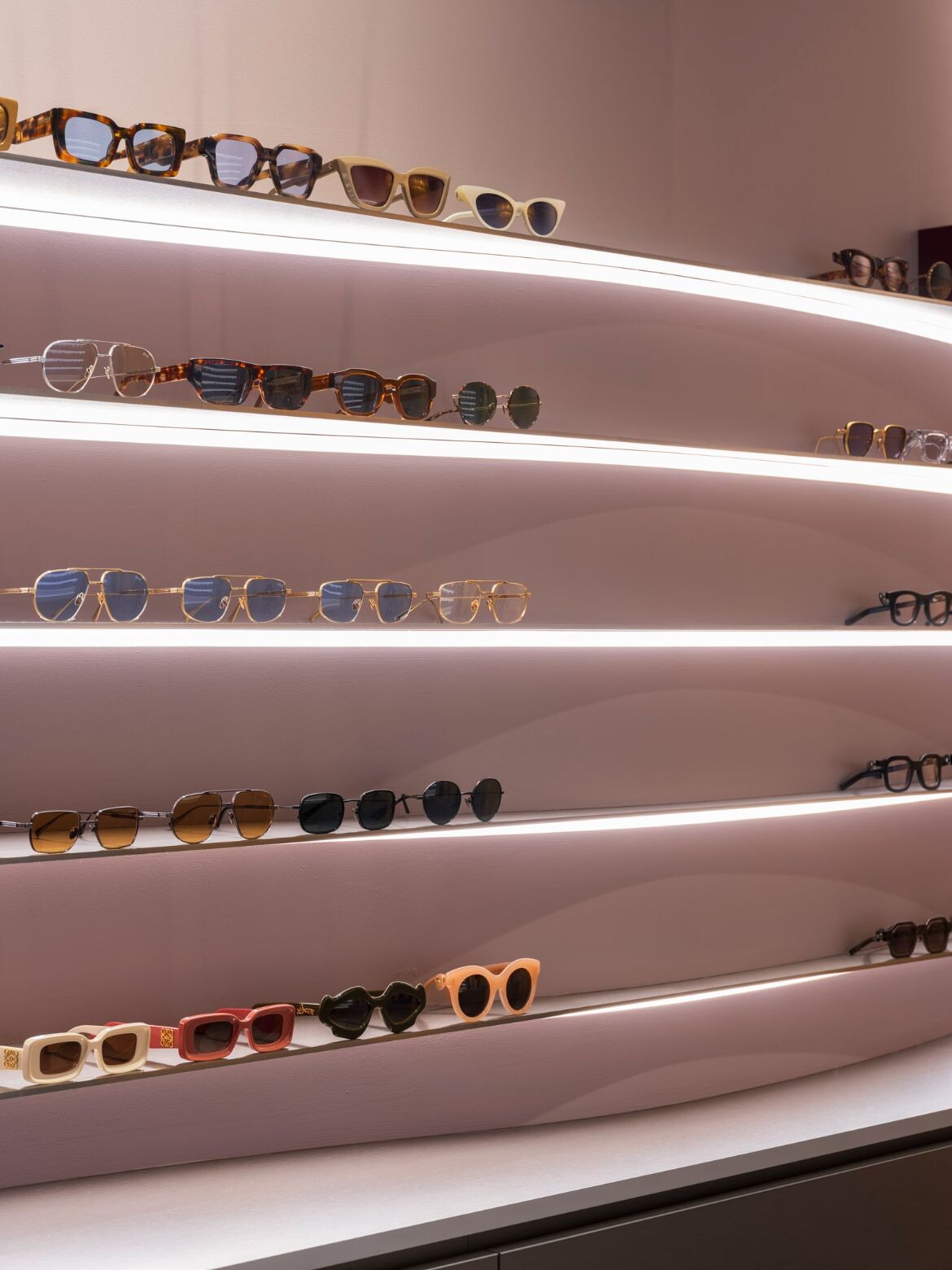
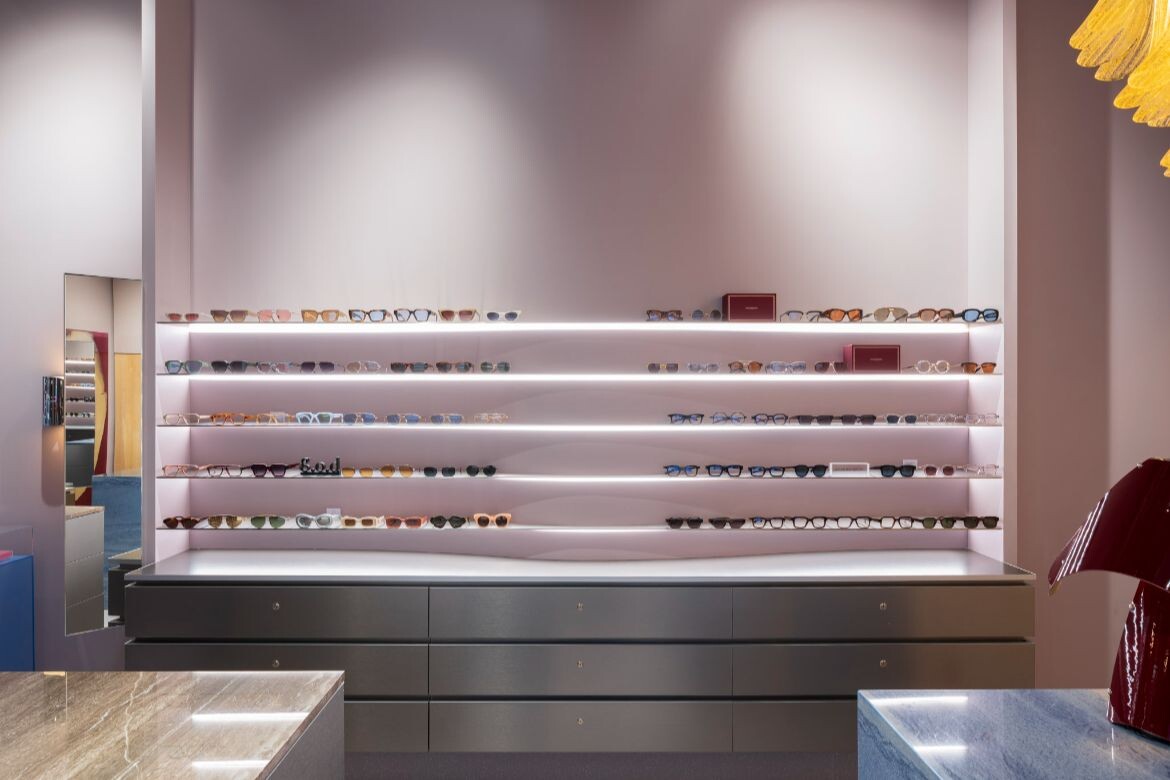
Spatially, the curved carpet-clad wall and long linear shelving soften the corridor-like plan and flow visitors gently through the room, echoing the arcade’s promenade experience but in a quieter, more intimate register.
Is there a material story or craftsmanship element you feel readers should know?
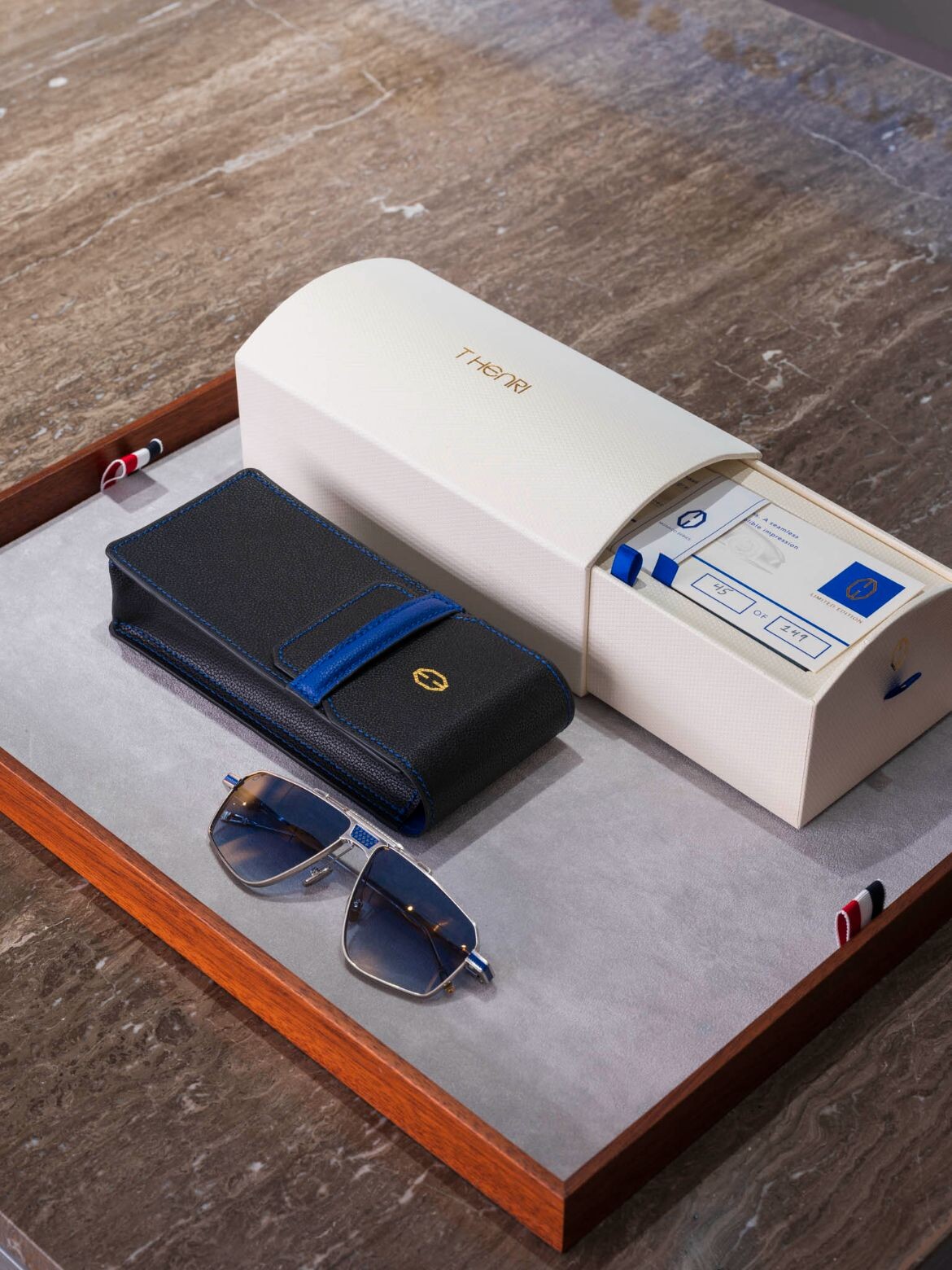
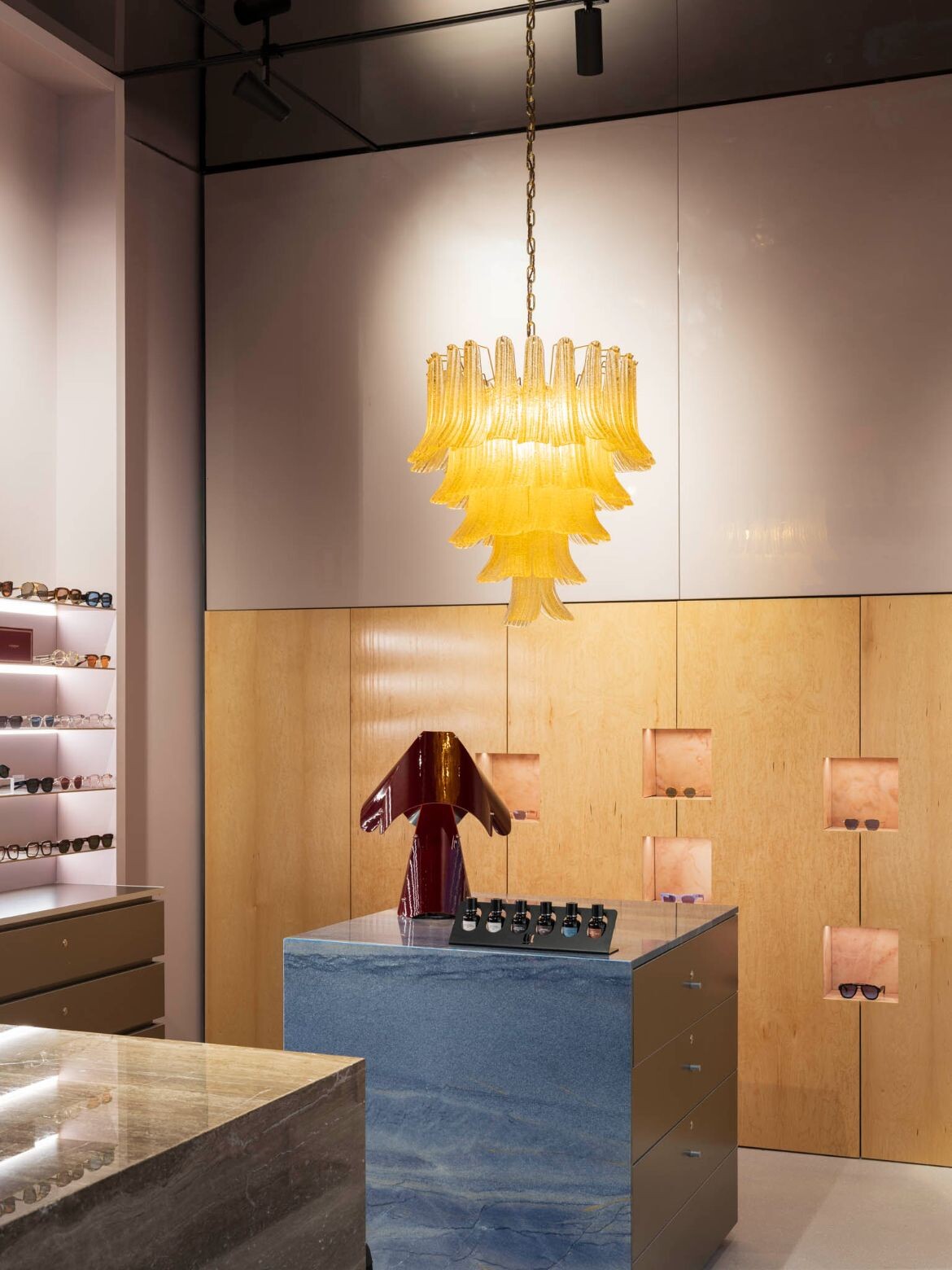
Blue vein-cut travertine counters—Ocean Blue—are used as monolithic blocks. These connect to the idea of sculptural display plinths, giving the store a grounded, almost museum-like permanence within a lightweight arcade context.
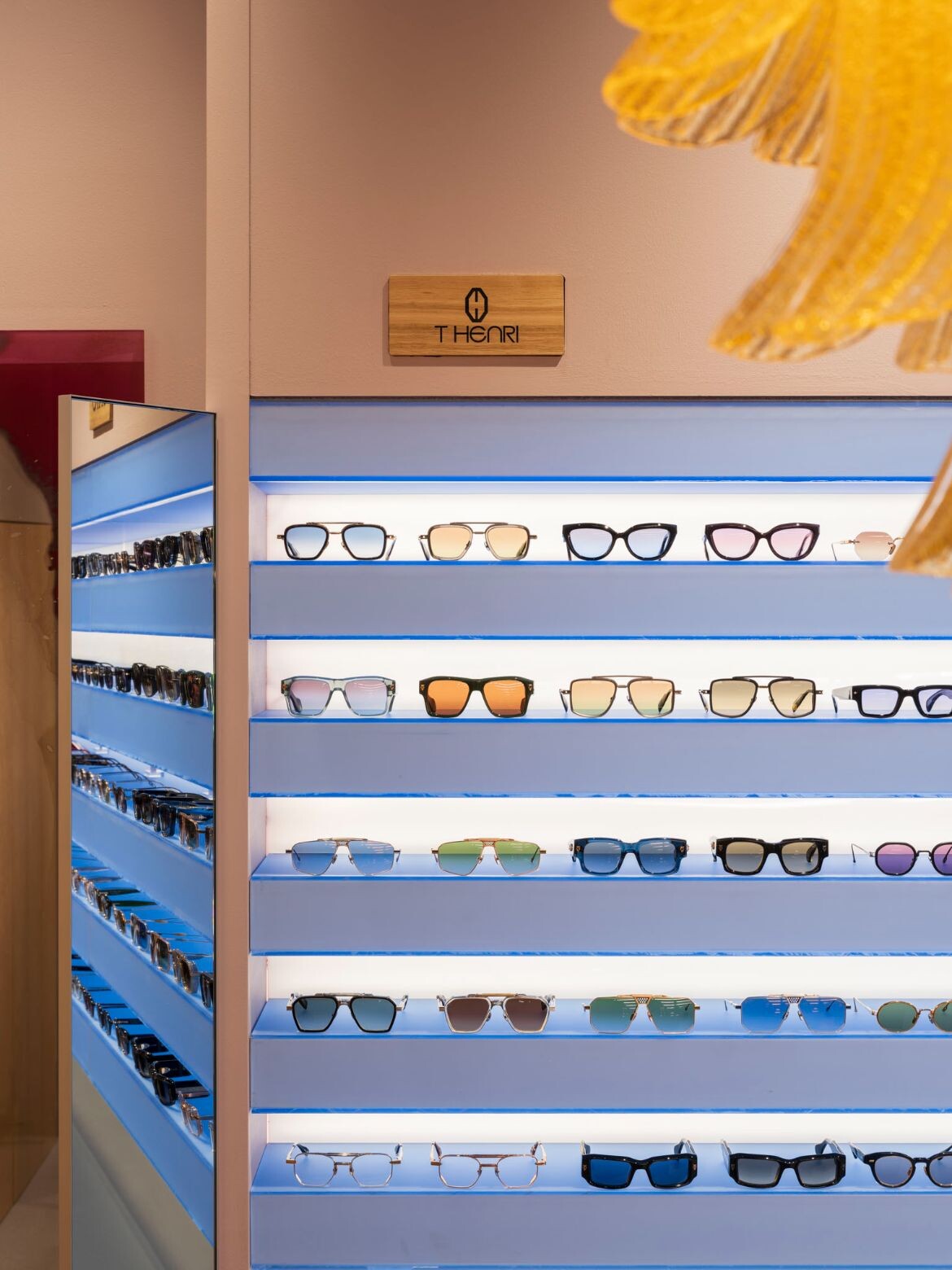
The blue Perspex shelving introduces a contemporary clarity and subtle glow, especially when paired with backlighting. It’s a crafted retail detail that feels jewel-like without being showy.
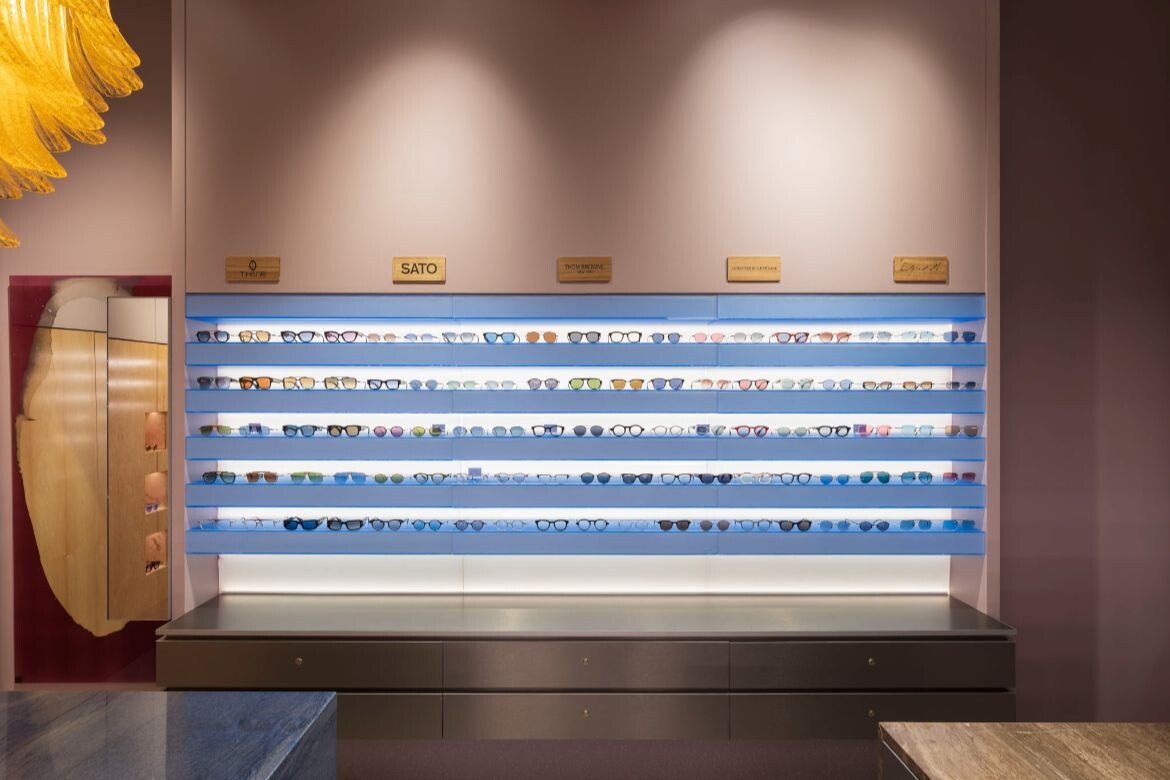
How did you choreograph the “gallery-like” experience for selecting eyewear?
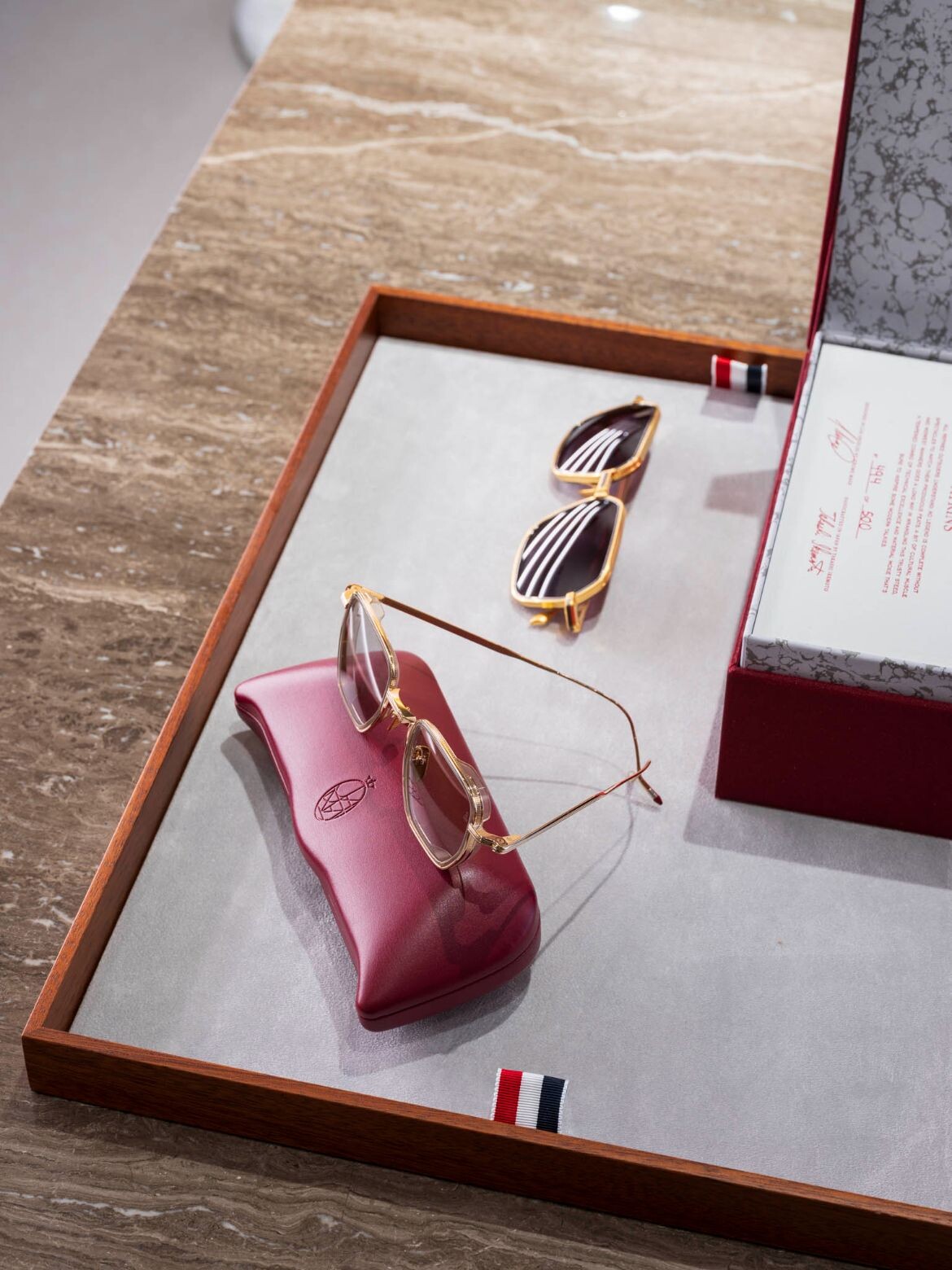
The gallery feel comes from treating eyewear as collectible objects, with a clear rhythm of approach, pause, focus and try-on. Along both long walls, the continuous shelving and cantilevered drawers create a calm horizontal datum. Frames appear to float, evenly lit and easy to scan.
How does this store reflect One Point Seven Four’s identity and direction as a luxury eyewear brand?
The store translates the brand into space through a balance of quiet confidence and sensory richness. Luxury here isn’t about overt signage or excess—it’s about craft, restraint and materials that reward close attention. The soft tonal environment—orchid wool, mauve flooring, maple veneer—sets a calm backdrop for the product, while high-clarity elements like chrome drawers, stainless steel blades, mirrored ceiling and blue acrylic express a modern, forward-looking edge.
The overall direction feels like an evolution of One Point Seven Four into a more collectible, design-driven luxury space: less retail showroom, more intimate salon and gallery. It positions the eyewear as objects of design and personal ritual, aligning with the brand’s premium craftsmanship and its move toward a refined, contemporary Australian luxury identity.
Brahman Perera
brahmanperera.com.au
Photography
Lillie Thompson