The home of architecture and design in the Asia-Pacific
Get the latest design news direct to your inbox!

Get the latest design news direct to your inbox!
Neill Johanson, Principal at Davenport Campbell, comments on what we might be losing and gaining with the expansion of remote work.
November 12th, 2025
The expansion of remote work has created what some scholars describe as an “invisible workforce” — employees whose professional contributions are mediated almost entirely through digital platforms, and whose presence is rarely felt beyond the screen (Kniffin et al., 2021). This shift, accelerated by the global pandemic, normalised working from home as both a necessity and a preference for many.
The benefits of remote work are well documented: increased flexibility, improved work–life balance and in many cases, sustained or even heightened productivity (Bloom et al., 2015).
Certain roles, particularly in knowledge industries such as software engineering, finance and research, lend themselves to distance work without compromising quality of output. For organisations, remote work also reduces overhead costs while widening access to geographically diverse talent.
Yet, alongside these advantages, the invisible workforce faces meaningful risks. Studies highlight the problem of proximity bias, the tendency of managers to reward employees who are physically present, often at the expense of remote staff (Choudhury et al., 2020). This lack of visibility can translate into fewer promotions, reduced opportunities to influence decision-making and vulnerability to redundancy during organisational restructuring (O’Neill et al., 2022).
The real risk isn’t just to the employee’s career – it’s to their identity, confidence and sense of belonging. When people become names on a screen or voices on a call, their full selves can feel diminished. Micro-affirmations, spontaneous conversations and the subtle social cues of in-person work all play a vital role in reinforcing professional confidence and connection. Without them, people can begin to feel transactional. Useful, but not truly seen.
When we hear viral phrases like “the office is dead,” we should pause before accepting them as truth. Yes, the traditional 9-to-5 model may be outdated, and hybrid flexibility is here to stay, but that doesn’t mean we can discard the office entirely. We should be asking deeper questions such as: What is lost when we work entirely apart? How do we rebuild professional intimacy, mentorship and casual belonging? Where do we foster the full range of human conditions, ambition, creativity, self-doubt, recognition, loneliness?
Related: More comment from Neill Johanson

The solution isn’t to drag people back into the office full-time. Instead, it’s to reimagine visibility – not as physical proximity, but as meaningful engagement. Organisations must create intentional practices that recognise contribution, encourage connection and value presence in all its forms. Employees, too, may need to develop new habits by showing up in visible ways, seeking out feedback and making time for face-to-face interaction when possible.
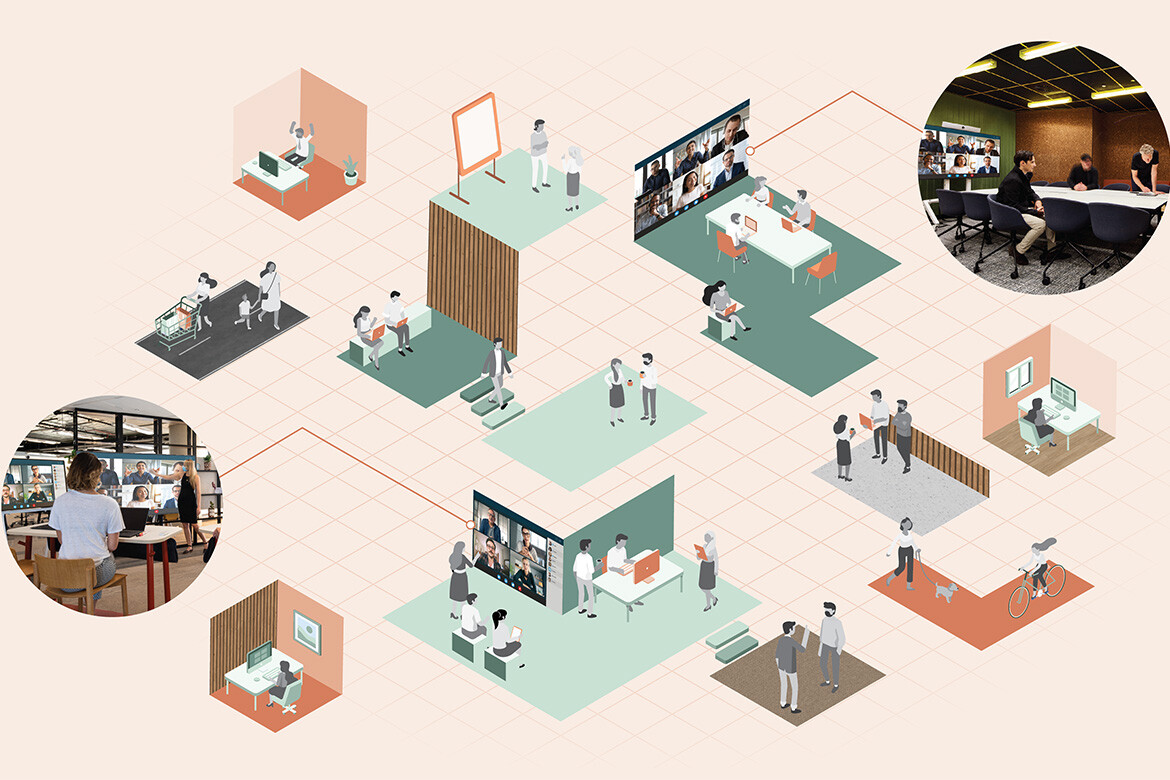
However, meaningful engagement also requires reimagining the spaces we return to – not as echoes of corporate tradition, but as destinations that invite participation and ‘earn the commute.’ Whether it’s through silent sanctuaries for deep focus, mixed reality rooms that blend physical and virtual collaboration, natural soundscapes that soothe and stimulate, or a complete rethinking of the office as a ‘third space’ somewhere between home and headquarters, the goal is the same: to create environments that people want to be in, not ones they feel obligated to return to.
Ultimately, the invisible workforce will thrive only if invisible contributions are made visible; not through surveillance or micromanagement, but through culture, care and clarity. Because no one wants to be reduced to a ‘people bot,’ seen as functional but forgettable, efficient yet expendable.
Davenport Campbell
davenport-campbell.com.au
INDESIGN is on instagram
Follow @indesignlive
A searchable and comprehensive guide for specifying leading products and their suppliers
Keep up to date with the latest and greatest from our industry BFF's!
The internet never sleeps! Here's the stuff you might have missed