The home of architecture and design in the Asia-Pacific
Get the latest design news direct to your inbox!

Get the latest design news direct to your inbox!
Unispace has its finger on the pulse when it comes to workplace trends both here and abroad. Its worldwide report, Returning for Good, which surveyed some 17,000 employers and employees across the globe, has some home truths for the organisations in Australia intent on re-establishing a full-time office regime.

July 17th, 2023
We hear the term ‘the post-pandemic workplace’ fairly often these days in built environment circles. It’s a common thought that for some time, we have been slowly crafting what we believe the workplace of the future looks like, and how the proverbial carrot can be dangled in front of employees working from home.
The Unispace report shows that responses between Australian employers and employees were poles apart. 86 per cent of Australian business leaders believe that working from home is limiting the future prospects of those who do so. On the other hand, only 56 per cent of their employees are aware that this is an issue.
While employers regard the commute as the major factor in preventing workers from returning full time, it’s actually more to do with workplace design and productivity, and the ability to mitigate distractions. Unispace Australia and New Zealand CEO, Emma Forster Mitrovski, believes that a solution will be reached sooner rather than later.

“I don’t think it’s ever going to be the same, but I do believe that there is a shift from large organisations to encourage their people to come back to be more creative and innovative without actually undermining the flexible working policies that have always been in place,” she says.
“I think four days a week is probably going to be where we land. Half of the respondents currently working from home expect that they’ll be back in the office four days a week at some point with 30 per cent of those people thinking it’ll happen by 2025.”
Unispace’s work has led to the organisation discovering that increased work from home time is creating silos – in which employees are very much in their own bubble – despite a large amount of work getting done.
Forster Mitrovski believes that creating truly personal places within commercial environments are the key to strong in-person workplace culture.
Related: Hassell and Hammond Studio at CBA’s Darling Quarter HQ

“I think there’s a few ways that organisations can look at design as a lever to creating more productive workspaces and workspaces that sort of attract and retain top talent,” adds Mitrovski. “Strong social culture and collaboration is what Aussies claim attracts them to the office and keeps them loyal. A design that aligns with the values and vision of an organisation inspires loyalty.
“The whole hot desking trend is not what people want because they want their own space. What we’re finding is people are coming in and there’s either not enough work points that provide focus spaces, which has seen phone booths and mini meeting rooms implemented.”

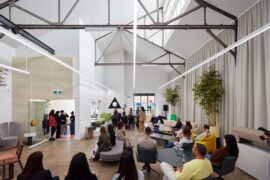
Forster Mitrovski cites the new Coca Cola Amatil office in Sydney and Melbourne offices for The Executive Centre and Quintessential Equity as two ideal workspaces defined by Unispace’s findings. She says that culture should be the centrepiece of all commercial design moving forward.
“If a workplace is going to serve as a magnet for workers to come back it has to reflect more than just some place to do their job. It has to reflect their own personal values.
“It’s not just creating bricks and mortar anymore. It’s aligning a brand, the values of a business and being able to translate through the work environment, but also around connecting culture and commitment.”
To read the Returning for Good report, click here.
Unispace
unispace.com
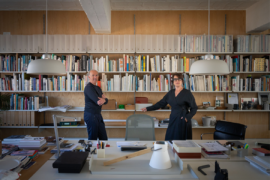
We think you might also like this profile story on CEO Emma Mitrovski.
INDESIGN is on instagram
Follow @indesignlive
A searchable and comprehensive guide for specifying leading products and their suppliers
Keep up to date with the latest and greatest from our industry BFF's!
The internet never sleeps! Here's the stuff you might have missed