The home of architecture and design in the Asia-Pacific
Get the latest design news direct to your inbox!

Get the latest design news direct to your inbox!
Co-working feel, in a mono-brand workplace. The offices of Akcelo by Cachet Group feels relaxed and flexible while also delivering an ‘engine room’ of productivity.

July 11th, 2022
Previously a client of co-working spaces, when this young advertising agency found itself having grown to 130 employees in just two years, it was time to shift to a dedicated workspace. Importantly Akcelo was keen to keep in place all the positives of a community or co-working environment.
“The space was to represent Akcelo’s brand experience and provide a collaborative and welcoming workspace for not only their staff but their clients also, who would often visit for the entire day and work alongside Akcelo in their space,” says Sue Redman, lead designer, Cachet Group.
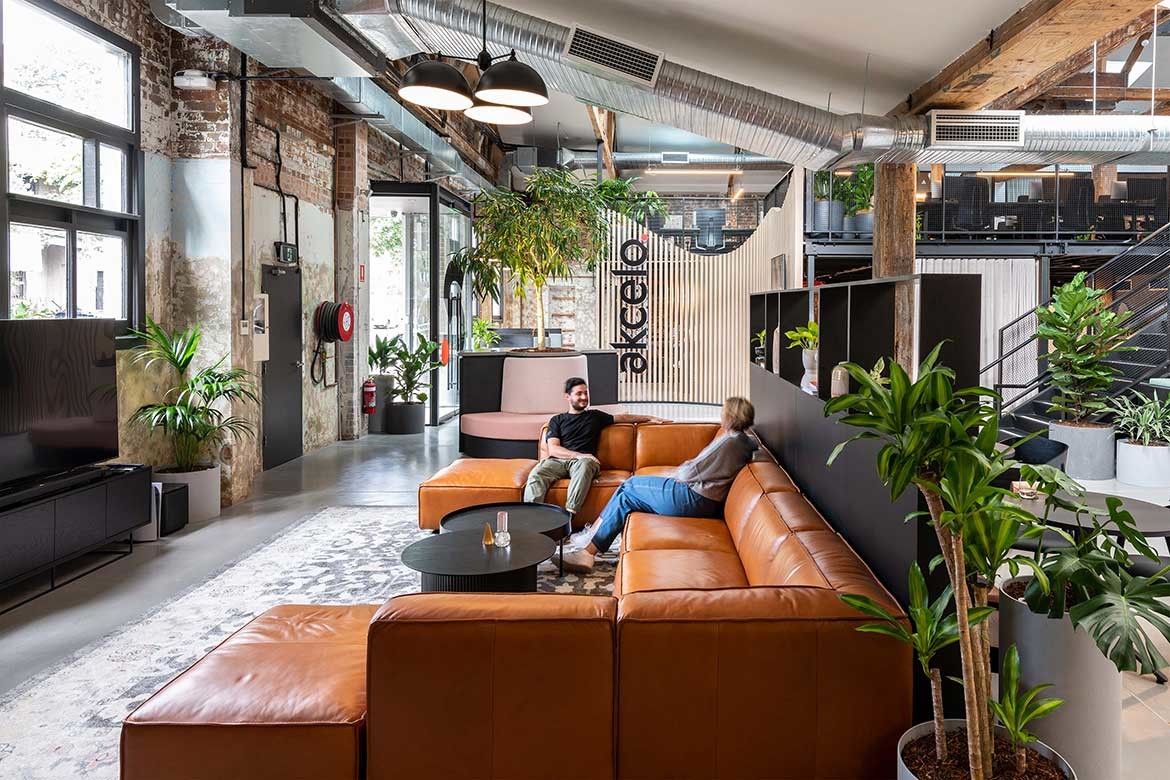
Selecting a 1913 heritage building with beautiful raw bones as their starting point, design and construct firm, Cachet Group delivered a flexible and relaxing workspace.
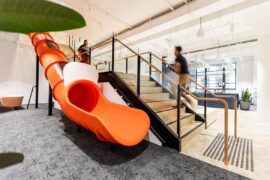
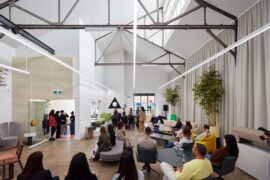
Retaining much of the historic markers of the building, the design is open and spacious with floors stripped back and painted, walls left as exposed brick and structural elements, such as the exposed timber A-frames, celebrated throughout.

Separating the spaces out by function without truncating the space, the upper level operates as the ‘Engine Room’ where a growing workforce can be accommodated.
“The desks upstairs do not have designated seating spaces. Instead, they’re long collaborative tables, allowing Akcelo to bring additional people in without affecting or impacting personal space,” says Redman.

The lower floor is designed to foster collaboration between Akcelo and its clients and has been divided into two functions. The main portion is a shared communal space that connects to the boardroom.
Moreover, this area seamlessly shifts into a night-time entertainment space, germane to their industry. “They can use the space for staff drinks in the evenings or invite their clients in for a showcase event. The central island bar is a very important space for them,” says Redman.
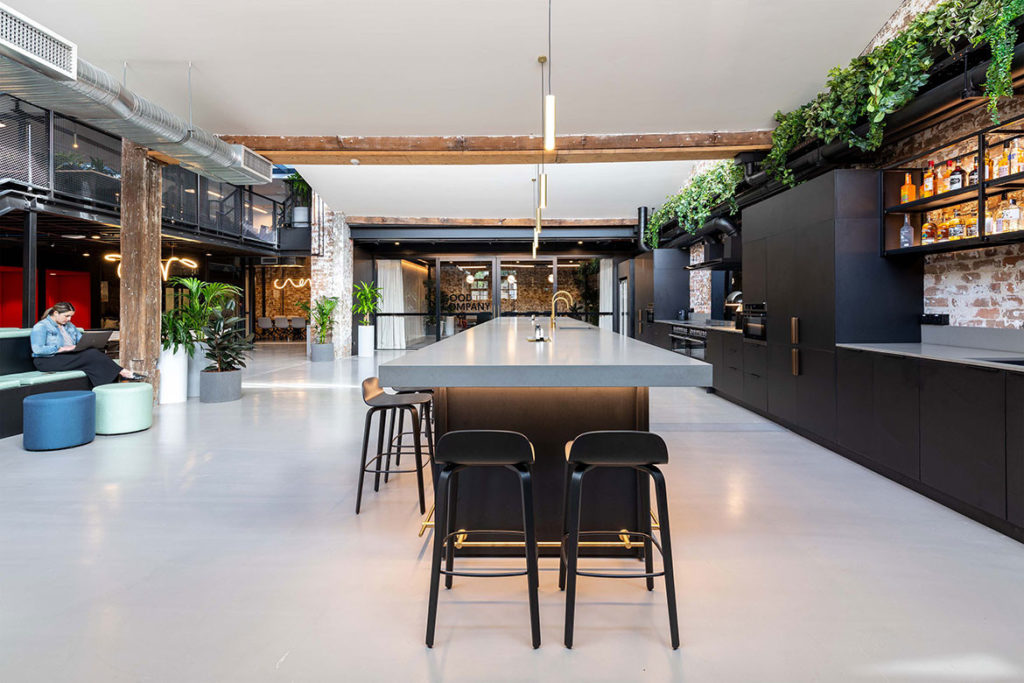
Fulcrumed by a nine-metre island that has been retrofitted to act as a touch-down point, the island is the heart of client/agency collaboration during the day. At night, as Redman points out, this island is central to the agency’s ability to entertain.
Connected but separate to the main open space is the area under the mezzanine, ‘The Dark Side’. This is where hybrid working comes to life.

Here, tucked away, but easily accessed are a host of digital meeting rooms, touch-down points, work booths, collaboration tables and banquettes, plus a state-of-the-art sound recording room and interconnected edit- suite.
Cachet Group
cachetgroup.com
Photography
David James

INDESIGN is on instagram
Follow @indesignlive
A searchable and comprehensive guide for specifying leading products and their suppliers
Keep up to date with the latest and greatest from our industry BFF's!
The internet never sleeps! Here's the stuff you might have missed