The home of architecture and design in the Asia-Pacific
Get the latest design news direct to your inbox!

Get the latest design news direct to your inbox!
It’s been nearly 50 years in the making, but Verner Panton’s original fully metallised vision for the Panthella lamp is now a reality. Louis Poulsen presents Panthella MINI Chrome.


There’s no greater satisfaction than when a design vision reaches full fruition. Way back in 1971, Verner Panton designed Panthella for Louis Poulsen with the ideal of a lamp that would both emit and reflect light. He designed a classic dome-shaped shade on a gently curving stem, creating a form that would soon become iconic. Panthella gently illuminates its surroundings while also highlighting its own form with downward-cast light that washes over the stem.
“Panton wanted the design to have a metal shade, which was technologically impossible at the time,” says Rasmus Markholt, Design Manager at Louis Poulsen. The original Panthella was produced with an acrylic shade and a steel stem, and it wasn’t until 2016 that Louis Poulsen was able to develop a MINI version in metal. Panthella MINI was released two years ago in bold colours from Panton’s own palette.
“Since the retro-wave of the 1990s rolled over us, enthusiasm for Verner Panton’s lamps has risen sharply. His products are in great demand at auction houses all over the world, and we received a great many requests for a Panthella lamp in a smaller format, designed to stand on window sills, shelves, tables or other limited surfaces,” says Markholt of the decision to create the MINI version.
Interest in Panton’s trailblazing work with steel and synthetic materials, and his pioneering use of circles and rounded shapes, hasn’t waned. It seemed timely, therefore, for Louis Poulsen to push for the achievement of Panton’s full creative vision for Panthella. Now, Panthella MINI is available with a fully metallised finish.
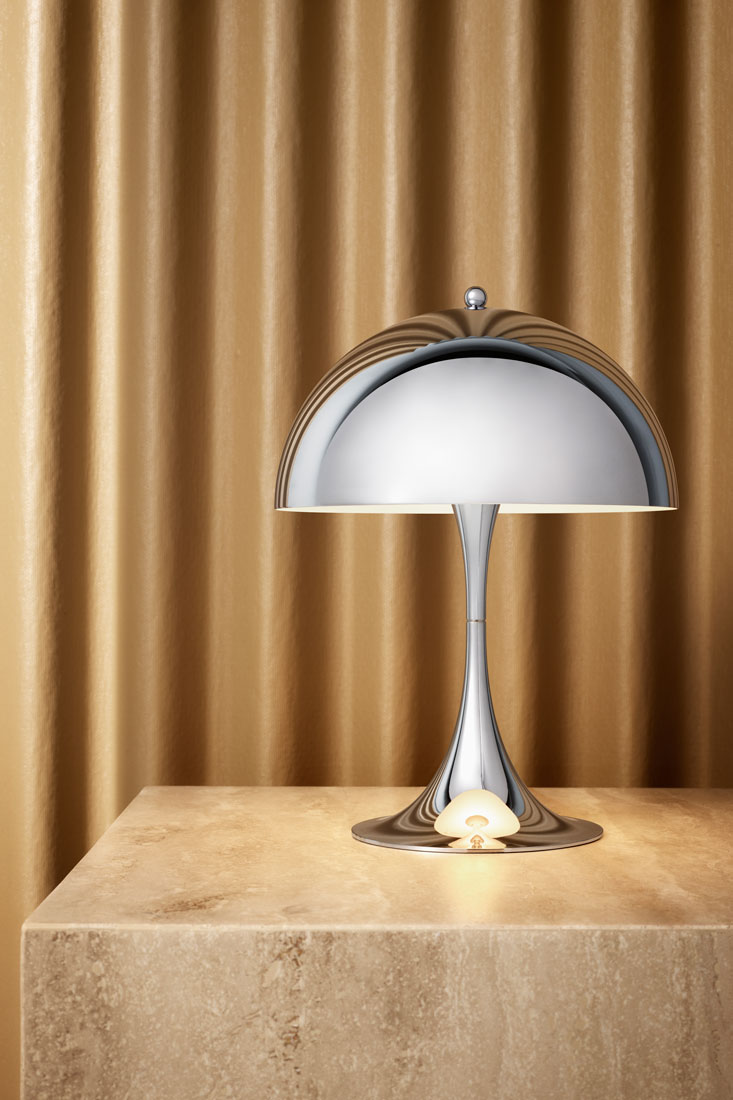
“The design retains its iconic form, but also gains an entirely new expression and becomes engaged in conversation with everything and everyone around it,” says Markholt. The shade is white on the inside and directs the light downward, where it is reflected up and out from the reflective trumpet-shaped foot. It is an ideal demonstration of the Louis Poulsen brand DNA: design to shape light.
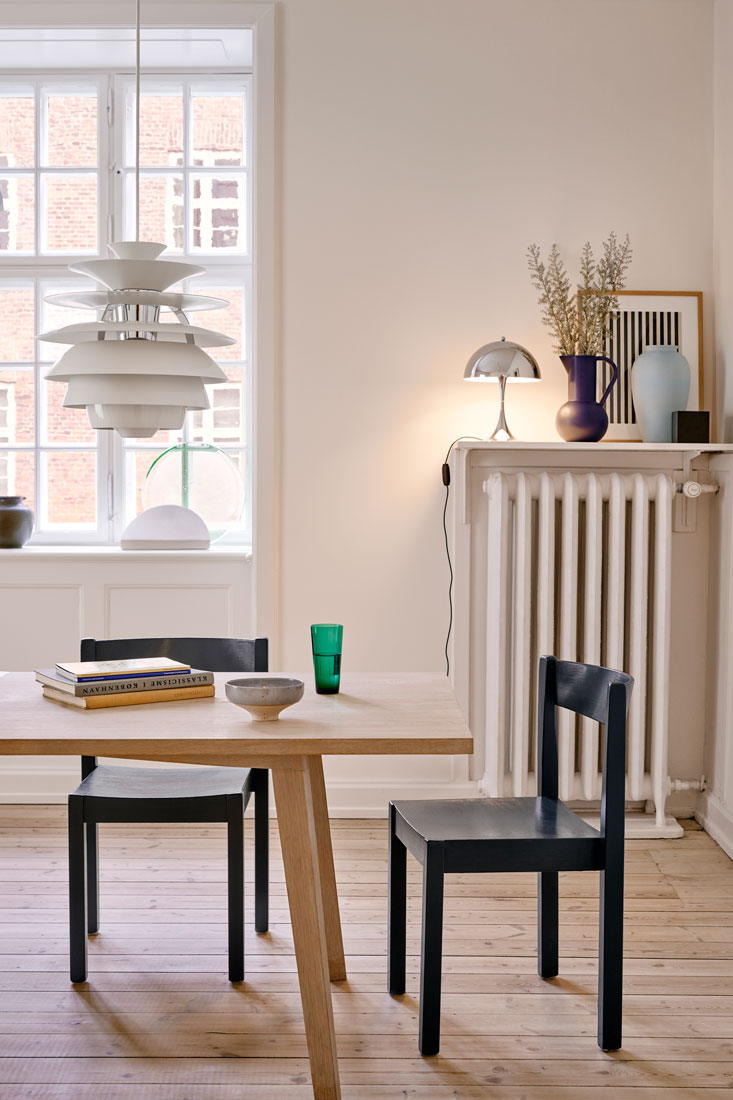
Panthella MINI Chrome has a compact size of 250mm in diameter and 335mm in height – the ideal size for the small nooks that characterize many of today’s spaces. It incorporates adjustable LED technology, which allows for stepless dimming from 15 to 100 per cent – making a broad range of visual effects possible and allowing for a tailored ambience as a result. Panthella MINI Chrome can be set to turn on as the desired brightness level, and a time can turn the lamp off after four or eight hours.
Read more about Louis Poulsen in our archive. Louis Poulsen is available through Cult in Australia.
INDESIGN is on instagram
Follow @indesignlive
A searchable and comprehensive guide for specifying leading products and their suppliers
Keep up to date with the latest and greatest from our industry BFF's!
The internet never sleeps! Here's the stuff you might have missed