The home of architecture and design in the Asia-Pacific
Get the latest design news direct to your inbox!

Get the latest design news direct to your inbox!
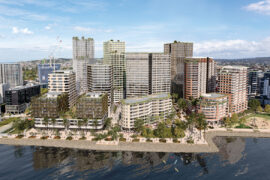
Designed by international architecture practice 10 Design (part of Egis Group), Haisco Plaza is officially open, welcoming leading tech-firm tenants in Chengdu, China.
October 3rd, 2022
Situated in the Singapore-Sichuan Hi-Tech Innovation Park (SSCIP), a 1,034-hectare innovation platform jointly invested by Singapore and Sichuan Province of China, the Haisco Plaza development presents a unique opportunity to create a new commercial and retail community for the TMT (technology, media, telecom) industry. To date, the Innovation Park is already home to several high-tech giants including Haisco Pharmaceutical, OPPO, FOUNDER, and Kuaishou.
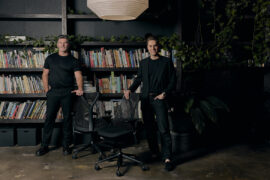
Managing Principal at 10 Design, Barry Shapiro commented: “The overall masterplan for this integrated mixed-use campus places social interaction at the heart of the design. Our vision is to create a truly inclusive, human-scaled space for all tenants and visitors to enjoy. The integrated communal spaces weave throughout the development to create opportunities for social interaction, commercial viability and amenities to create a strong sense of community for the future tenants.”

Design Principal Nick Cordingley led the competition win in 2016 while Design Principal Scott Findley oversaw the delivery of the design vision.
Planned as a vibrant destination for its surrounding working and residential community with convenient access to an adjacent metro station, Haisco Plaza is a unique development created to attract innovation-centric and knowledge-intensive enterprises.
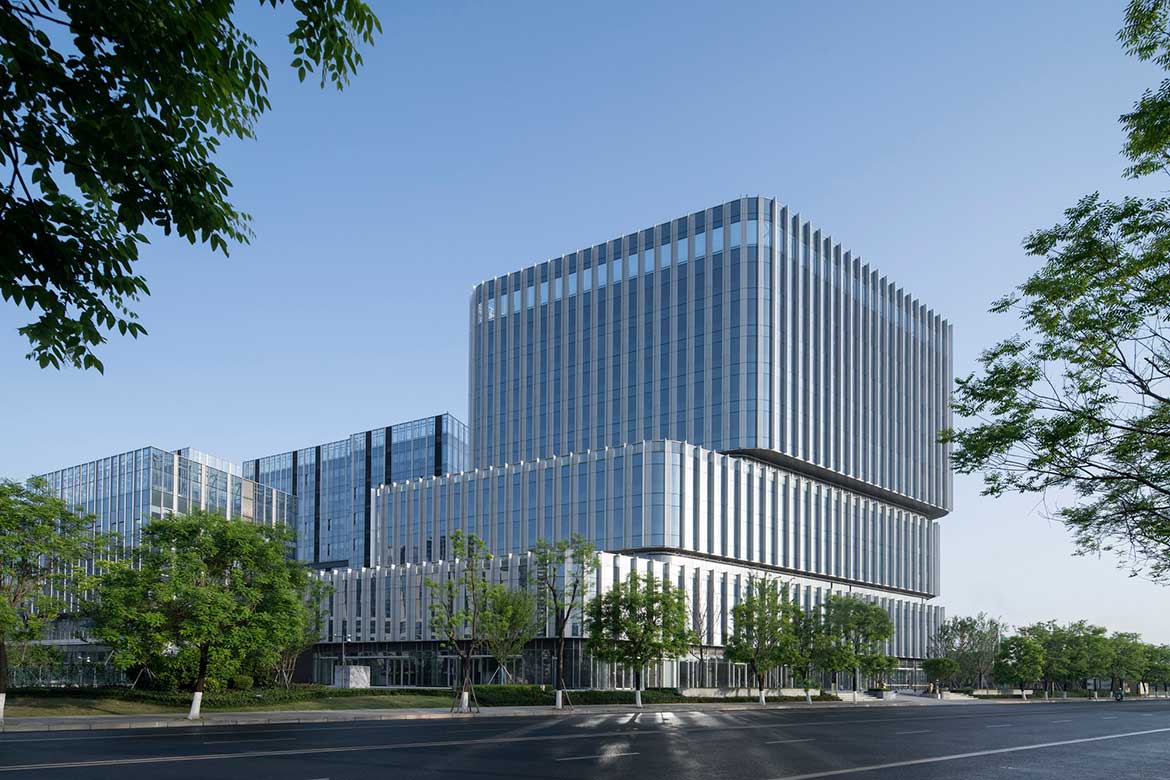
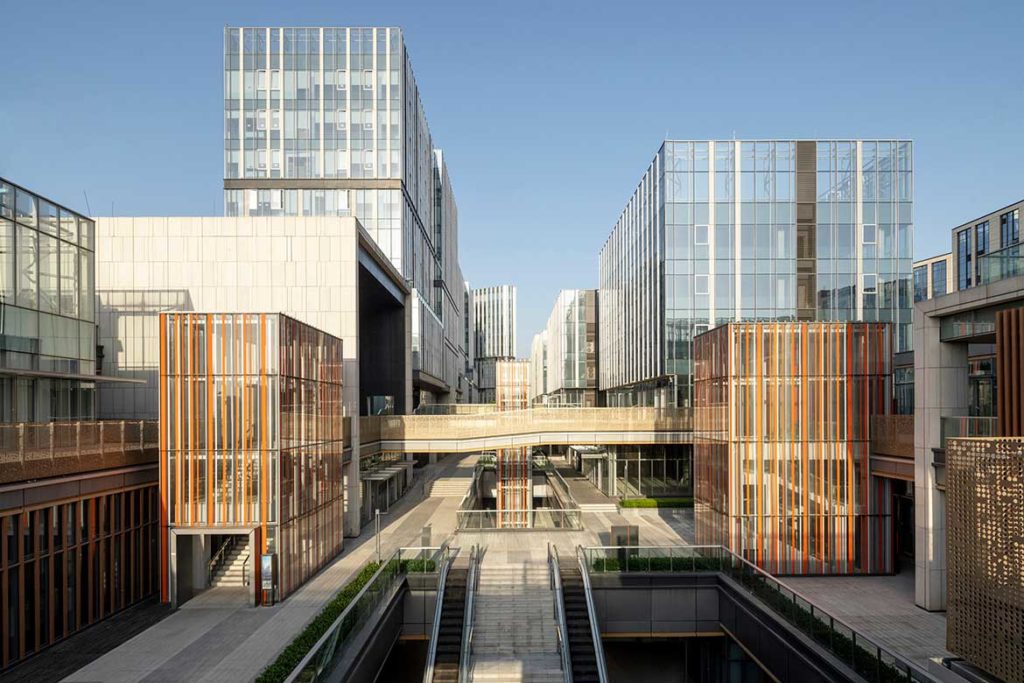
Diverse live-work programs on the campus are organised around an east-west central green axis, with multi-level shaded circulation routes between functions. The buildings are thoughtfully positioned to ascend in height along the green axis: the low-rise retail structures at the west draw attention to the centre of the campus and attract visitors from adjacent plots; the main headquarters tower occupies the most prominent northeast corner; and the leasable office towers rest in between.
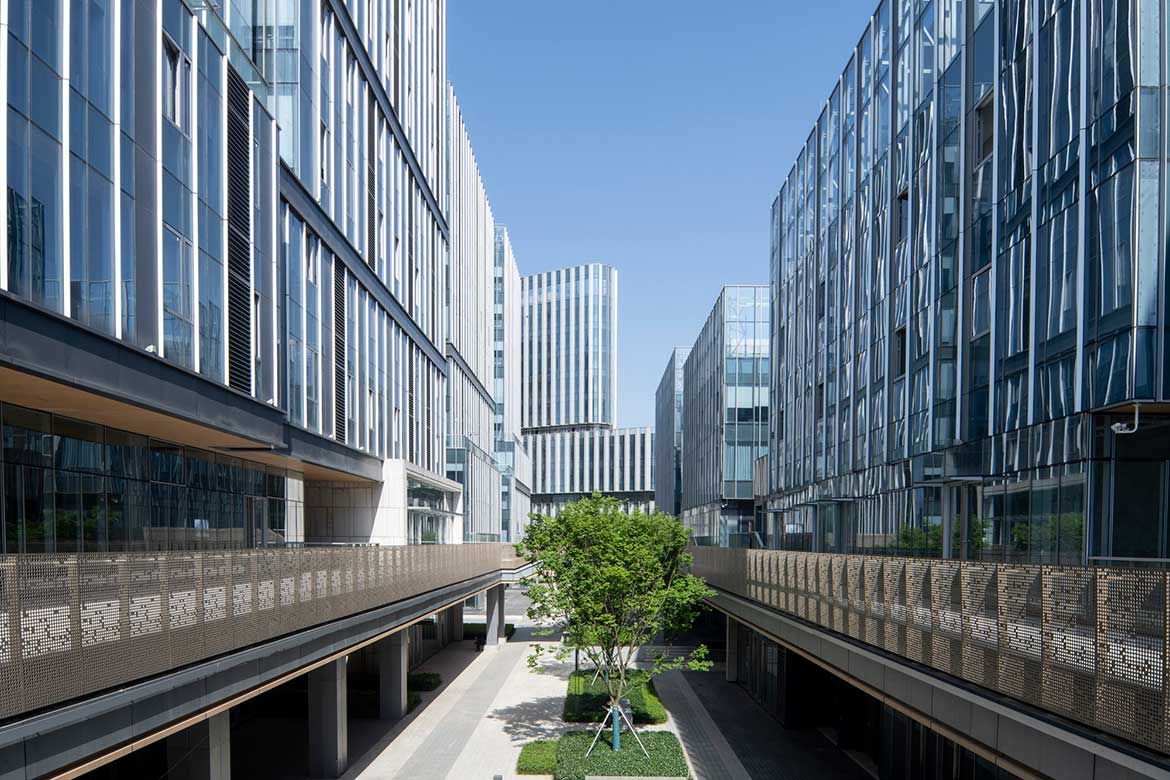
To further enhance the pedestrian experience within the campus, vehicular access is planned along the periphery of the site, allowing for a lush landscape to permeate the entire campus. A generous green belt is reserved for the north boundary, inviting passersby to wander in and explore. Each tower has stepped terraces and rooftop gardens, reinforcing the concept of outdoor living typical in Chengdu.
Standing as an iconic architectural statement, the main tower is made up of three stacked volumes descending in size, creating green terraces along the south facade. The floor plate is efficiently designed as a parallelogram with a central core to secure maximum flexibility for both single and multi-tenant users, including the new research and development centre for the primary client.
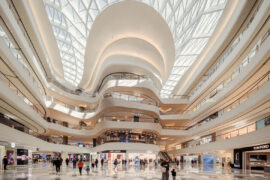
The retail section is also designed with flexible floor plates with extensive open terraces to allow for diverse retail formats and alfresco dining opportunities. Shops and restaurants extend along the central green spine which are interwoven with sunken plazas and link bridges to form key activity nodes that activate the inner streetscape, engaging pedestrians from all directions.
Atop the retail street, there are leasable office towers which have been designed with varying floor plates and building configurations, enabling them to be flexibly converted into multi-storey headquarters or shared offices for start-ups.

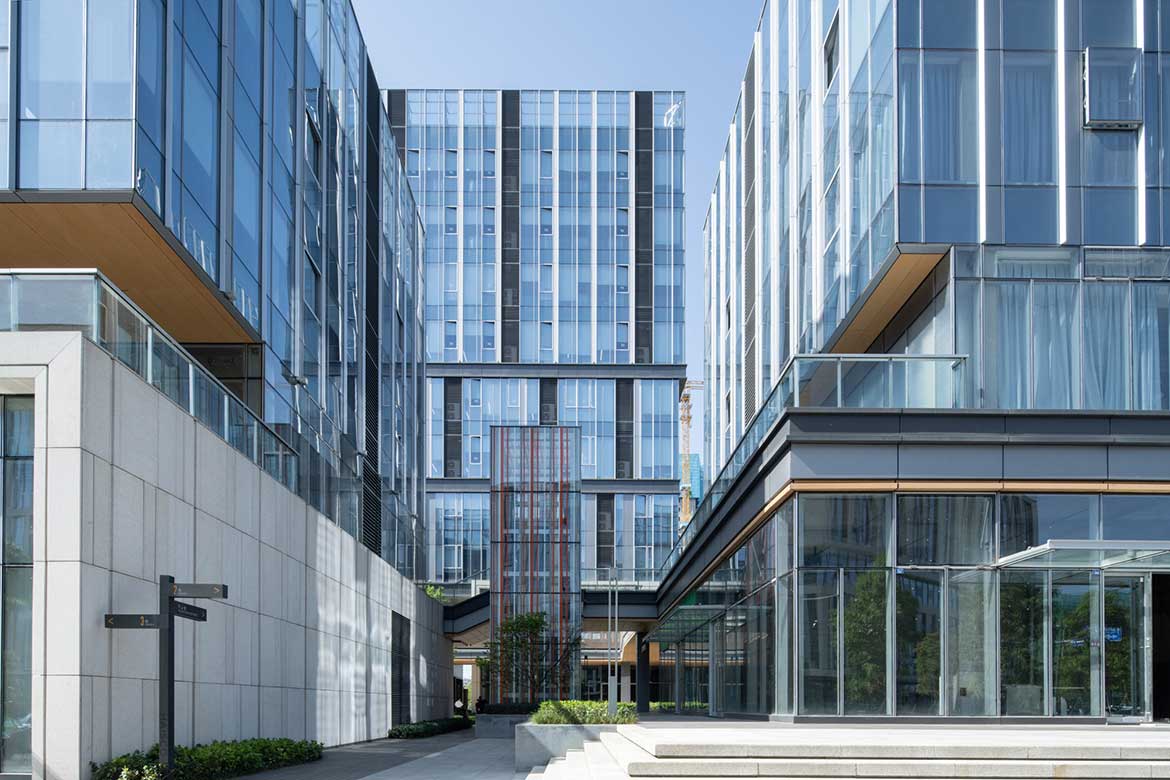
Towers with larger linear floorplates are located to the north of the site while smaller ‘villa-style’ office spaces are located along the southern edge, maximising the intake of natural light and views of the central promenade. Green terraces that are placed along the southern elevation provide additional breakout spaces for office users also function as passive shading for the internal office spaces.
The facade design borrows elements of vertical textures and weaving patterns from the local Chengdu Embroidery to form a unified identity. It is complemented by a high-performance curtain wall system with low-E coated glazing units, which features a series of vertical fins to achieve passive shading and minimise glare for the users within the building. A neutral yet vibrant colour palette was selected for the facade, encapsulating the dazzling modernity and infinite energy of the new high-tech development.


INDESIGN is on instagram
Follow @indesignlive
A searchable and comprehensive guide for specifying leading products and their suppliers
Keep up to date with the latest and greatest from our industry BFF's!
The internet never sleeps! Here's the stuff you might have missed