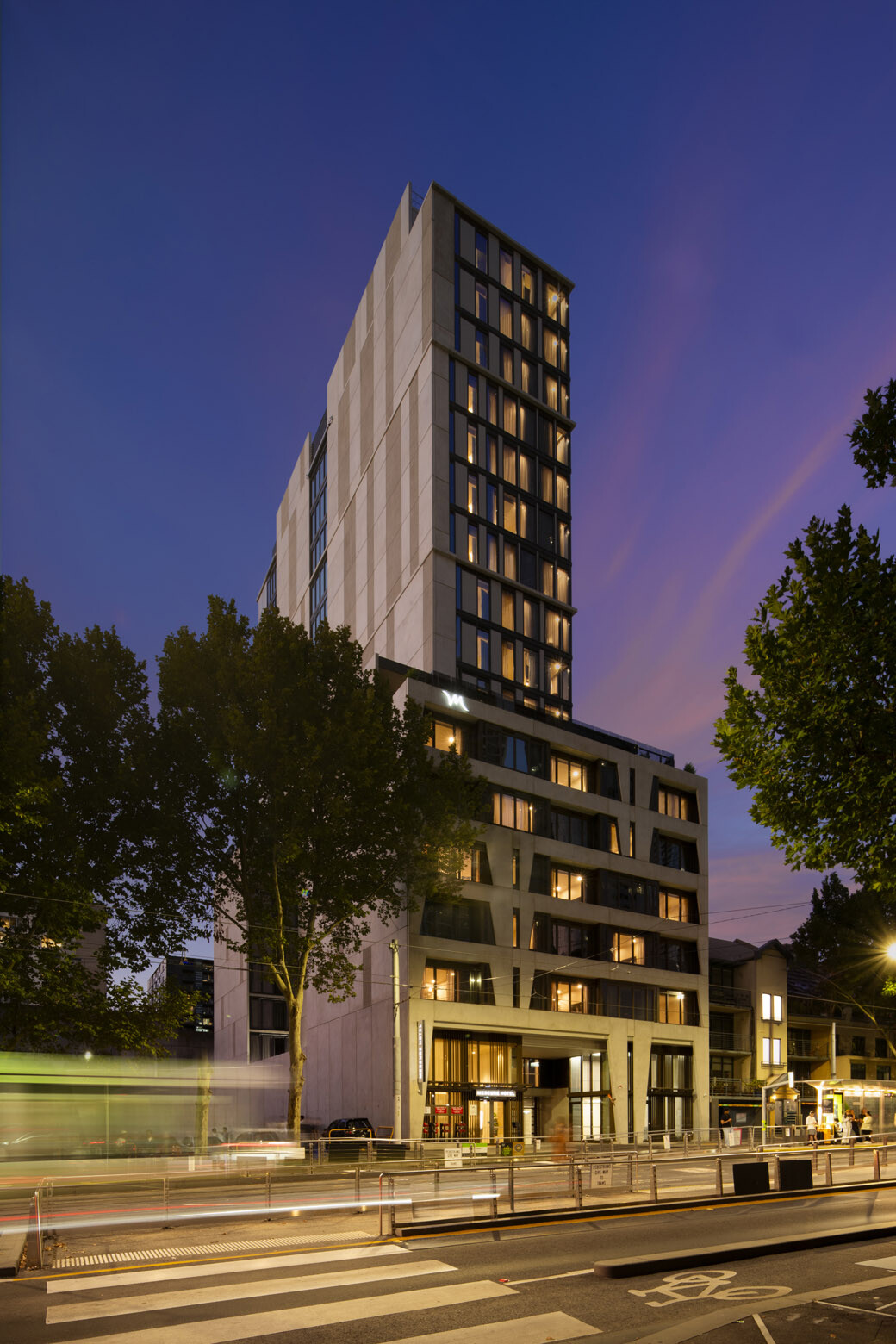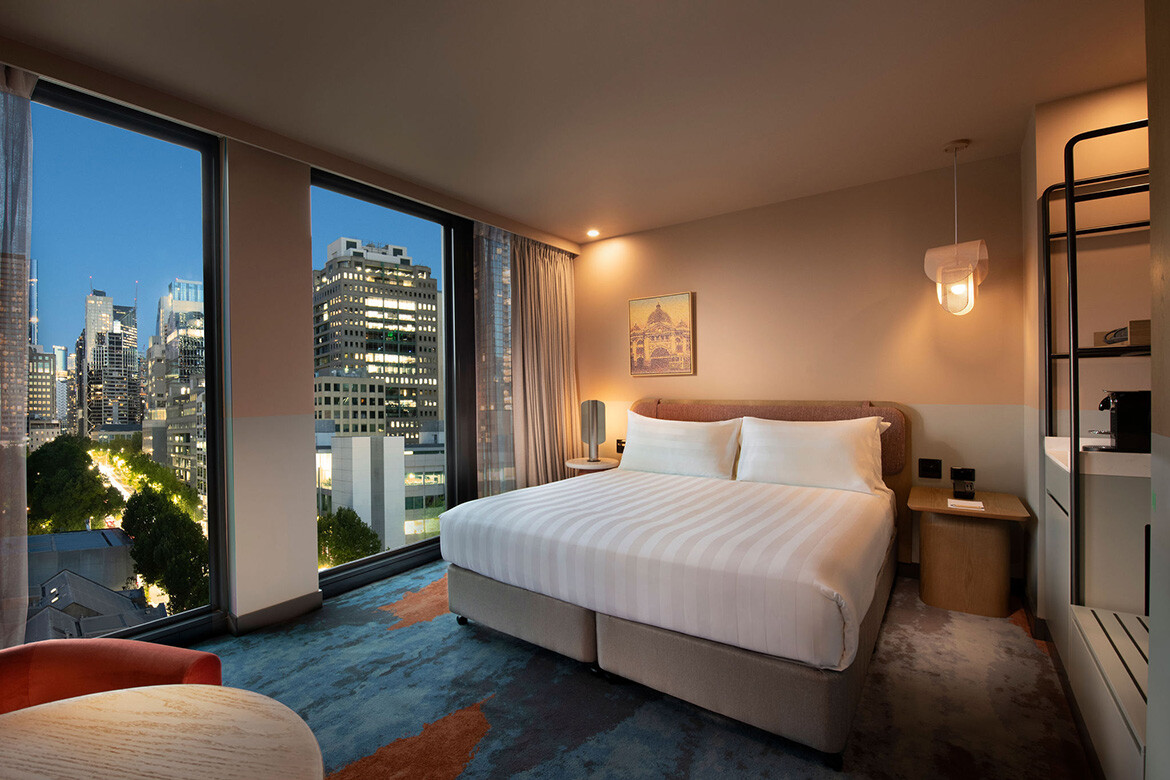
A new addition to Melbourne’s western CBD is aiming to do more than just accommodate overnight stays. The opening of Mercure Melbourne La Trobe Street brings 195 rooms to a part of the city that’s often overlooked, alongside a bar and restaurant offering that looks outward — both physically and socially.
Developed by Spacious Group, the $90-million project is the largest purpose-built hotel to open in Melbourne’s CBD this year, and the first new-build Mercure in the city centre in over a decade.
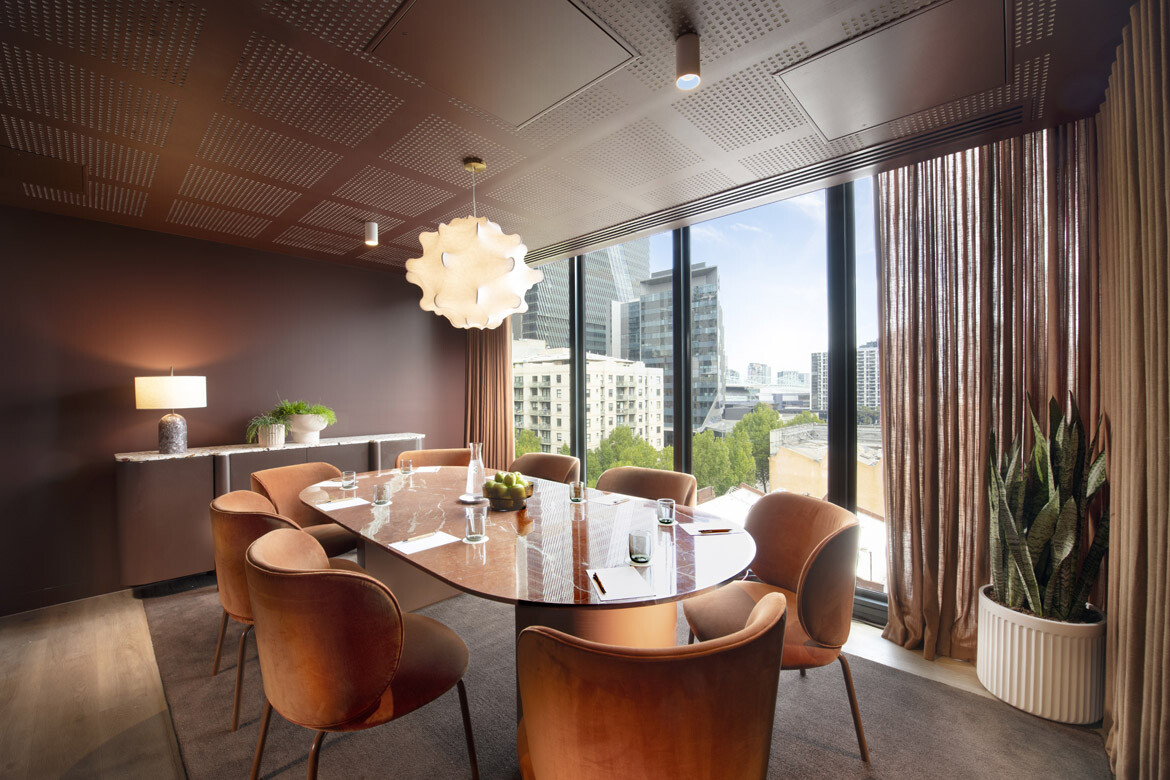
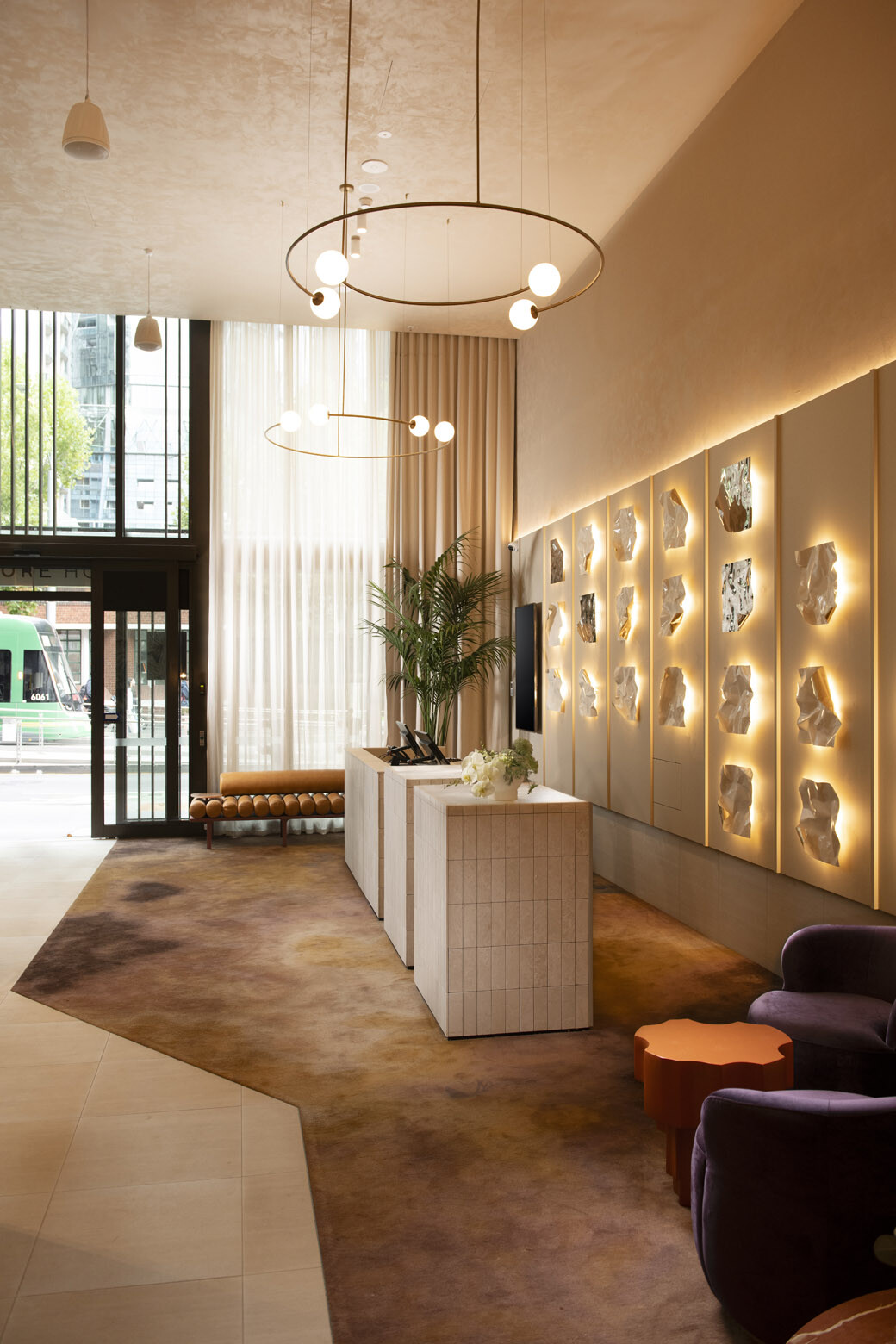
The 18-storey tower, with interiors by SORA Interiors and architecture by LiFE Architecture, draws lightly on the site’s past life as a tinsmith factory. That reference appears in details rather than overt gestures — abstract artwork in the lobby, metallic accents — set against a softer palette of travertine, drapery and diffused lighting that leans more towards retreat than industrial homage.
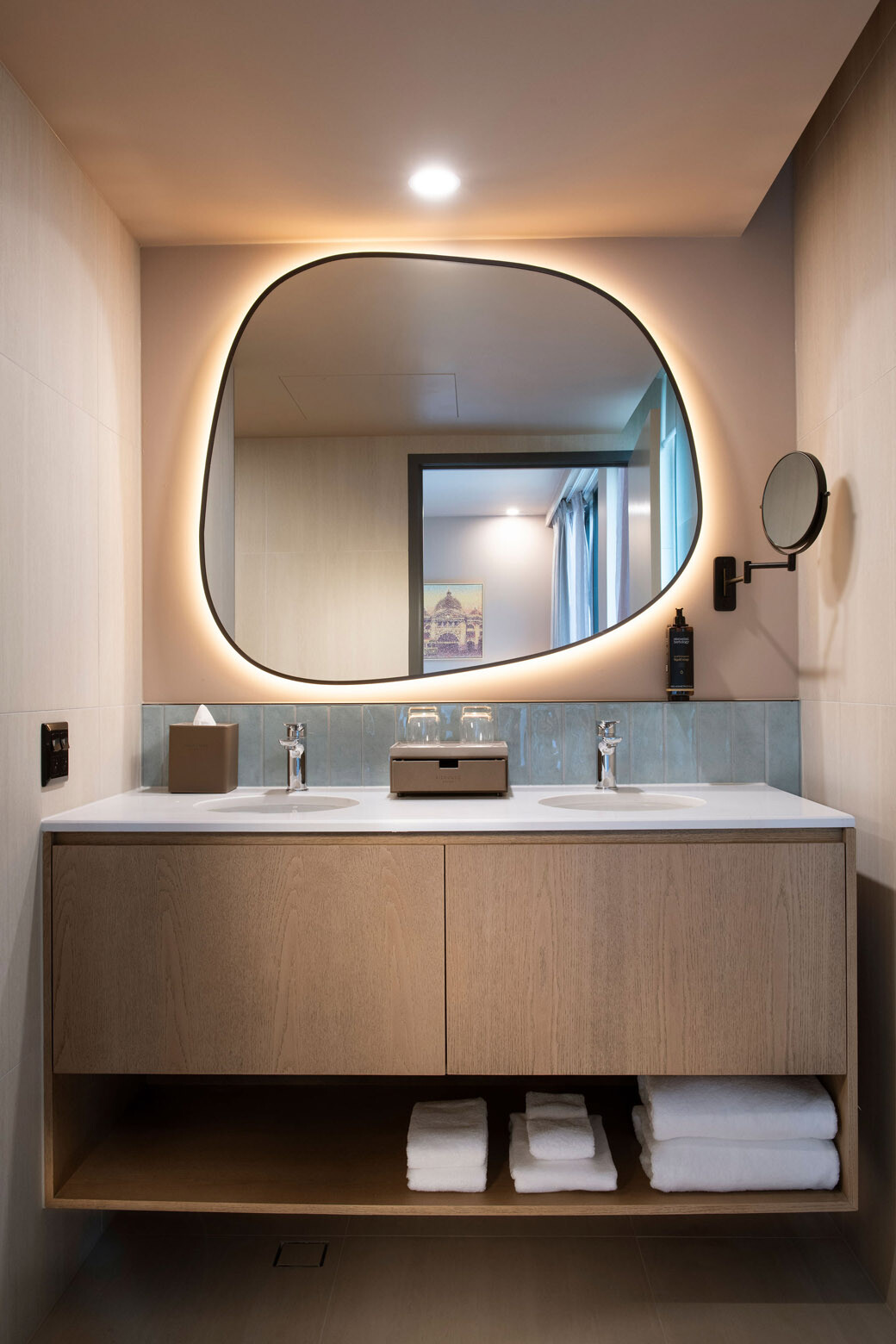
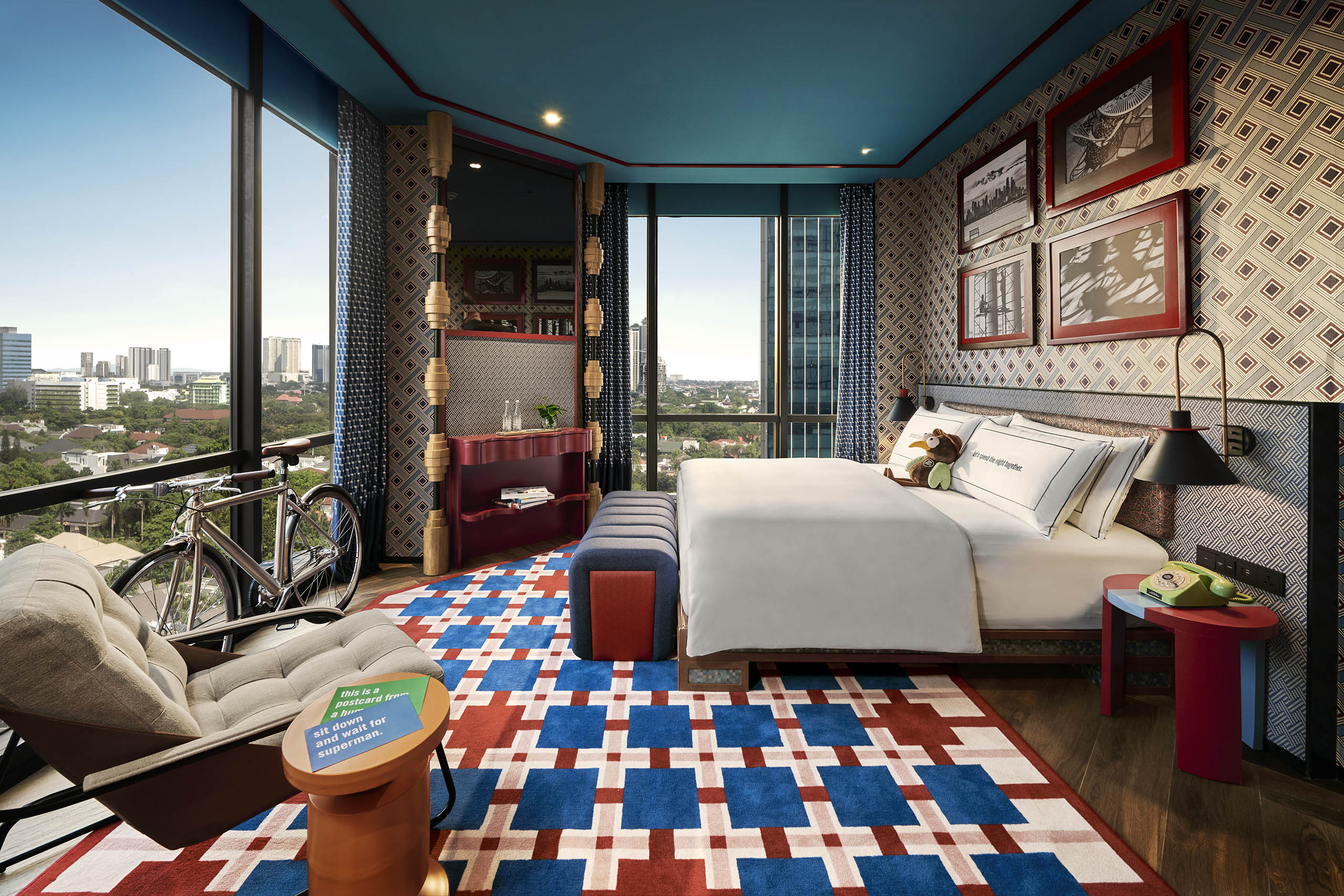
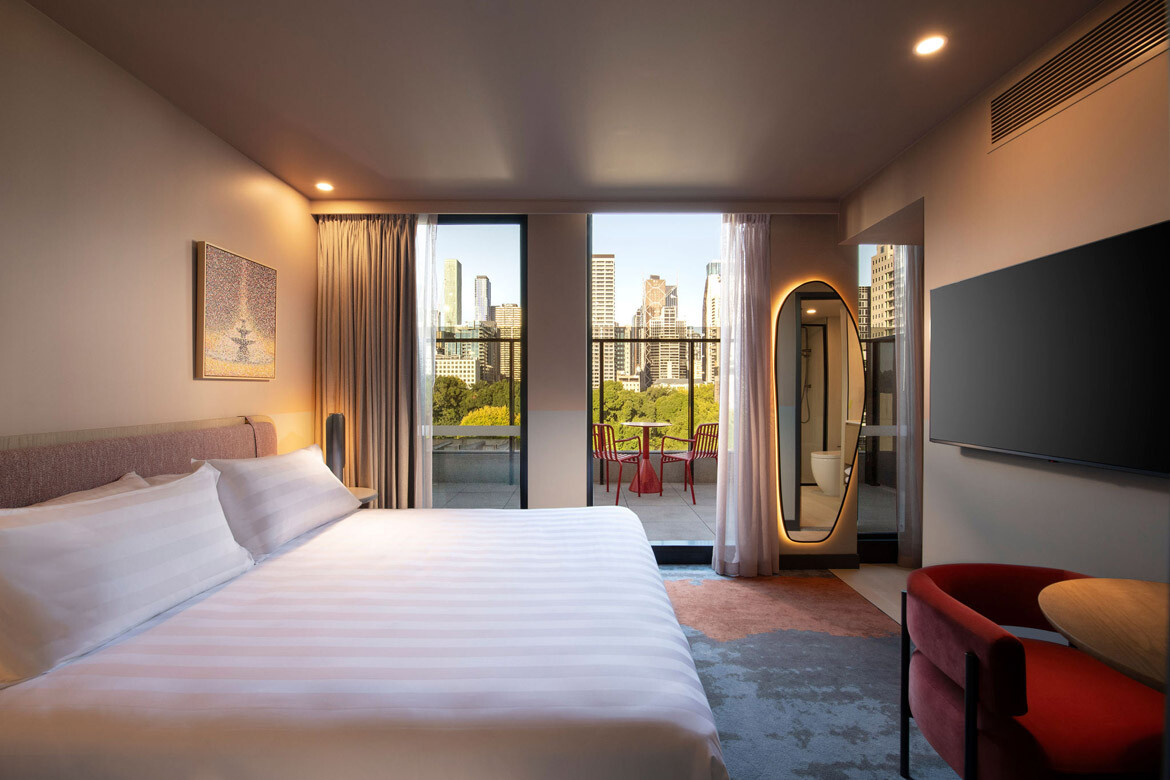
Guest rooms are organised to maximise outlook, with floor-to-ceiling glazing framing views towards Docklands, Flagstaff Gardens and the CBD. Interiors take cues from nearby green spaces, layering muted tones — greens, blush and soft neutrals — to offset the density of the city outside.
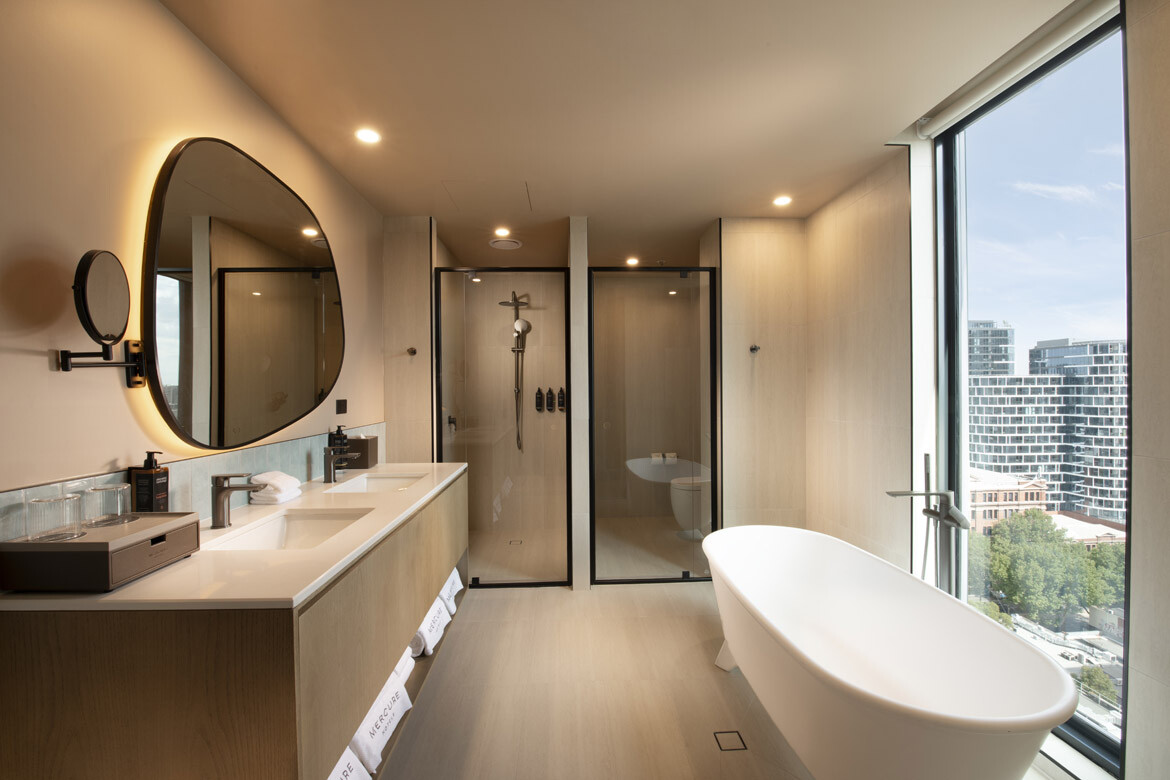
The hotel’s standout offering is its upper-level suite, where a freestanding bathtub is positioned directly against the window — a familiar luxury move, but still relatively rare in Melbourne’s midscale hotel market.
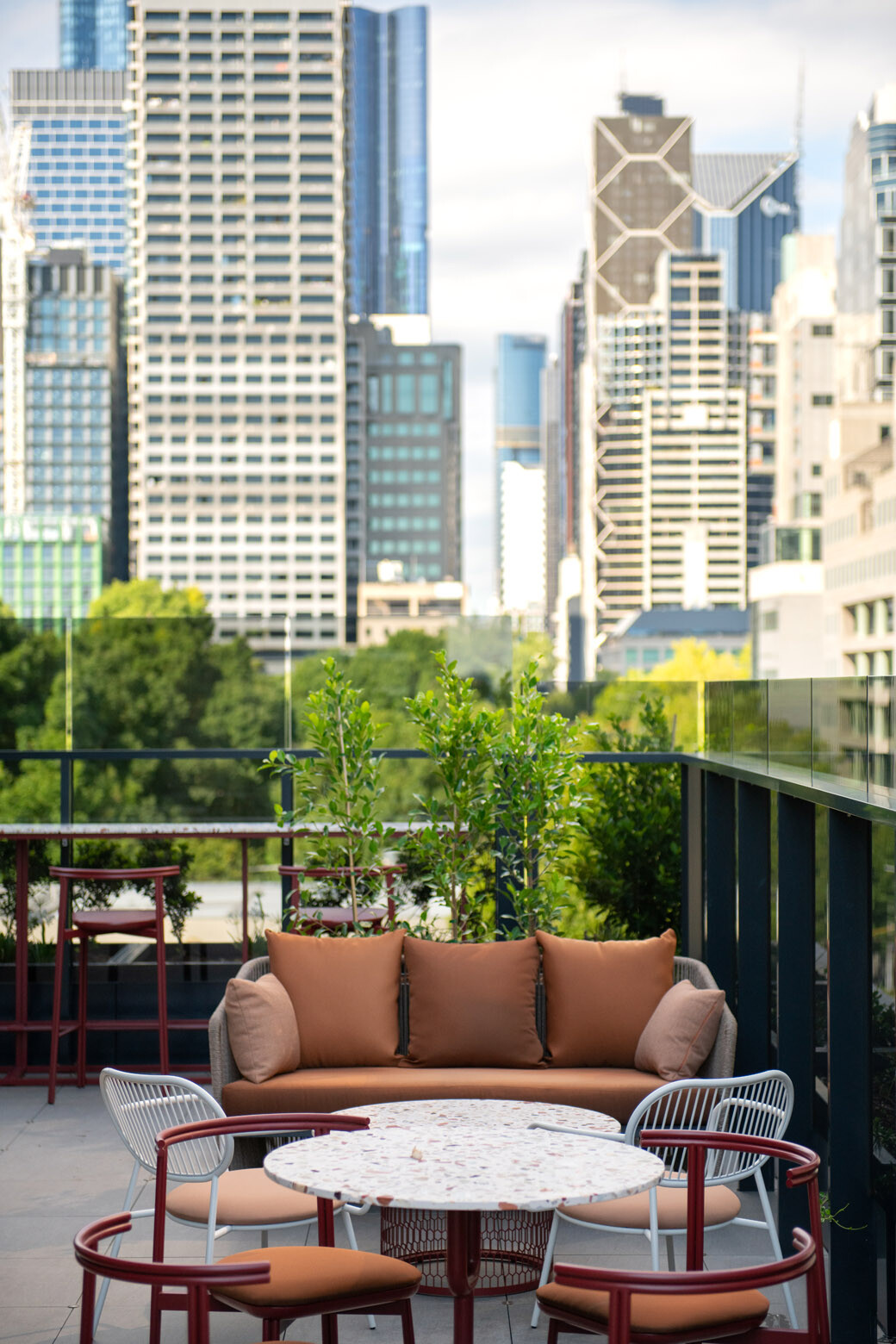
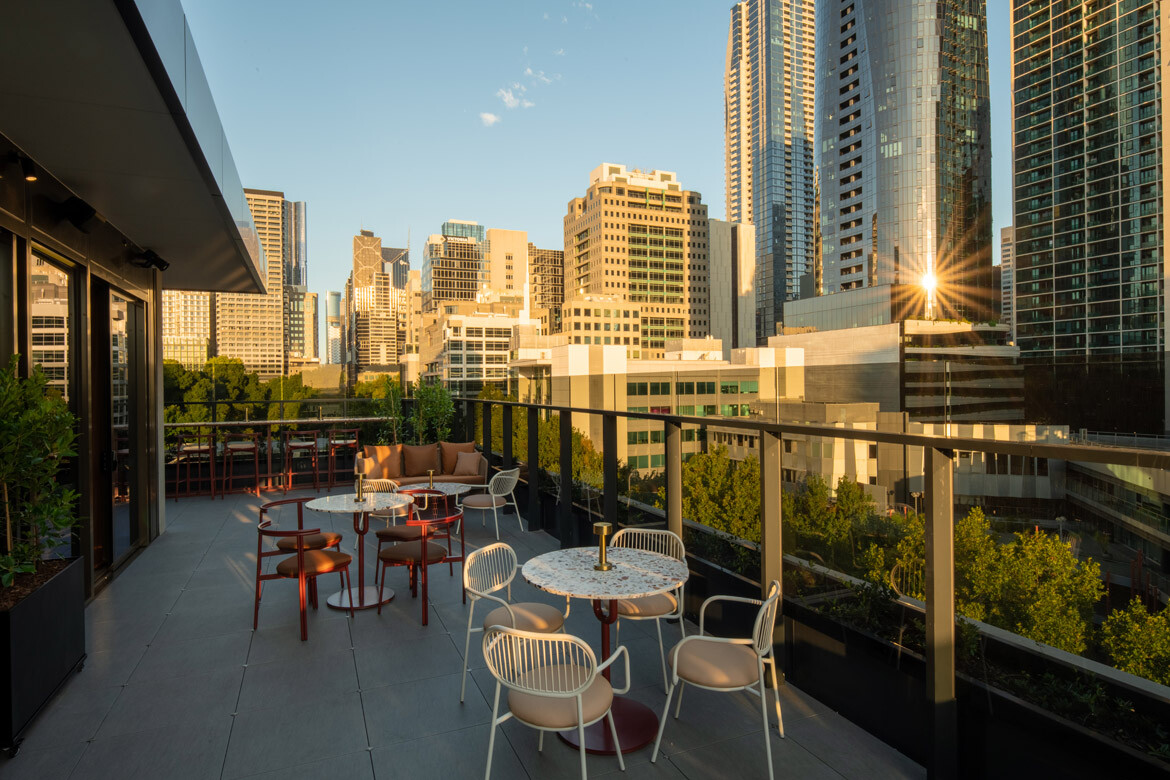
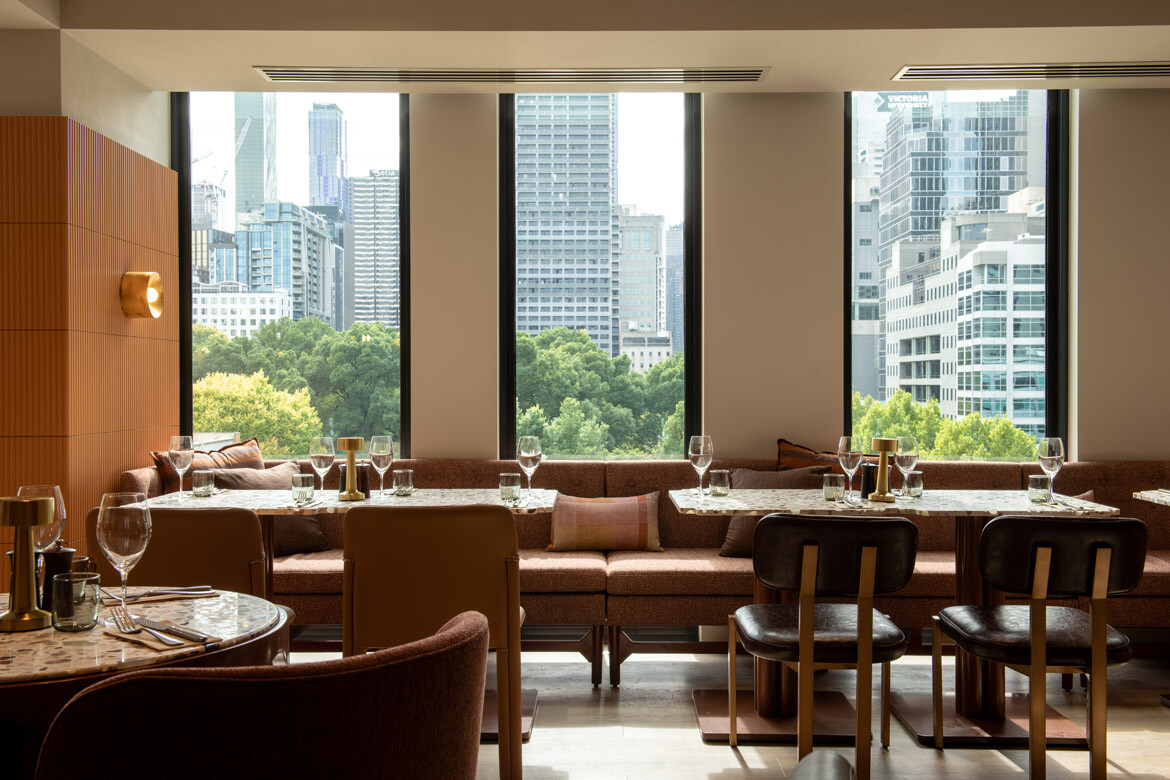
But it’s level six that’s likely to shape how the building is used day to day. Here, Foundry Bar and Kitchen occupies a combined indoor and outdoor footprint, with a bar, restaurant and terrace overlooking Flagstaff Gardens.
Related: Lane 23 is a Kuala Lumpur hot spot
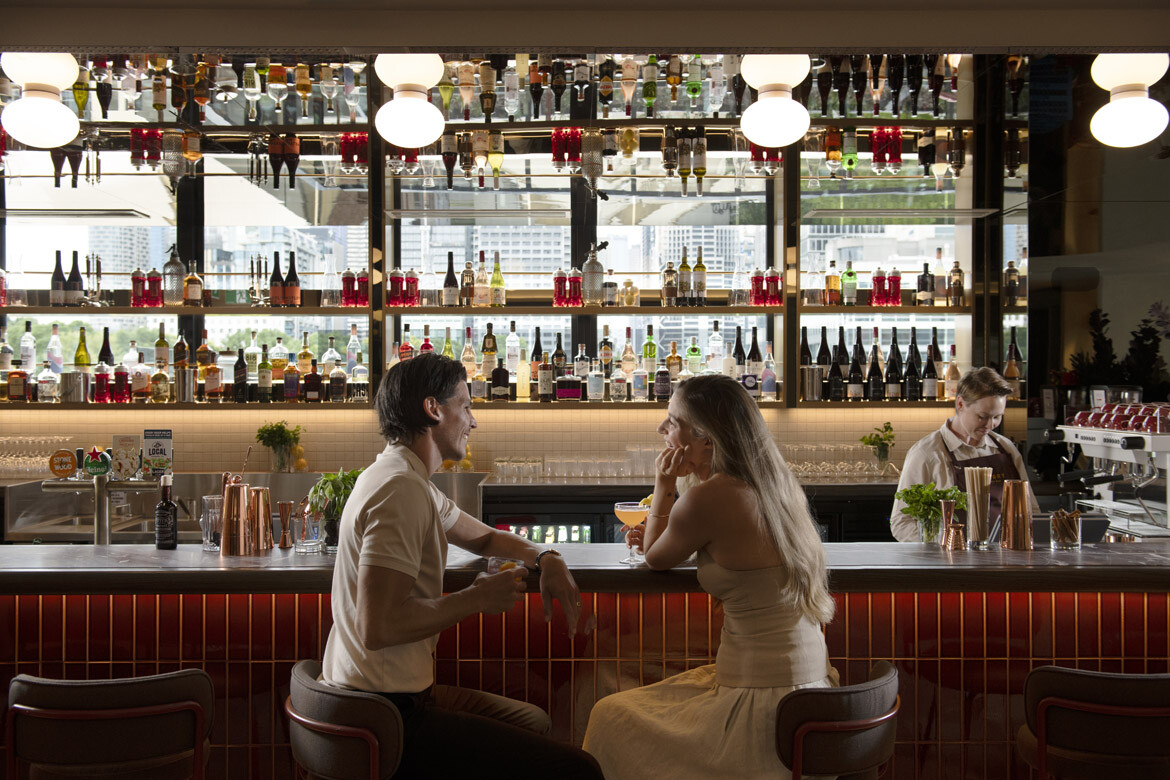
The space is anchored by a six-metre red marble bar, with mirrored surfaces and underlit shelving creating a more theatrical atmosphere than the calmer tones downstairs. Like the hotel, it carries through subtle industrial references — copper, brass — without leaning too heavily on them.
Outside, the terrace is one of relatively few in this part of the CBD. Oriented towards the west, it captures late afternoon light and views across to Marvel Stadium and Docklands — positioning it as a potential after-work drawcard as much as a hotel amenity.
The food and drink offering follows a similar logic. A strong emphasis on Victorian producers runs through the wine list, while the cocktail menu leans into technique-driven drinks — clarified, infused or otherwise reworked classics.
Taken together, the hotel and Foundry suggest a shift in how these midscale developments are being positioned. Rather than operating as closed systems, there’s a clear attempt to engage with the surrounding city — not just through views, but through programming and access. Whether that holds over time will depend on how the space is adopted. For now, it adds a new layer to a quieter part of the CBD — one that’s gradually becoming more active after hours.
LiFE Architecture and Urban Design
lifearchitecture.com.au
Photography
Adam Bruzzone