Architectus reimagines ageing in place with Australia’s tallest retirement community, combining housing, care and community in Sydney.
Retirement living in Australia has long been associated with horizontality: low-rise villages, suburban edges and a quiet separation from the rhythms of everyday urban life. In Sydney’s north-west, a new project by Architectus proposes a radically different model, one that stacks community, care and connection into a dense, civic-minded precinct embedded within the city itself.
Story continues below advertisement
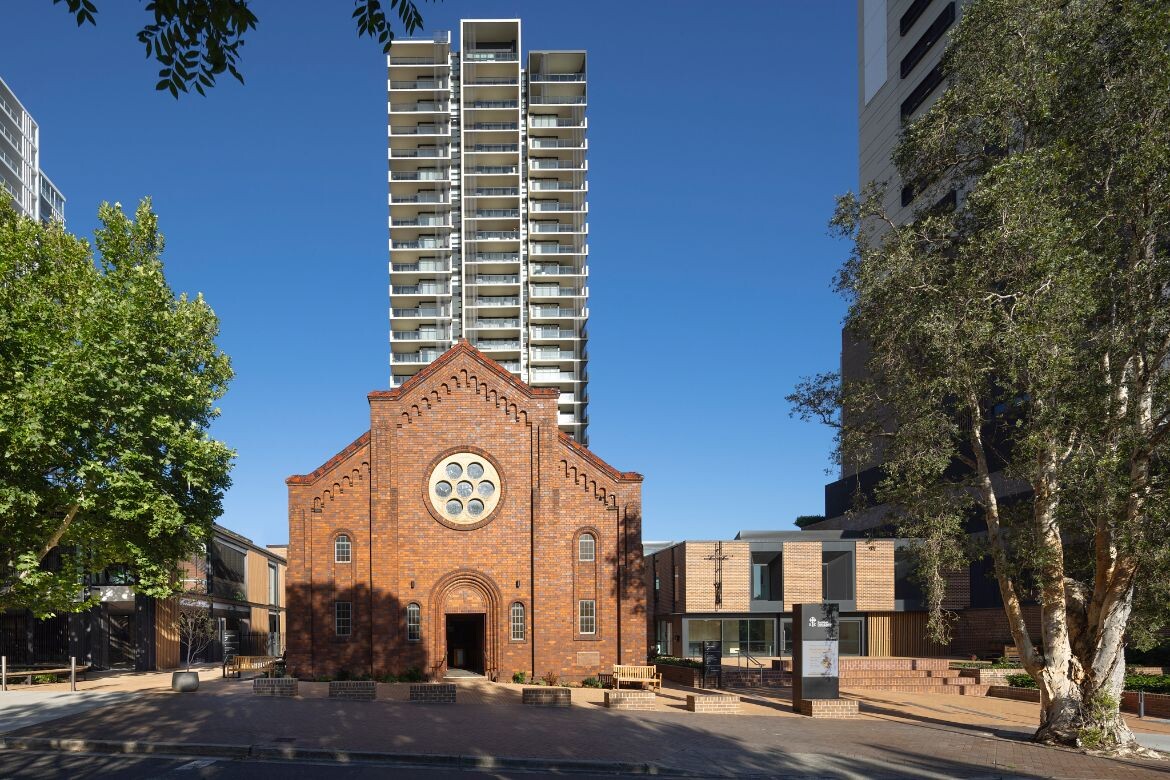
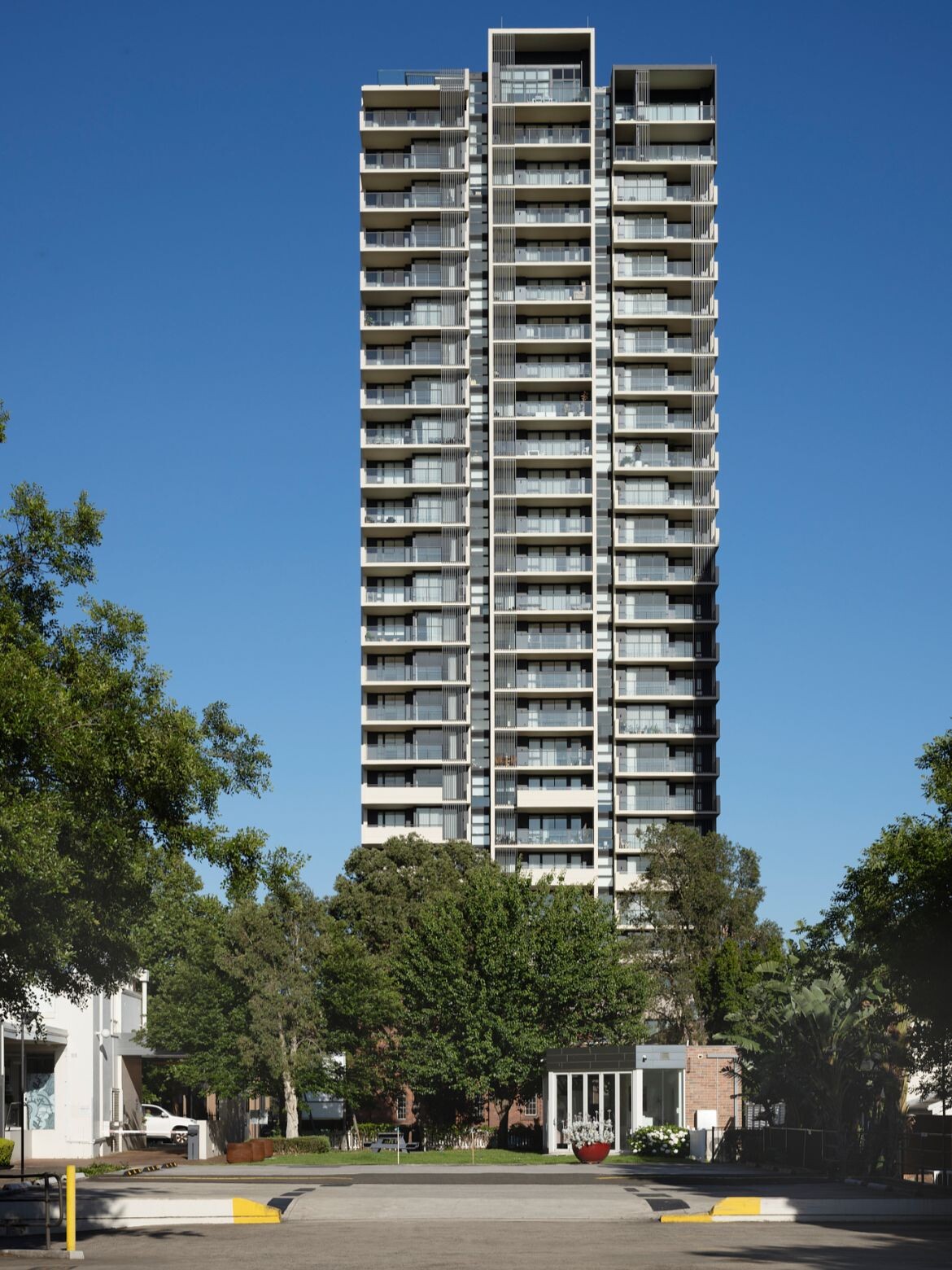
Known as The Cambridge, the $200 million development in Epping transforms a historic parish site into what Architectus describes as a “vertical, multi-generational precinct.” Rising to 29 storeys, it is Australia’s tallest retirement community, yet its ambition is not height alone. Instead, the project asks how ageing in place might be reimagined through shared infrastructure and meaningful intergenerational exchange.
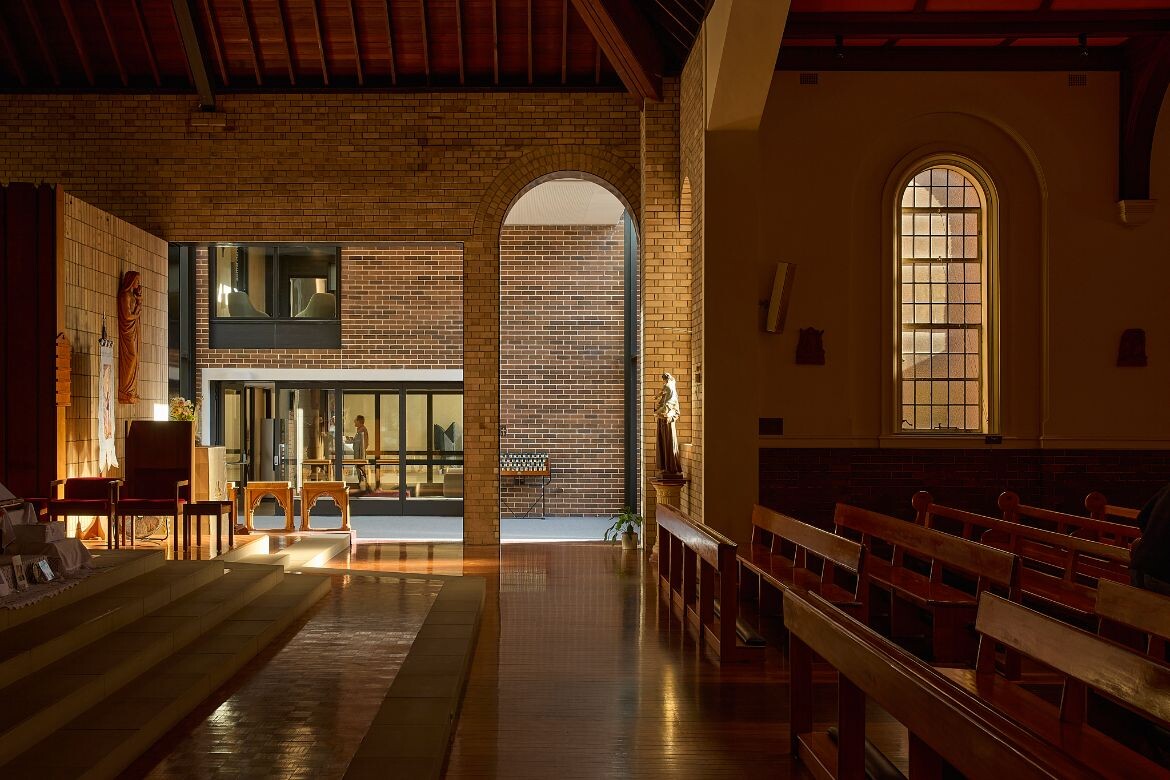
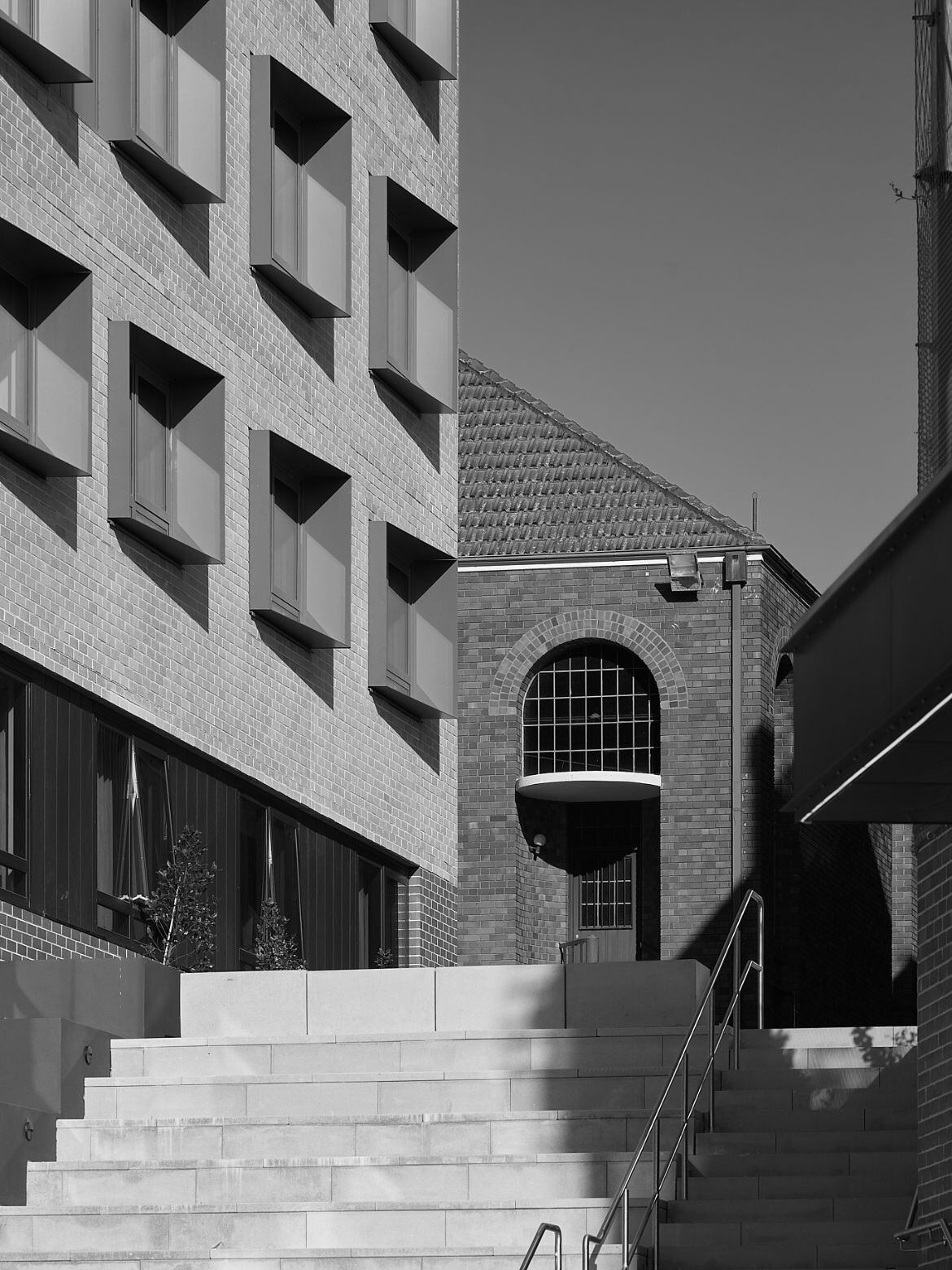
Developed by Levande in partnership with the Catholic Diocese of Broken Bay, the masterplan brings together independent living, residential aged care, a primary school, parish facilities and public spaces within a single, legible urban framework. At its heart sits the heritage-listed Our Lady Help of Christians Church, retained as both a spiritual anchor and a spatial organiser for the broader site.
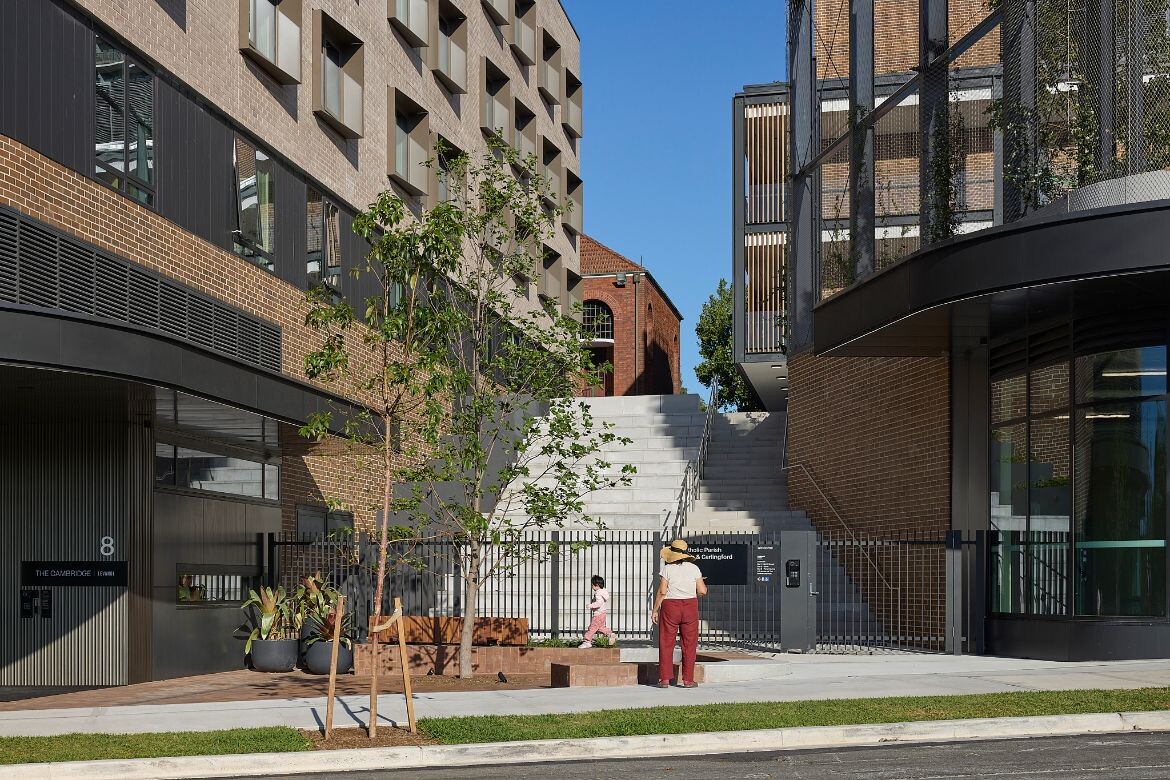
Rather than treating the tower as an isolated object, Architectus has structured the precinct as a sequence of buildings and landscapes that mediate between public and private. Along Oxford Street, the built form remains deliberately modest, deferring to the scale and presence of the church. The tower itself is positioned to the north-west, where its height aligns with the emerging density of the Cambridge Street corridor and allows the site to open up rather than overwhelm its surroundings.
Story continues below advertisement
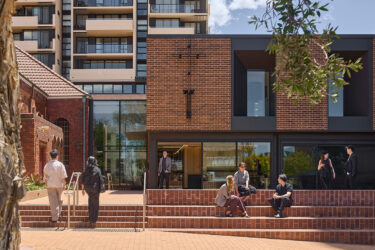
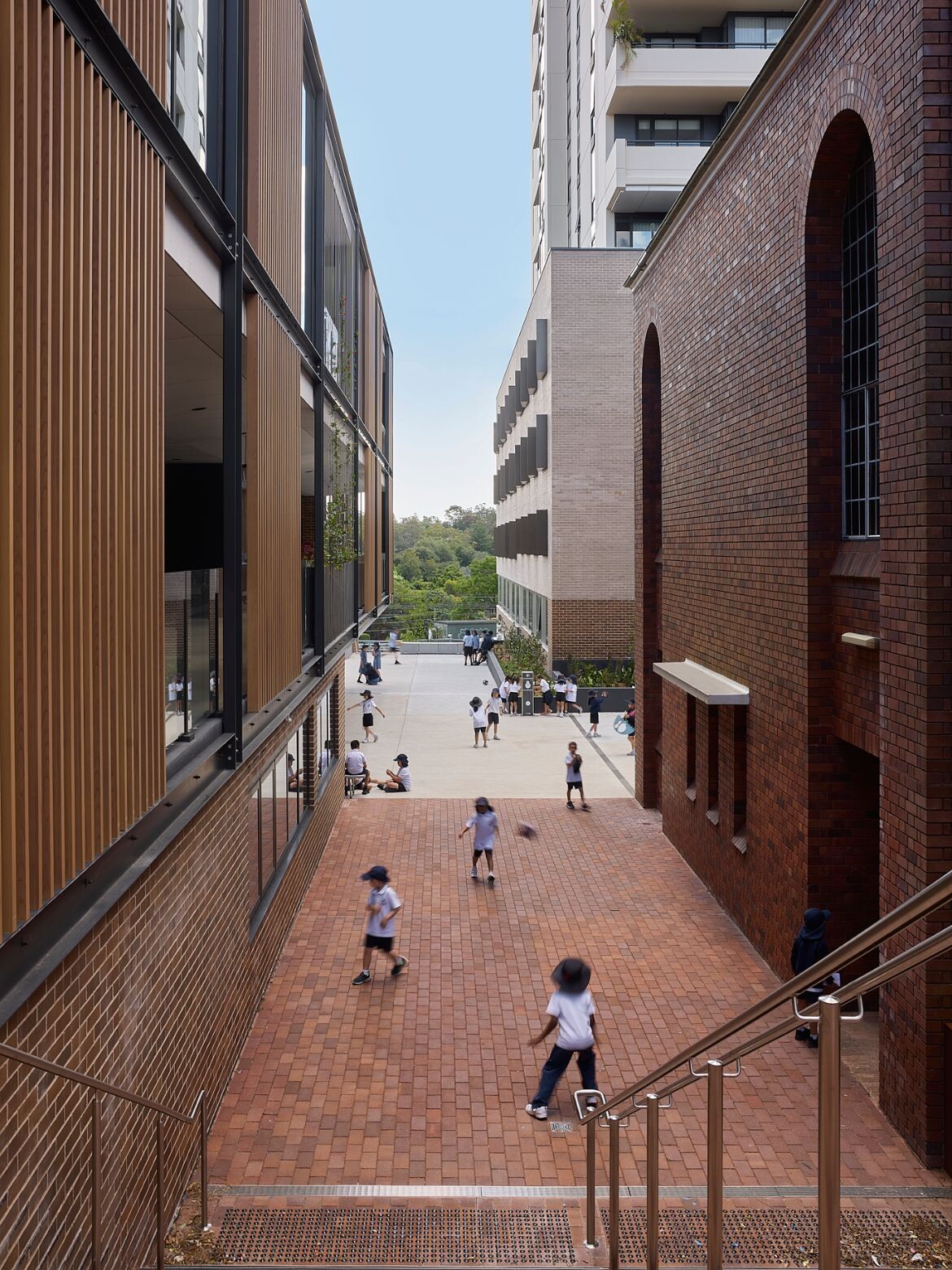
“The hall itself was set back to create a civic plaza,” says Architectus Principal, Farhad Haidari. “Previously, Epping town centre didn’t really have a civic open space like this. Now it’s an area that’s open to the wider community. That improves the locality in a very tangible way.”
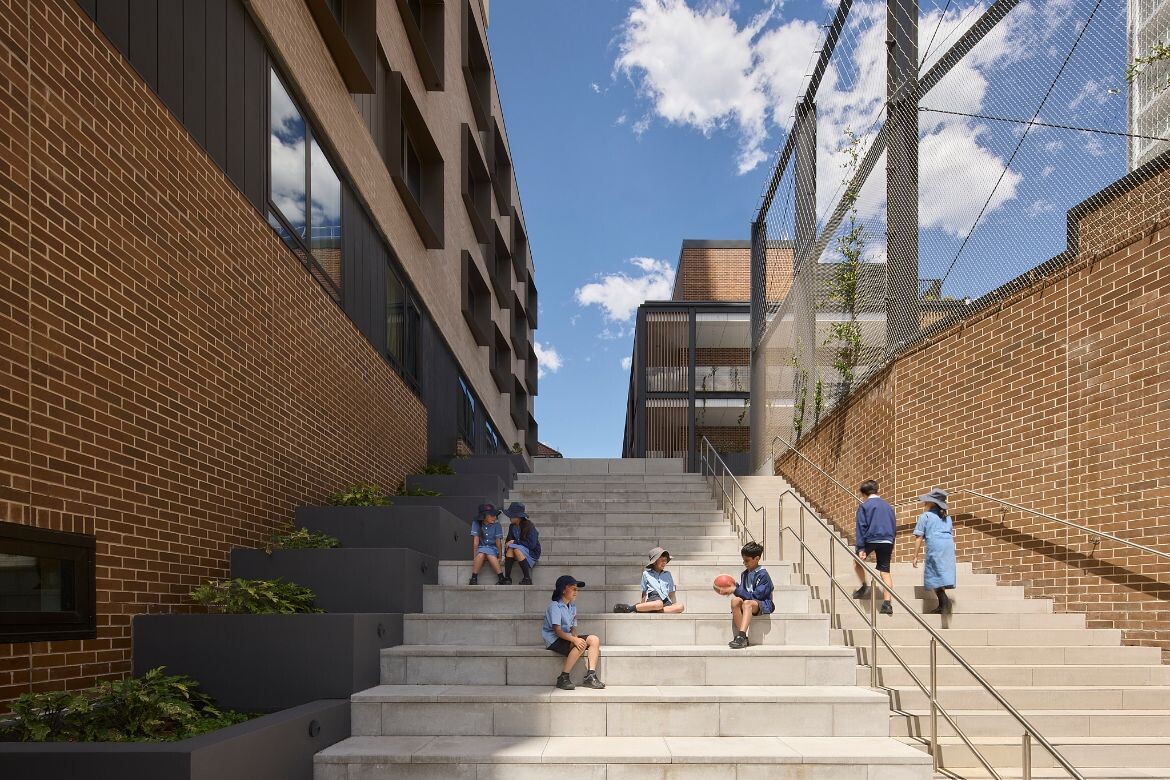
Across the precinct, landscaped courtyards and pedestrian links stitch the elements together, encouraging movement and everyday interaction. Secure east–west connections cut through the site, reducing perceived scale and reinforcing a civic openness that belies the density of the program. It is a careful balancing act, one that treats urban legibility and social clarity as essential design tools.
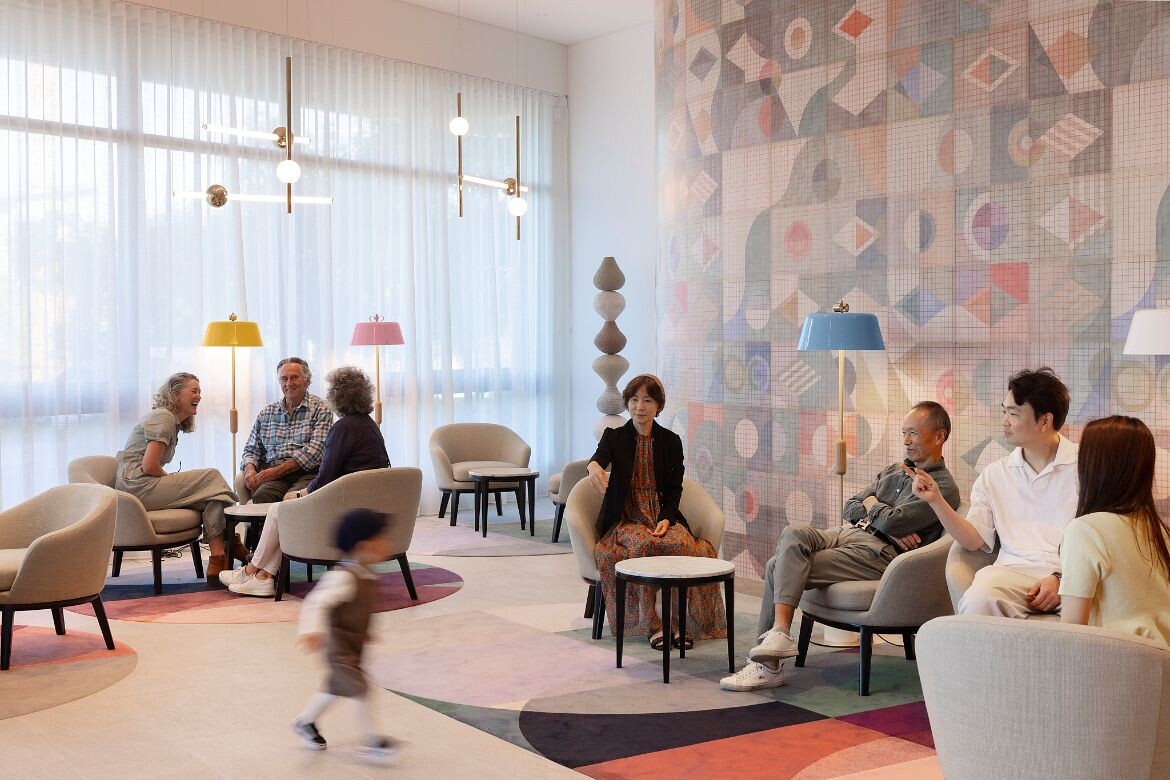
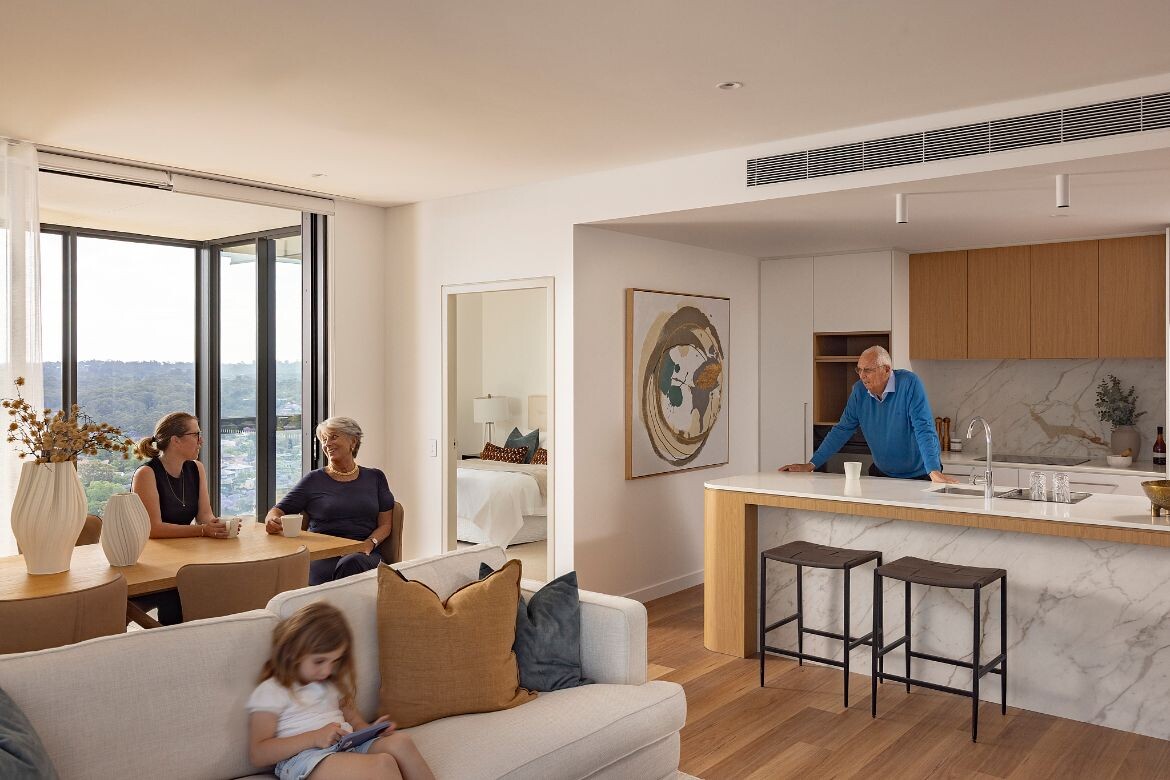
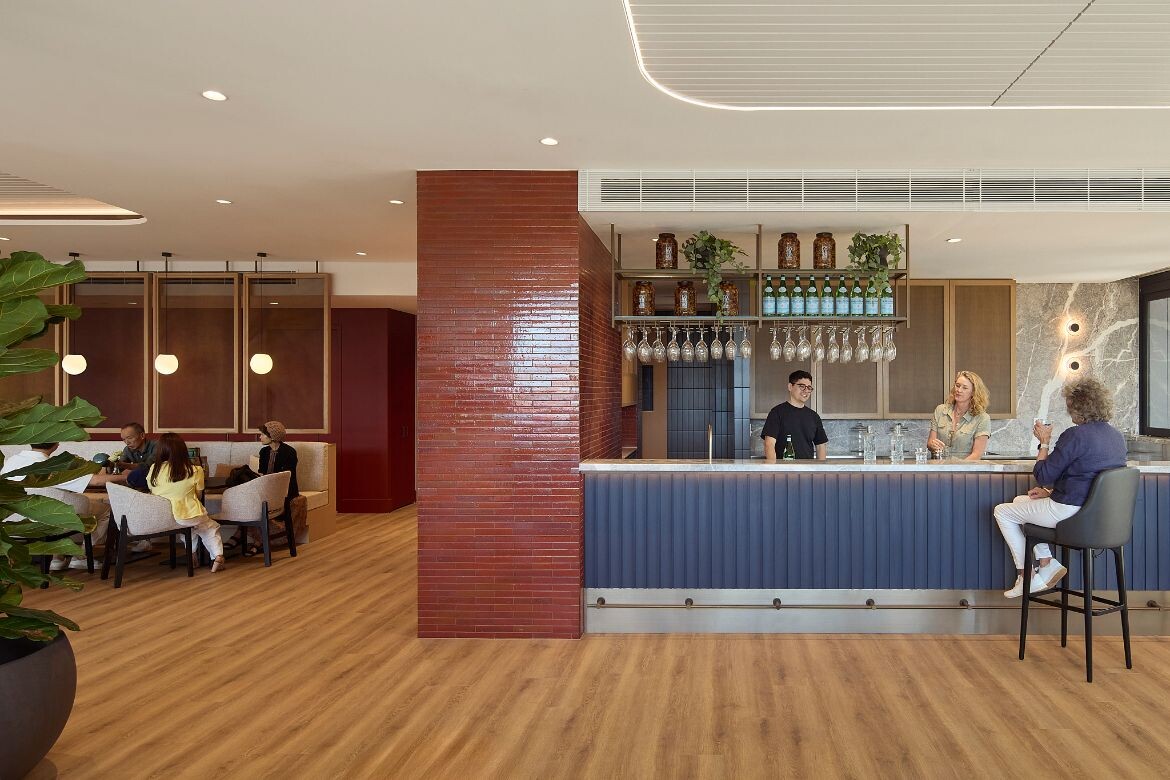
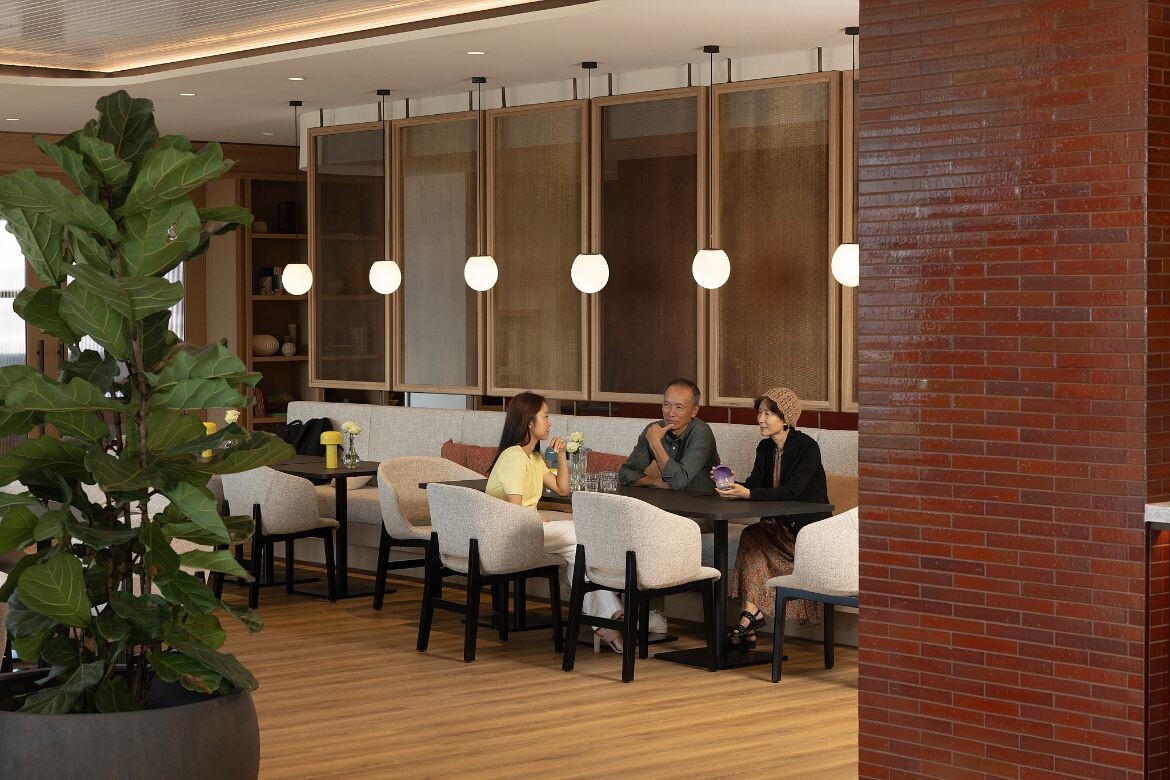
Within the tower, 158 independent living apartments sit alongside 132 aged care beds, supported by a generous suite of shared amenities. Rather than relegating communal life to a single level, these spaces are distributed and varied: a clubhouse and bar, rooftop dining areas and terraces, a cinema, pool and gym, library, craft studios, games rooms, gardens and workshops. Together, they form a vertical social infrastructure designed to encourage daily encounters and a strong sense of belonging.
What distinguishes The Cambridge is the way these residential spaces are deliberately entangled with the life of the broader community. The inclusion of a primary school and a 200-seat parish hall creates opportunities for interaction that extend beyond residents alone. Children, families, parishioners and older residents occupy the same site, sharing paths, spaces and routines. In this context, intergenerational living is not a slogan but a lived condition.
“Intergenerational exchange was discussed in depth in the early design phases,” Haidari explains. “The site’s shared space can be directly accessed from the aged care units — which makes sense because that group is the least mobile — and it’s easily accessed from the apartments, the church and the school. It’s a purposely created shared community space where interactions happen both through coordinated programs and incidental encounters.”
Haidari describes the project as a rare opportunity to bring generations together in ways that benefit all. The presence of youth, education and activity, he suggests, can invigorate older residents, while children gain exposure to lived experience, history and care embedded within their everyday environment.
“In a project as complex as The Cambridge, there are always going to be design challenges — especially when multiple stakeholders and briefs are involved,” says Haidari. “Our biggest challenge was getting the masterplan right. It was essentially a very difficult design jigsaw puzzle. We had to solve for schoolchildren, seniors, churchgoers and the broader public — and we couldn’t solve it for one group at the expense of another.”
The planning of movement and access reflects this complexity. Separate entries for aged care, independent living, school and parish facilities ensure dignity, safety and clarity, while shared outdoor spaces maintain a sense of collective life. Parking has been carefully integrated, including a new parish carpark that relieves pressure on surrounding streets, and a purpose-built school drop-off zone that prioritises safety without dominating the ground plane.
Landscape plays a critical role in softening density and reinforcing continuity across the site. New planting, shaded paths and courtyards link the precinct’s components, while the tower’s footprint has been deliberately minimised to protect solar access to the church and school. Privacy is achieved through orientation and screening rather than isolation, allowing residents to remain visually connected to the public realm.
In urban terms, The Cambridge offers a compelling response to Australia’s ageing population and intensifying cities. By consolidating services, housing and community infrastructure on a single site, the project provides housing diversity while freeing up existing family homes in surrounding suburbs. It also demonstrates how faith-based and community landowners can retain heritage and ownership while investing in long-term, socially sustainable outcomes.
Haidari believes the model will not remain unique. “It’s more than replicable — I would say it’s inevitable,” he says. “Before The Cambridge, the question about vertical living for seniors would always arise: is that what they want? But once people experienced the facilities and the connections across the site, they could see the benefits. More vertical living for seniors is on the horizon.”
As Australia’s tallest retirement village, The Cambridge is a significant milestone. More importantly, it signals a shift in how architects, developers and communities might think about ageing: not as retreat or withdrawal, but as continued participation in the life of the city. Here, retirement living is neither hidden nor peripheral. It is central, visible and woven into the everyday fabric of urban life.
“The Cambridge has added so much to the Epping community, but it has also kept so much,” Haidari reflects. “We’ve retained the school and the church while boosting housing supply and creating more accessible community spaces. It’s enhanced the area hugely.”