“Lloyd’s Inn Kuala Lumpur is unique from the other properties in that it is a high-rise development, with more than a hundred guest rooms,” explains Guan Sin Teo, Associate at the architectural and design studio, FARM, based in Singapore. As FARM is behind the design of all three Lloyd’s Inn properties in Singapore, Bali and now Kuala Lumpur, Teo attests that the main challenge for the latest property was to recreate the same feeling of being close to ground and nature in the sky in a high-rise context – a similar feeling that is present in the two other, low-rise hotels.

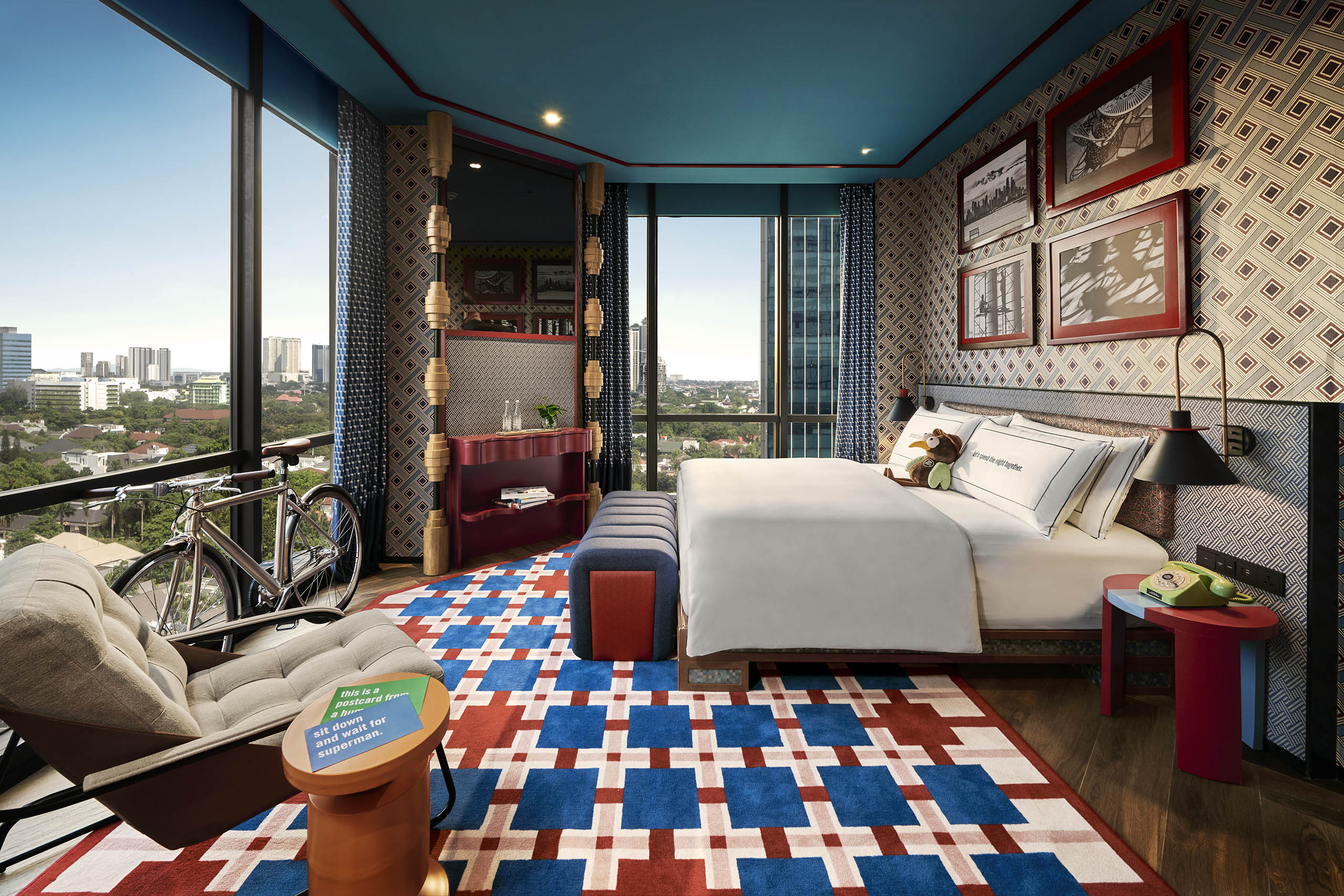
Mirroring Lloyd’s Inn’s eclectic mix of room typologies, Lloyd’s KL houses lofts, suites and rooms with their own private terraces, amongst others. Rooms range from 17 to 50 square metres, with a dipping pool (jacuzzi), F&B, co-working space, event and meeting spaces. Outdoor showers and bathtubs similar to the hotel’s Bali location are retained as the signature elements of the Lloyd’s Inn KL experience, while new elements, such as retro swings, are introduced to add a unique highlight to the location.
For each diverse room typology, the FARM team made an effort to bring greenery into the overall hospitality experience: “Every room is lined with planter boxes, private verandas, or small balconies, each with a little hint of green,” says Teo. “These natural spaces also aid in segmenting rooms and shading, creating maximum privacy with minimal visual obstruction. Businessmen, vacationing families and solo travellers all get to sit back at the end of the day and enjoy a quiet moment communing with nature, even on double-digit floors.”
Related: Exploring Hotel Indigo Kuala Lumpur on the Park with Anna Vivian

Treating Lloyd’s Inn KL as an exercise in the bottom-up approach to designing large structures, FARM understood that the strongest impression in hospitality came from the guest rooms. Instead of generic spaces determined by structure, each room sought to provide its inhabitant with a little patch of earth, suspended in the sky. “By using interior design to determine the scale and logic of architecture, Lloyd’s KL commits to the belief that hospitality can be tailored to the individual without compromising the overall experience,” says Teo.
In terms of materiality, Lloyd KL maintains a similar palette and similar outdoor elements as the other developments – off-form concrete walls, cement screed renderings and other raw finishes, mixed with a lush tropical planting scheme and natural timber-look finishes. An additional material used was the galvanised expanded metal mesh used for screens added on the facade.

Teo adds that, aside from acting as vertical sun breaks and privacy screens, these screens were introduced to help to break down the overall massing of the building at its tall height and volume, bringing another layer of tactility for the users. From afar, the building is meant to stand out with plants cascading down the screens of the building in a striking facade of green.
A sense of sustainability both from the hotel’s operational efforts and design touches brings another level of connectivity to nature throughout the spaces. From the design standpoint, corridors are naturally ventilated and mesh screens are used as sun-shading devices. Operationally, each year the hotels in KL and in other locations are taking baby steps towards sustainable practices – including replacing single-use shower bottles with pump dispensers and transitioning from plastic to paper amenities for a holistic hotel experience intertwined with nature.

FARM
farm.sg


Next up: The art and design of hospitality at The Ritz-Carlton, Melbourne