In Ahmedabad, the Java+ café by IKSOI Design Studio creates a dark and moody atmosphere with a generous sense of space.
Cave-like in its presence, this café by IKSOI Design Studio in India belies a cool hangout for creatives, coffee lovers, and tourists alike. Despite a unique and distinct vibe to the space, Java+ is, in fact, an addition to the existing Courtyard by Marriott in the city of Ahmedabad. Local architecture firm IKSOI was tasked with the job.
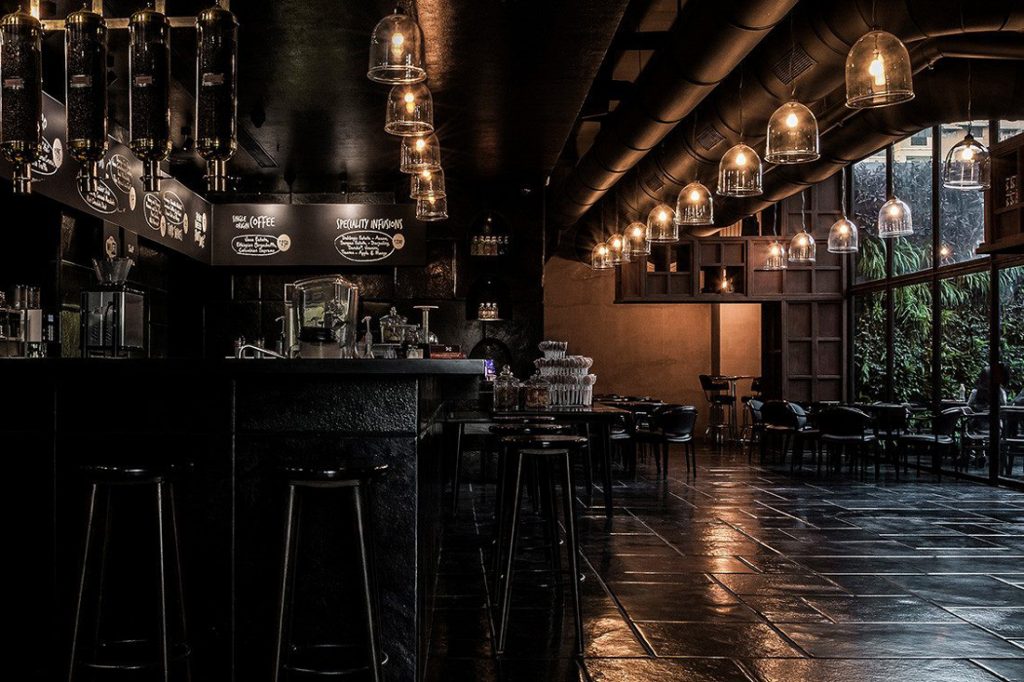
In a manner that truly champions working with site and surrounds – rather than against them – the moody and mysterious eatery was once a general storage space for hotel management with no openings and a complete lack of natural light. IKSOI Design Studio opened up the space by removing two boundary walls from the northeastern side of the site.
The architects also added in a courtyard. Coupled with the high-volume ceilings, this allowed the architects to use dark colours on the walls and floors without making the space feel claustrophobic: rather open and spacious all the while maintaining its cave-like atmosphere.

The added courtyard and filtering in of natural light likewise added an experiential quality to the café, conceptualised as three distinct spaces: finished in black, grey and green and characterised by the amount of daylight entering each space.
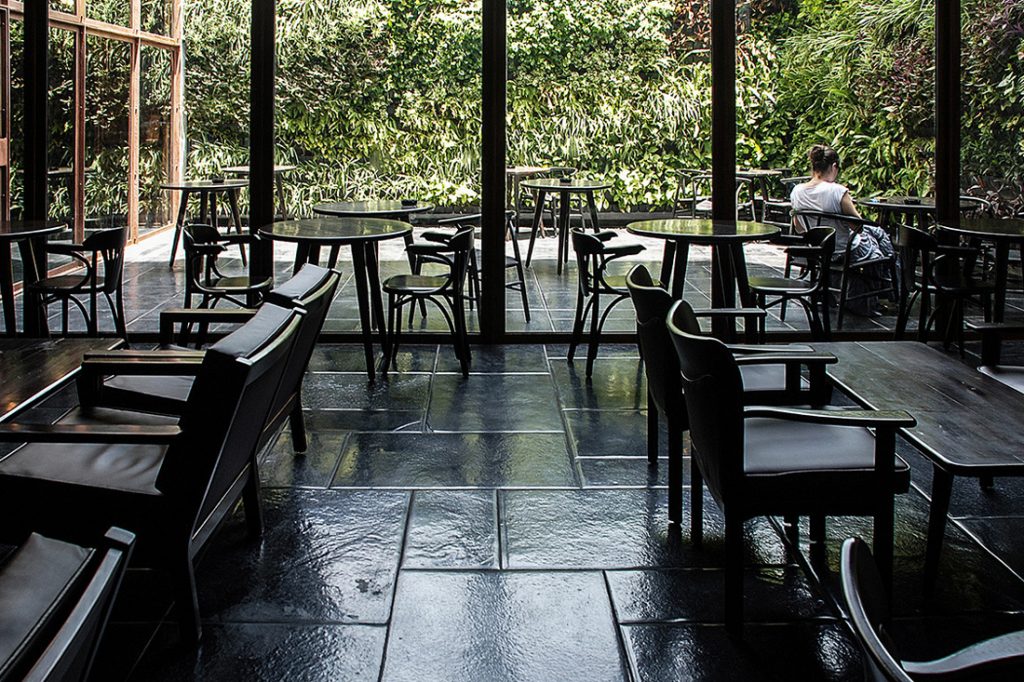
The first space experienced upon arrival acts as a transition from the rest of the hotel and café. It is entirely finished in black limestone and features lower ceilings than the rest of the café, actively exaggerating the transition.
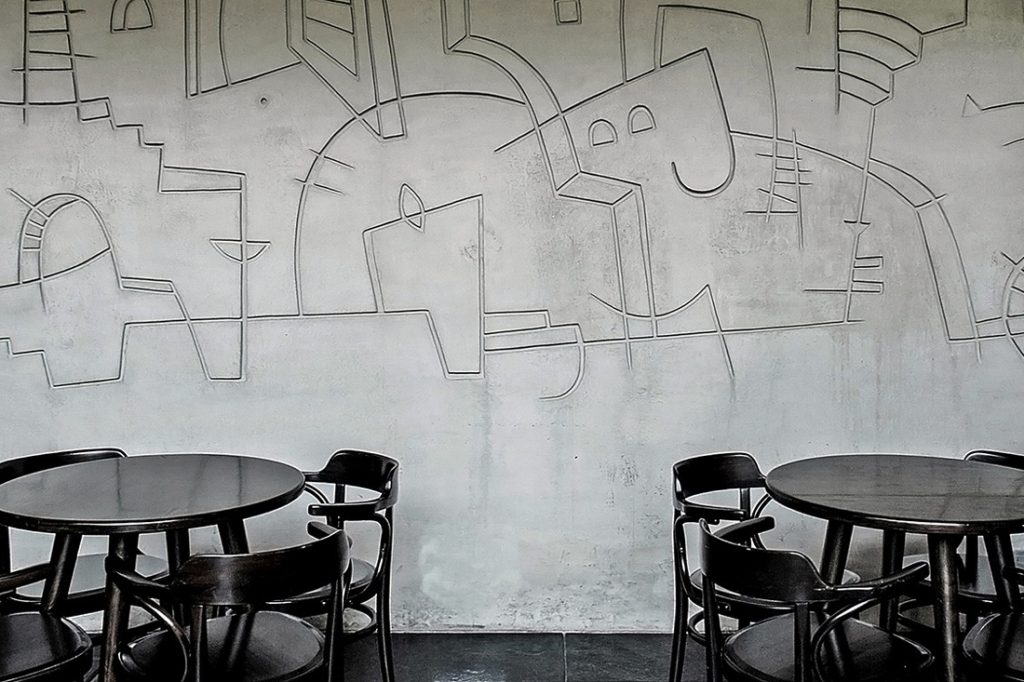
A grey, slightly lighter palette emerges as you make your way closer to the courtyard. The space is higher and walls are etched with simple line drawings. The Thonet chairs are original vintage pieces over three decades old – salvaged from an old ship. Daylight filters in.
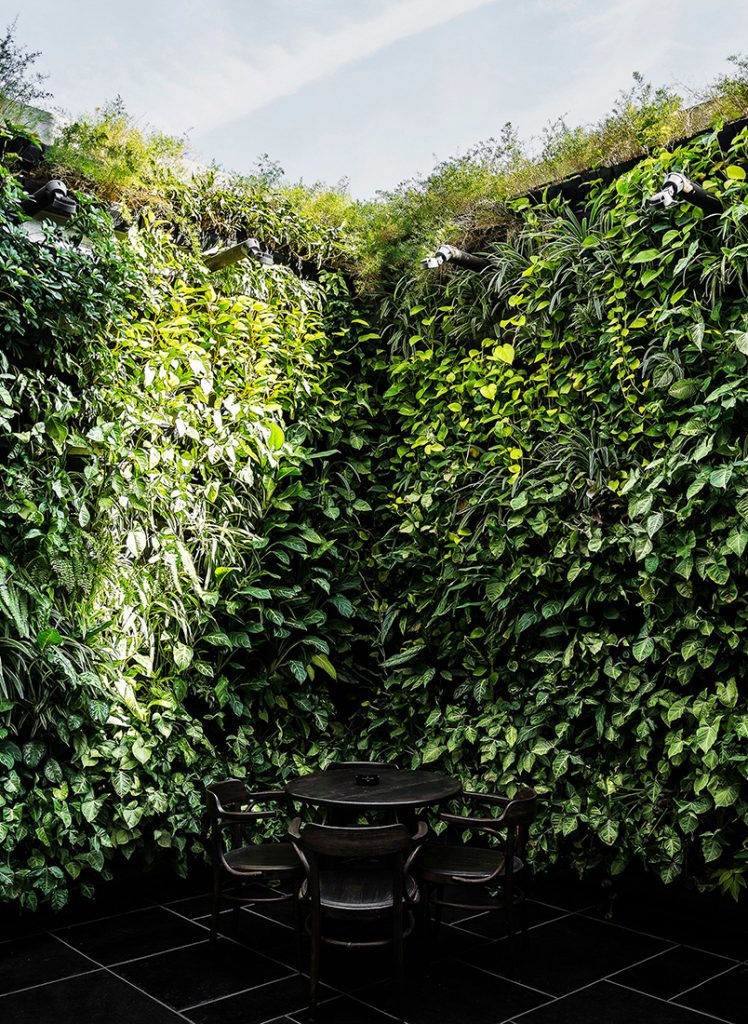
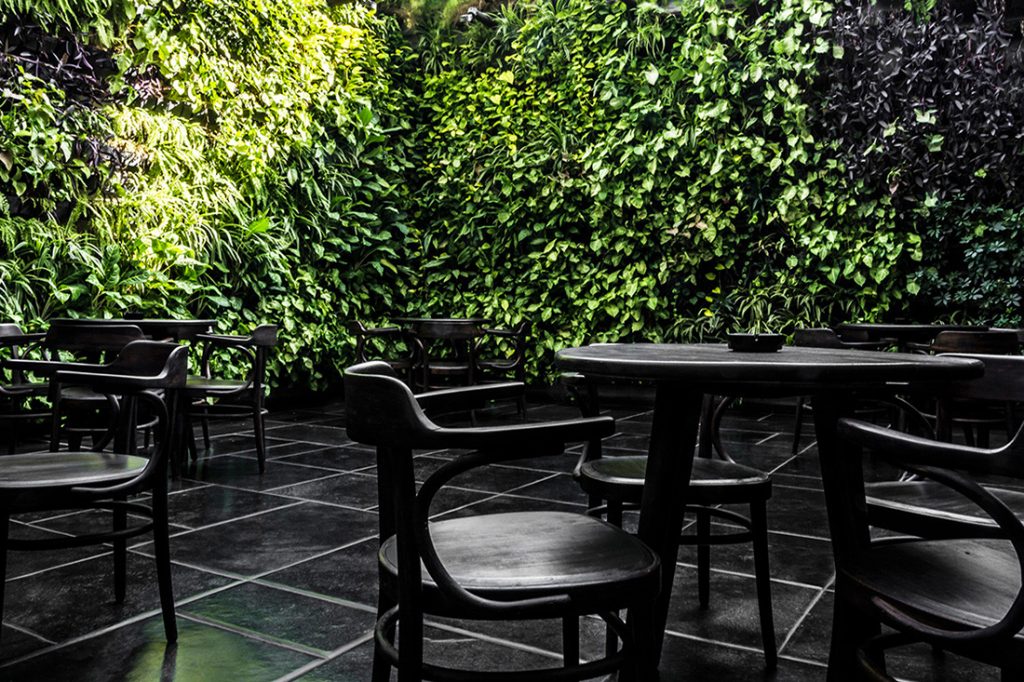
The final space, outside in the courtyard, is characterised by the vertical gardens lining the walls and open space reaching to the sky. Java+, through its design, attempts to explore the beauty of contrast within materials, textures and light.
INDESIGN is on instagram
Follow @indesignlive
A searchable and comprehensive guide for specifying leading products and their suppliers
Keep up to date with the latest and greatest from our industry BFF's!
In the second instalment of our performance seating three-parter, we turn to DKO’s Michael Drescher and Jacob Olsen to peek behind Sayl’s confident architectural form and explore the ideas of inclusivity, adaptability and freedom to move as hallmarks of what sitting your best actually means.
Natural stone shapes the interiors of Billyard Avenue, a luxury apartment development in Sydney’s Elizabeth Bay designed by architecture and design practice SJB. Here, a curated selection of stone from Anterior XL sets the backdrop for the project’s material language.
The newest brand to emerge from Cosentino’s creative crucible is Ēclos, a next-generation mineral surface that embodies the organic beauty and tactility of marble in a precision-mineral surface or material.
The Geelong College’s Sport and Wellbeing Centre ‘Belerren’ designed by Wardle is designed around bringing in natural light. But Shade Factor’s job was to help modulate and precisely control it for the most important competitive moments.
Brunit by 23 Degrees Design Shift brings together expressive structure, industrial materiality and climate-conscious hospitality on a rooftop site in Vijayawada.
When is a cave not exactly a cave? Metanoia Designs LLP transforms BLUORNG’s Gurgaon flagship into a cave-like retail environment, turning streetwear display into an immersive architectural experience.
The internet never sleeps! Here's the stuff you might have missed
For Mutual Trust’s Adelaide workplace, Woods Bagot drew on the idea of a stately family home to create an interior shaped by legacy and ease.
At Machine Hall, Herman Miller gathered Sydney’s design community to consider performance seating as part of workplace strategy, not just workplace furniture.
Scheduled to open later this year on the banks of the Parramatta River, the 30,000-square-metre Powerhouse museum — designed by Moreau Kusunoki in collaboration with Genton — represents a major shift in the geography of Sydney’s cultural infrastructure.