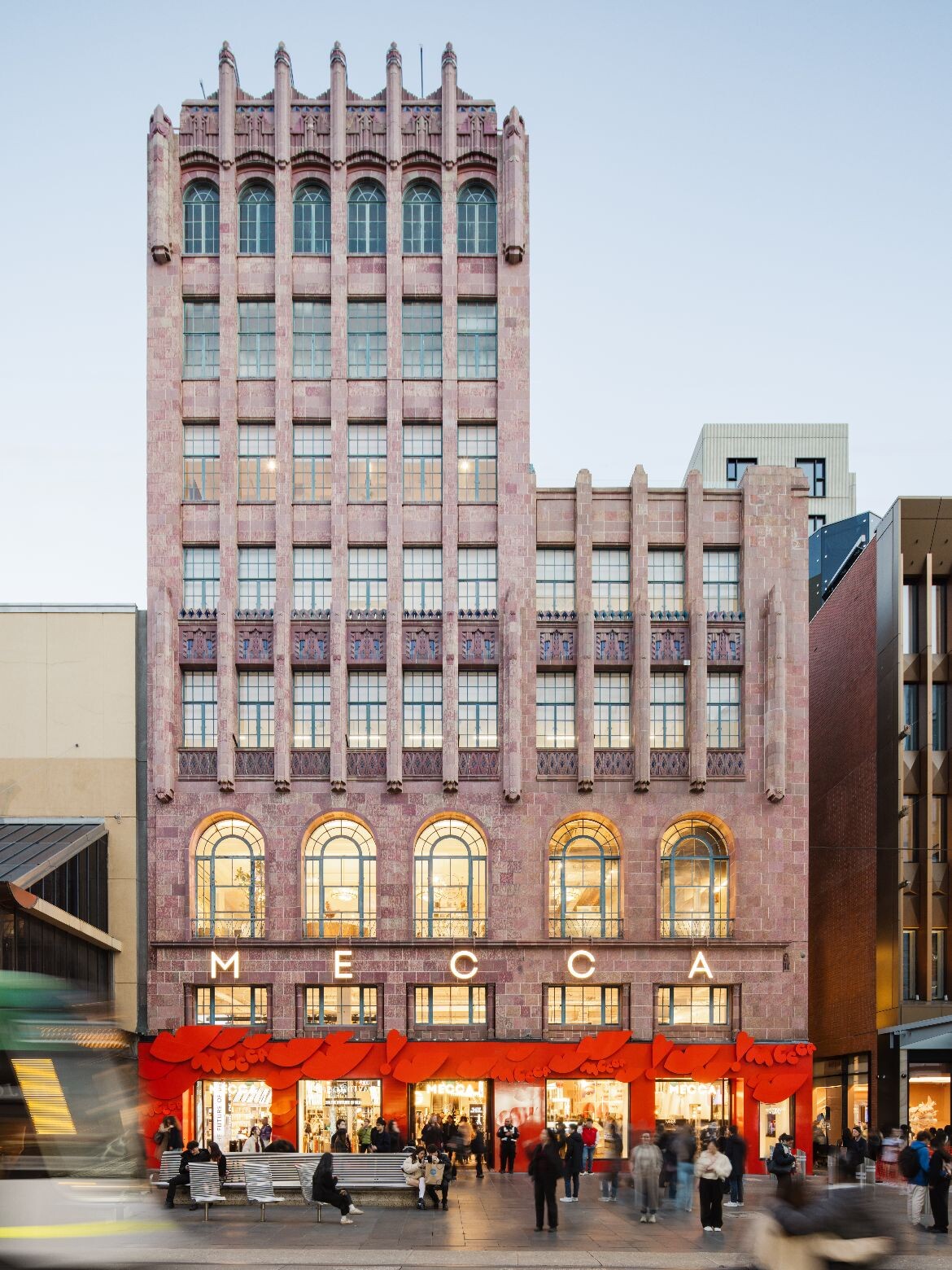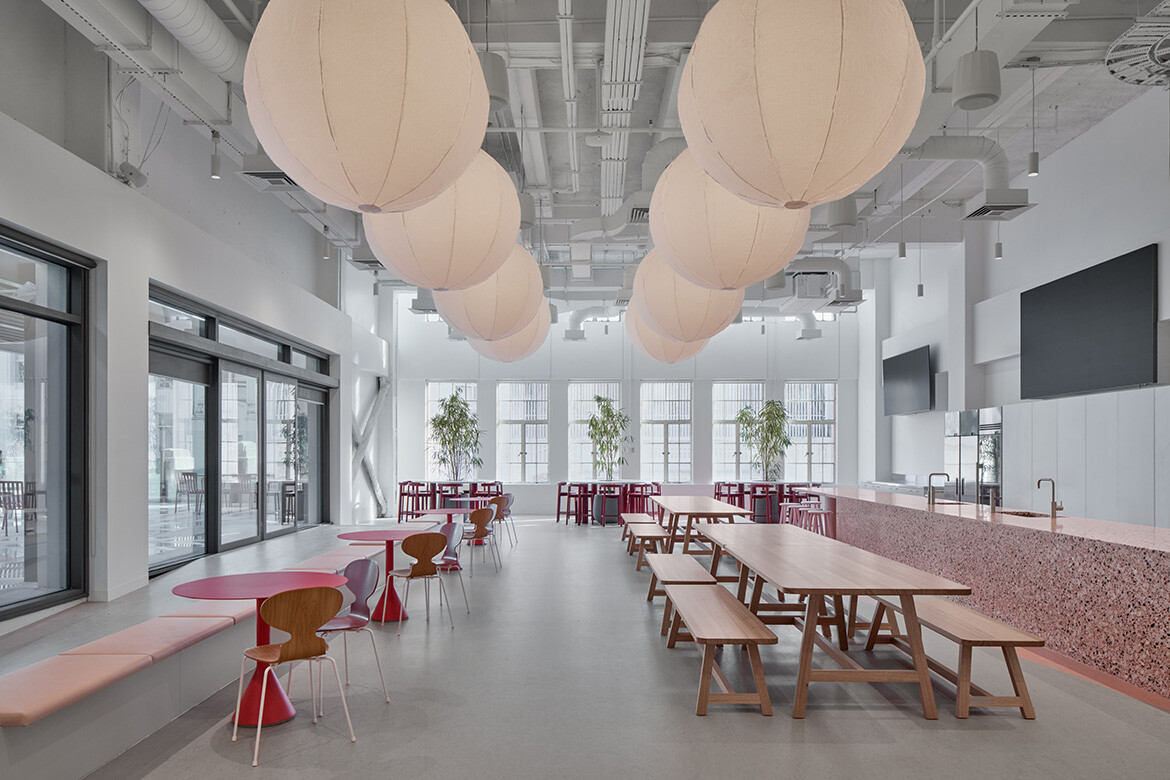
Located on Bourke Street, Melbourne, within the heritage-listed former Coles Book Arcade building, Omnicom’s new headquarters raises the bar for workspace design in the city.
Spanning five levels, the fit-out responds carefully to the historic architecture of the building while supporting the complex, high-paced workplace of a global communications group. Bates Smart undertook the base building works and, over a four-year period, delivered the interior design with sensitivity and restraint.
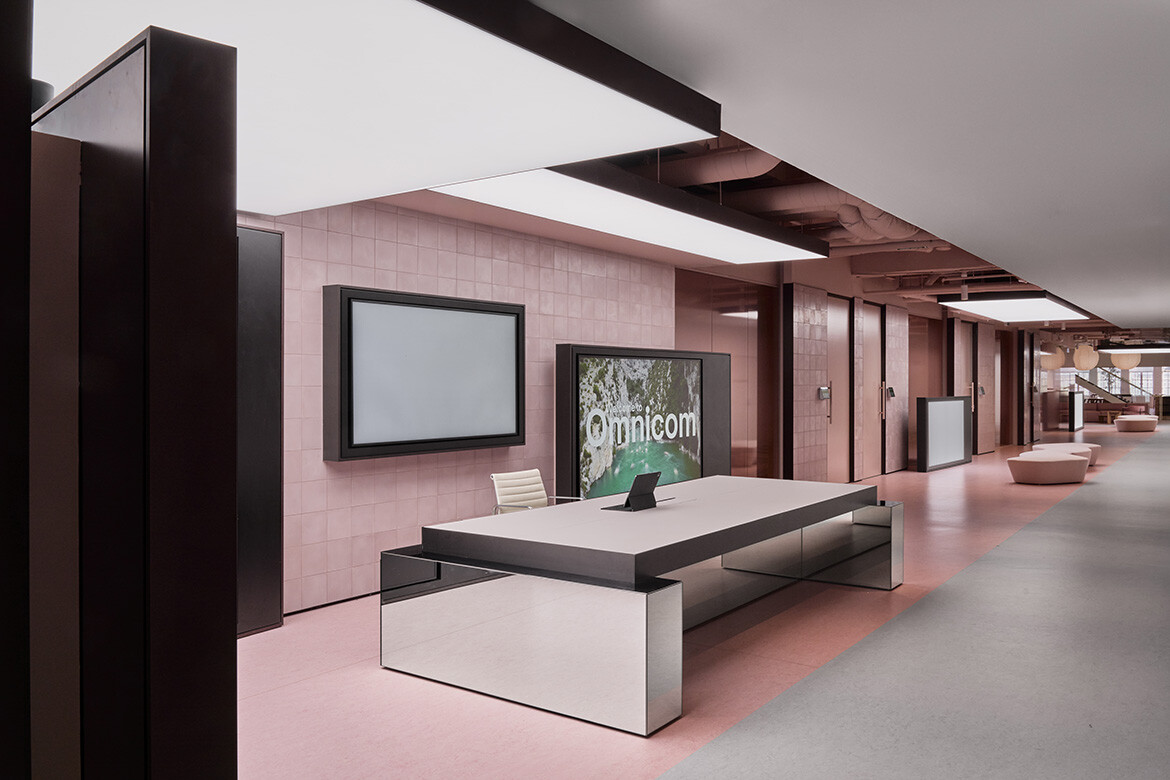
The upgrade, commissioned by Newmark Capital, involved the removal of unsympathetic 1980s alterations, the reinstatement of original windows and the introduction of finely detailed shopfronts. Contemporary insertions are calm and ordered, allowing the building’s original character to remain legible.
At 7580-square-metres, the floorplate is substantial, yet the interior feels both purposeful and highly resolved. According to Grant Filipoff, associate director at Bates Smart and lead on the project, the process was marked by discovery as much as design.
“When we started the project, it was still David Jones’ Men’s Store,” explains Filipoff. “Like many department stores, the space was heavily partitioned, making it difficult to understand the original volume and layout. Even with scan surveys, there were many unknowns, which presented a real challenge.”
Despite these complexities, the outcome is confident and timeless rather than trend-driven. Retail continues to activate the lower levels, while Omnicom’s offices occupy levels two through six. Each level accommodates a separate business within the Omnicom group, unified through a cohesive architectural and material language.
Related: Connecting people and place
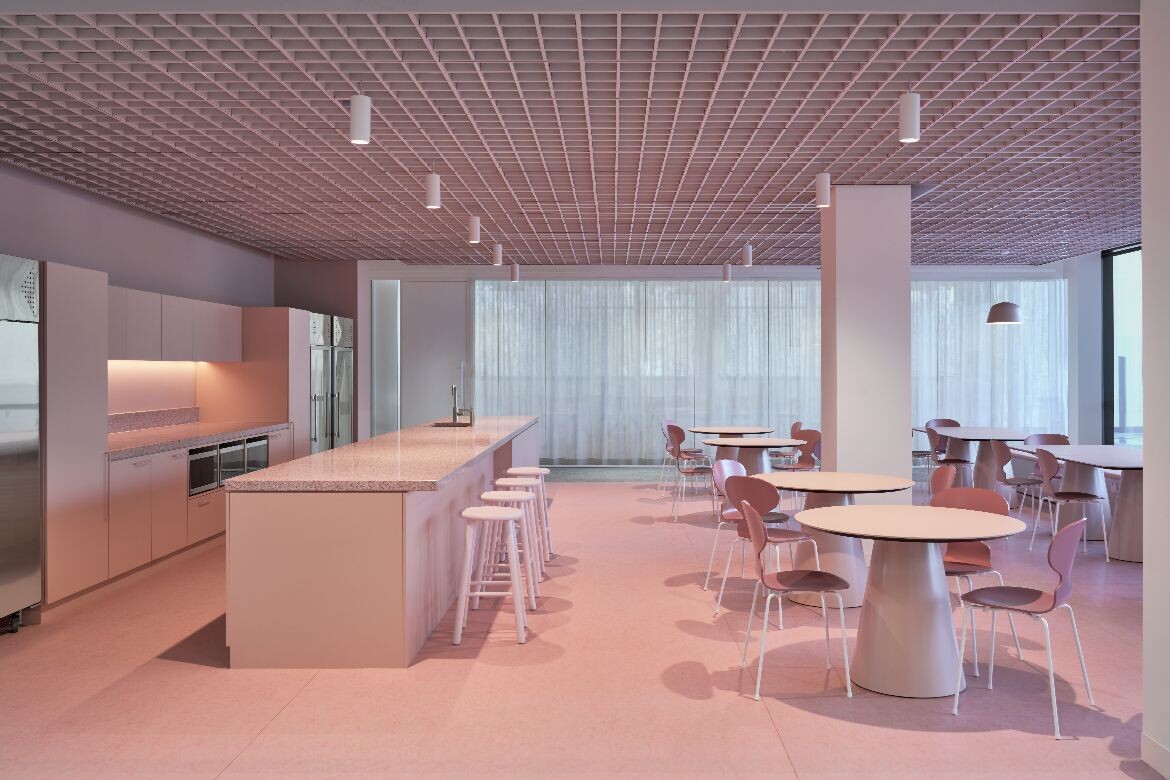
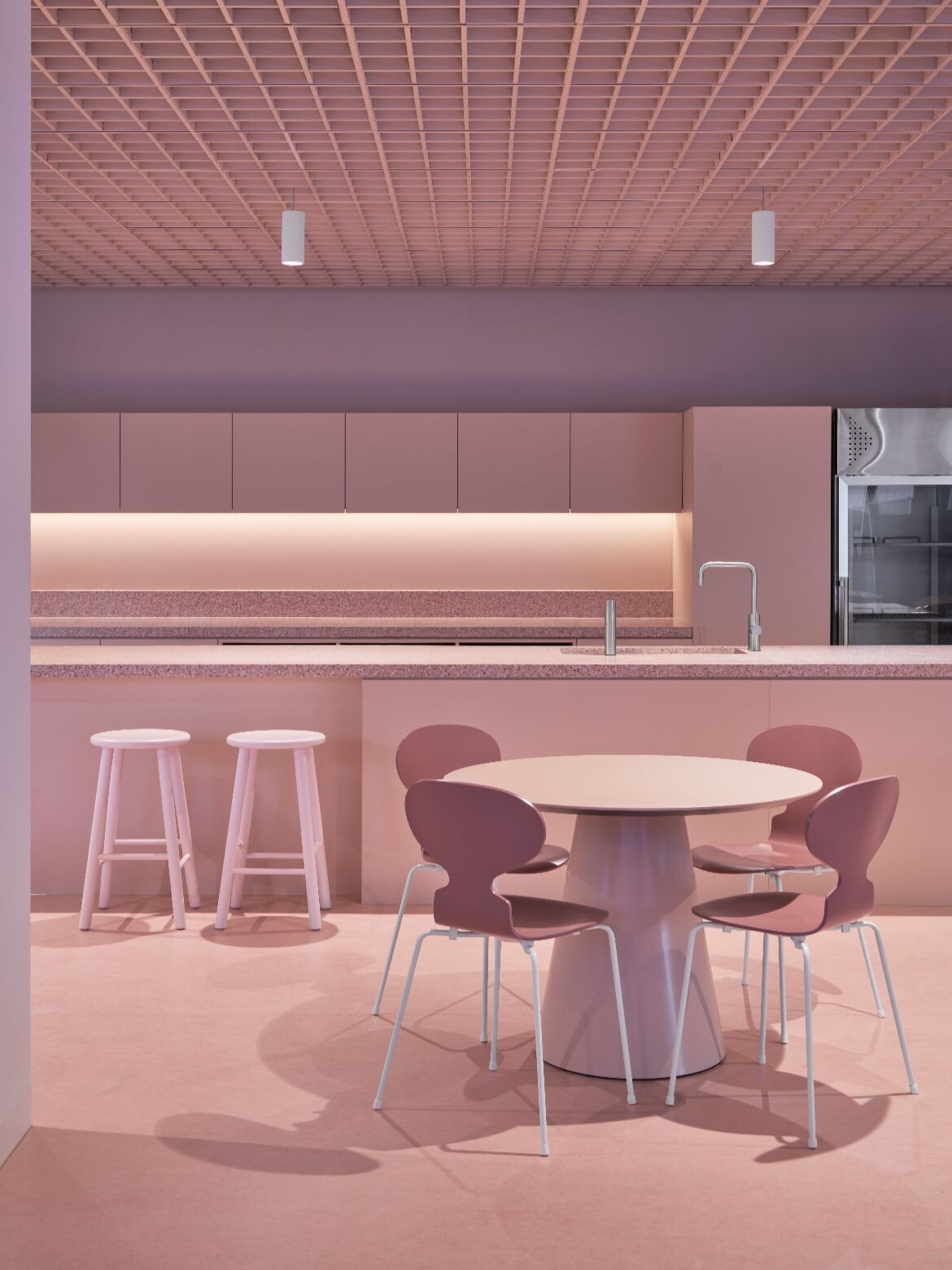
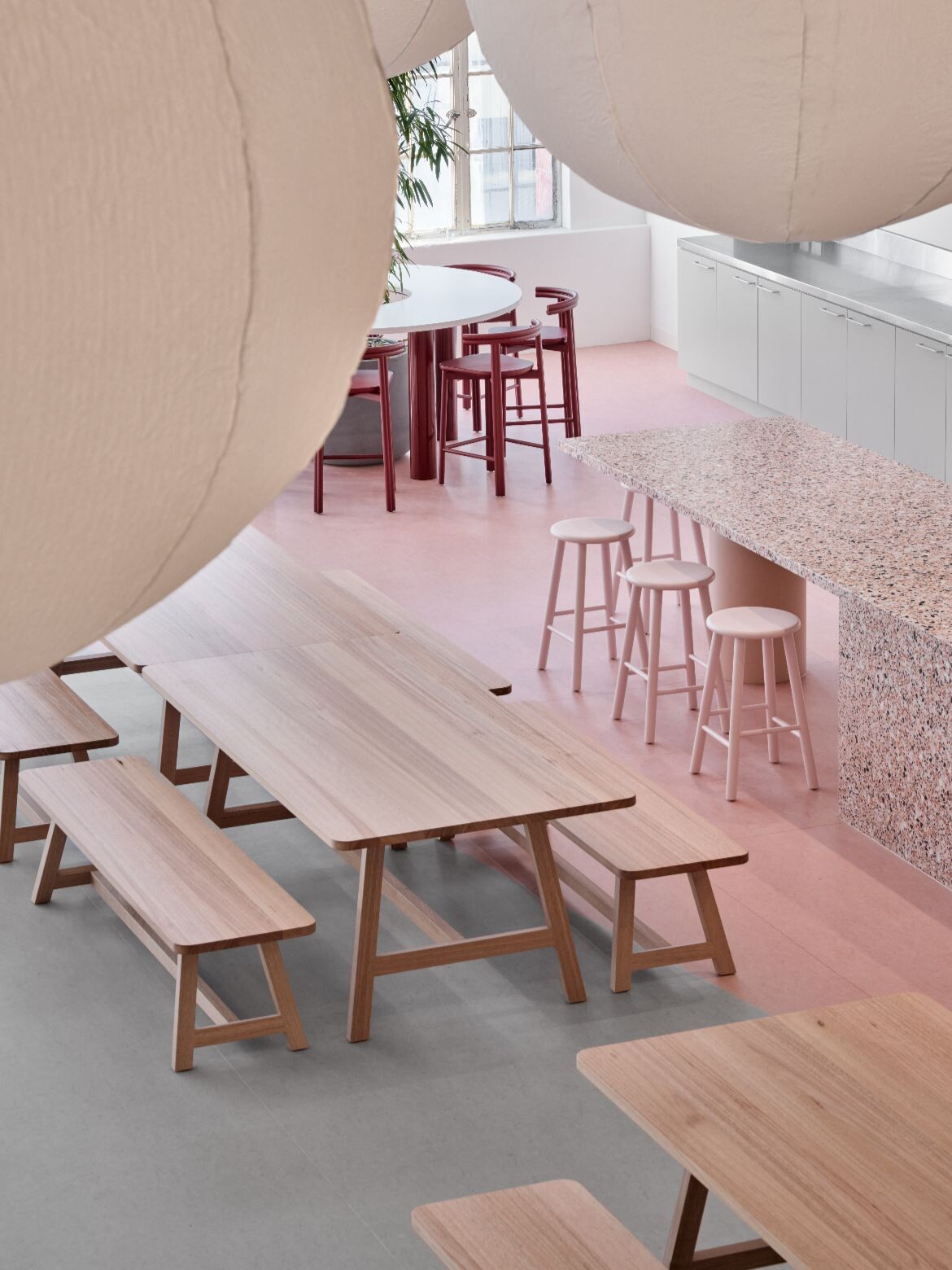
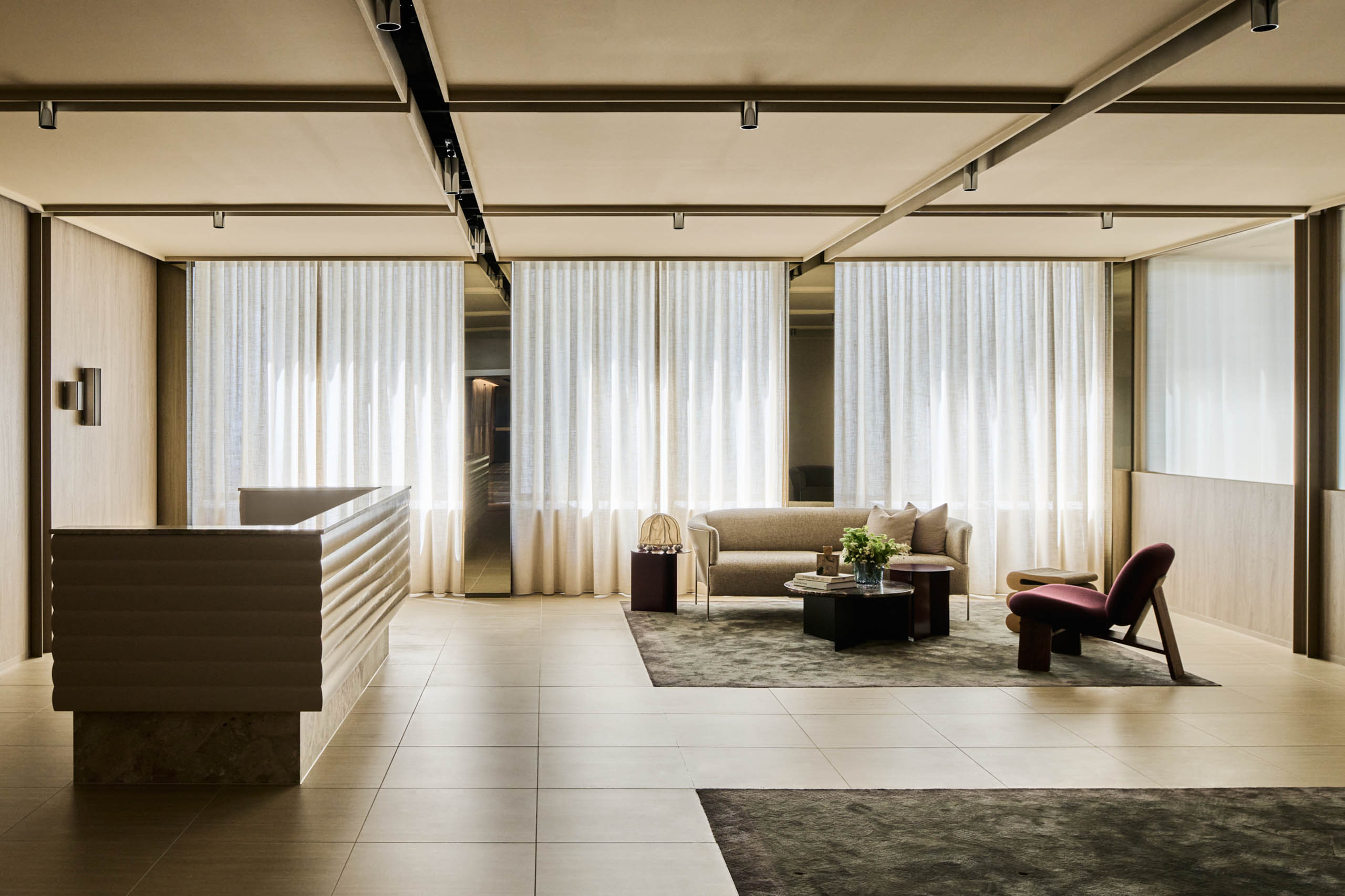
Level four functions as a shared hub, housing reception, client presentation spaces and a café. Positioned within the soaring volume of the building’s former gymnasium, it acts as both an impressive arrival space and a central gathering point for staff and visitors.
Large north-facing terraces on levels four and five extend the working environment outdoors, while a newly added sixth floor introduces a south-facing terrace for additional amenity.
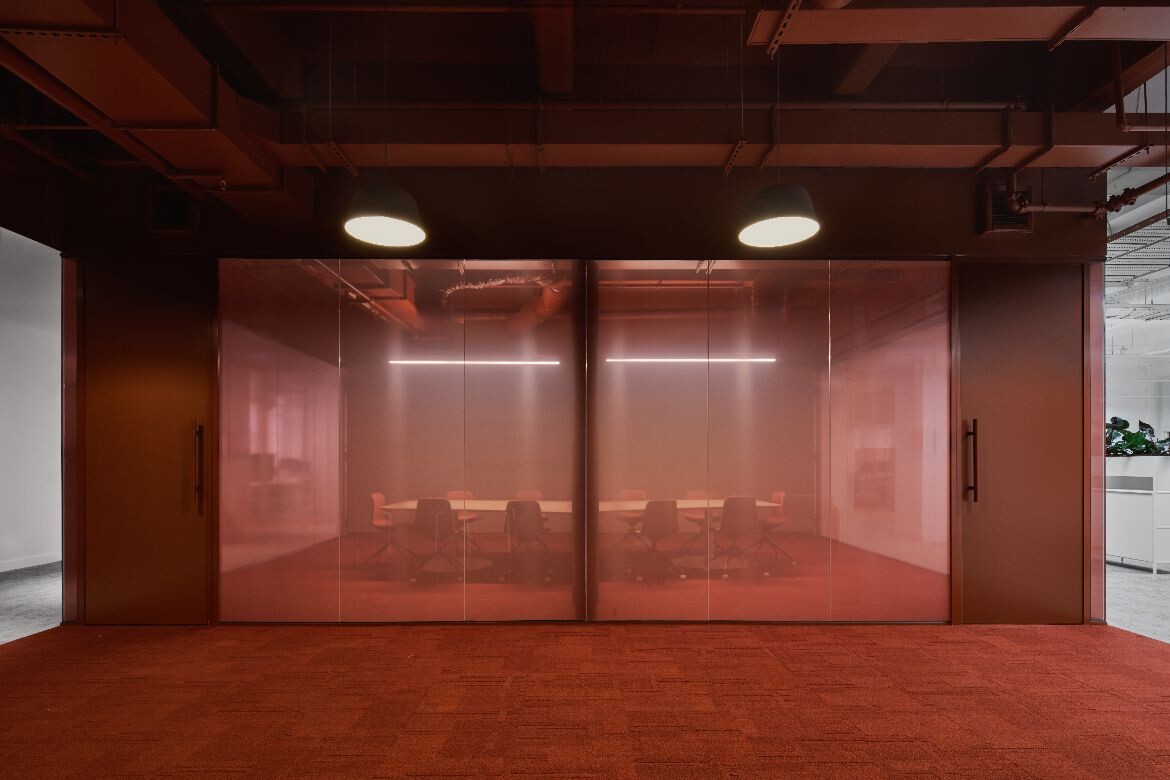
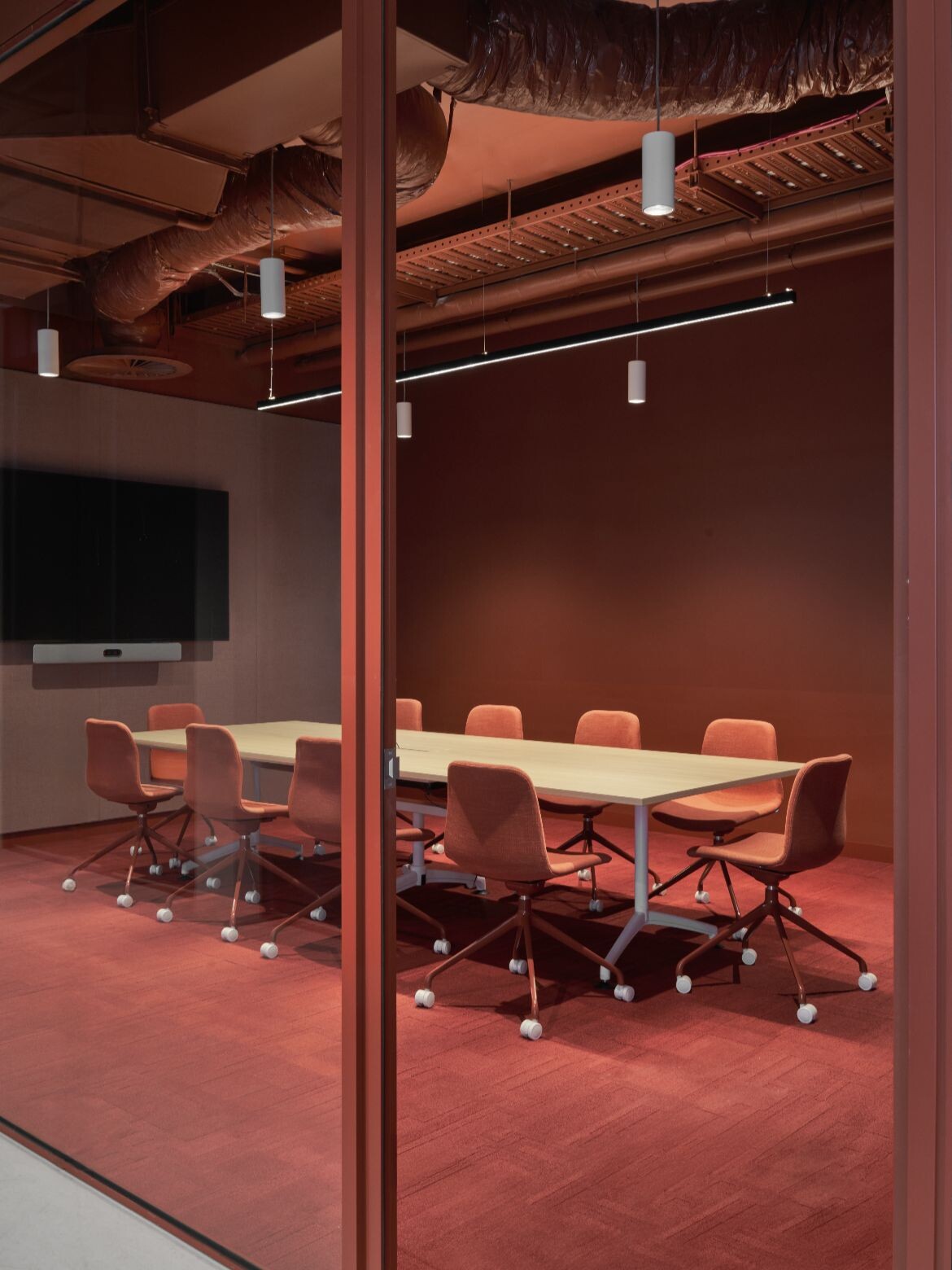
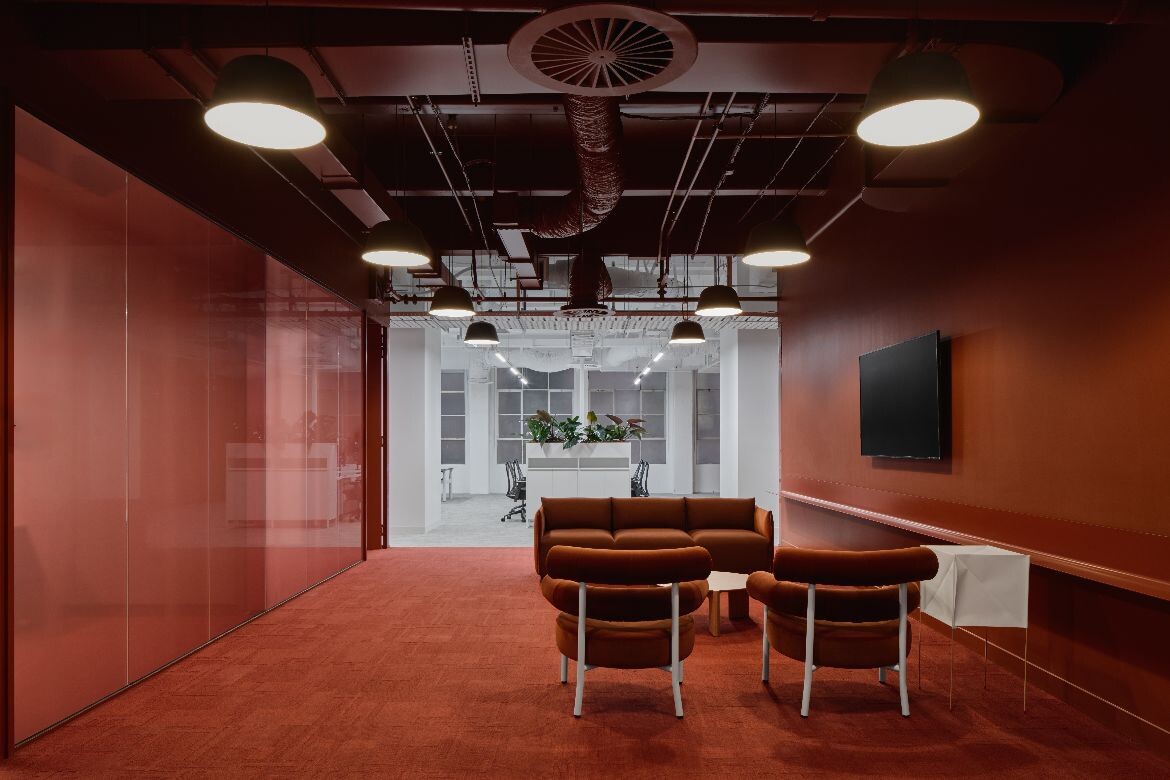
The interior palette draws directly from the building’s heritage fabric, particularly the porcelain tiles of the façade. A predominantly white interior is punctuated with carefully applied colour: a soft mauve-pink defines client spaces on level four, while terracotta and French blue create moments of contrast within meeting rooms and breakout areas.
“The heritage nature of the building, particularly the detailing on the façade and tiles, became the foundation for the internal palette,” says Filipoff.
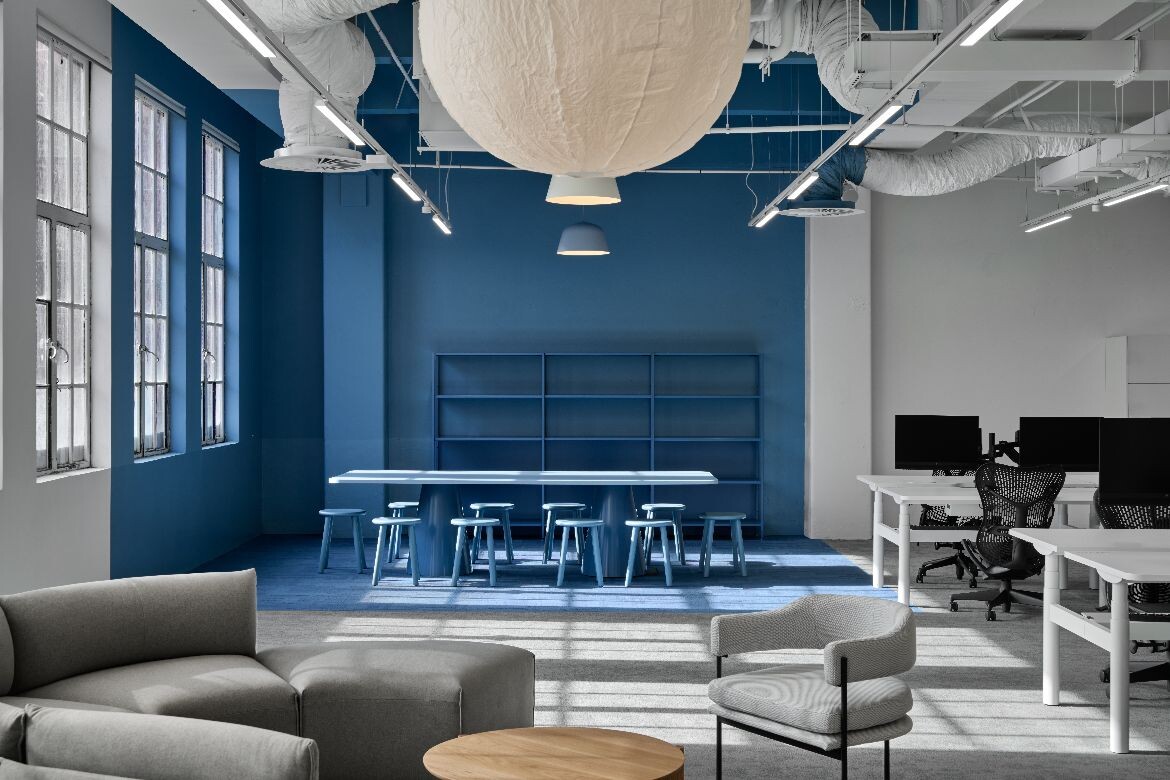
Saturated colour is used strategically to define zones, articulate circulation and enhance restored architectural elements, demonstrating a high level of design discipline throughout the project.
Natural light penetrates deep into every level, supported by generous ceiling heights and a clear spatial flow. The result is a workplace that balances heritage conservation with contemporary performance, offering flexibility, clarity and comfort at scale.
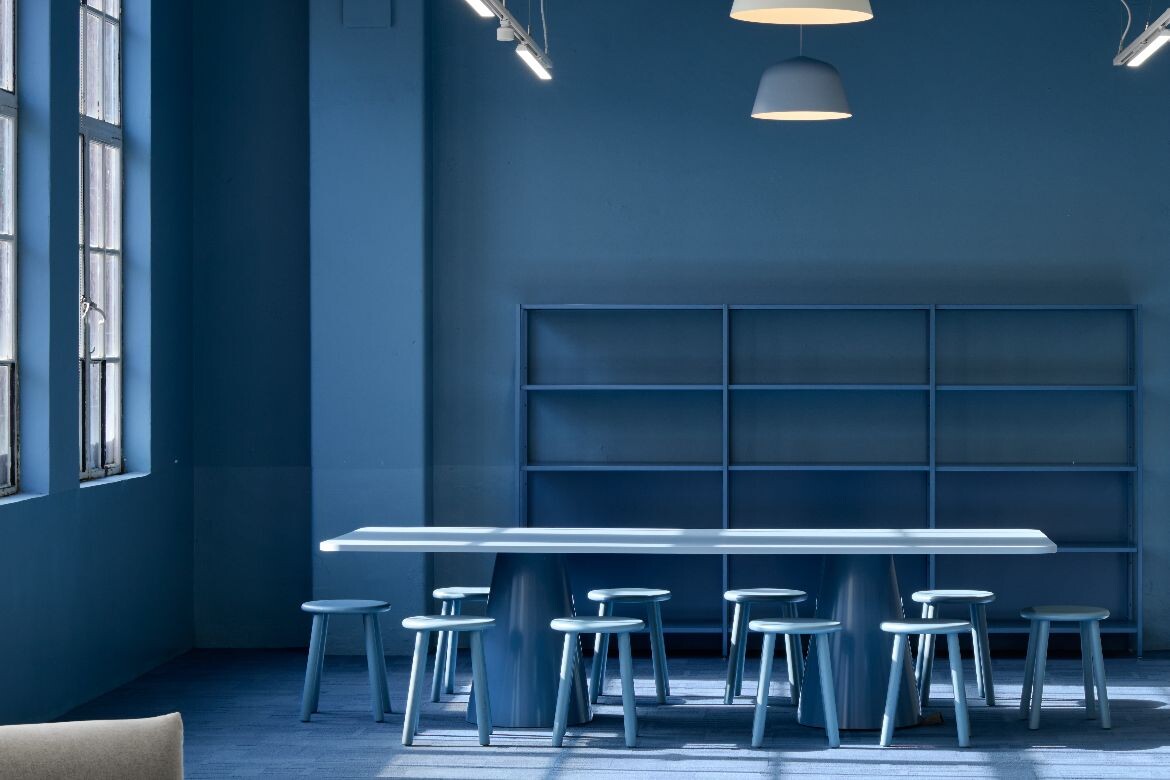
Through careful intervention and considered design, Bates Smart has reinvigorated a significant Melbourne landmark, allowing its architectural legacy to support a modern, multifaceted workplace.
Bates Smart
batessmart.com
Photography
Peter Clarke
Sherman Tan