The home of architecture and design in the Asia-Pacific
Get the latest design news direct to your inbox!

Get the latest design news direct to your inbox!
How should designers approach carpet specification for multi-residential and education environments? Download the free whitepaper on carpet specification for these sectors, here!

The multi-residential and education sectors have demonstrated sustained, marked growth in recent years. Though at first glance very different, the two sectors in fact bear numerous similarities: both should nurture and provide comfort, a balanced approach to style and functionality that prioritises positive, healthy environments. Akin to educational environments, multi-residential projects are high-traffic and often high-density, with increasingly compact footprints requiring design features to be integrated into new and inventive ways.
The expansion of both sectors coincides with a period in design history where health and wellbeing are being placed at the forefront of the built environment. Architects and designers are now committed to creating spaces that actively contribute to human health and wellbeing by marrying the best innovations in technology, health, science, and design.
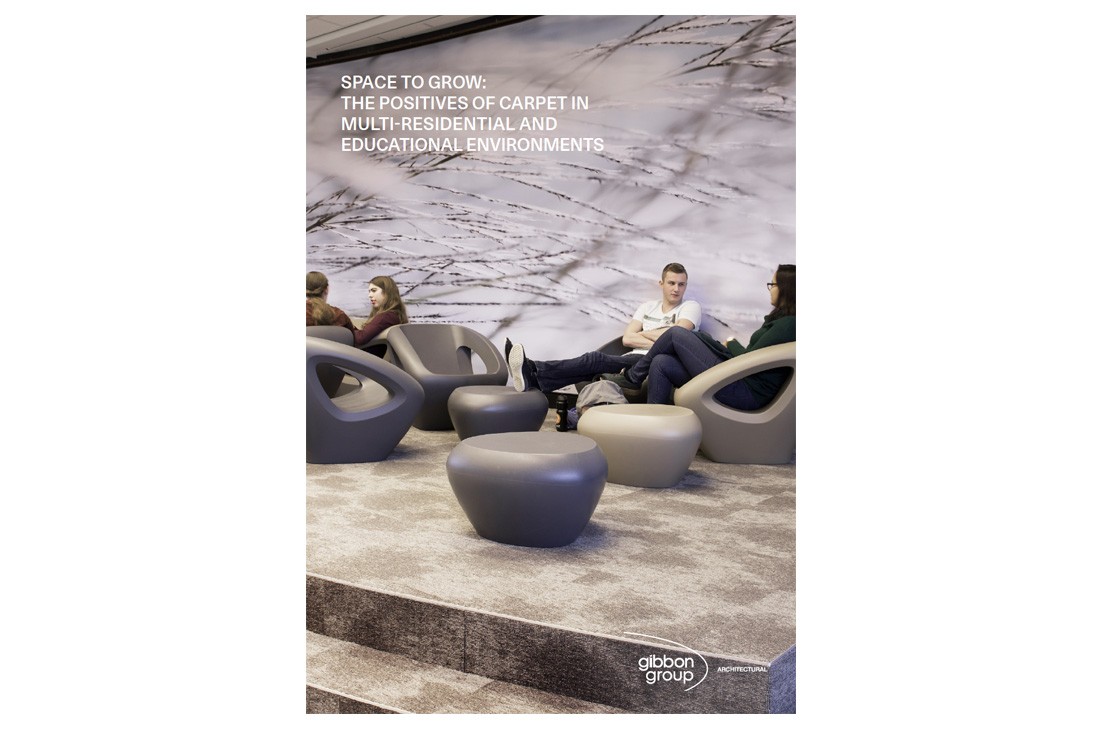
For over 20 years, Gibbon Group has sourced innovative, on-trend carpet roll and carpet tile ranges from around the globe and operated a custom rug program featuring soft flooring produced from the unique goat hair carpet. Driven by a strong focus on sustainability and a genuine commitment to delivering products that enhance user well-being, Gibbon Group understands how design can create healthy, happy spaces, making the company an ideal carpet supplier for multi-residential and education projects.
Their modular carpet tiles from Tretford (Germany) and modulyss (Belgium) have an outstanding appearance and a long life expectancy. With carpet tiles that can be mixed and matched via numerous colours, patterns, and shapes, it can be assured that all Gibbon Group carpets are sourced with specific backings that enhance comfort, durability, acoustic and thermal performance.
"If the document hasn't automatically downloaded in 10 seconds, download here."
Please note by accessing advertiser content your details may be passed onto the advertiser for fulfilment of 'the offer' and also permits the advertiser to follow up the fulfilment of the offer by email, phone or letter. The subscriber also permits further communication from indesignlive.com.
INDESIGN is on instagram
Follow @indesignlive
A searchable and comprehensive guide for specifying leading products and their suppliers
Keep up to date with the latest and greatest from our industry BFF's!
The internet never sleeps! Here's the stuff you might have missed