Growing up, Brittany Pearce didn’t have any clear connections to design, but she was “always surrounded by creativity”, like jewellery making, sewing and ceramics. There were some early signs that design was in her future, however, including Brittany’s fascination with miniatures and handmade vignettes and small houses. “The decision to study design didn’t really happen until the very last minute! On reflection, though it’s easy to see how aligned my childhood and upbringing were to what I do today. It’s a natural thing that I fell into, and I can’t see myself doing anything else,” says Pearce.
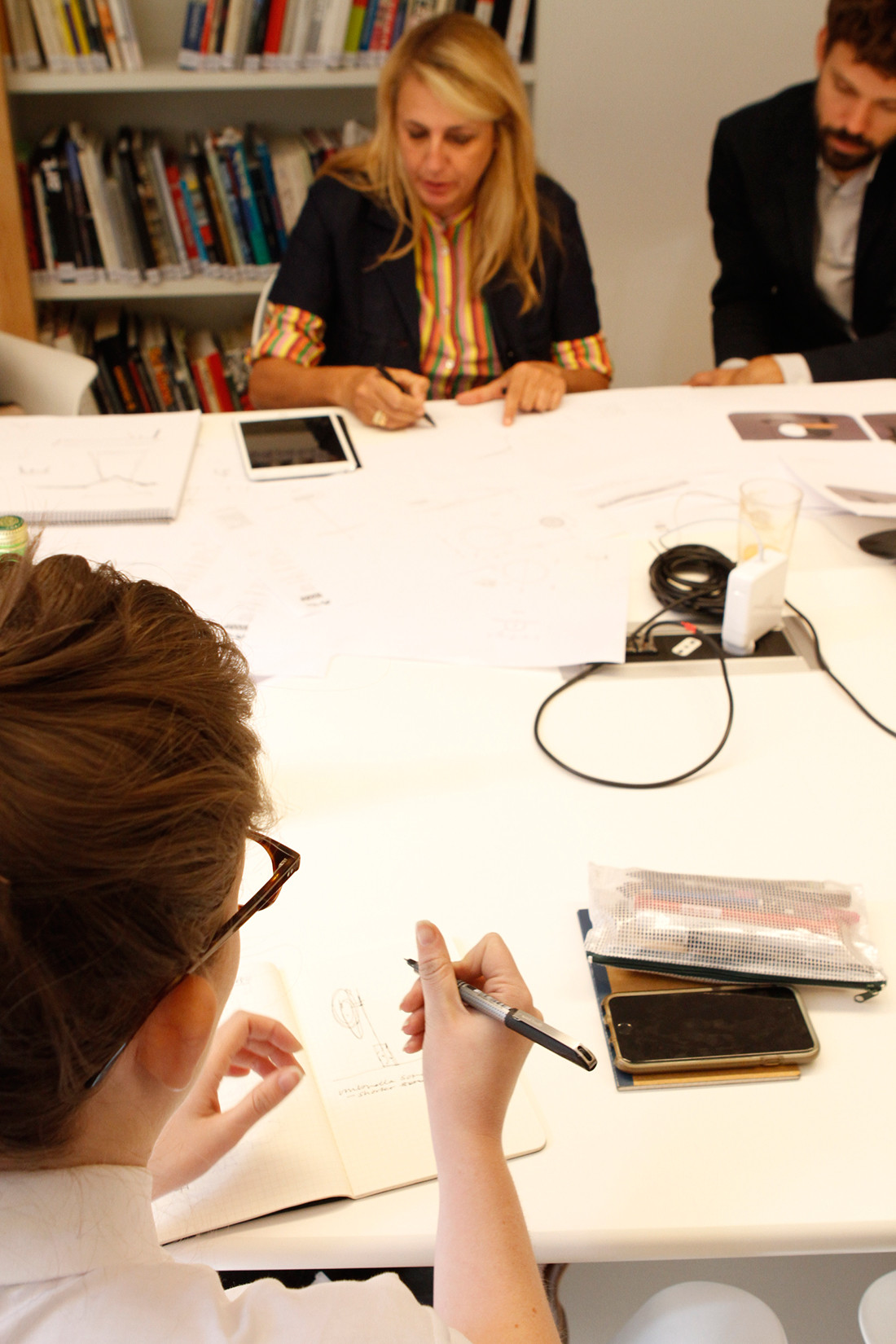
Workshop with Studio Urquiola, working through a design for a collaborative furniture piece.
History is something that Pearce prides herself on, “I am a bit of a history buff. From family history to local suburban history, I’m always looking things up. I love the stories behind buildings or places, and I think it’s important to understand the historical and cultural significance of a place before making any inventions. Often, I find that these methods of research feed back into my professional practice, especially when I put together a project’s design drivers.”
.
“I think it’s important to understand the historical and cultural significance of a place before making any inventions.” – Brittany Pearce
.
Another point of inspiration for Pearce is in real time experiences. “Experiencing things in real time gives me a catalogue of encounters that resonate much more than scrolling through Instagram or Pinterest. It’s these encounters, whether it is a physical space, art, music, research, literature or interactions with people, which pop up in moments of quiet. I find that when I let my mind rest or wander, those moments will come to the surface, usually at the right time (sometimes not!),” she explains.

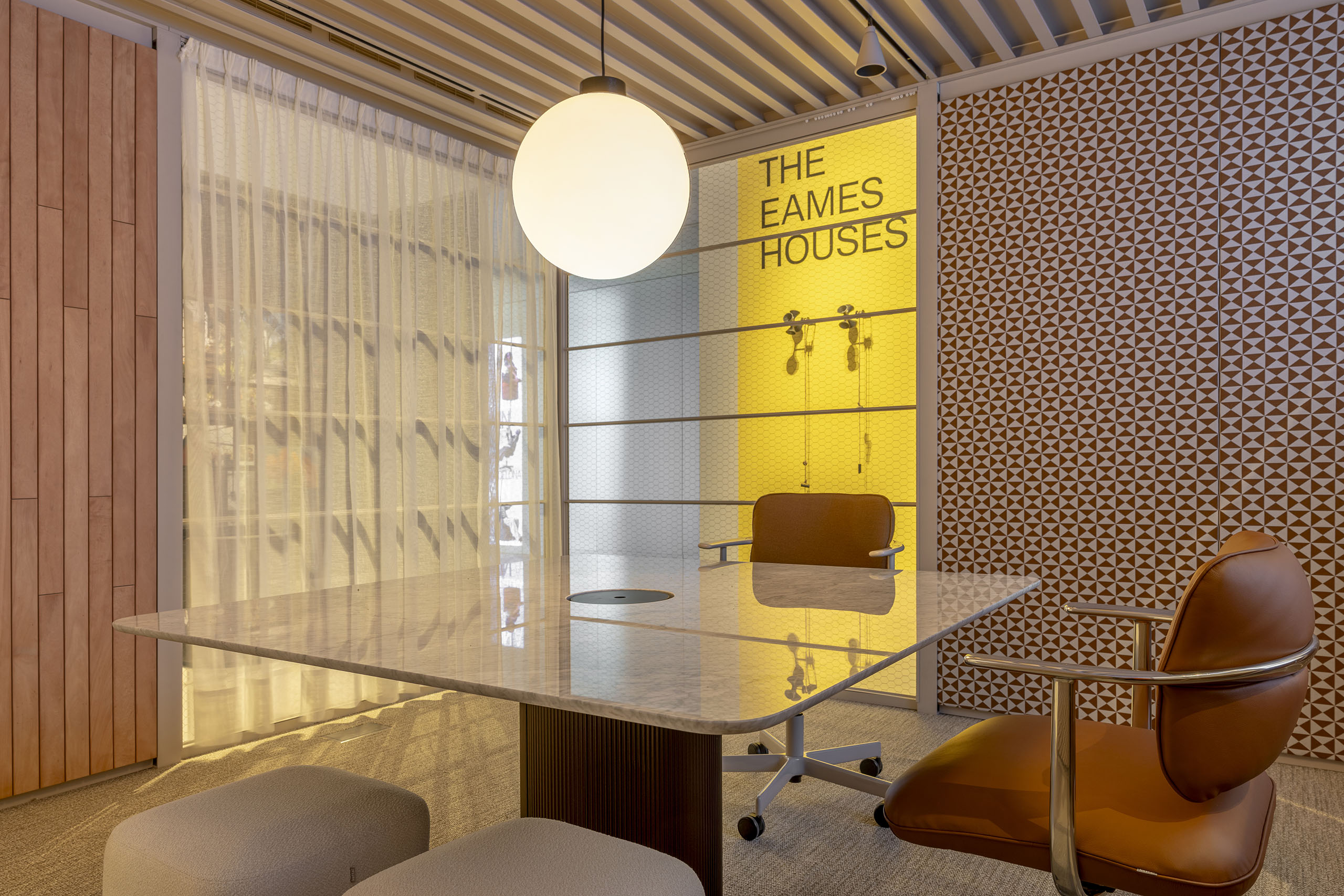
ADCO Melbourne, 1500-sqm of workplace, the crafted feature timber screen showcases the ADCO’s attention to detail and progressive approach to construction methodologies. Photo by Shannon McGrath.
This face-to-face real-time experience is something that Pearce values as our work lives are increasingly being taken over by technology. “Technology, data analytics and automation are already changing the way we design. Software that automates mundane, repetitive tasks allow us re-allocate time and focus to working through designs more intensely, and also free up time to connect and engage more with clients.
“Technology also allows us to connect and exchange knowledge faster than ever before, yet with this is a risk of losing the human interaction and face-to-face connections that are vital to collaboration. This needs to be managed and preserved as the industry progresses,” she says.
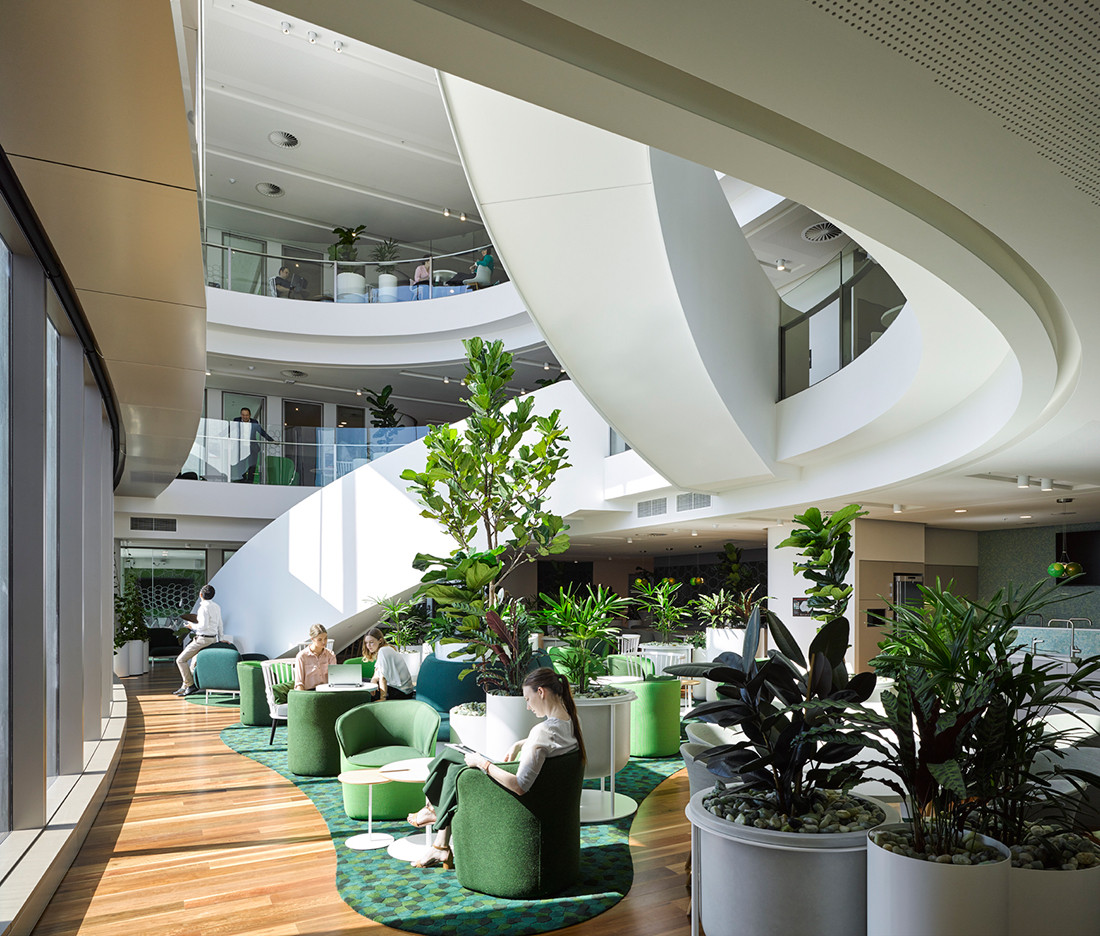
1 William Street, 75,000-sqm of integrated fit out for the Queensland State Government, an atrium connect three levels of workspace via social spaces, each designed around a Queensland flora or fauna theme. “Green Tree Frog” pictured here. Photo by Christopher Frederick Jones.
It’s no surprise that Pearce has worked on some highly regarded and awarded interior design projects in her time at Woods Bagot. With rich points of reference and a sound understanding of client needs, for Pearce outstanding projects are the “ones that exceed the client’s expectations”. Adding, “It’s a cliché, because it’s true. A project delivered on time and to budget, a design that challenges a client’s brief (for the better), has excellent design outcomes and innovations, and is always centred on the end user.”
Ultimately, Pearce believes “There is a fundamental privilege (and responsibility) we have as designers to provide people with healthy spaces that help them thrive.”