The home of architecture and design in the Asia-Pacific
Get the latest design news direct to your inbox!

Get the latest design news direct to your inbox!
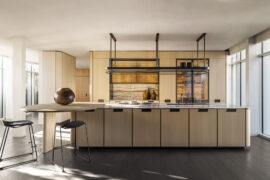
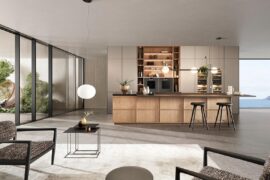
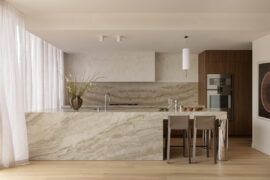
The Sub-Zero and Wolf Kitchen Design Contest is officially open. And the long-running competition offers Australian architects, designers and builders the chance to gain global recognition for the most technically resolved, performance-led kitchen projects.


May 6th, 2025
Any designer working in high-end residential can confirm that the kitchen remains one of the most critical spaces of a home. It’s where design vision, performance specification and user experience intersect – and where brands like Sub-Zero and Wolf have set the standard for decades.
With the entries now open for the 2024–2025 Kitchen Design Contest (KDC), the appliance powerhouse invites Australian architects, designers and builders to have their work assessed at the highest level – on a global stage.

Running since 1993, the KDC has long positioned itself as the world’s most prestigious competition dedicated to kitchen design. Its point of difference lies in its singular focus: to honour not only aesthetic excellence but also technical integration, spatial problem-solving and appliance performance within the design context. As a result, it has become a significant badge of recognition for those operating in the premium end of the residential market.
Eligibility is straightforward. Entrants must have completed a project between 1 January 2024 and 31 December 2025 in which Sub-Zero and Wolf appliances have been used. It is free to enter, and there’s no limit on the number of projects a designer or practice can submit.
Submissions are reviewed by an international panel of seven independent judges – all highly regarded professionals in design, architecture and construction. Evaluation criteria go well beyond looks. Judges assess how well the appliances are integrated, how the kitchen layout functions for real users, and how materials, lighting and circulation support long-term performance.

The commercial upside of being a finalist or winner goes beyond a trophy for the pool room. The 2024–25 contest offers nearly USD $300,000 in prizes and includes a Winners’ Summit and Gala hosted in the United States in 2026. Finalists are flown in with a guest for an all-expenses-paid networking event that includes brand leaders, judges, and fellow design professionals. For small-to-mid sized practices looking to build international profile, this visibility is not just valuable, it’s strategic.
Historically Australian design has fared incredibly well in the KDC, with previous awardees including Adrian Amore Architects, FGR Architects, Rob Mills Architecture & Interiors, Mim Design, Adam Kane Architects, Workroom and Spicer Architecture. These are practices working at the forefront of detailing, spatial clarity and premium materials.

Adrian Amore, who took out the Contemporary Kitchen Category shares, “To win the Kitchen Design Contest is a huge honour. It was wonderful to receive the validation and recognition from the judges. I am grateful to Sub-Zero and Wolf for their support, and the support they have given our global architecture and interior design community through this competition.”
For architects and designers who treat the kitchen as the aesthetic performance engine of the home, this contest is one worth entering.
Full entry details, judging criteria and past winners can be found at subzero-wolf.com/contest. Entries close 31 January 2026.
INDESIGN is on instagram
Follow @indesignlive
A searchable and comprehensive guide for specifying leading products and their suppliers
Keep up to date with the latest and greatest from our industry BFF's!
The internet never sleeps! Here's the stuff you might have missed