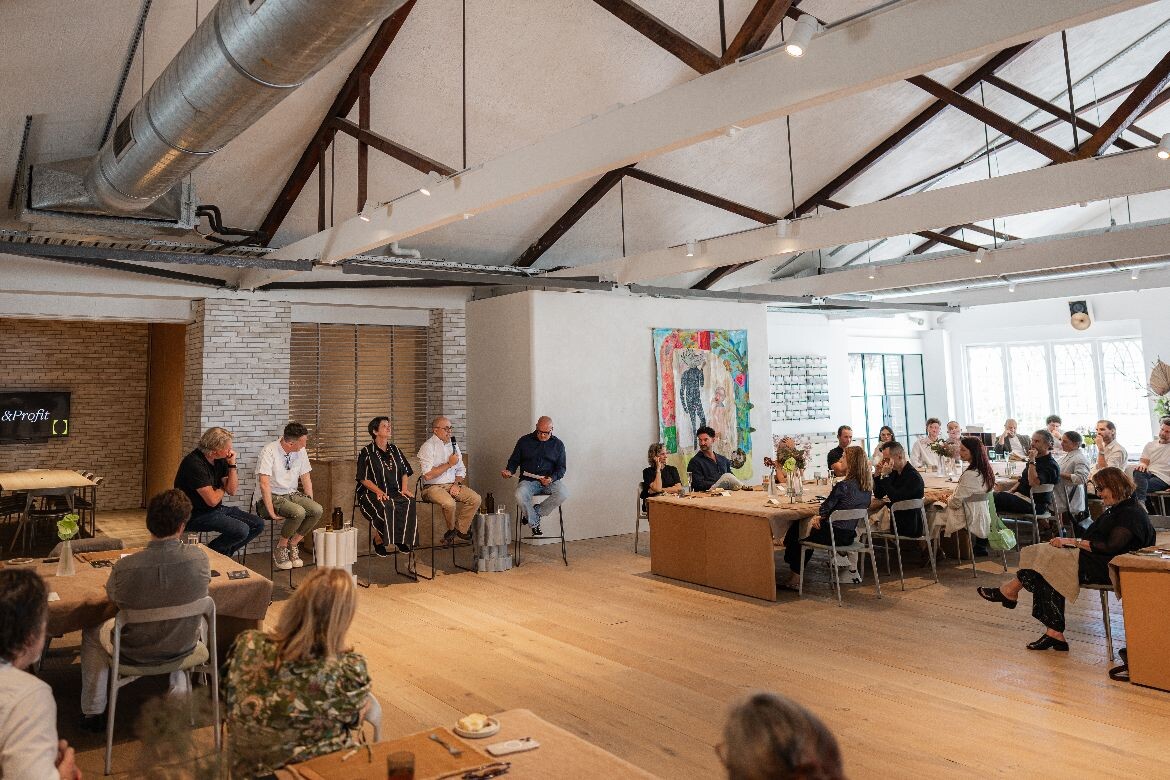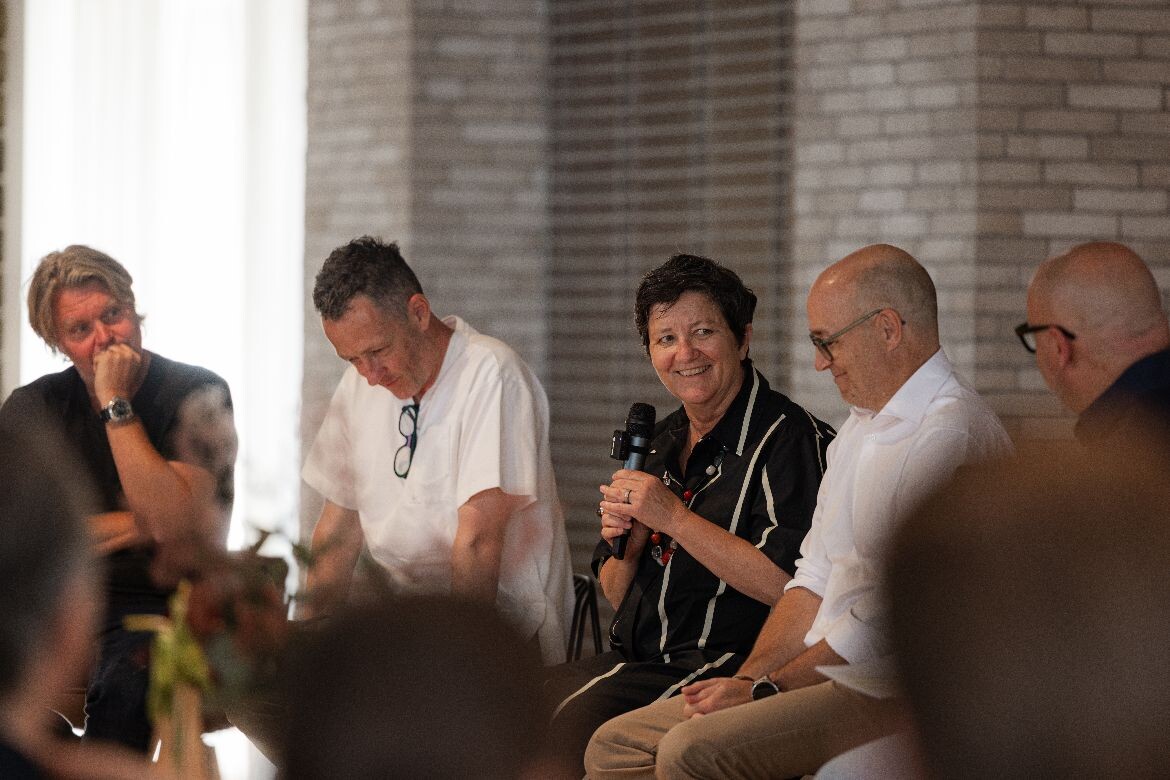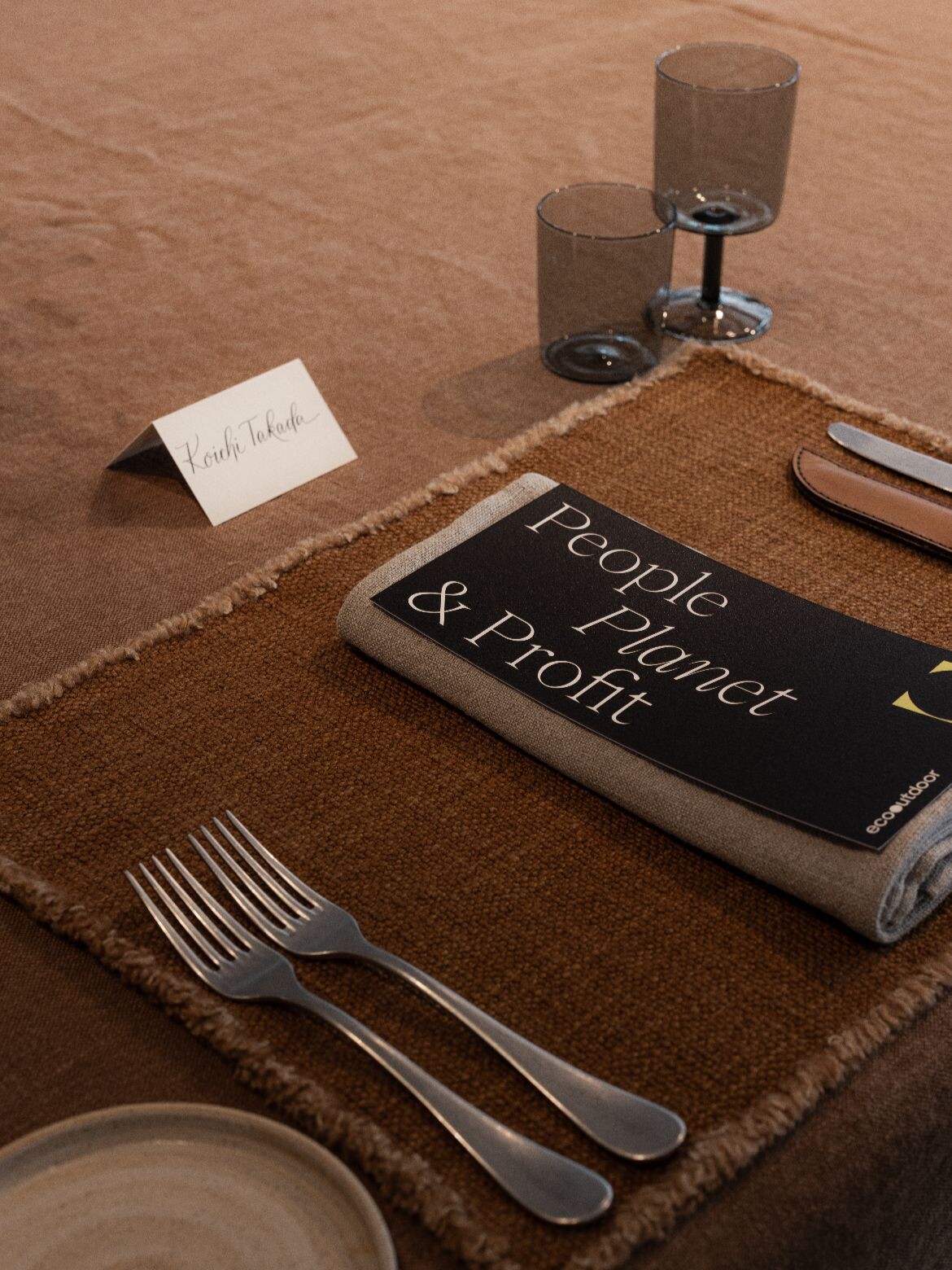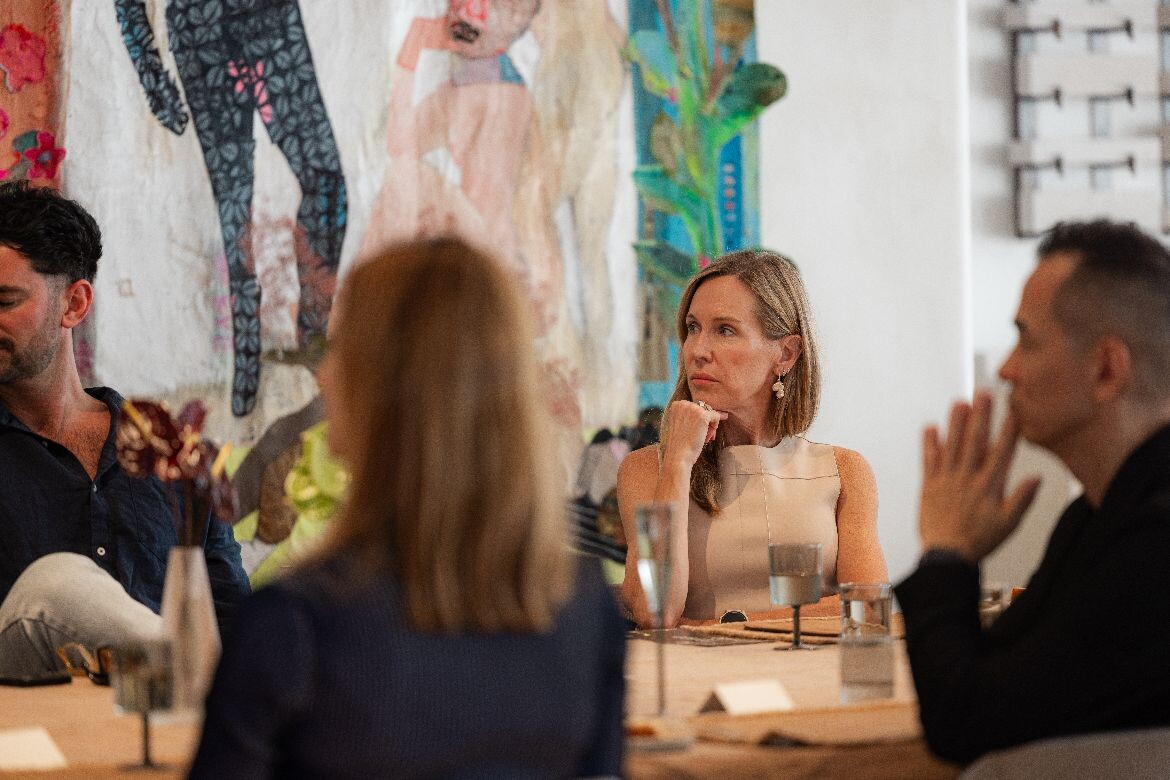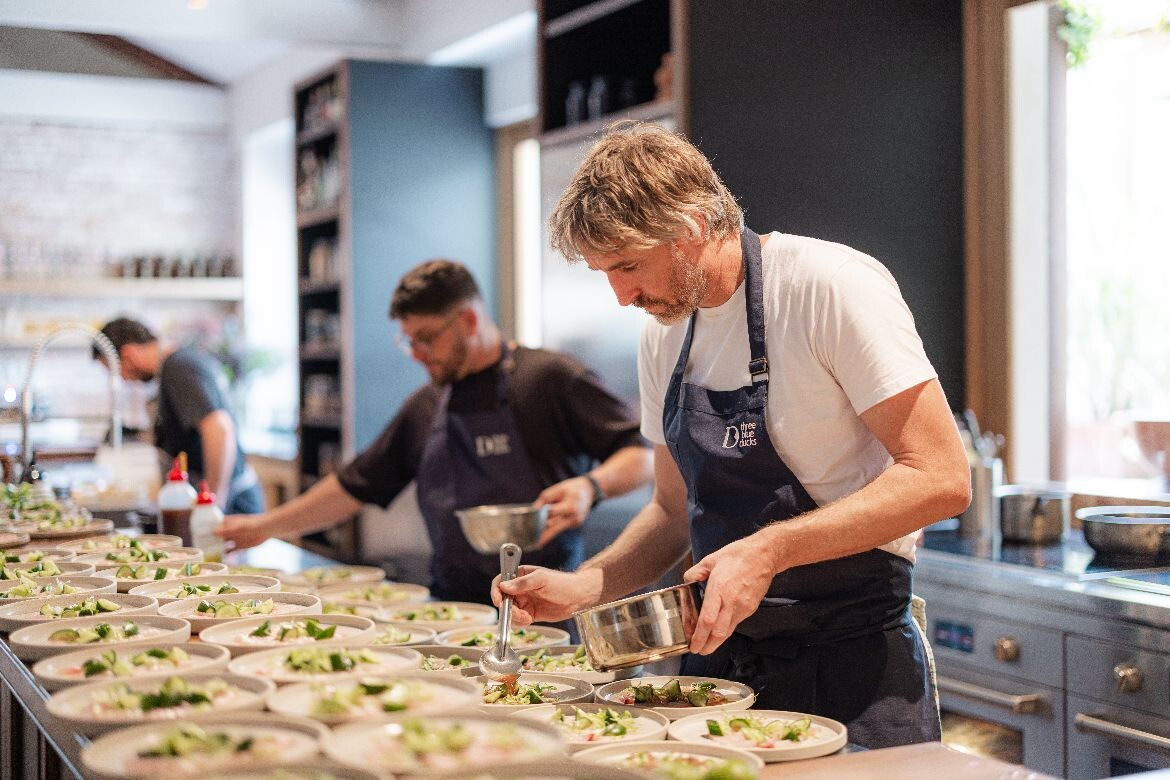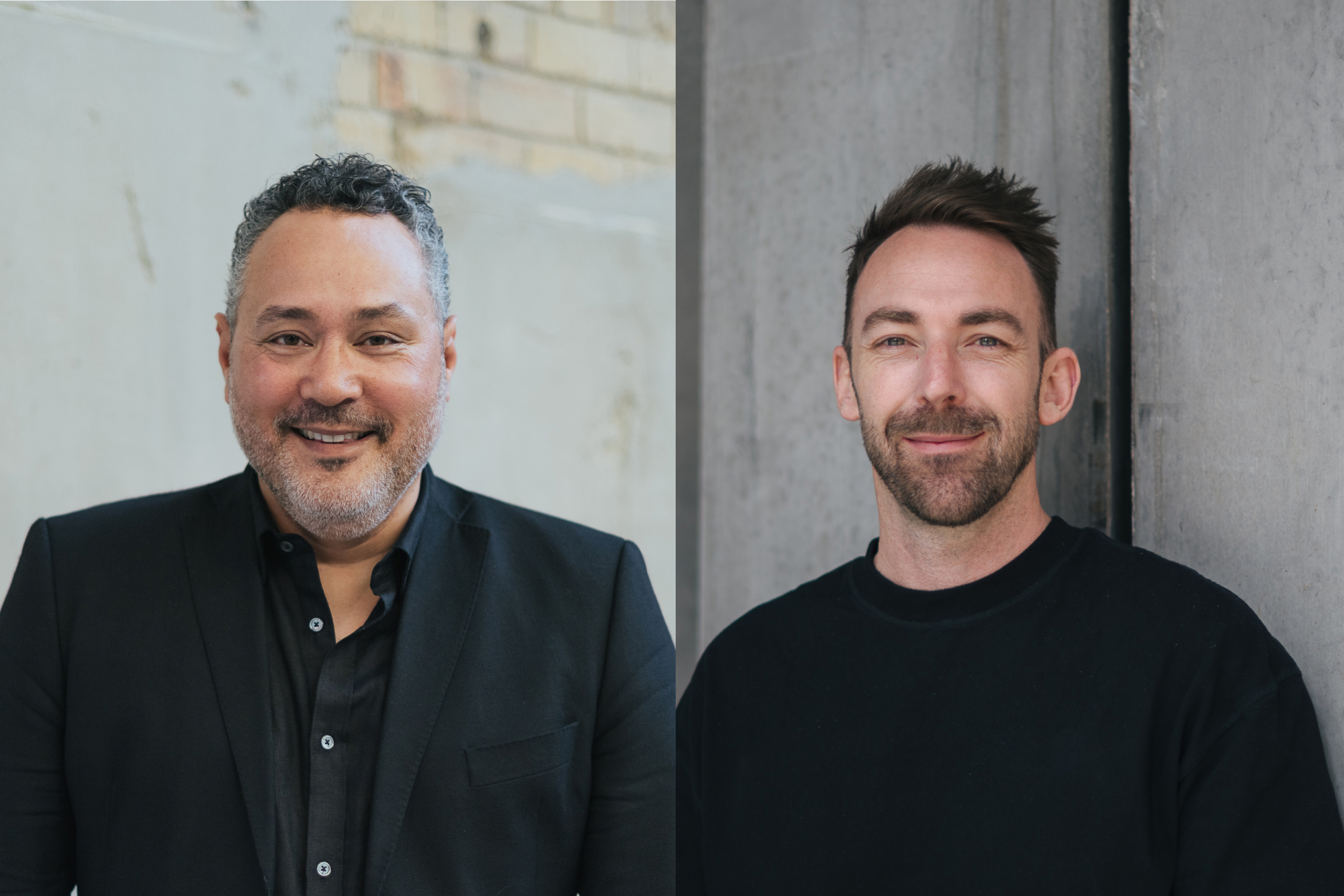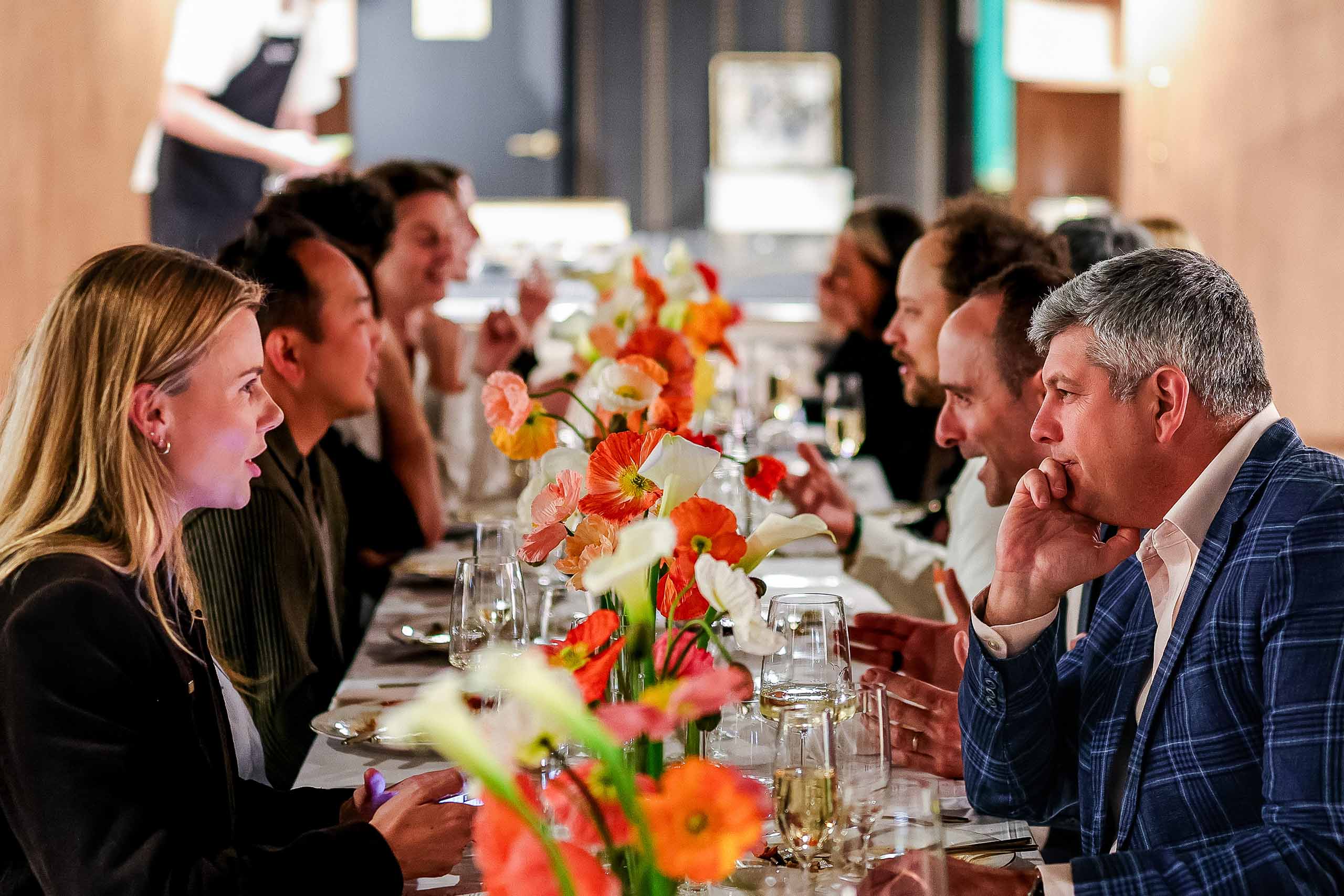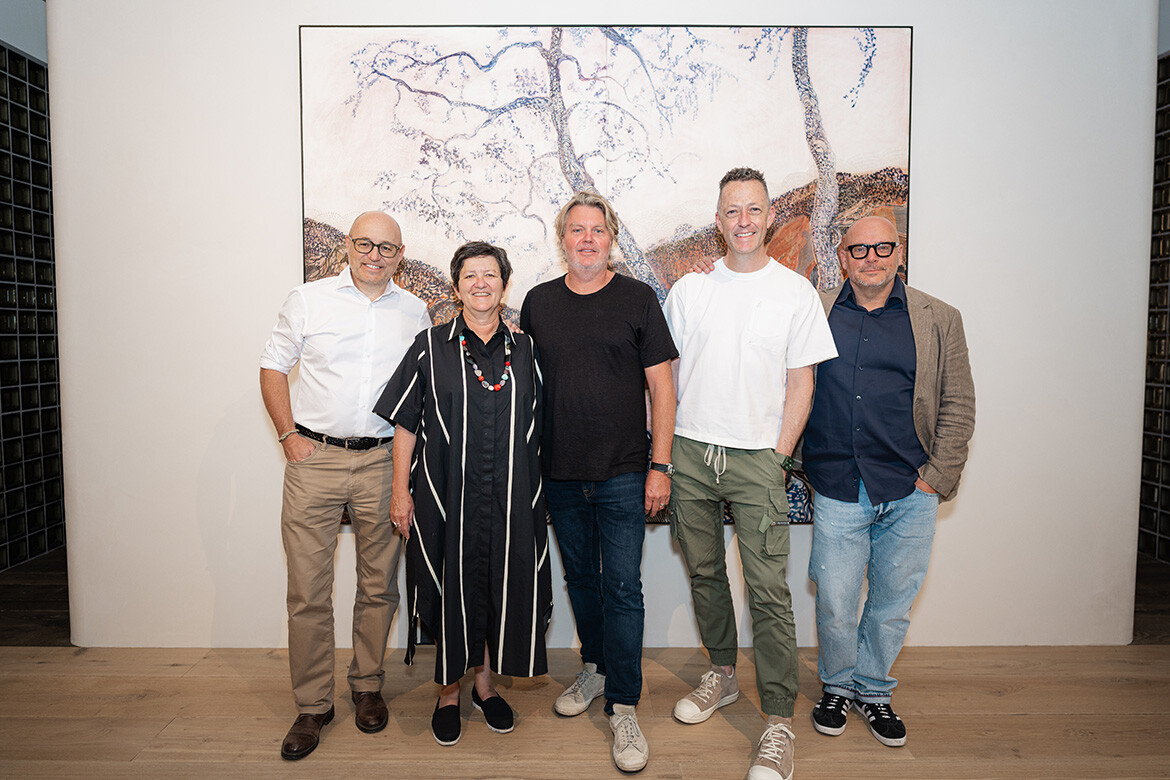
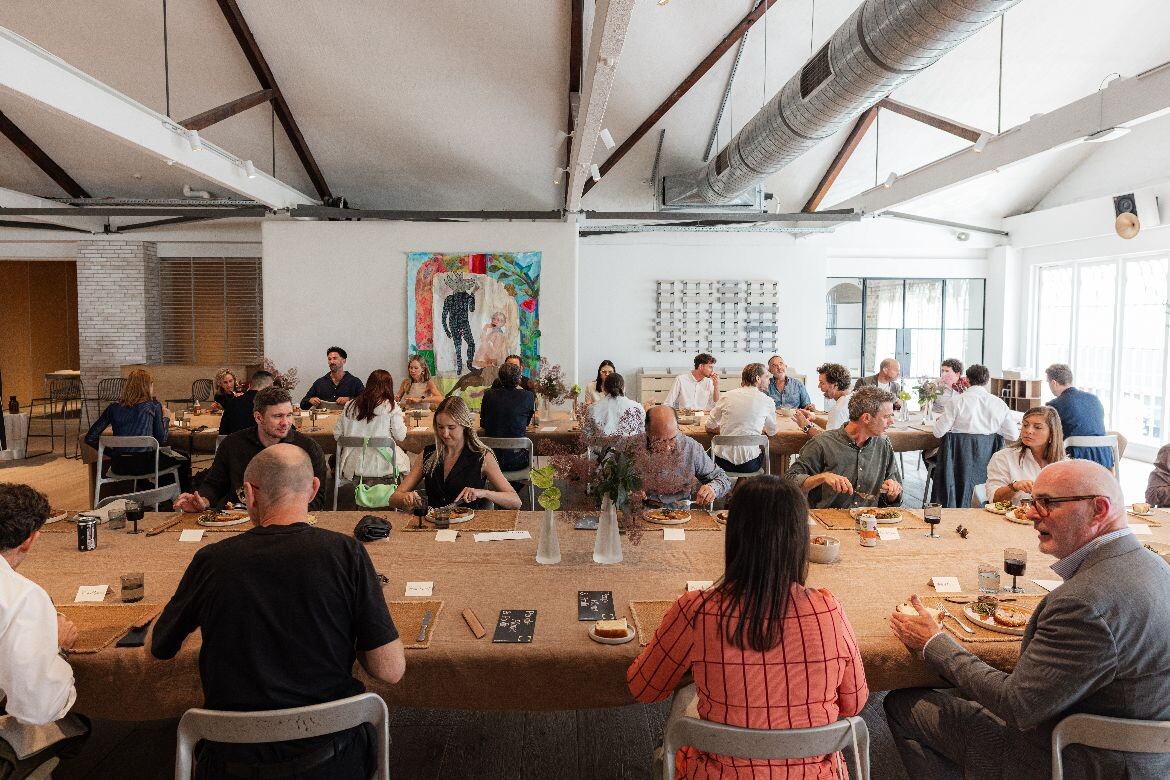
At its new Sydney headquarters, Eco Outdoor hosted an industry lunch and panel discussion featuring local and international voices from architecture, development, design and sustainability. The event was hosted by Eco Outdoor founder Ben Kerr, with guest speakers Rasmus Nørgaard (founder, Home.Earth, Copenhagen), Adam Haddow (SJB director and AIA president) and Caroline Pidcock (director, Pidcock Architecture & Sustainability). Vince Frost moderated the panel and Three Blue Ducks provided food.
“We wanted to bring people who care deeply about the built environment into the same room and have an honest conversation about how we can do better for people, the planet and the businesses that support them,” says Kerr, who has 25 years of experience supplying stone surfaces and architectural materials for hundreds of projects.
The discussion comes at a time when society is facing multiple crises, foremost of which for designers are housing, climate and cost of living. Panellists focused on how good design makes sustainability cheaper, not more expensive. By getting design fundamentals right at the beginning of the process, they asserted, the need for complex and costly engineering fixes later on is reduced.
On the question of profit and sustainability, Nørgaard focused on the problem of short investment cycles. He pointed, instead, to how Home.Earth, whose latest project in Denmark achieved one of the lowest embodied carbon footprints of any apartment building in the country, did so without costing more overall.
Related: Inside Surry Hills Village
Nørgaard says the key was setting carbon and performance targets at the start, not as an afterthought: “If you make low carbon performance an objective of the design process from day one, you can go a very long way with solutions that already exist. If you design the project first and then say ‘now we will make it sustainable’, it is usually too late.”
Meanwhile, Caroline Pidcock introduced the idea of moving beyond reducing our negative footprint to increasing our positive ‘handprint’. She framed it around five questions every project team should ask:
- How does this project bring the story of its place to life?
- How does it celebrate resourcefulness and low-carbon choices?
- How does it enable communities to thrive?
- How does it reflect long-term thinking, as ‘good ancestors’?
- How does it inspire others to act?
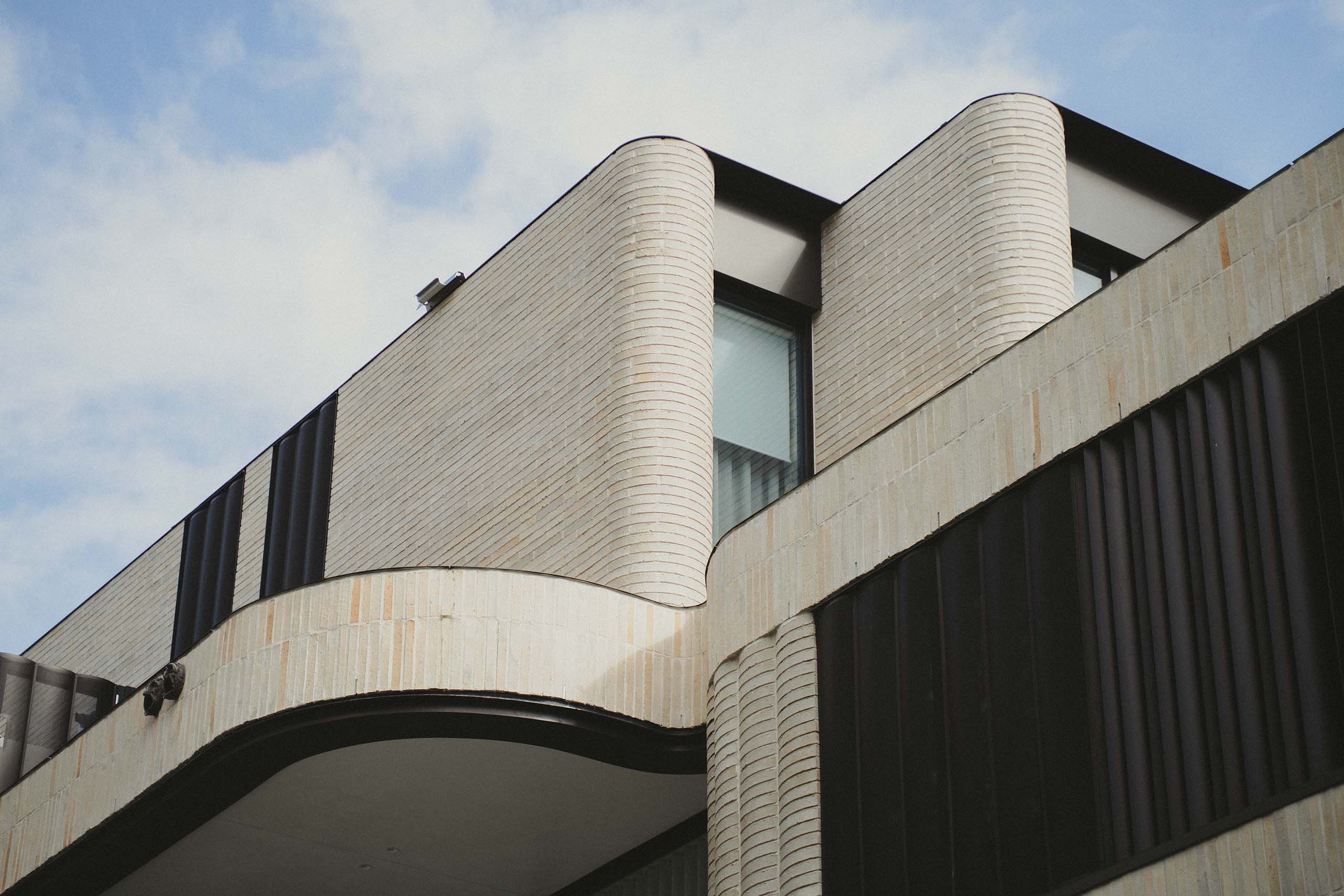
The conversation also turned to the average size of houses in Australia as well as material choices. Eco Outdoor’s new stone brick collection, for example, previewed at the event, is designed to reduce waste, use fewer raw resources and deliver high design value over a long time.
Eco Outdoor
ecooutdoor.com.au