“We have a finite environment – the planet. Anyone who thinks that you can have infinite growth in a finite environment is either a madman or an economist.”
This quote from David Attenborough is often seen when approaching the topic of the circular economy, and appears, in fact, as the opening line in the industry standard TM66, which is a guide to lighting design and the circular economy. TM66, among other standards and guides, are the tools we reference when developing our designs and product specifications with best practice in mind.
As a concept, we are seeing architects, specifiers and builders adopting circular economy as a way of identifying opportunities for reuse and closed-loop recycling of products and materials. Items such as bricks, timber, glazing, ceramics, carpets, cabinetry, cast-iron work and materials such as structural steel and concrete are often the focus.

Lighting, however, is not often mentioned, even though circular approaches can deliver measurable reductions in both environmental impacts and in lifecycle lighting system costs. In projects such as high-end residential and hospitality where the same occupant is often in place for a considerable length of time (and also often the owner of the building), circular approaches make even more sense.
One of the most important design decisions to make is to understand that, even though modern LED lighting offers the most energy-efficient source of illumination invented for the mass market to date, if the number of luminaires dramatically increases to create design flourishes, the combined energy use may be no better than an old school incandescent.
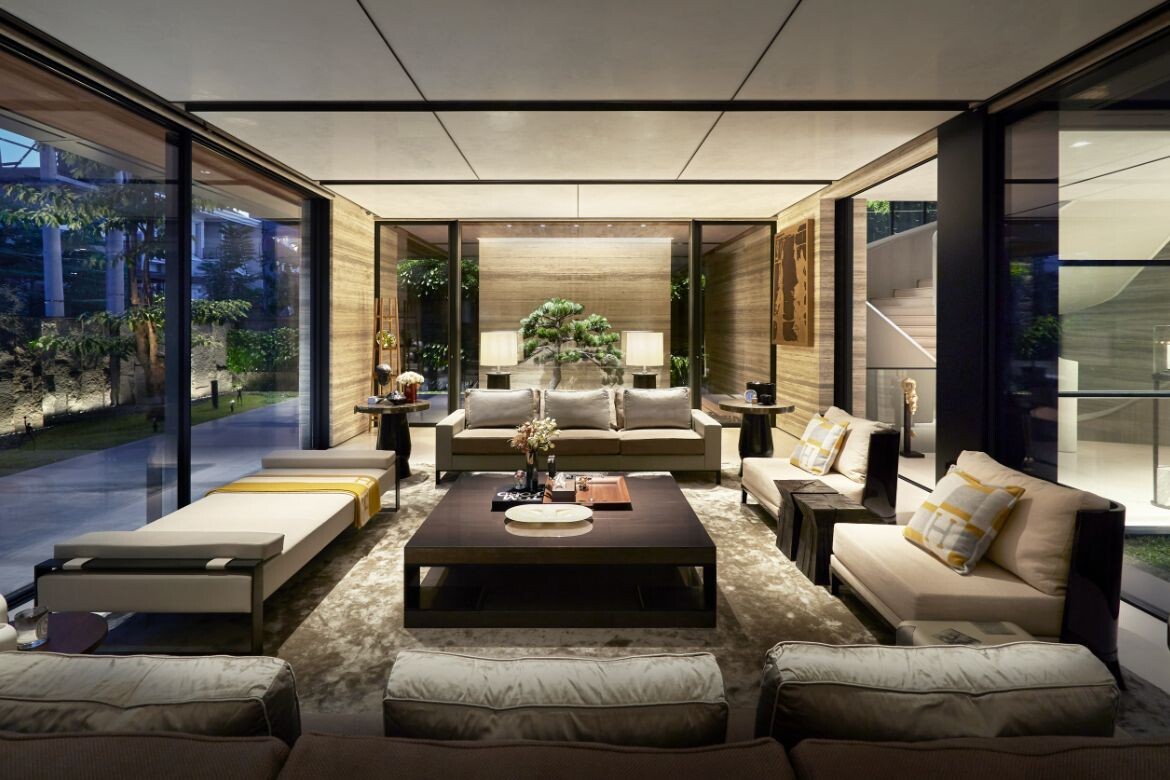
This is where lighting designers can provide a more nuanced and sustainable solution than perhaps an electrical contractor installing to a general schematic. By using science-based modelling to understand how natural light, electric light, materials, spatial dimensions and occupant behaviour will interact in a space, lighting specifications can be fine-tuned to deliver aesthetic and functional outcomes with minimised product installation. Incorporating smart lighting features to add a further layer of responsive function including automatic dimming, adjusting for time of day and seasons, scene-setting for different purposes and events all become possible, again, while managing energy and resource use efficiently.
Then the next layer after optimising design is being scrupulous with procurement and specifications, looking at impacts at each stage of the lighting product lifecycle. In a single-use linear model or a product’s lifecycle, scarce materials are taken from the Earth’s finite resources, processed, packaged, transported and then after use disposed in landfills.
Related: Waste and the built environment at COP28
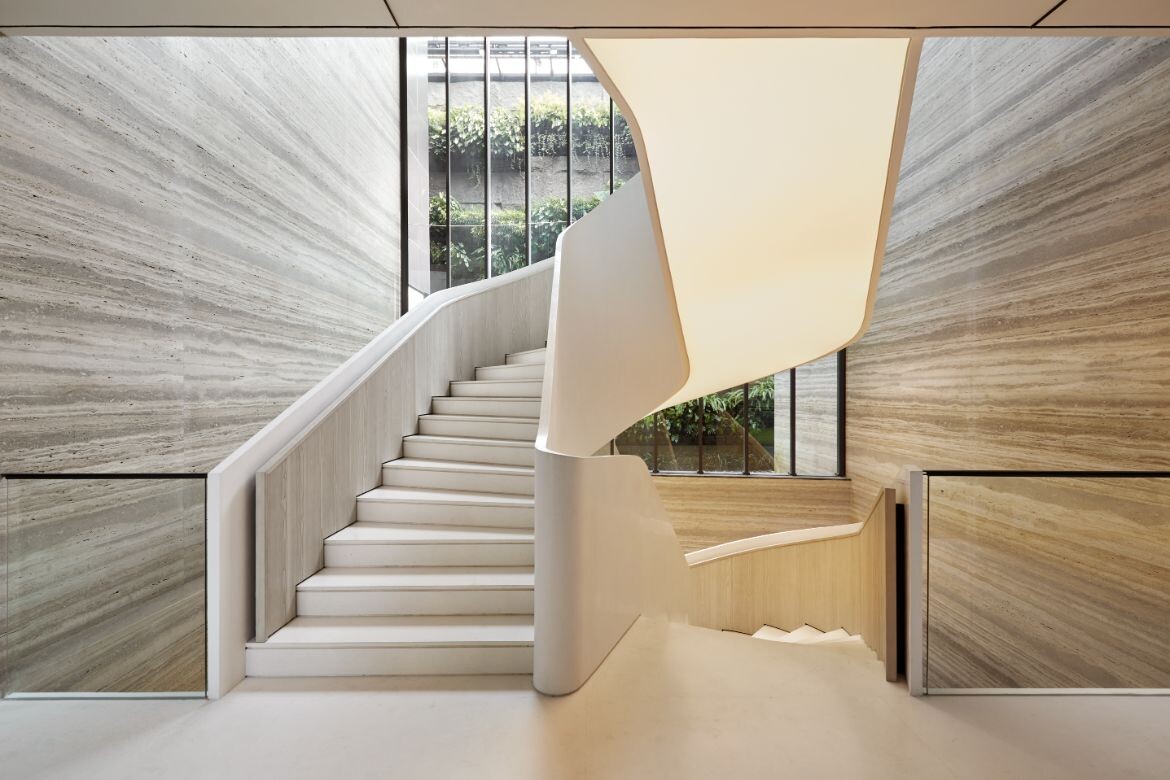
1. Design
It should start with us the designers. The process at the start of any project is firstly to understand the client’s brief and then, if relevant, assess what is currently in operation and how the users interact in the existing space. If, as a designer, we can reduce the injection of new manufactured materials in our new build projects, reduce the existing fittings currently installed or better still reduce and reuse the existing fittings by designing in such a way we take the load of the rest of the circular system.
2. Production remanufacturing
For new fittings, it is our role as designers to educate our clients on true value. While we might be specifying more premium products, they have the knowledge that they are getting a design that will reduce not only the carbon footprint in the manufacturing process but also over the life of the design through energy reduction, reduced maintenance and eventually less waste or material to be recycled.
3. Distribution
Less material and less packaging – all byproducts of a design using fewer fittings. This leads us to a reduction in the overall impact that the distribution chain presents. Sea and air freight of products contribute significant levels of carbon into the atmosphere. In certain situations, there is the ability to source locally.
4. Consumption
Consumption, in reference to lighting, is where we must consider the operating costs, energy consumption and the need for replacement parts throughout the lifecycle of the product.
5. Repair and reuse
When the product fails or needs to be upgraded and even possibly reused within either the same property or elsewhere due to redesign or change of purpose, it is important that we have considered this at the design stage and the owner is aware.
6. Residual waste
Managing residual waste is as important as reducing the quantity. It is rare to find a product that is 100 per cent recyclable and, again, the less waste that is generated reduces in turn the energy used and pollution created in the atmosphere.
7. Recycled/recovered materials
Possibly the most important step of the process is the actual process of recycling and recovering materials. Often this only becomes applicable many years after the initial installation was completed.
Manufacturers need to ensure that someone is attending to failures of fittings or removing fittings in the event of a change of installation there is a clear path on how to start the process of recycling and returning the materials to the manufacturer for reuse in new products where applicable.
8. Raw materials
And from there the process starts again. As we can see by minimising the input of materials at the design stage the reduction is carried across the rest of the lifecycle.
As designers, we all hold the keys to unlocking vast amounts of carbon savings not only in our specifications but also in what we don’t specify!
Cundall
cundall.com
Project images
Surabaya Private Residence, Indonesia; Conservation Shophouse, Singapore