The home of architecture and design in the Asia-Pacific
Get the latest design news direct to your inbox!

Get the latest design news direct to your inbox!
Suupaa in Cremorne reimagines the Japanese konbini as a fast-casual café, blending retail, dining and precise design by IF Architecture.
January 19th, 2026
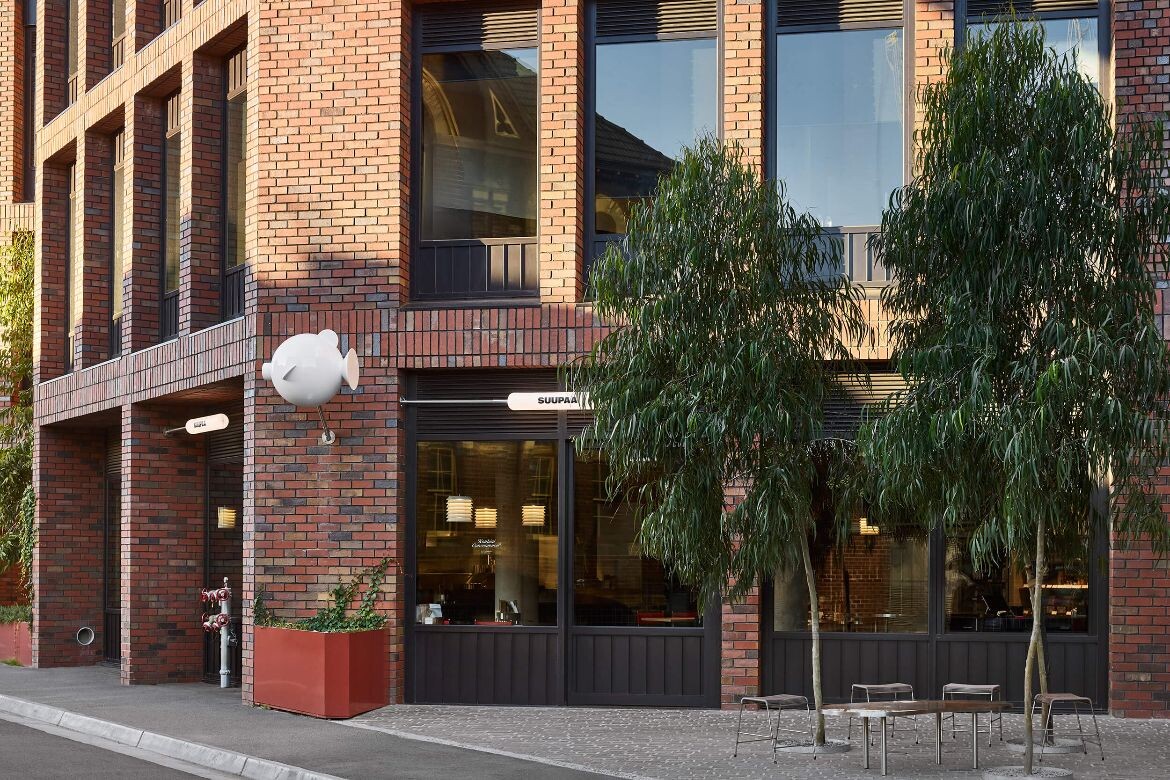
In a narrow Cremorne street better known for tech offices and converted warehouses, Suupaa announces itself with quiet confidence. Part fast-casual Japanese restaurant, part konbini-inspired convenience store, the hybrid venue by IF Architecture draws on the cultural familiarity of Japan’s ubiquitous convenience stores while reworking the typology for a contemporary Melbourne context.
In Japan, the konbini is more than a place to grab a snack. It is a finely tuned system of efficiency, organisation and everyday ritual. Suupaa’s design distils these qualities into a spatial language that feels both recognisable and newly calibrated. Rather than mimicry, the project operates through abstraction: materials are utilitarian but precise, colours are bold but controlled and every element is positioned with intention.
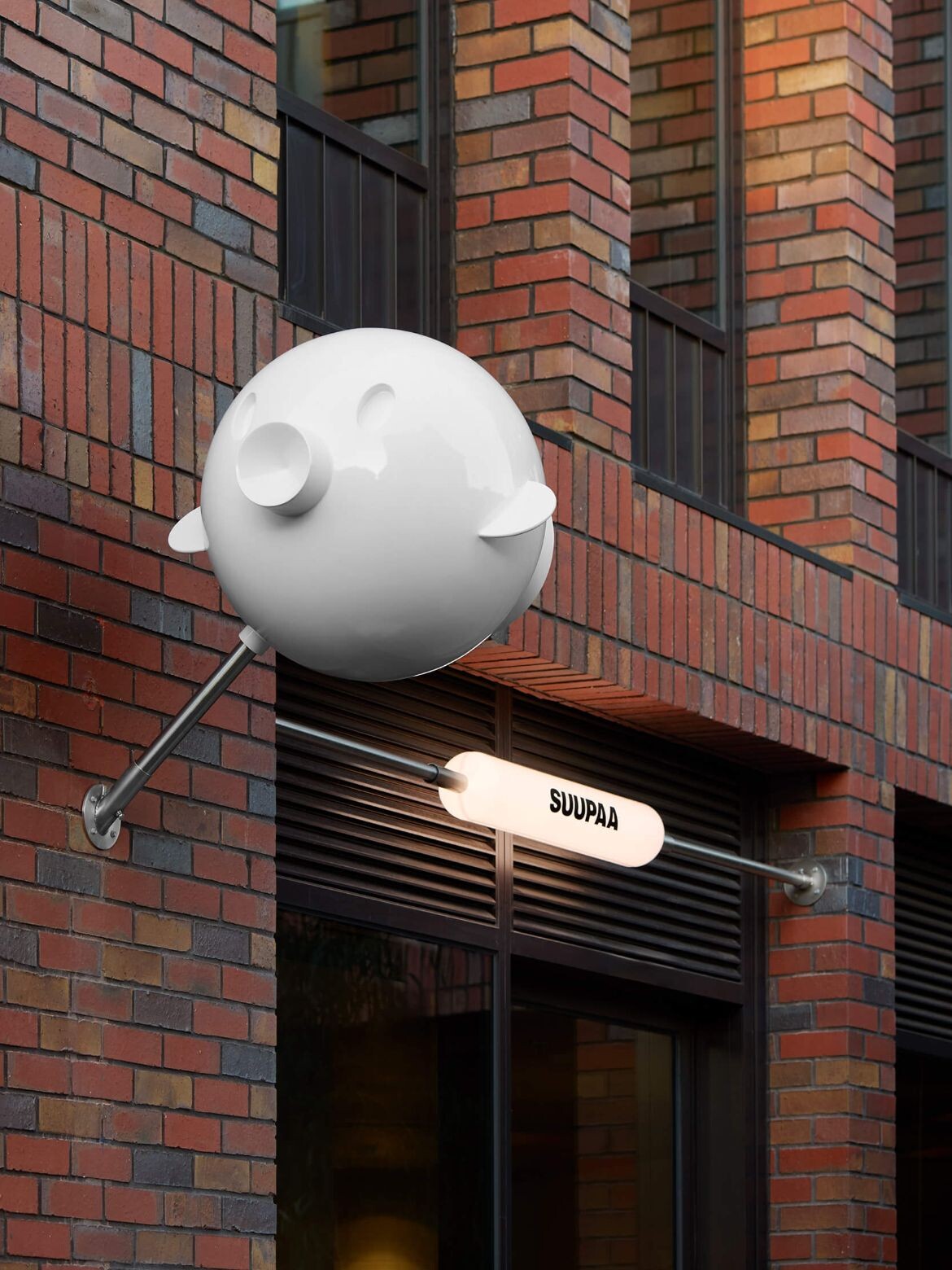
Set within a red-brick building, the fit-out extends assertively toward the street. Angled signage and planters push outward from the glazed frontage, collapsing the threshold between inside and footpath. Hospitality spills into the public realm, signalling movement and accessibility rather than formality. The brick rhythm of the existing shell is echoed and amplified by the interior palette, allowing old and new to sit in productive dialogue.
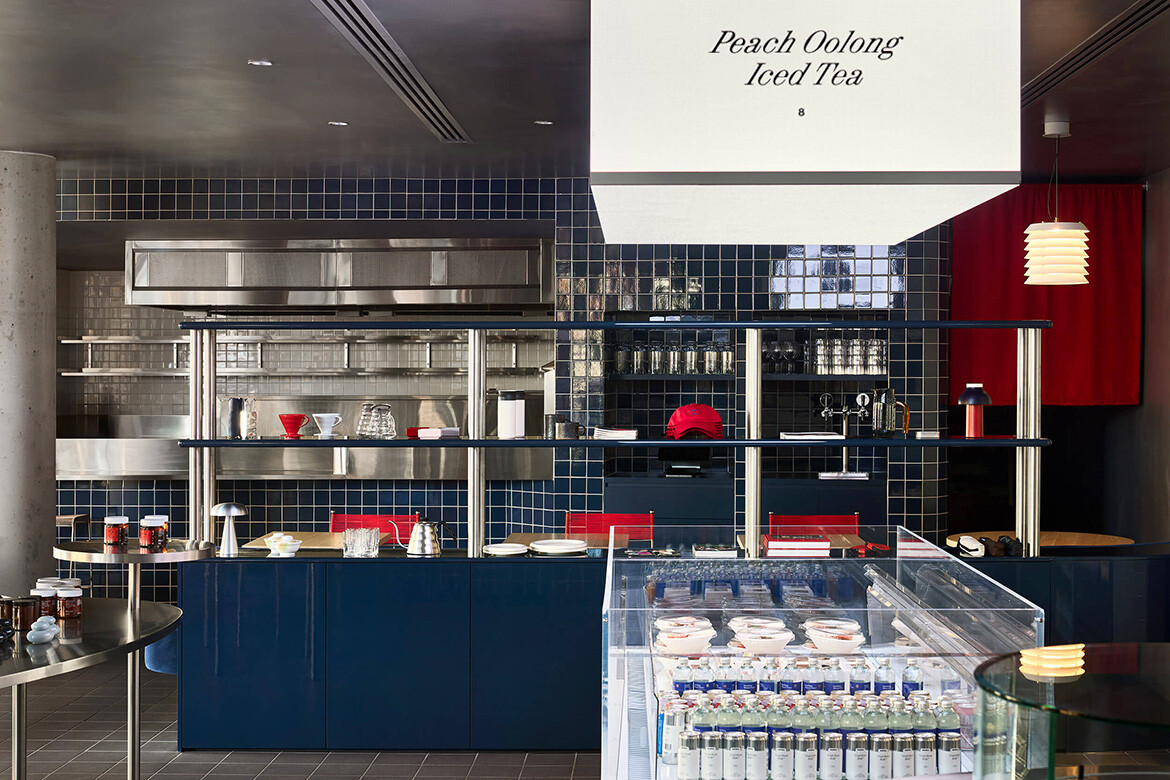
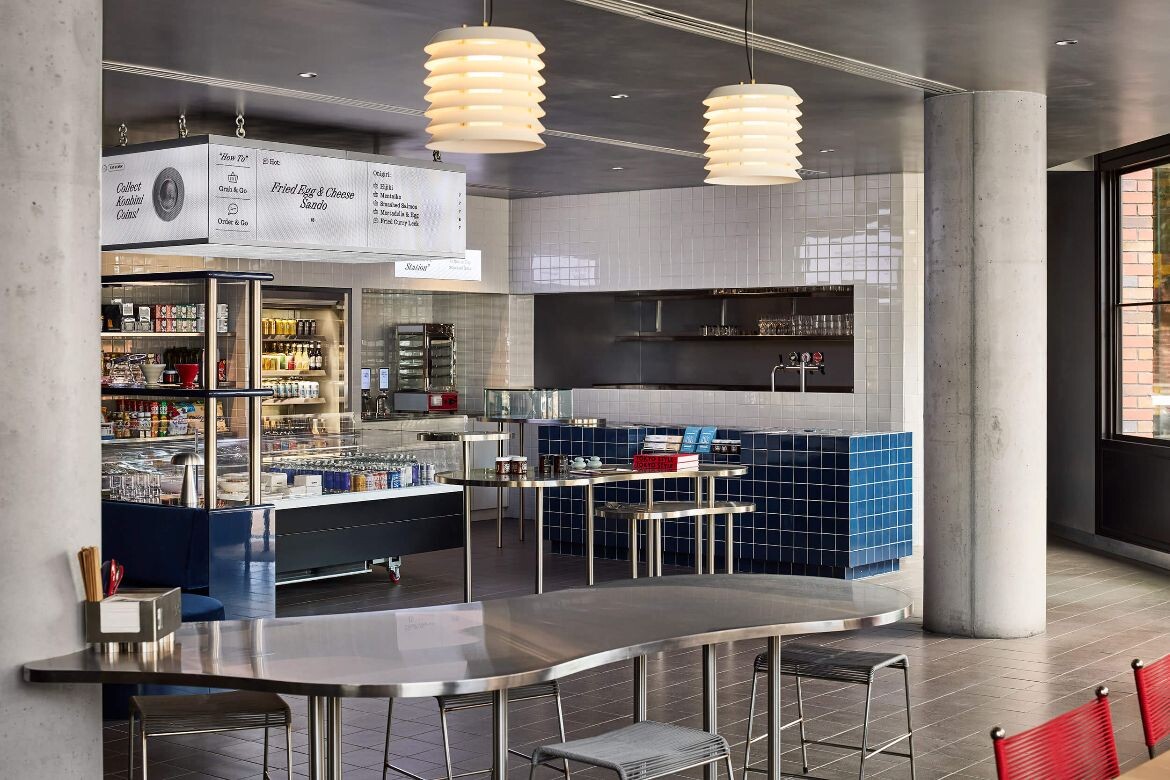
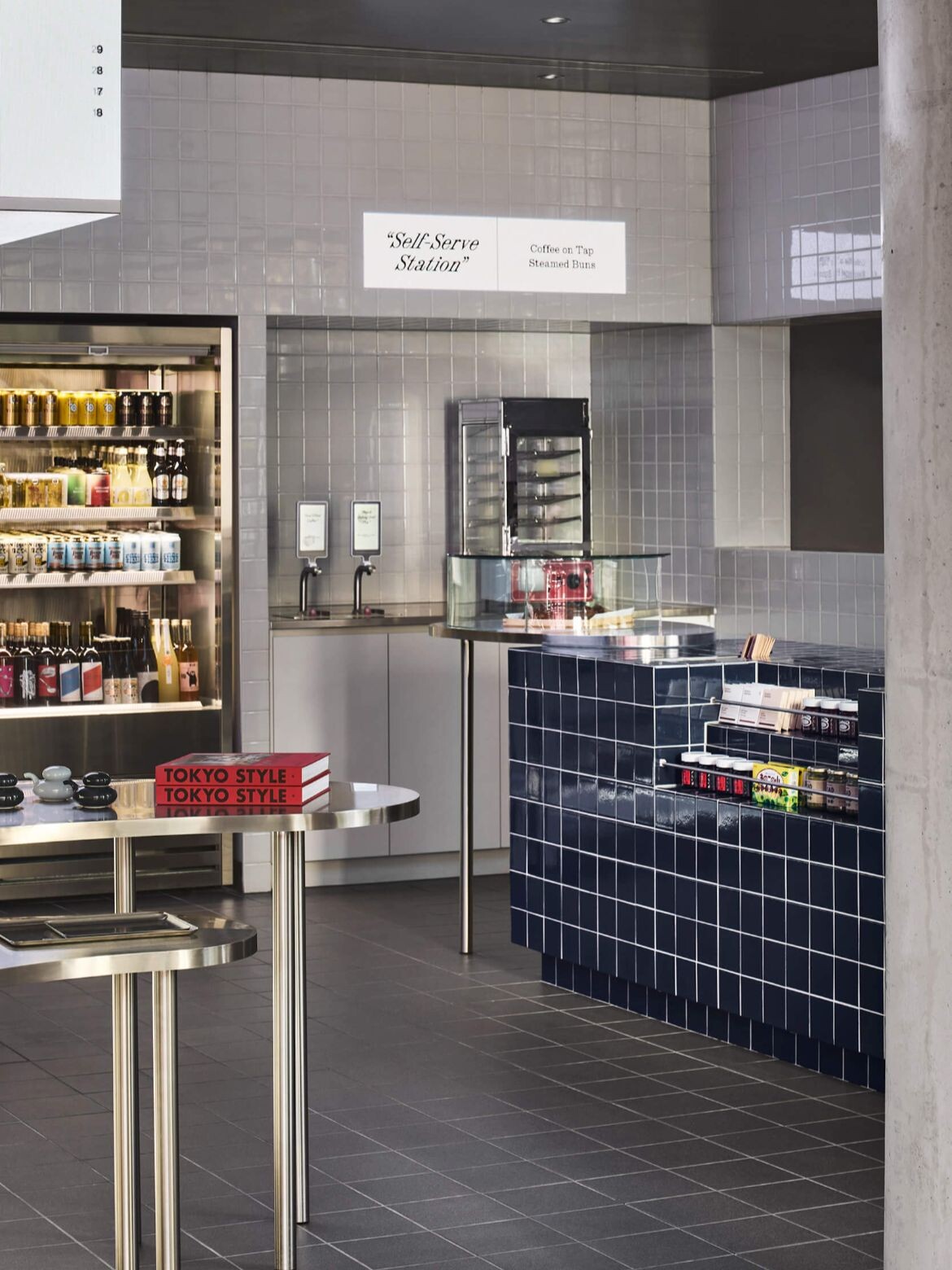
Central to the design is a colour system drawn from goshiki, the traditional Japanese five-colour framework of red, black, blue, white and yellow. Rather than deploying colour decoratively, IF Architecture uses it as an organising tool. Crisp whites define the retail and takeaway zone, creating a luminous, almost clinical environment that reframes the konbini as something elevated yet efficient. Here, a fluorescent light box hovers overhead, illuminating a central display and evolving menu.
Related: Retail as space to linger
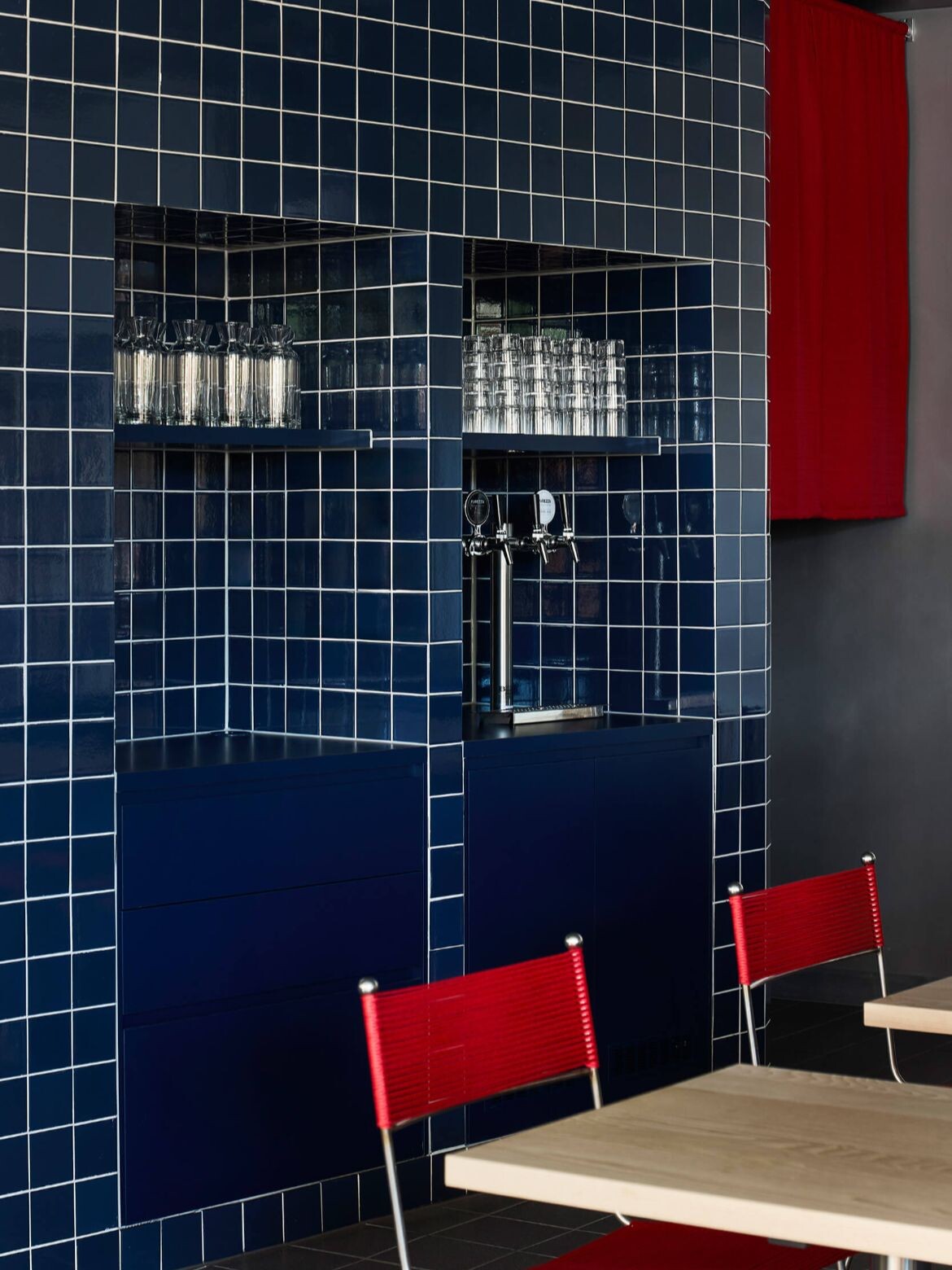
Products are arranged within a strict grid, transforming packaging into visual artefacts. Smaller items are recessed into tiled joinery at the point of sale, where function and composition merge. The effect is one of calm precision, where speed does not equate to disorder.
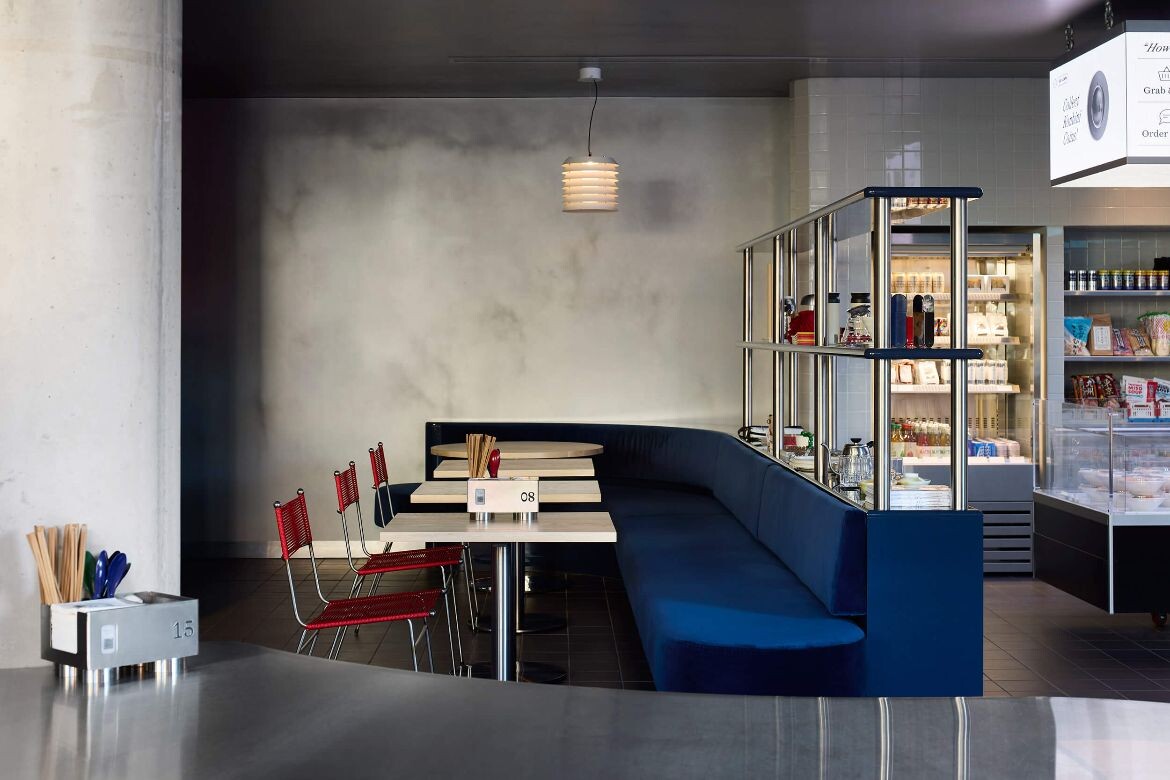
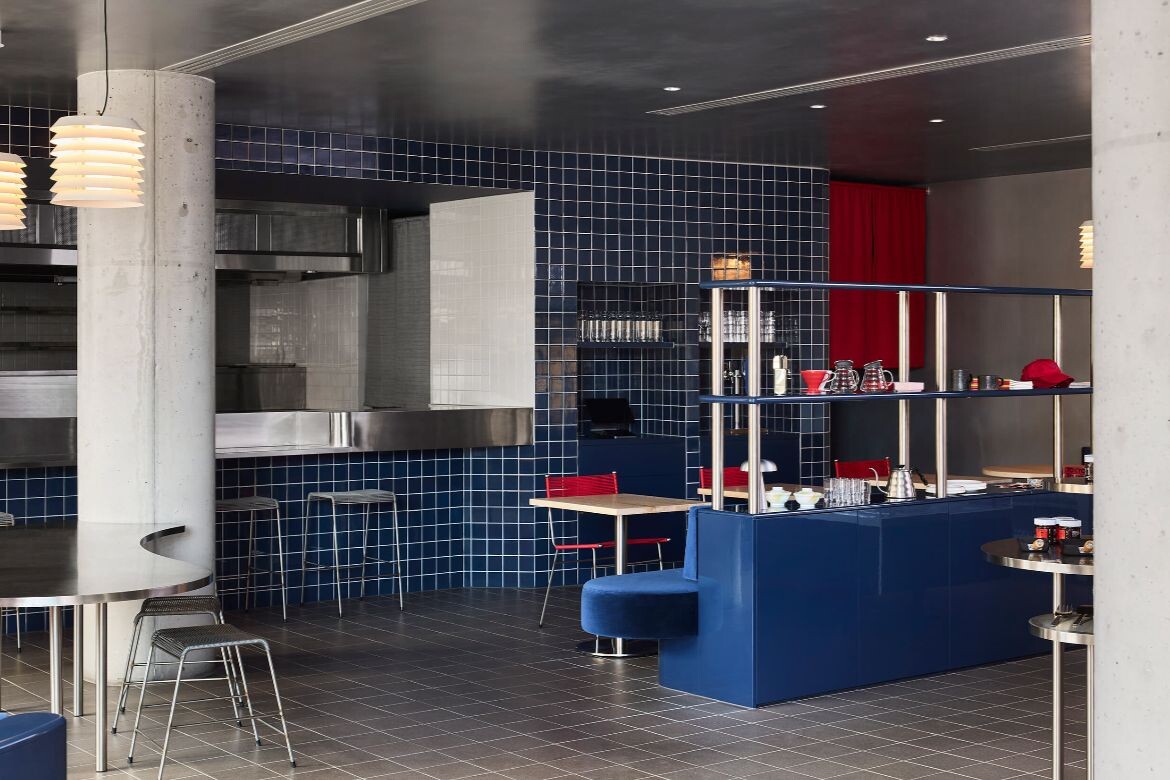
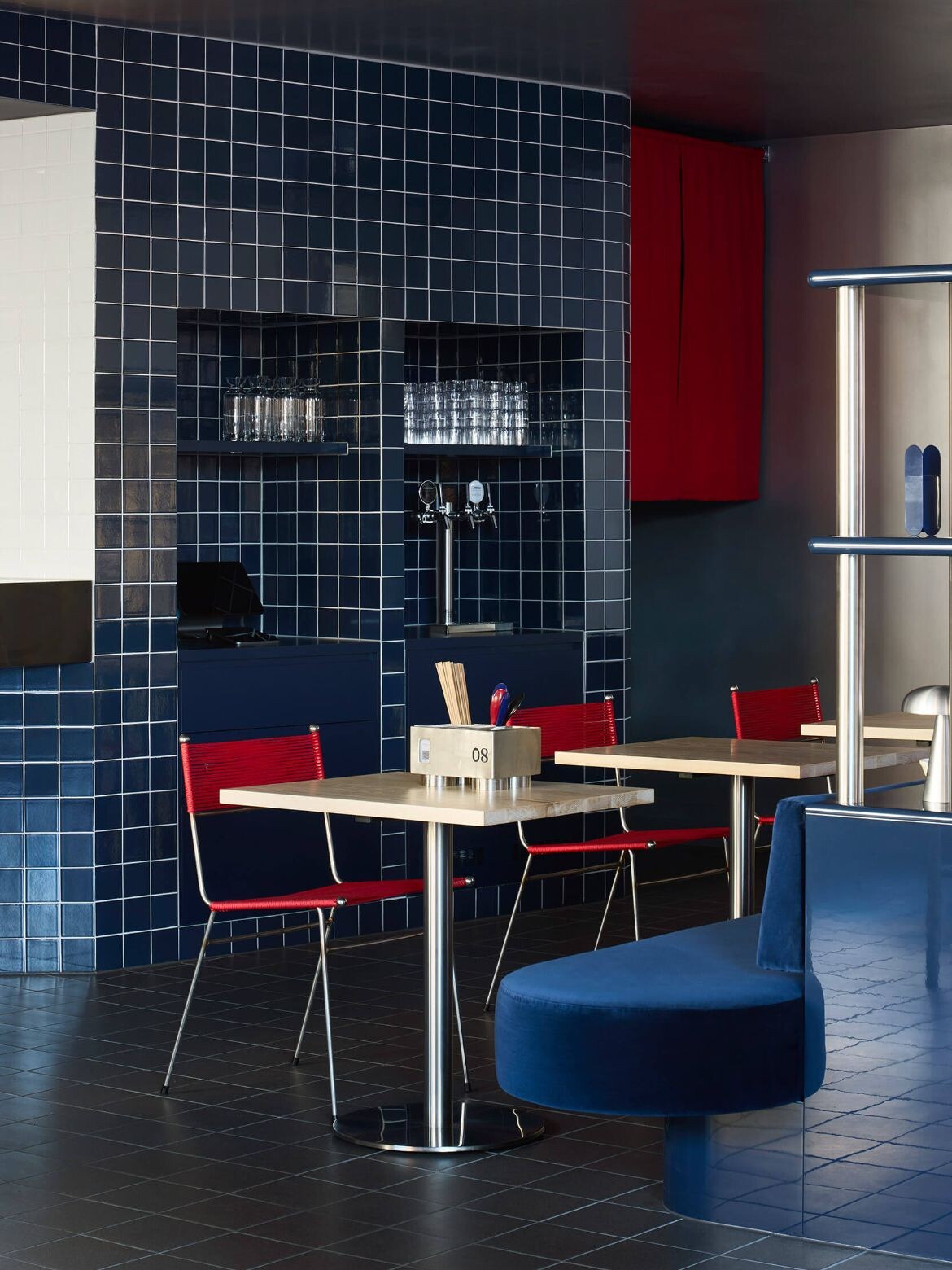
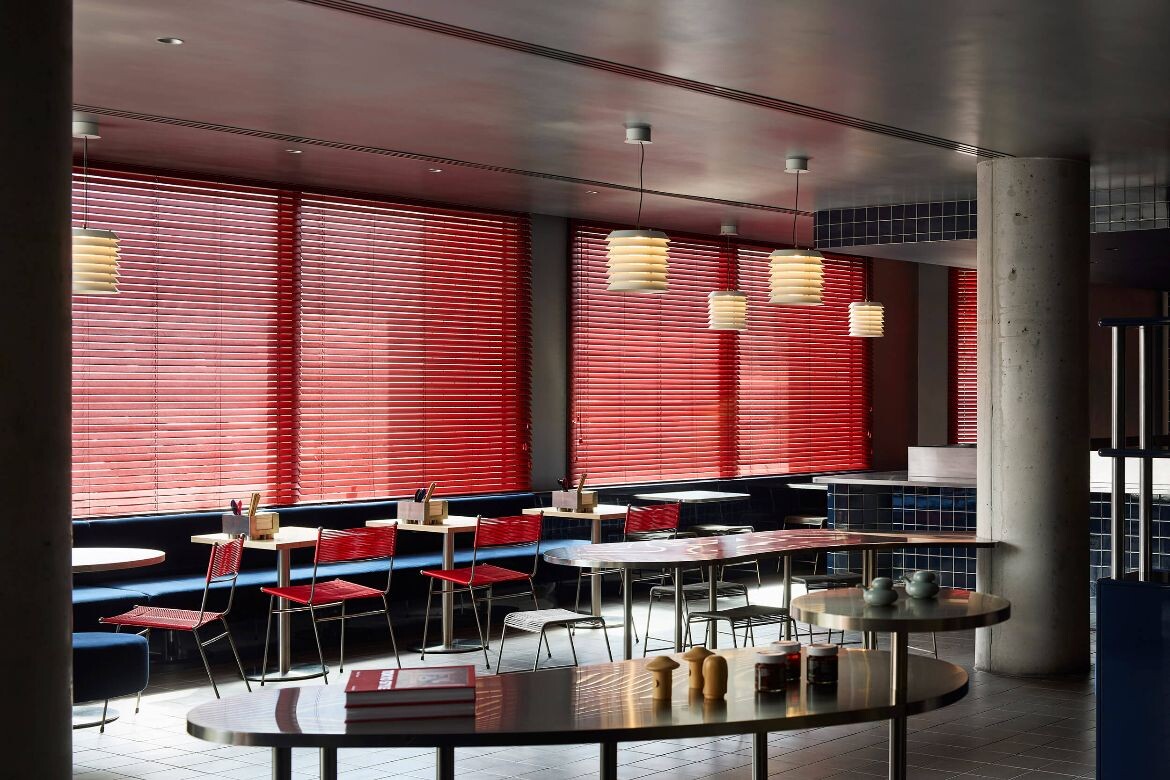
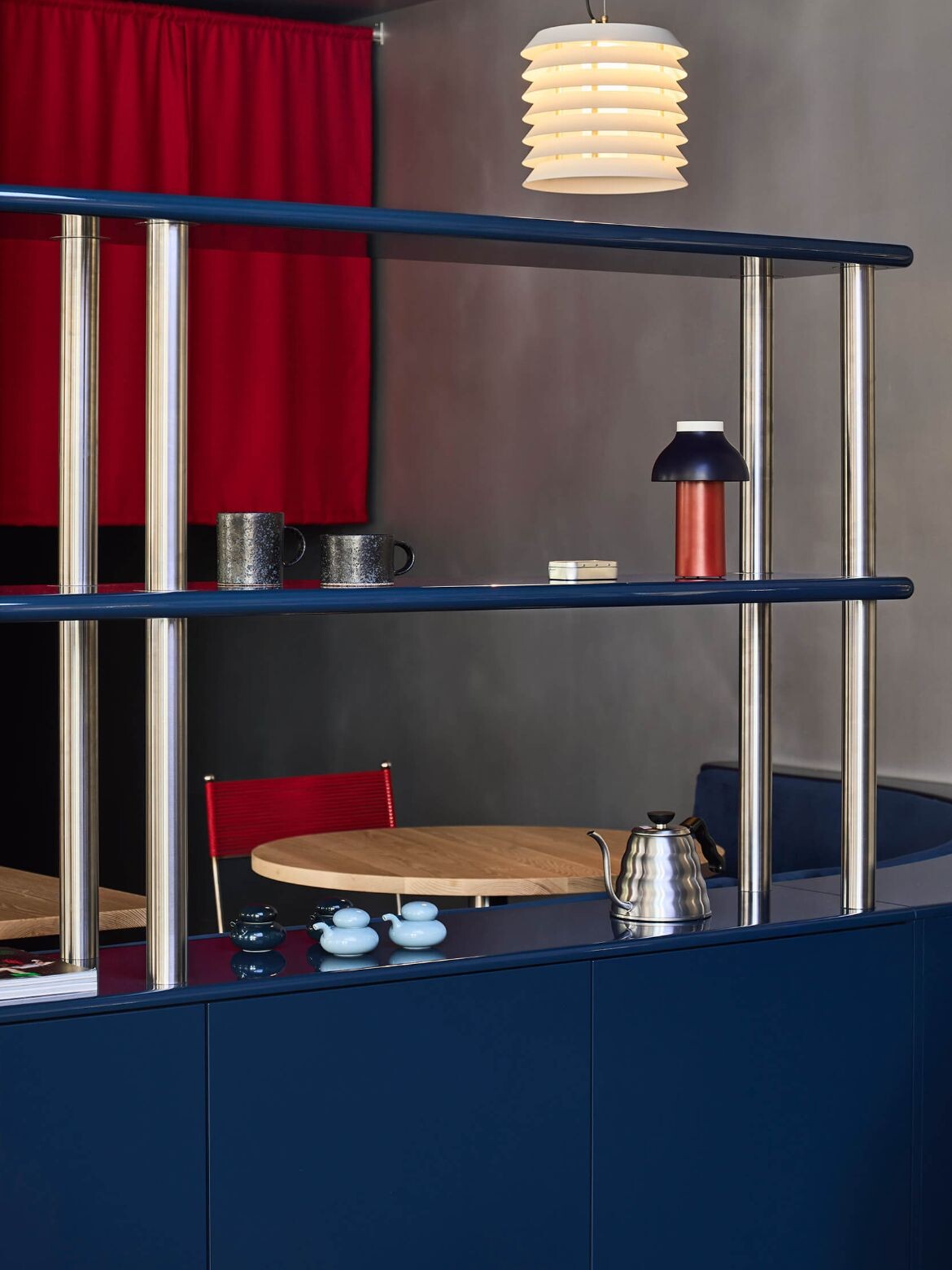
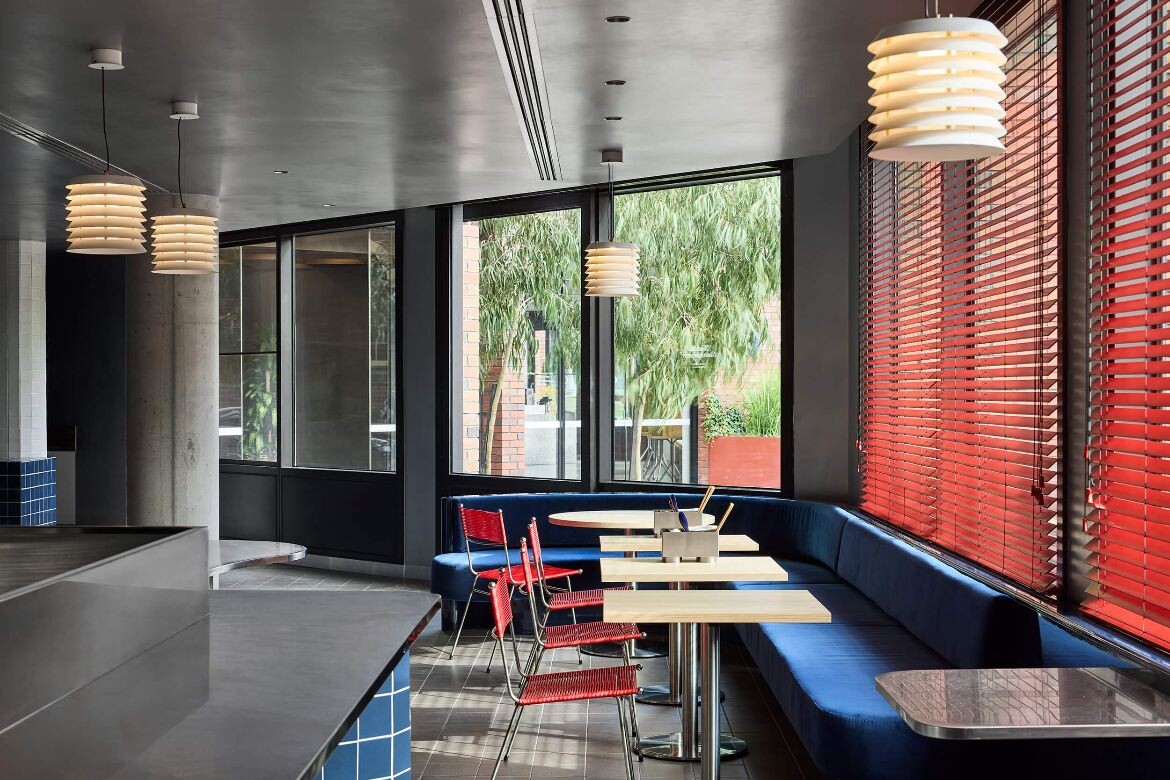
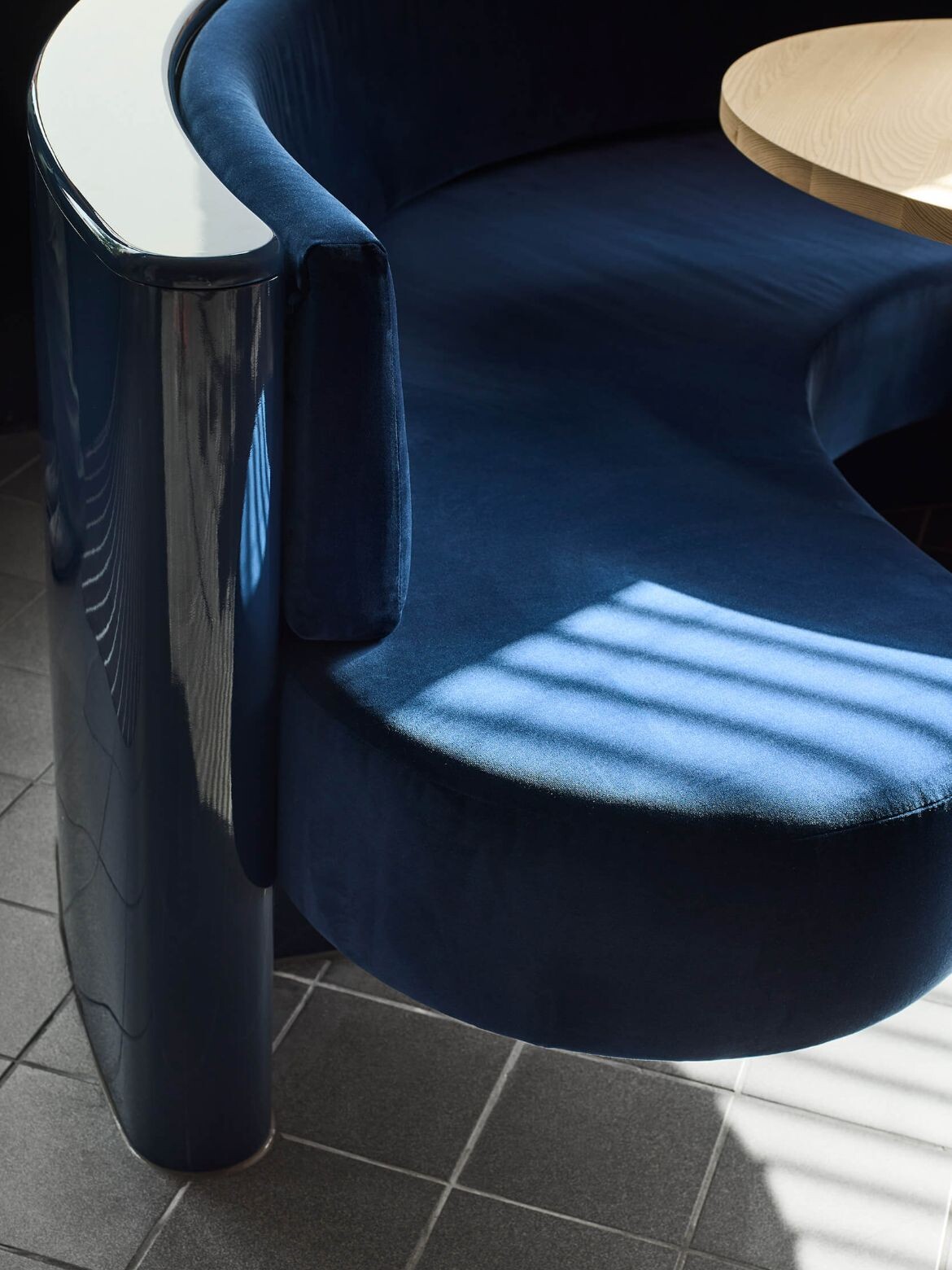
Moving deeper into the venue, the atmosphere shifts. Saturated blues ground the dine-in area, introducing warmth and slowing the tempo. Timber tables, soft textiles and contemporary lantern lighting soften the experience without losing the discipline established upfront. Open shelving bridges the two zones, stocked with Japanese goods that reinforce continuity between retail and hospitality rather than separating them.
Red appears as punctuation throughout the space, most noticeably in the blinds that modulate light across the day. These accents are echoed in a custom red iteration of the Meadmore corded chair, anchoring the palette while lending a tactile familiarity. The gesture feels deliberate rather than nostalgic, part of a broader effort to balance cultural reference with contemporary restraint.
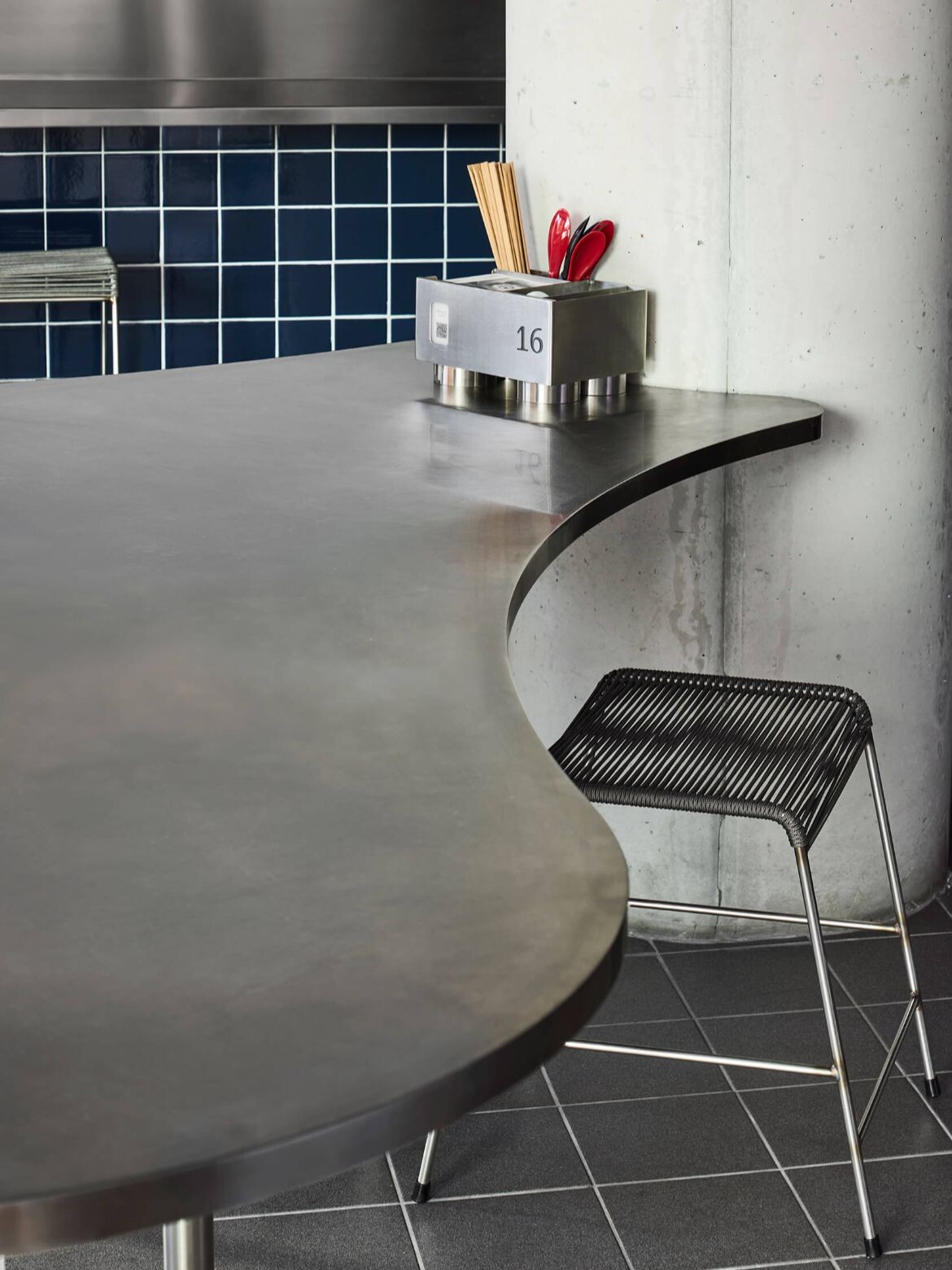
To counter the orthogonality of the fit-out, organic forms are introduced through freestanding stainless steel tables. Designed to float through the space, they serve multiple roles, from dining surfaces to display and event infrastructure. Their curves reappear in banquette seating and are reinforced by stainless steel finishes within the forward-facing kitchen elements, creating material continuity across programs.
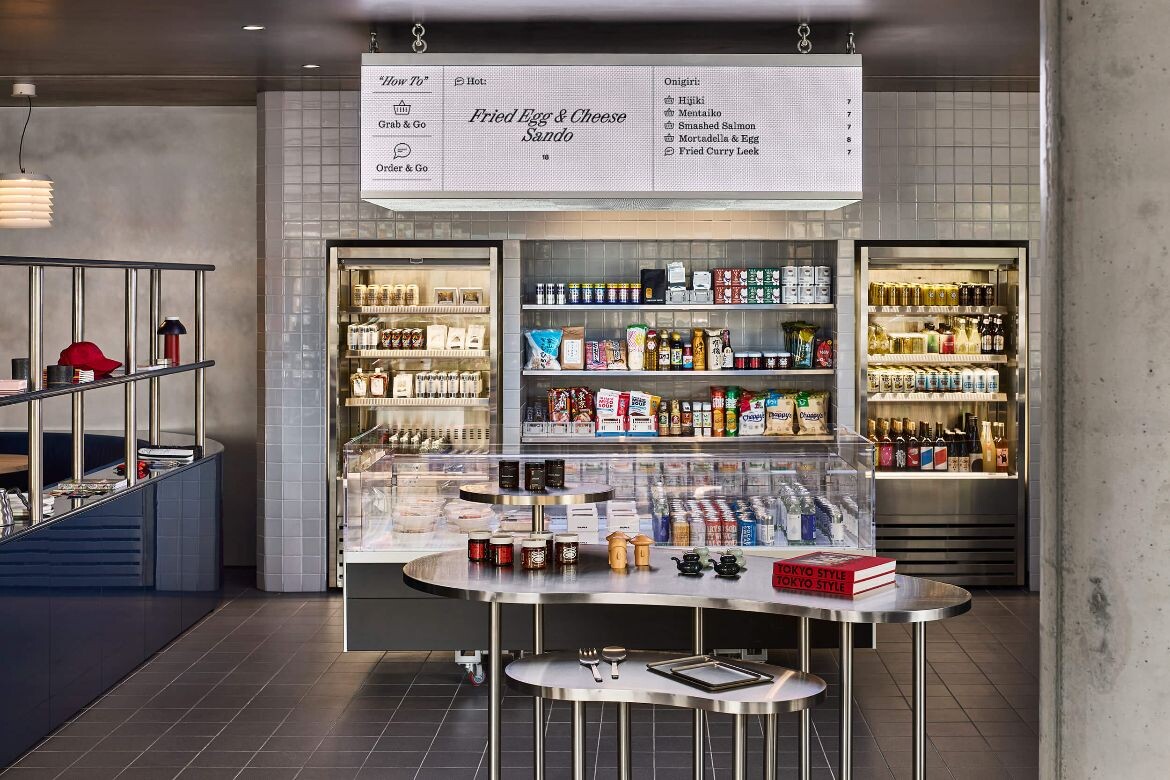
Named after the Japanese word suupaa, meaning both “super” and “supermarket,” the venue plays with scale, expectation and pace. What might otherwise be a transactional experience is reframed as something sensory and spatially engaging. Through careful calibration rather than overt theming, Suupaa elevates the act of grabbing a quick meal into a considered encounter.
In doing so, IF Architecture offers a compelling reimagining of fast dining that proves that speed, culture and design clarity can coexist, even within the tight footprint of a neighbourhood storefront.
IF Architecture
ifarchitecture.com.au
Photography
Sharyn Cairns
INDESIGN is on instagram
Follow @indesignlive
A searchable and comprehensive guide for specifying leading products and their suppliers
Keep up to date with the latest and greatest from our industry BFF's!
The internet never sleeps! Here's the stuff you might have missed