DuPont’s Shanghai R&D Centre is not short on technical expertise. The challenge facing M Moser Associates was how to create a workplace capable of supporting the connections between people and disciplines that drive innovation in the first place.
Occupying a 3,492-square-metre floorplate within an existing lab building, the project involved the complete transformation of DuPont’s workplace to better support collaboration, flexibility and future growth. The existing environment had become inefficient, limiting opportunities for teams to connect and restricting more agile ways of working. Rather than simply updating finishes or introducing new furniture, the project began with a broader question: how could the workplace better support the organisation’s ambitions around innovation, sustainability and digitalisation?
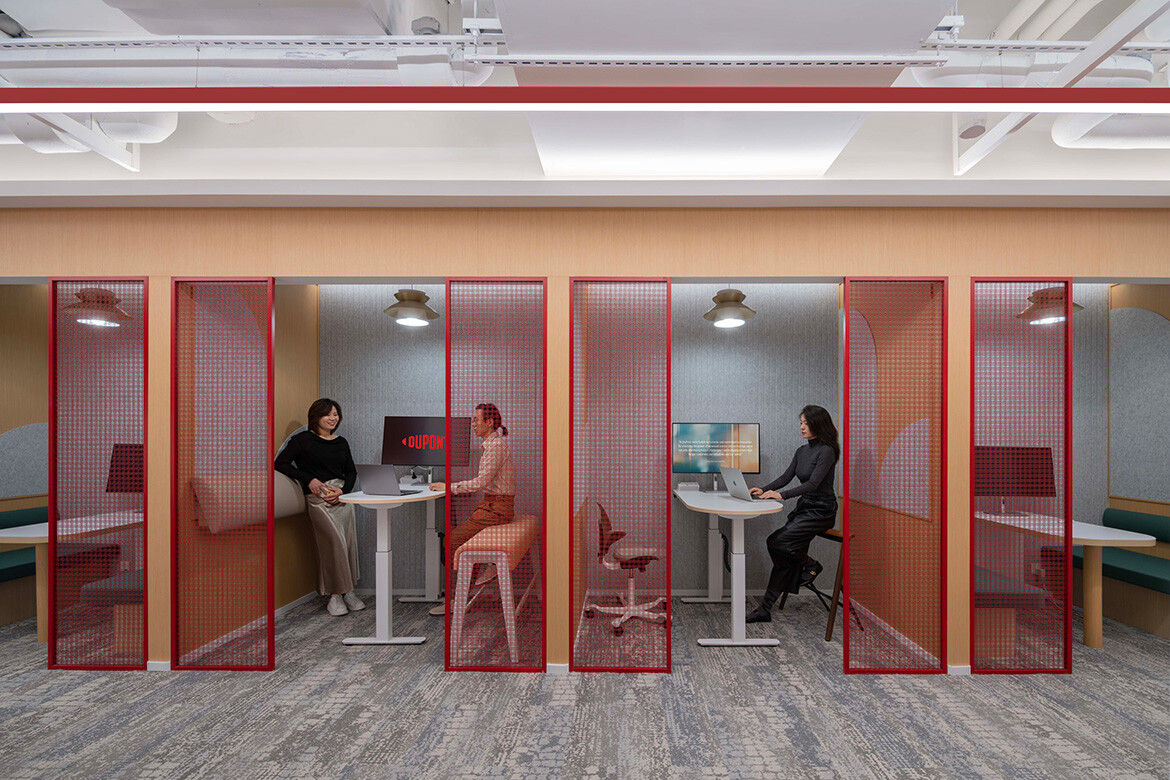
The answer emerged through a combination of workplace strategy, spatial planning and local storytelling.
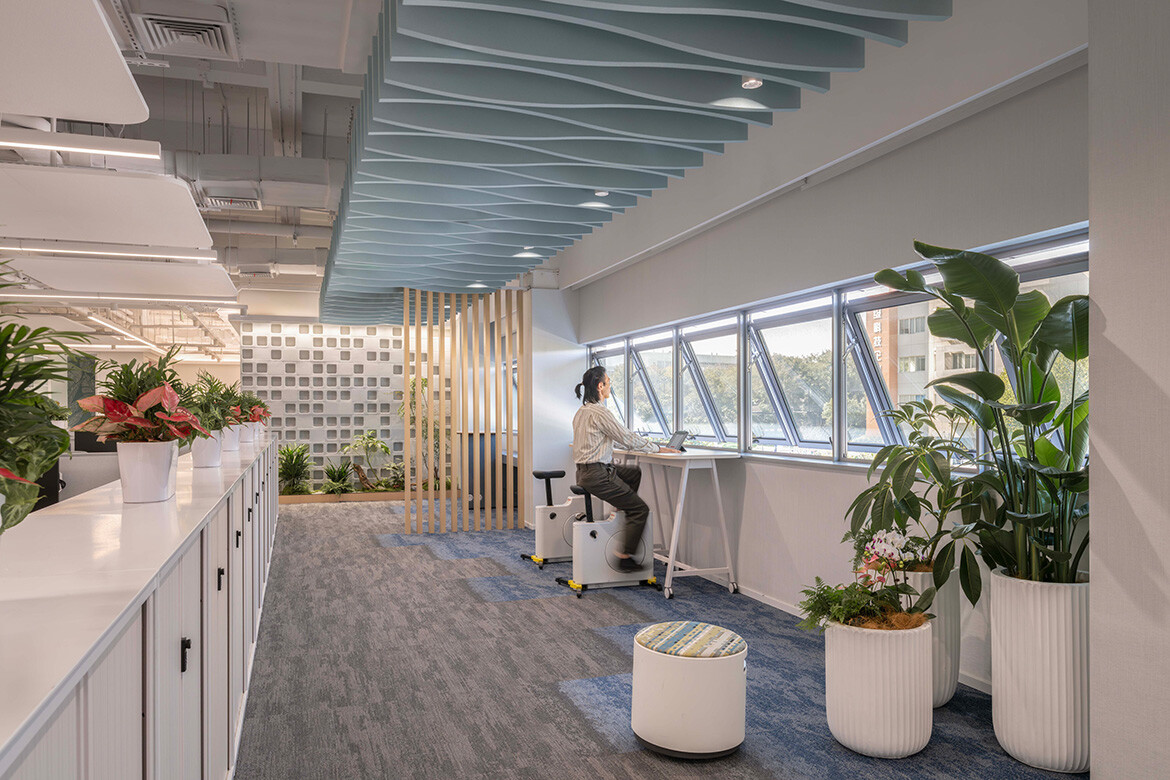
Working closely with DuPont, M Moser developed a more open and adaptable environment that accommodates a range of work modes, from focused individual tasks to collaborative problem-solving and informal discussion. Recognising that many employees were new to flexible working practices, the project extended beyond design, incorporating workplace analysis, engagement and post-occupancy support to help teams adapt to new ways of working.
Related: A new front door for paediatric care at Westmead
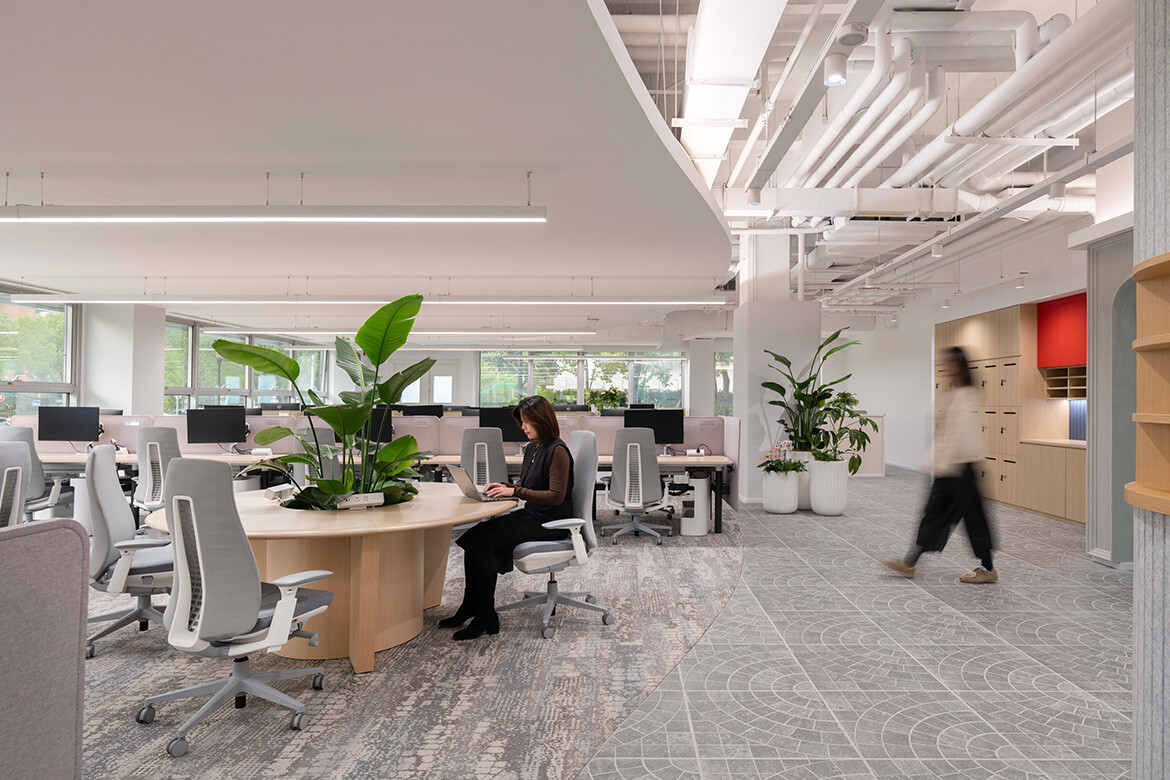
What could have been a difficult floorplate became one of the project’s defining strengths. The large, square plan and relatively low 2.7-metre ceiling height presented clear constraints, but also provided an opportunity to rethink how space could be organised.
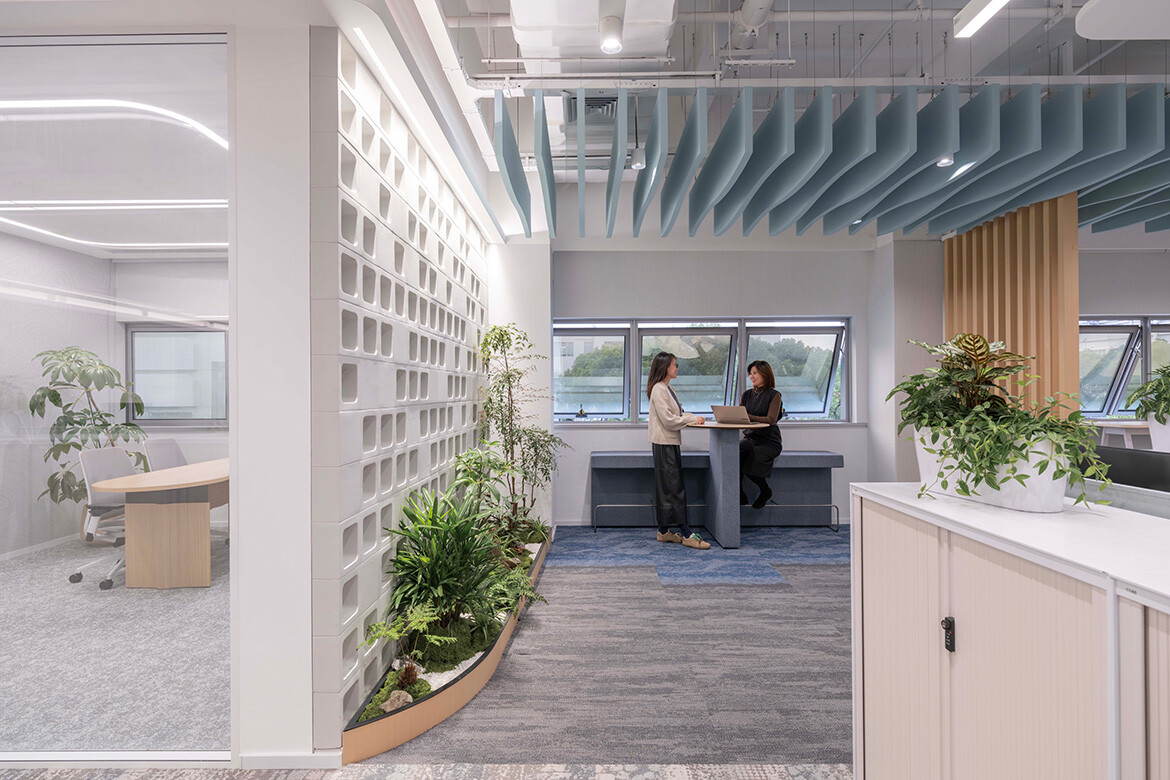
Instead of treating the workplace as a continuous open-plan office, M Moser divided it into a series of interconnected neighbourhoods. Each zone serves a distinct purpose while remaining connected through shared spaces and circulation routes.
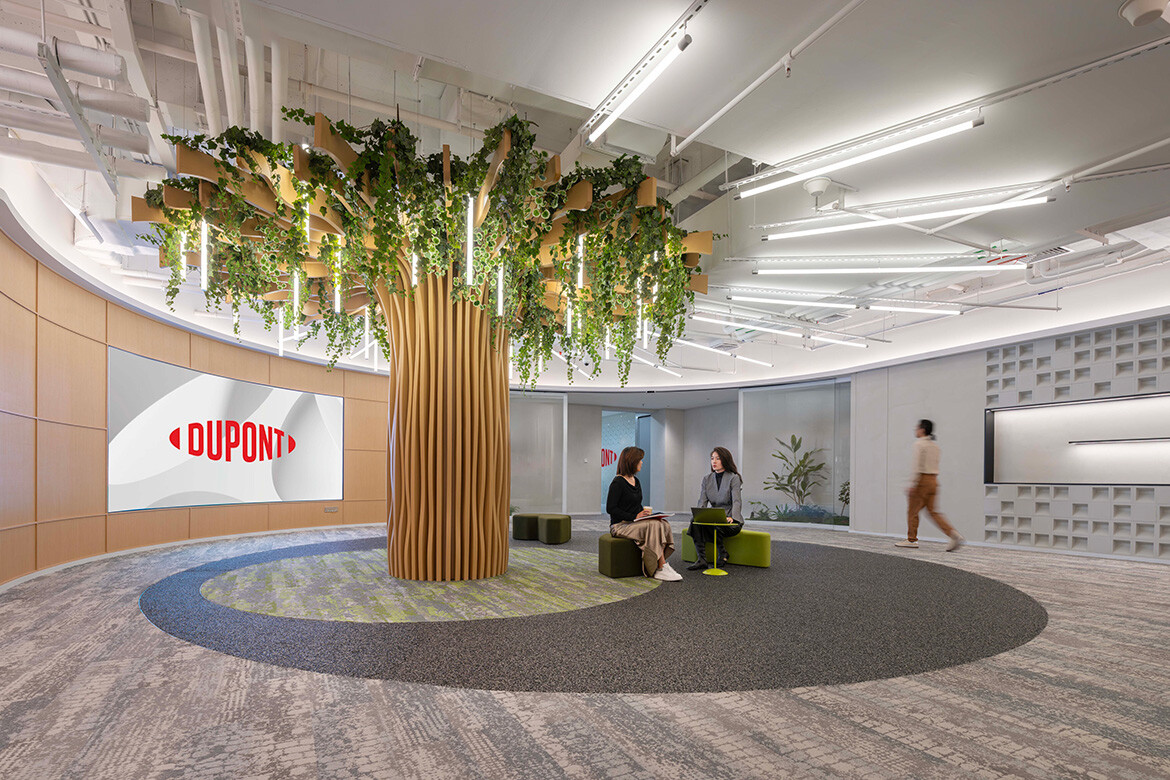
At the entrance, visitors arrive at a small plaza designed to encourage informal interaction. Further inside, a larger employee plaza acts as the social centre of the workplace, providing space for gathering, collaboration and exchange. Linking everything together is a central circulation route known as “DuPont Boulevard”, which establishes a clear rhythm and sense of movement throughout the floor.
The design also looks beyond the workplace itself, drawing inspiration from the urban fabric of Shanghai. Rather than relying on overt thematic gestures, the project incorporates references to the city through a series of recognisable spatial moments.
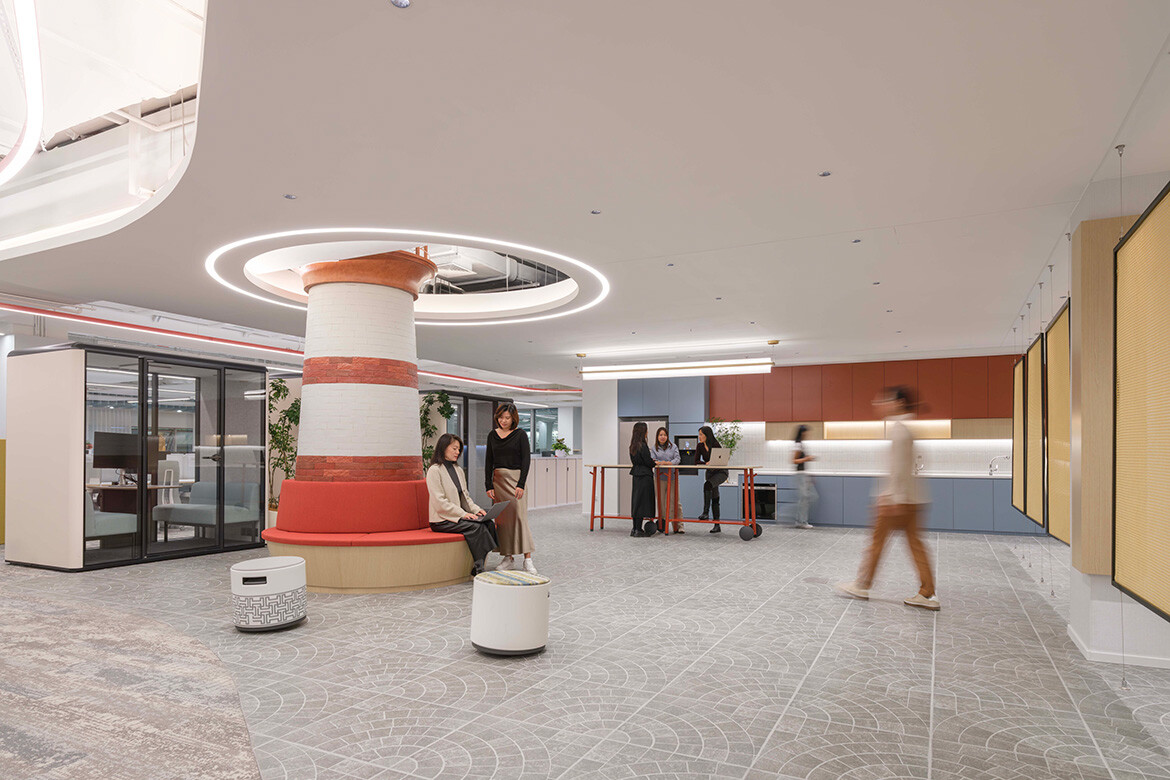
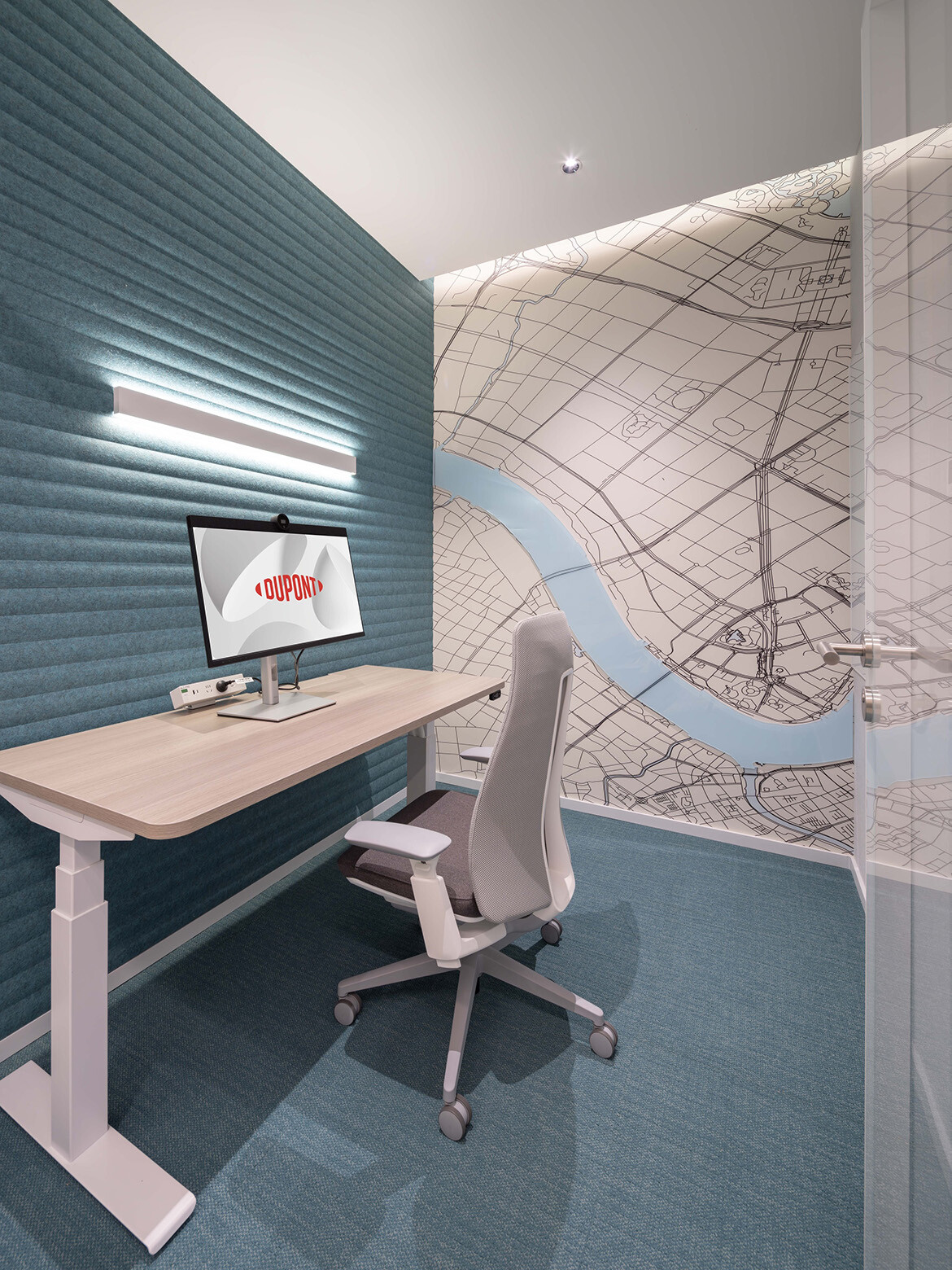
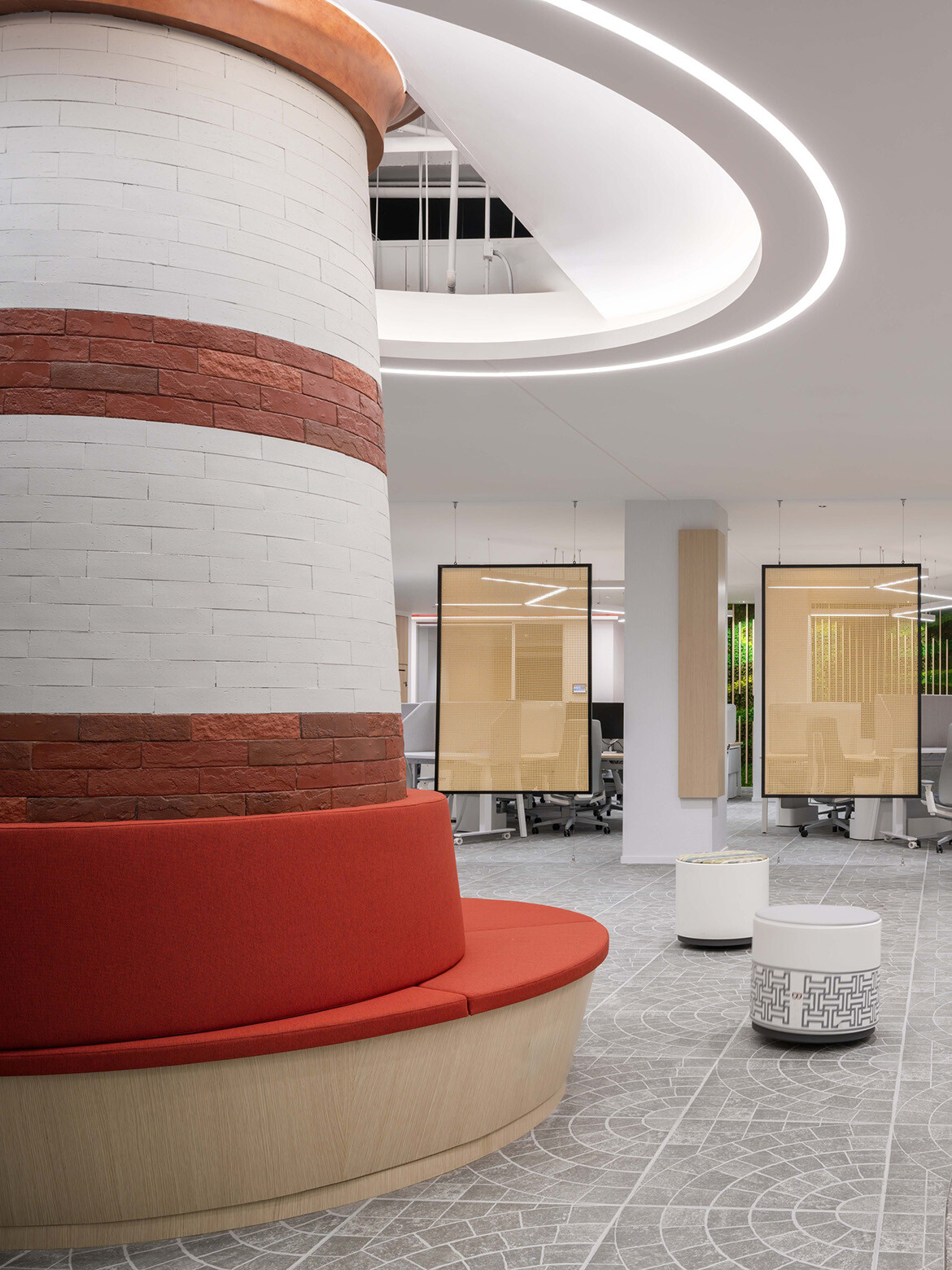
A column at the entry has been transformed into a stylised plane tree, referencing Shanghai’s iconic tree-lined streets. Elsewhere, landmarks such as the Wukang Building and local lighthouse forms provide visual anchors within the workplace, helping employees orient themselves and creating natural moments for pause and interaction. Meeting rooms and quieter spaces take cues from the Huangpu River, historic Shanghai and local textile patterns, introducing variety and a sense of place throughout the interior.
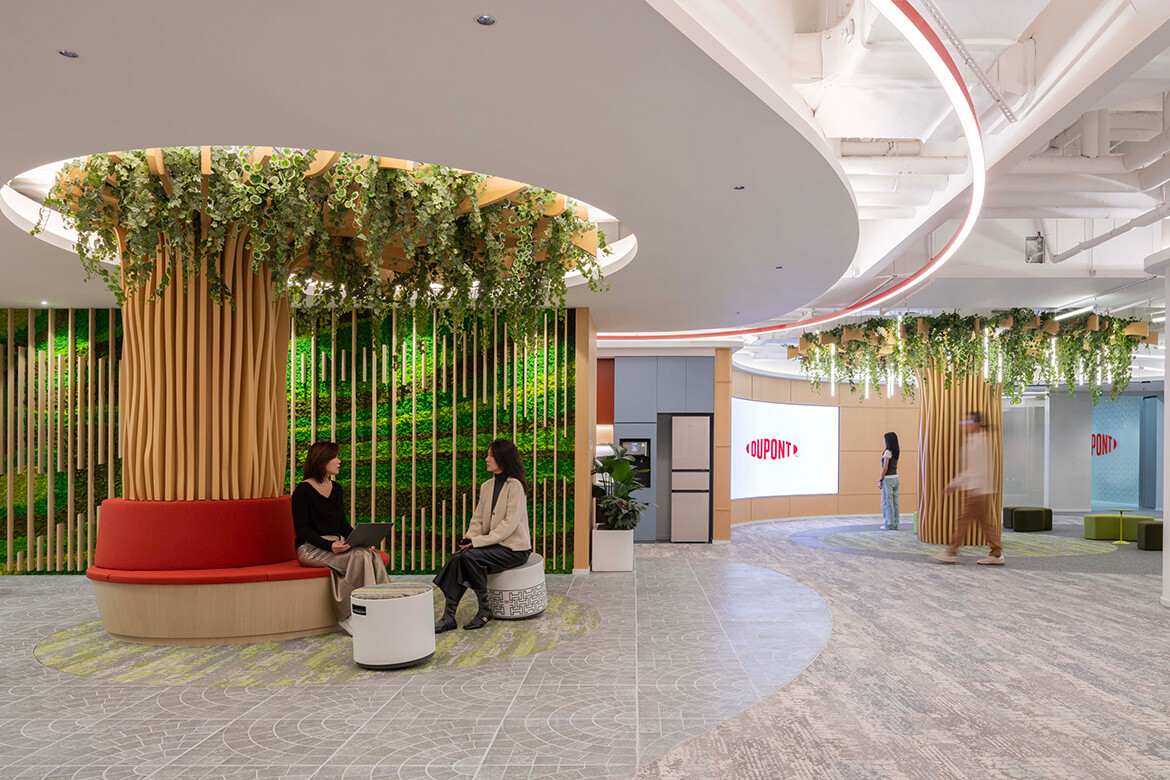
Importantly, these references are integrated into the daily experience of the workplace rather than treated as decorative additions, cementing identity without overwhelming the practical demands of the environment.
Behind the scenes, a series of engineering upgrades support the workplace’s performance. Acoustic improvements reduce noise levels within the lab building context, while revised lighting strategies respond to different work settings, minimising glare and visual fatigue. Air-conditioning, fresh air and power systems have been designed with zoned control, giving users greater flexibility while improving operational efficiency. Fire protection infrastructure has also been upgraded to support future expansion.
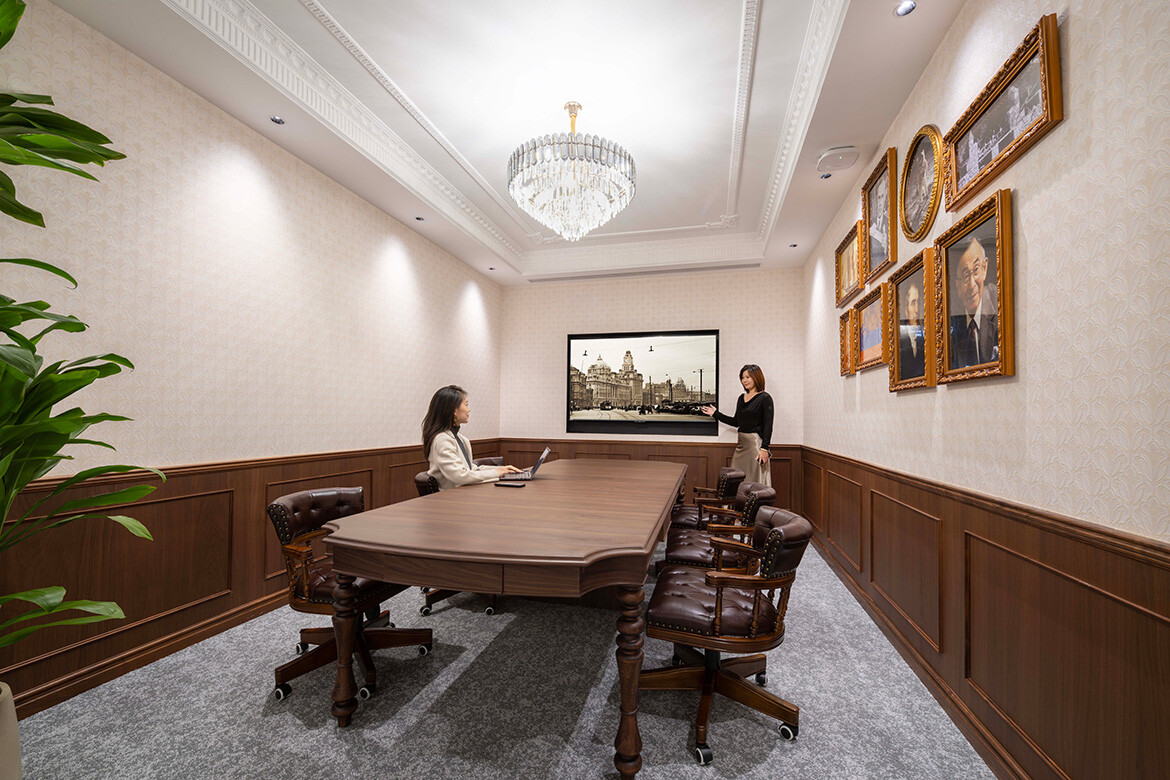
The result is a workplace that feels less like a single office and more like a connected network of destinations. By combining workplace strategy, urban references and technical performance, M Moser has created an environment that supports both the day-to-day realities of work and DuPont’s longer-term ambitions.
For a company focused on innovation, the most significant transformation may not be the physical space itself, but the opportunities it creates for people to connect, collaborate and develop new ideas together.
M Moser Associates
mmoser.com
Photography
Edward Shi