The home of architecture and design in the Asia-Pacific
Get the latest design news direct to your inbox!

Get the latest design news direct to your inbox!
When Hobart-based architecture practice Cumulus Studio worked on the iconic Pumphouse Point on Lake St Clair, it was only natural to take inspiration from the incredible forested surrounds.
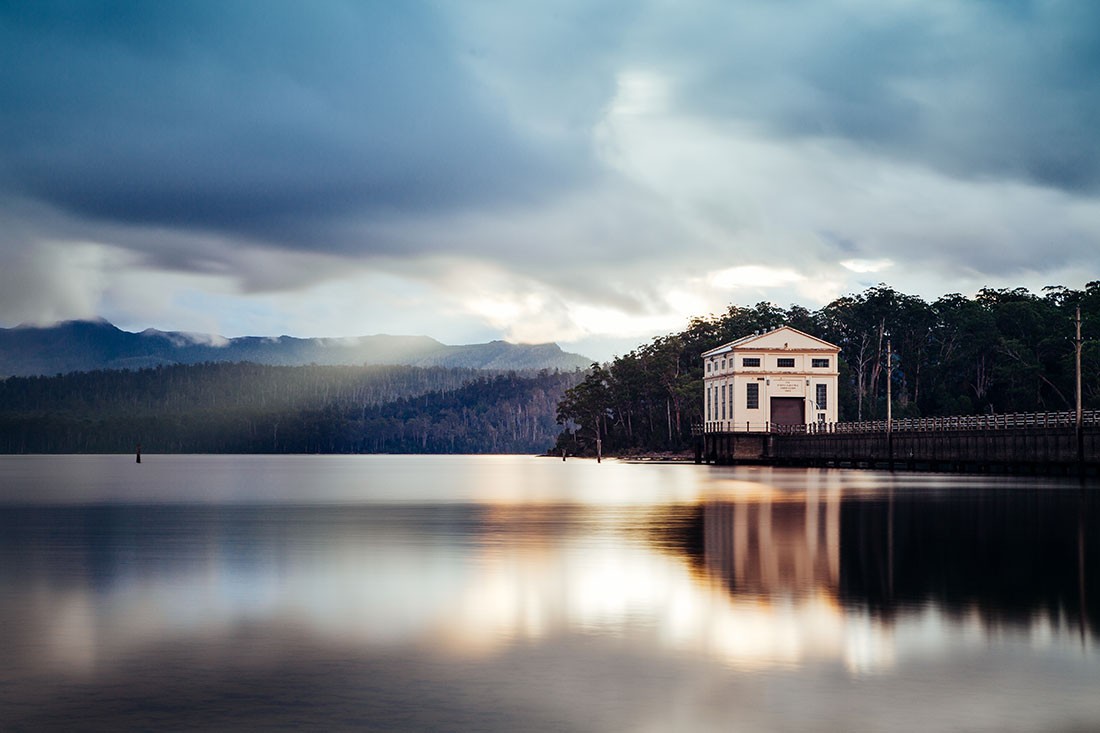
Pumphouse Point

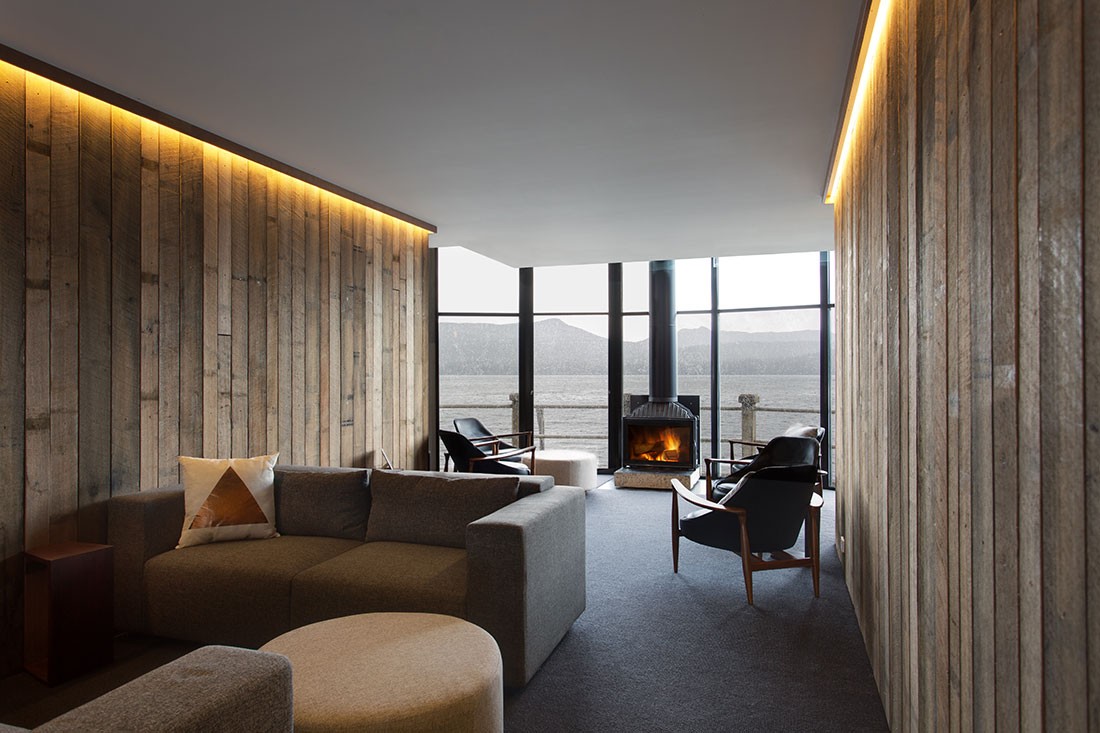
The entry features rough sewn Tasmanian Oak timber wall panelling.
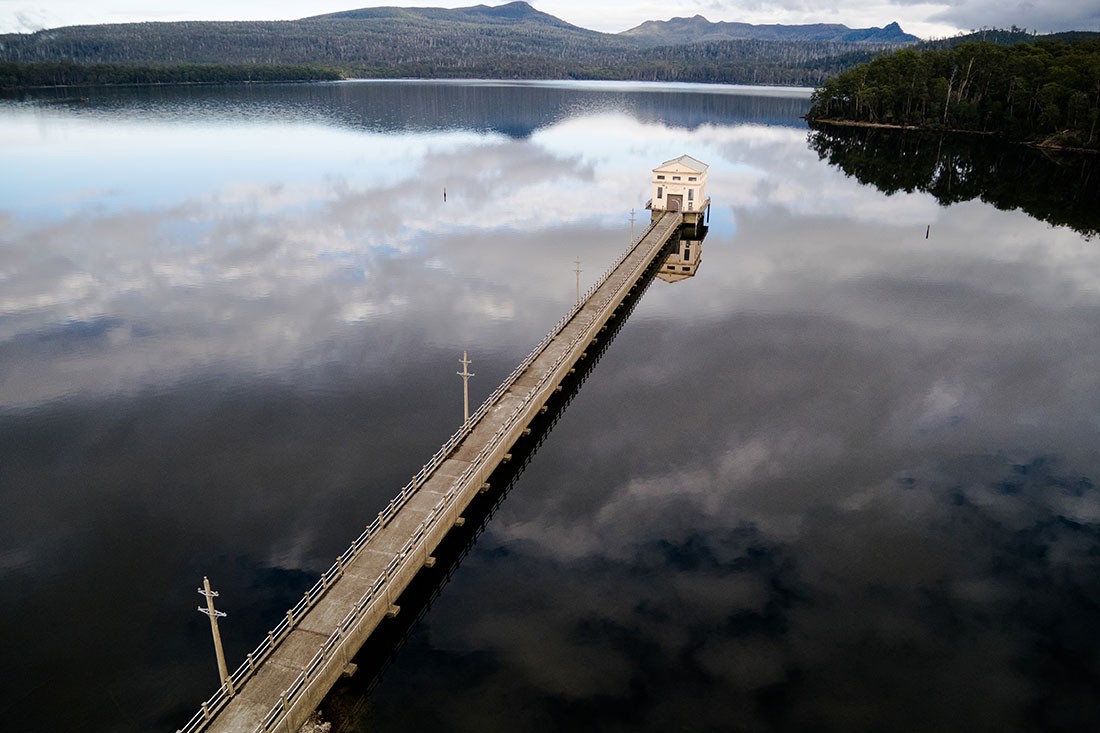
Breathtakingly beautiful, Pumphouse Point sits out in the middle of Tasmania’s Lake St Clair, with entry via a long, meandering jetty. Densely forested hills surround the lake, adding to the overwhelming natural beauty of the setting, which also happens to be a designated World Heritage Site.
It’s not surprising to find out that the adaptive re-use project received a slew of awards when it was completed back in 2014. But behind the accolades and careful heritage overlay, the project could be seen as a case study for a Tasmanian design sensibility.
In a previous life, the original building formed part of the state’s Hydro Electric Commission, which has left the area with a series of defunct buildings, each with a distinct Art Deco flair. Cumulus Studio has worked within the shell and existing parameters of the building to ensure the best practice in heritage adaptation.
The 100-year old heritage is called forth from the exterior shell, but moving inside, visitors are transported to an entirely different place. Upon entry guests are cocooned in a space clad with rough sewn Tasmanian Oak timber along the walls, drawing the eye to a floor to ceiling window that looks out to the water and forest beyond. This raw materiality was a deliberate design decision.
The entry features rough sewn Tasmanian Oak timber wall panelling.
The rough nature of the timber wall panelling is part of the first transition between the wild beauty outside and enveloping retreat inside. The entry wall cladding, with its repetition and natural finish, are a reference to the rows of timber on the jetty that every guest must traverse.
As guests continue deeper into the space, Tasmanian timber resurfaces in myriad applications alongside the complementary concrete formwork. For the guest rooms, satin-looking Tasmanian Oak is used to encapsulate a sense of luxury.
Throughout the rooms and stairways, a nod to the Art Deco era can be seen in the ceiling details where geometric shapes and patterns are formed with Tasmanian timber battening.
The feeling inside Pumphouse Point is a place of respite, tempered by the beauty of nature. What makes this project particularly poignant is the subtleties of materiality and place.
Through the selection of materials from the region itself – in particular, the use of Tasmanian Oak – the project is an example of how sourcing locally helps to tell a narrative and express a clear sense of place.
For more information on Tasmanian timber products, samples, stories, events and technical specifications visit tasmaniantimber.com.au.
INDESIGN is on instagram
Follow @indesignlive
A searchable and comprehensive guide for specifying leading products and their suppliers
Keep up to date with the latest and greatest from our industry BFF's!
The internet never sleeps! Here's the stuff you might have missed