The home of architecture and design in the Asia-Pacific
Get the latest design news direct to your inbox!

Get the latest design news direct to your inbox!
We find out how a Hong Kong-born designer finds design inspiration in the imperfections of Bangkok.
November 24th, 2017
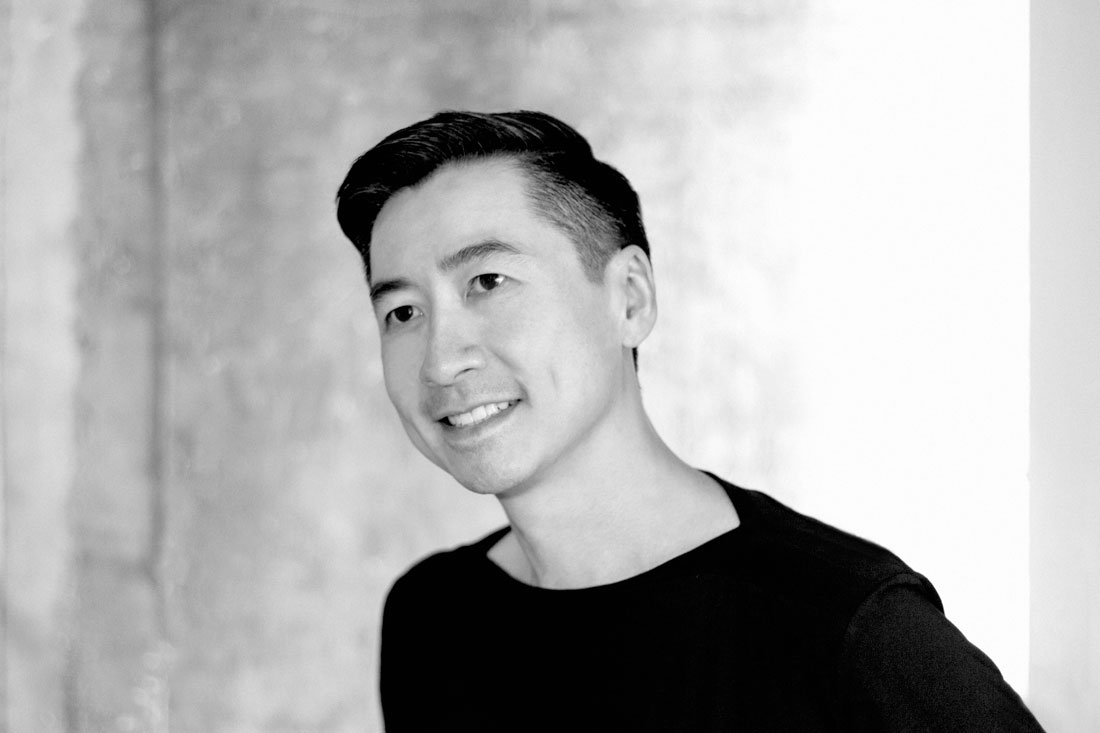
I was born in Hong Kong and raised in Canada, but my colleagues at Architectkidd are Thai. Being exposed to different environments is a good thing because it enables you to see a variety of viewpoints. We start our projects by opening up as many design variables as possible. We like to look for contrasting scenarios before narrowing things down. I think sometimes it helps to be a bit of an outsider, and to be able to look from the outside-in.
Informal spaces are very inspiring to us. In Bangkok you see spaces that have been designed for a specific purpose but then end up being used in completely different and unofficial ways. Every day I pass through restaurants inside parking lots and visit markets under overpasses. This mixing and mismatching of spaces and uses can be interesting because new meanings can come from that and can strengthen the sense of community.
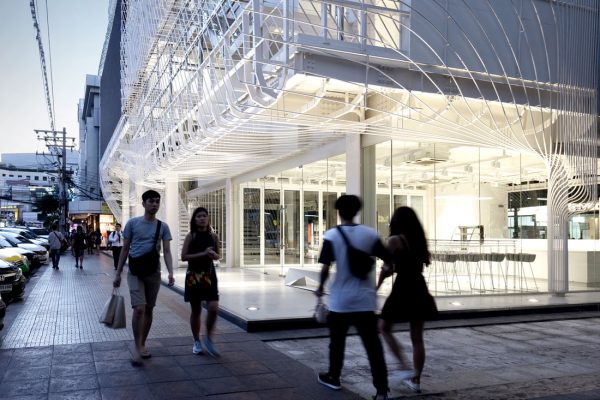
Above: A building for digital TV station Now 26 in Bangkok
We love to show that even though we are a smaller studio we can take on challenges found in larger, significant buildings and projects – such as the Now 26 TV office. We believe we can offer a different perspective from the conventional wisdom. We are always asking why things have to be the way they are when it comes to buildings and materials.
(Read Simon Ostheimer’s review of Now 26 in issue 81 of Cubes magazine.)
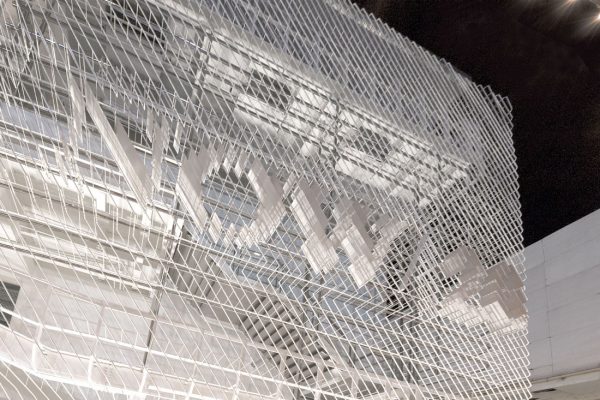
Above: Now 26
There’s a new generation of design talent coming through in Bangkok that is inspiring, like Anonym. Architects are starting to work across disciplines from landscape to fashion and they are starting to be more involved in thinking about the city, urban and civic spaces.
Bangkok has a unique mix of high and low culture. We love to be hands-on with our work and are interested in the local craft approaches, but not only from craft traditions such as weaving and wood working techniques. In Bangkok there is a unique material culture found on the streets, a kind of make-it-from-scratch way of thinking and doing things. It’s imperfect at times, but we think it’s interesting to create imperfect architecture from this.
There are so many wonderful old stand-alone cinema and theater buildings throughout Southeast Asian communities. They were once social centres in their neighborhoods but due to changing tastes and generational change most have been abandoned. Philip Jablon, with his Southeast Asia Movie Theatre Project, and others have been documenting these buildings. I would love to be part of a team or project to get together to restore and give new life to these theaters and to the neighbourhoods that once drew life from them.
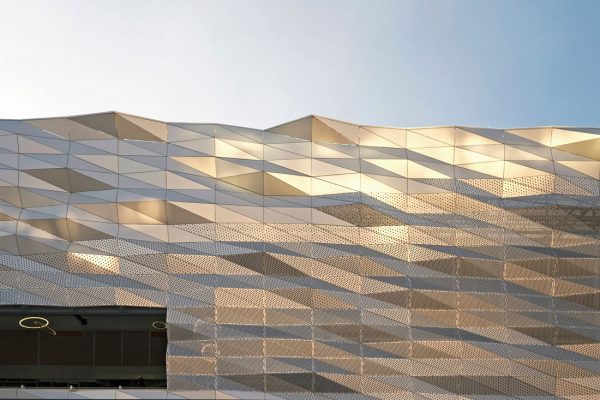
Above: The Street Ratchada in outer Bangkok contains cafes, restaurants and other retail and commercial functions.
If there’s any one thing that I’m struck by it is the change in the flow between East and West. Each region has always had their own traditional and vernacular architecture, but up until quite recently modern architecture and urbanism has really been mainly dictated by Western thought and approaches. With new developments I fully expect to see a shift in this exchange, and more contributions and ideas from Asia towards global architecture.
Bold, inventive, well-connected (with the Asian context).
INDESIGN is on instagram
Follow @indesignlive
A searchable and comprehensive guide for specifying leading products and their suppliers
Keep up to date with the latest and greatest from our industry BFF's!
The internet never sleeps! Here's the stuff you might have missed