The home of architecture and design in the Asia-Pacific
Get the latest design news direct to your inbox!

Get the latest design news direct to your inbox!
dwp is an international practice that has established a foothold in Asia. The Indesignlive team speaks with the practice’s CEO Brenton Mauriello, from his office in Thailand, about creating workplace culture and the changing perspectives of the region.

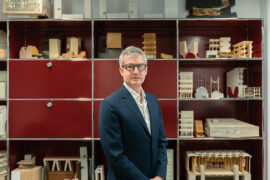
dwp CEO Brenton Mauriello

October 18th, 2018
Brenton Mauriello: It has taken some time to achieve what we’ve now created. It’s a cultural change, it’s a way of thinking, and of course, you need the systems to back it up. Fortunately, we’ve invested well into IT, and our policies and process. We’ve worked very hard over the last five years, and in the last two to three years it has really taken off and is delivering benefits.
We’re fully integrated, fully in the cloud – we work as one team. There is no division. We have a very functional management structure, so decision-making is fast. We are also very well aligned.
Everybody makes decisions not in their own interests, but in the group interest, and therefore the client interests – keeping the project focused on what’s best for the project and the client.
Because of our IT and technology infrastructure, it doesn’t matter where a project is, anyone can contribute. We’re live, every day. I speak to every manager across all of the different countries and studios almost every day.
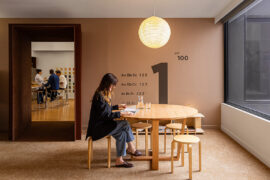
I’m very adamant on [not working in a silo]. If I see it happening I’ll call it into question very quickly. We have a saying here, “We don’t do divas.” We are one company. We really do collaborate. Every project is reviewed every Wednesday across the group. And anybody can attend. So on any given Wednesday, throughout the whole day, you can go into the meeting room in each office and just sit, and look at a project and comment on it, no matter where it is in the world.
I think yes, and I think it must be very clear what you’re trying to deliver and why. I start with the projects and the clients and work back from there. As the CEO, you can get caught in running a business with all its moving parts. But by keeping it simple, and bringing it back to what we’re delivering – a project for a client – the agenda for the office can work very well.
We always have people fly around to places, but there is also a level of trust in that the team is going to understand and consider these parameters. In each office, there is always somebody that will understand the local context.
And I will say this; the world’s becoming more international. We see it everywhere. It is becoming more international, the parochial is becoming less dominant. And actually, I think there’s a search for that internationalism sometimes.
But it’s also important to keep it to the local, to where it’s being developed. I think that’s important, we don’t want to lose that either.
Absolutely, Asia is much more sophisticated. There is such great talent here, and again why aren’t we tapping into that? It doesn’t matter where you’re from, or what language you speak. It should be a question of, “Are you going to take us somewhere we haven’t been?”
When I came to Bangkok 25 years ago there was nothing. Right now, I’m looking at a skyline that would be four times larger than Sydney. And that was all built in 20 years. What’s in the next 20?
We thought it would be, but it wasn’t. The reasoning and the direction behind it were very strong but simple, and understood by everybody. And it has created huge opportunities for people. We’re sharing skills and knowledge across the entire region and it has brought whole new sectors into our company. Suters had great expertise in healthcare and seniors living – Thailand and Malaysia have an ageing population and we’re able to utilise that knowledge now.
In general, the market was much more accepting than I expected, and I think that shows a great maturity of the market across the board.
INDESIGN is on instagram
Follow @indesignlive
A searchable and comprehensive guide for specifying leading products and their suppliers
Keep up to date with the latest and greatest from our industry BFF's!
The internet never sleeps! Here's the stuff you might have missed