The home of architecture and design in the Asia-Pacific
Get the latest design news direct to your inbox!

Get the latest design news direct to your inbox!
Architecture is reportedly a profession of stress. How can workplace culture alleviate the daily pressures that come with the job? Vietnamese architect Vo Trong Nghia resets the priorities of his busy, award-winning firm.

Staff reap the benefits of being in a plant-laden building which they call the 'urban farming office'.
July 22nd, 2021
It is common practice for architects to work overtime, and often late into the night. While the high-workload, long-hours culture is prevalent and even considered ‘industry standard’, it having been instilled as early as in architecture school where students often pull all-nighters in 24-hour studios, it is by no means healthy.
A survey by Architect’s Journal found that one in four UK architecture students seek mental health treatments. Another report published by AustraliaAU suggests that there has been a strong common perception and growing anecdotal evidence of a challenging work environment and high levels of stress and anxiety among architecture practitioners. Even more worrying are the findings of American research showing that architecture and engineering professionals are the fifth most likely to commit suicide compared to other occupations in the US.
These findings are shocking. Surely industrious architects, who toil to raise the quality of life, deserve healthier work cultures for themselves?
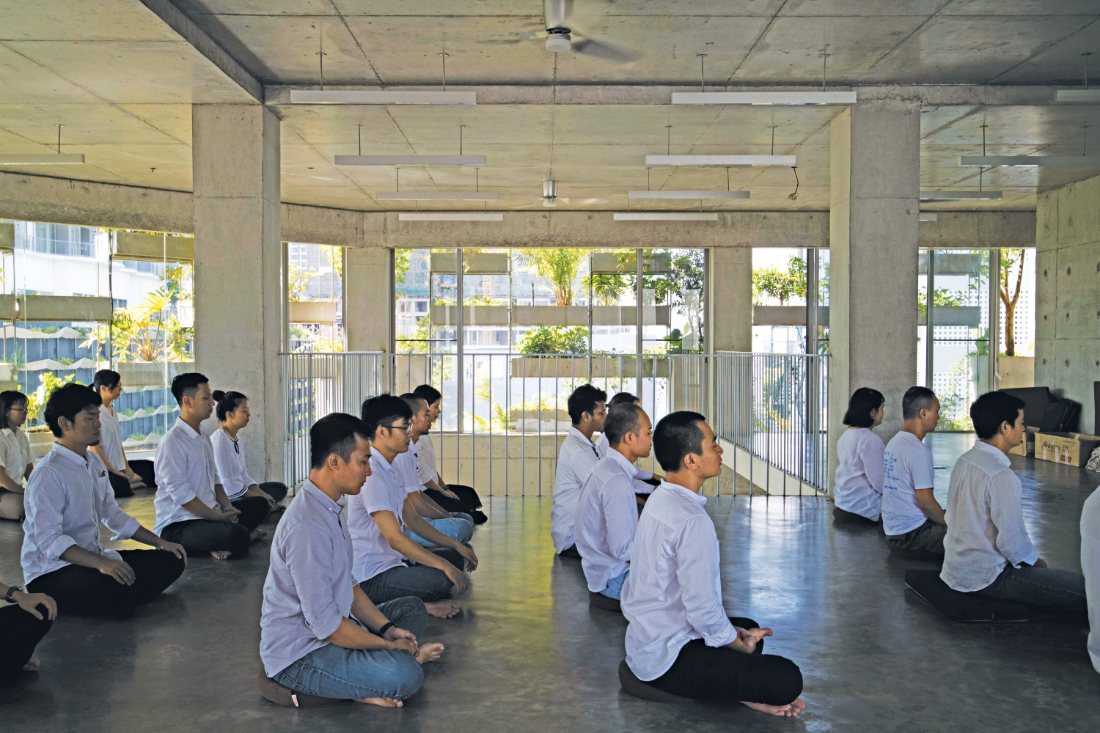
Staff at VTN Architects meditate twice daily and do yoga three times a week.
In Ho Chi Minh City, a practice has established an office culture that alleviates work stress and boosts productivity and creativity.
VTN Architects occupies a seven-storey building in which the top three levels are for the dedicated use of meditation and yoga. Staff leave their desks to meditate upstairs twice daily, an hour from 8 to 9am, and again at 5pm. They also do health-boosting yoga three times a week—all while reaping the biophilic benefits of being in the plant-laden building which they call the “urban farming office”.
“First, meditation; second, to educate architects; then last comes architecture,” Vo Trong Nghia told me when I asked him of his priorities as principal of his Ho Chi Minh City and Hanoi-based practice.
Meditation is taken very seriously at VTN. I visited the office in 2019, just after they had moved in. The interiors were not yet completed then. “We have stopped the work temporarily because we are having a meditation course,” Nghia said. “Construction is too noisy. We don’t want that to disrupt our course.”
That was a Friday morning and Nghia had just come back to Ho Chi Minh City. He had been away on an extended meditation retreat at the Pa-Auk Meditation Centre in Myanmar and was coming back to office to see to business—but mostly because he had invited a monk to conduct a ten-day meditation course for his staff, including the team from the Hanoi office who had flown in to attend the course.
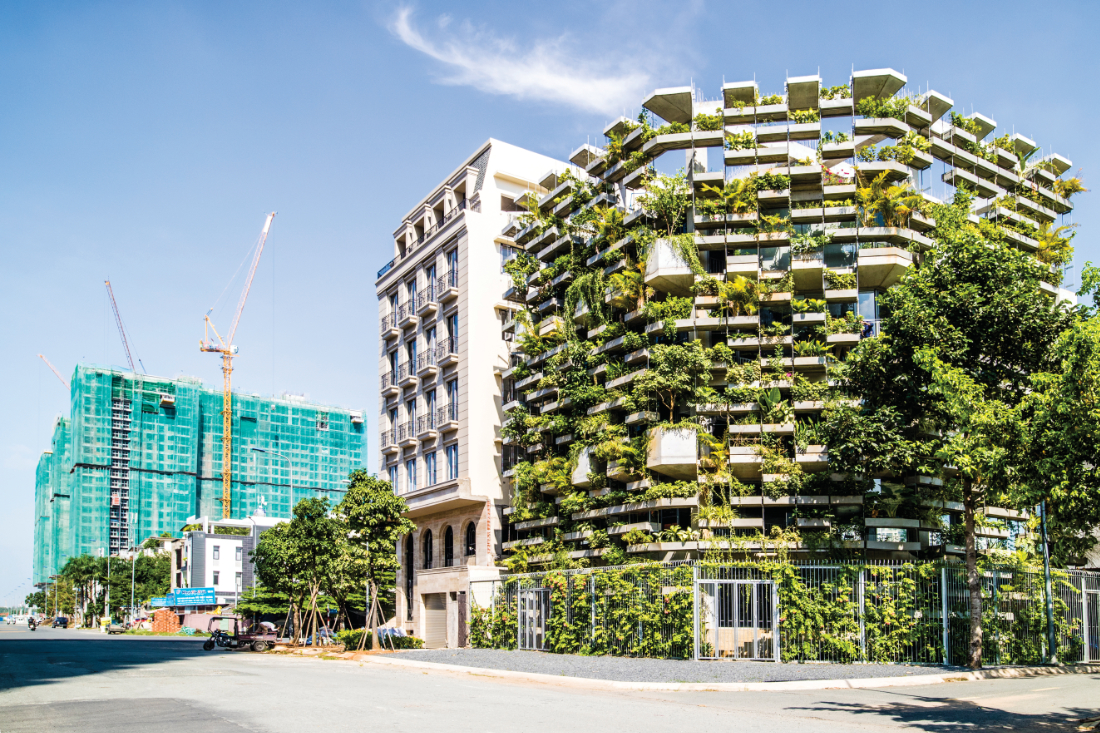
The practice occupies a seven-storey building cloaked in greenery.
Nghia advocates meditation to everyone, and especially recommends it to those in his profession. “If you can develop super concentration, architecture becomes easier—very easy, it will not be difficult at all,” he said. “Now I only work five, ten minutes, at most thirty minutes a day but the quality of our work is getting better and better. People’s minds are too complicated. It is about simplifying the mind first. This is especially important for designers and architects.”
At the invitation of Nghia, I joined the staff in one of their meditation sessions. There is something to be said about meditating on site at the workplace. It is not escapism—in fact every rustle in the office below became loud and clear, and the noise from the construction that was going on all around in neighbouring plots were deafening, but everything seemed to be happening at a remarkable remove. That provided respite and a sense of perspective that one was outside the thick of the fray.
Nghia has been meditating since 2012 and has strong convictions about keeping up the practice. “Architecture may be my career, but I feel that meditation is a million times more important. Having one more good building in the world is a good thing but more important than that is meditation and keeping sila,” he said, explaining the five Buddhist moral precepts of not lying, stealing, killing, indulging in sexual misconduct, and taking intoxicants.
“I would like to make the workplace an environment for keeping the five precepts. Meditation is a big goal for the company,” he added. “This year, we don’t have any goals about our profit or about architecture, it is about meditation and keeping sila and that’s it.”
Judging by VTN’s strong output of award-winning projects and its fast-growing team of staff since the time of our meeting, Nghia’s workplace policy is paying off richly.
INDESIGN is on instagram
Follow @indesignlive
A searchable and comprehensive guide for specifying leading products and their suppliers
Keep up to date with the latest and greatest from our industry BFF's!
The internet never sleeps! Here's the stuff you might have missed